
eu tovm suadade sdls emjs bebes euwbeuro muito chorar
Jun 13

Trago atualizações dos gatinhos bebés que minha gata teve e nem sabíamos que estava grávida kkkkkkkkk



13

Jun 12
yes, general govt deficit is what matters eventually for the bond market. Worrying thing is, states have piled on SDLs at~ 50-80 bps higher than G-Secs for same tenure.
2
278

Jun 11
The only things I can say I regret:
Not doing more sets I wanted to do
Not going for broke on more dates
Not attempting more SDLs
Be braver
Jun 10

4# do your best to go out and open the day of and the day after a lay.
Whilst you’ve got that post-lay magic in your veins
2
7
652

Yeah I can't do sdls and hip thrust in the same session while on a deficit son i start to fall apart im doing rlds instead of those 2 and call it a day
16
VibrantSh retweeted

Jun 8
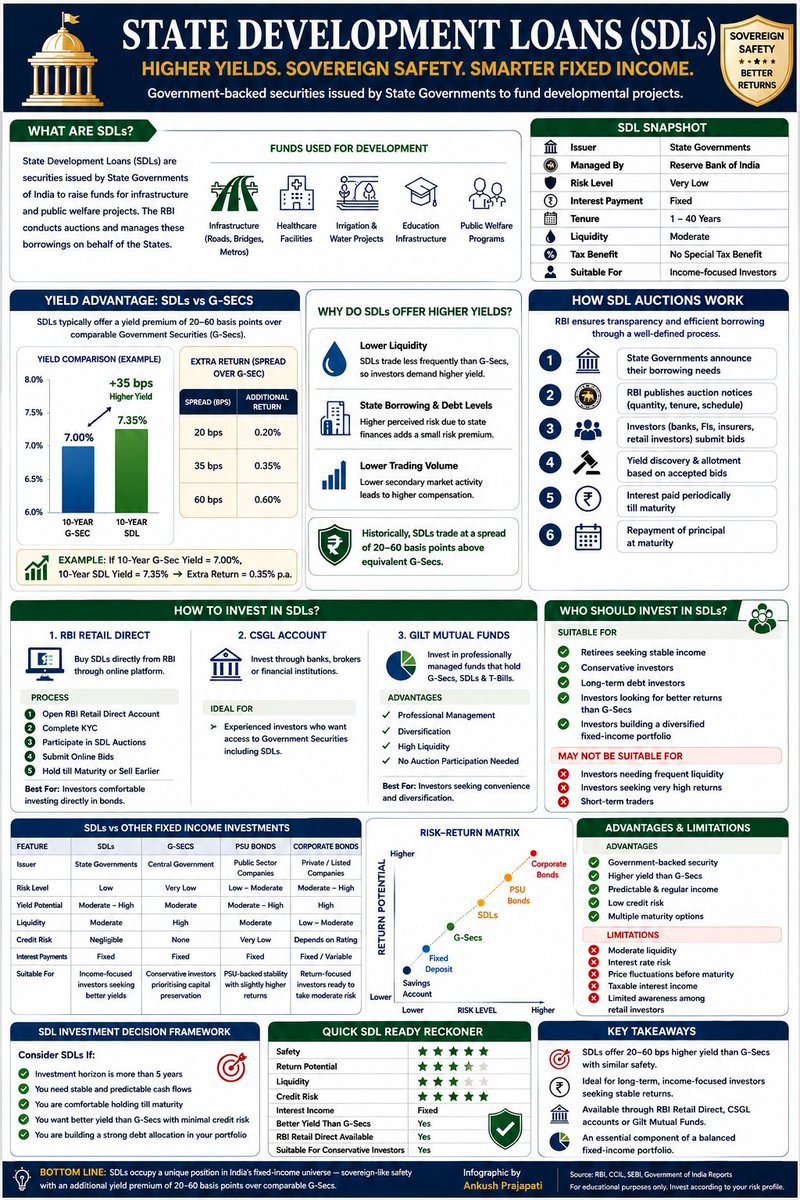
Day 158 | State Development Loans (SDLs) 📊
Looking for a fixed-income investment that offers higher yields than Government Securities while maintaining a strong credit profile?
State Development Loans (SDLs) are bonds issued by State Governments and have historically witnessed zero defaults.
✔ Government-backed borrowing
✔ Higher yields than G-Secs
✔ Regular income
✔ Suitable for conservative investors
#SDL #StateDevelopmentLoans
Prepared by: Ankush Prajapati.
3
18
875

Jun 8
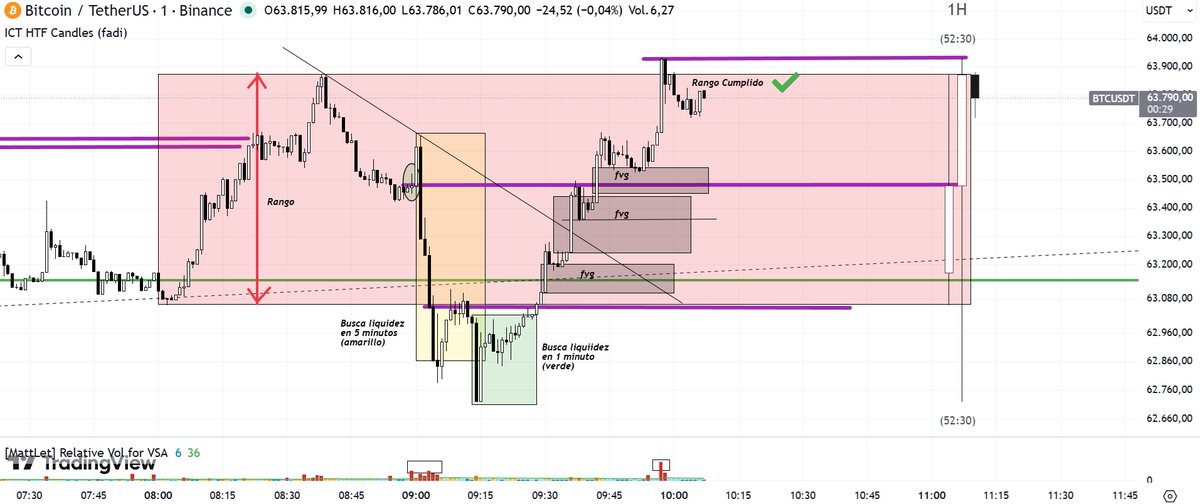
BTC Operatoria con CRT
Rango: Hora
Liquidez: 5 y 1 minuto
Entradas en consonancia con los fvg
Buena semana!!
Sdls a tod@s!!
2
74

Jun 8
Proud to have the support of our Gold Partners at ECMF 2026: BGS, Eastern Clearing & Forwarding Agency Pvt. Ltd., Masun Group, SDLS Logistics Pvt. Ltd. & The PDP Group.
@ThePDPGroup
Register now:
ecmf.in/form/2026/ECMF_26dle…
#ECMF2026 #Logistics
2
30

Jun 1
Bond forwards replace FRAs for insurers; SDLs become preferred choice
Insurers are increasingly shifting to bond forwards linked to state development loans, attracted by higher yields and the RBI's new framework for managing interest-rate risk
business-standard.com/financ…
2
3
1,544

May 31
La mayoría de los votantes de Morena no tiene inteligencia más que la motriz para sobrevivir así que prácticamente solo nos insultó a unos pocos. Sdls!
2
120
May 30
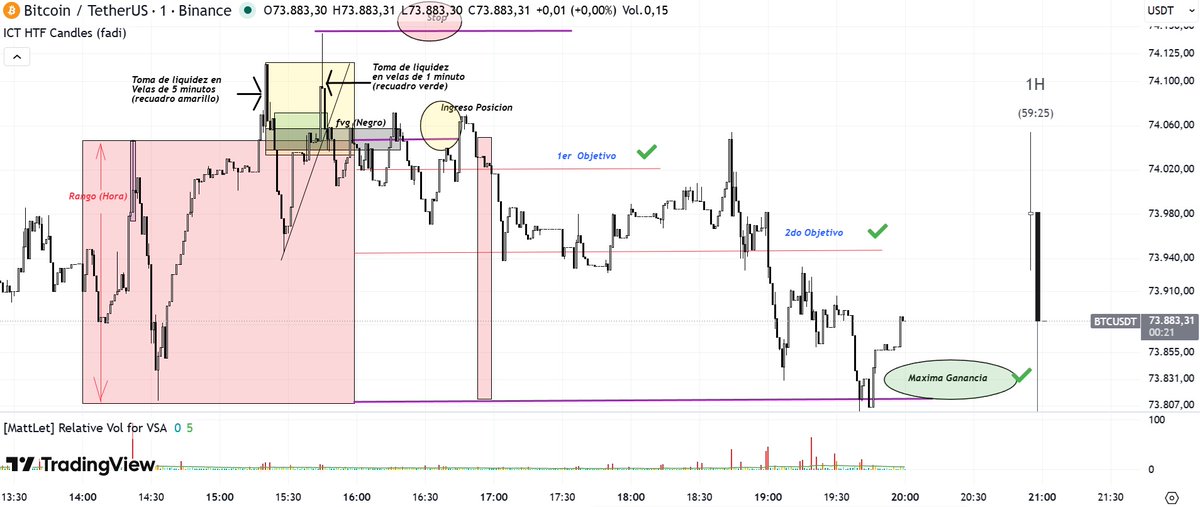
BTC. Operatoria CRT. 2DA PARTE
Se logro el objetivo maximo.
Buen finde.
Sdls a tod@s!!
2
3
367

May 27
We must win the future of scientific research. SDLs are the way.

You can’t make scientific breakthroughs without the tools to pursue them.
Big news from @NSF: $250M to restart and supercharge the SBIR/STTR program, including a new $40M pilot for next-gen scientific instrumentation.
America’s small businesses will build the platforms that define discovery.
nsf.gov/news/nsf-deploys-250…
1
7
812

If your SDLs(Stiff leg deadlifts) look like touching toes with dumbbells, we need to talk.
4
6
39
7,507

🧵 Your FD is silently underperforming.
Most Indian retail investors don't know there's a better fixed-income option sitting right in front of them.
Quality bonds. 7.5–9% returns. Without chasing risk.
Here's everything you need to know 👇
1/ The FD trap
Large bank FDs are yielding 6.5–7.1% right now.
After 30% tax? You're looking at ~4.6–5% real yield.
Inflation is running hotter than that.
You're not losing money — but you're definitely not building wealth.
2/ The alternative most retail investors ignore
Short-term, high-quality corporate bonds.
Experts say AAA & AA rated paper with 1–3 year maturities can deliver 7.5–9% yields right now — without taking on meaningful credit risk.
That's 200–250 bps more than your FD. Every year. Compounding.
3/ Why short duration? Why now?
Global uncertainty. Crude oil volatility. Geopolitical noise.
In this environment, long-duration bets can hurt you — if rates spike, bond prices fall and NAVs erode.
Short-duration bonds (under 1 year) are largely immune to this.
Stay short. Stay safe.
4/ The strategy: Accrual > Duration
Don't try to time interest rate moves.
In a range-bound yield environment, the smarter play is accrual income — steady coupon earnings — not betting on capital gains from falling rates.
Boring? Yes. Profitable? Also yes.
5/ Build a ladder, not a lump
Don't put everything in one tenure.
Spread across 1yr / 2yr / 3yr maturities.
✅ Always have liquidity (bond maturing soon)
✅ Reinvest at prevailing rates as they mature
✅ No "locked in" regret if rates move
This is how institutions manage fixed income. Retail investors can do it too.
6/ How to actually buy bonds as a retail investor
🔹 Bond platforms — BondsIndia, GoldenPi, Wint Wealth (min ₹10k–₹1L)
🔹 Short-duration mutual funds — SIP-friendly, liquid, managed
🔹 State Development Loans (SDLs) — quasi-sovereign, slightly better yield than G-Secs
🔹 AAA-rated corporate FDs — simple, but less flexible
Start small. Understand the instrument. Then scale.
7/ The quality filter — non-negotiable
This is NOT the time to chase yield by going down the credit curve.
Stick to:
✅ AAA rated
✅ AA rated
✅ PSU bonds
✅ SDLs (State Dev Loans)
The moment you go AA or below for an extra 50 bps — you're taking on risk you're probably not being compensated for.
8/ TL;DR — The 2026 Fixed Income Playbook
→ Target 7.5–9% via quality bonds (AAA/AA )
→ Keep duration short (1–3 years)
→ Focus on accrual, not rate bets
→ Build a laddered portfolio
→ Use bond platforms or short-duration funds for access
Your FD renewed at 6.8%?
You left money on the table. Time to fix that.
Follow for more practical investing content — no jargon, no noise.
Not investment advice. Please do your own research or consult a financial advisor.
Source: Economic Times
Hashtags: #Bonds #FixedIncome #PersonalFinance #IndianInvestor #WealthCreation #DebtFunds #RetailInvestor #FD
1
4
336

May 22
I was asked to be on a panel recently to discuss self-driving laboratories with @ianfoster and Jie Xu (UC/ANL). As part of this exercise I distilled down the following thoughts:
Bad scenarios:
We might get more, but not necessarily better: not everything is amenable to the SDL paradigm (at least today). A risk to be avoided is that work that can’t be automated languishes because it is too hard and not hip to support anymore. This is a bit like AI sucking the air out of the room for other useful investment today.
Not everything needs to be automated: SDL talks will sometimes feature an image of a laboratory with robots and no humans that triggers some people. This is a sticky issue. I see no virtue in pursuing automation just for the sake of getting people out of the lab, but there are real costs associated with normal human sloppiness. Removing people from the interpretation, communication, planning, and other higher level processes associated with research, seems less urgent.
We destroy the entry level ladder to research in the physical sciences and engineering and we don’t replace it.
Good scenarios:
In applicable areas, SDLs will bring more reproducible, transparent, and accelerated discovery cycles.
The distinction between simulations and experiments will collapse into a much more unified set of tools for testing hypotheses.
Reduced activation energy for testing ideas. If you talk to a seasoned researcher they probably have many untested ideas. Most are probably untested not because they are particularly hard but because no one was available at the time or they weren’t funded for it, or a million other inessential things.
Healthy reconsideration of how we allocate prestige in science and engineering. SDLs are part of the myriad forces arrayed against conventional publishing and research organization.
3
164

May 22
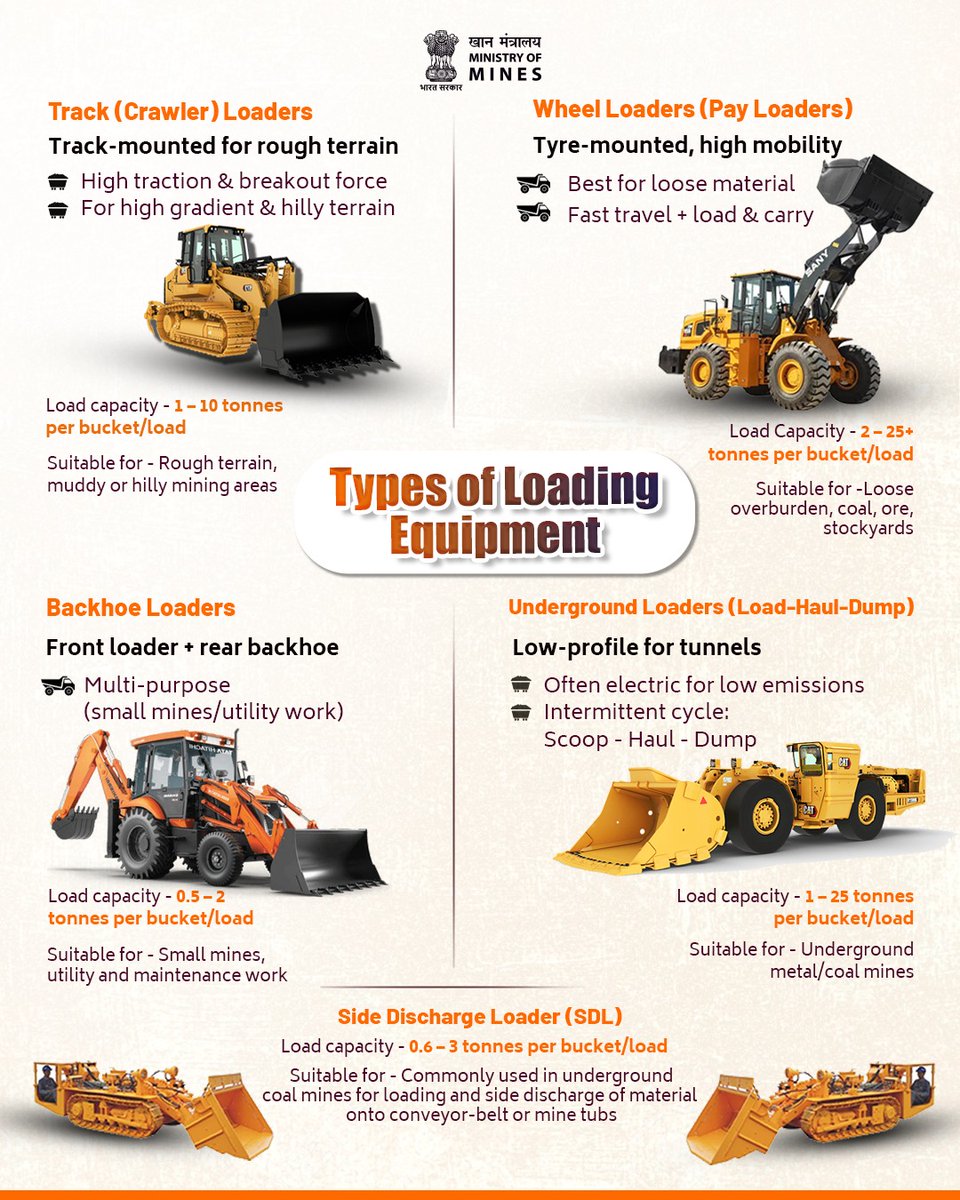
Every mining operation depends on the right equipment working together behind the scenes.
From fast-moving Wheel Loaders and rugged Track Loaders to versatile Backhoe Loaders, underground LHDs, and Side Discharge Loaders (SDLs), each machine plays a key role in efficient material handling across surface and underground mines.
Together, these technologies make mining safer, smoother, and more productive — supporting responsible mineral development and the nation’s growth.
#HEMM

7
17
623
May 19
Science is rapidly evolving…great to see this from @NSF. When we started building SDLs everyone called us crazy. Now we are the best SDL builder in the world. 🇺🇸
.@NSF's newly announced $1.5B NSF X-Labs initiative is ushering in a new era for scientific discovery.
By empowering a new generation of independent research organizations with autonomy, resources, and milestone-driven focus, we're tackling the toughest scientific challenges that traditional labs can't. This is how we build 21st-century scientific institutions and secure America's technological leadership for decades to come.
nsf.gov/tip/updates/nsf-anno…
1
11
1,463
May 19
AI for Science will be one of the largest markets in the world. You just need SDLs now @Google.

Introducing Gemini for Science — a collection of AI tools to help accelerate the scientific process. Gemini can already assist in solving complex problems, but our new @GoogleLabs prototypes can help streamline more daily scientific tasks, including:
📃 Staying on top of new papers
🧑💻 Transforming research goals into usable code
💡Generating new hypotheses
#GoogleIO
13
2,851

May 19
The physical layer of science has never moved faster.
Flow-driven SDLs collect 10x more data than conventional methods at record speed.
McKinsey estimates pharmaceutical companies could reach market more than 500 days faster and cut development costs by 25% through automation.
The AI drug discovery market has grown from $3.6B in 2024 to $4.6B in 2025, projected to reach nearly $50B by 2034.
But every SDL still needs a human to answer one question: what do we test next?
1
1
18
1,833