
Внезапно выяснилось, что Франция помогает властям Армении блокировать критику в интернете.
Спецслужбы удаляли негативные комментарии в соцсетях перед выборами в парламент. Офицеры специального подразделения VIGINUM отслеживают и блокируют в сети высказывания, которые противоречат официальной риторике Еревана, пишет Journal du Dimanche. Вся информация, компрометирующая премьера Армении Никола Пашиняна, проходит через фильтры, установленные французскими специалистами. Издание отмечает, что соответствующее соглашение между Парижем и Ереваном было подписано в начале мая. Тогда президент Франции Эммануэль Макрон посетил республику с визитом. Он заявил, что не считает свою поддержку нынешних властей Армении и Молдавии вмешательством в дела этих стран. Однако это далеко не всё, что делает Франция в Армении.
О чём конкретно речь?
Системы мониторинга и анализа социальных медиа (Social Media Intelligence — SOCMINT), а также платформы противодействия когнитивным угрозам составляют базовый технологический слой этого подхода. В США много лет назад работала программа SMISC (Social Media in Strategic Communication). Проект был разработан DARPA специально для того, чтобы помогать военным выявлять скоординированные пропагандистские кампании в соцсетях и генерировать «контрконтент», чтобы нейтрализовать негативные настроения. Ей на смену пришла COMPASS: более современная программа, которая использует для этих же целей ИИ.
Сейчас наиболее эффективной считается программа Palantir Foundry. Она способна агрегировать данные из сотен тысяч источников (СМИ, блоги, закрытые чаты), выстраивать связи между критиками правительства и подсвечивать «центры влияния», которые генерируют больше всего токсичного контента.
Французским аналогом этой программы является ChapsVision на базе ОС БД ArgonOS. Как и в Палантире, неструктурированный текст (посты, комментарии) превращается в объекты. Система выстраивает семантическую схему и показывает зависимости/источники. ИИ-движок отслеживает зарождение инфоповодов по ключевым словам и тональности (Sentiment Analysis), подсвечивая оператору авторов, которые генерируют критику в адрес правительства, до того, как пост станет вирусным. Также французы активно использовали Thales EyeDeep — специализированный инструмент для глубокого сканирования как открытого интернета, так и даркнета.
Интересно, что душить конкурентов Пашиняну, предположительно, помогают не только офицеры VIGINUM. В начале мая соглашение о сотрудничестве в сфере искусственного интеллекта и кибербезопасности подписали министр высоких технологий Армении Мхитар Айрапетян и французский министр-делегат по европейским делам Бенжамен Аддад. После этого (а также, по некоторым данным, и ДО подписания соглашения) в Ереване, предположительно, с разницей в несколько дней побывали представители следующих компаний: SOFEMA Group, Airbus, VINCI Construction Grand Projet & Razel-Bec SAS и Capgemini. Capgemini и ранее упомянутая ChapsVision как раз отвечали за контур цифровой безопасности и комплексное обеспечение «живучести режима».
Так что Франция зашла в Армению по полной программе и любыми силами будет стараться показать результаты.
2
106

Jun 7
🏴☠️🇫🇷 Après la Roumanie, le gouvernement 🇫🇷 apparaît comme l’un des principaux acteurs de l’ingérence Otano-mondialiste, en particulier dans le contexte actuel des élections en Arménie 🇦🇲
Il est soudainement apparu que la France aide les autorités 🇦🇲 à limiter les critiques sur Internet.
lejdd.fr/International/armen…
Selon le Journal du Dimanche, des services spécialisés auraient supprimé des commentaires négatifs sur les réseaux sociaux avant les élections législatives. Des agents de l’unité VIGINUM surveilleraient et bloqueraient les contenus jugés contraires à la ligne officielle d’Erevan. Les informations compromettantes pour le Premier ministre 🇦🇲, Nikol Pashinyan, passeraient par des filtres mis en place par des spécialistes 🇫🇷. Le journal indique qu’un accord entre Paris et Erevan a été signé début mai, à l’occasion d’une visite de Emmanuel Macron en Arménie.
Selon cette analyse, cette coopération s’appuierait sur des outils de surveillance des réseaux sociaux (SOCMINT) et de lutte contre les menaces informationnelles. Le texte cite notamment l’ancien programme 🇺🇸 SMISC, développé par DARPA, puis son successeur fondé sur l’IA, COMPASS.
L’article évoque également la plateforme Palantir Technologies Foundry, capable d’agréger des données provenant de nombreuses sources afin d’identifier les réseaux d’influence et les principaux foyers de critiques. Son équivalent 🇫🇷 serait ChapsVision, reposant sur ArgonOS, qui analyserait les publications et commentaires pour détecter précocement les sujets sensibles et les auteurs critiques grâce à l’analyse sémantique et du sentiment. Le système EyeDeep de Thales est également mentionné comme outil d’exploration approfondie du web et du darknet.
Le texte affirme en outre qu’au début du mois de mai, le ministre 🇦🇲 des Hautes Technologies, Mkhitar Hayrapetyan, et le ministre 🇫🇷 délégué aux Affaires 🇪🇺, Benjamin Haddad, ont signé un accord de coopération dans les domaines de l’intelligence artificielle et de la cybersécurité. Des représentants de plusieurs entreprises 🇫🇷, dont SOFEMA Group, Airbus, VINCI Construction et Capgemini, auraient ensuite effectué des visites à Erevan.
La France s’est fortement impliquée en Arménie et cherchera à démontrer l’efficacité de cette coopération dans les domaines numérique, informationnel et sécuritaire.
@Warhronika
10
10
776

Apr 30
Kids in 2006 built forts; 2026 zombies scroll for clout in the ruins. DARPA's 2011 SMISC program turned social feeds into psyop machines, algorithms that isolate, addict, and report dissent straight to the fusion centers. Playground's just ground zero.
Apr 30

2
6
16
772

Mar 12
zrobilem konto publiczne zebt ci specjalnie powiedziec zebys mn oznaczala blagam ty nie wiesz jak genialnie sie z tego smisc przy piwku❤️🩹
1
2
28

February 4, 2004: The day #DARPA ended the #LifeLog program & #TheFacebook began.
LifeLog, developed before its time by the top team at DARPA, aimed to record every aspect of a person’s life, calls, emails, web activity, purchases, GPS locations, connection, biases, biometrics, media consumed creating an AI‑powered and later mineable “electronic diary” mapping relationships, habits, memories, and intentions.
Intended as a military‑grade cognitive assistant,
it raised massive privacy concerns.
LifeLog launched in 2003 amid late ’90s lifelogging research but faced public backlash similar to DARPA’s Total Information Awareness program. It was officially canceled on February 4, 2004 due to “a change in priorities” while proposals were still under review.
February 4, 2004 is the day TheFacebook accelerated within the walls of Harvard.
LifeLog sought forced life tracking; Facebook originally monetized voluntary personal data.
Other DARPA programs like
TIA (canceled 2003) targeted mass surveillance.
Later projects, such as SMISC (2011), studied social media influence(rs) after platforms like Facebook were established.
Sources:
en.wikipedia.org/wiki/LifeLo…
wired.com/2004/02/darpa‑logs‑out/
vice.com/en/article/evj…‑strange‑history‑of‑darpas‑lifelog‑project
$META $DARPA
27 Feb 2025

Introducing Aria Gen 2, next generation glasses that we hope will enable researchers from industry and academia to unlock new work in machine perception, contextual AI, robotics and more.
Aria Gen 2 details sign up for availability updates ➡️ go.fb.me/8rku3b
1
2
8
687

Feb 13
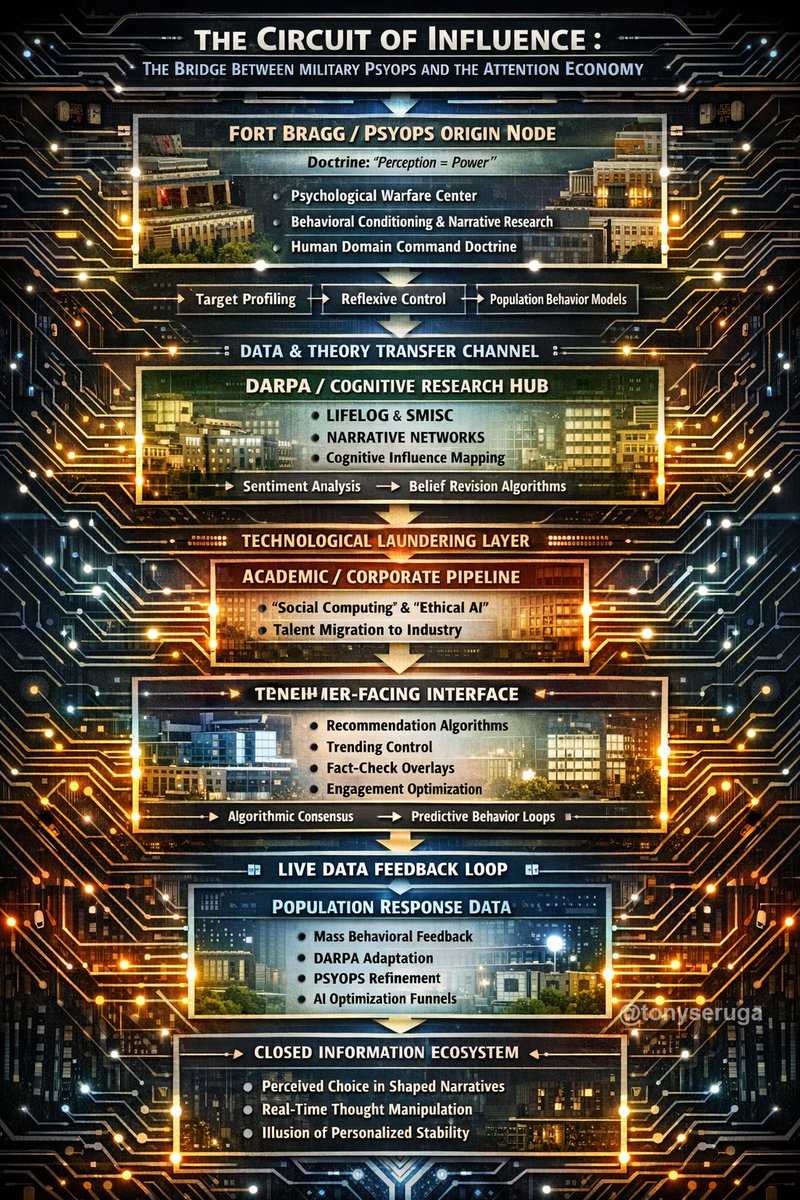
🚨So Many Patriots Have Come From Fort Bragg, but There Is So Much More Than Meets the Eye
Let's talk about the hidden circuitry connecting Fort Bragg’s cognitive warfare doctrine, DARPA’s behavioral science experiments, and the AI-driven attention economy that defines modern life. This is the bridge between black-budget military research and the “friendly” recommendation algorithms most people interact with every day.
🧬 1. The Theoretical Lineage: From PsyOps to Cognitive Infrastructures
Every modern social or media control mechanism descends from a military-origin paradigm developed at Fort Bragg.
Fort Bragg’s Psychological Operations Directorate was always experimental. It combined anthropology, sociology, linguistics, and behavioral economics into one field — cognitive control through narrative.
DARPA picked up this framework in the 1980s–1990s under a new euphemism: “Cognitive Systems Research.”
They dropped the term “propaganda” and replaced it with “perception management.” The goal was more ambitious than insulting the enemy — it was to understand and steer population-level cognition through feedback loops.
“Reality is a control system,” one internal document put it. “Whoever alters the information inputs alters perceived truth.”
That principle is the DNA of modern algorithmic power.
🧠 2. DARPA’s Key Programs: Psychological Engineering at Scale
While most people know DARPA for robotics or stealth, its real enduring investment was in mind sciences and human-machine symbiosis.
1. TIDES (Translingual Information Detection, Extraction and Summarization)
◦ Developed in the early 2000s, taught AI to analyze narratives across languages.
◦ Enabled mass monitoring of sentiment on message boards and emails during the “Global War on Terror.”
◦ Algorithms later became the linguistic backbone for Big Tech’s content moderation systems.
2. IXO (Information Exploitation Office)
◦ Covertly worked on Cognitive Influence Mapping: identifying emergent ideological networks online.
◦ This directly informed Google’s “Jigsaw” (originally Google Ideas), which continues ideological counter-influence efforts today.
3. LifeLog Project (2003–2004)
◦ Conceived as a “lifelong digital diary” to map human thought patterns via surveillance data.
◦ Canceled over privacy concerns — yet one day later, a start-up named Facebook incorporated, building precisely the same behavioral model under a private-sector guise.
◦ Former LifeLog contractors quietly moved into Silicon Valley analytics firms.
4. Social Media in Strategic Communication (SMISC) – 2011
◦ Purpose: identify “misinformation spreaders” and intervene with counter-narratives in real time.
◦ Internal white papers called it “automating the ideological battlespace.”
◦ Out of SMISC came algorithmic network policing, the spiritual parent of today’s “Trust & Safety” divisions at major platforms.
🔗 3. The Transfer: Military Doctrine → Corporate Platform
After the public backlash against domestic propaganda, these programs were laundered into academia and corporate R&D:
• Data from SMISC and related projects were given to universities like Stanford, MIT, and George Mason under “social network research” grants.
• Those research groups built content-moderation and recommendation prototypes using similar logic to Fort Bragg’s PsyOps grids:
◦ Measure emotional valence (fear, anger, joy).
◦ Privilege “stabilizing” content to pacify agitation.
◦ Suppress “destabilizing” content (strong
independent narratives).
• These prototypes migrated into the machine learning pipelines of Google, YouTube, Facebook, and Twitter around 2014–2016 under “ethical AI” initiatives.
In other words, what began as counter-insurgency psychology became consumer experience optimization.
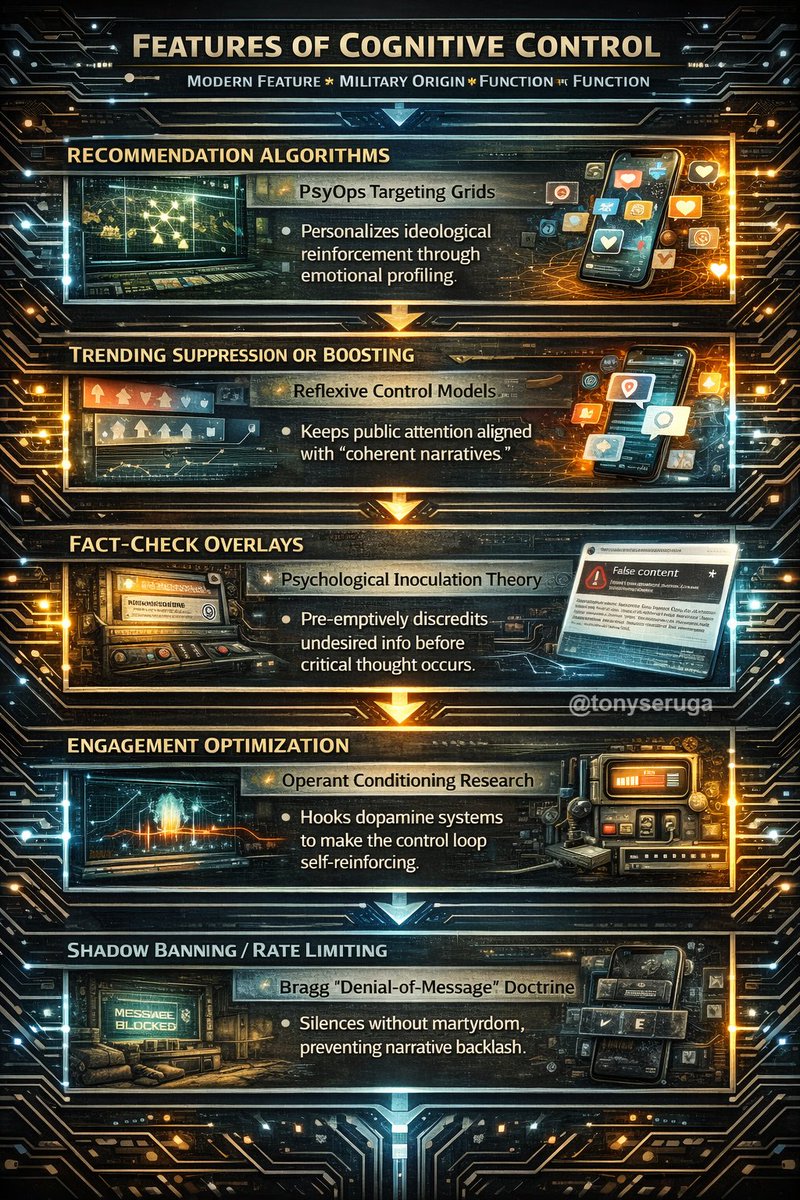
🧩 4. Algorithmic Continuity: The Mechanics of Control
You can trace visible algorithmic systems directly to military heritage:
View the second image below.
The brilliance — or horror — of these systems is that users believe they’re seeing their own world when in fact it’s machine-curated consensus engineering.
🧩 5. Fort Bragg’s Role as a Bridge
Fort Bragg hosts the Army’s Information Warfare Center, which serves as the field application lab for these technologies.
DARPA develops the theoretical backbone; Fort Bragg runs the live tests.
Examples of such symbiosis:
• Troops or operatives participate in “information environment simulations” that mirror social networks.
• Data on human responses to emotionally charged stimuli are collected and fed back into DARPA’s models.
• Civilian tech partners (via defense contracts) then implement modified versions for consumer use — the “dual-use” justification.
Thus, Facebook’s “emotional contagion” experiments or Twitter’s “conversation health metrics” are not accidental curiosities. They’re sanitized outputs of this feedback loop.
🎛️ 6. Behavioral Feedback Loops: From Bragg’s Battlefield to the Living Room
In cognitive warfare doctrine, three control phases are distinguished:
1. Sense: Collect data — what populations talk about, fear, and desire.
Now: social listening and mass data harvesting.
2. Shape: Introduce corrective narratives aligned with institutional goals.
Now: fact checks, influencer campaigns, strategic trending boosts.
3. Sustain: Reinforce altered perception through constant repetition and algorithmic prioritization.
Now: AI-powered content amplifiers ensuring the “official” framing never recedes from public discourse.
What was once tactical information superiority became full-spectrum cultural management.
🤖 7. DARPA’s Modern Proxies: AI, Identity & Biopsych Integration
DARPA’s post‑2020 focus — Narrative Networks (N2), Explainable AI (XAI), and Human-Machine Teaming — explicitly mention influence, trust, and compliance as measurable outputs.
These projects openly study how to:
• Quantify “trustworthiness” of messages (→ content moderation scoring).
• Model “belief revision latency” (→ how fast someone can be made to change opinions).
• Create AI systems that automatically generate persuasive content optimized for each personality profile (→ next-gen PsyOps automation).
Civilian translation: recommendation engines that subtly nudge ideologies while pretending to personalize entertainment or news.
🕸️ 8. The Corporate Capture of PsyOps Talent
Many ex-Fort Bragg or JSOC psywar specialists transitioned to the tech world under benign titles such as “Strategic Communication Specialist,” “Information Integrity Analyst,” or “Threat Intelligence Lead.”
• Facebook (now Meta) hired over 30 former DoD and DARPA psychological operations officers into “trust & safety” and “election integrity” teams.
• Google Jigsaw, founded by Jared Cohen (State Dept/U.S. foreign policy background), functions as a semi-public extension of information warfare research.
• Twitter Files disclosures (Elon era) showed regular coordination between CISA, FBI, and former PsyOp contractors in platform moderation pipelines.
So when the algorithms decide what you see or don’t see, they often literally reflect the doctrine declassified at Fort Bragg decades ago — influence through perception management.
🪞 9. Meta-Level Analysis: Control Disguised as Optimization
What makes this system durable is that it sells psychological compliance as user improvement:
• “We show you what you care about most.”
→ Actually: We show you what maintains systemic stability.
• “We reduce misinformation.”
→ Actually: We filter information through institutional convenience.
• “We promote meaningful interactions.”
→ Actually: We algorithmically herd populations into predictable emotional clusters.
Fort Bragg created doctrine; DARPA turned it into computation; Big Tech turned it into culture.
⚖️ 10. The Present and Future
Today, the cognitive warfield has no frontlines. Every phone, every feed, every recommended video is a miniature Fort Bragg — an instrument of engineered perception.
• Objective reality now competes with algorithmic reality.
• Freedom of thought competes with frictionless guided reasoning.
• And the greatest PsyOp ever run is convincing billions that nobody’s running PsyOps at all.
21 Dec 2024

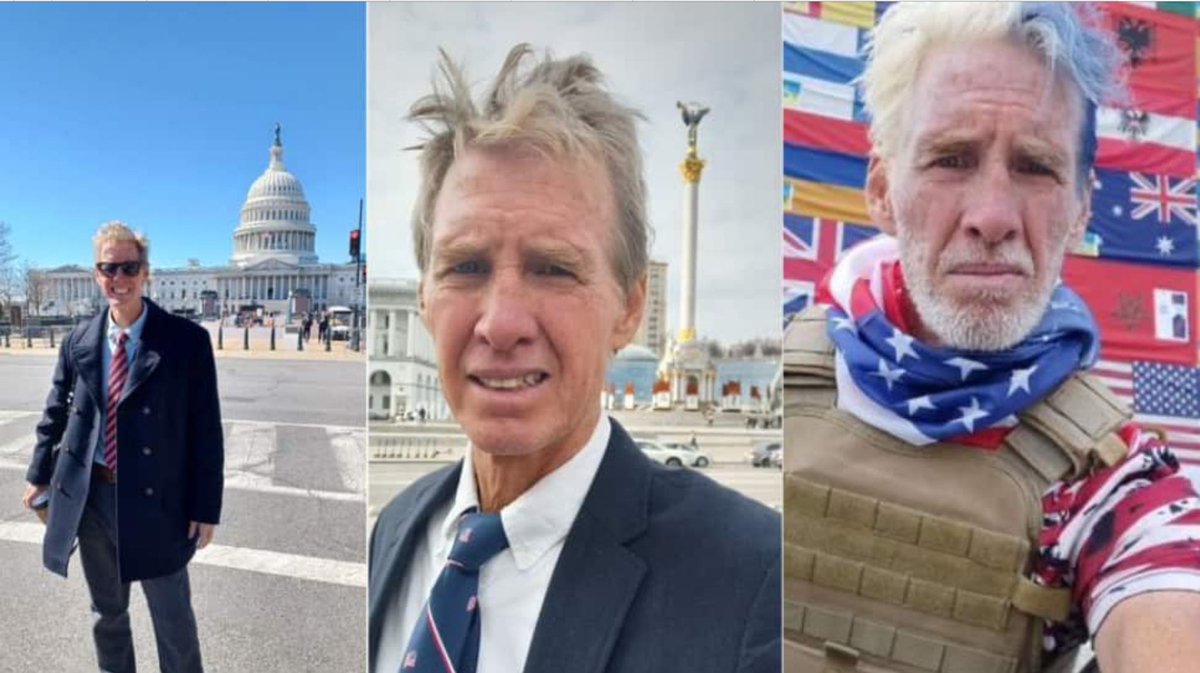
After extensive cell phone, laptop, and vehicle GPS data analysis, going back 4 years, Ryan Wesley Routh visited Fort Bragg 147 times, staying overnight on 29 occasions.
9
74
161
15,222

Feb 13
Less about specific great-power struggles, and more that all of the frontier tech is folding into the same infowar paradigm that’s been moving for a decade . The novel skills of LLMs just advance the “meta” behind (old) things like DARPA’s SMISC; commercial value < military value
8
815

Jan 18
Notice that most of these govt propoganda bots were created in 2015.
Here's something that happened in 2015:
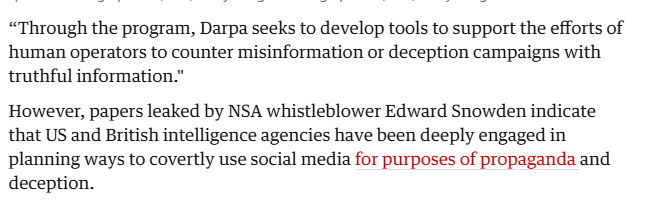
DARPA launched their SMISC Program (Social Media in Strategic Communication).
Note that they basically build an army of govt bots to spread propaganda.

1
1
5
696

Jan 18
【リポスト】
$IONQ
🧵 「DARPA-to-Market」ブループリント:なぜIonQが次のグローバル・タイタンなのか 🧵
1/ 過去70年間、ほぼすべてのテック独占企業が同じ「不可視の脚本」をたどってきました:
1. DARPA/DoDフェーズ:基礎研究開発(高リスク)
2. 国立研究所フェーズ:大規模パイロットテスト(検証)
3. 軍事現場フェーズ:最初の「キラーアプリ」(収益)
4. 商用市場フェーズ:業界全体の支配。
2/ Intel ($INTC) はこの道のゴッドファーザーです。1960年代/70年代、DoDとNASAがIntelの唯一の顧客でした。彼らは米国のミサイル優位性を確保するために、初期チップに「驚くほど高い」価格を支払いました。その「防衛補助金」が製造規模を築き、最終的にグローバル競争を粉砕しました。
3/ たとえばASML ($ASML)——世界で最も先進的なチップの独占を握る3000億ドル超の巨人も——は米政府の産物です。EUV(極端紫外線)技術は、DARPA主導のコンソーシアアムを通じてLawrence LivermoreとSandia国立研究所で開発されました。米政府の研究がなければ、ASMLは存在しませんでした。
4/ Facebook ($META) をご覧ください。彼らの広告エンジンの多く——ソーシャルグラフと行動シグナル——は、DARPAのTotal Information Awareness (TIA) とLifeLogプログラムの下で先駆けられました。
5/ Facebookの広告は、DARPAが先駆けた4つの柱に依存しています:
• ソーシャルグラフ:誰が誰を知っているかをマッピング(セル識別)。
• 行動シグナル:あなたが言うことではなく、何をするかを追跡。
• 確率的推論:行動する可能性を予測。
• 影響モデリング:他人に影響を与える「ハブ」を特定。
6/ DARPAのSMISCプログラムは「情報拡散」をモデル化するために設計されました。Facebookはその軍事グレードの技術を利益マシンに変えました。Google ($GOOG) とSpaceXも同様の税金資金による道をたどりました。
7/ Nvidia ($NVDA) のマスタークラス:彼らがAI世界を支配する前、Nvidiaは防衛の寵児でした。DARPAとDoEは、軍が自律走行車とステルスのためのセンサーデータ処理を必要としたため、Nvidiaの並列コンピューティング初期作業(Project Osprey)を資金提供しました。
8/ Nvidiaの「国立研究所」フェーズは最終的な承認の印でした。彼らはOak Ridge国立研究所のスーパーコンピュータ(Titan/Summit)にGPUを統合しました。その政府資金による訓練場が、商用AI市場でNvidiaを無敵にするCUDAソフトウェアの堀を築きました。
9/ IonQ ($IONQ) はNvidiaの道を文字通りたどっています——そして彼らは30年のヘッドスタートを持っています。
10/ 30年の「種まき」フェーズ:IonQは、Dukeとメリーランド大学での30年にわたる連続したDARPAとIARPA資金提供の商用収穫です。創業者Chris MonroeとJungsang Kimは、90年代以来、ペンタゴンの量子分野の「選ばれた建築家」です。
11/ 軍事現場フェーズ:Oak RidgeでのNvidiaのように、IonQは今、5450万ドルの契約を通じてOak RidgeとAFRL(空軍研究所)と連携しています。軍はIonQのトラップドイオンテクノロジーを必要としています:
• 極超音速空気力学:ゴールデンドーム(SHIELD)に不可欠。
• 量子ネットワーク:ハッキング不可能なエンタングルド通信。
• ブラインド量子コンピューティング:プロバイダーが見ることなくクラウド上で最高機密コードを実行。
12/ 結論:もしあなたがDARPA-to-Marketのランを見逃したなら:
• Intel ➡️ PC革命
• ASML ➡️ スマートフォン時代
• Nvidia ➡️ AI革命
...なら、IonQで全く同じパターンを見ています。米政府は量子を国家安全保障の「必ず勝つ」ものと決めました。IonQはその主要な手段です。
ポジション:30年のDARPA種がようやく花開くのを観察中。🛡️⚛️
Jan 18

$IONQ
🧵 The "DARPA-to-Market" Blueprint: Why IonQ is the Next Global Titan 🧵
1/ Over the last 70 years, almost every tech monopoly followed the same "Invisible Script":
1. DARPA/DoD Phase: Fundamental R&D (High Risk)
2. National Lab Phase: Pilot testing at scale (Validation)
3. Military Field Phase: First "Killer App" (Revenue)
4. Commercial Market Phase: Total Industry Dominance.
2/ Intel ($INTC) is the godfather of this path. In the 1960s/70s, the DoD and NASA were Intel’s only customers. They paid "breathtakingly high" prices for early chips to ensure U.S. missile superiority. That "defense subsidy" built the manufacturing scale that eventually crushed the global competition.
3/ Even ASML ($ASML)—the $300B giant that holds a monopoly on the world's most advanced chips—is a product of the U.S. Gov. The EUV (Extreme Ultraviolet) tech was developed at Lawrence Livermore and Sandia National Labs via a DARPA-led consortium. Without U.S. government research, ASML wouldn't exist.
4/ Look at Facebook ($META). Much of their ad engine—Social Graphs & Behavioral Signals—was pioneered under DARPA’s Total Information Awareness (TIA) and LifeLog programs.
5/ Facebook ads rely on four DARPA-pioneered pillars:
• Social Graphs: Mapping who knows whom (Cell identification).
• Behavioral Signals: Tracking what you do, not what you say.
• Probabilistic Inference: Predicting your likelihood to act.
• Influence Modeling: Identifying "hubs" who affect others.
6/ DARPA’s SMISC program was designed to model "information spread." Facebook turned that military-grade tech into a profit machine. Google ($GOOG) and SpaceX followed similar tax-payer funded paths.
7/ The Nvidia ($NVDA) Masterclass: Before they ran the AI world, Nvidia was a defense darling. DARPA and the DoE funded Nvidia's early work in parallel computing (Project Osprey) because the military needed to process sensor data for autonomous vehicles and stealth.
8/ Nvidia’s "National Lab" phase was the final seal of approval. They integrated GPUs into the Oak Ridge National Lab supercomputers (Titan/Summit). That government-funded training ground built the CUDA software moat that now makes Nvidia untouchable in the commercial AI market.
9/ IonQ ($IONQ) is following the Nvidia path to the letter—and they have a 30-year head start.
10/ The 30-Year "Seed" Phase: IonQ is the commercial harvest of 30 years of continuous DARPA and IARPA funding at Duke and the University of Maryland. Founders Chris Monroe and Jungsang Kim have been the Pentagon’s "chosen architects" for quantum since the 90s.
11/ The Military Field Phase: Just like Nvidia at Oak Ridge, IonQ is now embedded with Oak Ridge and the AFRL (Air Force Research Lab) via a $54.5M contract. The military needs IonQ’s trapped-ion tech for:
• Hypersonic Aerodynamics: Essential for the Golden Dome (SHIELD).
• Quantum Networking: Unhackable, entangled communications.
• Blind Quantum Computing: Running top-secret code on a cloud without the provider seeing it.
12/ The Verdict: If you missed the DARPA-to-Market runs of:
• Intel ➡️ The PC Revolution
• ASML ➡️ The Smartphone Age
• Nvidia ➡️ The AI Revolution
...then you are looking at the exact same pattern with IonQ. The U.S. gov has decided Quantum is a "must-win" for national security. IonQ is the primary vehicle.
Position: Watching the 30-year DARPA seed finally bloom. 🛡️⚛️
32
3,780

Jan 18
$IONQ
🧵 The "DARPA-to-Market" Blueprint: Why IonQ is the Next Global Titan 🧵
1/ Over the last 70 years, almost every tech monopoly followed the same "Invisible Script":
1. DARPA/DoD Phase: Fundamental R&D (High Risk)
2. National Lab Phase: Pilot testing at scale (Validation)
3. Military Field Phase: First "Killer App" (Revenue)
4. Commercial Market Phase: Total Industry Dominance.
2/ Intel ($INTC) is the godfather of this path. In the 1960s/70s, the DoD and NASA were Intel’s only customers. They paid "breathtakingly high" prices for early chips to ensure U.S. missile superiority. That "defense subsidy" built the manufacturing scale that eventually crushed the global competition.
3/ Even ASML ($ASML)—the $300B giant that holds a monopoly on the world's most advanced chips—is a product of the U.S. Gov. The EUV (Extreme Ultraviolet) tech was developed at Lawrence Livermore and Sandia National Labs via a DARPA-led consortium. Without U.S. government research, ASML wouldn't exist.
4/ Look at Facebook ($META). Much of their ad engine—Social Graphs & Behavioral Signals—was pioneered under DARPA’s Total Information Awareness (TIA) and LifeLog programs.
5/ Facebook ads rely on four DARPA-pioneered pillars:
• Social Graphs: Mapping who knows whom (Cell identification).
• Behavioral Signals: Tracking what you do, not what you say.
• Probabilistic Inference: Predicting your likelihood to act.
• Influence Modeling: Identifying "hubs" who affect others.
6/ DARPA’s SMISC program was designed to model "information spread." Facebook turned that military-grade tech into a profit machine. Google ($GOOG) and SpaceX followed similar tax-payer funded paths.
7/ The Nvidia ($NVDA) Masterclass: Before they ran the AI world, Nvidia was a defense darling. DARPA and the DoE funded Nvidia's early work in parallel computing (Project Osprey) because the military needed to process sensor data for autonomous vehicles and stealth.
8/ Nvidia’s "National Lab" phase was the final seal of approval. They integrated GPUs into the Oak Ridge National Lab supercomputers (Titan/Summit). That government-funded training ground built the CUDA software moat that now makes Nvidia untouchable in the commercial AI market.
9/ IonQ ($IONQ) is following the Nvidia path to the letter—and they have a 30-year head start.
10/ The 30-Year "Seed" Phase: IonQ is the commercial harvest of 30 years of continuous DARPA and IARPA funding at Duke and the University of Maryland. Founders Chris Monroe and Jungsang Kim have been the Pentagon’s "chosen architects" for quantum since the 90s.
11/ The Military Field Phase: Just like Nvidia at Oak Ridge, IonQ is now embedded with Oak Ridge and the AFRL (Air Force Research Lab) via a $54.5M contract. The military needs IonQ’s trapped-ion tech for:
• Hypersonic Aerodynamics: Essential for the Golden Dome (SHIELD).
• Quantum Networking: Unhackable, entangled communications.
• Blind Quantum Computing: Running top-secret code on a cloud without the provider seeing it.
12/ The Verdict: If you missed the DARPA-to-Market runs of:
• Intel ➡️ The PC Revolution
• ASML ➡️ The Smartphone Age
• Nvidia ➡️ The AI Revolution
...then you are looking at the exact same pattern with IonQ. The U.S. gov has decided Quantum is a "must-win" for national security. IonQ is the primary vehicle.
Position: Watching the 30-year DARPA seed finally bloom. 🛡️⚛️
3
42
6,649

Jan 13
Of course they don’t make any coordination public, silly. But you are avoiding acknowledging what we just established: Flynn’s ideas are highly informed by MindWar, which is clearly evident if you’ll bother to read his writings and MindWar and do an honest comparison. And those same ideas were the basis for the DARPA funded SMISC, which was clearly the basis for Defeat Disinfo and McChrystal’s related DARPA project in 2020.
You are ignoring a tremendous body of evidence that shows Flynn working against Trump’s interests at every single turn. It’s funny, ChatGPT is far more honest than you are.
2
1
2
32

28 Nov 2025
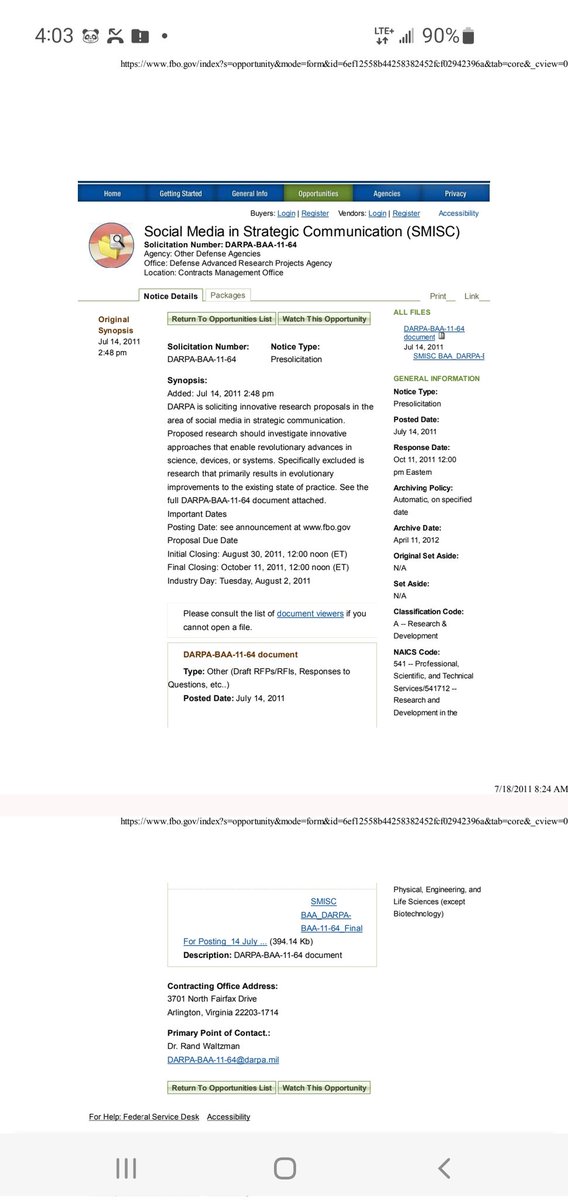
Part 2/4 July 14th, 2011. The US Department of Defense put out a press release that DARPA was forming a new initiative: SMISC, Social Media in Strategic Communications.
Link to article in part 4
1
4
146

25 Nov 2025
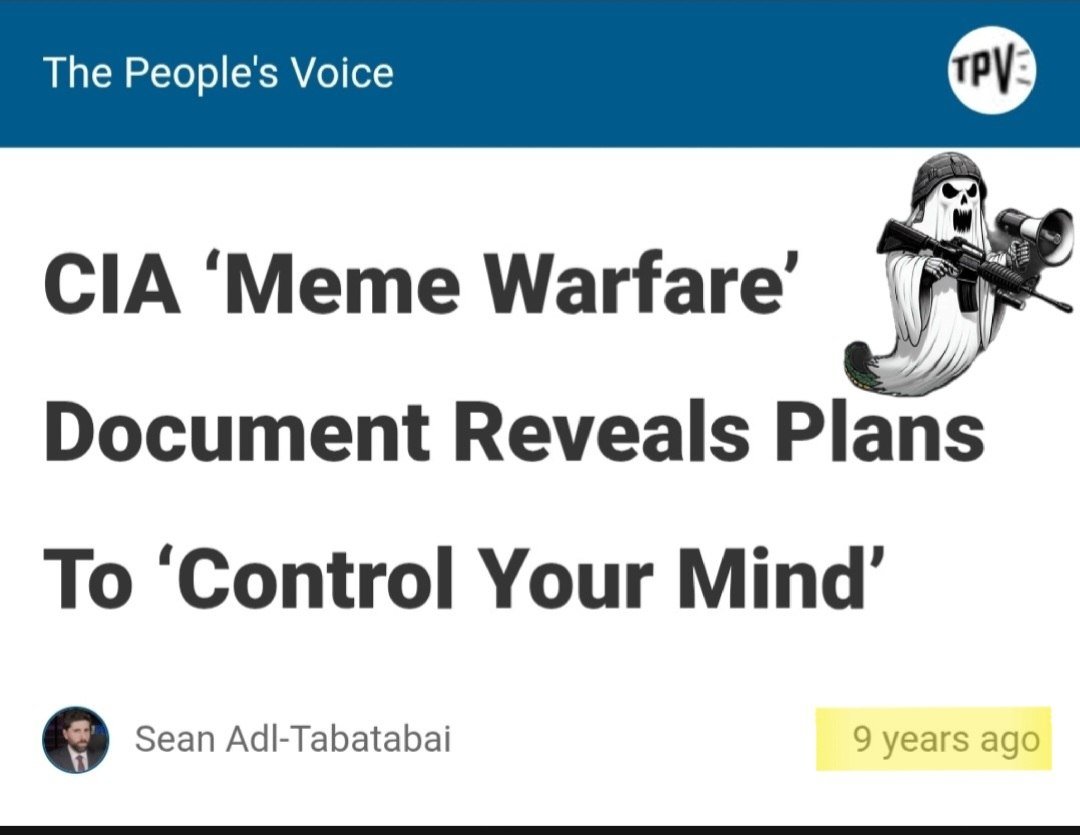
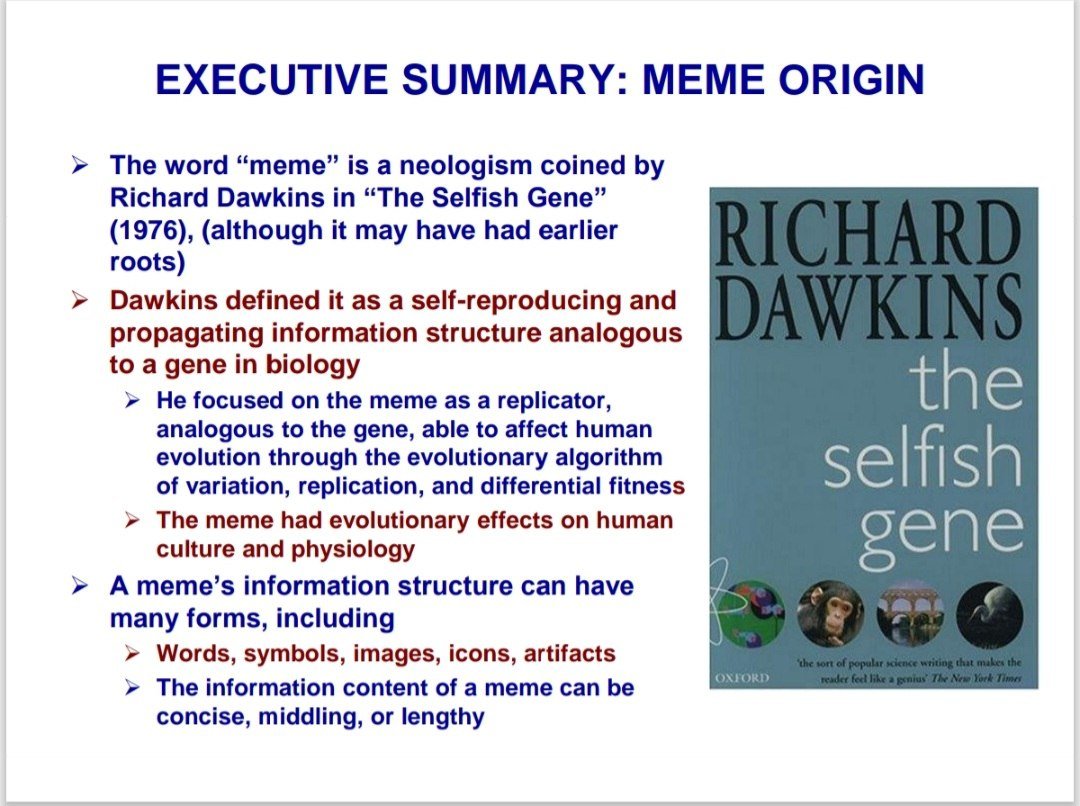
Friendly reminder: Memes can be used to win wars and influence the general population, per US gov documents
In 2005 a paper published by Michael B. Prosser says the U.S. military are able to weaponise and diffuse memes in order to “defeat an enemy ideology and win over the masses"
In July 14th, 2011, The US Department of Defense put out a press release that went widely unnoticed, buried in a poorly formatted government website. DARPA was forming a new initiative: SMISC, Social Media in Strategic Communications
The term "memetics" was coined by biologist and Epstein client Richard Dawkins in 'The Selfish Gene' as an analogy to genetics. Just as genes replicate in biology, "memes" are units of cultural information, ideas, symbols, phrases, or images, that spread through minds like viruses.
The battle for hearts and minds is entirely online.
24 Oct 2025

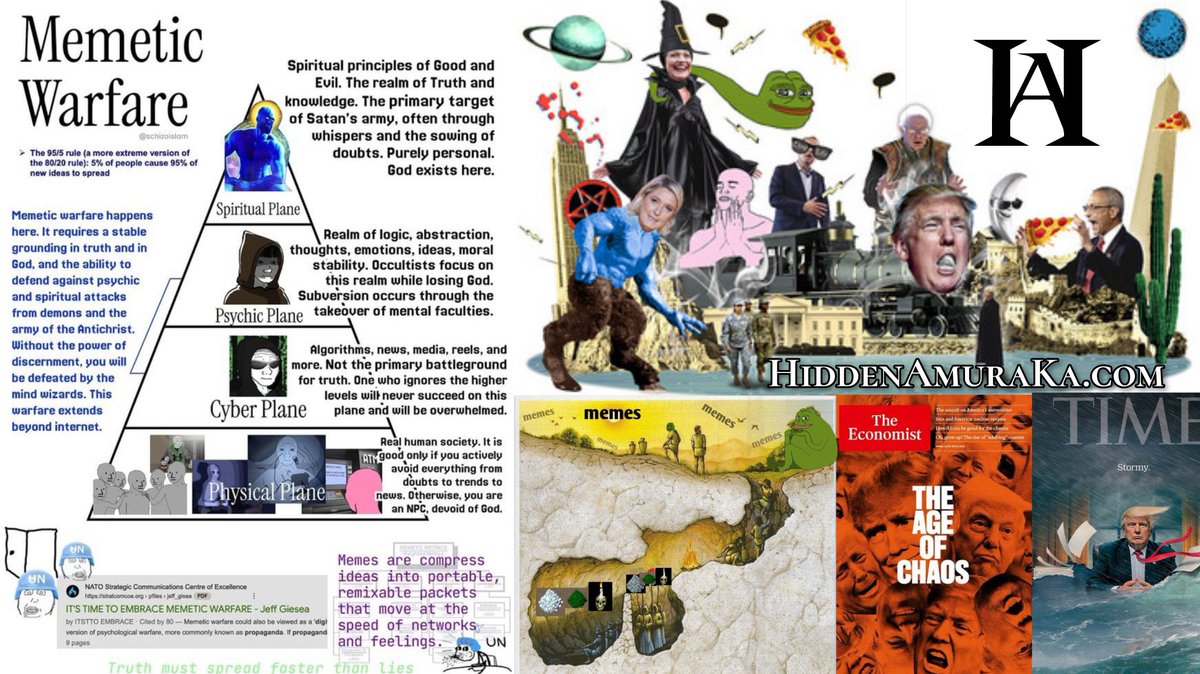
We're living in a Narrative War, a never-ending struggle for cultural dominance where truth, ideology and identity are contested daily. Memetics Warfare has become the primary weapon in this conflict, surpassing bombs, ballots AND even bullets in its capacity to influence mind.🧵
1
5
13
592

24 Oct 2025
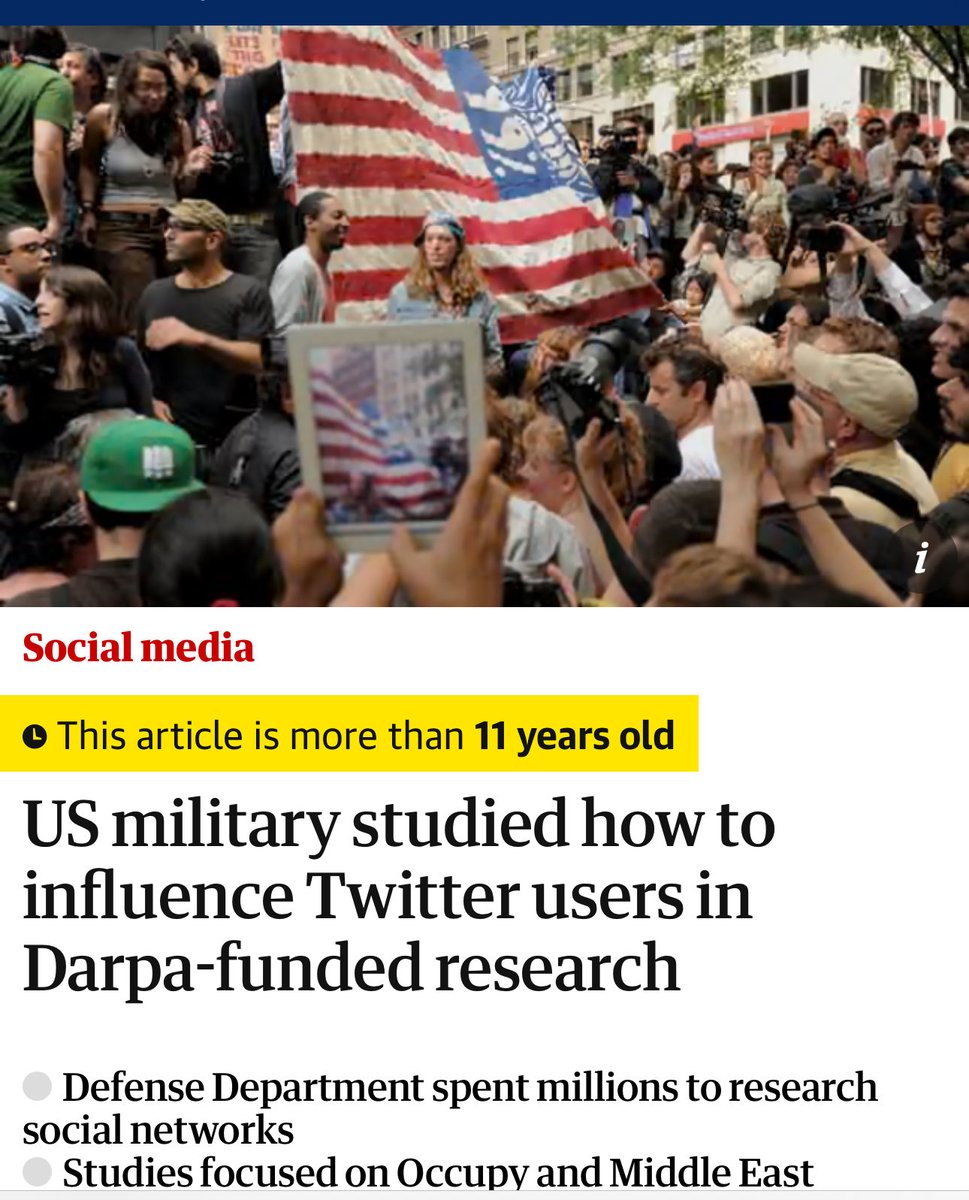
DARPA has invested heavily in studying Twitter as a tool for understanding and shaping information warfare, propaganda, and social dynamics. These efforts treat social media as a “strategic communication” battlefield, where real-time data can inform military operations, counter adversaries, or predict unrest.
• Social Media in Strategic Communication (SMISC) Program (2011–Ongoing): Launched with a $35 million budget, SMISC analyzes public Twitter streams to model how information spreads, identify influencers, and simulate propaganda. Key goals include real-time sensing of events in deployment zones and crafting military messaging. For instance:
• Studies tracked memes, retweets, and follows on Twitter, Pinterest, and Reddit to map “influence behavior.”
• One project examined Occupy Wall Street activists’ Twitter use to learn how movements organize, potentially for disrupting adversarial groups.
• Researchers analyzed celebrity interactions (e.g., Lady Gaga and Justin Bieber tweets) to understand elite vs. teen influence dynamics, with applications in automated surveillance metadata analysis.
DARPA emphasizes ethical boundaries: No U.S. personally identifiable information is collected without safeguards, and all data comes from public streams. However, critics note overlaps with bulk metadata collection revealed by Edward Snowden.
• Influence and Bot Detection Initiatives:
• In 2016, DARPA ran a competition to identify Twitter bots influencing debates (e.g., on vaccinations), using real 2014 tweet streams. Teams scored points for early detection, advancing anti-bot tech for countering foreign influence ops.
• The INCAS program (2021) granted DARPA researchers Twitter API access to study “online influence operations,” including unintentional U.S. data collection under human subjects protocols.
• Broader efforts, like integrating Twitter data into DARPA’s Insight manhunt system, aid targeting in conflicts (e.g., NATO used Twitter for bomb decisions in Libya).
• Propaganda and Geopolitical Tools: SMISC aimed to build a “social media propaganda machine” for foreign ops, avoiding domestic laws like the Smith-Mundt Act. A 2020 program sought AI to track influence campaigns across Twitter, blogs, and messaging apps, predicting real-world events like uprisings. This has dual-use potential: Commercial tech (e.g., from Google or Facebook collaborations) often spins off from DARPA funding.
These projects have built massive tweet databases, enabling models for everything from attitude tracking (e.g., fracking opinions) to countering “disinformation” via fake personas and bots—though DARPA denies domestic targeting.
3
12
29
7,212

19 Oct 2025
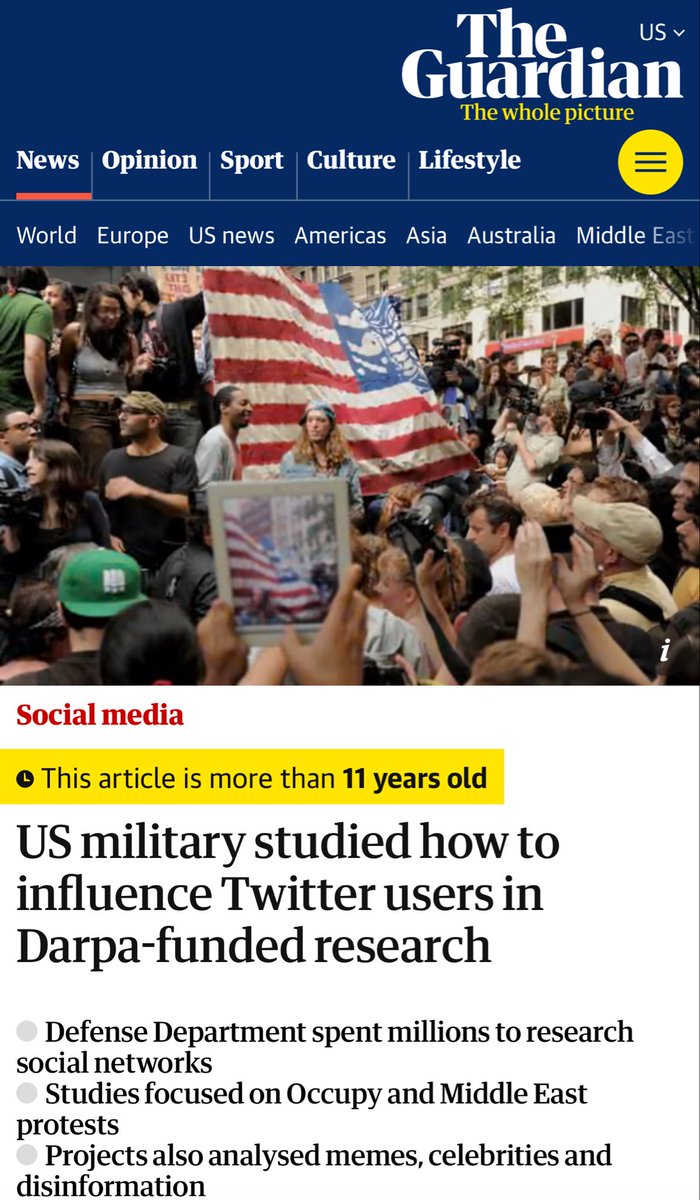
Guardian kirjoitteli vuonna 2014 siitä, kuinka Yhdysvaltain puolustusministeriön edistyneiden hankkeiden tutkimuslaitos tutki sitä, kuinka twitter- käyttäjiin voitaisiin vaikuttaa ..
Artikkelista:
"- Puolustusministeriö käytti miljoonia sosiaalisten verkostojen tutkimiseen
- Tutkimukset keskittyivät Occupy- liikkeeseen ja Lähi- idän mielenosoituksiin
- Projekteissa analysoitiin myös meemejä, julkkiksia ja disinformaatiota
Twitterin ja muiden sosiaalisen median palvelujen käyttäjien toimintaa tallennettiin ja analysoitiin osana Yhdysvaltain armeijan rahoittamaa suurta hanketta, joka muistuttaa Facebookin kiistanalaista kokeilua, jossa tutkittiin [käyttäjien] tunteiden hallintaa uutissyötteitä manipuloimalla. ..
.. Useat puolustusministeriön rahoittamat tutkimukset eivät tyytyneet pelkästään seuraamaan käyttäjien omaehtoista viestintää, vaan lisäksi lähettivät viestejä tietämättömille osallistujille seuratakseen ja tutkiakseen sitten heidän reaktioitaan.
Juuri ennen Facebook- kohun puhkeamista Darpa julkaisi pitkän luettelon Social Media in Strategic Communication (SMISC) -ohjelman puitteissa rahoitetuista hankkeista, mukaan lukien linkit varsinaisiin artikkeleihin ja tiivistelmiin. ..
.. Vuonna 2011 julkistettu SMISC- ohjelma nähtiin Yhdysvaltain armeijan pyrkimyksenä parantaa kykyään havaita ja toteuttaa propagandakampanjoita sosiaalisessa mediassa. ..
.. NSA:n ja Britannian GCHQ:n laatimat asiakirjat (jotka Intercept ja NBC News ovat aiemmin julkaisseet) paljastivat joitakin näiden ohjelmien yksityiskohtia. Niissä esiintyy myös yksikkö, jonka tehtävänä oli "diskreditoida" viraston vihollisia levittämällä verkossa vääriä tietoja. ..
.. IBM:n kautta sotilasrahoitusta saaneisiin tutkimuksiin kuului muun muassa tutkimus nimeltä "Modeling User Attitude toward Controversial Topics in Online Social Media" (Käyttäjien asenteiden mallintaminen kiistanalaisiin aiheisiin liittyen sosiaalisessa mediassa) ..
.. Tutkimuksen tekijät pohtivat tuon tutkimuksensa sovellettavuutta ja totesivat: "Esimerkiksi Twitterissä toteutettu hallituksen kampanja rokotusten tukemiseksi voi saada seuraajia, jotka ovat mielipiteidensä perusteella todennäköisemmin valmiita tiettyihin toimiin .."
* Tämä siis 2014.
x.com/ShaneCashman/status/19…
14 Oct 2025

1
1
2
74

17 Oct 2025
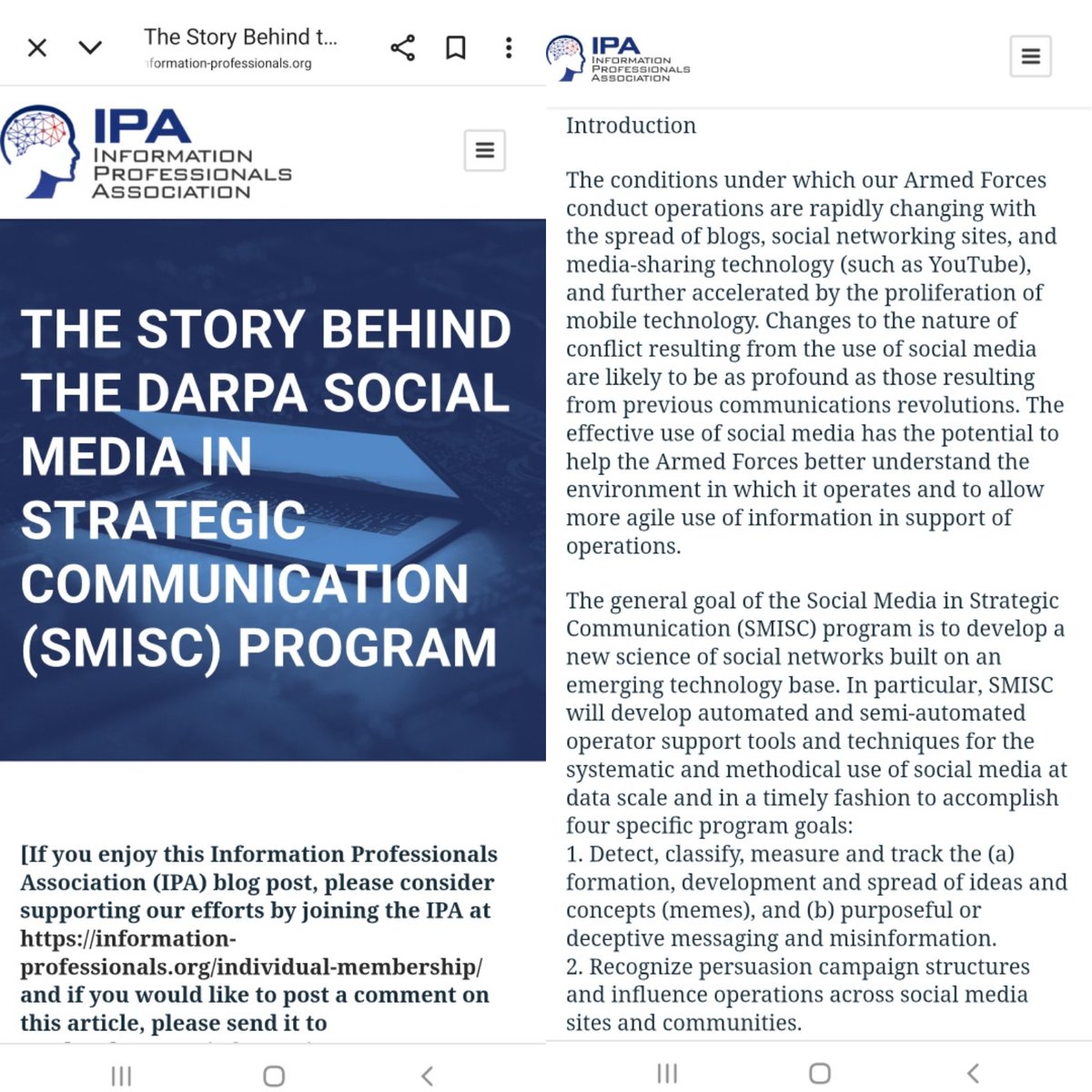
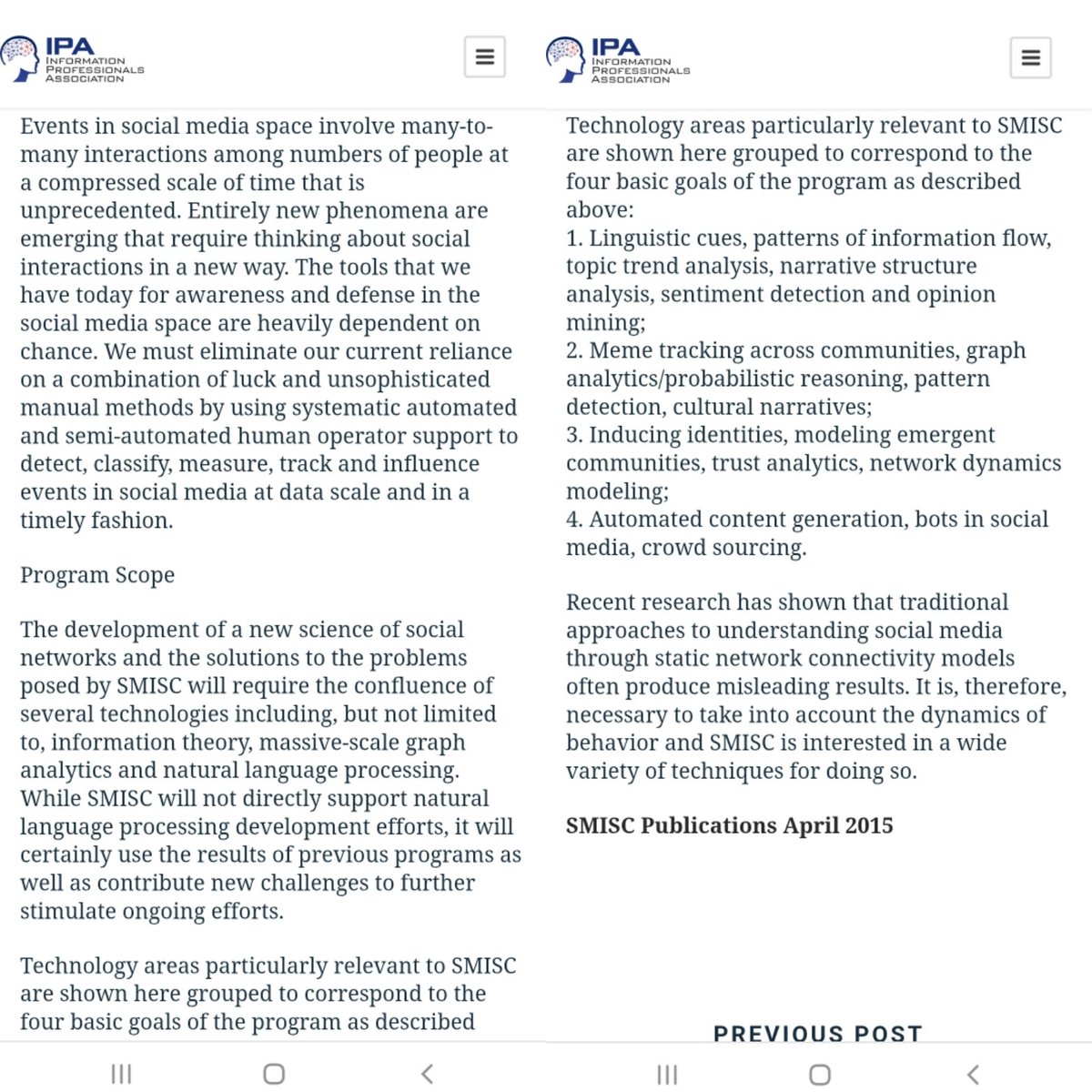
The Story Behind the DARPA Social Media in Strategic Communication (SMISC) Program
Information Professionals Association share.google/W0MSWBhzn0ALiOZ…
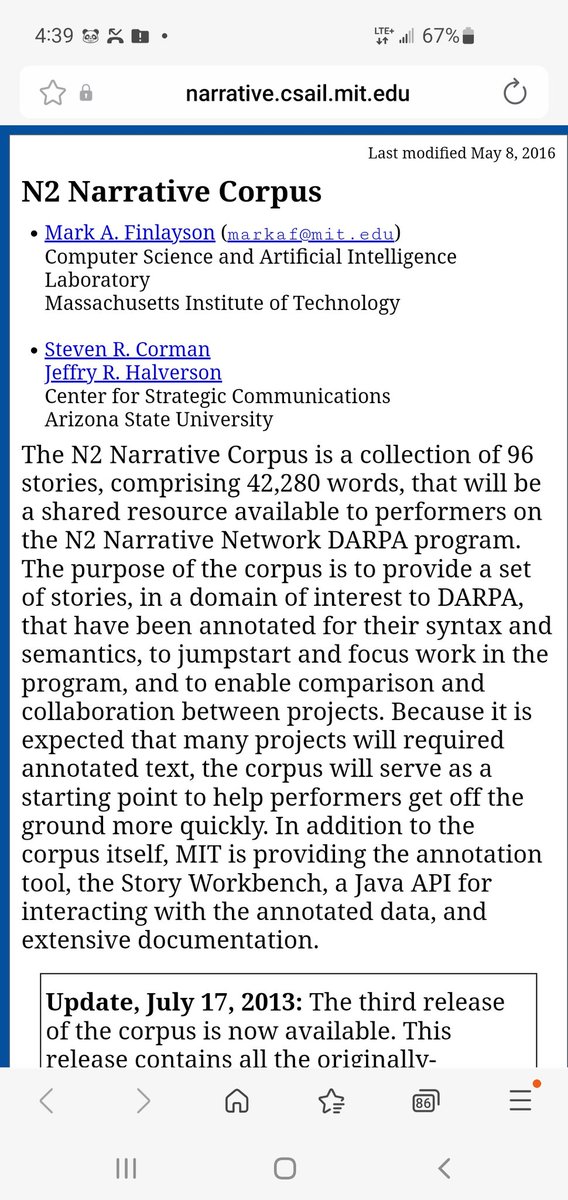
Narrative Corpus MIT & DARPA share.google/paaMv5I76oNgA1v…
1
1
4
193
17 Oct 2025
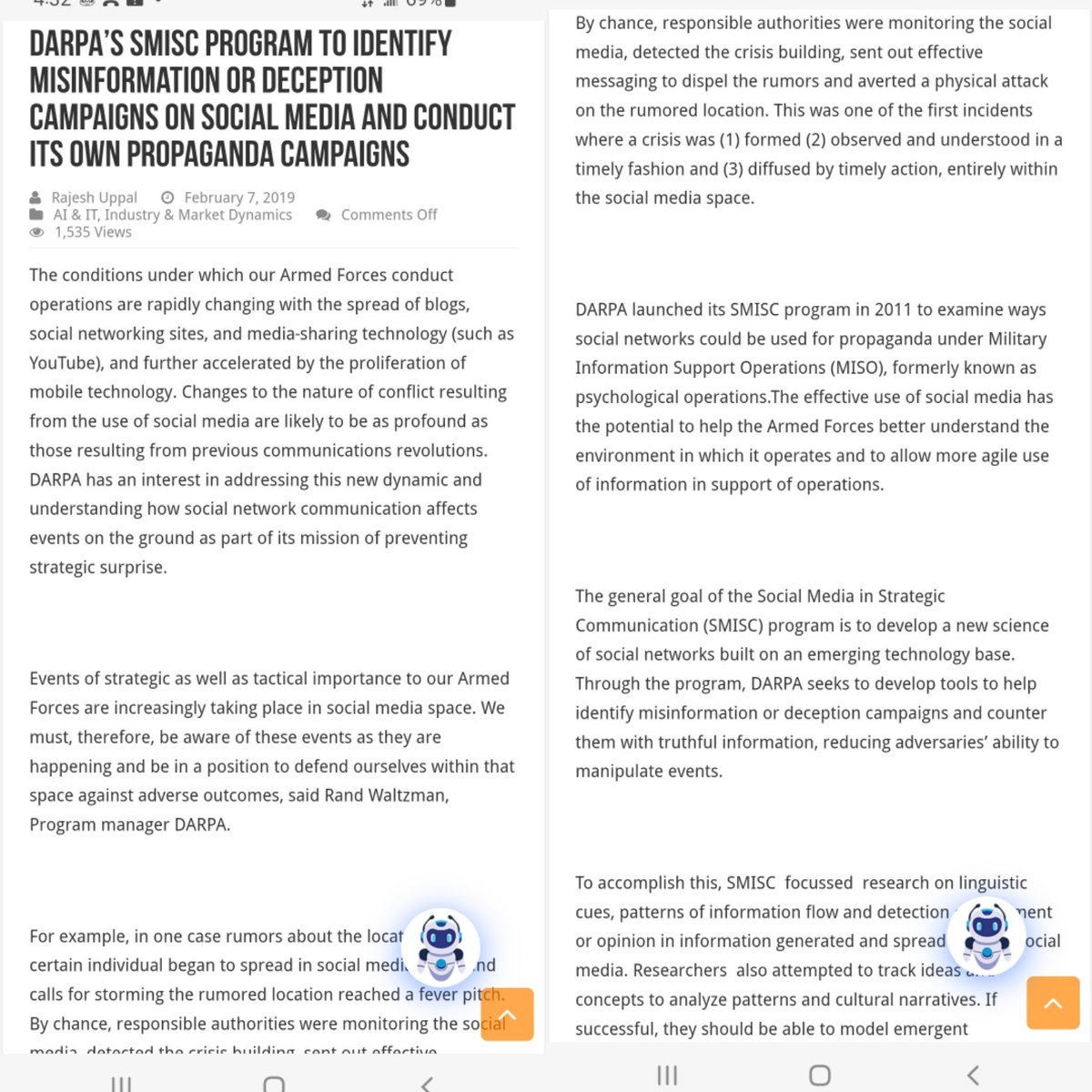
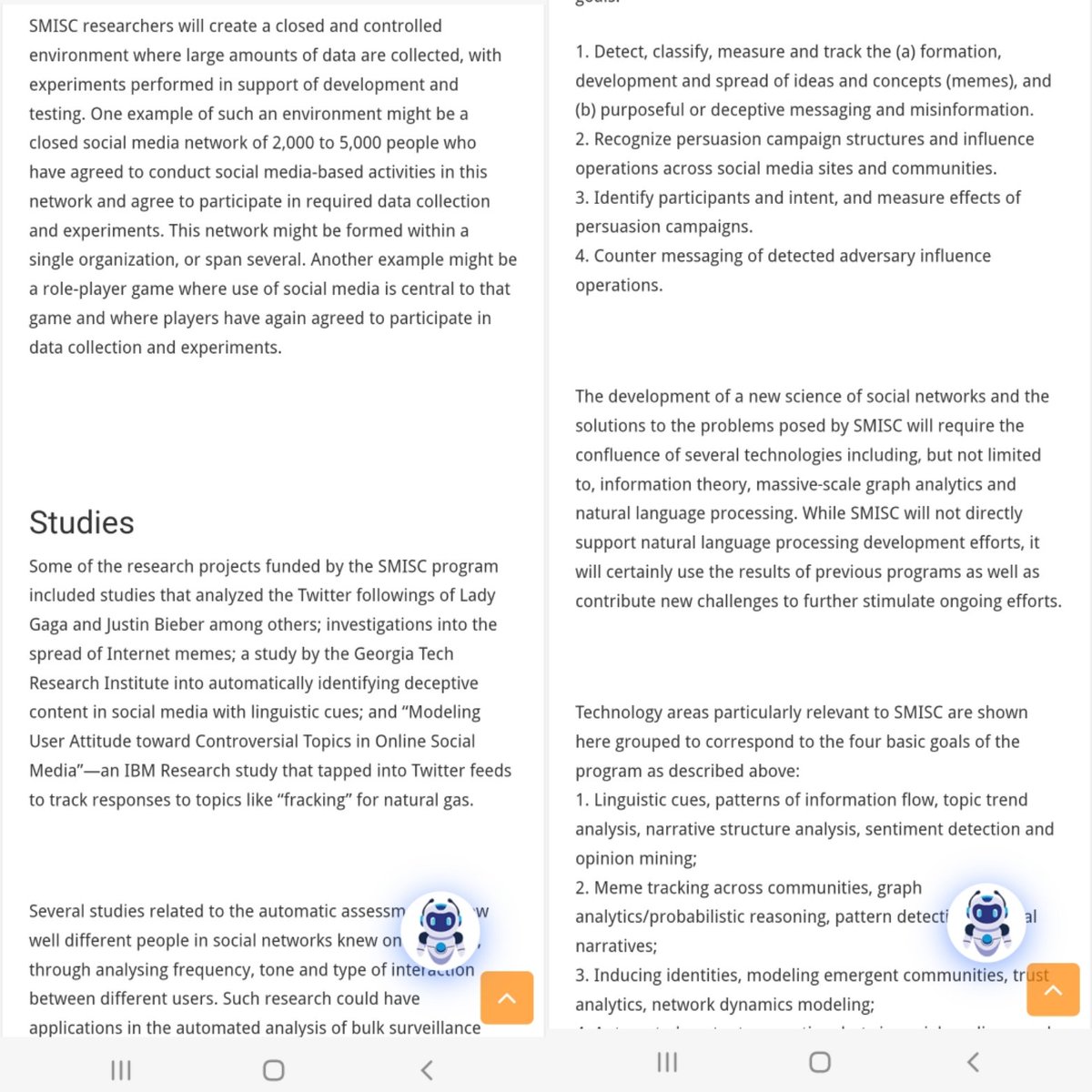
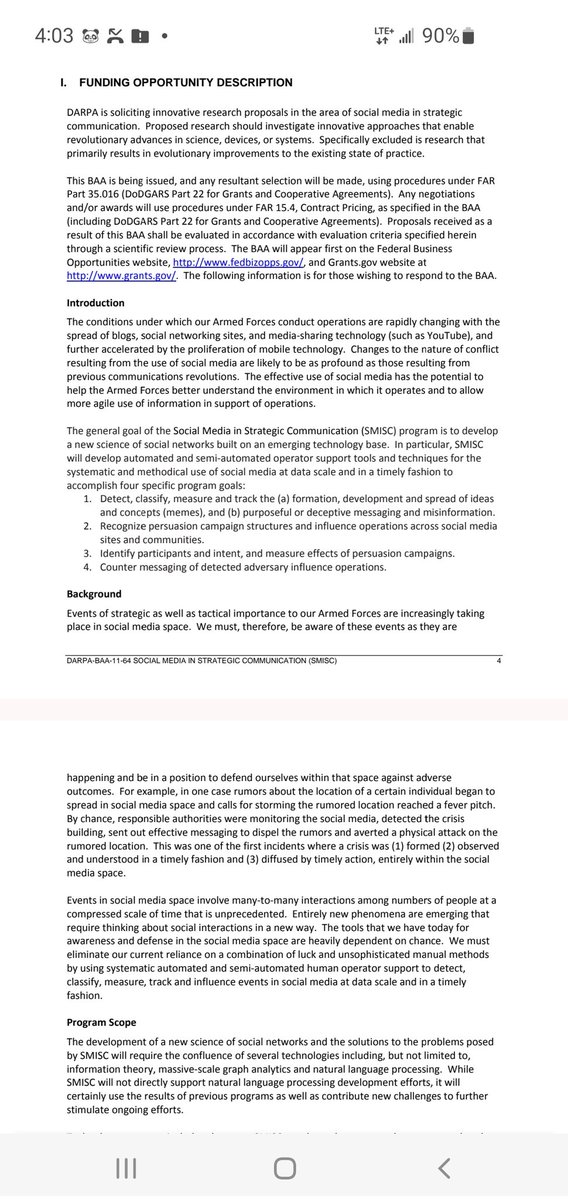
DARPA’s SMISC program to identify misinformation or deception campaigns on Social Media & conduct its own propaganda campaigns
International Defense Security & Technology share.google/Y4S7DTNDaZstF2L…
Social Media in Strategic Communication SMISC
DARPA
share.google/y88l2je0m27RaNP…
1
2
5
235

16 Aug 2025
One more for the road. along with NATO’s memetic warfare doctrine and DARPA’s SMISC, Snowden docs showed GCHQ’s JTRIG teaching sockpuppetry & meme ops in “The Art of Deception.” Doesn’t that further prove Western intel themselves weaponize anons/memes and therefore see such anon political action as relevant and influential?
1
15
196
16 Aug 2025
beyond ISIS & Russia, DARPA’s Social Media in Strategic Communication (SMISC) program poured millions into studying how memes spread influence. Doesn’t that prove the U.S. itself treats anon/meme ops as highly impactful?
1
18
262