Evan Kirstel #B2B #TechFluencer retweeted

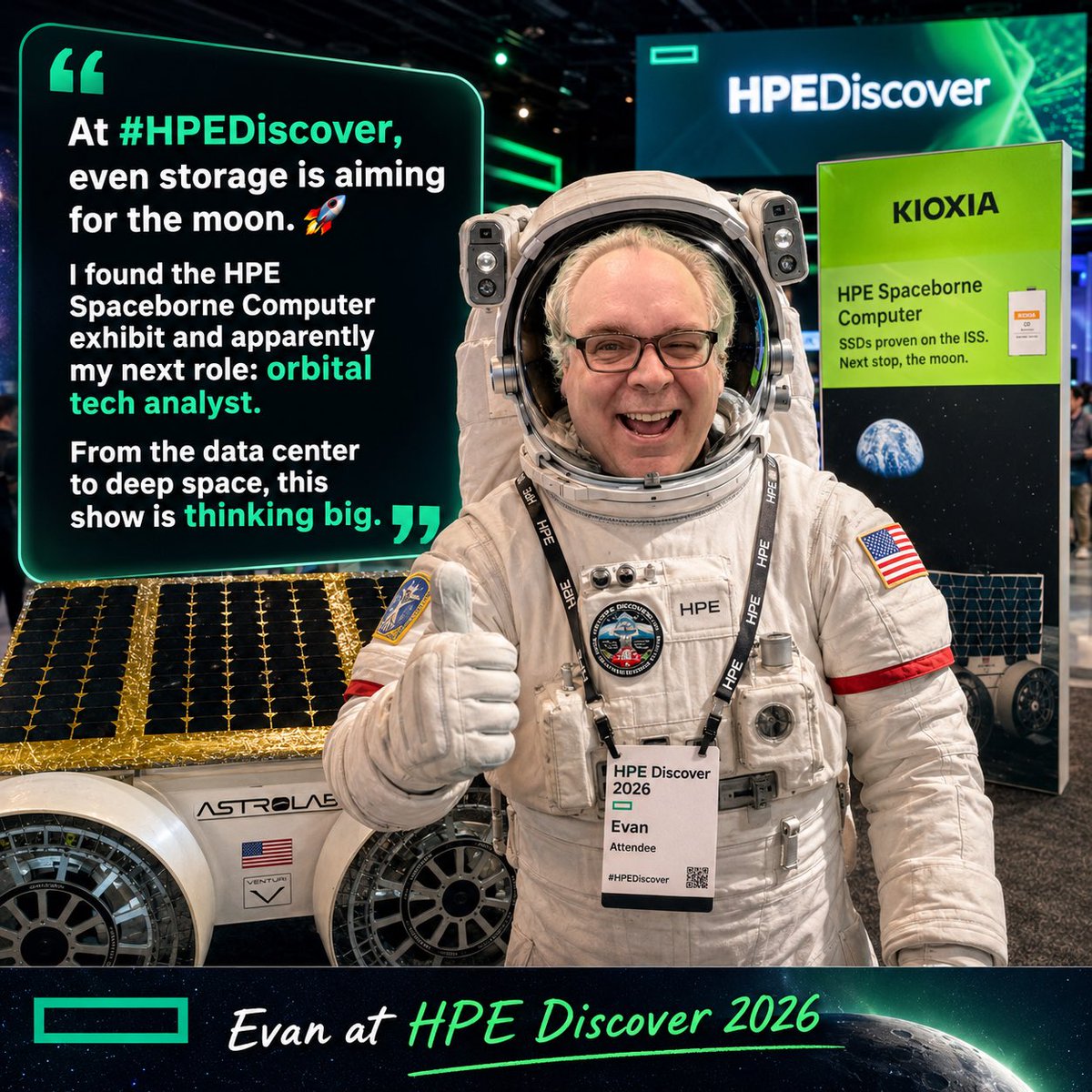
Suited up and ready for liftoff at #HPEDiscover. 🚀
The HPE Spaceborne Computer already proved SSDs survive on the ISS. Sitting right next to me: KIOXIA flash, an Astrolab lunar rover, and a spacesuit with my name on the badge.
Next stop, the moon. Green Lantern energy, enterprise hardware built to leave orbit 🌕
@DougonIPComm @HPE #HPEpartner
1
1
265
Cube Dragon retweeted

42% slashed of Samsung's 990 Pro SSD, 2TB now $369 — $270 savings brings one of the fastest PCIe 4.0 SSDs to its lowest price in months tomshardware.com/pc-componen…
16
6
80
6,205

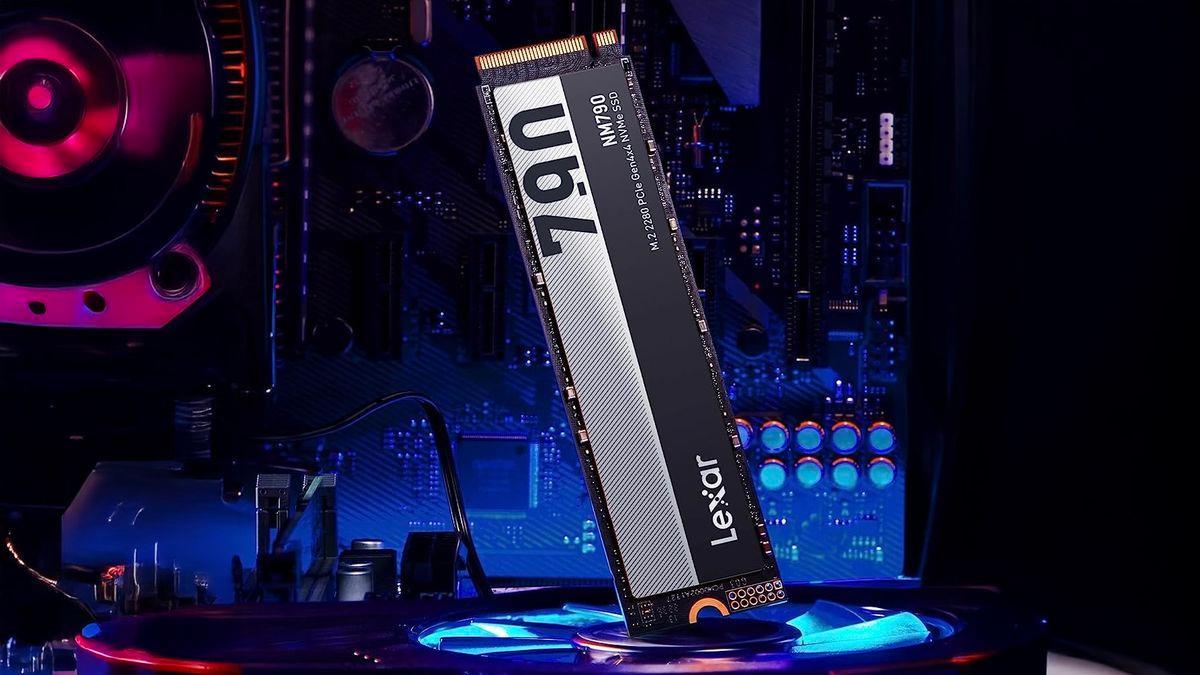
Crise de memória é tão grave que Lexar quer transformar SSDs em RAM canaltech.com.br/hardware/cr…
2
561

Não muito, peguei um daqueles mini pcs da Lenovo, um core I5 com 32 GB de RAM, os SSDs que tive que trocar, tenho um de 1TB e outro de 2TB, bom que ele é bem compacto, deixo ele ligado direto e acesso eventualmente da rua, isso me permite acessar da rua a minha aplicação principal que não roda em celulares.
Aí como ele fica ligado direto aproveitei para deixar um fullnode BTC rodando nele e também um tunnel SSH para acessar internet de forma segura.
1
1
42

With the power of modern SSDs, I fear it's not a matter of tech constraints but instead they want to keep the player in a controlled, directed experience so they feel good regardless of their input.
1
39


Deep Dive: Everspin Technologies $MRAM
Everspin Technologies is one of the most interesting small-cap “real memory technology” stocks, but it is not simply a mini Micron, SanDisk, or Kioxia. Those companies operate in massive DRAM, NAND, SSD, and storage markets. Everspin is different. It focuses on MRAM, short for Magnetoresistive Random Access Memory.
MRAM is a type of memory that combines some advantages of RAM and flash storage. It is fast, non-volatile, durable, and highly reliable. In simple terms: MRAM can keep data even when power is lost, while still offering much faster write endurance than traditional flash memory.
That makes it especially useful in areas where data loss is unacceptable: industrial systems, aerospace, defense, medical devices, automotive, networking, satellites, casino gaming machines, and other mission-critical applications.
---
What does Everspin actually do?
Everspin sells Toggle MRAM and STT-MRAM products. These are not mass-market memory chips like NAND used in SSDs or HBM used in AI servers. Instead, they are more specialized memory products for demanding environments.
That is both a strength and a weakness.
The strength: Everspin does not have to compete directly against giants like Samsung, SK Hynix, Micron, Kioxia, or SanDisk in brutal commodity markets.
The weakness: MRAM is still a niche technology. The market is much smaller than DRAM or NAND, and Everspin still has to prove that MRAM can scale into larger commercial applications.
---
Why the stock is interesting
Everspin is not just a “future story” with no revenue. The company already generates real sales, has strong gross margins, and has a relatively clean balance sheet.
For 2025, Everspin reported around $55.2 million in revenue, including about $48.3 million from MRAM product sales. Gross margin was above 50%, which is attractive for a small semiconductor company. The company was slightly unprofitable on a GAAP basis, but profitable on a non-GAAP basis.
Q1 2026 was also solid, with around $14.9 million in revenue, including $14.1 million from MRAM products. The company also guided for roughly $15.5–16.5 million in Q2 2026 revenue.
So the key point is: Everspin already has a real business. This is not a pure pre-revenue lottery ticket.
---
The bull case
The bull case is that MRAM slowly moves from a niche memory technology into a much larger category.
Everspin’s long-term target is to move from roughly $55 million in annual revenue toward $100 million by FY2029. That is not explosive Nvidia-style growth, but for a small specialty memory company, it would be meaningful.
The biggest near-term trigger is the company’s $40 million agreement with a U.S. prime contractor for military and aerospace MRAM applications. For a company with around $55 million in annual revenue, a $40 million agreement over roughly 2.5 years is very significant.
This is where the story gets interesting: defense, aerospace, industrial automation, satellites, and edge computing all need highly reliable memory. MRAM fits that use case very well.
Everspin also has optionality in areas like FPGA configuration memory, chiplets, edge AI, and in-memory computing. That is the more speculative part of the story. If MRAM becomes more important in these next-generation architectures, Everspin could become much more valuable.
---
Why it is not “the next SanDisk”
This is very important: Everspin is not a direct SanDisk replacement or a mini Micron.
SanDisk/Kioxia are NAND and flash storage giants. They benefit directly from AI data centers, SSD demand, storage growth, and huge volume markets.
Everspin does not sell mass-market NAND. It does not produce HBM for AI GPUs. It is not directly plugged into the Nvidia AI server supply chain in the same way as HBM or SSD suppliers.
So the mistake would be thinking:
“Memory is hot, SanDisk is running, Micron is running, so Everspin must be the next one.”
The better way to think about Everspin is:
1
509

Last month some long planned hardware upgrades were completed. Everything's faster now though the database still gets sluggish during peak hours, so more work's needed there. More storage was also planned but the astronomical prices of SSDs have put that on hold. There's empty bays waiting for their return.
Over in the Xbox Vault all xiso files have been rebuilt using the xdvdfs library. This should fix errors in many games that extract-xiso couldn't process correctly. :)
Hope everyone has a great week!
vimm.net/
25
82
1,307
22,669

für mich war's sehr easy, weil ich 2 ssds hab für die beiden os.
war dann nur ne neue Installation für mich. auf einer ssd ist aber glaube auch nicht wirklich schwer, zumindest mit cachyos
1
1
22

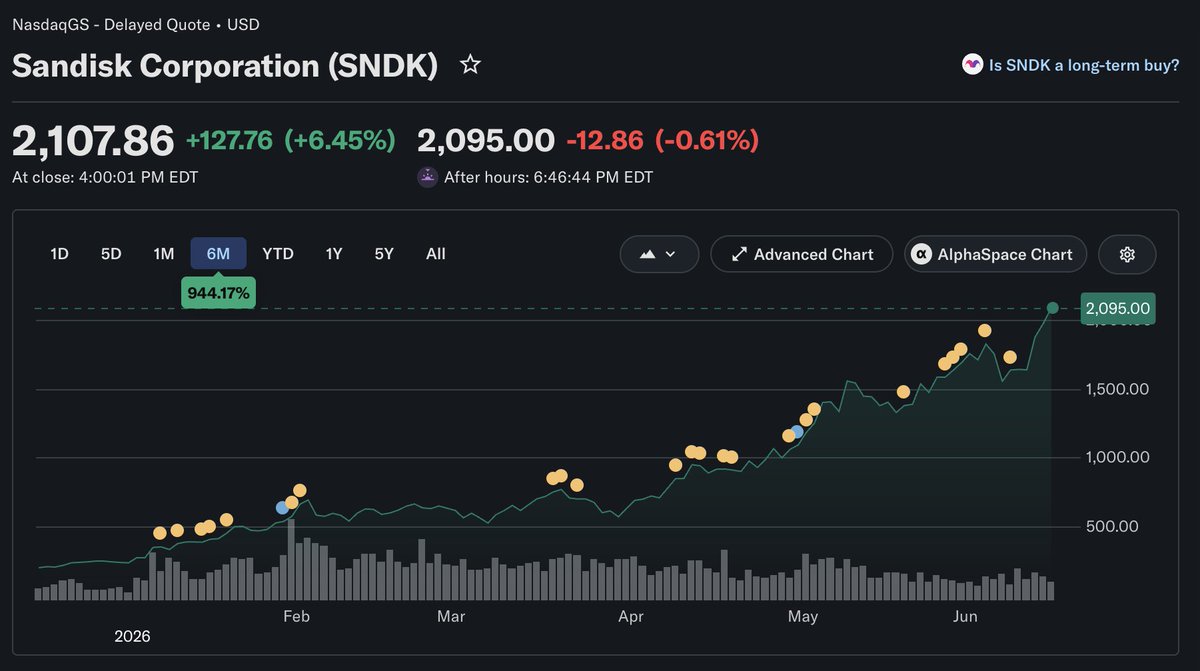
$SNDK has exploded 944% in just 6 months.
The surge is being driven by exploding demand for NAND flash memory and enterprise SSDs used in AI data centers.
Every new AI data center being built needs massive amounts of NAND storage, and supply is struggling to keep up.
SanDisk is one of the few companies that can produce these chips at scale.
148

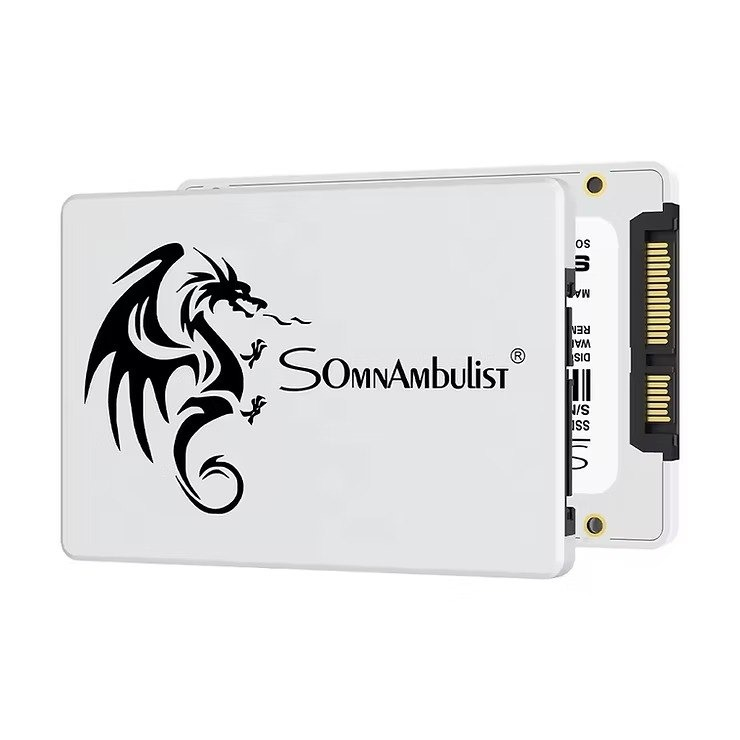
⚡⚡⚡⚡SomnAmbulist SSD Cinza(AliExpress)
02pçs 120GB-R$179,21/R$90,63 cada pelo APP
Cupom: IFPZ3HG9
2% de desconto usando moedas(65 moedas)
3pçs 120GB-R$269,38/R$90,81 cada pelo APP
Cupom: MDA02
2% de desconto usando moedas(98 moedas)
02pçs 128GB-R$193,28/R$97,77 cada pelo APP
Cupom: MDA02
2% de desconto usando moedas(72 moedas)
240GB-R$156,28 pelo APP
Cupom: MDA01
2% de desconto usando moedas(55 moedas)
02pçs-240GB-R$312,57/R$158,03 cada pelo APP
Cupom: MDA02
2% de desconto usando moedas(111 moedas)
IMPOSTO INCLUSO
Frete Grátis
wix.to/EDoXicn
Abra o link da página de moedas no APP, e acesse o produto na lista: s.click.aliexpress.com/e/_c3…
SSDs com Desconto em Moedas pelo APP: s.click.aliexpress.com/e/_oo…
SSD: chinacuponsbr.com/blog/categ…
Nossos Canais do Telegram: t.me/addlist/REp_1F4QOHgyMDc…
Novo Canal do Whatsapp Geral: whatsapp.com/channel/0029Vaj…
Nossos grupos de Promoções: chinacuponsbr.com/post/grupo…
72

I had them in my shopping cart when the price was silly compared to now, but then I thought, ah whatever, I can get another year out of my workstation... gotta dig up more SSDs now I guess
2
50

He died soon after the filming.
Sudden Sniffing Death Syndrome (SSDS), also called sudden inhalant death or inhaled hydrocarbon-associated sudden collapse (IHASC), is a rare but devastating form of sudden cardiac arrest triggered by inhaling volatile chemicals from common household or industrial products. It can strike during or shortly after use, even on the first try in otherwise healthy young people.
549
729
16,691
7,825,212
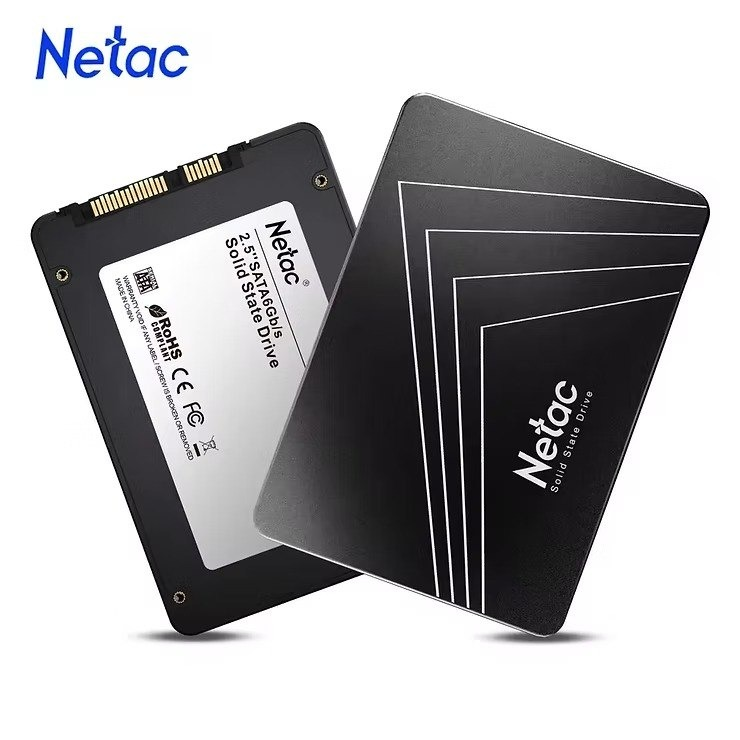
⚡⚡⚡⚡NETAC SSD Preto(AliExpress)
128GB-R$102,59 pelo APP
Cupom: MDA01
16% de desconto usando Moedas(R$18,47 - 381 moedas)
256GB-R$178,58 pelo APP
Cupom: MDA02
16% de desconto usando Moedas(R$32,78 - 677 moedas)
512GB-R$275,88 pelo APP
Cupom: MDA02
16% de desconto usando Moedas(R$44,03 - 909 moedas)
IMPOSTO INCLUSO
Frete Grátis
wix.to/M66FiF0
Abra o link da página de moedas no APP, e acesse o produto na lista:
s.click.aliexpress.com/e/_c3…
SSDs com Desconto em Moedas pelo APP: s.click.aliexpress.com/e/_oo…
SSD: chinacuponsbr.com/blog/categ…
Nossos Canais do Telegram: t.me/addlist/REp_1F4QOHgyMDc…
Grupo Whatsapp Hardware: chat.whatsapp.com/D8rLrIU5xA…
Nossos grupos de Promoções: chinacuponsbr.com/post/grupo…
67

AI companies have bought up most GPU, ram, SSDs and HDDs and made order years in advance. Bascailly all the supply goes to AI companies and the stuff sold to use has gone up in price signifcantly. Older outdated parts not suitable for AI are less effected
1
3