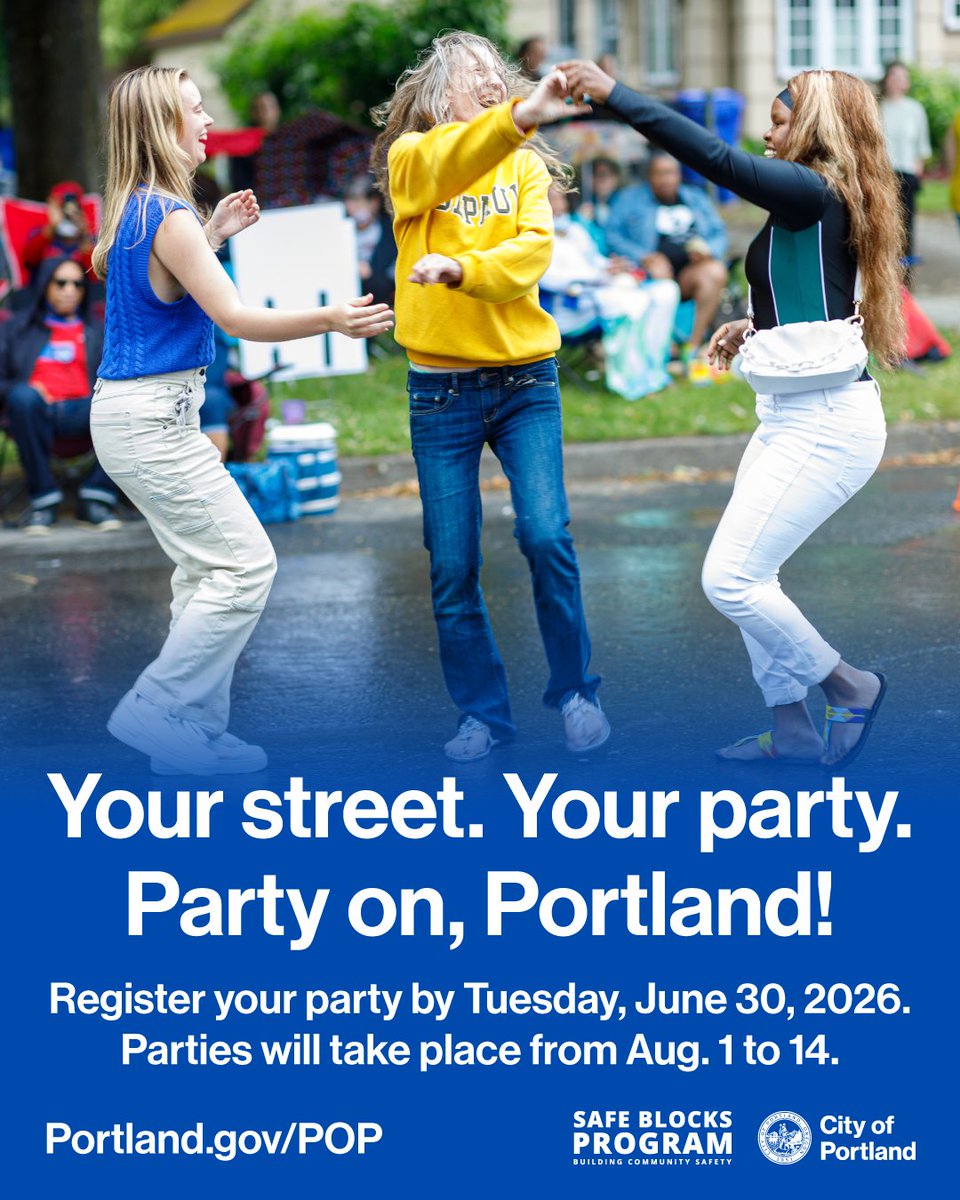
ALT Photo of three people dancing in a Portland street. Text reads “Your street. Your party. Party on, Portland! Register your party by Tuesday, June 30, 2026. Parties will take place from Aug. 1 to 14. Portland.gov/POP. “Safe Blocks Program wordmark. City of Portland seal and wordmark.
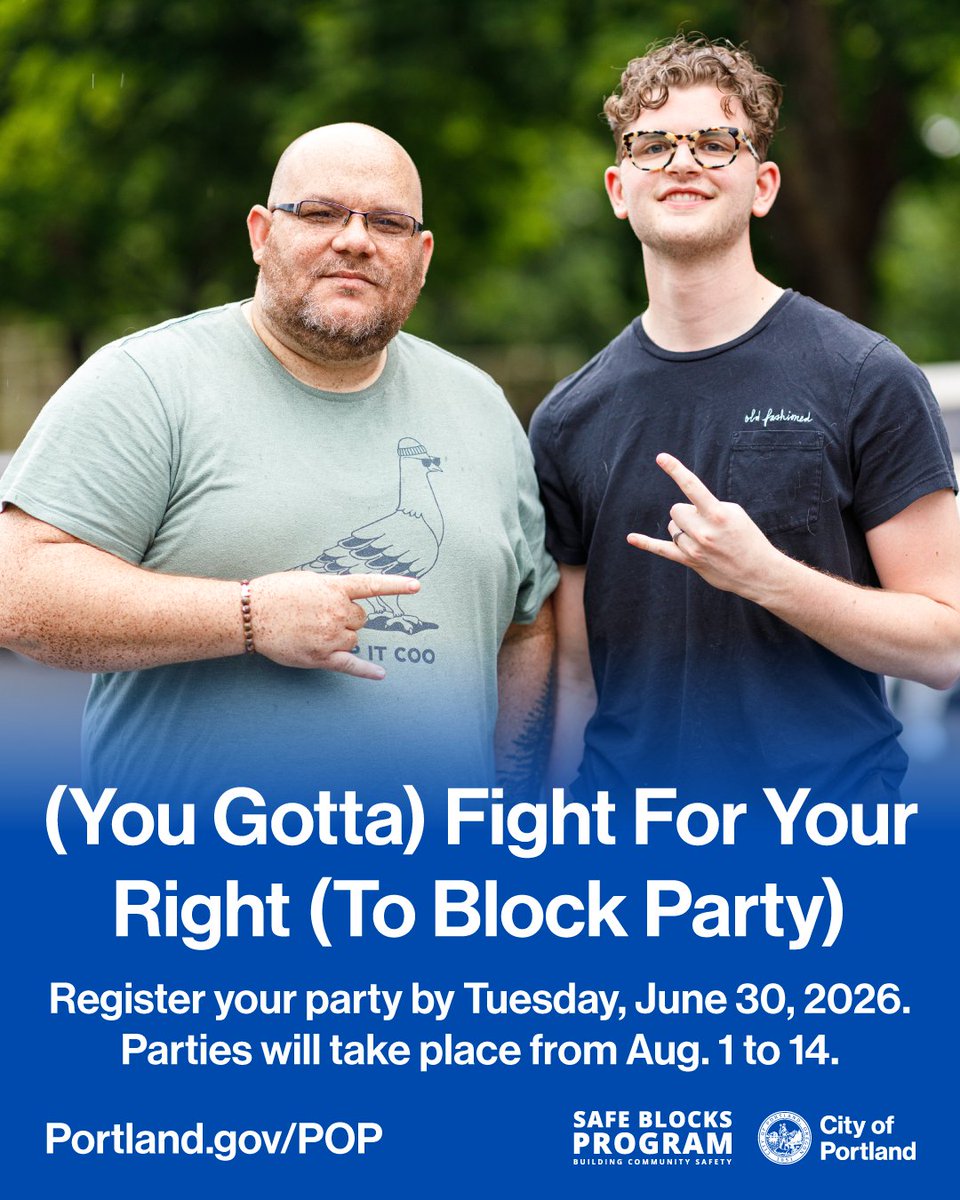
ALT Photo of two people with a party rock hand symbol. Text reads “(You Gotta) Fight For Your Right (To Block Party) Register your party by Tuesday, June 30, 2026. Parties will take place from Aug. 1 to 14. Portland.gov/POP.” Safe Blocks Program wordmark. City of Portland seal and wordmark.

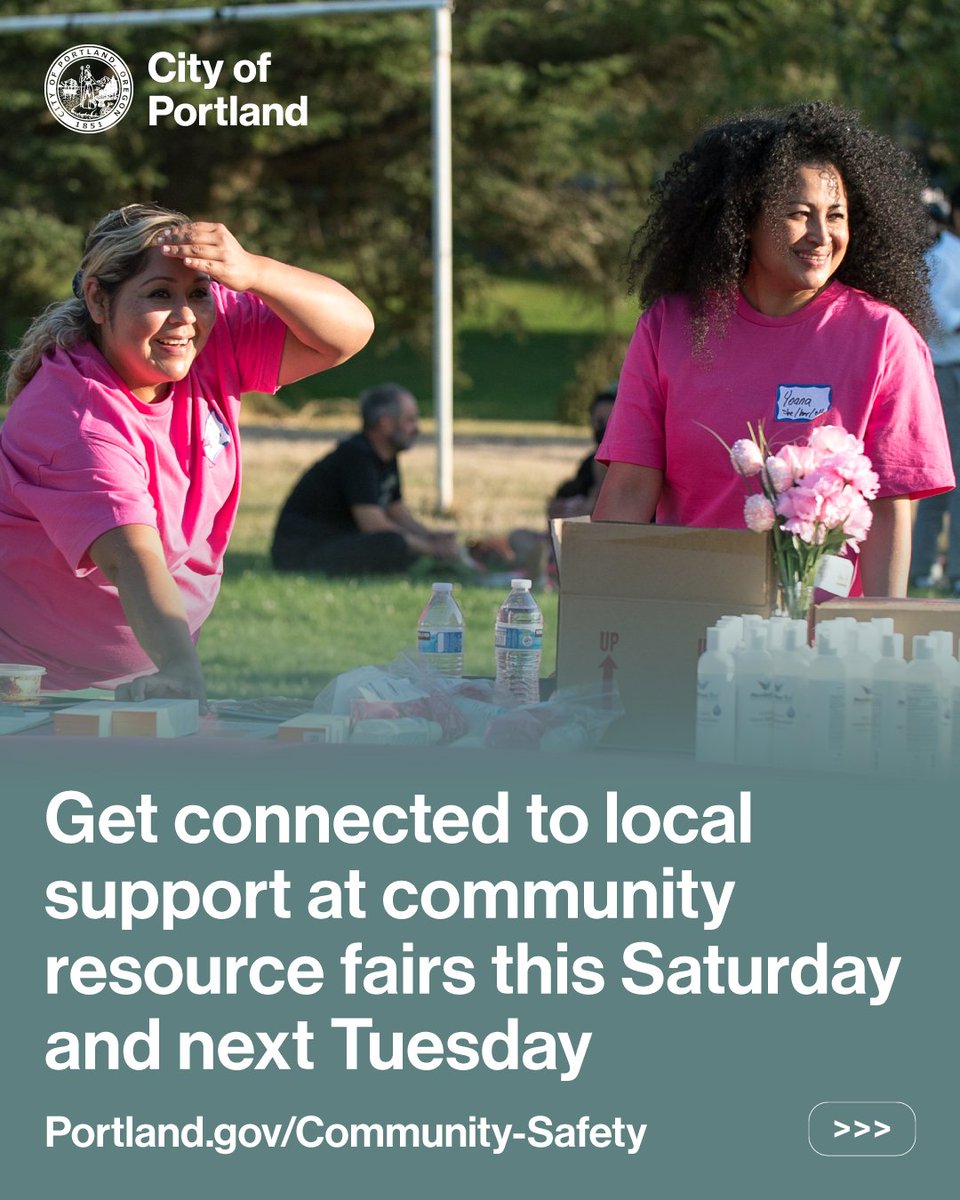
ALT A photo of two women at a resource fair wearing pink shirts. White text on green background: Get connected to local support at community resource fairs this Saturday and next Tuesday. Portland.gov/Community-Safety. City of Portland seal and wordmark.
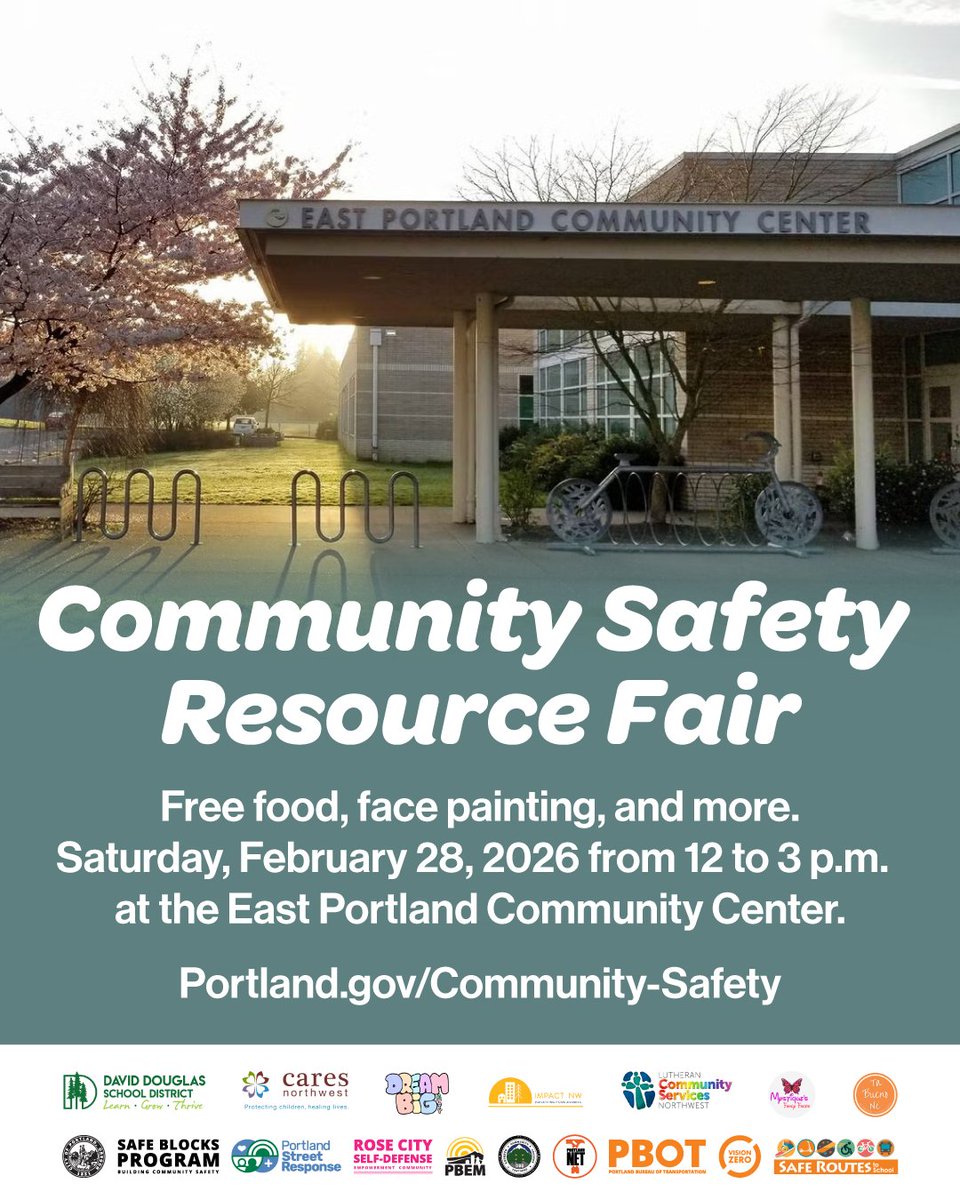
ALT A photo of the East Portland Community Center entrance. White text on green background: Community Safety Resource Fair. Free food, face painting, and more. Saturday, February 28, 2026 from 12 to 3 p.m. at the East Portland Community Center. Portland.gov/Community-Safety. Multiple logos from community partners and city bureaus.
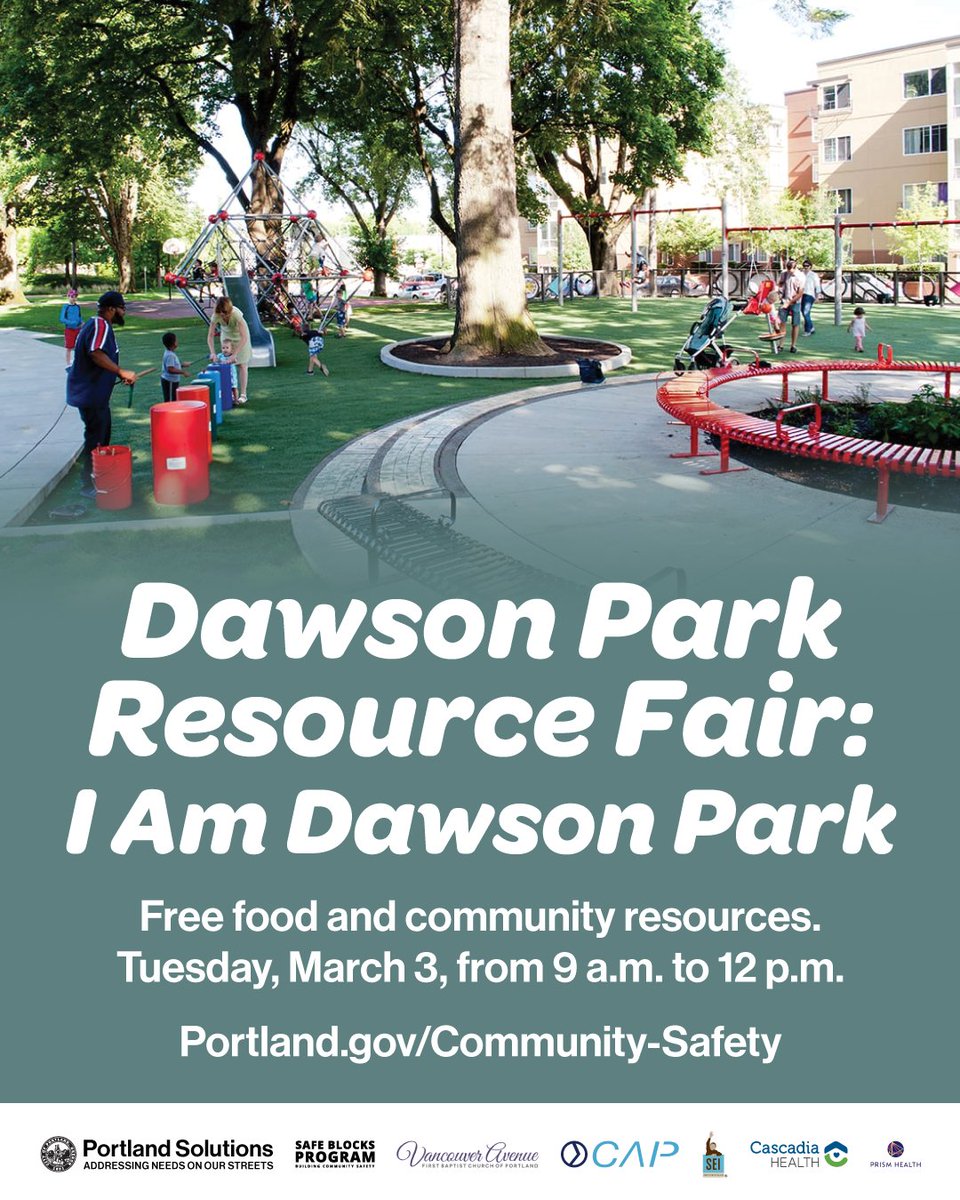
ALT Photo of an event at Dawson Park. Dawson Park Resource Fair: I Am Dawson Park Free food and community resources. Tuesday, March 3, from 9 a.m. to 12 p.m. Portland.gov/Community-Safety. Multiple logos from community partners and city bureaus.
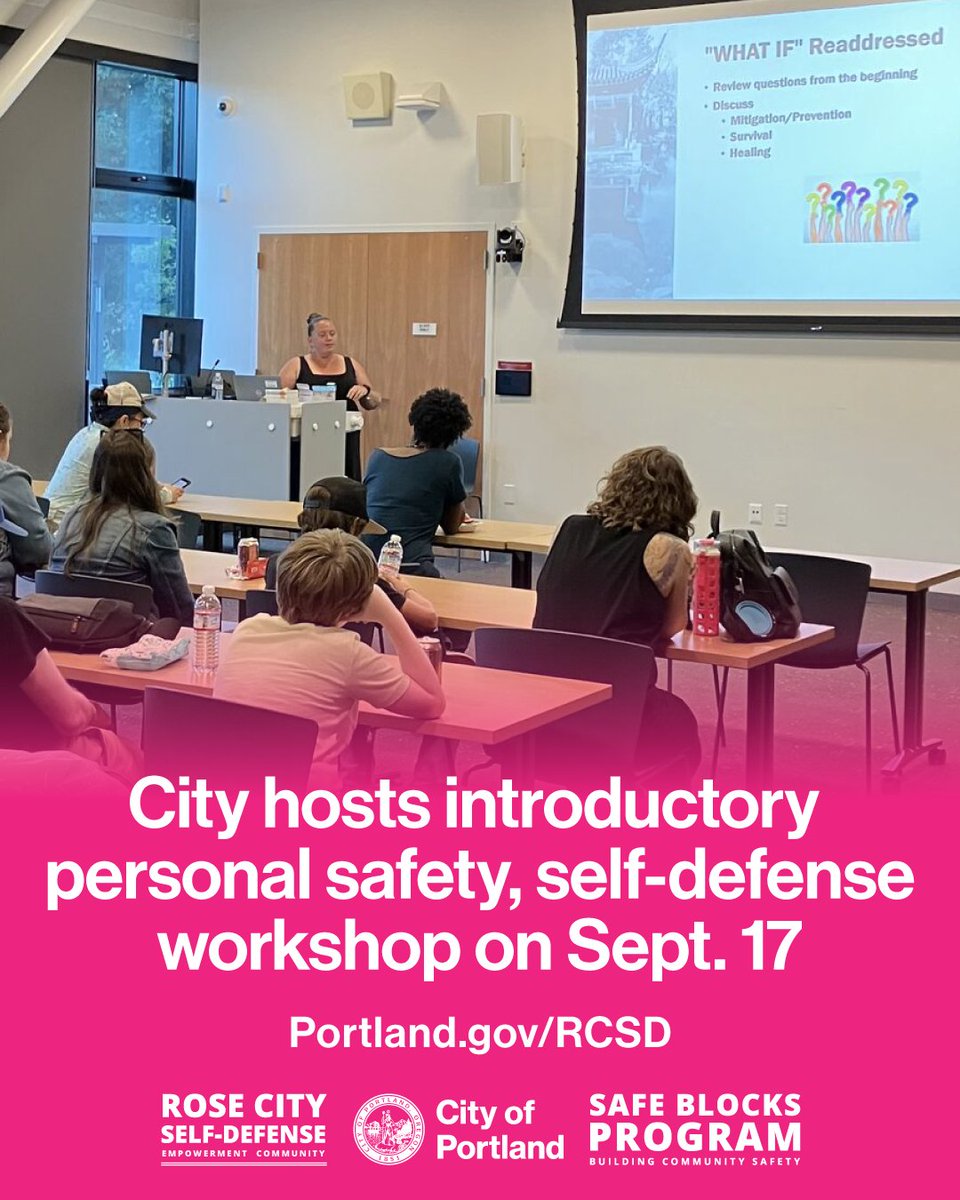
ALT Photo of a Rose City Self Defense workshop, person standing at the front of a classroom with a PowerPoint presentation. City hosts introductory personal safety, self-defense workshop on Sept. 17. Portland.gov/RCSD. Rose City Self Defense Logo. City of Portland seal and wordmark. Safe Blocks Program logo.


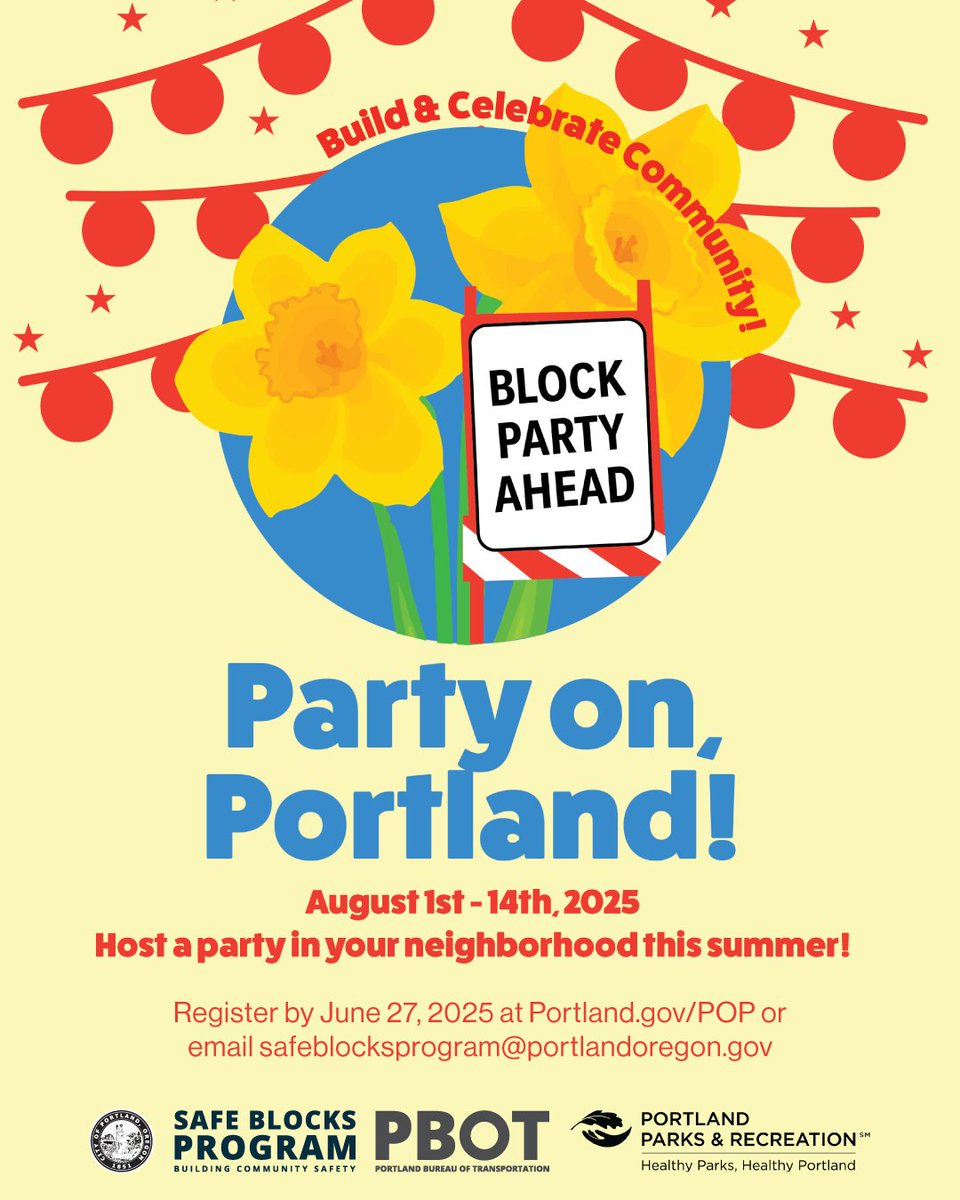
ALT Illustration of two yellow flowers coming out of a blue circle surrounded by smaller red circles on a string. Text around reads: Build and celebrate community. A steet sign in between the flowers reads: Block party ahead. Main title: Party on, Portland! August 1st-August 1th, 2025. Host a party in your neighborhood this summer! Register by June 27, 2025 at Portland.gov/POP or email safeblocksprogram@portlandoregon.gov. City of Portland seal. Logos for Safe Blocks, PBOT and Portland Parks and Recreation.