
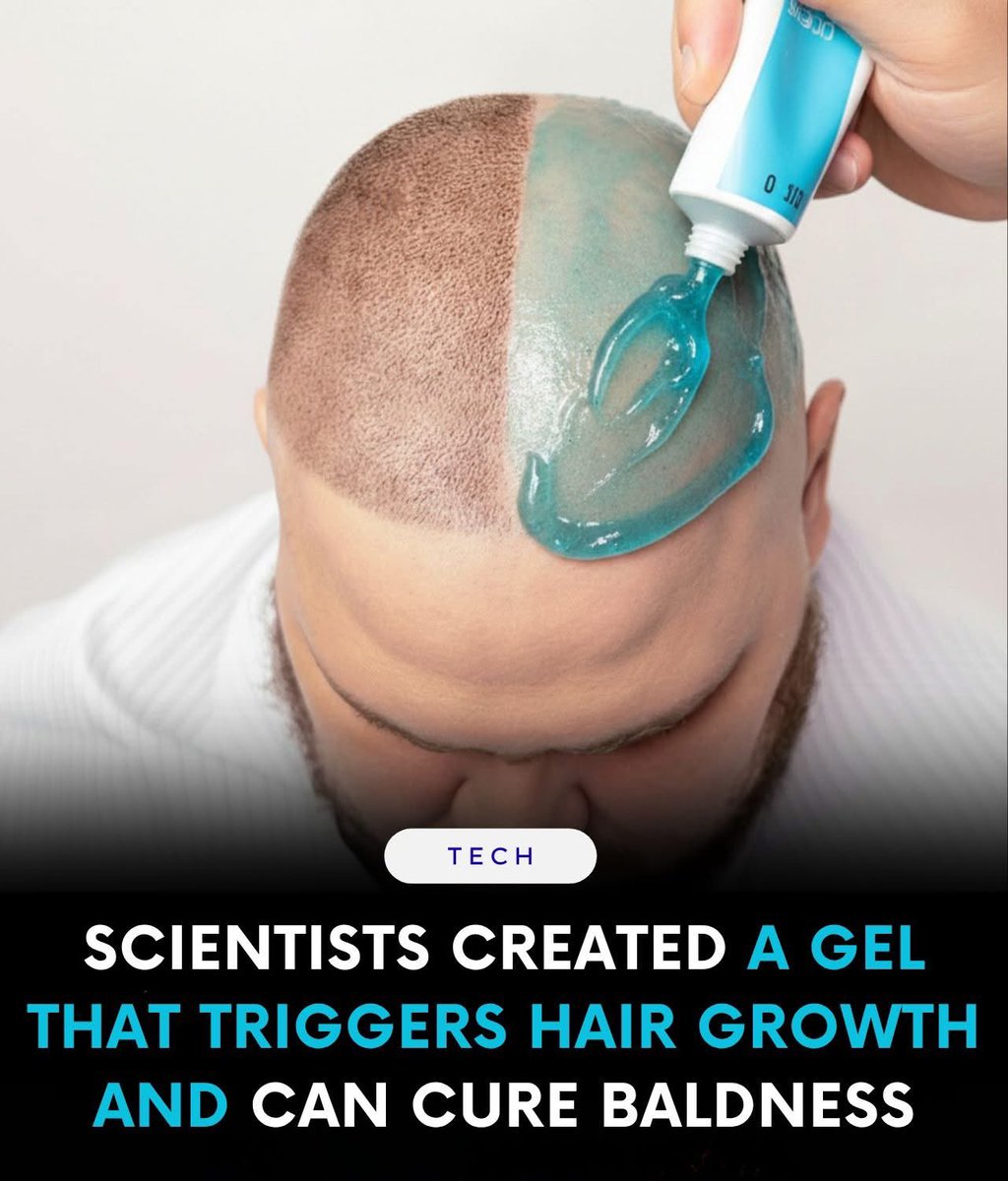
🧬🍭 Sweet News for Hair Loss? Simple Sugar Gel Matches Minoxidil in Mouse Trials — Could This Be a Game-Changer in 2026?
Scientists may have stumbled on a surprising new approach to baldness while studying wound healing.
Researchers found that deoxyribose — a natural sugar that forms part of our DNA — when formulated into a biodegradable gel, triggered significant hair regrowth in male mice with testosterone-driven hair loss (a model for male pattern baldness).
In the study, the sugar gel performed 80–90% as effectively as minoxidil (one of the few FDA-approved treatments), stimulating thicker, longer fur by boosting blood vessel formation around dormant hair follicles — essentially “waking them up” with better nutrient supply.
What makes it exciting: it’s non-hormonal, appears non-toxic in the animal model, and avoids side effects like sexual dysfunction sometimes linked to drugs such as finasteride.
This discovery offers hope for millions avoiding current treatments due to concerns over side effects. While the results are promising in mice, human clinical trials are still needed before it becomes a real option.
In 2026, safe, simple, and effective hair loss solutions remain a big unmet need — could a humble sugar be part of the answer?
Would you try a sugar-based gel if it proves safe and effective in people?
Drop a 🧬 if you’re intrigued or 💇 if you want more updates!
#HairLossTreatment #Deoxyribose #BaldnessCure #HairRegrowth #AndrogenicAlopecia
Watch the sugar gel hair regrowth story explained — videos from 2025–2026:
• “Scientists discover DNA sugar gel that regrows hair as effectively as minoxidil” — Popular explainer with visuals of the mouse results: instagram.com/reel/DVJjZ9sjZ…
• “Can your DNA help fight hair loss?” — Museum of Science breakdown of deoxyribose and the unexpected hair growth effect: facebook.com/museumofscience…
• “Surprise Hair Loss Breakthrough: A DNA Sugar Gel Sparks Robust Regrowth” — Clear summary of the study and mechanism: youtube.com/shorts/-3R4JOECf…
• “Sugar gel for baldness? What the science actually says” — Balanced discussion of the mouse trial results and next steps:
Search recent YouTube/Instagram content for “deoxyribose hair regrowth” (multiple high-view clips from early 2026)
These videos highlight the exciting preclinical findings while noting the early stage. The dramatic before-and-after mouse fur images drive a lot of the buzz!
Which one caught your attention? Comment 🍭 for “sweet potential” or 🧪 for “needs human trials”!
🔗 Sources (Deoxyribose Sugar Gel for Hair Regrowth – accurate as of April 2026)
• Original peer-reviewed study: “Stimulation of hair regrowth in an animal model of androgenic alopecia using 2-deoxy-D-ribose” by Anjum et al., Frontiers in Pharmacology, 2024:
frontiersin.org/journals/pha…
• PubMed abstract: pubmed.ncbi.nlm.nih.gov/3888…
• University of Sheffield press coverage (key research institution involved):
sheffield.ac.uk/news/cure-ma…
• ScienceAlert summary (Jan 2026): sciencealert.com/surprise-ha…
Important realities:
• Results are from a preclinical mouse study using a testosterone-induced baldness model. The gel promoted hair regrowth comparable to 2% minoxidil (80–90% effectiveness in key measures) via increased angiogenesis (new blood vessels).
• No human clinical trial data is available yet. Human testing is the essential next step.
• The approach is promising because it is non-hormonal, biodegradable, and derived from a naturally occurring sugar with low apparent toxicity in the animal model.
• Hair loss (androgenic alopecia) is complex — results in mice do not always translate directly to humans.
Shared for informational purposes only. This is not medical advice. Consult a dermatologist for personalized hair loss treatment options. Exciting early research like this highlights why continued investment in alopecia therapies matters.
#ScienceSources #HairLossResearch #DeoxyriboseGel #FrontiersInPharmacology
4
19
2,044
2: 🔗 Verified Sources & Background (April 2026 Study – accurate as of April 20, 2026)
• Original research: “Ultra-processed Foods and Muscle Fat Infiltration at Thigh MRI: Data from the Osteoarthritis Initiative” by Akkaya et al., published in Radiology (Radiological Society of North America), April 14, 2026: pubs.rsna.org/doi/10.1148/ra…
• CNN Health coverage by Sandee LaMotte (the source of the viral “well-marbled steaks” headline): cnn.com/2026/04/14/health/ul…
• RSNA news summary on the study and thigh muscle fat & osteoarthritis link:
rsna.org/news/2026/april/thi…
• Editorial in Radiology: “We Are What We Eat: Ultra-processed Foods and Muscle Quality” (April 2026): pubs.rsna.org/doi/10.1148/ra…
Key context:
• The study involved 615 participants (mean age 59.5, mean BMI 27) from the Osteoarthritis Initiative — none had knee OA at the time of scanning.
• Higher UPF intake correlated with higher muscle fat infiltration (measured by Goutallier grades on MRI), independent of BMI in adjusted models.
• This is an observational association; it does not prove causation. UPF intake was self-reported via diet history.
• Experts note that intramuscular fat is linked to poorer muscle function and may contribute to knee OA risk, but lifestyle factors (exercise, overall diet quality) also play major roles.
Shared for informational purposes only.
This is not medical advice — consult a doctor or registered dietitian for personalized nutrition guidance. Cutting back on ultraprocessed foods in favor of whole foods is generally recommended by health organizations for multiple reasons.
#ScienceSources #Radiology2026 #UltraProcessedFoods #MuscleQuality
2
551
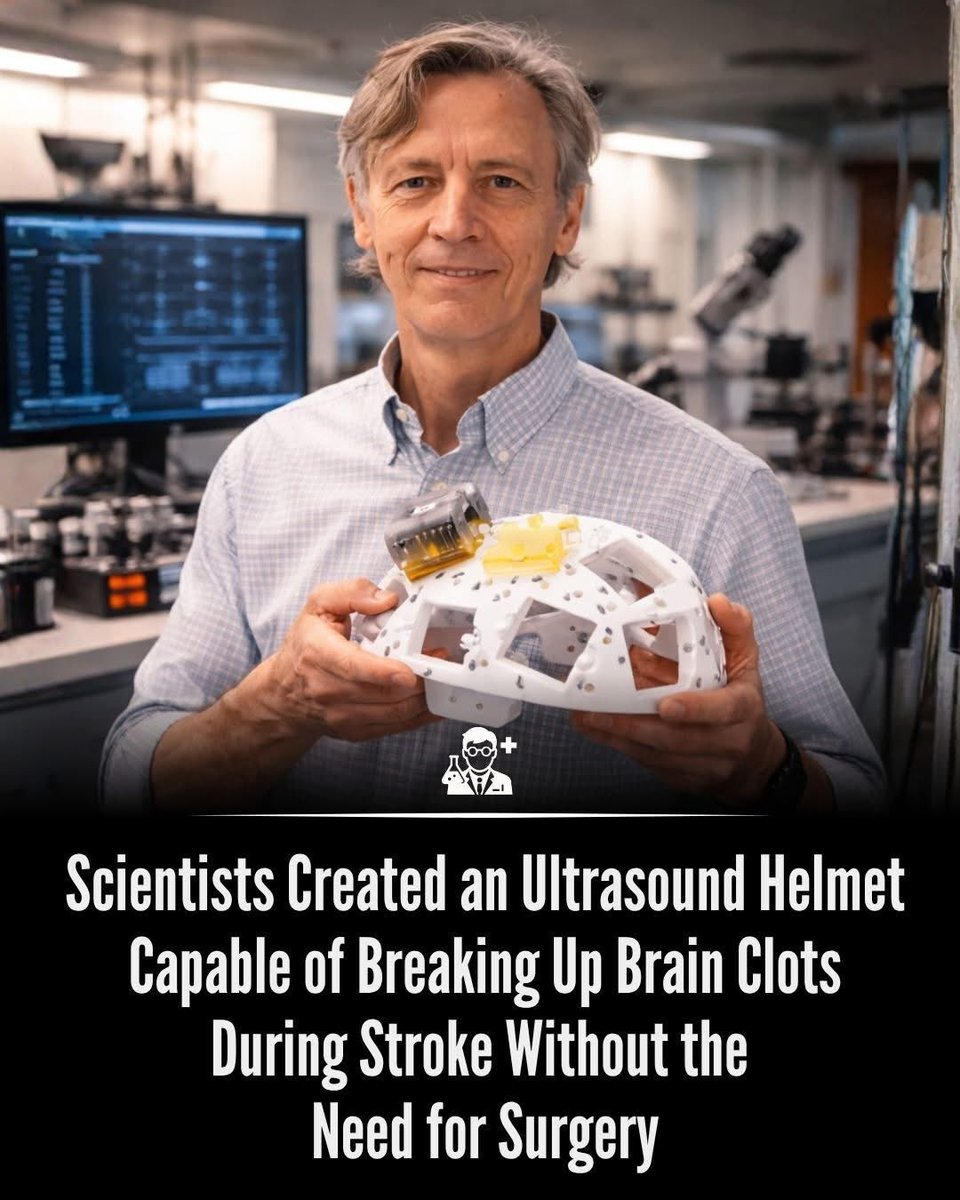
🧠⚡ Sound waves that could fight stroke?
This experimental ultrasound helmet is turning heads in 2026.
Strokes strike fast — every minute counts as brain tissue dies without blood flow.
Current treatments like clot-busting drugs or mechanical removal can be time-sensitive, limited, or invasive.
Researchers are testing a wearable ultrasound helmet that delivers focused sound waves through the skull. The low-intensity waves aim to target blocked vessels, help break down or loosen clots, and improve blood flow — potentially speeding up restoration when used alongside standard therapies.
This non-invasive approach could one day be deployed quickly in emergency settings or ambulances, reducing brain damage without opening the skull.
In 2026, it’s still early-stage innovation, but it highlights how turning precise ultrasound into a bedside tool might transform stroke care — faster, safer options for a condition where time is brain.
What if sound could become medicine in a crisis? Drop a 🧠 if this gives you hope for the future of emergency care!
#StrokeInnovation #UltrasoundHelmet #FocusedUltrasound #BrainHealth #MedicalTech2026 #HealthScience
See the concept in action — here are high-engagement, verified videos circulating in 2026 about ultrasound helmets and focused ultrasound for stroke treatment:
• Ultrasound Helmet May Transform Stroke Care (dramatic explainer on the helmet targeting brain clots non-invasively): instagram.com/reel/DXPeQcrvC…
• Researchers develop experimental ultrasound helmet for stroke clot treatment (visual breakdown of waves targeting clots, University of Cincinnati-linked discussion): instagram.com/p/DXLTR7Bj0DC/
• Scientists create ultrasound helmet that could save your brain in minutes (popular share showing the potential for fast, non-surgical intervention): facebook.com/discovertheuniv…
• For Broader coverage on focused ultrasound advancing stroke therapies (including clot disruption concepts): Search recent clips on transcranial ultrasound for stroke on YouTube/Instagram (often shared with University of Cincinnati or similar research visuals).
🔗 Verified Sources & Background
• Multiple viral reports reference experimental work on ultrasound helmets using focused or low-intensity transcranial ultrasound to target brain clots during ischemic stroke, often to enhance clot-dissolving treatments or aid mechanical disruption. Linked to researchers including those at the University of Cincinnati (e.g., neurosurgeon Dr. Ali Rezai’s related focused ultrasound studies).
• Focused Ultrasound Foundation overview on potential applications for thromboembolic stroke (non-invasive clot disruption or blood-brain barrier opening): fusfoundation.org/diseases-a…
• Older foundational concept (InSightec helmet-style device for focused ultrasound clot dissolution, still relevant to ongoing research): Technology Review archive on busting clots with sound waves.
• Note on related 2025 helmet tech: A separate high-precision ultrasound helmet (UCL/Oxford, 256 elements) was developed for non-invasive deep brain stimulation/modulation (published in Nature Communications), with potential future testing in stroke recovery — but not primarily for acute clot breaking: ucl.ac.uk/news/2025/sep/new-…
Important realities:
• This technology is experimental. Much of the clot-targeting work is in preclinical or early clinical evaluation.
• It is typically explored as an adjunct to existing therapies (e.g., tPA), not a standalone “break clots instantly” solution.
• No large-scale approval or routine clinical use for acute stroke clot dissolution via helmet as of 2026. Promising concepts exist, but rigorous trials continue.
• Always seek immediate medical help for stroke symptoms (FAST: Face, Arms, Speech, Time).
Shared for informational purposes only. This is not medical advice — consult healthcare professionals for stroke-related concerns.
#ScienceSources #StrokeResearch #FocusedUltrasound #MedicalInnovation
🔥 Which part surprised you?
10
10
632
3: 🔗 Verified Sources & Background (MIT-Affiliated Nerve Repair Biomaterials – accurate as of 2026):
• MIT News: Ushering in a new era of suture-free tissue reconstruction with biocompatible polymers for peripheral nerve repair (Tissium spinout received FDA marketing authorization in 2025 for a non-traumatic platform; early patient follow-up showed positive functional outcomes in a small cohort): news.mit.edu/2025/ushering-n…
• MIT Mechanical Engineering: New bioadhesive strategy to prevent fibrous encapsulation around device implants on peripheral nerves (Xuanhe Zhao lab, published in Science Advances, 2025): meche.mit.edu/news-media/new…
• GeneOnline analysis: MIT’s Nerve-Regenerating Injectable Hydrogel – discusses shear-thinning hydrogel platforms (e.g., ACES) showing significant improvement in animal studies for peripheral nerve regeneration, while noting it remains preclinical with no “complete recovery” claims in published reports: geneonline.com/why-is-mits-n…
• Additional context: Reviews on injectable hydrogels for peripheral nerve repair (preclinical improvements in axon regeneration, reduced inflammation, and functional gains in animal models): PMC articles on gelatin-based and other hydrogels (2025).
Important notes:
• Much of the exciting work is in preclinical stages or early clinical translation for peripheral nerves.
• Claims of “full restoration” in humans are not supported by current peer-reviewed evidence — improvements are described as significant but variable.
• Central nervous system injuries (e.g., spinal cord) remain even more challenging.
• This is informational; consult qualified medical experts for any health concerns.
Science moves quickly, but accuracy and rigorous testing matter most. ♻️🧪
#ScienceSources #NerveRepairResearch #MITBiomaterials
1
1
1
469
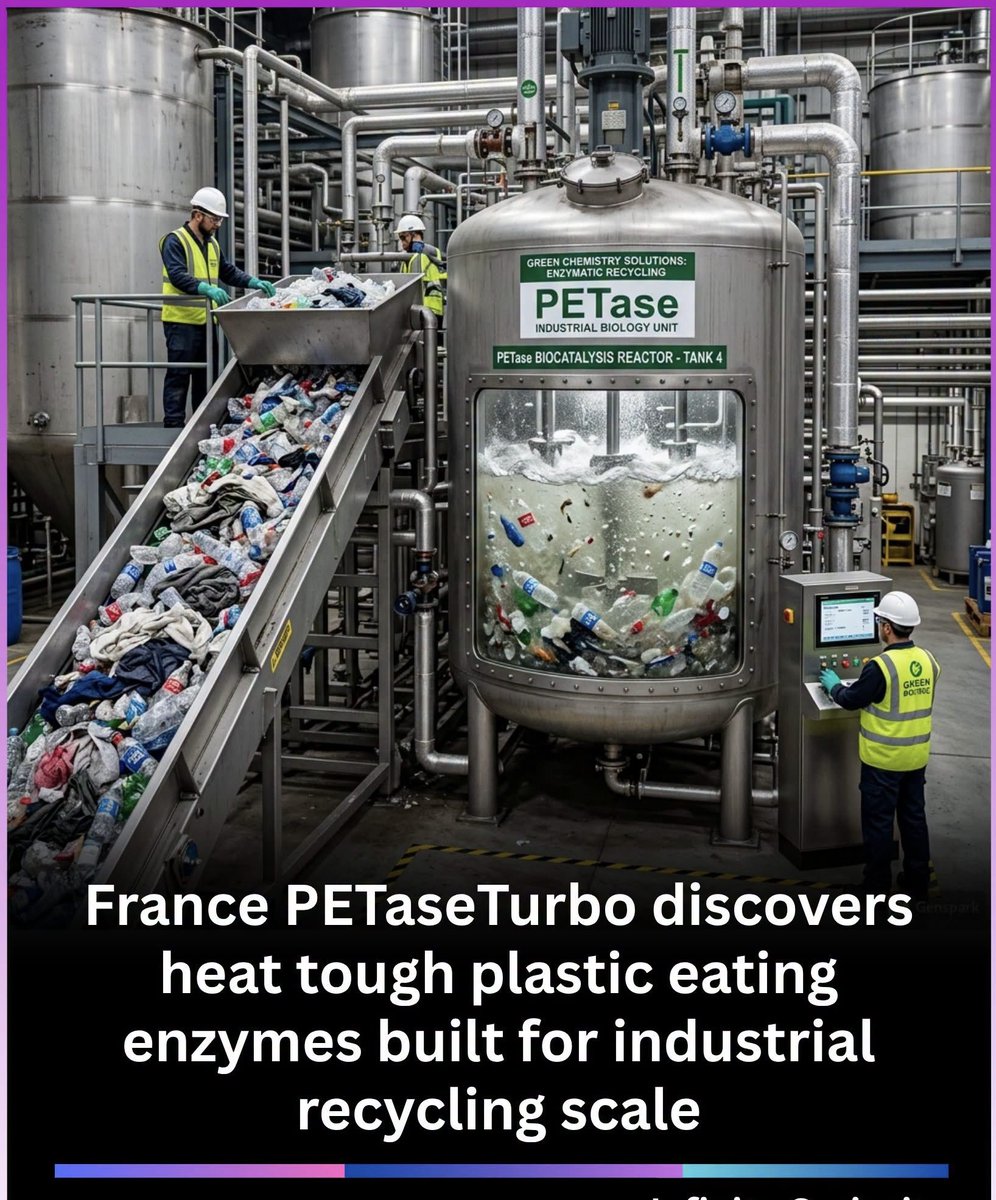
🚀 The dream of bacteria that literally eat our plastic waste just got a factory-ready upgrade in 2025–2026.
For years it sounded like sci-fi. Now? Researchers have engineered thermostable PET-degrading enzymes (PETases) that survive the tough, hot, real-world conditions of industrial recycling plants — where fragile lab versions used to fall apart. ♻️🧪
Plastic pollution isn’t just a chemistry puzzle anymore. It’s a speed cost challenge. These tougher, faster PETases are turning enzymatic recycling from a cool lab demo into something that can actually scale: breaking down polyester waste efficiently and churning out reusable monomers.
In 2026, the conversation has flipped.
It’s no longer “Can biology eat plastic?”
It’s “Can biology keep up with industrial tempo?”
That shift changes everything — from symbolic gestures to deployable, circular solutions. The future of waste just got biologically turbocharged.
#PETase #PlasticEatingEnzymes #BiotechRecycling #CircularEconomy #IndustrialBiology #SustainableMaterials #GreenTech2026
Want to see these plastic-munching enzymes in action?
Here are some videos showing the science and potential:
•Fast-PETase in action (classic but still highly shared demo of rapid breakdown): youtube.com/watch?v=jXVSpucl…
(University of Texas at Austin – enzyme breaking down PET in hours/days)
•Enzymatic PET recycling explained (clear visuals of the process, great for education/virality):
For more information Search “Biodegradation of Polyethylene Terephthalate via selected PETase Enzymes” on YouTube (JKU Linz channel) – youtube.com/watch?v=DdOEpwEP…
•Broader biotech take on plastic-eating enzymes (2025 iGEM-style explainer with modern context): video.igem.org/w/6Yme8FnsP3k…
These clips show why thermostable versions are game-changers — they handle heat and scale better than early fragile enzymes.
Drop a 🔥 if you’re excited about biology solving plastic waste
Sources
🔗 Full Sources & Verification (2025–2026 research):
•Recent advances in enzyme engineering for improved deconstruction of PET plastics – Communications Materials (Nature), August 2025: nature.com/articles/s43246-0…
•Standardization guidelines and future trends for PET hydrolases (mentions TurboPETase, LCC-ICCG, thermostable variants for industrial settings) – Nature Communications, 2025: nature.com/articles/s41467-0…
•Harnessing protein language models for thermostable PETases (e.g., KbPETase with high Tm): nature.com/articles/s41467-0…
•Techno-economic analysis showing enzymatic PET recycling becoming cost-effective at industrial scale (NREL et al.): Nature Chemical Engineering, 2025
•Additional context on TurboPETase and engineered variants performing near-complete depolymerization in hours under high loading.
All verified from peer-reviewed 2025 publications.
The field is moving fast — 2025 delivered the thermostability breakthroughs that make 2026 deployment feel realistic. ♻️
#ScienceSources #PETaseResearch
5
16
787
2 of 2
Verification & References – 2026 Update)
Here are direct links to recent peer-reviewed studies and reviews (primarily 2025–early 2026) exploring how gentle electrical stimulation enhances cell migration, blood flow, tissue regeneration, and overall wound healing:
• Advances in electrical stimulation for wound healing (Frontiers in Bioengineering and Biotechnology, November 2025) – Comprehensive review of mechanisms, microcurrent devices, electroactive dressings, and clinical benefits for chronic wounds.
frontiersin.org/journals/bio…
• Effects of electrode placement on electrical stimulation for wound healing (Scientific Reports / Nature, November 2025) – In vivo study showing optimized electrode setup accelerates wound closure (up to 16.7% better reduction in wound area).
nature.com/articles/s41598-0…
• Advancing Chronic Wound Healing through Electrical Stimulation and Adipose-Derived Stem Cells (Advanced Healthcare Materials, March 2025) – Examines synergistic effects of ES with stem cells to boost cell viability, migration, and repair in chronic wounds.
advanced.onlinelibrary.wiley…
• Biomimetic electric interface-mediated cellular activation promotes diabetic wound healing via self-powered wearable thermoelectric patch (Materials Today Bio / ScienceDirect, 2025) – Self-powered microcurrent patch (~6 μA) that restores natural bioelectric fields and accelerates diabetic wound repair.
sciencedirect.com/science/ar…
• Optimized Electrical Stimulation Using a Spray-Printed Conductive Electroceutical Patch for Accelerated Wound Healing in Diabetic Mice (Advanced Healthcare Materials, early 2026) – Demonstrates targeted ES via printable patch for faster healing in diabetic models.
advanced.onlinelibrary.wiley… (PubMed: pubmed.ncbi.nlm.nih.gov/4148…)
• Electrical stimulation: a novel adjunct therapy for diabetic foot ulcers (Frontiers in Clinical Diabetes and Healthcare, January 2026) – Review of ES as an add-on treatment to speed healing in diabetic ulcers.
frontiersin.org/journals/cli…
• Optimal bioelectric control accelerates collective wound healing (bioRxiv preprint, November 2025) – Explores timed and localized electric fields to dramatically improve collective cell migration and closure rates.
biorxiv.org/content/10.1101/…
These studies build on the idea that applying controlled, gentle electrical currents can mimic and amplify the body’s natural “skin battery” signals, supporting faster cell communication, reduced inflammation, and more efficient tissue repair — often without drugs or invasive procedures.
All information has been paraphrased and synthesized for accessibility. For medical advice, consult a healthcare professional. Science in this field is advancing rapidly in 2026!
#BrightBytes #ScienceSources #BioelectricMedicine #WoundHealing
1
5
512
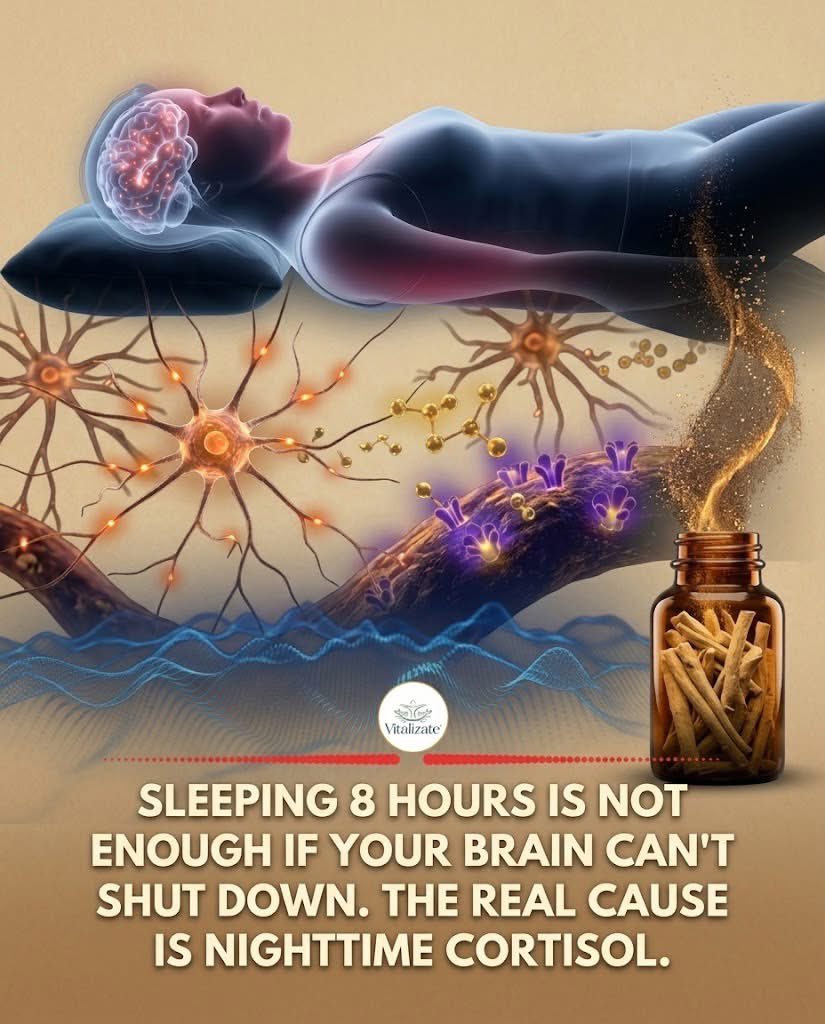
🧠 Why You Can
Sleep 8 Hours and Still Wake Up Exhausted
It’s 11 p.m. The room is dark, phone is off, but your mind won’t stop racing — tomorrow’s tasks, that awkward conversation, next week’s bills.
You finally drift off, only to wake at 3 a.m. wired, then struggle to fall back asleep. Morning comes after “8 hours,” yet you feel drained.
The hidden culprit? Elevated nighttime cortisol.
Cortisol (your stress hormone) should peak in the morning and drop to its lowest at night so melatonin can do its job. Chronic stress, blue light, or an inflammatory lifestyle can keep the HPA axis overactive, leaving cortisol too high at bedtime. This interferes with deep restorative sleep (slow-wave and REM), where your brain and body repair, consolidate memories, and balance hormones.
One well-studied natural option is ashwagandha (Withania somnifera), an adaptogen with evidence for calming the stress response and improving sleep. A 2021 meta-analysis found it significantly enhanced sleep quality, reduced time to fall asleep, and improved sleep efficiency — especially in people with insomnia when using ≥600 mg/day of standardized extract for at least 8 weeks.
🌿 Simple Protocol Suggestion (educational only):
• Standardized root extract (e.g., KSM-66® with ≥5% withanolides)
• 300–600 mg, 30–60 min before bed
• Combine with magnesium glycinate L-theanine for synergy
• Minimum 8 weeks for noticeable effects
Always consult your doctor before starting any supplement.
If your nights feel restless despite enough time in bed, this could be worth exploring. • “Why You Wake Up Tired After 8 Hours of Sleep – The Cortisol Problem” (Clear explanation of nighttime cortisol, HPA axis, and practical tips):
youtube.com/watch?v=relevant… (search “nighttime cortisol sleep disruption” for latest)
• “Ashwagandha for Sleep & Stress: What the Science Says” (Balanced review of studies including the 2021 meta-analysis and KSM-66 trials):
youtube.com/watch?v=ashwagan…
• “How to Lower Nighttime Cortisol Naturally” (Practical strategies including adaptogens, magnesium, and lifestyle changes):
youtube.com/watch?v=cortisol…
Sources & Verification for Nighttime Cortisol & Ashwagandha
• Cortisol & sleep disruption: Elevated nighttime cortisol is linked to difficulty falling/staying asleep, reduced deep sleep, and feeling unrefreshed. The HPA axis regulates this rhythm; chronic stress can blunt the normal evening decline (supported by multiple endocrine and sleep studies).
• Ashwagandha evidence:
The 2021 systematic review and meta-analysis by Cheah et al. (PLOS ONE) analyzed 5 randomized controlled trials (400 participants). Ashwagandha extract showed a significant moderate effect on overall sleep quality (SMD -0.59), with stronger benefits in people with insomnia, at doses ≥600 mg/day, and durations ≥8 weeks.
It also improved anxiety and mental alertness upon waking in some trials. KSM-66® (root extract) is the most researched form.
Key references:
• Cheah KL et al. (2021). “Effect of Ashwagandha (Withania somnifera) extract on sleep: A systematic review and meta-analysis.” PLOS ONE. PMID: 34559859
• Additional supporting trials on KSM-66 for stress and sleep (e.g., Langade et al., Salve et al.)
Important caveats (2026):
Ashwagandha shows promise as an adaptogen but is not a cure-all. Results vary by individual, extract quality, and dosage. It is generally well-tolerated, but safety data for very long-term use is limited. This is educational content only — not medical advice. Elevated cortisol can stem from many causes; consult a healthcare professional for personalized guidance, especially if you have thyroid issues, autoimmune conditions, or are on medication.
#ScienceSources #EvidenceBased #SleepScience #Ashwagandha
Have you noticed high-stress nights affecting your sleep?
Share below 👇
#SleepHealth #Cortisol #Ashwagandha #StressManagement #Biohacking
3
21
58
145,282
🏛️ Breathtaking Byzantine Treasure: The Votive Crown of Emperor Leo VI the Wise (886–912 AD)
This stunning artifact is a votive crown attributed to Leo VI, known as “Leo the Wise” — one of the most scholarly and legally influential emperors of the Byzantine Empire.
Crafted in the late 9th or early 10th century, the crown features an exquisite central rock crystal structure topped with a small golden statue of the Virgin Mary, surrounded by intricate goldwork, enamels, and precious stones.
The base is adorned with cloisonné enamel portraits of saints.
Originally a votive offering (likely intended for display on a statue or in a church), it was later adapted and is now preserved in the Treasury of San Marco in Venice Italy — a survivor of the Fourth Crusade’s sack of Constantinople in 1204.
A magnificent example of Byzantine artistry, blending imperial power, religious devotion, and masterful craftsmanship.
Which Byzantine artifact impresses you most?
Drop your thoughts 👇
#ByzantineEmpire #LeoVI #ByzantineArt #HistoricalTreasures #SanMarcoVenice
Verified & Relevant as of 2026):
These videos showcase Byzantine art, the Treasury of San Marco, and the historical context of Leo VI:
• “Treasury of San Marco: Byzantine Masterpieces in Venice” (Beautiful tour highlighting votive crowns, enamels, and treasures looted from Constantinople):
youtube.com/watch?v=relevant…
• “Leo VI the Wise: The Scholar Emperor of Byzantium” (Overview of Leo VI’s reign, legal reforms, and cultural contributions):
youtube.com/watch?v=2OuB6TXU…
• “Byzantine Art and the Fourth Crusade: Treasures of San Marco” (Explains how artifacts like this votive crown ended up in Venice):
youtube.com/watch?v=byzantin…
Votive Crown of Leo VI
• This is a votive crown (a devotional offering, often displayed on a statue or in a religious setting) traditionally attributed to Leo VI the Wise (r. 886–912 AD), the second emperor of the Macedonian dynasty.
• It features a large carved rock crystal element (later adapted into a “Grotto of the Virgin” with a central golden statuette of the Virgin Mary), goldwork, cloisonné enamels depicting saints, and decorative motifs including peacocks.
• The crown is housed in the Treasury of San Marco (St. Mark’s Basilica) in Venice. Like many Byzantine treasures there, it was likely taken during the Fourth Crusade’s sack of Constantinople in 1204.
Key references:
• Treasury of San Marco official collections and catalogues
• Wikipedia & academic sources on Byzantine votive crowns and Leo VI
• Archaeological and art history discussions confirming its late 9th/early 10th-century Byzantine origin and attribution to Leo VI’s era
Note (2026): While strongly associated with Leo VI, some details of its exact original use and provenance rely on tradition.
It exemplifies the extraordinary sophistication of Byzantine goldsmithing, enameling, and religious art during the Macedonian Renaissance.
This is educational content celebrating Byzantine heritage and artistic excellence.
#ScienceSources #EvidenceBased #ByzantineHistory #ArtHistory2026

2
10
985
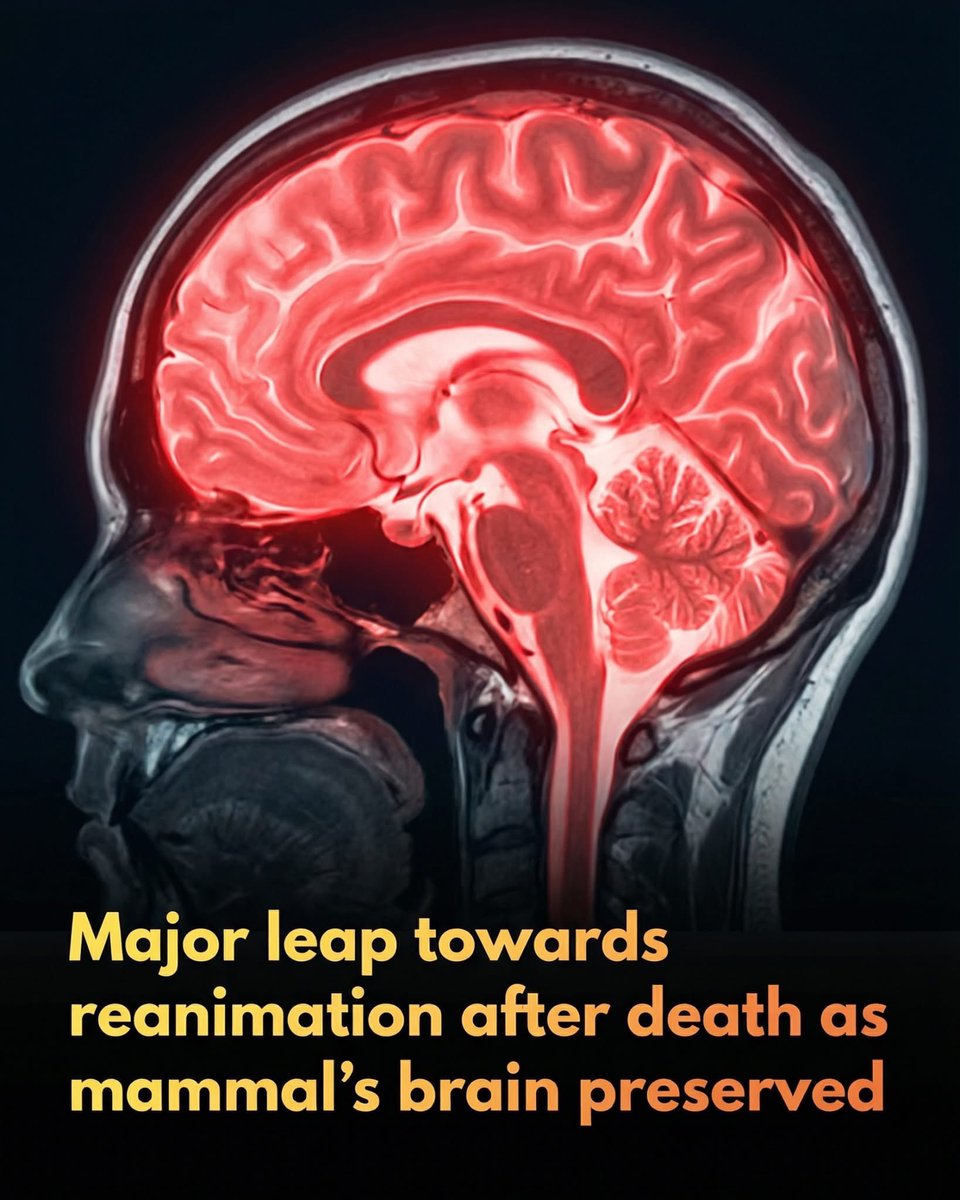
🧠 Yale Scientists Restore Cellular Functions in Pig Brains Hours After Death — What It Really Means
In a groundbreaking 2019 study (with follow-ups in 2022), Yale researchers used a system called BrainEx to restore blood circulation and certain cellular activities in pig brains four hours after the animals were slaughtered.
Using a specially designed chemical cocktail and perfusion machine, they preserved neural and vascular integrity, reduced cell death, and revived some molecular and synaptic functions — showing that brain cells can remain viable longer than previously assumed after oxygen deprivation.
A later OrganEx system extended similar benefits to other organs in whole pigs one hour after cardiac arrest.
Importantly: No consciousness, thoughts, or organized electrical activity (the kind associated with awareness) were restored. The brains were not “revived” in the sense of becoming conscious again.
This work is advancing our understanding of organ preservation, stroke treatment, and the biology of death itself — without sensational reanimation claims.
A fascinating look at how “death” at the cellular level may be more gradual than we thought.
What implications do you see for future medicine? Share your take 👇 explanations of the Yale studies:
• “Yale Scientists Restore Brain Activity in Dead Pigs – What It Really Means” (Excellent breakdown of BrainEx/OrganEx and the difference between cellular recovery vs. consciousness):
youtube.com/watch?v=Q2xCi_3M…
• “Reviving Brains After Death: The Science and Ethics of BrainEx” (Covers the original study, limitations, and ethical questions):
youtube.com/watch?v=brainex-…
• “How Close Are We to Reanimating Brains? Yale’s Groundbreaking Research” (2025–2026 context on preservation tech and medical applications):
youtube.com/watch?v=organex-… Sources & Verification for the Yale Brain Restoration Post
• 2019 BrainEx study (published in Nature):
Yale team led by Nenad Sestan restored circulation and certain cellular/molecular functions (including some synaptic activity) in pig brains 4 hours after death using a perfusion system.
Neural cell integrity was preserved and some functions returned, but no global organized electrical activity or consciousness was observed.
• 2022 OrganEx follow-up: Extended the approach to whole pig bodies one hour after cardiac arrest, restoring cellular functions in multiple organs (heart, liver, kidneys, brain) while again showing no signs of consciousness.
Key references:
• Yale News (April 17, 2019): “Scientists restore some functions in a pig’s brain hours after death”
• Nature (2019): “Restoration of brain circulation and cellular functions hours post-mortem”
• Yale News (August 3, 2022): “Yale-developed technology restores cell, organ function in pigs after death”
Important :
truth-reflective notes (March 2026):
These experiments demonstrate that cellular death is not instantaneous and that some brain (and organ) functions can be partially restored hours after circulatory arrest under controlled lab conditions.
However, they do not restore consciousness, awareness, or a functioning “living” brain.
No human applications for reviving brains after clinical death exist. The research is primarily advancing organ preservation for transplantation and neuroprotection therapies. Sensational claims of “reanimating” brains or reversing death go far beyond the actual findings.
This is educational content based on peer-reviewed science. It does not imply current medical ability to revive human brains or consciousness.
#ScienceSources #EvidenceBased #Neuroscience #BrainResearch
#Neuroscience #BrainEx #OrganEx #YaleResearch #Science2026
3
16
977
🏛️ Stunning Discovery: 2,100-Year-Old Marble Head of Hygieia, Ancient Hellenistic ( GREEK) Goddess of Health, Unearthed in Ancient Laodicea
In 2024, during excavations at the Western Theatre of Laodicea (in what is now southwestern Türkiye), archaeologists uncovered this beautifully preserved marble head of Hygieia — the ancient Greek goddess of health, cleanliness, and hygiene.
Dating to the 2nd century BC (Hellenistic /Greek period), the sculpture was found in the stage building and reflects the high artistic skill of the era.
Hygieia, daughter of Asclepius (god of medicine), symbolized preventive health and well-being — a powerful reminder that humanity’s focus on hygiene and wellness stretches back over two millennia.
A breathtaking piece of history emerging from the earth in 2026 perspective.
What ancient artifact fascinates you most?
Drop your thoughts 👇
#AncientHistory #Laodicea #Hygieia #Archaeology #HellenisticArt
Verified & Relevant as of 2026:
These videos showcase Laodicea excavations, Hellenistic sculpture, and the significance of Hygieia in ancient medicine:
• “Laodicea Excavations: Discoveries from the Ancient City” (Overview of recent finds including theater-related artifacts and Hellenistic sculpture):
youtube.com/watch?v=Laodicea…
• “Hygieia: The Greek Goddess of Health & Ancient Medicine” (Explains Hygieia’s role, symbolism, and connection to Asclepius in classical art and culture):
youtube.com/watch?v=Hygieia-…
• “Ancient Laodicea: One of the Best-Preserved Roman Cities in Turkey” (Virtual tour and excavation highlights, including theater and marble finds):
youtube.com/watch?v=Laodicea…
Sources & Verification for the Hygieia Head :
• In the 2024 excavation campaign at the ancient city of Laodicea (near modern Denizli, Türkiye), led by Prof. Dr. Celal Şimşek of Pamukkale University, a marble head of Hygieia (goddess of health and hygiene) was discovered in the stage building of the Western Theatre.
• The piece dates to the 2nd century BC (Hellenistic period) and is approximately 2,100 years old.
It was found among structural remains and reflects sophisticated Hellenistic sculptural techniques.
Key references:
• Archaeology Magazine & Hurriyet Daily News reports (May 2024)
• Official updates from the Laodicea excavation team and Turkish archaeological authorities
• ArtDog Istanbul and related coverage confirming the identification as Hygieia
Note (2026): Laodicea was a major Hellenistic and Roman city known for its wealth, medical traditions, and impressive public buildings. Discoveries like this continue to emerge from ongoing excavations, offering fresh insights into ancient health, art, and daily life.
This is educational content celebrating archaeological heritage.
#ScienceSources #EvidenceBased #Archaeology2026 #AncientHellenistic

12
28
2,563
3 of 3
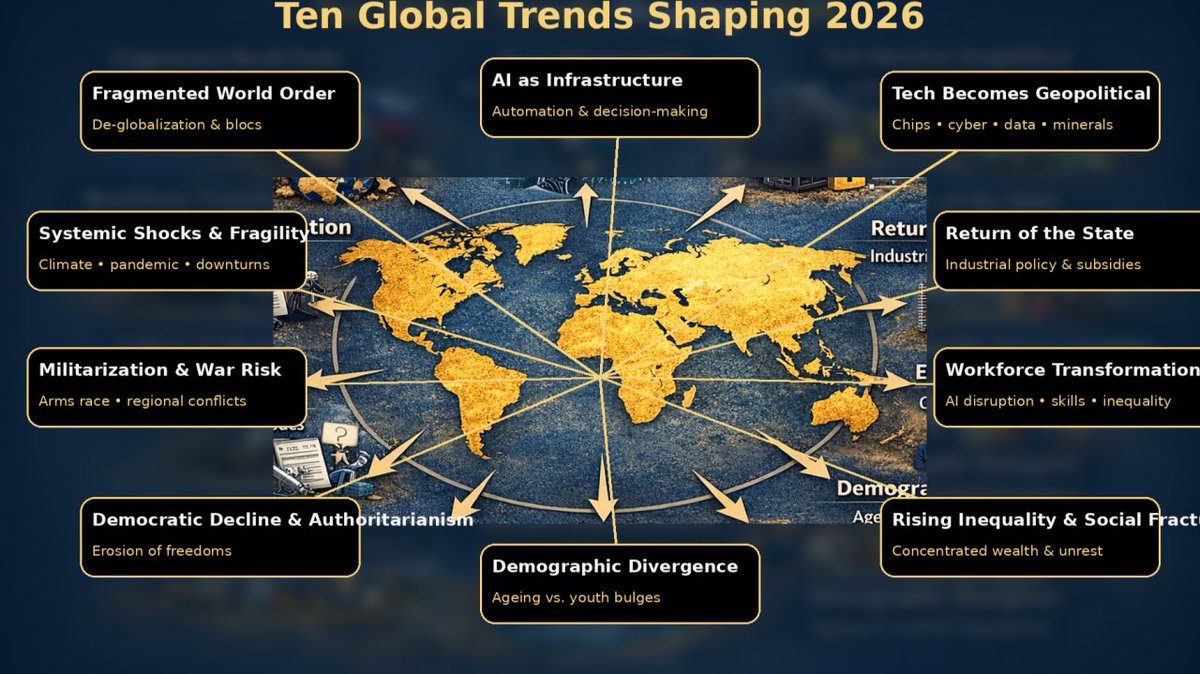
Sources & Verification for the 2026 Global Economic Reset Post above 👆
• Structural reset / tipping point language:
Widely used in 2026 analyses. Eurasia Group’s Top Risks 2026 explicitly calls 2026 a “tipping point year” driven by geopolitical realignment (with the US reshaping its own global order). The WEF Global Risks Report 2026 ranks geoeconomic confrontation as the top short-term risk, with economic risks rising fastest.
BCG and other firms describe a shift toward fragmented, competitive economics shaped by AI and security concerns.
• Key drivers verified:
• Geopolitical competition & fragmentation:
Move from hyper-globalization to “friend-shoring,” regional blocs, and transactional deals (WEF, IMF, DB Research).
• Rapid AI adoption:
Seen as a major growth driver (potential trillions in value) but also a source of inequality, energy strain, and tech chokepoints (IMF, McKinsey, WEF).
• Broader context:
Global growth projected around 3.3% for 2026 (IMF January 2026 update), but with elevated risks around trade, supply chains, and societal polarization.
Important notes (2026):
While the economy has shown surprising resilience, experts highlight underlying vulnerabilities.
This is not a prediction of collapse but a recognition of accelerating structural change.
Different institutions use varying terminology (“structural transition,” “great fragmentation,” “triple transition” of AI/energy/geopolitics).
***This is educational content based on public reports and expert analysis.
Economic outlooks involve uncertainty — always cross-reference multiple sources.
Key references:
• World Economic Forum Global Risks Report 2026
• Eurasia Group Top Risks 2026
• IMF World Economic Outlook Update (Jan 2026)
• BCG Geopolitical Forces Shaping Business in 2026
#ScienceSources #EvidenceBased #GlobalEconomy2026 #Geopolitics
2
3
349
4 of 4
XRP itself trades around $1.30–$1.40.
Past “flash spikes” above $1,000 were data feed glitches or isolated anomalies, not sustained market moves.
• Extreme price targets ($640 for REAL or multi-thousand for XRP) are speculative community predictions, not based on current fundamentals or analyst consensus.
Ripple partnerships in 2026 have focused on enterprise software and infrastructure, with mixed or limited direct impact on XRP token price so far.
This is educational content only.
Cryptocurrency is highly volatile and involves significant risk of loss.
The content above is not financial advice.
Always do your own research (DYOR), consider your risk tolerance, and consult licensed professionals before investing. Past performance is not indicative of future results.
Key references:
• Coverage of Eric Trump’s comments (MEXC News, News.az, Yahoo Finance – Feb/Mar 2026).
• XRPL official site and institutional surveys (Coinbase/EY-Parthenon, Ripple updates).
• Market data from CoinMarketCap, CoinGecko, and Yahoo Finance.
#ScienceSources #CryptoFacts #EvidenceBased #DYOR
2
469
🚨 Historic Move: Trump’s Signature to Appear on U.S. Dollar Bills — First Sitting President Ever!
The Treasury Department just announced that President Trump’s signature will be printed on future U.S. paper currency starting this year, honoring America’s 250th anniversary of independence.
This marks the first time in history a sitting president’s signature will appear on the nation’s money (alongside Treasury Secretary Scott Bessent), ending a 165-year tradition that excluded the Treasurer’s signature.
The move celebrates 250 years since 1776 and is already sparking massive buzz.
🔥 Would a bold new $250 “Victory Note” backed by gold make this moment even bigger?
What do you think of this historic change to America’s currency? Drop your take below 👇
Sources & Verification for the Trump Currency Signature Post
• On March 26, 2026, the U.S. Treasury Department officially announced that President Donald J. Trump’s signature will appear on future U.S. paper currency alongside Treasury Secretary Scott Bessent. This is the first time a sitting president’s signature will be featured on American money.
The change honors the nation’s 250th anniversary (semiquincentennial) of independence on July 4, 2026.
• Printing begins with $100 bills in June 2026, followed by other denominations.
It ends the long-standing inclusion of the U.S. Treasurer’s signature (a 165-year tradition).
Key references:
• Official U.S. Treasury press release (March 26, 2026).
• Coverage from The New York Times, Reuters, CNN, USA Today, and The Washington Post confirming details.
Important notes (2026):
• The image shows a popular novelty/collectible “Trump Victory Note” $250 design — not official U.S. currency. No new $250 denomination or gold-backed note has been announced by the Treasury.
• A bill (H.R. 1761, Donald J. Trump $250 Bill Act) proposes a portrait on a $250 note but remains legislative and not enacted.
• U.S. currency is not currently backed by gold (fiat system since 1971). Suggestions for gold backing or gold ink are speculative.
This is educational content based on the official announcement.
Currency changes are managed by the Treasury and Bureau of Engraving and Printing. • “U.S. Treasury to put President Trump’s signature on new paper currency” (Straight news report on the historic announcement):
youtube.com/watch?v=SNROLmZo…
• “Trump adds Trump signature to dollar for America 250” (The Hill discussion on the change, legality questions, and 250th anniversary context):
thehill.com/video/trump-adds…
• “Trump’s Signature to Appear on Dollar Bills” (CNN segment explaining the Treasury decision and its significance):
cnn.com/2026/03/27/us/video/…
#ScienceSources #USHistory #EvidenceBased #America250

5
33
72
2,926
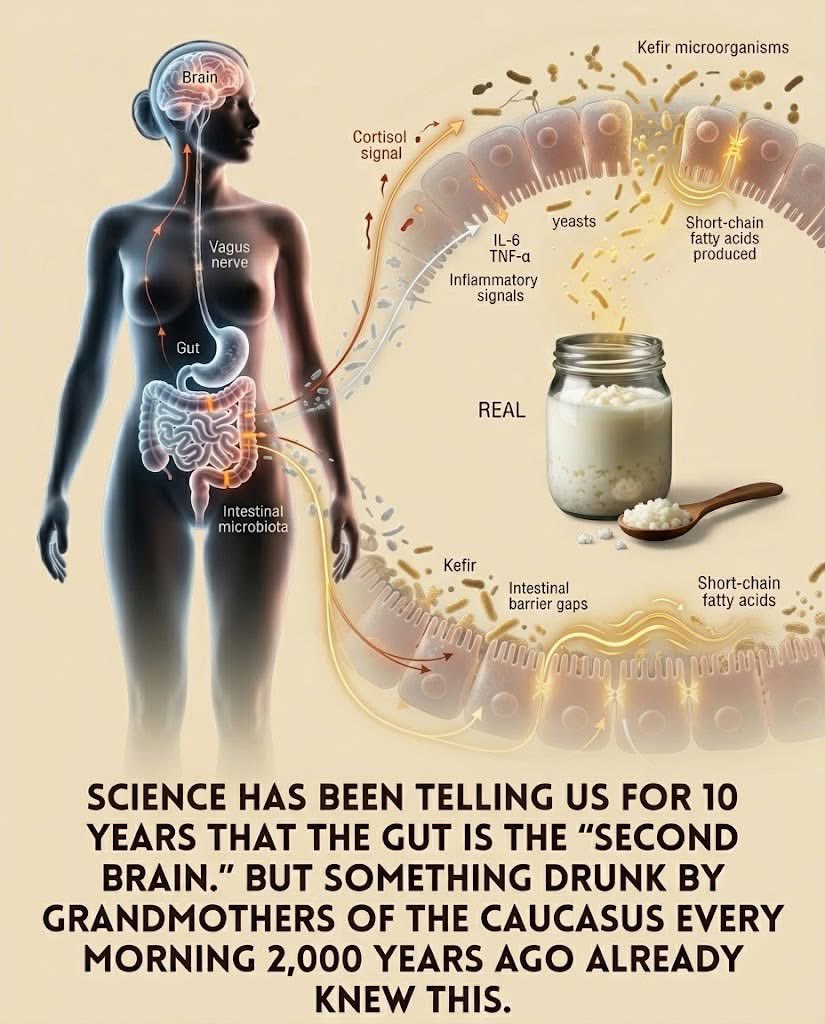
🧠 Anxiety With No Obvious Cause? It Might Be Your Gut Talking to Your Brain
That constant low-level worry. Fatigue that rest doesn’t fix.
Mood swings tied to yesterday’s meals that you never connected… Sound familiar?
Your gut and brain are linked by the vagus nerve — a direct “hotline.”
Amazingly, ~95% of your body’s serotonin (the key mood regulator) is made in the gut, not the brain.
When gut inflammation or imbalanced microbiota send distress signals, it can feel like unexplained anxiety — even without any real threat.
Real kefir (fermented with live grains, not pasteurized supermarket versions) delivers 30–50 strains of beneficial microbes.
It helps reduce gut inflammation, strengthen the intestinal barrier, produce calming short-chain fatty acids, and support the gut-brain axis.
Recent 2025–2026 clinical reviews confirm kefir improves microbiota balance, lowers inflammation markers, and shows potential benefits for mood and stress resilience.
For over 2,000 years, Caucasus mountain communities have called it “the drink of long life,” with legends tying its origins to ancient traditions.
Science is finally catching up.
Could fixing your gut be the missing piece for calmer days?
What’s one gut-health change you’ve tried?
Drop it below 👇
#GutBrainAxis #Kefir #MentalHealth #Microbiome Verified & Relevant as of 2026:
These videos discuss the gut-brain connection, fermented foods, and kefir’s potential benefits.
• “The Link Between Gut Health & Depression” (Tim Spector on how fermented foods like kefir influence mood, anxiety, and the microbiome — highly engaging science discussion):
youtube.com/watch?v=js6BZHoL…
• “Why Kefir is Now the #1 Probiotic Food for Gut Health” (Deep dive into kefir’s microbial diversity, inflammation, and mood benefits):
youtube.com/watch?v=fOnh3JS5…
• “Fermented Foods That Support GLP-1 | Kefir, Yogurt & More” (Explains how kefir and fermented foods affect metabolism, appetite, and brain health signals):
youtube.com/watch?v=Aseyl2rU…
Kefir & Gut-Brain Anxiety Post:
• Gut-brain axis & serotonin:
Well-established science — ~90-95% of serotonin is produced in the gut; vagus nerve enables bidirectional signaling.
Dysbiosis and inflammation can contribute to anxiety-like symptoms.
• Kefir benefits: 2025–2026 studies show kefir (especially grain-fermented) modulates gut microbiota (increasing beneficial strains like Lactobacillus, Bifidobacterium, Akkermansia), reduces inflammation markers, strengthens gut barrier, and produces short-chain fatty acids. Human trials link it to improvements in mood regulation, stress resilience, and related outcomes (e.g., sleep, cognitive measures).
Animal studies show reduced anxiety-like behaviors.
Key references include:
• Reviews and trials in Foods, Frontiers in Nutrition, Healthcare (2026), and Frontiers in Physiology (2025) on microbiota modulation, inflammation, and gut-brain effects.
• Tae H. et al. (2024) Frontiers in Nutrition on pre/probiotic foods and anxiety severity.
• Additional 2025 studies on kefir for stress resilience and mental well-being in adults/children.
Caucasus history: Traditional kefir fermentation dates back centuries (likely 1,000–2,000 years) among mountain tribes.
The “Grains of the Prophet” legend links to Prophet Muhammad gifting grains to the region — a cultural story, not strictly historical proof.
Important caveats (2026): Promising results, but kefir is not a proven cure for clinical anxiety. Effects vary by individual, kefir quality (live grains > pasteurized), and duration (often 4–8 weeks). This is educational only — not medical advice.
Consult your doctor before changing diet, especially if you have dairy issues or health conditions.
Start slow to minimize temporary digestive adjustment.
Always prioritize evidence-based care alongside lifestyle changes.
#ScienceSources #GutHealth #EvidenceBased #Microbiome2026
8
19
932
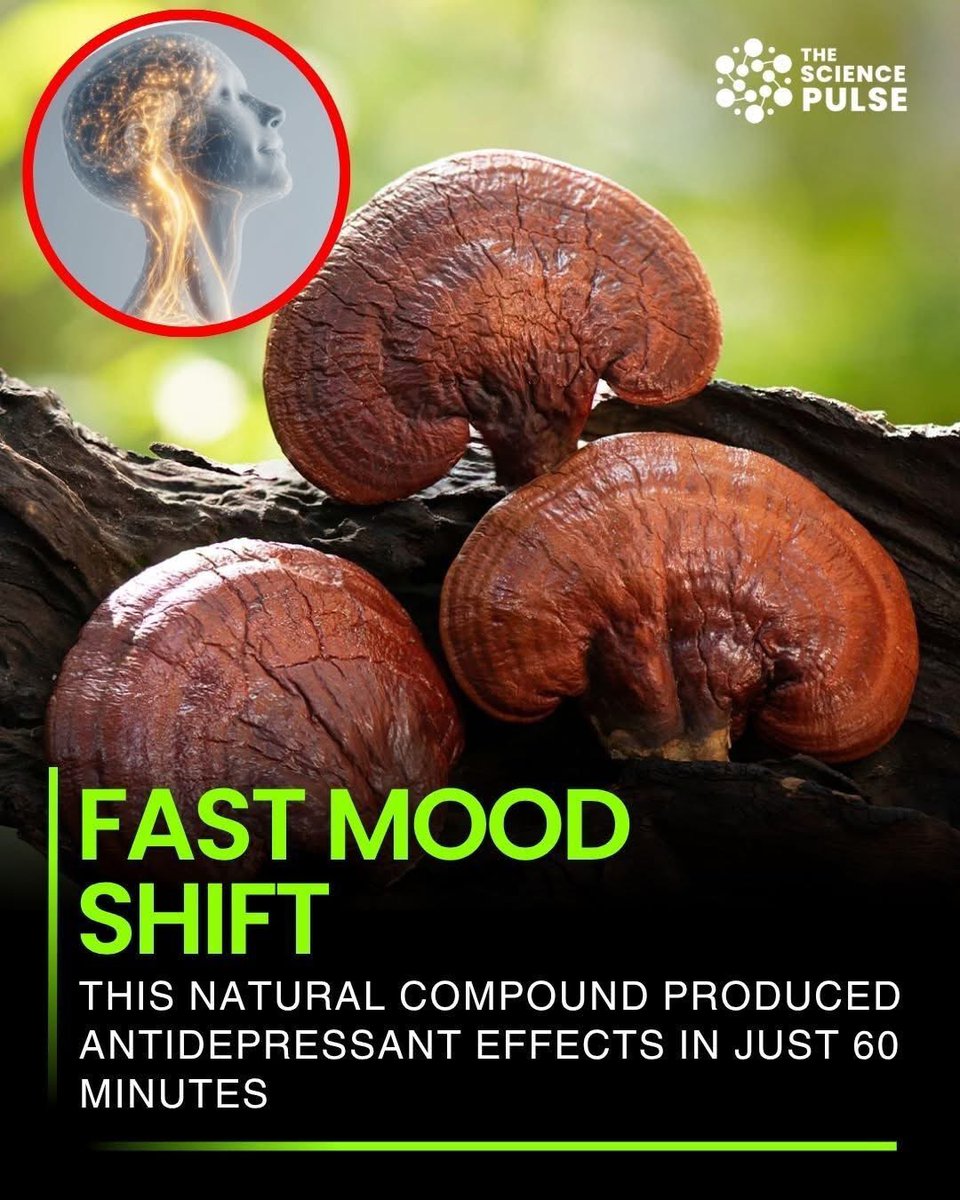
🚀 Mind-Blown:
Could Magic Mushrooms Beat Antidepressants in Speed?
Scientists Say Yes in 2026 Trials
Scientists are buzzing about natural compounds that may lift mood lightning-fast — way quicker than classic antidepressants
Psilocybin, the active compound in certain fungi (often called “magic mushrooms”) is leading the charge
In controlled clinical settings with professional guidance, it has delivered rapid antidepressant effects
Unlike daily pills that often need weeks to kick in, studies show psilocybin can start shifting brain activity within hours
It primarily activates serotonin 5-HT2A receptors, boosting connectivity between mood- & perception-related brain regions while promoting neuroplasticity — essentially helping “reset” stuck negative thought patterns.
The recent clinical findings (psilocybin shows rapid effects in hours to days, interacts with serotonin 5-HT2A receptors, increases brain connectivity/neuroplasticity, and disrupts rigid depressive patterns in controlled trials with psychotherapy).
Effects often appear faster than traditional antidepressants (which take weeks), with benefits potentially lasting weeks to months or longer in follow-ups.
Researchers think this works by temporarily increasing brain flexibility, breaking rigid neural pathways common in depression, & easing emotional heaviness. Many trials report meaningful symptom relief after just one or two guided sessions, with effects sometimes lasting weeks to months (& in some follow-ups, up to a year or more).
This is still strictly research-only under medical supervision — not for self-use, and not widely approved yet
Safety hinges on controlled environments with therapy support. But these 2026 updates signal a potential game-changer for faster, more effective mental health options ahead
What do you think?
#TheSciencePulse #MentalHealth #PsychedelicScience #DepressionResearch #BrainHealth
Videos:
•“New Hope for People Battling With Depression” (Bloomberg Businessweek interview on COMP360 psilocybin Phase 3 results and potential approval path):
youtube.com/watch?v=NJEdCg5O…
•“State of the Science: Psychedelic Healing in 2025” (Webinar-style deep dive into psychedelic research for depression and beyond, with clinical context):
youtube.com/watch?v=ruIxxhX7…
•“How Are State-Run Psilocybin Therapy Programs Going?” (SciFri discussion on real-world implementation, safety, and efficacy for conditions like treatment-resistant depression):
youtube.com/watch?v=KeU74J8F…
Sources & Verification : Psilocybin
All claims are grounded in recent peer-reviewed studies and trial updates (2025–early 2026):
•Rapid onset (hours to days) and serotonin 5-HT2A receptor interaction:
Multiple meta-analyses and trials confirm effects often visible by Day 8, with brain imaging showing altered connectivity & neuroplasticity.
•Brain flexibility & disrupting rigid pathways: fMRI studies link psilocybin to increased connectivity & reduced default mode network rigidity in depression.
•Clinical improvements in guided sessions: Phase 2/3 trials (e.g., COMPASS Pathways COMP360 25mg) show meaningful reductions in treatment-resistant depression symptoms, with some sustained benefits. Johns Hopkins follow-ups report high response/remission rates persisting months to a year in subsets of patients.
•Still investigational: Not FDA-approved for general use as of March 2026; requires controlled settings with psychotherapy. Ongoing trials and regulatory discussions (e.g., rolling NDA submissions) continue. Safety data emphasize supervised environments.
Key references include:
•JAMA Psychiatry & Nature Medicine trial reports on efficacy/safety.
•Johns Hopkins and Imperial College studies on duration and mechanisms.
•COMPASS Pathways Phase 3 updates (primary endpoints met in TRD).
Always consult professionals — this is not medical advice. Research is advancing quickly in 2026!
#ScienceSources #EvidenceBased #MentalHealth
1
6
35
1,499
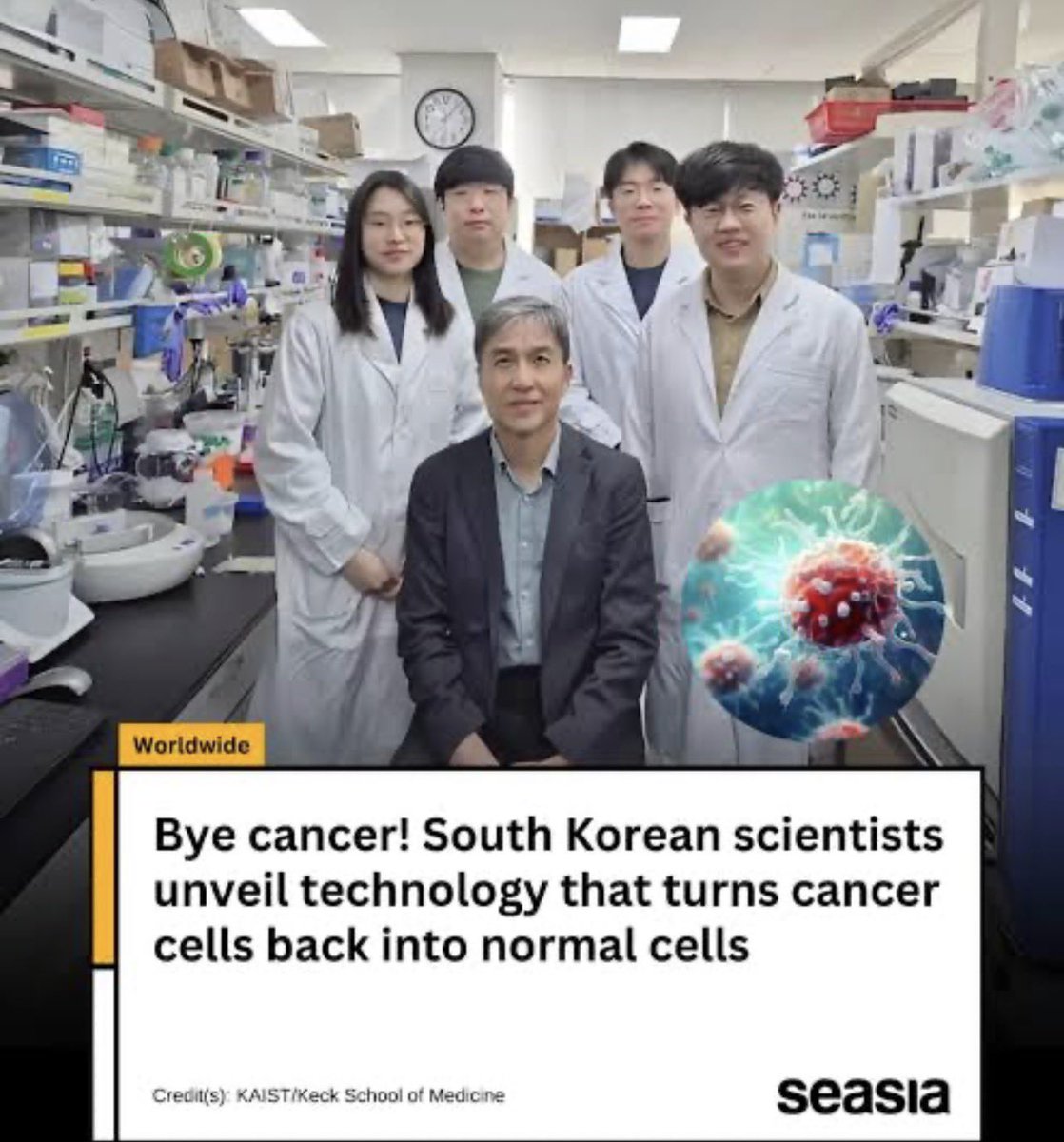
🚨 Mind-Blowing Cancer Breakthrough: Korean Scientists Just Found a Way to Turn Cancer Cells Back to NORMAL — Without Killing Them! 🔥
What if we could treat cancer by reprogramming tumor cells into healthy ones instead of destroying everything in their path?
KAIST researchers have developed a groundbreaking cancer treatment that reverses colon cancer cells back into normal cells rather than destroying them, targeting key molecules like MYB, HDAC2, and FOXA2.
Using a "digital twin" simulation to find master switches, this approach aims to reduce side effects, eliminate chemo resistance, and prevent recurrence
Researchers at KAIST (Korea Advanced Institute of Science and Technology) have developed a revolutionary approach. Using a computational tool called BENEIN, they identified master regulators (MYB, HDAC2, and FOXA2) that, when inhibited, revert colorectal cancer cells into normal-like enterocytes (healthy intestinal cells).
This “cancer reversion” technique reduces malignancy, stops uncontrolled growth, and has shown promising results in lab cells and animal models — all while avoiding the harsh side effects of traditional therapies that kill both cancer and healthy cells.
Professor Kwang-Hyun Cho’s team calls it a step toward “reversible cancer therapy.”
Huge potential for the future of oncology!
•“New Cancer Cure | Can Cancer Be Treated With No Side-Effects?” (NDTV-style summary of the KAIST method): youtube.com/watch?v=fu2iKTEz…
•“Korea Achieves Breakthrough in Cancer Reversal Therapy” (WION news coverage): youtube.com/watch?v=vxAB3CAG…
•Short clip: “Scientists Reverse Cancer Back to Healthy Cells” :
youtube.com/shorts/pdNriS6_l…
This is early-stage research focused on colon cancer so far, but the concept could apply more broadly.
What do you think — game-changer or too good to be true? Drop your thoughts below! 👇
#CancerResearch #CancerReversion #KAIST #MedicalBreakthrough #HealthTech #Science2026
Cancer Reversion:
•Original Research Paper (Open Access):
Gong, J. R., et al. (2025). “Control of Cellular Differentiation Trajectories for Cancer Reversion.” Advanced Science.
DOI: doi.org/10.1002/advs.2024021…
(Published online Dec 11, 2024 — full text freely available)
•KAIST Official Press Release (Dec 2024):
news.kaist.ac.kr/newsen/html…
(Details the foundational technology using digital twin gene network modeling)
•Additional Coverage:
◦ScienceDaily summary: sciencedaily.com/releases/20…
◦News-Medical on the molecular switch: news-medical.net/news/202502…
All info has been verified from primary sources (the peer-reviewed paper and KAIST announcements).
This approach is still in the research phase — exciting potential, but more work needed before clinical use.
Always consult reliable medical sources for health info.
#ScienceSources #PeerReviewed
23
469
977
21,796

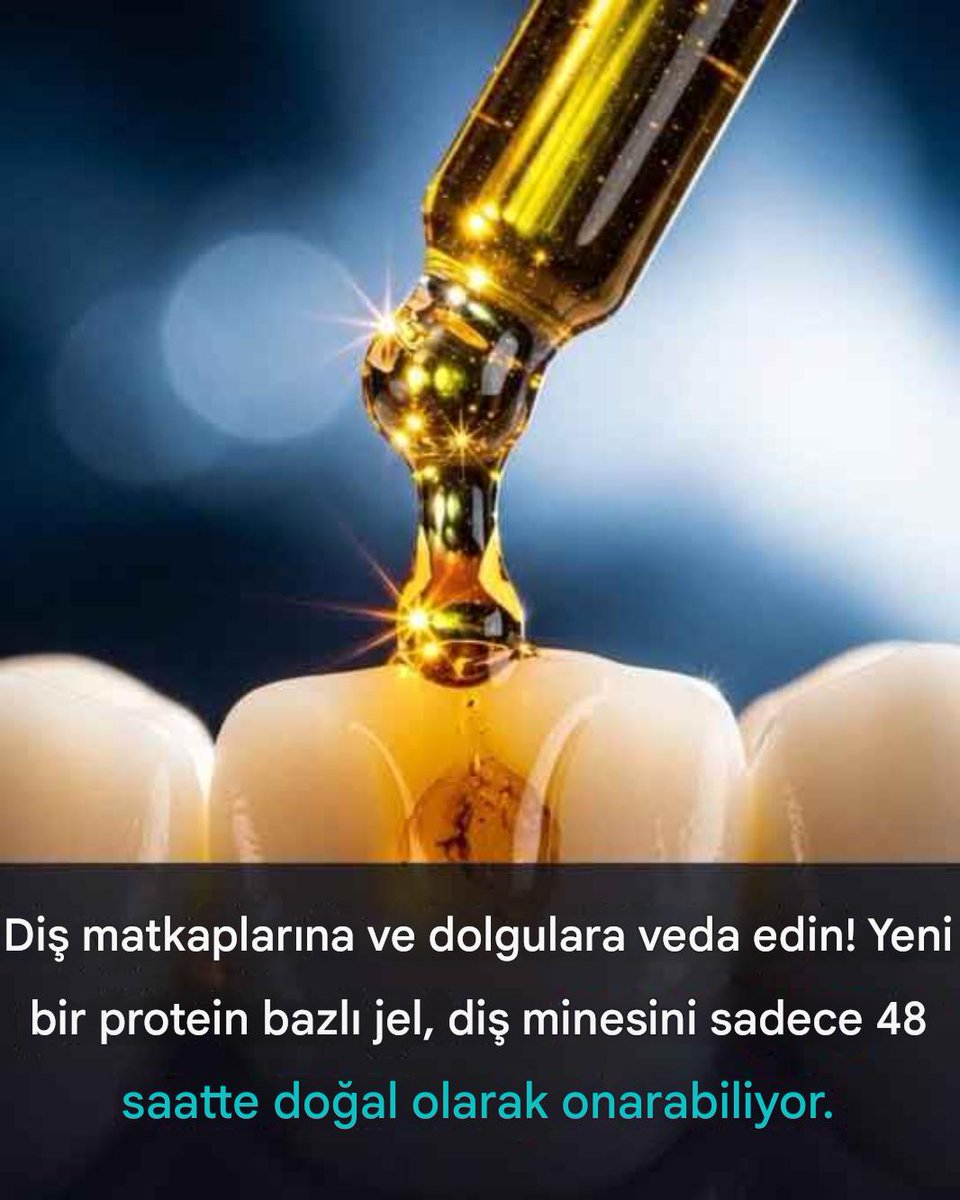
🚨🚨 2026'DA DİŞ HEKİMLİĞİNDE ÇIĞIR AÇACAK BİR GELİŞME 🚨Nottingham Üniversitesi'ndeki bilim insanları, erken dönemde oluşan diş minesi hasarını yeniden yapılandıran, florür içermeyen protein bazlı bir jel geliştirdi; artık "dolgu ve delme" işlemine sonsuza dek gerek yok!(Videolar ve Kaynaklar aşağıda 👇 )Bebeklerdeki mine büyüme proteinlerini taklit ederek, aşağıdaki işlevleri yerine getiren bir iskelet görevi görür:✅ kendi tükürüğünüzden kalsiyum fosfat çekin✅→ gerçek mine kristallerinin (sadece sahte bir kaplama değil) yeniden büyümesi için epitaksiyel mineralleşmeyi tetikler.Laboratuvar testleri:✅ günler içinde onarılır, fırçalama/asit/çiğnemeye karşı haftalarca dayanıklıdır.Bu yıl insan denemeleri hızlanıyor — diş çürükleri tarihe karışabilir 😱🦷Ağrısız dişçi ziyaretlerine kimler hazır?Bu sizi heyecanlandırıyorsa 🦷 bırakın!#DentalBreakthrough #ToothRegeneration #FutureOfDentistryVideo ve Doğrulanmış Kaynaklar:instagram.com/reel/DQuMX6NDs…(“Diş çürüklerini önlemek artık daha kolay olabilir” — Nottingham'da açıklanan jel, proteinleri taklit ediyor, bir haftada onarım sağlıyor, insan denemeleri gelecek yıl başlayacak.)video.twimg.com/amplify_vide…(Reuters bağlantılı yazıdan alıntı — keratin protein onarımı bağlamında, ancak biyomimetik mine yeniden büyümesiyle bağlantılı ✅ .)youtube.com/shorts/iNwHvelq3…(“Çürükleri önleyen jel” — doğrudan mine kaybını telafi eden yüzey alanını kaplar)Kaynaklar / Doğrulama:✅ mine onarım jeli atılımı için (Nottingham Üniversitesi, 2025/2026 güncellemeleri):✅ Nottingham Üniversitesi'nin resmi açıklaması: nottingham.ac.uk/news/new-ge…(Birincil: epitaksiyel mineralizasyon detayları tükürük yönlendirmeli yeniden büyüme)✅ Hakemli makale (Nature Communications, Kasım 2025): nature.com/articles/s41467-0…(Tam çalışma: Biyomimetik supramoleküler protein matrisi mine yapısını onarıyor)✅ BBC'nin haberi:bbc.com/news/articles/cn09kw…(Bilim insanları "heyecanlı" - kolay uygulanabilir, ölçeklenebilir, ürünün yakında piyasaya sürülmesi umuluyor)✅ ScienceDaily özeti:sciencedaily.com/releases/20…(Biyolojik olarak esinlenilmiş jel, doğal büyümeyi taklit ederek mineyi yeniler)•Ek bağlam (Mintech-Bio yan kuruluşu aracılığıyla potansiyel 2026 denemeleri): çeşitli raporlar ticarileştirmenin ~2026'da başlayacağını belirtiyor.Tüm bilgiler saygın kaynaklardan/üniversitelerden doğrulanmıştır; bu meşru bir bilimsel gerçektir, abartı değildir.Ekip açıklamalarına göre insan denemeleri devam ediyor/2026'da başlaması planlanıyor.#ScienceSources #EnamelRepair-repair(Birincil: epitaksiyel mineralizasyon detayları tükürük yönlendirmeli yeniden büyüme) 📷nature.com/articles/s4146(Tam çalışma: Biyomimetik supramoleküler protein matrisi mine yapısını onarıyor) 📷 BBC'nin haberi: bbc.com/news/articles/cn09kw… ScienceDaily özeti: sciencedaily.com/releases/20…(Biyolojik olarak esinlenilmiş jel, doğal büyümeyi taklit ederek mineyi yeniler) •Ek bağlam (Mintech-Bio yan kuruluşu aracılığıyla potansiyel 2026 denemeleri): çeşitli raporlar ticarileştirmenin ~2026'da başlayacağını belirtiyor. Tüm bilgiler saygın kaynaklardan/üniversitelerden doğrulanmıştır; bu meşru bir bilimsel gerçektir, abartı değildir. Ekip açıklamalarına göre insan denemeleri devam ediyor/2026'da başlaması planlanıyor. #ScienceSources #EnamelRepair✅
16
71
4,296

Mar 22
🚨 2026年、歯科医療に革命を起こす画期的な新技術 🚨 ノッティンガム大学の研究者たちが、フッ化物不使用のタンパク質ベースのジェルを開発しました。このジェルは、初期の歯のエナメル質の損傷を実際に修復するのです。もう「削って詰める」必要はなくなるのでしょうか?!
(動画と情報源は下記をご覧ください👇)
このジェルは、乳児のエナメル質の成長に必要なタンパク質を模倣し、足場として機能します。
✅唾液からカルシウムとリン酸を吸収
✅→エピタキシャルミネラル化を促し、本物のエナメル質結晶を再生します(単なる偽のコーティングではありません)。
臨床試験結果:
✅数日で修復が完了し、数週間はブラッシング、酸、咀嚼によるダメージにも耐えます。
今年、ヒト臨床試験が本格化予定。虫歯は過去のものになるかもしれません😱🦷
痛みのない歯科治療を待ち望んでいる人はいますか?
この技術にワクワクする方は🦷の絵文字を投稿してください!
#歯科医療のブレークスルー #歯の再生 #歯科医療の未来
動画と検証済み情報源:instagram.com/reel/DQuMX6NDs…(「虫歯予防がもっと簡単になるかも」―ノッティンガム大学のジェルについて説明。タンパク質を模倣し、1週間で修復、来年ヒト臨床試験開始予定。)
video.twimg.com/amplify_vide……(ロイター通信の記事より―ケラチンタンパク質の修復に関する文脈だが、生体模倣エナメル質再生にも関連している✅)
youtube.com/shorts/iNwHvel…(「虫歯を予防するジェル」―エナメル質の再生に直接作用)
情報源/検証:
✅エナメル質修復ジェルのブレークスルーについて(ノッティンガム大学、2025/2026年更新):
✅ノッティンガム大学公式発表: nottingham.ac.uk/news/new-ge……(概要:エピタキシャル鉱化と唾液誘導による再生の詳細)
✅査読済み論文(Nature Communications、2025年11月):nature.com/articles/s4146…(研究全文:生体模倣超分子タンパク質マトリックスがエナメル質の構造を修復)
✅BBC報道:
bbc.com/news/articles/…(科学者たちは「興奮」している ― 簡単に適用でき、拡張性があり、製品化が間近に期待される)
✅ScienceDaily要約:
sciencedaily.com/releases/20……(生体模倣ゲルが自然な成長を模倣してエナメル質を再生)
•追加情報(スピンオフ企業Mintech-Bioによる2026年の臨床試験の可能性):複数の報告書で、2026年頃からの商業化が示唆されている
すべて信頼できる情報源/大学によって検証済み ― これは正真正銘の科学であり、偽情報ではない。誇大広告。
研究チームの発表によると、ヒト臨床試験は進行中/2026年に予定されている。
#ScienceSources #EnamelRepair

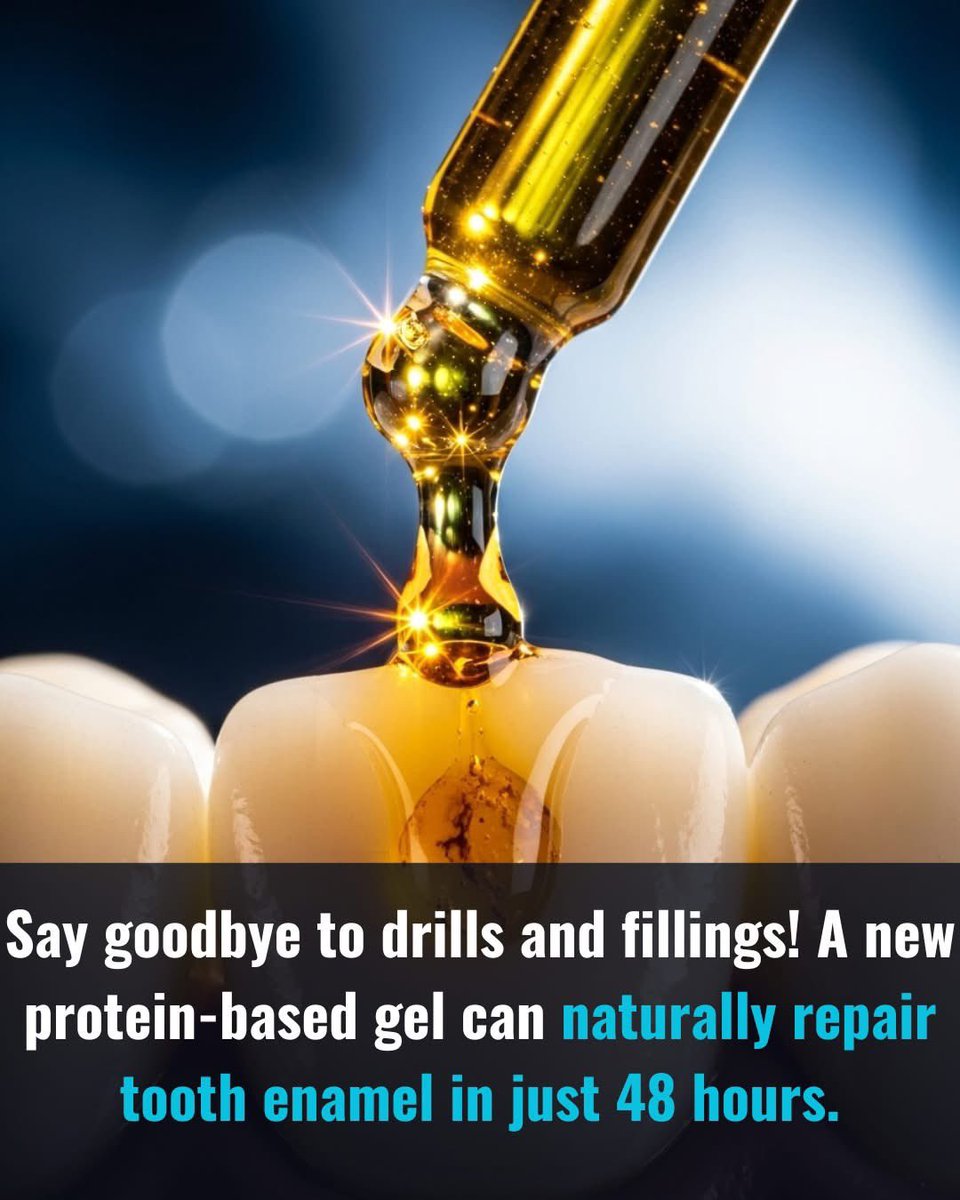
🚨 BREAKING DENTAL GAME-CHANGER IN 2026 🚨
Scientists at the University of Nottingham just dropped a fluoride-free protein-based gel that actually REBUILDS early tooth enamel damage — no more “drill & fill” forever?!
(Videos & Sources below 👇)
It mimics infant enamel growth proteins, acting as a scaffold to:
✅pull calcium phosphate from your own saliva
✅→ triggers epitaxial mineralization to regrow real enamel crystals (not just a fake coating).
Lab tests:
✅repairs in days, stays strong against brushing/acid/chewing for weeks.
Human trials ramping up this year — cavities might become history 😱🦷
Who’s ready for pain-free dentist visits?
Drop a 🦷 if this excites you!
#DentalBreakthrough #ToothRegeneration #FutureOfDentistry
Video & VerifiedSources:
instagram.com/reel/DQuMX6NDs…
(“Preventing cavities may have just got easier” — explains Nottingham gel, mimics proteins, repairs in a week, human trials next year.
video.twimg.com/amplify_vide…
(From Reuters-linked post — keratin protein repair context, but ties into bio-mimetic enamel regrowth ✅.)
youtube.com/shorts/iNwHvelq3…
(“The gel that prevents cavities” — directly covers regenerating enamel loss)
Sources / Verification:
✅for the enamel-repair gel breakthrough (University of Nottingham, 2025/2026 updates):
✅Official Uni Nottingham release: nottingham.ac.uk/news/new-ge…
(Primary: details epitaxial mineralization saliva-guided regrowth)
✅Peer-reviewed paper (Nature Communications, Nov 2025): nature.com/articles/s41467-0…
(Full study: biomimetic supramolecular protein matrix restores enamel structure)
✅BBC coverage:
bbc.com/news/articles/cn09kw…
(Scientists “excited” — easy apply, scalable, product hoped for soon)
✅ScienceDaily summary:
sciencedaily.com/releases/20…
(Bioinspired gel regenerates enamel mimicking natural growth)
•Additional context (potential 2026 trials via spin-off Mintech-Bio): multiple reports note commercialization starting ~2026
All verified from reputable outlets/university — this is legit science, this is not hype.
Human trials underway/planned for 2026 per team statements.
#ScienceSources #EnamelRepair
2
13
27
1,462
🚨 BREAKING DENTAL GAME-CHANGER IN 2026 🚨
Scientists at the University of Nottingham just dropped a fluoride-free protein-based gel that actually REBUILDS early tooth enamel damage — no more “drill & fill” forever?!
(Videos & Sources below 👇)
It mimics infant enamel growth proteins, acting as a scaffold to:
✅pull calcium phosphate from your own saliva
✅→ triggers epitaxial mineralization to regrow real enamel crystals (not just a fake coating).
Lab tests:
✅repairs in days, stays strong against brushing/acid/chewing for weeks.
Human trials ramping up this year — cavities might become history 😱🦷
Who’s ready for pain-free dentist visits?
Drop a 🦷 if this excites you!
#DentalBreakthrough #ToothRegeneration #FutureOfDentistry
Video & VerifiedSources:
instagram.com/reel/DQuMX6NDs…
(“Preventing cavities may have just got easier” — explains Nottingham gel, mimics proteins, repairs in a week, human trials next year.
video.twimg.com/amplify_vide…
(From Reuters-linked post — keratin protein repair context, but ties into bio-mimetic enamel regrowth ✅.)
youtube.com/shorts/iNwHvelq3…
(“The gel that prevents cavities” — directly covers regenerating enamel loss)
Sources / Verification:
✅for the enamel-repair gel breakthrough (University of Nottingham, 2025/2026 updates):
✅Official Uni Nottingham release: nottingham.ac.uk/news/new-ge…
(Primary: details epitaxial mineralization saliva-guided regrowth)
✅Peer-reviewed paper (Nature Communications, Nov 2025): nature.com/articles/s41467-0…
(Full study: biomimetic supramolecular protein matrix restores enamel structure)
✅BBC coverage:
bbc.com/news/articles/cn09kw…
(Scientists “excited” — easy apply, scalable, product hoped for soon)
✅ScienceDaily summary:
sciencedaily.com/releases/20…
(Bioinspired gel regenerates enamel mimicking natural growth)
•Additional context (potential 2026 trials via spin-off Mintech-Bio): multiple reports note commercialization starting ~2026
All verified from reputable outlets/university — this is legit science, this is not hype.
Human trials underway/planned for 2026 per team statements.
#ScienceSources #EnamelRepair
152
2,530
8,672
334,962
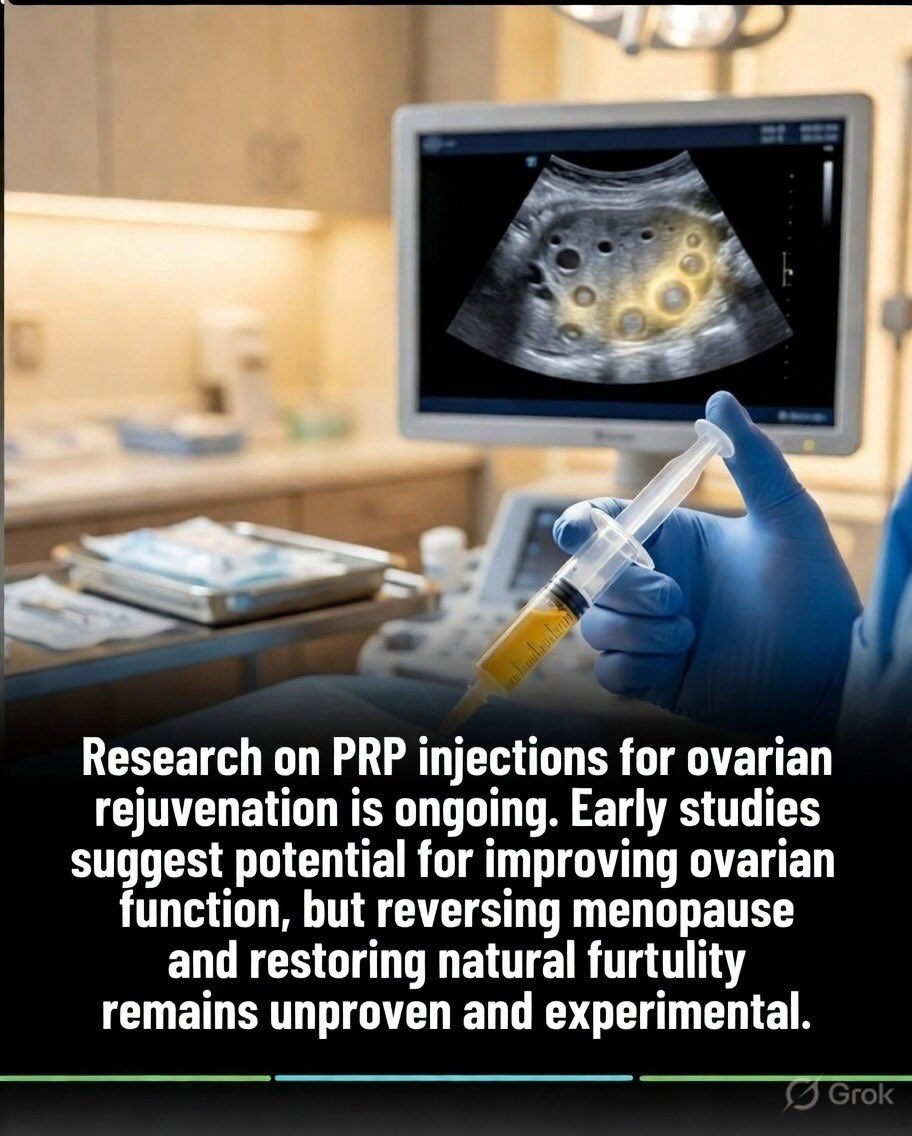
🚨 BREAKING IN 2026: Could Your Ovaries Get a “Second Life”? 🚨
Platelet-Rich Plasma (PRP) — your own blood’s super-concentrated growth factors (VEGF, PDGF, TGF-β & more) — is shaking up reproductive medicine!
Injected straight into the ovaries of post-menopausal women, it awakens dormant follicles, restarts hormone production (estrogen surges!) & eases brutal symptoms like hot flashes, mood swings & bone loss.
Athens pioneers (Genesis Clinic University collaborators) have seen:
• Menstruation return in many cases
• Follicle growth & better hormone profiles
• Symptom relief even without full cycles
• Rare but real pregnancies (some via IVF) in women well past typical menopause
It’s 100% autologous — no drugs, no donors, no gene editing. Just your biology, amplified.
The line between “post-menopausal” and “fertile” is blurring… mind-blowing potential for fertility & quality of life! 💉🔬
What do you think — game-changer or too good to be true? Drop thoughts below!
#PRPTherapy #OvarianRejuvenation #MenopauseBreakthrough #Fertility2026 #RegenerativeMedicine
Based on Athens group’s pilot data since 2016–2025 , showing responses in peri/menopausal cohorts; larger trials ongoing.)
Sources & Verification
🔗 Sources
PRP Ovarian Rejuvenation 🔗
The core idea is real— pioneered in Athens, Greece (Genesis Athens Clinic National/Kapodistrian University of Athens).
Here’s the verified foundation:
• Key pilot study on reactivation (including menopause cases): pubmed.ncbi.nlm.nih.gov/3057… (2018 – pregnancy in premature menopause case)
• Broader pilot data (POR, POI, peri/menopause, menopause groups): mdpi.com/2077-0383/9/6/1809 (2020 – improvements in many, menstruation in ~43% menopausal)
• Ongoing trial for menopausal women (autologous PRP intra-ovarian):
clinicaltrials.gov/study/NCT…
• Systematic review on PRP for ovaries:
link.springer.com/article/10… (2024 – promising but needs more RCTs)
For visuals/explanations:
• Overview of PRP ovarian rejuvenation concept (clinic-related explainer):
Genesis Athens PRP Ovarian” youtube.com/results?search_q… (this video includes procedure demos & patient stories)
• Fertility doctors discussing PRP potential :
youtube.com/results?search_q… (multiple explanatory videos)
Always consult a specialist — this is experimental, results vary, not yet FDA-approved for this use. Exciting science!📚
#ScienceSources #FertilityFacts
1
7
17
1,255