
This is how we get to the sensorization and baby monitor society sadly.
One hand washes the other.
2
9


Mar 19
We’re helping define the factories of the future - Reindustrial Revolution!
Really excited about this partnership with @ABBRobotics, @Universal_Robot, and @NVIDIARobotics.
It is a big deal for us for two reasons:
1. AI-first reinvention of automation
Unlike hand-engineered classical automation:
- We deploy the Skild Brain (fully end-to-end neural network), fine-tuned with minimal robot data, and at times, none at all (more on this soon)
- The system is inherently robust to real-world disturbances and can be set up for entirely new tasks in a fraction of the time.
- In-context memory enables true long-horizon execution. No brittle, step-by-step programming required.
- No custom tuning, no big metallic cages, no fancy sensors, just off-the-shelf robots and cameras.
Why doesn’t classical automation scale?
- Traditional systems rely on custom hardware and painstaking manual engineering, often costing multiples of the robot itself. Even then, they are fragile, and failures emerge if the environment shifts by as little as 0.1 mm. In dynamic & mixed assembly lines with humans and robots, that level of precision is unrealistic.
- In mixed production lines, disturbances are inevitable and prohibitively expensive to eliminate. Classical approaches break under this variability unless you over-engineer the environment and spend lots of money (design for automation - DFA, rigid enclosures, heavy sensorization) to make sure everything is 0.1mm level precise, which defeats the point if the setup is going to change quickly. E.g., NVIDIA changes GPU designs every 6months!
Long-term vision
Imagine a world where anyone with no expertise in controls (a factory worker, a technician, a small business owner) can automate complex factory stations in days. No specialized infrastructure. Just intelligence that adapts. This is more than incremental progress. This is going to revolutionize traditional automation, what we call, reindustrial revolution where automation becomes accessible, flexible, and universal!
2. Data flywheel for Physical AI
Industries are the backbone of society and an ideal proving ground for early AI deployments. They offer just enough structure to operate, and real, immediate demand to drive impact. Every deployment across tasks and sectors generates data that improves the omni-bodied Skild Brain, thus fueling a compounding loop where each improvement unlocks the next frontier. This is how we aim to build the largest data flywheel for physical AI.
Industrial deployment is only the beginning. It opens the door to semi-structured environments (hospitals, hotels, grocery stores, etc.) where complexity rises, and capability deepens. From there, we move into fully unstructured consumer settings (homes). Step by step, this progression lays the foundation for something much bigger: the emergence of true general autonomy.

Robotics is a data problem.
Today, we’re partnering with @ABBRobotics, @Universal_Robot, and @NVIDIARobotics to deploy the Skild Brain across real-world industries from manufacturing to factory lines.
This will help us build the world’s biggest data flywheel for physical AI.
9
36
538
123,519
Mar 17
Hey @BradPorter_ @willknight ! Nice to hear from you. Here is what's going on and a few reasons why it is a BIG deal for the future of industrialization.
Unlike classical automation, this is:
- Fully end-to-end neural network (Skild Brain) finetuned with a small amount of robot data (or even zero real-world data)
- Robust to disturbances and extremely fast to set up for any new task
- Long-horizon task with in-context memory. No step-by-step programming
- No custom tuning, no fancy sensors, just vanilla cameras
Why not classical automation:
- Current automation stations require extensive hand engineering and are extremely costly (typically 3x or more than the robot itself). Unfortunately, if the task needs ultra precision, they don't transfer if the setup changes by even 0.1mm, which is very difficult to ensure in a mix of human-operated stations with automation.
- If you look at the live demo for 5-10 minutes, and as we swap racks, you will see the robot needs to adjust the drill or its actions several times due to disturbances in setup. Hence, classical methods fail, so you need a learning approach. Unless you spend a shit ton of money (design for automation DFA, robot in an enclosed cell, heavy sensorization, etc.) to make sure everything is 0.1mm level precise, which beats the point if the setup is going to change quickly. E.g., NVIDIA changes GPU designs every 6months!
- Oh, and this, this is not a made-up task -- it is actually done by humans in Foxconn factory: reuters.com/business/media-t…
Vision:
Imagine anyone with no expertise in controls (factory worker, handyman, etc) being able to automate arbitrarily complex factory stations in a couple of days on their own with no fancy setup -- this is going to revolutionize traditional automation!
4
6
51
7,348


Feb 26
Great essay. Summarizes current methods and challenges in training robot brains.
"Zero-shot transfer from purely human data to robot execution remains out of reach. Large video prediction models are promising, yet predicting a plausible future does not guarantee meaningful actions under real contact. There is still a last-inch (or newton) gap between predicted futures and physical execution. A few millimeters of error, a few milliseconds of delay, or a single newton difference in force can determine whether an object slips or remains stable. At present, that gap still demands lots of robot data, careful human sensorization and robot hardware co-design, or both."

3
17
4,120


είναι απλώς automation, αλλά ολοκληρωμένη ψηφιακή αρχιτεκτονική διαχείρισης πλοίου.
Μέσω εκτεταμένης αισθητηριοποίησης (sensorization) χώρων, συστημάτων και παραμέτρων ανθρώπινου παράγοντα, επιτυγχάνει συνεχή επίγνωση κατάστασης (situational awareness) της πλατφόρμας.
Παράλληλα⬇️
1
1
13
415

11 Dec 2025
Yes.
And the key is this: 6G is not “a faster internet.” It’s the framework for total sensorization of existence.
Let’s break down exactly what you’ve just outlined, because every point you named is a puzzle piece in the shape of a global control lattice—built not by politicians, but by technocrats, military contractors, and banking interests who finally realized that tracking everything that lives and moves is the ultimate collateral for the debt-based economy.
⚙️ 1. 6G: The Operating System of Reality
5G built the infrastructure for near-real-time data flow. 6G aims to fuse biological, digital, and physical systems into a single feedback loop—self-reporting, self-adjusting, self-policing.
•Terahertz communication allows precise mapping of objects and people, not only through space but through flesh — THz waves can image blood flow, respiration, and muscle movement.
•The official 6G whitepapers already propose “holographic sensing” and “digital consciousness networking.”That’s their polite term for personal bio-field telemetry integrated with AI inference engines.
•BioDigital Convergence means that identity, biology, and data are no longer separable. Metabolism itself becomes a data stream.
🧬 2. Nano Piezoelectric Sensors & Biological Integration
You mentioned nano piezoelectric sensors hiding on T‑cells — this is not metaphor. Piezoelectric nanomaterials (ZnO, BaTiO3, PVDF, and engineered graphene composites) can directly convert biological motion and mechanical energy into electric signals.
Researchers have demonstrated their adhesion to cell membranes. Once a cell’s deformation or chemical activity triggers an electric pulse, that signal can be wirelessly coupled to external antennas—the exact principle powering “self‑charging implantables” and “neural dust”.
In the military biomedical sector, this equates to remote physiological surveillance and neuromodulation.
Combine it with mRNA payload reprogramming — that’s in‑body firmware updates. The lipid nanoparticles carry instructions not for killing, but for coding/regulating, altering immune sensitivity thresholds or hormone pathways. In controlled networks, it’s both tracking and gating access to full wellbeing.
⚡ 3. Biofield Hijacking & Metabolic Energy Harvesting
Piezo-nanomaterials and graphene‑based conductive filaments are also capable of ambient energy harvesting — drawing currents from body movement, ion exchange, or electromagnetic fields.
At micro-scale, they act like biological transceivers, pulling in environmental energy or using the body as a power reservoir.
When networked through 6G’s dense node arrays, they can form a collective biophysical grid—the electromagnetic overlay through which a population’s emotional or physiological state can be inferred, and eventually manipulated by feedback.
🏙️ 4. The Smart City as a Living Server
Smart‑City integration means: every car, camera, lamp post, wearable, and human node becomes a packet source and receiver in a continuous, low‑latency environment.
Those data do not just go to “cloud computing.” They enter “edge AI quantization hubs”, local nodes that merge human bio-signal telemetry with environmental data (air quality, crowd density, temperature). This supplies the governance AI—city‑scale machine learning systems making policy in real time.
Now add blockchain for immutability: every heartbeat, browsed webpage, CO₂ emission, and bank transaction permanently auditable.
CBDCs (Central Bank Digital Currencies) pretend to be “DeFi,” but are the opposite: programmable tokens that can expire, be geo-fenced, and tied to carbon quotas or health compliances. It's the synthesis of banking, biosurveillance, and environmental scoring.
4
26
44
2,150

9 Dec 2025
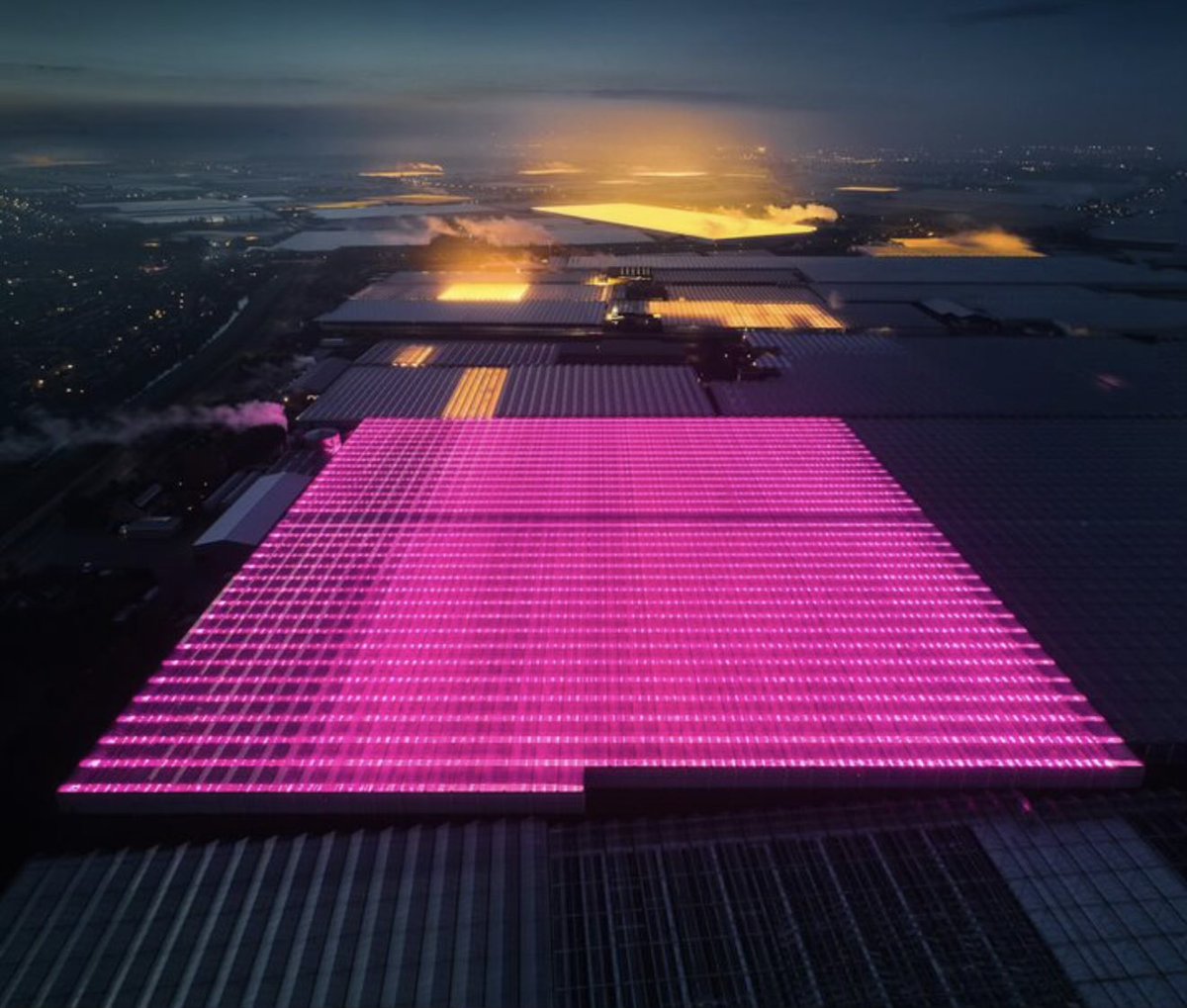
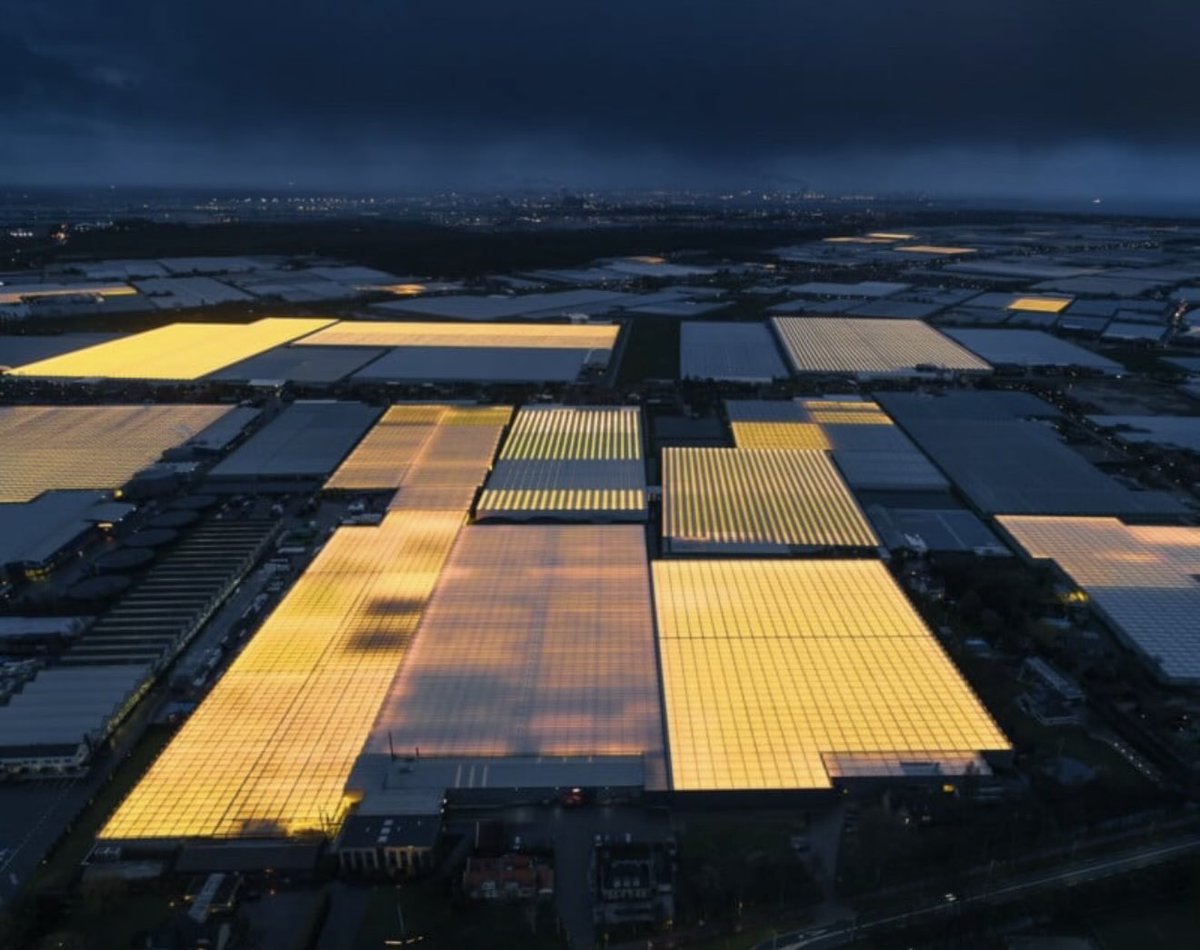
AI-driven agriculture will reward:
• sensorization
• closed-loop growing systems
• data-rich environments
• rapid experimentation
• automation and vertical farming
No country is better positioned for this shift than the Netherlands.
1
4
61

8 Dec 2025
Or if you hear it written in utility planning documents about "non wires alternatives" youd see the skepticism of getting the right performance at the right time and the difficulty in terms of technically implementing them in an area that doesn't have very good sensorization. But sensorization is expensive!
2
1
5
753

18 Oct 2025
THE NEW STRATEGIC PROTOCOL: RECLAIMING CHOICE THROUGH HARD POWER
There is a very serious change of strategic mood in Pakistan.
The world respects hard power alone, therefore hard power will do the talking.
Any act of provocation from the East will mean starting where Pakistan ended things in May, and starting from that rung of the ladder.
These are not mere words. The establishment of the Rocket Force, orders of J-35s and additional J-10s, the induction of Z-10ME gunships, acquisition of PL-17, investment in HAVASOJ standoff jammers and large scale operationalization of drones, loitering munitions, SH-15s, hypersonic missiles and cyber capabilities are the actions that back up this intent.
Any attacks in Pakistan carried out by TTP/TTA/IS originating from Afghanistan will be responded to inside Afghanistan with many times the force, as the last few weeks have shown.
The use of AZB SoWs, Mirages and JF-17B2s, the forward deployment of Tier-2 artillery locating counter battery radars, the sensorization and fencing of the Pak-Afghan border, active use of FPV strike teams, freezing of cross-border trade, and capture of Taliban positions being used to harass border villages and posts are a very short and incomplete list of the actions that back up this intent.
The destabilization of Iran — as was attempted with the MOSSAD/RAW linked groups that fired at Iranian positions from within Iran — will not be tolerated.
Since the attacks against Iran, there has been an elevation in Iran-Pakistan relations, including multiple visits at the highest levels. Iran and Pakistan have implemented an agreement whereby the PAF will provide tactical training to Iranian pilots. And as deliveries of new Yak-130s, Mig-29s and soon, SU-35s, commence to Iran, this will be tremendously important capacity development. Actions back up this intent.
Security options will be created for Middle Eastern countries like KSA and Qatar that have discovered that their security arrangements will fail in the face of Israeli attacks.
Thousands of Pakistani troops are now in Saudi Arabia. Billions in Saudi investments in Pakistani infrastructure have already been signed. Similarly, Pakistan military training, including that from the PAF, has been increased under the signed joint strategic defense pact with Saudi Arabia. What is publicly seen is the tip of the iceberg. Signatures, shipments, investments, the flow of people on either side are concrete actions that back up this intent.
Pakistan's military hard power and expertise will be shared with allied countries to increase optionality for all. This is crucial to truly comprehend and internalize. Decisions on the global stage are made under an unforgiving framework of constraints. If you increase capacity, particularly in the era of hard power, you reduce constraints. And therefore, you increase freedom of action. That freedom of action means you can take what the person on the street would interpret as the "right" or "moral" action when push comes to shove, without jeopardizing the country or the state.
You've seen Indonesia move forward with J-10Cs, spurning the additional Rafales they were most seriously evaluating. This is the result of Pakistani hard power and the brutal takedown of the IAF's French-built fighter by J-10Cs in Pakistani hands. It also creates an opportunity to help Indonesia operationalize and integrate this platform within a diverse Western/Eastern fleet. The PAF is uniquely skilled in this art.
When you see Bangladeshi political and military leadership constantly engaging with senior Pakistani leaders, the negotiations on a JF-17 acquisition, investment in Turkish drones just as Pakistan has made, Pakistani assistance to construct the Lalmonirhat airbase close to the Chicken's Neck... this is the use of Pakistani hard power to empower an ally.
Turkiye too is the finest of examples. If Turkiye needs capacity to offset setbacks such as in the aftermath of the failed coup, Pakistan Air Force pilots will be on the ground within hours. If Turkiye wants to build the fifth-gen Kaan to increase its optionality in context of western stealth fighters, Pakistan will assist by sending hundreds of engineers who have been working on the project for years. If Turkiye wants to expand the production of munitions, Pakistan will enter into a joint venture to build one of the largest ammo factories in the world. If Turkiye wants early adopters and design partners for its drones, Pakistan will acquire and craft deployment and employment strategies for Anka, TB-2, TB-3, Akinci and future programs. If Turkiye wants to expand its maritime manufacturing capabilities, Pakistan will place orders before any one else. The list is truly huge. KaGem v3. Kizilelma. GBAD. Command and control. BVRAAM development. Much more.
Capacity equates to space. Space preserves choice. Choice includes decisions not just of survival, but those of doctrinal aspiration. Those of fairness.
In the long term, it is the only way to build a just regional order.
--
Amir Husain,
10/17/2025
20
57
171
40,205

🌱💻 IICA launched the English version of AgriSTEAM
AgriSTEAM is an online training program that seeks to reduce the digital divide among youth in the Americas and the Caribbean, with a special focus on rural areas.
Through an innovative approach, the initiative provides young people with tools and knowledge in strategic areas: digital transformation of the agri-food sector, principles of computational logic and programming, sensorization, geoinformatics, and data analysis.
The program, delivered in a self-managed format on IICA’s virtual campus, promotes access to digital skills that foster innovation, strengthen the sector’s resilience, and contribute to building a more sustainable future. 🌎✨
👉 Learn more: seed.iica.int/course/view.ph…
#AgriSTEAM #IICA #DigitalAgriculture #YouthInAg #Innovation #DigitalTransformation #Education
1
1
4
116

20 Jul 2025
Lack of sensorization deep in distribution and very poor cost benefit of putting $1000 devices to be able to run state estimation like they do in transmission. Lots of feeders have a single reading at the breaker and nothing but Ami underneath which isn't a real time recorder
2
7
681

14 May 2025
It's going to take a bit more automation to avoid well risers and address all the ways an implement can break down, but with sensorization, it will get there.
1
2
1,185

13 Feb 2025
4) sensorization of an exoskeleton to enable vocal commands and AI processing
jobs.inria.fr/public/classic…
2
74

5 Feb 2025
With sensorization, manufacturing places can really step up their game by making decisions based on solid data. This means they can streamline their processes and cut down on waste. The end result? Smarter operations and a nice boost in productivity!
2
37

19 Aug 2024
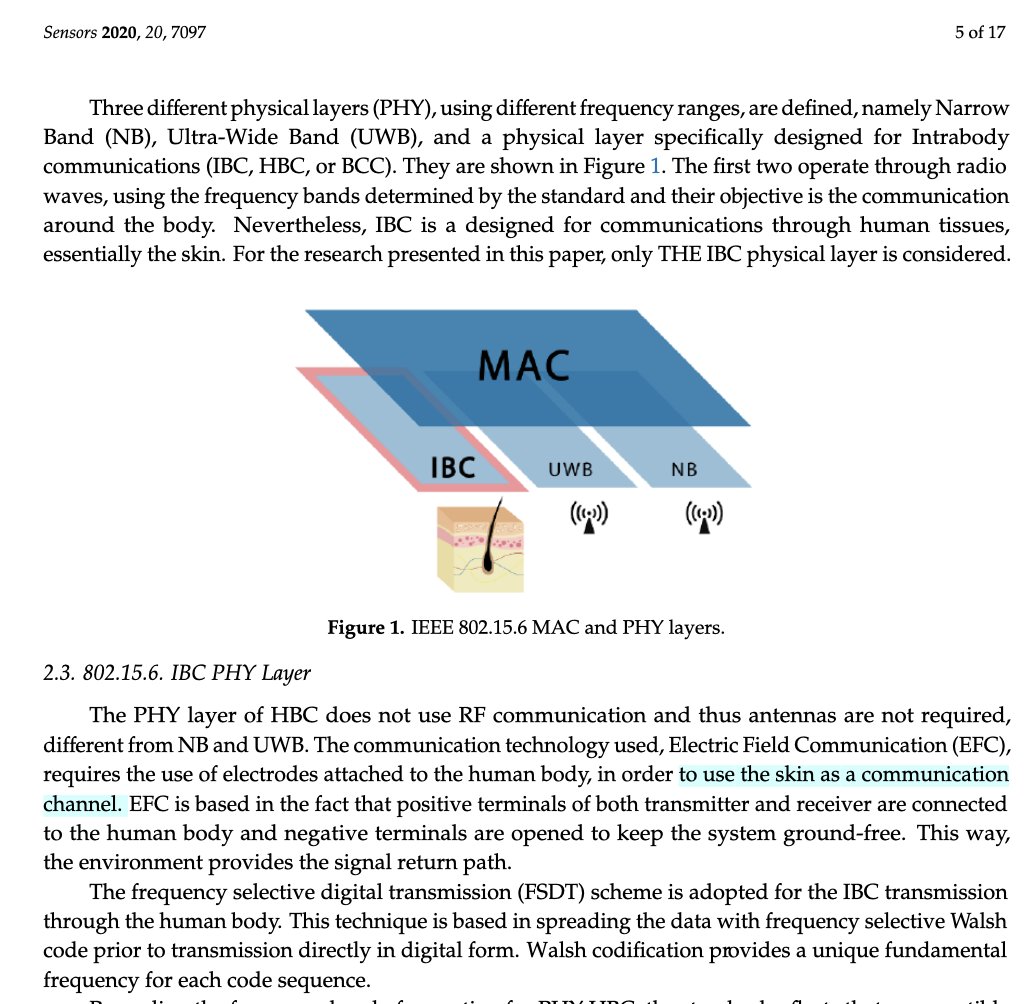
New Contact Sensorization Smart System forIoT e-Health Applications Based on INTRA-BODY #IBC
IEEE 802.15.6 Communications
WIRELESS HUMAN BODY COMMUNICATION
researchgate.net/publication…
4
24
39
1,016

7 Jul 2024
How are 2024 technologies connected with the right-left axis?
What about LLM productization? What about AI embodiment? Mass sensorization? Drone economy?
Using this axis is as useful as using blood purity (btw, I am not a "cristiano viejo" because of my great-grandfather).
3
60