
Se fosse vero la Shlain avrebbe l’aspetto da gigante,invece era è rimane una misera nana
55

Jun 13
in italia il partito degli immobiliaristi é a destra Angelucci lega, esempio di virtú e presenteismo si dichiara nullatenente. questi sono i personaggi a destra. e infatti non la vogliono perché dovrebberò pagate piú tasse, che cazzo c entra la shlain che a me sta pure sul cazzo
33

Certamente!
L’unica cosa che non deve fare Vannacci è uscire dalla maggioranza perché così da una grossa mano a quei debosciati di Shlain Conte Fratoianni e Bonelli
20
La shlain dice che la Meloni ha dei problemi con la calcolatrice, lei mi sembra li abbia con il proprio cervello!
4

È più donna l'omaccione di sinistra che la Shlain ..che al contrario è assolutamente uomo..(manco bello oltretutto!)
3
16
539

May 30
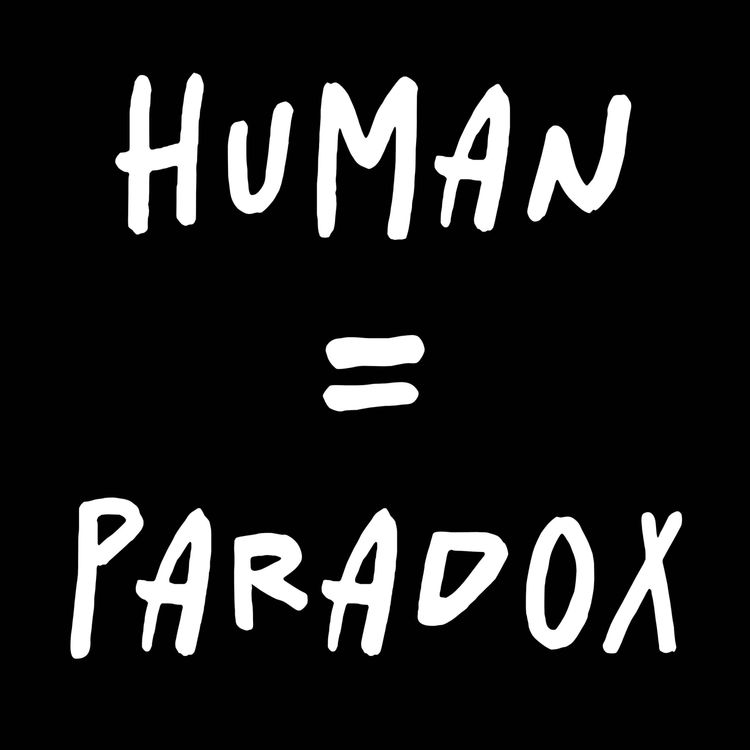
The Human Paradox:
We stand as the strangest animal on Earth: capable of breathtaking art, science, and compassion, yet uniquely driven to annihilate our own kind on a scale no other species approaches.
In a few thousand years…a blink in planetary time…we have armed ourselves for planetary suicide while sleepwalking toward ecological collapse.
Philosophers and historians have long wrestled with this contradiction.
German psychologist, Erich Fromm called it “malignant aggression”…a form of violence that is not instinctual self-defence or resource competition, but pure, pleasurable destructiveness found nowhere else in the primate family.
Leonard Shlain observed that our killing capacity exploded in the last 40,000 years, turning a blood-soaked planet into what looks, from a distance, like a vast compost heap of extinct species and shattered civilisations.
We fight, torture, persecute, and genocide with creativity no other creature matches.
We alone derive pleasure from the act itself.
Faced with this reality, humanity invented religion.
Every culture asked: why are we like this? The dominant Western answer has been “original sin”…a fall from grace that explains our duality.
Yet when we examine the story closely, it raises far more questions than it answers.
Why does an all-powerful, all-good God create beings in his image, implant the seeds of evil, place temptation within easy reach, and then punish the inevitable?
Why allow…or even create…a serpent (later rebranded as Satan) to test the innocent?
Why does God repeatedly harden hearts, command massacres that break his own commandments, lie about consequences, and demand rituals from his sinless son?
The biblical text itself shows God declaring, “I create evil.”
The same deity who says “Thou shalt not kill” orders the slaughter of entire peoples and the theft of their land.
The protective mark on Cain makes no sense in a world of three people.
The Flood reads less like justice than cosmic rage.
These are not peripheral details.
They sit at the foundation of the narrative millions have built their morality upon.
The historical Jesus adds another layer.
He flips tables in fury, speaks of bringing a sword, and in one parable orders enemies slain before him.
He writes nothing down himself.
His sinless self submits to a sinner’s baptism.
Later followers turned these sparse teachings into doctrines that, in the words of Thomas Jefferson, burned and tortured millions while enriching a clergy Jefferson openly called “the real Anti-Christ.”
John Adams: “the divinity of Jesus became “a convenient cover for absurdity.”
So we return to the core mystery: why does only this species need religion to explain itself?
Perhaps because we alone recognise the horror of what we are…and cannot bear it without a story that places the blame somewhere else: on a fall, on Satan, on Eve, on “human nature” as divinely ordained.
Yet the questions remain uncomfortable and unanswered: if God is perfect, why is creation so clearly flawed? If we are made in the divine image, why does that image include the capacity…and evident pleasure…in pointless destruction?
Humanity remains the only creature that builds cathedrals and concentration camps with equal skill.
Understanding why may be the most important question we will ever ask…because the sleepwalkers are still heading toward the edge, and this time the Armageddon we face is one we have engineered ourselves.
The answers, if they exist, will not come from blind faith in ancient contradictions.
They will come from honestly facing who and what we truly are.
2
3
16
2,164


May 24
Sources:
1. Acid Dreams: The Complete Social History of LSD: The CIA, the Sixties, and Beyond by Martin A. Lee and Bruce Shlain
2. Operation Julie by Colin Pratt and Dick Lee
3. ACID: A New Secret History of LSD by David Black
5
22
583

May 19
……determined- Robert sapolsky, alphabet vs the goddess- Leonard Shlain, the invention of power- Bruce bueno de masquita……
2
35

May 11
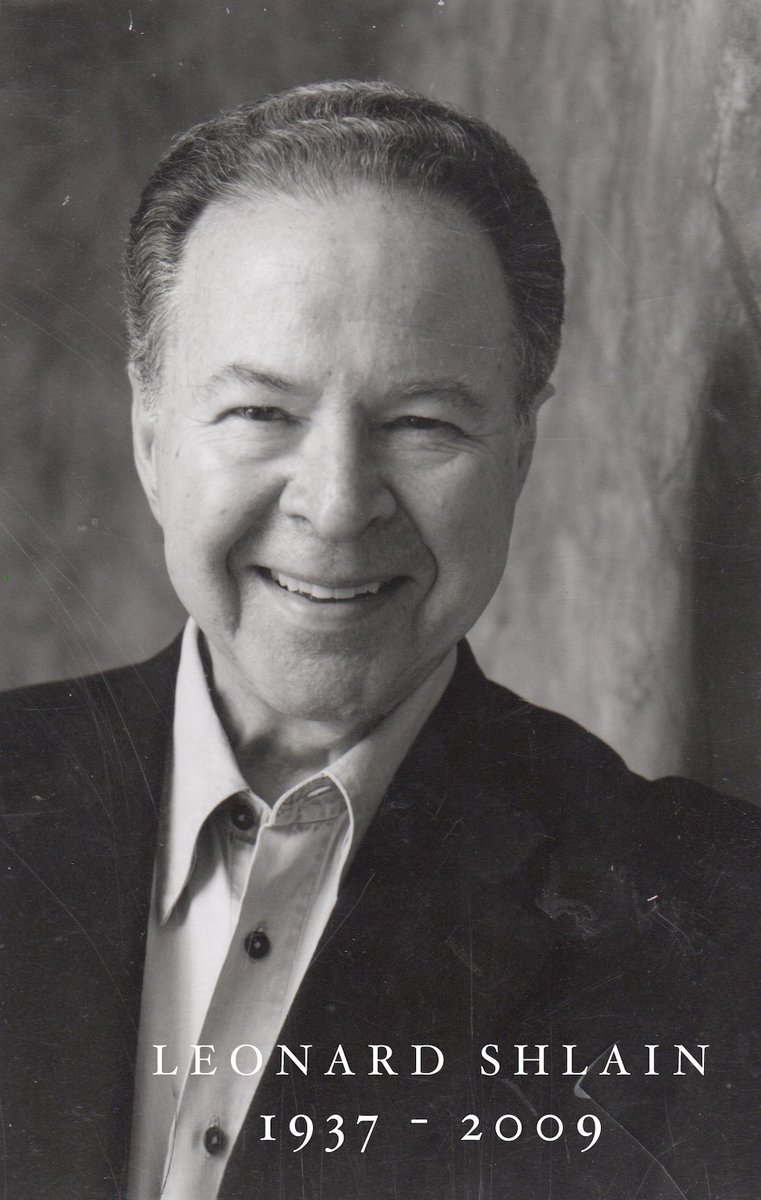
Today is the 15th anniversary of my father's yahrzeit. He was an absolute legend. I think about him every day. I miss you, dad. I know you can hear me. RIP Leonard Shlain
latimes.com/nation/la-me-leo…
leonardshlain.com

1
11
216

Apr 30
Se si mette a parlare la shlain o gli sveglioni di Avs avremo la certezza che le merde la schiveranno anche stavolta
1
3
28

Apr 24
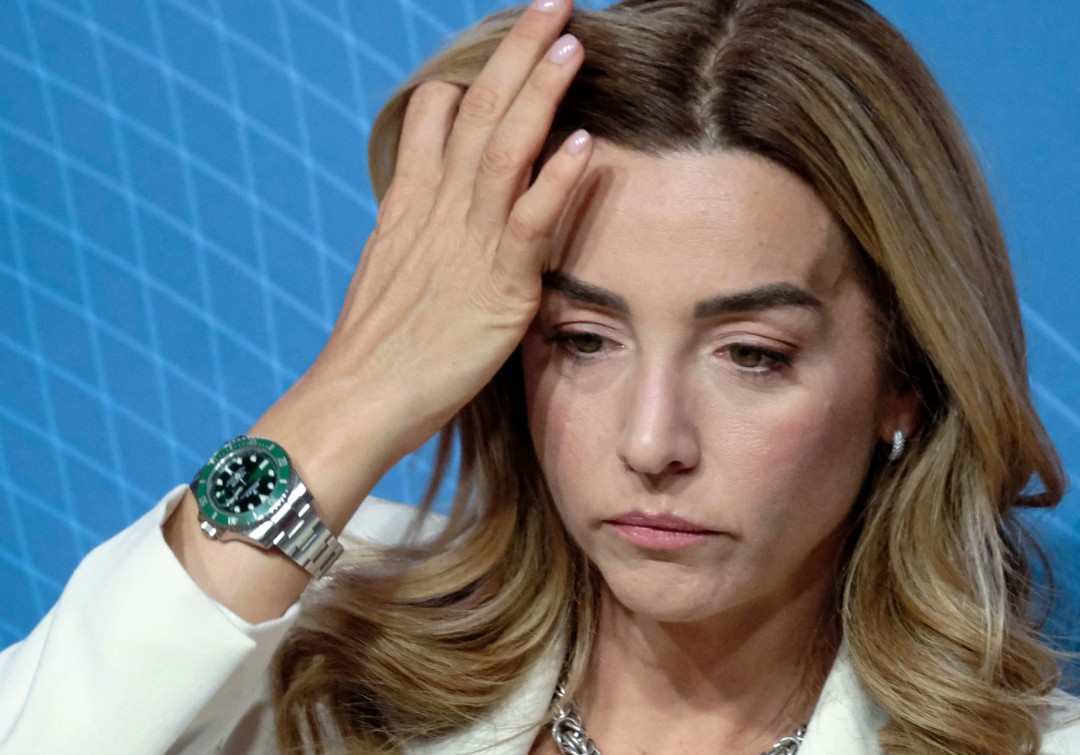
Comincia da te la tua amica con il rolex 69milaeuro poi è poi parla 50milioni di euro è in vece 47milioni che lei ha preso spariti poi non parliamo Bonacini è la Shlain più di un miliardo poi non parliamo dei stupratori che giustizia rilasciano poi chi ci rimette italiani onesti



4
28

Apr 20
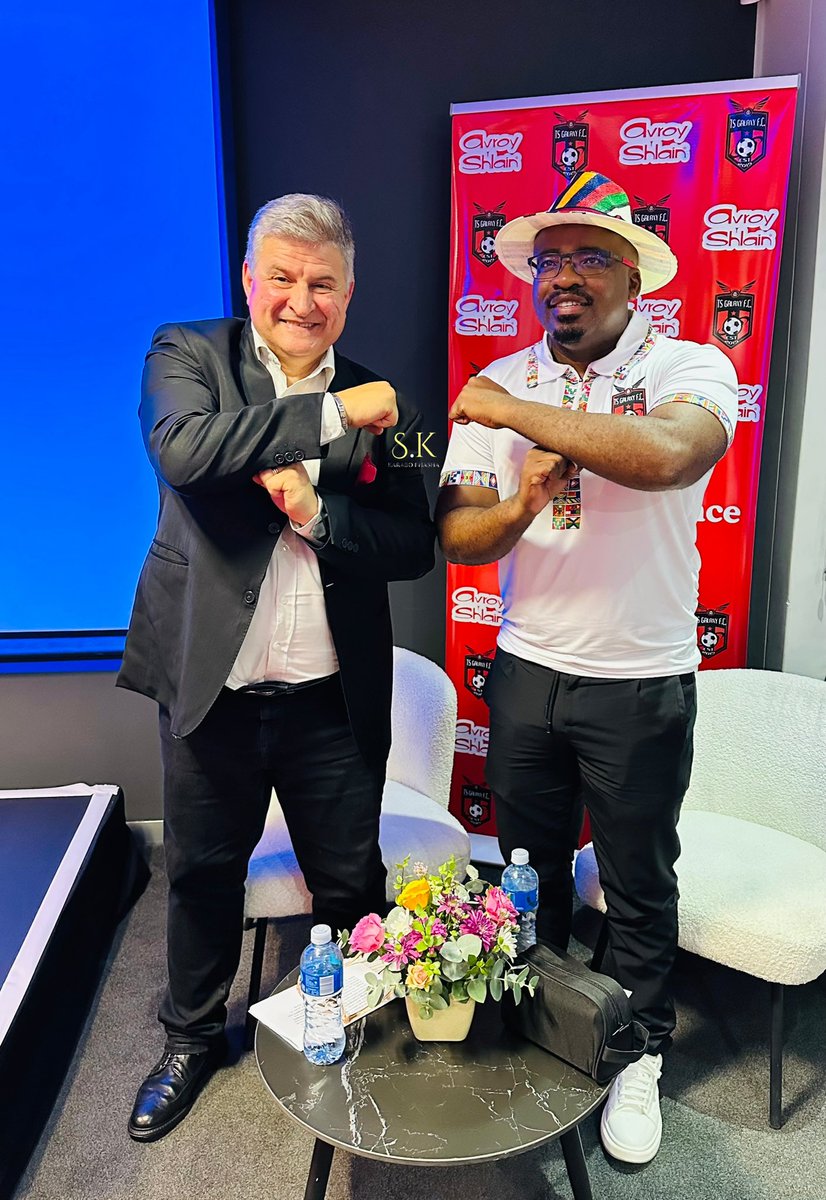
TS Galaxy chairman Tim Sukazi is plotting a new strategic path for the club after securing a landmark sponsorship deal with beauty giants Avroy Shlain.
#FARPost
farpost.co.za/2026/04/20/how…
1
11
1,570
Apr 18
𝙄𝘾𝙔𝙈𝙄
TS Galaxy FC has unveiled a landmark partnership with Avroy Shlain SA.
"Proud to announce our partnership with @Avroy_Shlain_SA — a collaboration built on excellence, confidence, and shared ambition."
#FARPost
 TS Galaxy FC
3
31
348
25,922

Apr 17
TS Galaxy players arriving at the Avroy Shlain Headquarters in Midrand during the launch of the team's partnership with Avroy Shlain in Midrand on Friday evening.
1
6
1,736

Apr 17
TS Galaxy chairman Tim Sukazi speaks to guests at the Avroy Shlain partnership launch in Midrand.
3
3
833
Apr 17
TS Galaxy Chairman Tim Sukazi addressing the guests during the launch of the team's partnership with Avroy Shlain in Midrand on Friday evening.
1
2
2
1,211

Apr 17
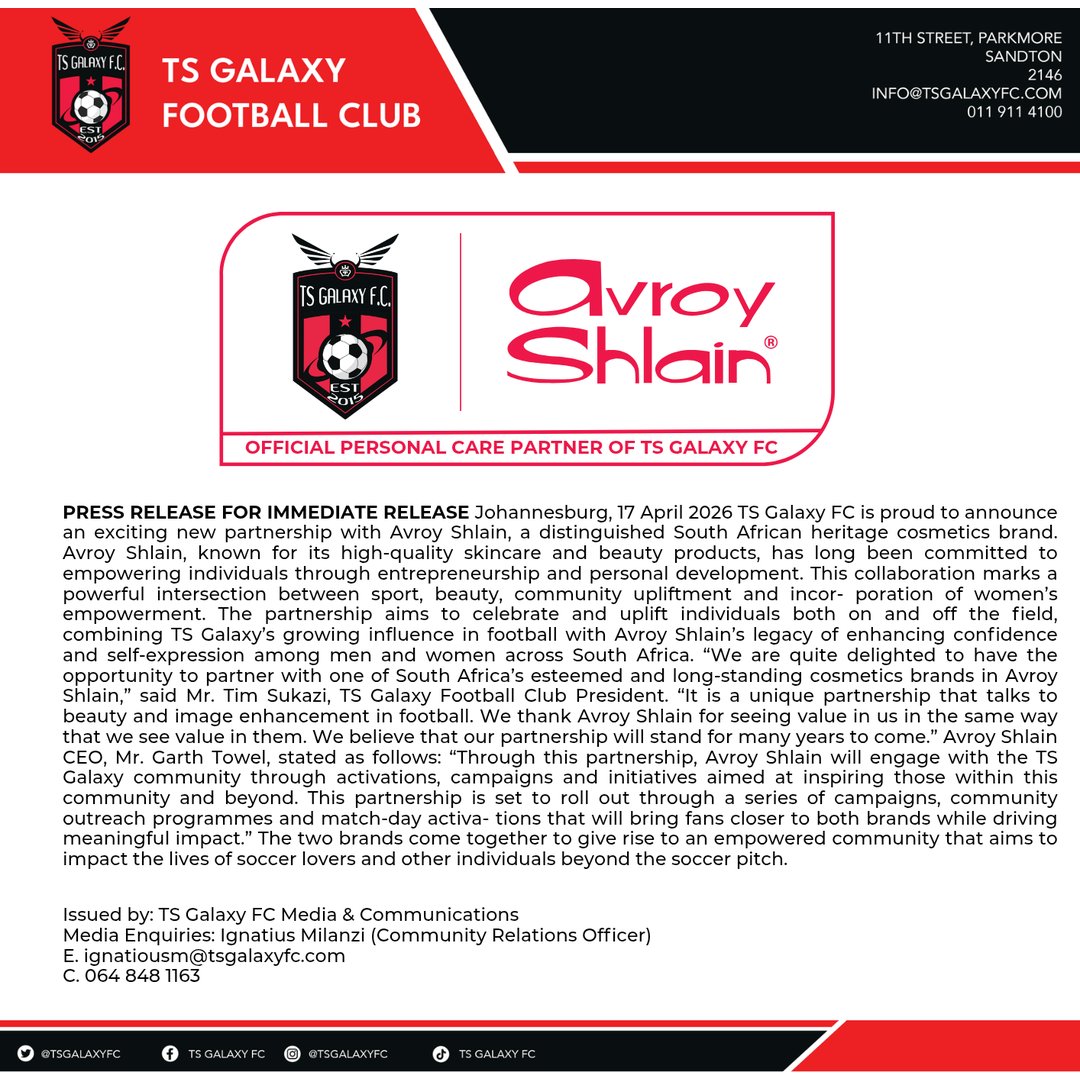
𝗣𝗔𝗥𝗧𝗡𝗘𝗥𝗦𝗛𝗜𝗣🤝
TS Galaxy have announced a partnership with Avroy Shlain — terming it as "a collaboration built on excellence, confidence, and shared ambition."
3
9
54
2,104

𝐓𝐒 𝐆𝐚𝐥𝐚𝐱𝐲 𝐒𝐢𝐠𝐧𝐬 𝐖𝐢𝐭𝐡 𝐀𝐯𝐫𝐨𝐲 𝐒𝐡𝐥𝐚𝐢𝐧 ✍🏾
🔴 TS Galaxy have signed a three-year-deal with beauty & care brand Avroy Shlain
🔴 A monumental deal for Galaxy going forward with the 52-year-old brand of Avroy
#TSGalaxy #Transfers 🤝
14
43
488
13,348