
Jan 24
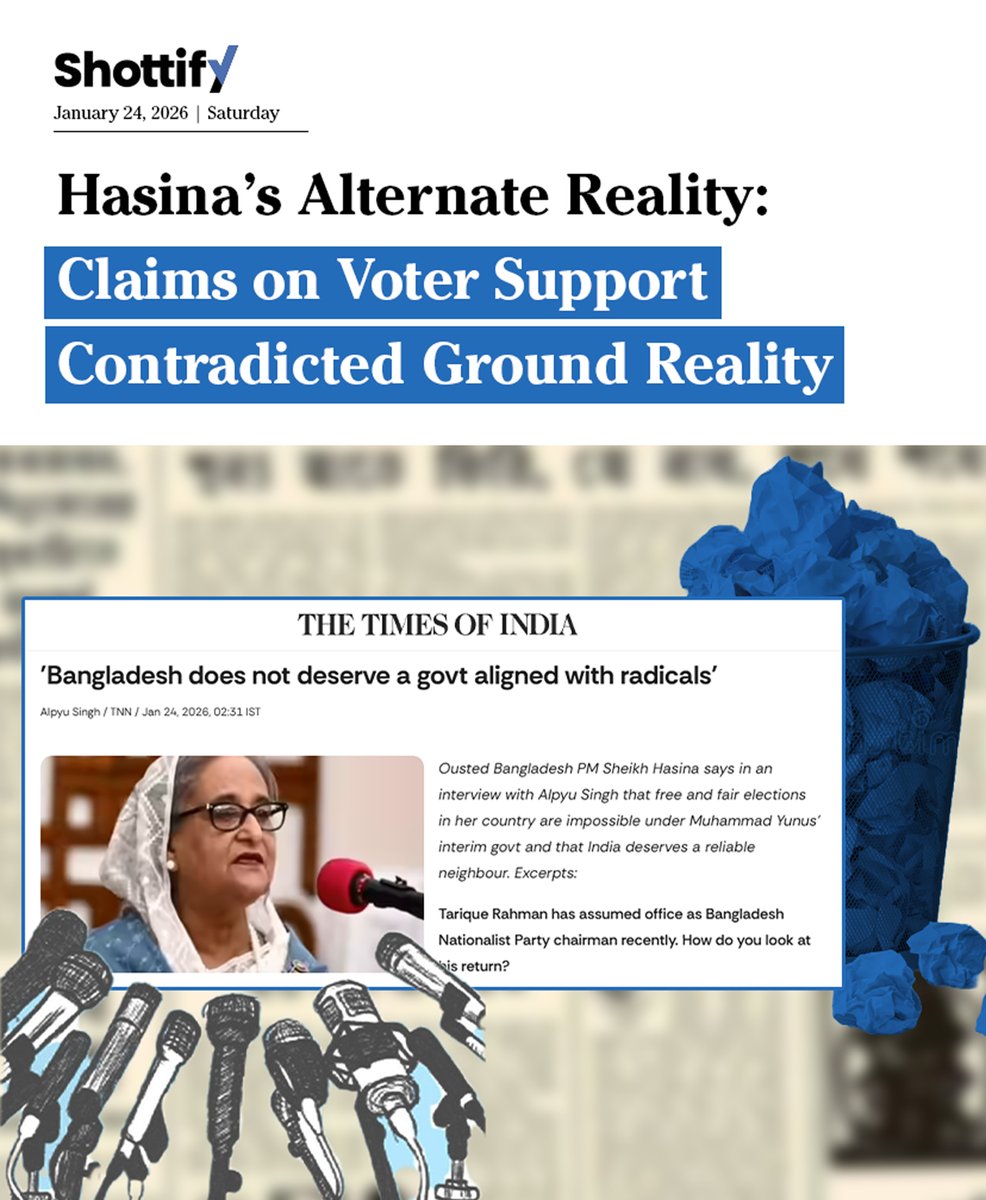
Former Prime Minister Sheikh Hasina’s recent assertion that “over half the voters” support the Awami League contradicts the power of her final hours in Dhaka. If such mass legitimacy existed, her departure on August 5th would not have been a desperate flight but a political retreat.
History offers no parallel: unlike the power transitions of 1990 or 2006, the Awami League’s leadership did not just lose power; they abandoned the country generally in the face of a popular uprising.
This collapse was not, as Hasina implies, a conspiracy by the opposition, but a spontaneous explosion of public anger. Shottify analysis confirms that while political activists joined later, the uprising was initiated by Generation Z—students and ordinary citizens who paid the highest price in a state-led massacre that left at least 1400 dead.
The Awami League’s leadership fled not an opposition plot, but the consequences of their own “license to kill.”
Hasina’s appeal to India for a “reliable neighbor” omits New Delhi’s role in sustaining this fragility. By backing a regime that systematically destroyed democratic checks—evident in the ‘one-sided and rigged’ elections of 2014 and 2018—India helped create the very instability it now fears.
The current volatility is not the creation of the interim government but the remainder of a 15-year project that hollowed out state institutions to serve a single party.
𝘋𝘪𝘴𝘤𝘭𝘢𝘪𝘮𝘦𝘳: 𝘛𝘩𝘪𝘴 𝘤𝘰𝘯𝘵𝘦𝘯𝘵 𝘪𝘴 𝘴𝘩𝘢𝘳𝘦𝘥 𝘧𝘰𝘳 𝘫𝘰𝘶𝘳𝘯𝘢𝘭𝘪𝘴𝘵𝘪𝘤 𝘢𝘯𝘥 𝘦𝘥𝘶𝘤𝘢𝘵𝘪𝘰𝘯𝘢𝘭 𝘱𝘶𝘳𝘱𝘰𝘴𝘦𝘴 𝘵𝘰 𝘥𝘦𝘣𝘶𝘯𝘬 𝘮𝘪𝘴𝘪𝘯𝘧𝘰𝘳𝘮𝘢𝘵𝘪𝘰𝘯.𝘈𝘯𝘺 𝘳𝘦𝘱𝘳𝘰𝘥𝘶𝘤𝘵𝘪𝘰𝘯 𝘰𝘧 𝘩𝘢𝘵𝘦 𝘴𝘱𝘦𝘦𝘤𝘩, 𝘵𝘩𝘳𝘦𝘢𝘵𝘴, 𝘰𝘳 𝘧𝘢𝘭𝘴𝘦 𝘤𝘭𝘢𝘪𝘮𝘴 𝘪𝘴 𝘧𝘰𝘳 𝘤𝘳𝘪𝘵𝘪𝘤𝘢𝘭 𝘢𝘯𝘢𝘭𝘺𝘴𝘪𝘴 𝘢𝘯𝘥 𝘥𝘰𝘤𝘶𝘮𝘦𝘯𝘵𝘢𝘵𝘪𝘰𝘯 𝘰𝘯𝘭𝘺. 𝘞𝘦 𝘥𝘰 𝘯𝘰𝘵 𝘦𝘯𝘥𝘰𝘳𝘴𝘦 𝘰𝘳 𝘱𝘳𝘰𝘮𝘰𝘵𝘦 𝘷𝘪𝘰𝘭𝘦𝘯𝘤𝘦, 𝘱𝘰𝘭𝘪𝘵𝘪𝘤𝘢𝘭 𝘣𝘪𝘢𝘴, 𝘰𝘳 𝘩𝘢𝘳𝘮𝘧𝘶𝘭 𝘣𝘦𝘩𝘢𝘷𝘪𝘰𝘳. 𝘛𝘩𝘪𝘴 𝘱𝘰𝘴𝘵 𝘢𝘥𝘩𝘦𝘳𝘦𝘴 𝘵𝘰 𝘔𝘦𝘵𝘢’𝘴 𝘱𝘰𝘭𝘪𝘤𝘪𝘦𝘴 𝘰𝘯 𝘗𝘶𝘣𝘭𝘪𝘤 𝘐𝘯𝘵𝘦𝘳𝘦𝘴𝘵 𝘢𝘯𝘥 𝘍𝘢𝘤𝘵-𝘊𝘩𝘦𝘤𝘬𝘪𝘯𝘨.
#Shottify #facts #shottifyfacts #ShottifyReport #MisleadingNews #fakenews #framinginquestion #shottified
1
2
18
Jan 11
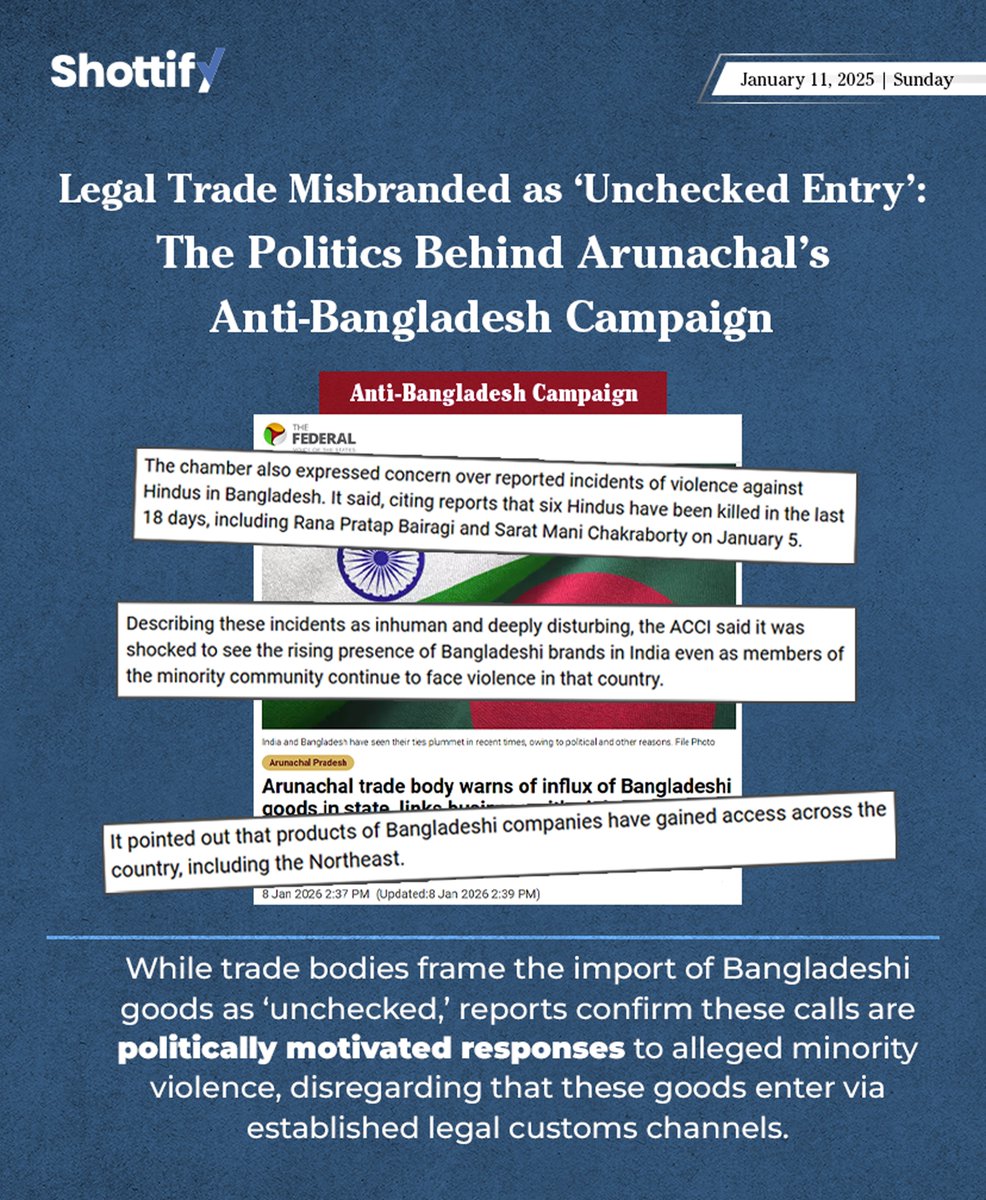
To the Arunachal Chamber of Commerce and Industries (ACCI), the presence of Bangladeshi goods in local markets is an ‘unchecked entry’ threatening the region.
In reality, it is legal commerce being rebranded as an invasion. Bangladeshi exports enter India’s Northeast through established customs checkpoints, fully compliant with bilateral trade protocols and tax frameworks. By labeling lawful imports as ‘unchecked,’ trade bodies are conflating competitive pricing with smuggling.
This alarmism is notably selective: while markets in Arunachal are flooded with Chinese goods that enter through nontransparent channels, they face no similar public outcry. The targeting of Bangladeshi products appears less about economic protection and more about a political signal, weaponizing trade to disrupt regional connectivity.
𝘋𝘪𝘴𝘤𝘭𝘢𝘪𝘮𝘦𝘳: 𝘛𝘩𝘪𝘴 𝘤𝘰𝘯𝘵𝘦𝘯𝘵 𝘪𝘴 𝘴𝘩𝘢𝘳𝘦𝘥 𝘴𝘵𝘳𝘪𝘤𝘵𝘭𝘺 𝘧𝘰𝘳 𝘫𝘰𝘶𝘳𝘯𝘢𝘭𝘪𝘴𝘵𝘪𝘤, 𝘳𝘦𝘴𝘦𝘢𝘳𝘤𝘩, 𝘢𝘯𝘥 𝘦𝘥𝘶𝘤𝘢𝘵𝘪𝘰𝘯𝘢𝘭 𝘱𝘶𝘳𝘱𝘰𝘴𝘦𝘴 𝘵𝘰 𝘥𝘦𝘣𝘶𝘯𝘬 𝘮𝘪𝘴𝘪𝘯𝘧𝘰𝘳𝘮𝘢𝘵𝘪𝘰𝘯. 𝘈𝘯𝘺 𝘪𝘯𝘤𝘭𝘶𝘴𝘪𝘰𝘯 𝘰𝘧 𝘤𝘰𝘯𝘵𝘳𝘰𝘷𝘦𝘳𝘴𝘪𝘢𝘭 𝘤𝘭𝘢𝘪𝘮𝘴, 𝘩𝘢𝘵𝘦 𝘴𝘱𝘦𝘦𝘤𝘩, 𝘰𝘳 𝘵𝘩𝘳𝘦𝘢𝘵𝘴 𝘪𝘴 𝘧𝘰𝘳 𝘵𝘩𝘦 𝘴𝘰𝘭𝘦 𝘱𝘶𝘳𝘱𝘰𝘴𝘦 𝘰𝘧 𝘤𝘳𝘪𝘵𝘪𝘤𝘢𝘭 𝘢𝘯𝘢𝘭𝘺𝘴𝘪𝘴, 𝘧𝘢𝘤𝘵-𝘤𝘩𝘦𝘤𝘬𝘪𝘯𝘨, 𝘢𝘯𝘥 𝘱𝘶𝘣𝘭𝘪𝘤 𝘥𝘰𝘤𝘶𝘮𝘦𝘯𝘵𝘢𝘵𝘪𝘰𝘯. 𝘞𝘦 𝘥𝘰 𝘯𝘰𝘵 𝘦𝘯𝘥𝘰𝘳𝘴𝘦, 𝘴𝘶𝘱𝘱𝘰𝘳𝘵, 𝘰𝘳 𝘱𝘳𝘰𝘮𝘰𝘵𝘦 𝘷𝘪𝘰𝘭𝘦𝘯𝘤𝘦, 𝘩𝘢𝘳𝘮𝘧𝘶𝘭 𝘪𝘥𝘦𝘰𝘭𝘰𝘨𝘪𝘦𝘴, 𝘰𝘳 𝘱𝘰𝘭𝘪𝘵𝘪𝘤𝘢𝘭 𝘣𝘪𝘢𝘴. 𝘛𝘩𝘪𝘴 𝘱𝘰𝘴𝘵 𝘪𝘴 𝘪𝘯𝘵𝘦𝘯𝘥𝘦𝘥 𝘵𝘰 𝘱𝘳𝘰𝘷𝘪𝘥𝘦 𝘤𝘰𝘯𝘵𝘦𝘹𝘵 𝘪𝘯 𝘢𝘭𝘪𝘨𝘯𝘮𝘦𝘯𝘵 𝘸𝘪𝘵𝘩 𝘟’𝘴 𝘚𝘢𝘧𝘦𝘵𝘺 𝘎𝘶𝘪𝘥𝘦𝘭𝘪𝘯𝘦𝘴, 𝘊𝘪𝘷𝘪𝘤 𝘐𝘯𝘵𝘦𝘨𝘳𝘪𝘵𝘺 𝘗𝘰𝘭𝘪𝘤𝘪𝘦𝘴, 𝘢𝘯𝘥 𝘗𝘶𝘣𝘭𝘪𝘤 𝘐𝘯𝘵𝘦𝘳𝘦𝘴𝘵 𝘌𝘹𝘤𝘦𝘱𝘵𝘪𝘰𝘯𝘴.
#Shottify #facts #shottifyfacts #ShottifyReport #MisleadingNews #claiminquestion #fakenews #framinginquestion #shottified
1
2
17