
Jun 10
Sim-to-Realギャップ。仮想空間で完璧に動いたロボットが現実では動かない問題。照明・摩擦・物体の微妙な違いが誤差を生む。NVIDIAはこれに正面から取り組み、学習時間を3ヶ月→36時間に短縮。技術の進化は本物です。
#SimToReal #NVIDIA #フィジカルAI
20

Jun 9
Pipeline 5: Digital World Twin
You can't safely train an embodied agent by letting it fail in the real world. And you can't generate enough rare, dangerous, or adversarial scenarios by waiting for them to happen.
Pipeline 5 — Digital World Twin — is the simulated reality where agents and robots learn safely: high-fidelity dynamic environments, multi-agent interaction, a scenario engine for normal operations and stress tests and adversarial events, a feedback layer measuring KPIs, and an optimization loop.
For robotics, autonomous systems, and embodied-AI teams, this is sim-to-real infrastructure that lets you generate the long tail on demand.
If you're working on embodied or autonomous agents, let's talk about modeling your environment. DM open.
xpertsystems.ai/
#Robotics #SimToReal #EmbodiedAI #AutonomousSystems
61

Jun 7
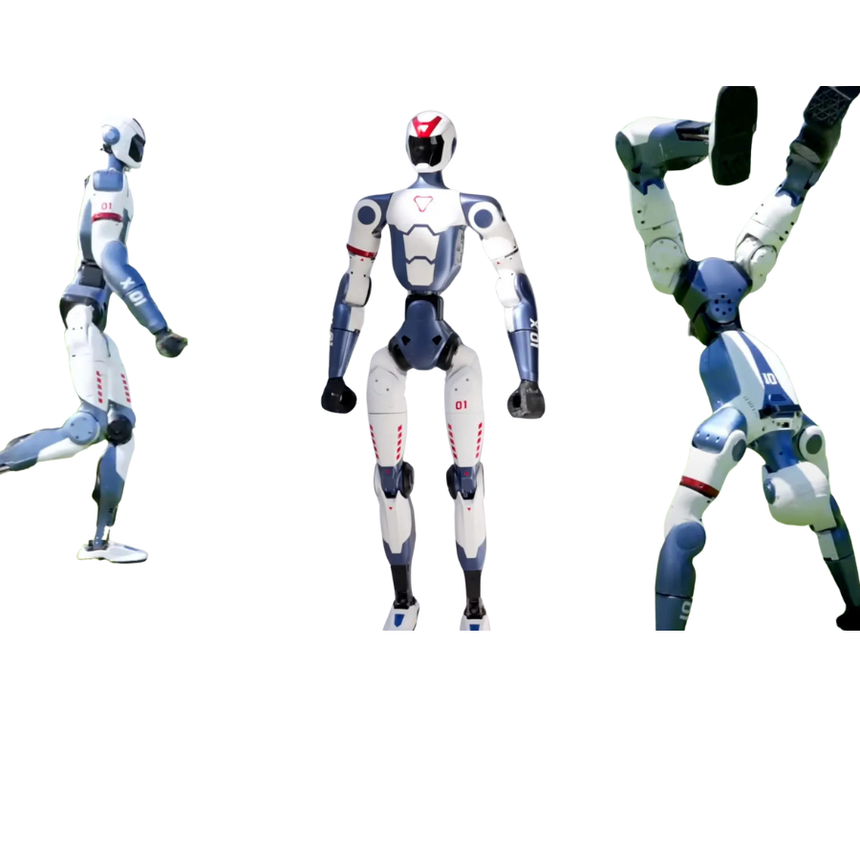
Unitree R1 İnsansı Robot ile Robot kontrol algoritmaları, Görü hareket AI modelleri ve Simülasyon → gerçek dünya geçişi algoritmalarını test edin. #UnitreeR1 #HumanoidRobot #RoboticsResearch #AI #SimToReal #RobotControl #DeepLearning #UniversityLab #MeseBilisim #MucitRobot
1
6
265

Jun 1
🤖 KHI THẾ GIỚI ẢO TRỞ THÀNH PHÒNG THÍ NGHIỆM TỐI THƯỢNG CHO ROBOT
Từ trước đến nay, giới robotics luôn tồn tại một lời nguyền Dữ liệu thực tế là vua. Muốn robot khéo léo, bạn phải tốn hàng ngàn giờ điều khiển thủ công, chi phí đắt đỏ và cực kỳ khó mở rộng. 💸
Nhưng sự xuất hiện của MolmoBot từ Ai2 đã chính thức thách thức tư duy đó. Liệu chúng ta có thể huấn luyện một bộ não robot hoàn chỉnh mà không cần đến một giây dữ liệu thực tế nào?
🚀 Bước Ngoặt Từ MolmoBot: Sim to Real Không Còn Là Giấc Mơ
MolmoBot không chỉ là một mô hình thử nghiệm, nó là minh chứng cho sức mạnh của Dữ liệu Mô phỏng quy mô lớn. Thay vì chờ đợi thu thập dữ liệu từ thế giới thực, MolmoBot tự học trong vũ trụ ảo với:
1.7 triệu quỹ đạo chuyên gia.
11,000 vật thể đa dạng.
94,000 môi trường được tạo ra bằng thuật toán (procedural generation).
Kết quả? 📈
Trong bài kiểm tra gắp thả thực tế, MolmoBot đạt tỷ lệ thành công 79.2%, vượt xa con số 39.2% của mô hình DROID (vốn được huấn luyện trên dữ liệu thực tế khổng lồ). Điều này chứng minh rằng môi trường ảo đủ đa dạng, robot hoàn toàn có thể thẩm thấu các kỹ năng vật lý để áp dụng ngay vào đời thực mà không cần tinh chỉnh (zeroshot transfer).
🏗️ Góc Nhìn Từ Axis: Xây Dựng Xương Sống Cho Dữ Liệu Robotics
Tại Axis, chúng tôi không nhìn nhận Simulation (mô phỏng) là sự thay thế hoàn toàn cho con người. Thay vào đó, chúng tôi coi đây là Đòn bẩy quy mô. 💥
Chiến lược mà Axis đang theo đuổi chính là sự giao thoa hoàn hảo:
Ý chí con người (Human Teleoperation): Cung cấp các hành vi phức tạp, giải quyết các tình huống đuôi dài (edge cases) mà máy tính chưa tự nghĩ ra được.
Sức mạnh mô phỏng (Simulation Augmentation): Nhân bản những bài học đó lên gấp hàng triệu lần trong môi trường ảo để tối ưu hóa độ chính xác và khả năng thích nghi.
Việc MolmoBot thành công là một tín hiệu xanh cho thấy lộ trình của Axis về một hạ tầng dữ liệu hợp nhất nơi dữ liệu sạch, quy trình kiểm định nghiêm ngặt và khả năng mở rộng mô phỏng sẽ giúp mọi doanh nghiệp robotics rút ngắn thời gian triển khai từ nhiều năm xuống còn vài tháng. 🛠️
Kỷ nguyên của Robot học từ dữ liệu đang dịch chuyển từ giai đoạn thu thập thủ công sang tự động hóa dữ liệu. MolmoBot đã mở cánh cửa, và Axis đang xây dựng con đường để mọi robot có thể bước qua cánh cửa đó một cách hiệu quả nhất.
Bạn nghĩ sao về việc robot chỉ học qua game mà vẫn làm việc giỏi hơn robot học từ người? Hãy để lại ý kiến dưới phần bình luận! 👇
#Robotics #AI #MolmoBot #SimToReal #AxisData
@axisrobotics
3
6
107

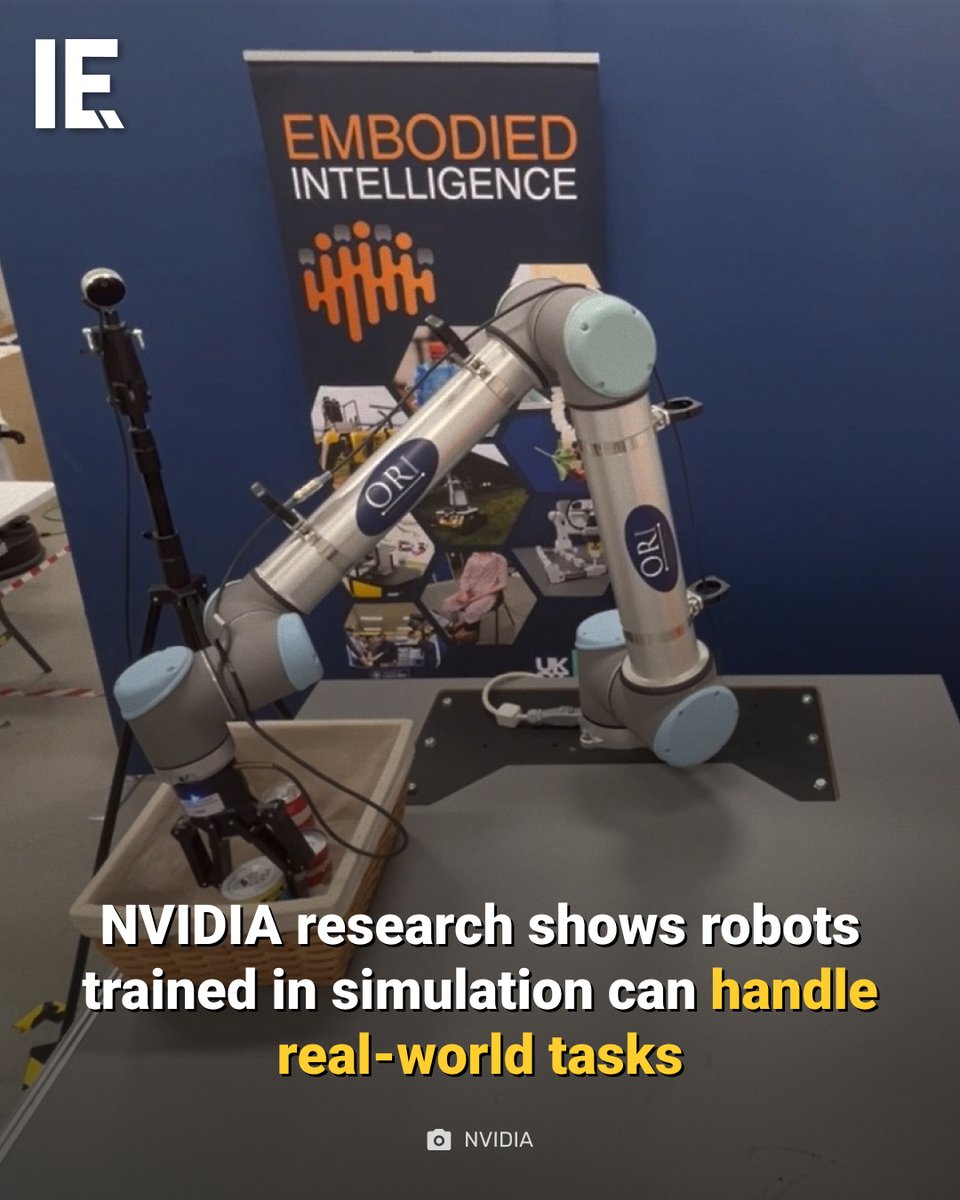
Robots trained entirely in simulation are beginning to navigate and grasp objects in the real world.
bit.ly/4ecDwIg
#SimToReal #NVIDIARobotics #RoboticsAI
1
3
14
1,505

May 26
There was a period when I was closely following robotics data loops and simulation training systems while the AI/robotics space was quietly shifting from experimental models to production-like infrastructures 👾
After that, I started seeing weekly updates that looked more like structured engineering logs - failure rates, cross-simulation metrics, pipeline improvements and over time, all that remained were performance traces, task outcomes, and evaluation numbers.
That’s when I realized a very familiar type of risk in modern AI systems.
Many systems don’t fail because the model is fundamentally wrong or underpowered, but because the input data layer and simulation environment are contaminated - by bot traffic, broken assets or signals that don’t actually represent real behavior 🌟
It feels like interacting with a multi-layered automation system: you only see the final success rate, but you never really see how much of it came from clean signal versus misclassified noise.
Value doesn’t necessarily disappear, but the reliability of the entire pipeline shifts the moment you can no longer identify what the original signal actually was.
What made me pause was how Axis Weekly directly addresses this blind spot by separating bot traffic, extending TaskGen into articulated-object task generation and deploying an automated recovery pipeline for simulation infrastructure.
It’s not just collecting and processing data anymore - it’s restructuring how data is generated, how tasks are synthesized, how models are trained and how failures are recovered, all into a system that can actually be observed end-to-end 🌟
where the data originates from
how task generation and simulation environments are constructed
and how cross-simulation transitions (IsaacLab to MuJoCo) are evaluated
Most systems today still return a single aggregated number like “~40% success rate” and expect you to trust everything behind it.
It resembles a closed machine where you only see the final output, not the transformations across each layer of the pipeline.
A system is only truly resilient when every layer in its data loop can be traced and verified backward.
By that standard, this kind of robotics stack has to prove that every improvement in model performance can be linked back to changes in data quality, task generation design, or simulation fidelity. And as it scales from isolated simulation environments to cross-simulation and sim-to-real settings, that traceability cannot be lost 🌟
Only then does the claim of “scalable robotics intelligence” carry real weight.
I don’t need a prettier narrative.
I need a system willing to expose its internal structure when necessary.
And that is why I’m following Axis Weekly.
@axisrobotics @chris_anm01
#Robotics #AIInfrastructure #SimToReal
May 25

@axisrobotics introduced the Task Package as its core commercial unit for Physical AI data. when i first read it, i almost saw it as a technical detail. not about robotics datasets. not about model training pipelines. but more like a design choice reflecting how the system shapes how intelligence, data and deployment flow across robotics ecosystems.
Because most participants usually think in a very simple way: data is collected, then models are trained, then robots are deployed. but Axis does not operate like that and it shows this through Task Packages defined across Scenario, Atomic Skills, In-task Randomization, and Total Trajectories ☺️
The logic here is static datasets vs dynamic data engines. the system does not just accumulate data, but continuously generates structured interaction data tied to tasks, environments and embodiments. and the moment i understood that, it stopped feeling like a small detail.
Static datasets keep value trapped inside fixed corpora. dynamic task-based generation pushes value outward into continuously expanding interaction loops between simulation, model and real-world deployment. so when looking at Task Packages, it no longer feels like a feature, but a way the system directs behavior and value flow 🌟
Which opens another layer.
Axis Robotics is expanding into a Physical AI infrastructure layer spanning hardware companies, foundation model developers and industrial automation partners. when i first read it, i saw it as a technical item in the development roadmap. not about tools. not about infrastructure. but a shift in who creates value.
previously, almost everything came from centralized dataset owners or model builders. but this expansion changes that.
Third parties can build directly within the same Task Package simulation deployment loop. and once that became clear, the question was no longer what the system would build next, but who was actually building it 🌟
Early participants have advantage in integration access to embodiments. people who understand the system have advantage in task decomposition and data leverage. people who participate deeply have advantage in compounding distribution across simulation-to-real loops.
How do people see this?
@chris_anm01
#PhysicalAI #RoboticsAI #DataInfrastructure

8
1
13
390

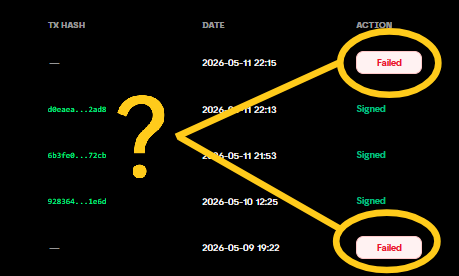
If your @axisrobotics task failed recently — you're not alone.
A lot of contributors are confused about why it happened and what to do next.
Here's the reasons:
→ Bot activity — Task 805 had unusually high failure rates because bots were spamming it, not real players
→ Gripping & manipulation issues — failed grasps, objects slipping, gripper problems mid-task
→ Physics glitches in sim — lag, objects clipping, unstable long-task sessions
→ Harder new tasks — microwaves, ovens, cabinets require open/close/press skills that are genuinely more complex
So what should you do?
Honestly? Just move on to the next task.
You can't fix the bots, the sim glitches, or the data pipeline yourself. Don't stress over a failed task — it's not always on you.
#AxisRobotics #PhysicalAI #RoboticsAI #TaskFailure #SimToReal #AIContributors
May 25

Axis Weekly
This week, we focused on making the robotics data loop more measurable and reproducible: separating real user signals from bot traffic, expanding TaskGen into articulated-object tasks, and turning data-to-model workflows into repeatable services.
Key updates:
- Data quality: Task 805’s high failure rate was driven by bots, not real players.
- TaskGen: Codebase delivered for an upcoming update that will support end-to-end generation of articulated-object tasks from prompts.
- Simulation and data infra: Asset bugs fixed, and the automated recover-from-failure pipeline is nearing full deployment.
- Model training: Achieved a ~40% success rate in cross-simulation evaluation (IsaacLab to MuJoCo).
- Sim-to-real: Updated the domain randomization roadmap to heavily boost physical parameter diversity.
A closer look at this week’s progress 🧵
3
56


【Robo Spotlight】 🖥️Building smarter robotics with a hybrid system.🤖Dive into this #tech case and learn how we integrated #WSL, #ROS, and #Unity—using the #myCobot 280 M5 to validate seamless communication across platforms👉bit.ly/3Zp7i3E #robotics #SimToReal #Tech
1
2
16
395

May 19
Computex Taipei 2026 is just around the corner, and NVIDIA's upcoming keynote on June 1st will undoubtedly spotlight the era of Physical AI.
Right now, the biggest bottleneck in the robotics industry is the data crisis: collecting enough trajectories to train a robot for a single real-world manipulation task can take 6 to 12 months and cost up to $2 million.
That’s exactly why SR-Platform @StrikeRobot_ai is positioned as a true Physical AI Data Factory. The system can transform a natural language description into complete, photorealistic, and annotated training datasets ready to directly train VLA models with zero manual intervention. By natively integrating the Newton physics engine, it flawlessly simulates contact-rich tasks requiring high precision and physical deformation, such as connector insertion and cable routing. Then, through the NVIDIA Cosmos pipeline, the simulated data is transformed to bridge the sim-to-real gap and packaged perfectly into LeRobot or RLDS standards.
Fully automating the sim-to-real training data pipeline is the mandatory next step to unlock the true potential of Agentics and Behavior Foundation Models. Can't wait to see the groundbreaking AI infrastructure solutions unveiled at next week's event! 🔥
🔗 Event details: events.computextaipei.com.tw…
#PhysicalAI #Robotics #Computex2026 #NVIDIA #SRPlatform #SimToReal #Agentics
1
2
5
129

May 16
🧵 SIM-TO-REAL GAP LÀ GÌ? THÁCH THỨC LỚN NHẤT CỦA ROBOTICS AI 🤖
@axisrobotics
Một robot có thể hoạt động hoàn hảo trong mô phỏng.
Nhưng khi bước ra thế giới thật, nó có thể thất bại ngay lập tức.
Khoảng cách này được gọi là Sim-to-Real Gap. 👇
🧠 SIM-TO-REAL GAP LÀ GÌ?
Sim-to-Real Gap là sự khác biệt giữa:
môi trường mô phỏng (simulation)
môi trường thực tế (real world)
Trong mô phỏng:
mọi thứ sạch sẽ
điều kiện ổn định
ít nhiễu
Ngoài đời:
ánh sáng thay đổi
vật thể đa dạng
môi trường khó dự đoán
📌 Hiểu đơn giản:
Điều robot học trong mô phỏng không phải lúc nào cũng hoạt động ngoài đời thật.
🤖 VÌ SAO ĐÂY LÀ BÀI TOÁN KHÓ?
Robot phải đối mặt với:
sai số cảm biến
ma sát khác nhau
vật thể biến đổi
chuyển động không hoàn hảo
Chỉ một khác biệt nhỏ cũng có thể khiến robot thất bại.
⚙️ AXIS GIẢI QUYẾT NHƯ THẾ NÀO?
Axis thu hẹp Sim-to-Real Gap bằng:
Physical consistency checks
Data cleaning
Smoothing
In-task randomization
Diverse trajectories
Insight:
Mô hình càng được huấn luyện trên dữ liệu đa dạng và đúng vật lý, khả năng thích nghi với thế giới thật càng cao.
🌍 VAI TRÒ CỦA RANDOMIZATION
Khi asset, màu sắc, vị trí và điều kiện thay đổi liên tục,
robot buộc phải học nguyên tắc tổng quát thay vì ghi nhớ.
Điều này giúp tăng khả năng generalization.
🏆 TẠI SAO ĐIỀU NÀY QUAN TRỌNG?
Một mô hình chỉ giỏi trong mô phỏng có giá trị hạn chế.
Giá trị thực sự nằm ở khả năng:
biến kỹ năng trong simulation thành hành động đáng tin cậy ngoài đời thật.
💡 Insight lớn nhất
Trong robotics, bài toán không phải là “robot có học được không”.
Mà là:
“Những gì robot học có thực sự hoạt động ngoài đời không?”
Sim-to-Real Gap chính là câu trả lời cho câu hỏi đó.
📌 KẾT LUẬN
Nếu phải tóm tắt trong 1 câu:
Sim-to-Real Gap là khoảng cách giữa thành công trong mô phỏng và hiệu quả ngoài thế giới thực.
Axis đang xây dựng dữ liệu để thu hẹp khoảng cách này.
🚀 Join Axis Robotics:
hub.axisrobotics.ai/login?in…
📲 Telegram CĐVN:
t.me/AxisroboticsVietnam/1
🤖 Telegram Bot:
t.me/tgbot?start=lYPkTomm-nM…
#AxisRobotics #AI #Robotics #PhysicalAI #SimToReal #Web3 #Base
May 15

🧵 DATA TRAJECTORY LÀ GÌ? TÀI SẢN CỐT LÕI CỦA AXIS ROBOTICS 🤖
@axisrobotics
Khi tham gia Axis Robotics, bạn sẽ liên tục nghe đến thuật ngữ “trajectory”.
Thoạt nhìn, đây chỉ là một chuỗi thao tác.
Nhưng trong robotics AI, trajectory chính là đơn vị dữ liệu quan trọng nhất. 👇
🧠 DATA TRAJECTORY LÀ GÌ?
Trajectory là toàn bộ chuỗi hành động từ lúc bắt đầu đến khi hoàn thành nhiệm vụ.
Ví dụ:
Robot nhìn thấy chiếc cốc
Di chuyển cánh tay
Gắp chiếc cốc
Đặt vào đúng vị trí
Tất cả các bước trên hợp lại thành một trajectory.
📌 Hiểu đơn giản:
Trajectory = một “bài học hoàn chỉnh” để robot học cách hành động.
⚙️ THÀNH PHẦN CỦA MỘT TRAJECTORY
Một trajectory thường bao gồm:
Quan sát (images, states)
Hành động (actions)
Thời gian (timestamps)
Trạng thái hoàn thành
Mỗi trajectory ghi lại toàn bộ quá trình ra quyết định của con người.
🤖 TẠI SAO TRAJECTORY QUAN TRỌNG?
Robot không học qua lý thuyết.
Robot học bằng cách bắt chước hành động.
Trajectory chính là:
ví dụ thực tế về cách giải quyết một nhiệm vụ.
Càng nhiều trajectory chất lượng cao:
mô hình càng hiểu tốt hơn
hành động càng chính xác hơn
khả năng tổng quát hóa càng mạnh hơn
📈 1 TRAJECTORY = 1 ĐƠN VỊ GIÁ TRỊ
Trong hệ sinh thái Axis:
mỗi task hoàn thành tạo ra trajectory
trajectory được kiểm tra và làm sạch
dữ liệu được dùng để huấn luyện Physical AI
Insight:
Mỗi trajectory bạn tạo ra là một mảnh trí tuệ cho robot tương lai.
🌍 TẠI SAO CHẤT LƯỢNG QUAN TRỌNG?
Một trajectory tốt cần:
hoàn thành mục tiêu
mượt mà
đúng vật lý
ít nhiễu
Dữ liệu không đạt chuẩn có thể bị loại bỏ.
🏆 SO SÁNH DỄ HIỂU
Nếu mô hình AI là “bộ não”,
thì trajectory là “ký ức trải nghiệm”.
Càng nhiều trải nghiệm chất lượng,
robot càng thông minh.
💡 Insight lớn nhất
Nhiều người nghĩ họ chỉ đang chơi mô phỏng.
Nhưng thực tế:
Mỗi trajectory là một bài học hoàn chỉnh giúp robot học cách tương tác với thế giới thật.
📌 KẾT LUẬN
Nếu phải tóm tắt trong 1 câu:
Data Trajectory là đơn vị dữ liệu cốt lõi biến thao tác của con người thành trí tuệ cho robot.
🚀 Join Axis Robotics:
hub.axisrobotics.ai/login?in…
📲 Telegram:
t.me/AxisroboticsVietnam/1
#AxisRobotics #AI #Robotics #PhysicalAI #Trajectory #Web3
27
1
30
1,269

May 7
Axis Robotics: Khi Robot "Cai Sữa" Phòng Thí Nghiệm – Bước Vào Tuyến Đầu Công Nghiệp
Hầu hết AI hiện nay vẫn đang sống trong thế giới của "bits" (dữ liệu số). Chúng chat với bạn, vẽ ảnh cho bạn, nhưng chúng không thể tự tay cầm một tách cà phê hay vận hành một dây chuyền sản xuất mà không có sự lập trình tỉ mỉ của con người. @axisrobotics đang thay đổi điều đó bằng cách đưa AI bước vào thế giới của "atoms" (vật chất thật) – hay còn gọi là Physical AI (AI Vật lý).
1. Dữ liệu "Hạng Nặng" cho những Tác vụ "Hạng Nặng"
Tầm nhìn của Axis không chỉ dừng lại ở các task gia đình đơn giản. Gần đây, Axis Robotics đã hoàn thành các thí nghiệm thu thập dữ liệu quy mô lớn, chính thức xác nhận tính khả thi của việc triển khai công nghiệp. Điều này có nghĩa là, thay vì chỉ huấn luyện robot cách "sắp xếp đồ chơi" trong MetaSim (môi trường ảo), Axis đang tiến tới huấn luyện robot masters các kỹ năng cần thiết cho nhà máy, kho bãi, và hậu cần.
Để làm được điều này, nền tảng MetaSim đã được nâng cấp lên một tầm cao mới:
Hợp nhất 2 Engine đỉnh cao: Sử dụng dữ liệu vật lý tần số cao từ MuJoCo và tái hiện lại trong Isaac Sim (của NVIDIA) để đạt được độ chân thực tối đa về mặt hình ảnh và ánh sáng.
Randomization (Ngẫu nhiên hóa) Quy mô lớn: Tạo ra hàng triệu biến thể khác nhau về ánh sáng, kết cấu, và bối cảnh ảo. Nhờ đó, một hành trình được thu thập từ con người có thể nhân bản thành hàng nghìn kịch bản huấn luyện, giúp robot không bị "bỡ ngỡ" trước sự hỗn loạn của thế giới thật.
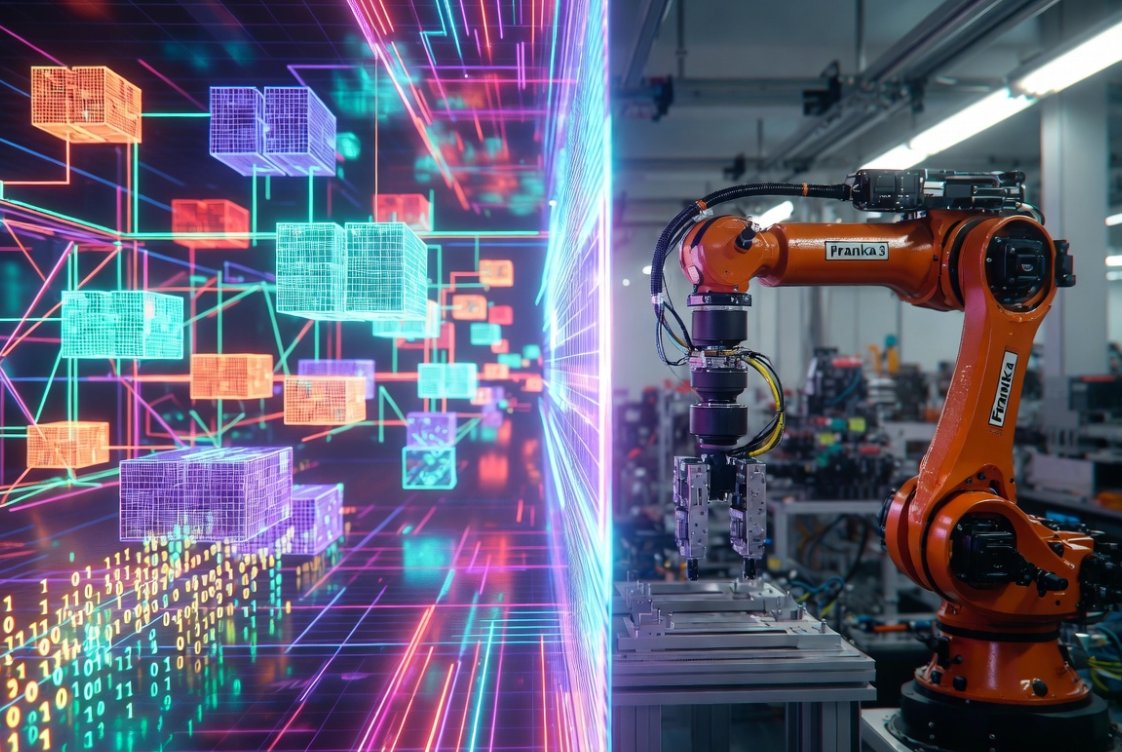
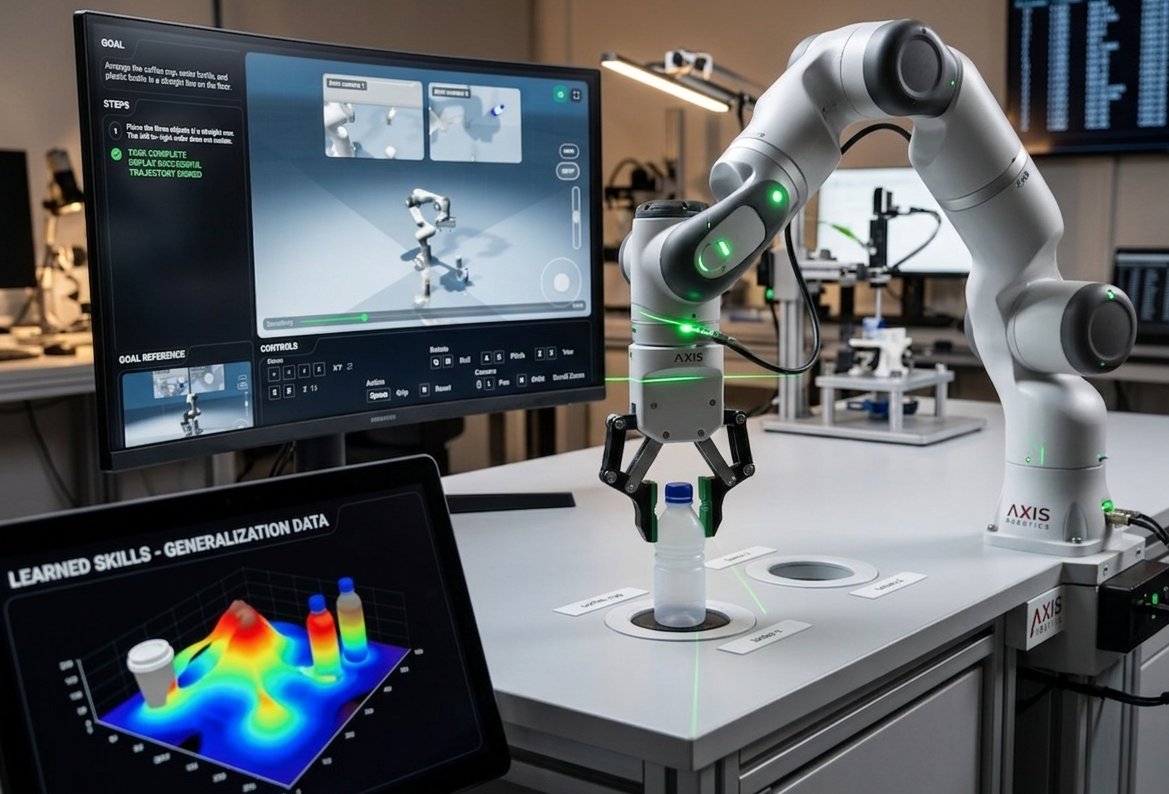
2. Sim-to-Real: Đã Thành Công Trên Cánh Tay Robot Franka
Chứng minh cho tính khả thi này, lô dữ liệu đầu tiên được thu thập từ những người dùng Internet thông thường đã được sử dụng để huấn luyện và tái hiện thành công mô hình hành vi trên cánh tay robot thật (Franka Emika) trong môi trường thí nghiệm được thiết kế giống nhà xưởng.
Đây là minh chứng cho việc hệ thống xác thực Replay Validation của Axis hoạt động hiệu quả, lọc sạch dữ liệu rác và đảm bảo chỉ dữ liệu tuân thủ quy luật vật lý mới được đưa vào "bộ não" robot.
3. Tương lai: Tài sản hóa Kỹ năng Robot trên Base
Với việc mở rộng chương trình tạo nội dung trên Base và hợp tác với Kaito AI, Axis đang xây dựng một nền tảng nơi mỗi module kỹ năng, mỗi bộ dữ liệu robot được đăng ký trên blockchain như một loại tài sản số (On-chain Asset).
Tương lai của @axisrobotics là một hệ sinh thái mở: Người dùng đóng góp dữ liệu -> Robot học kỹ năng công nghiệp -> Doanh nghiệp thuê kỹ năng robot -> Người đóng góp nhận phần thưởng.
Axis Robotics không chỉ dạy robot cách di chuyển; họ đang xây dựng hạ tầng phi tập trung đầu tiên để công nghiệp hóa trí tuệ của robot.
#Axis #AxisRobotics #PhysicalAI #SimToReal #RoboticsIndustry #Base #Web3Data
3
4
60

世界モデルを実装中。
アームが3本に重なって見えるのは失敗ではなく、世界モデルが複数の未来を確率的に予測し、その不確実性が重畳表示されているWorld Modelの本質的な振る舞い。編集で消すこともできましたが、あえてそのままお出ししています
#WorldModel #PhysicalAI #ロボティクス #SimToReal
Apr 28

前回の投稿とそっくりの実験ブースですが、こちらは世界モデルが再現した仮想空間内でのシミュレーションです。
モデルが動きの結果を予測しているため、動画のようにアームが3本に重なって見えることもあります。
世界モデルを活用したデータ収集にも取り組んでいます。 #JDSC #physicalAI
1
7
1,235
Most of us don't know how AI robots are actually trained. People think they're programmed by developers writing complex code that tells them exactly what to do — something like prompting.
But it doesn't work like that.
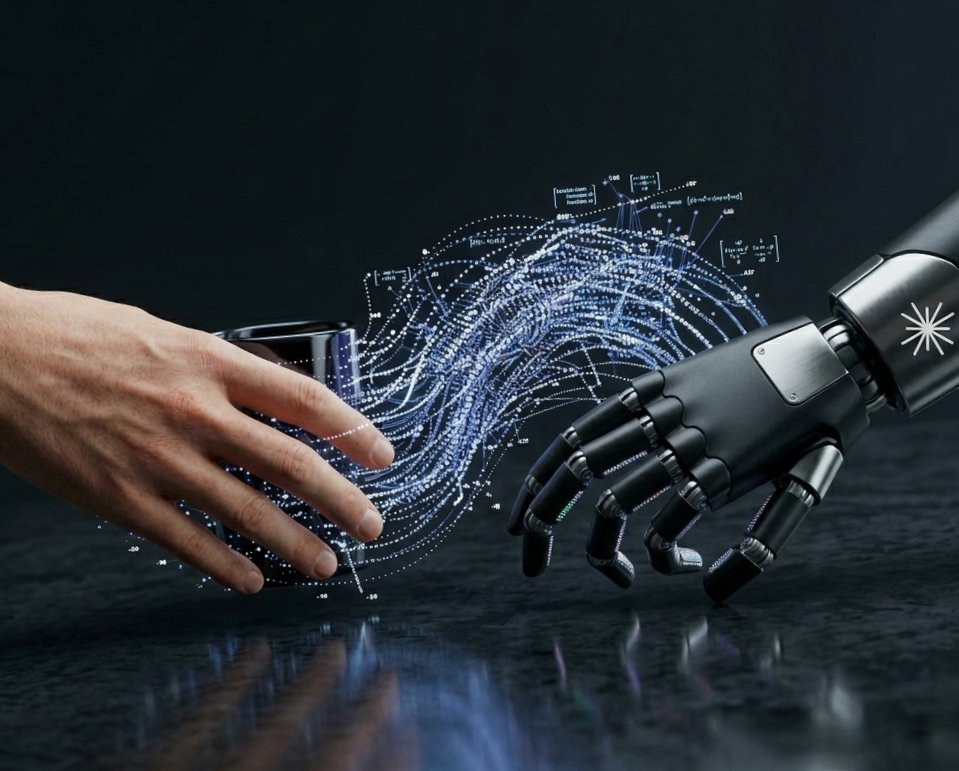
Real robots learn from demonstration. You show the robot a movement over and over until it recognizes the pattern and can repeat it on its own.
How does it work?
Robots can't learn the way we do — they depend on data points. Say you record a video of yourself picking up a cup. The robot breaks that video down into thousands of data points and learns from them. Your 1 minute becomes thousands of data points for a robot.
What's the problem?
Getting millions of those demonstrations is incredibly hard — near impossible, honestly. It requires expensive lab equipment, expert operators, and years of work. And even then, you still can't say you have enough.
This is the exact problem @axisrobotics is trying to solve.
To be very honest — human feeling (like how you naturally reach for a glass, adjust your grip, or catch something before it falls) is the most valuable dataset on earth. And almost none of it has been captured. That's intelligence no textbook can teach a robot.
So they built a platform where anyone, anywhere can contribute that feeling — teaching robots through simulation.
#AxisRobotics #PhysicalAI #EmbodiedAI #RobotTraining #ImitationLearning #SimToReal #AI
1
2
8
151

Apr 21
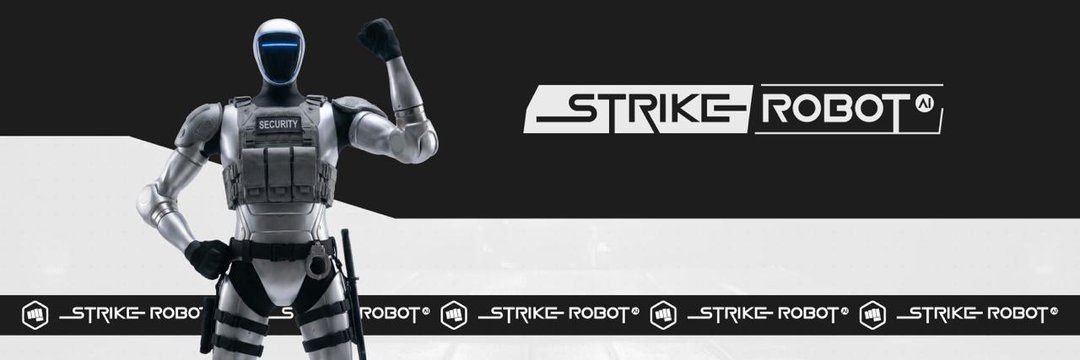
StrikeRobot AI is accelerating the evolution of Physical AI through its mastery of Sim-to-Real technology.
While the transition from virtual simulation to the physical world is traditionally a massive bottleneck in robotics, @StrikeRobot_ai bypasses this using highly advanced simulation infrastructure and learning-based motion control.
By extensively training their models in hyper-realistic virtual environments, they can flawlessly transfer complex skills to the physical Unitree G1 humanoid robot with minimal friction.
This seamless bridge allows for rapid development, testing, and iteration operating at a speed that traditional hardware-first approaches simply cannot match.
Ultimately, this rapid pipeline is the driving force behind the fast-tracked real-world deployment of their SR Agentic system and SafeGuard ASF, proving that Physical AI can be both scalable and practical for industrial applications.
#StrikeRobot #PhysicalAI #SRAgentic #SimToReal
32
28
168