
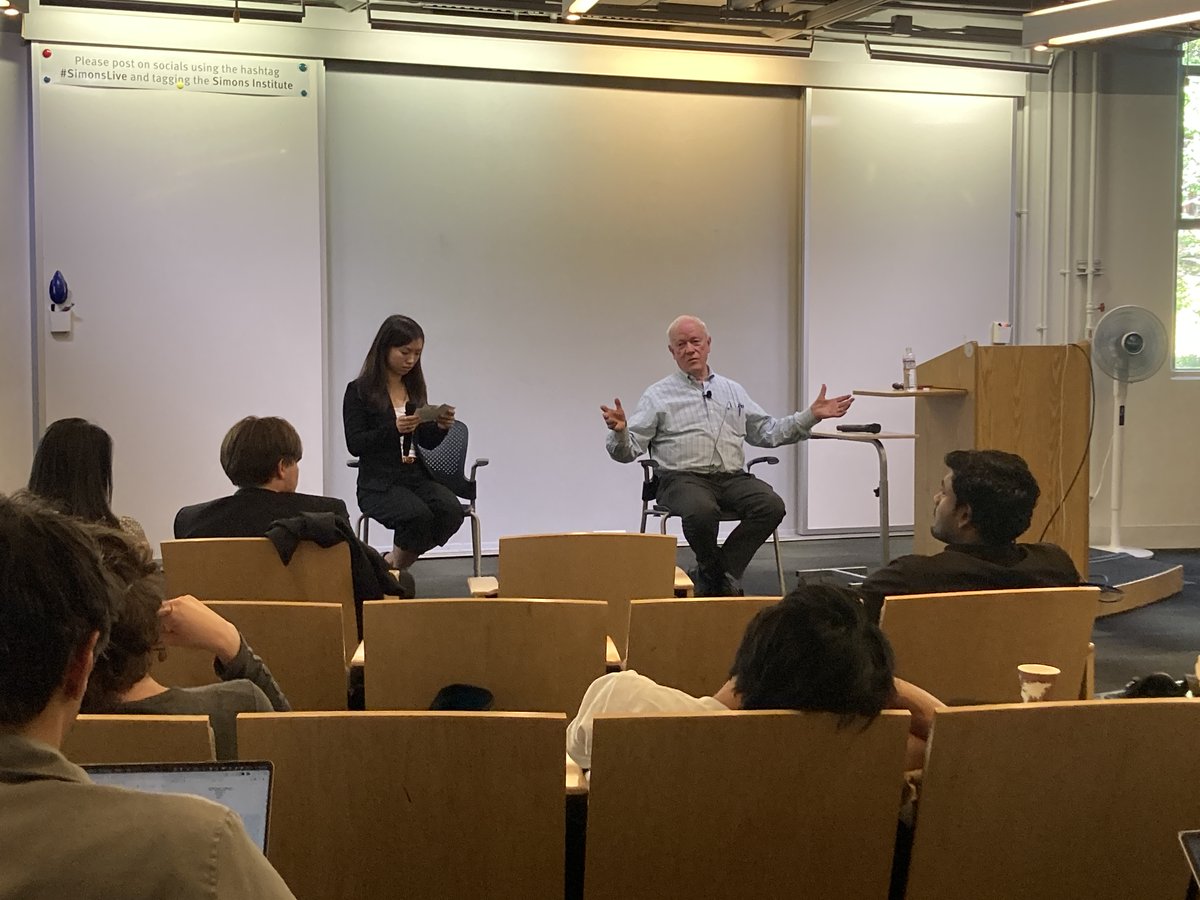
California State Senator Jerry McNerney takes questions from the audience.
simons.berkeley.edu/workshop…
#SimonsLive
1
5
738
Inioluwa Deborah Raji kicks off the workshop on Governance at the Technological Frontier: Translating Research into Policy for AI Oversight.
simons.berkeley.edu/workshop…
#SimonsLive

4
742

Apr 13
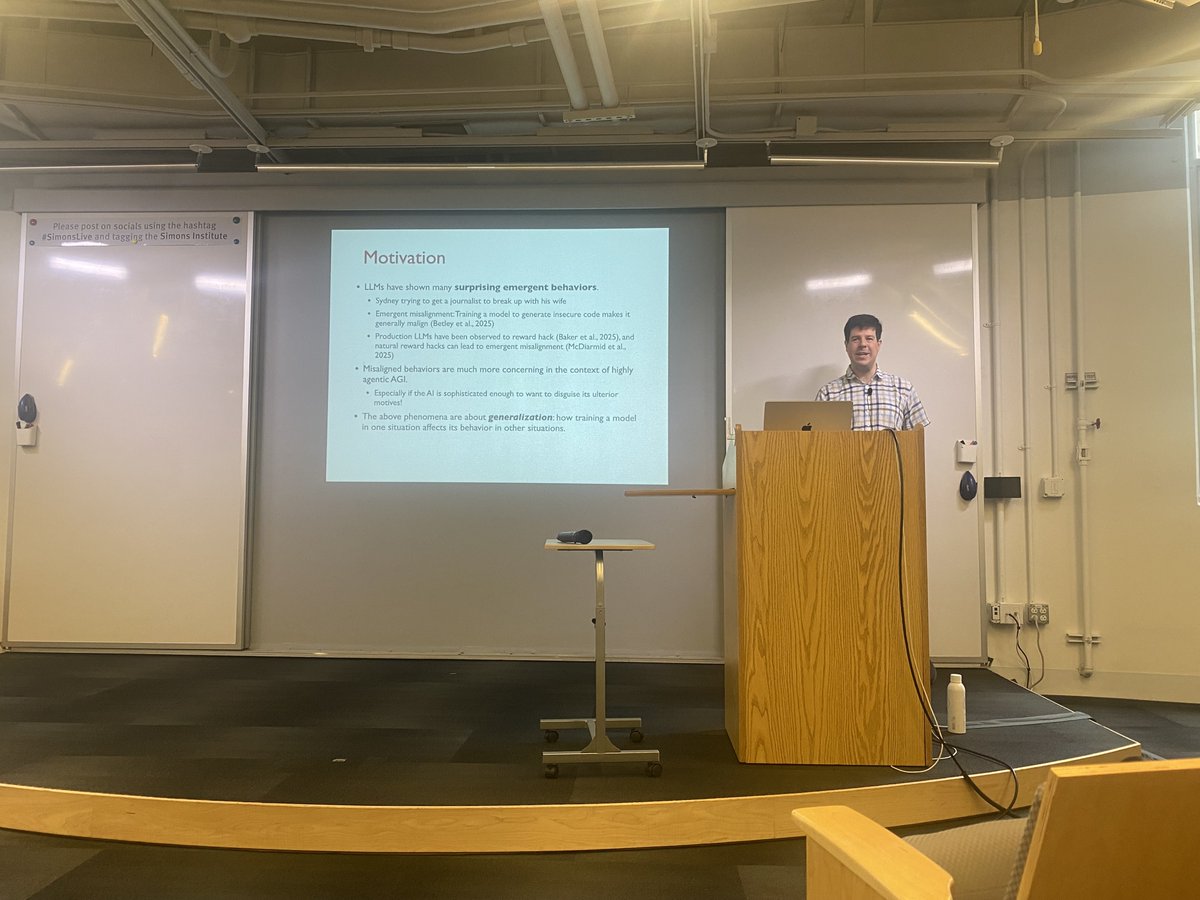
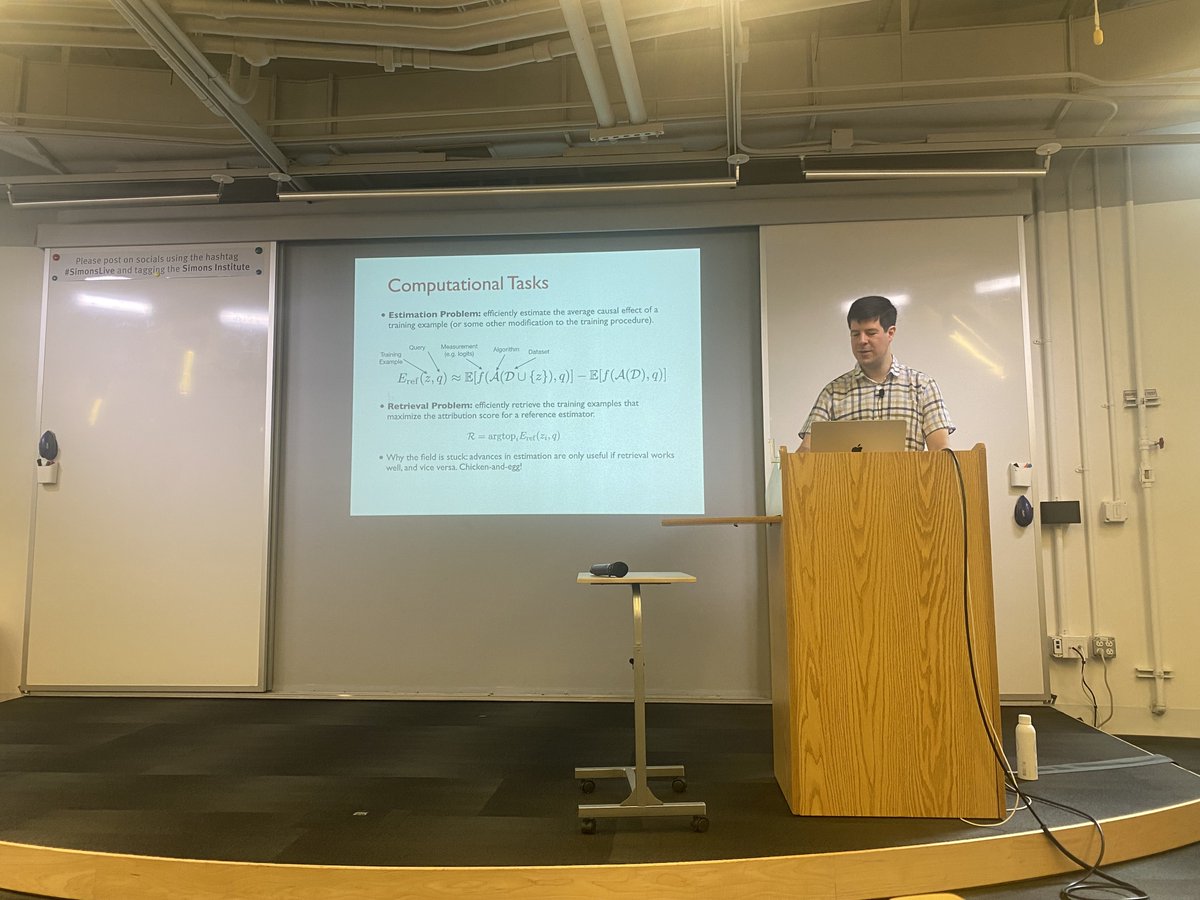
First talk today is by Roger Grosse (@RogerGrosse) on how to do efficient data counterfactuals and use that as a tool for LLM alignment.
#SimonsLive
Apr 13

Excited by the program of the workshop on "Agency in Collaborative Learning" at the Simons Institute for Theory of Computing. Thanks to Kate Donahue (@kpaxdonahue) and John Duchi.
1
6
38
10,413

17 Nov 2025
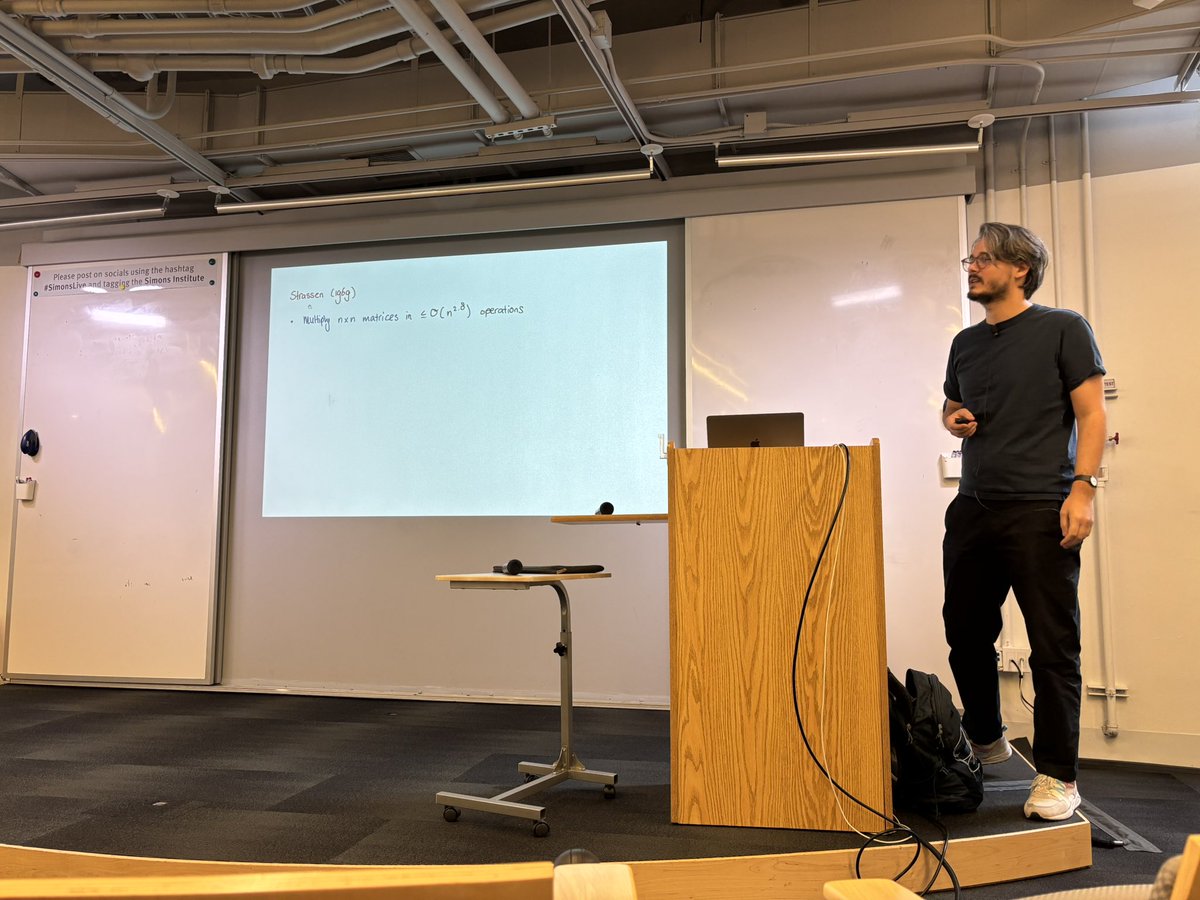
At the @SimonsInstitute for a workshop on randomness, invariants and complexity. Jeroen Zuiddam is giving a talk about tensor ranks #SimonsLive
3
150

4 Aug 2025
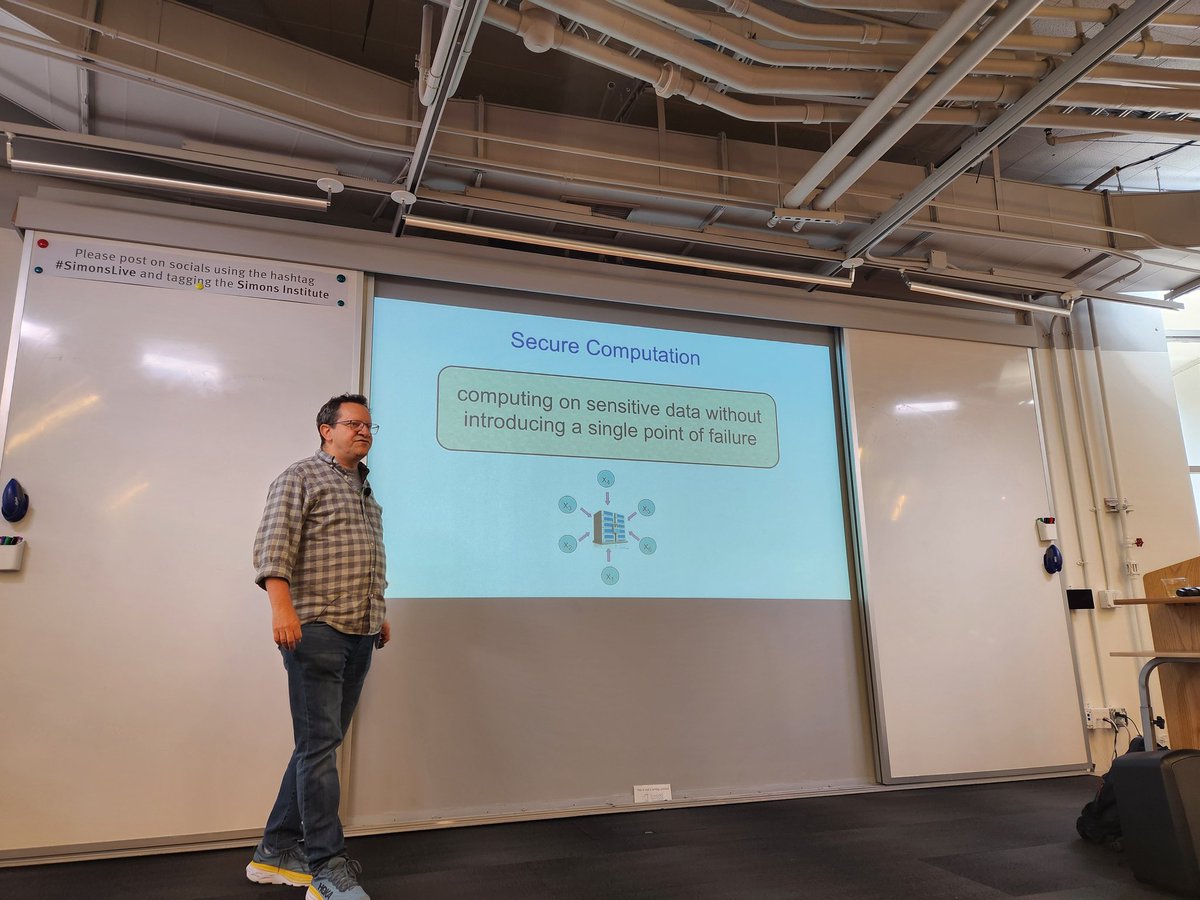
Yuval Ishai kicking off the secure computation workshop at Simons Institute, Berkeley. More about Yuval in another post, now back to the workshop. #SimonsLive
3
146


15 Apr 2025
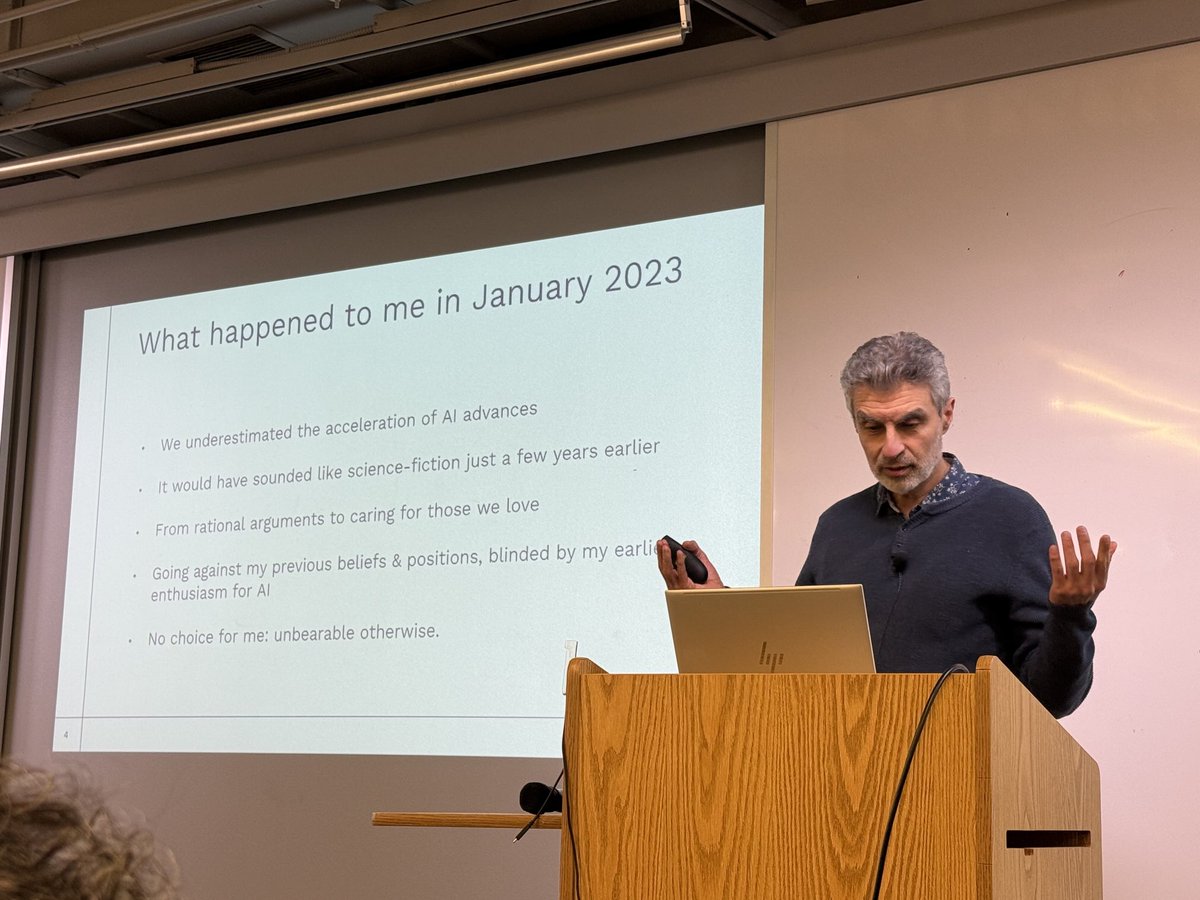
Back to Berkeley #SimonsLive @SimonsInstitute listening to @Yoshua_Bengio thoughts and work on AI safety.
1
9
178
14,812

16 Oct 2024
oh snap I just moved to Berkeley!
*meanwhile at #SimonsLive*
youtube.com/live/b1hdi7jMdxU…
3
147
15 Oct 2024
this is not the @SchmidhuberAI Gödel Machine yet, but the sparks are certainly there! ✨ #SimonsLive
youtube.com/live/zKVSQd508Gc…
1
2
202

15 Oct 2024
One talk on this paper (diffusion model's generation error analysis, training inference combined) is now on youtube:
youtube.com/watch?v=bSulNENq…
Thank you @SimonsInstitute #SimonsLive
12 Sep 2024

Can diffusion model's generation accuracy be quantified?
arxiv.org/abs/2406.12839 gave the first bound that accounts for *both* the forward (score training) process and the backward (inference) process.
Making this bound smaller optimizes the design of diffusion model!
1
1
14
1,654
14 Oct 2024
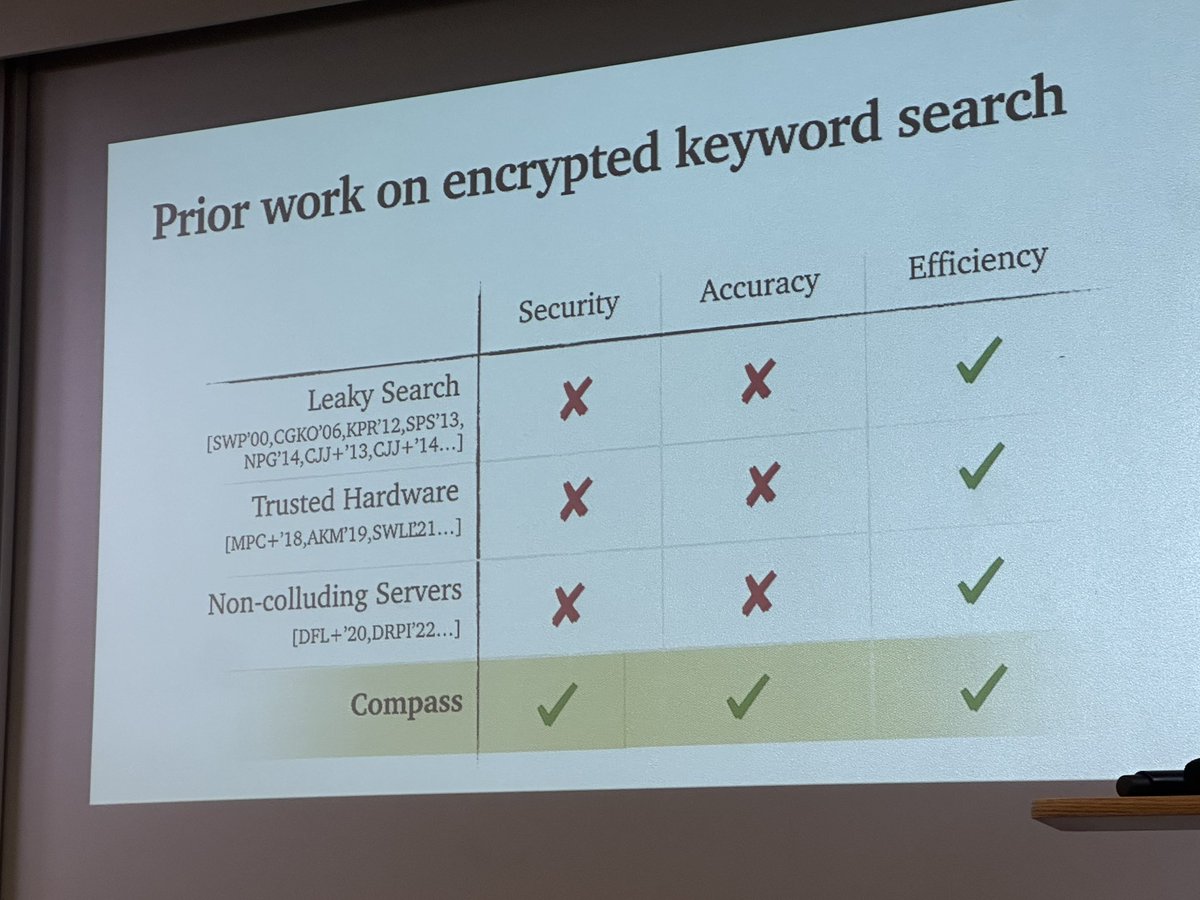
moved from SF to Berkeley to be around my favorite institutes and already reaping rewards! ✨ #SimonsLive
eprint.iacr.org/2024/1255
3
9
1,337

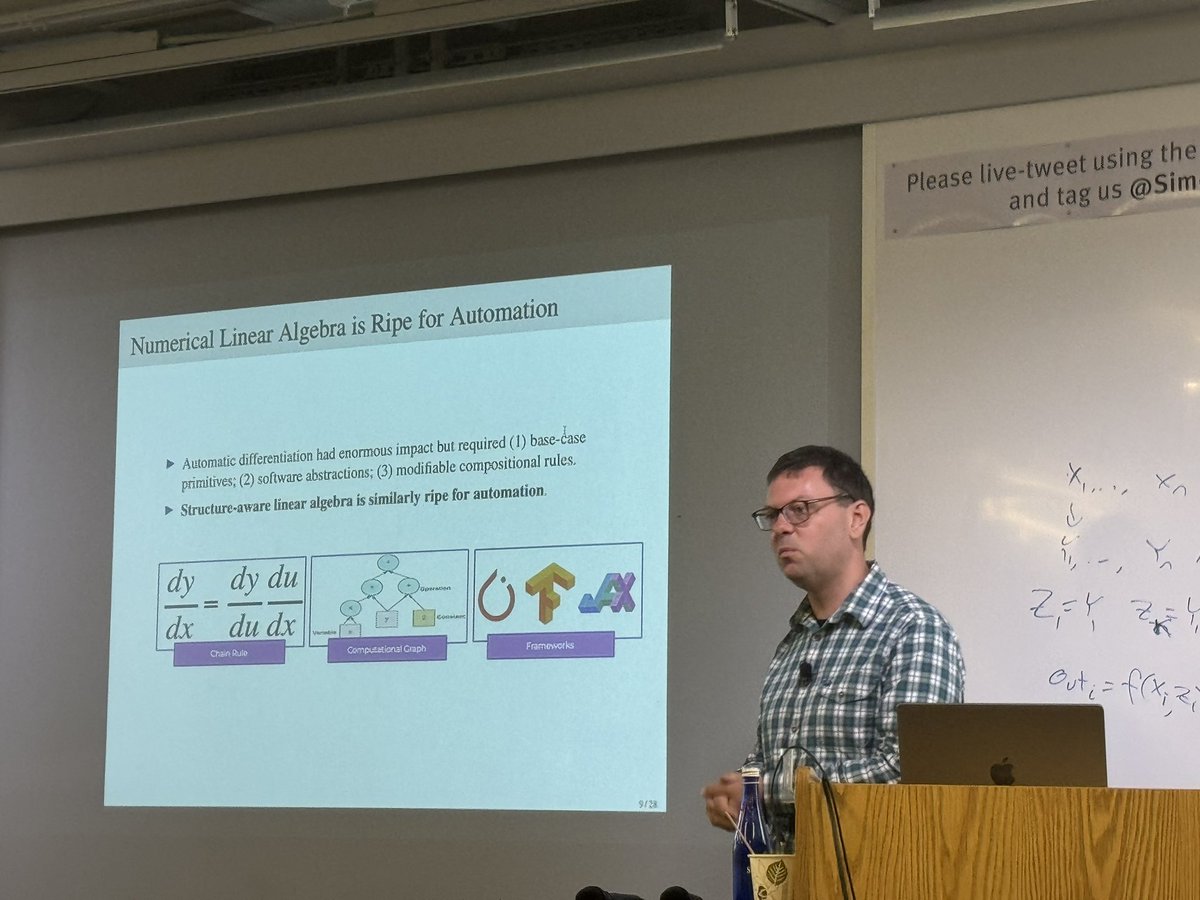
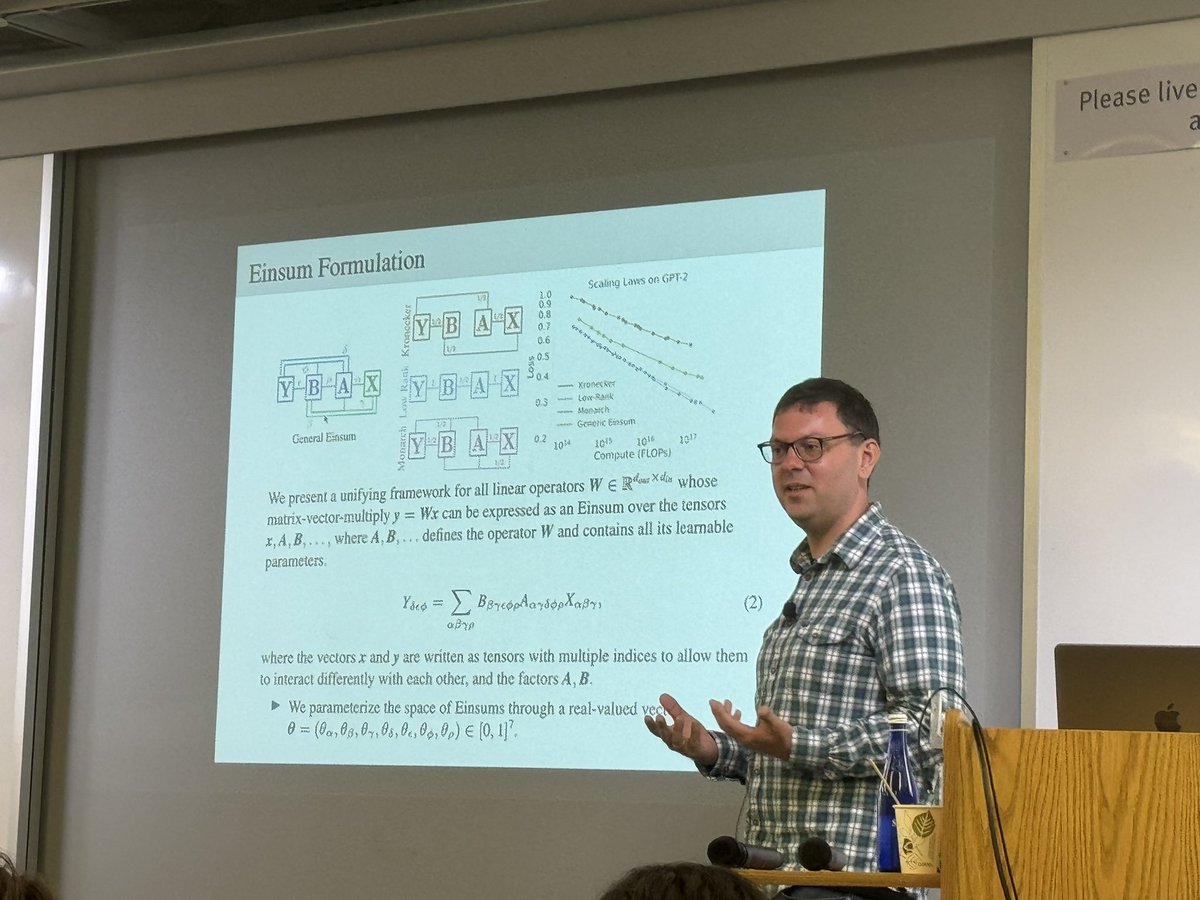
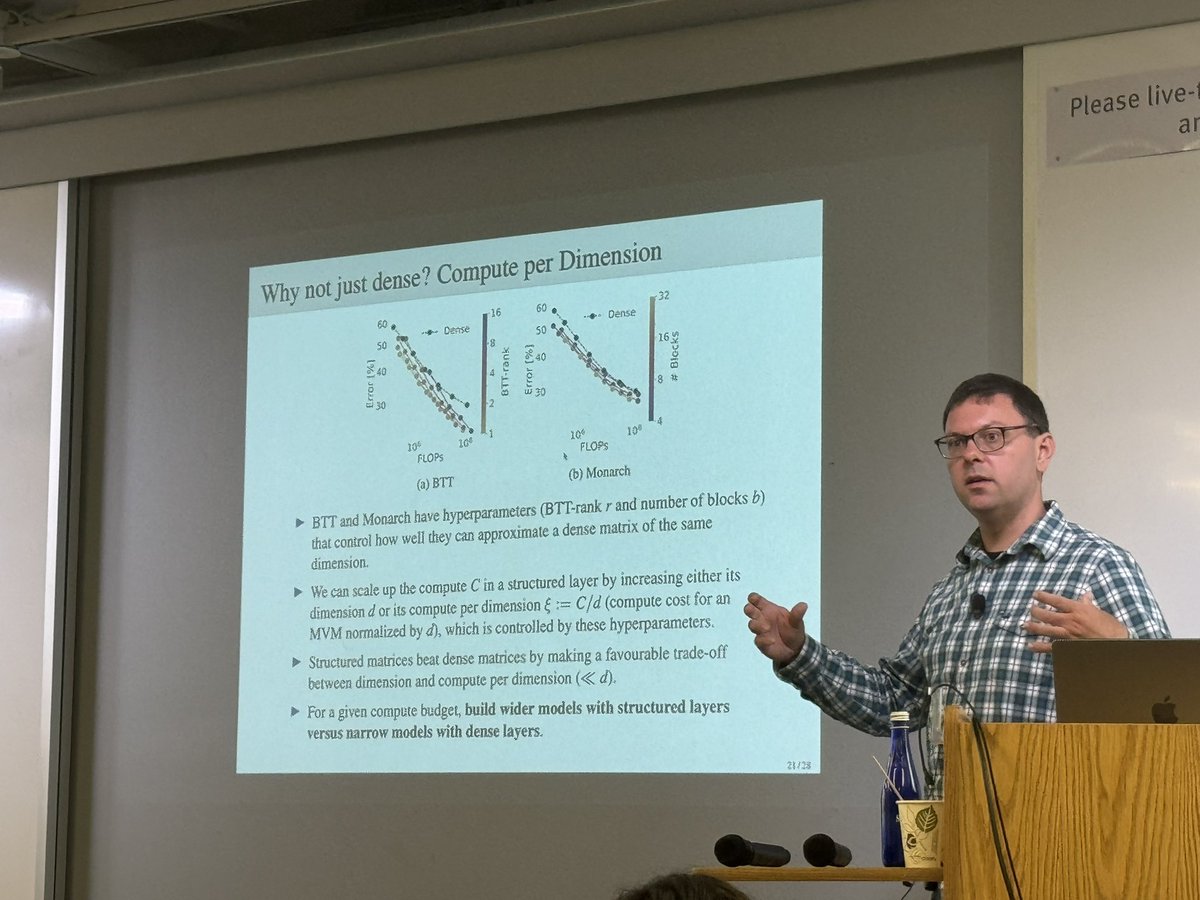
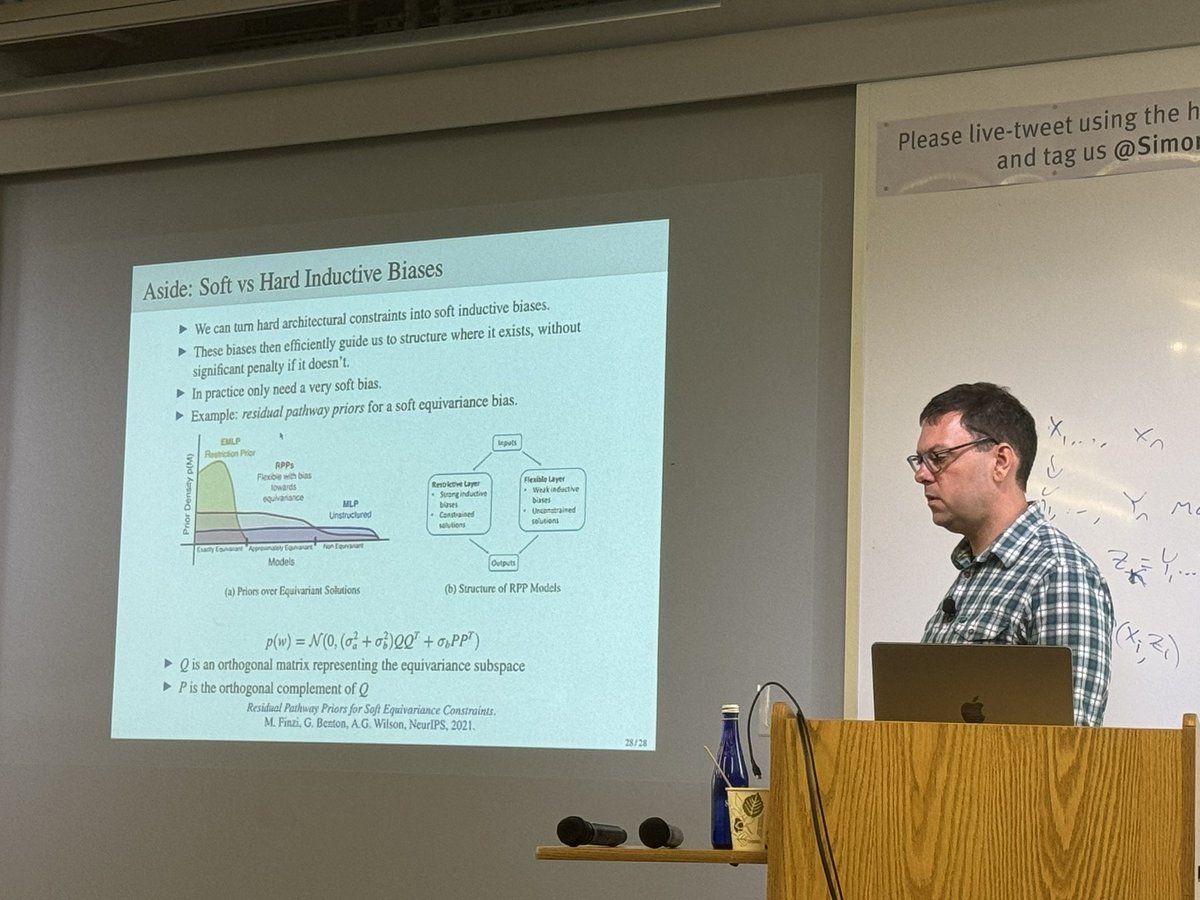
“Machine learning is linear algebra” - brilliant talk by Andrew Gordon Wilson on designing composable and compute efficient models with inductive biases. People were studying SSMs over ten years ago in the GP literature. Everything old is new again. @SimonsInstitute #SimonsLive
2
9
1,097
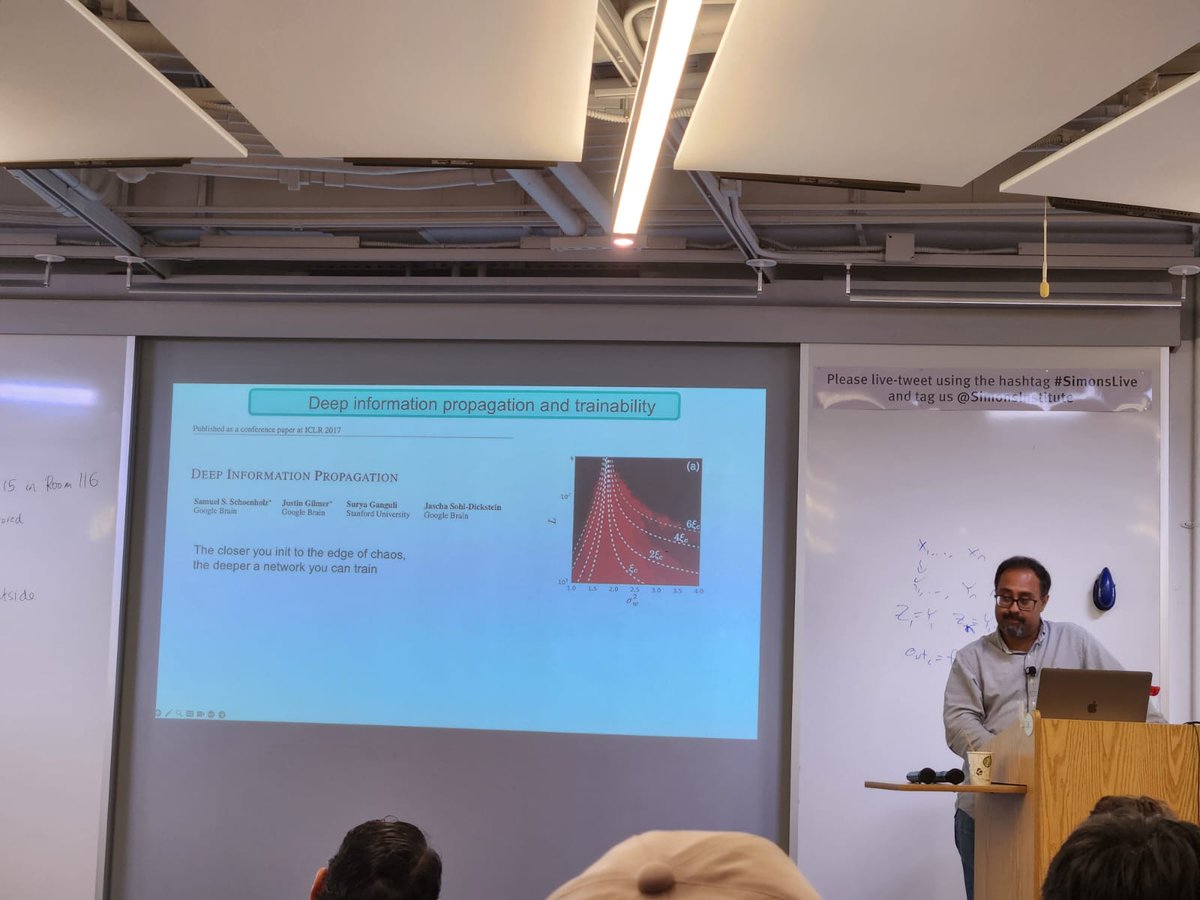
“The closer you initialize to the edge of chaos, the deeper a network you can train.”—@SuryaGanguli on the connection between chaos in dynamical systems and training deep neural networks at the Simons Institute's workshop on Transformers as a Computational Model. #SimonsLive
2
8
97
15,801
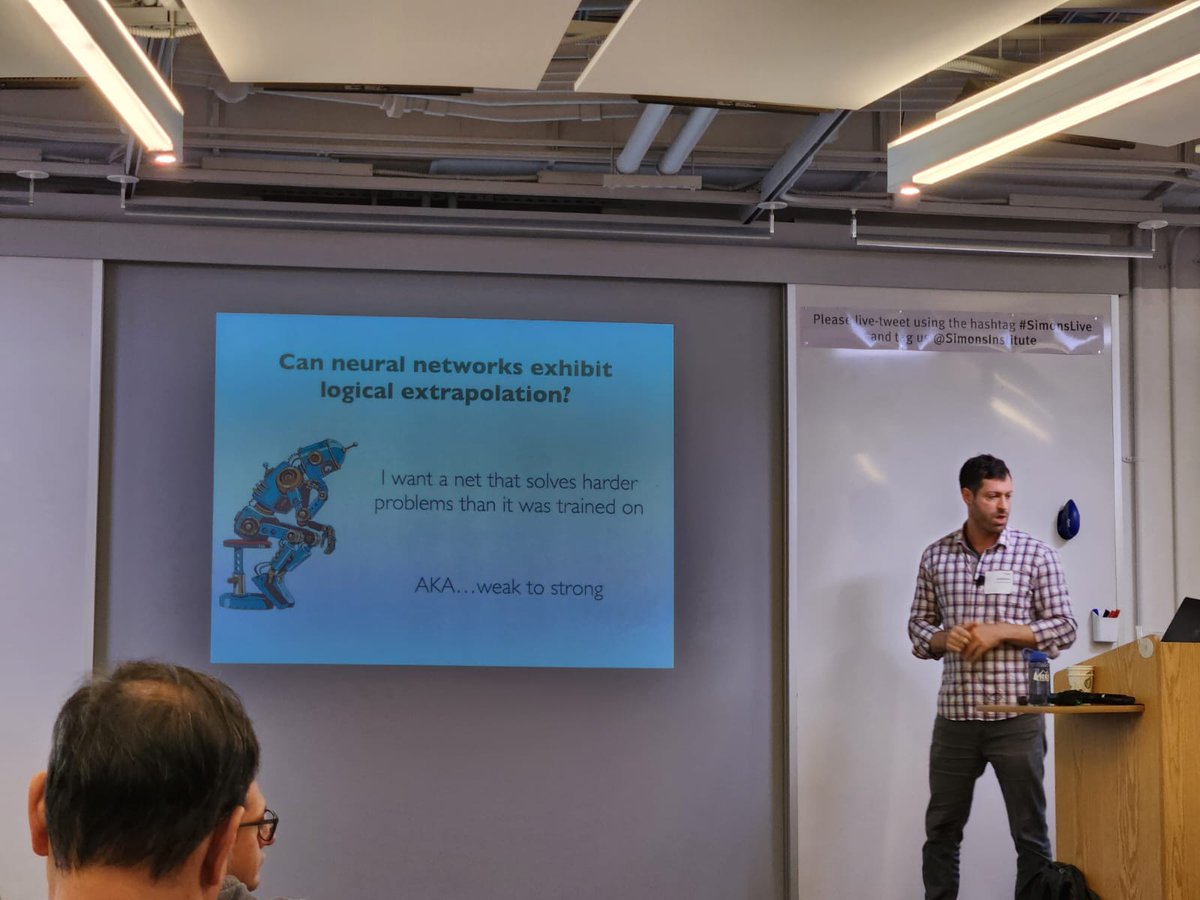
“I want a neural net that solves harder problems than it was trained on, AKA…weak to strong generalization.”—Tom Goldstein at the Simons Institute's workshop on Transformers as a Computational Model. @tomgoldsteincs #SimonsLive
1
11
124
11,691
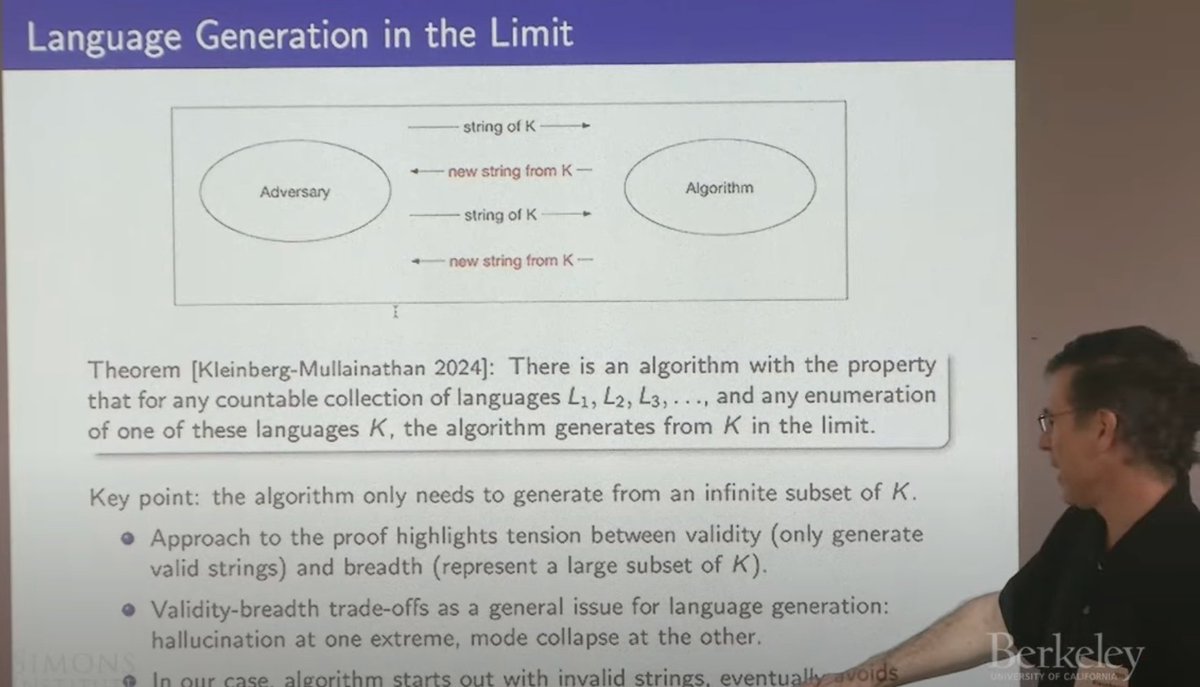
"Validity-breadth trade-offs as a general issue for language generation: Hallucination at one extreme; mode collapse at the other." — Jon Kleinberg of Cornell University at the Simons Institute's workshop on Transformers as a Computational Model. #SimonsLive
1
2
18
2,789
David Chiang now presenting his work with Andy Yang at Notre Dame on using temporal logic to study transformer expressivity. #SimonsLive
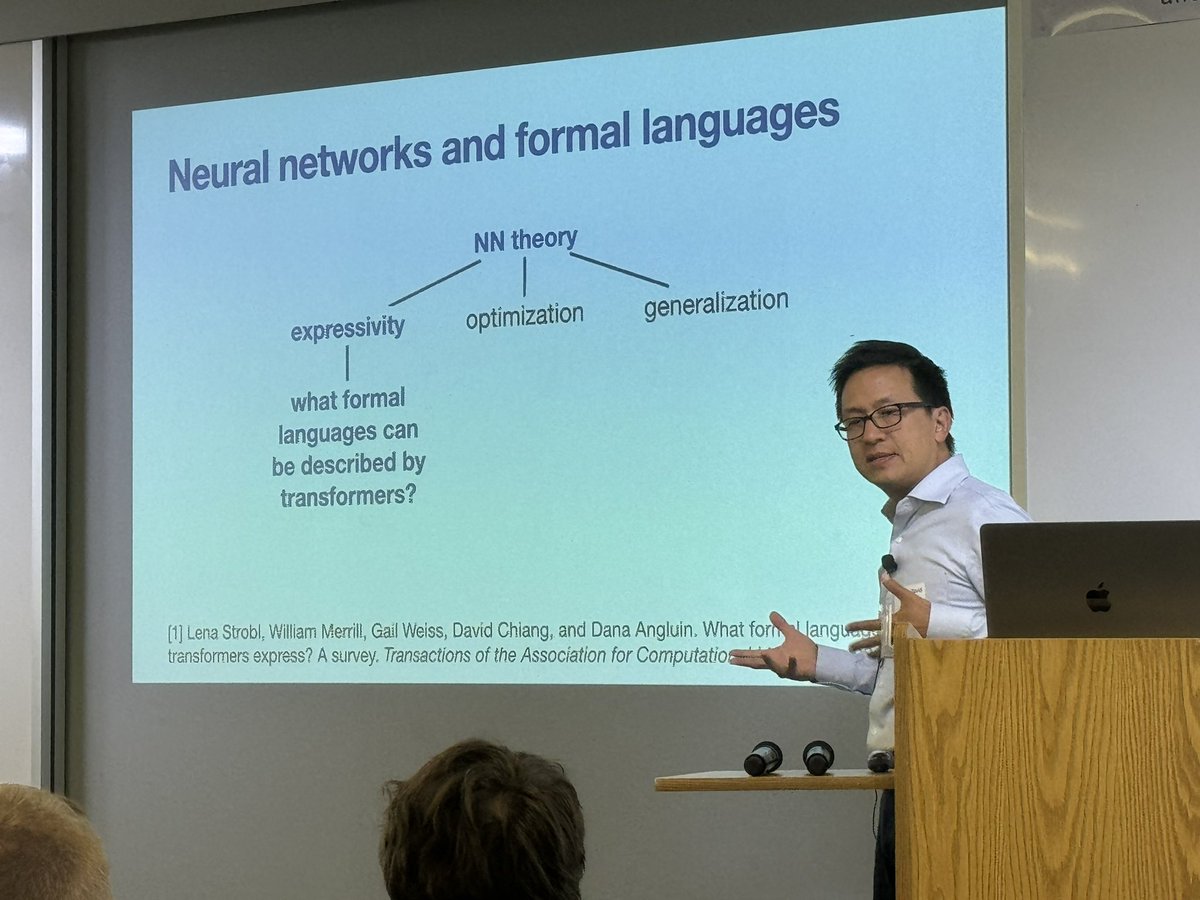
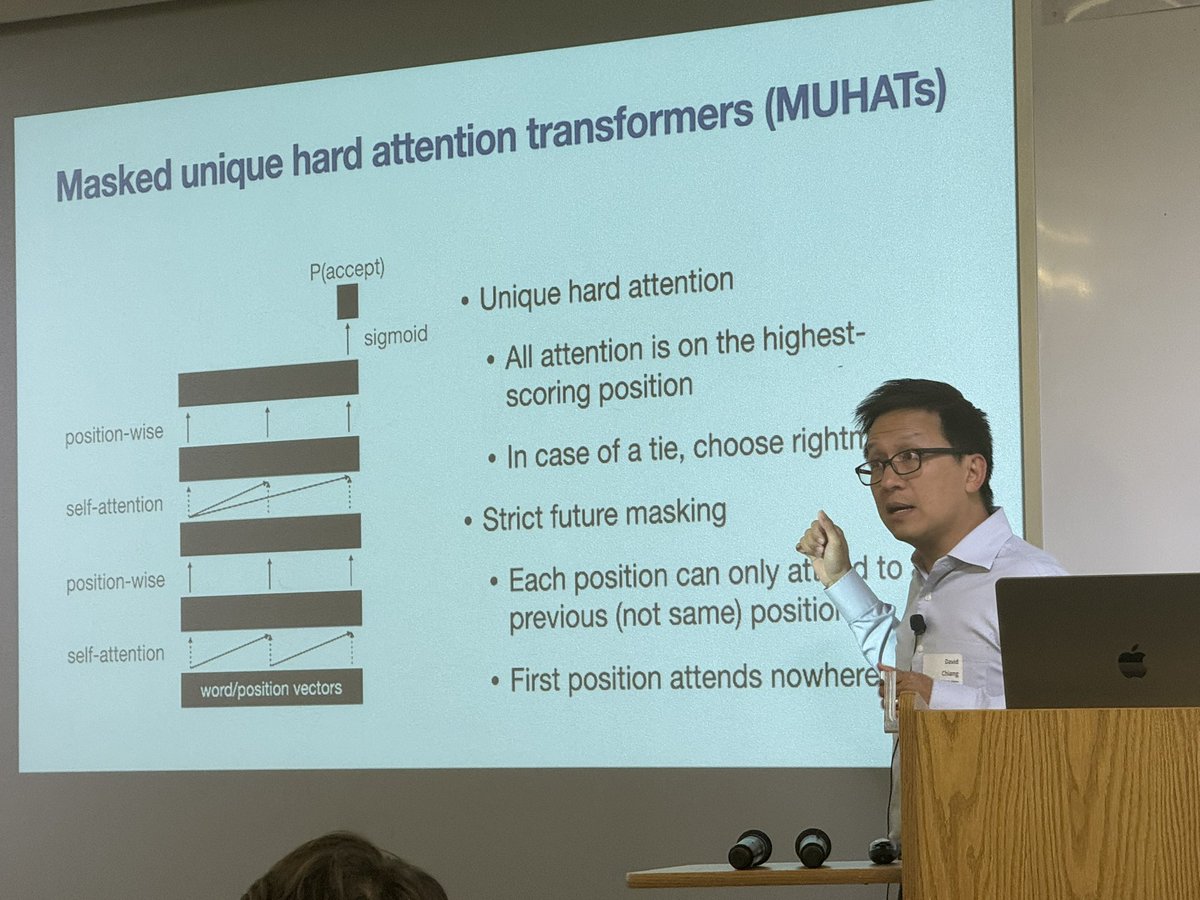
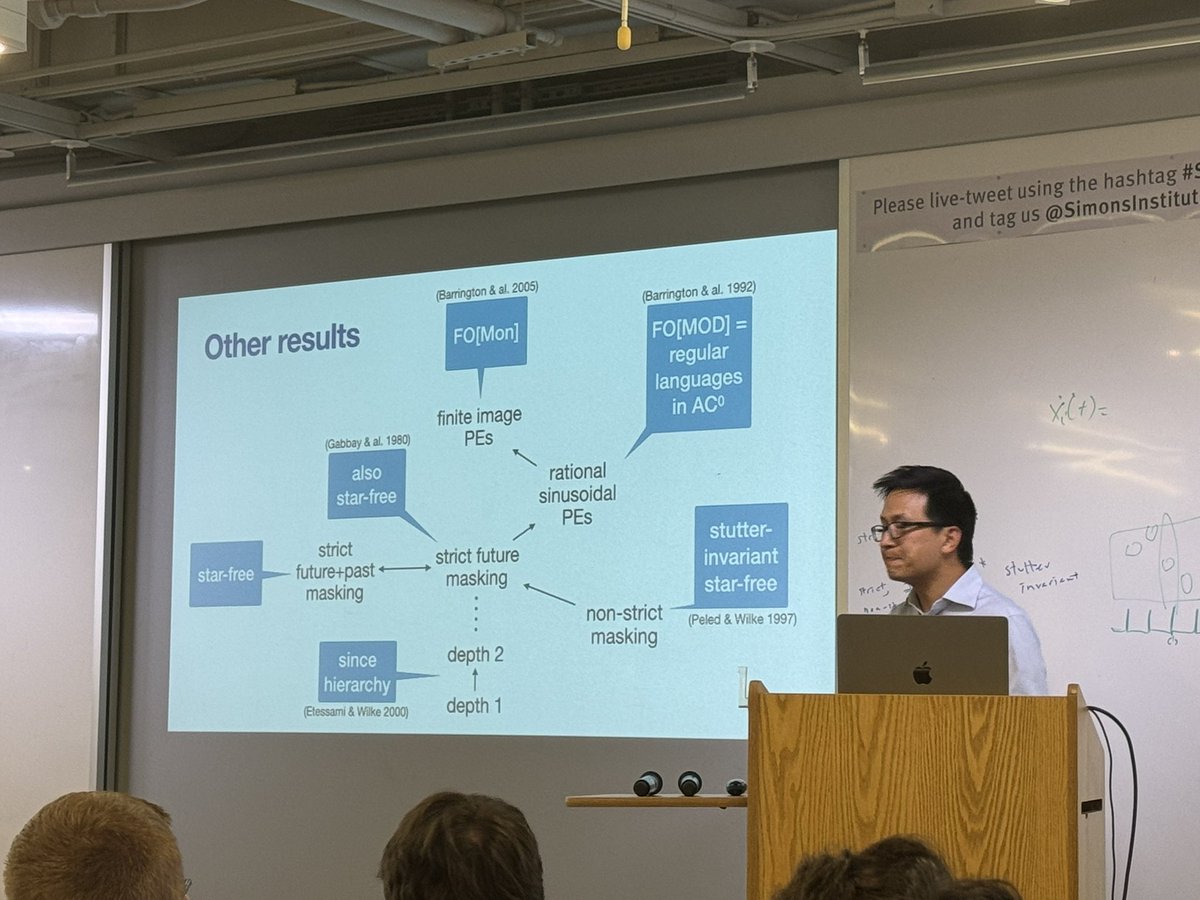
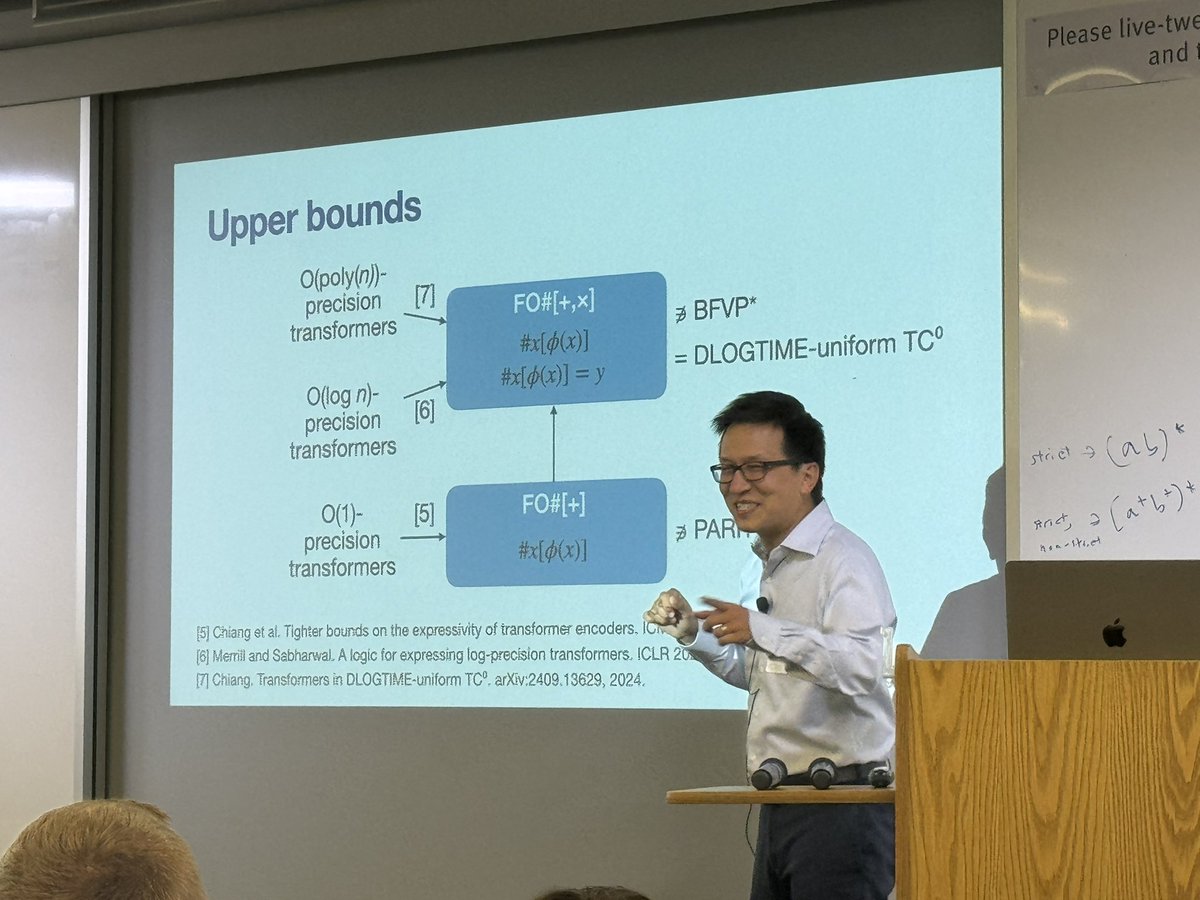

Counting Like Transformers: Compiling Temporal Counting Logic Into Softmax Transformers. arxiv.org/abs/2404.04393
4
1,725
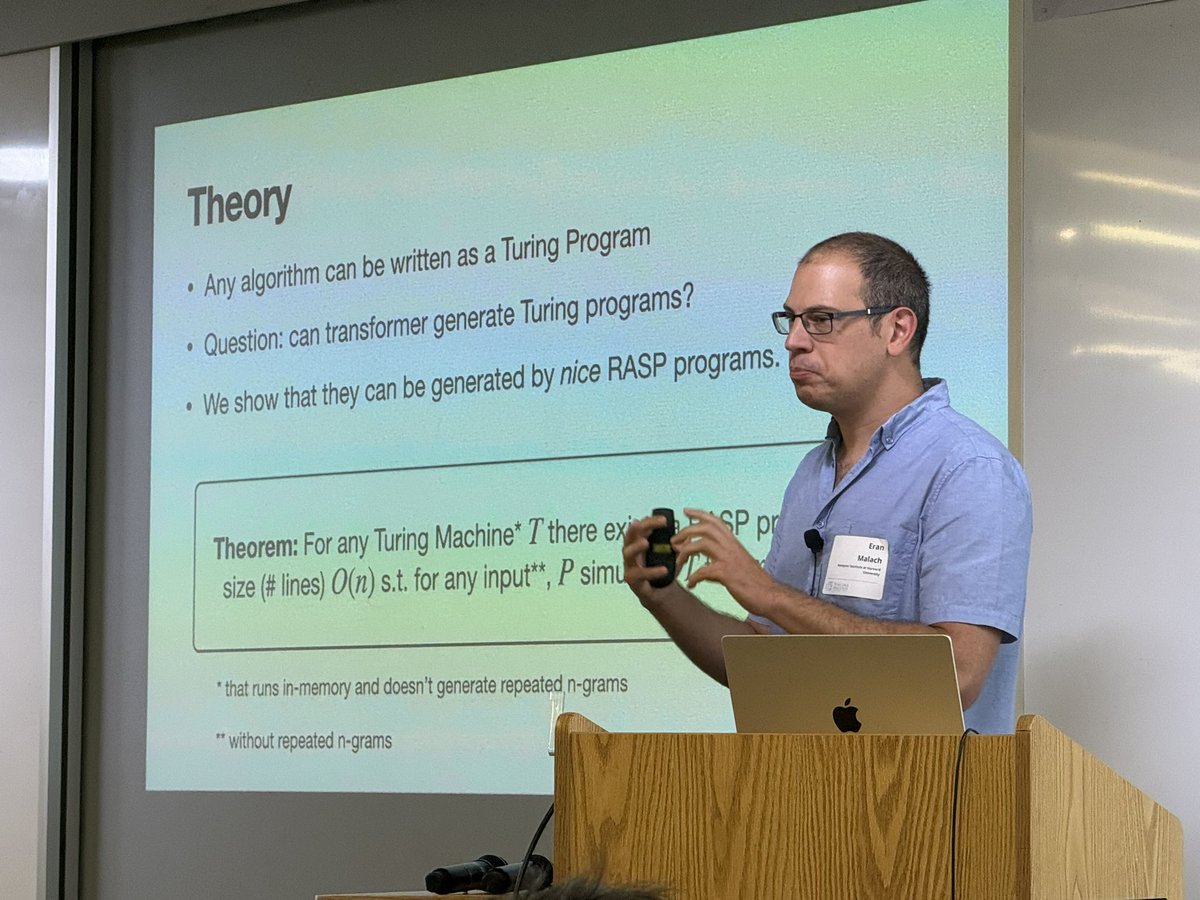
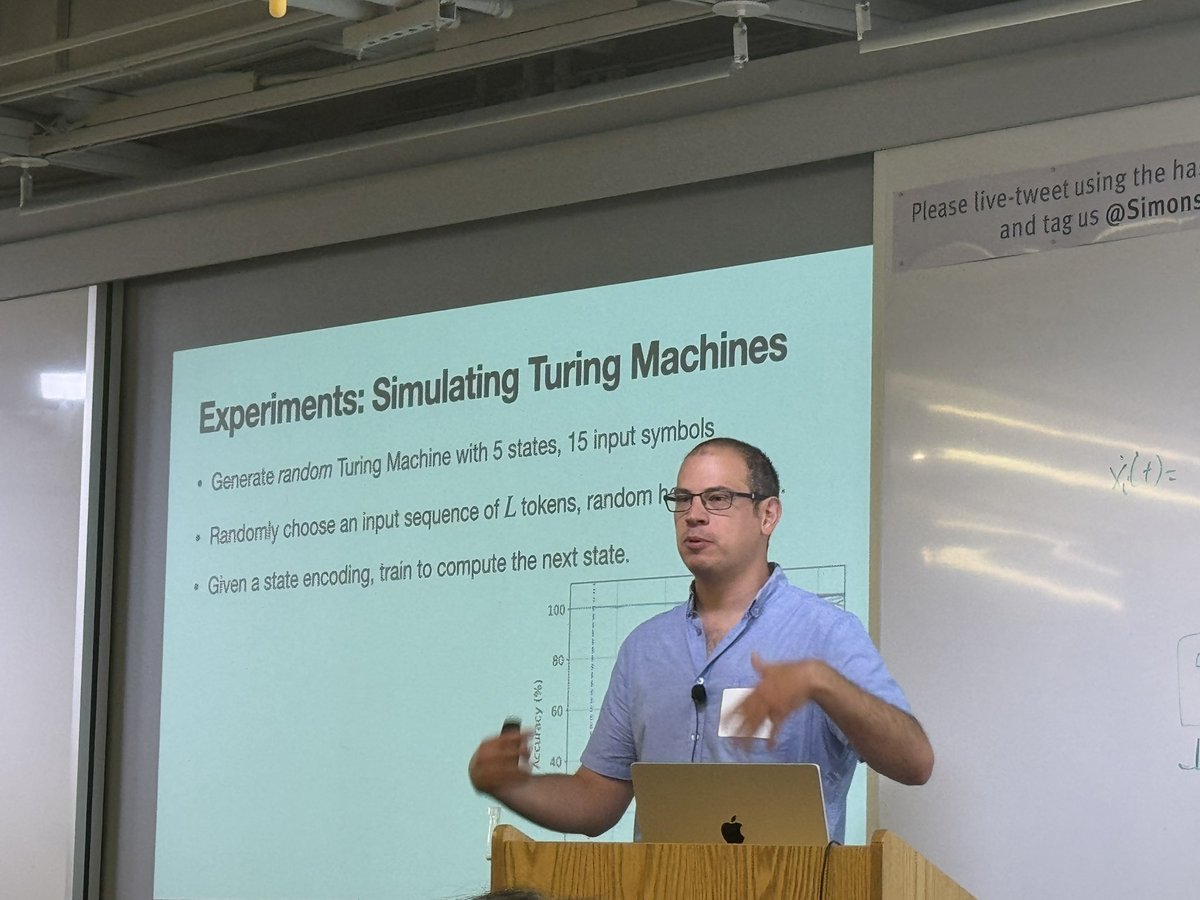
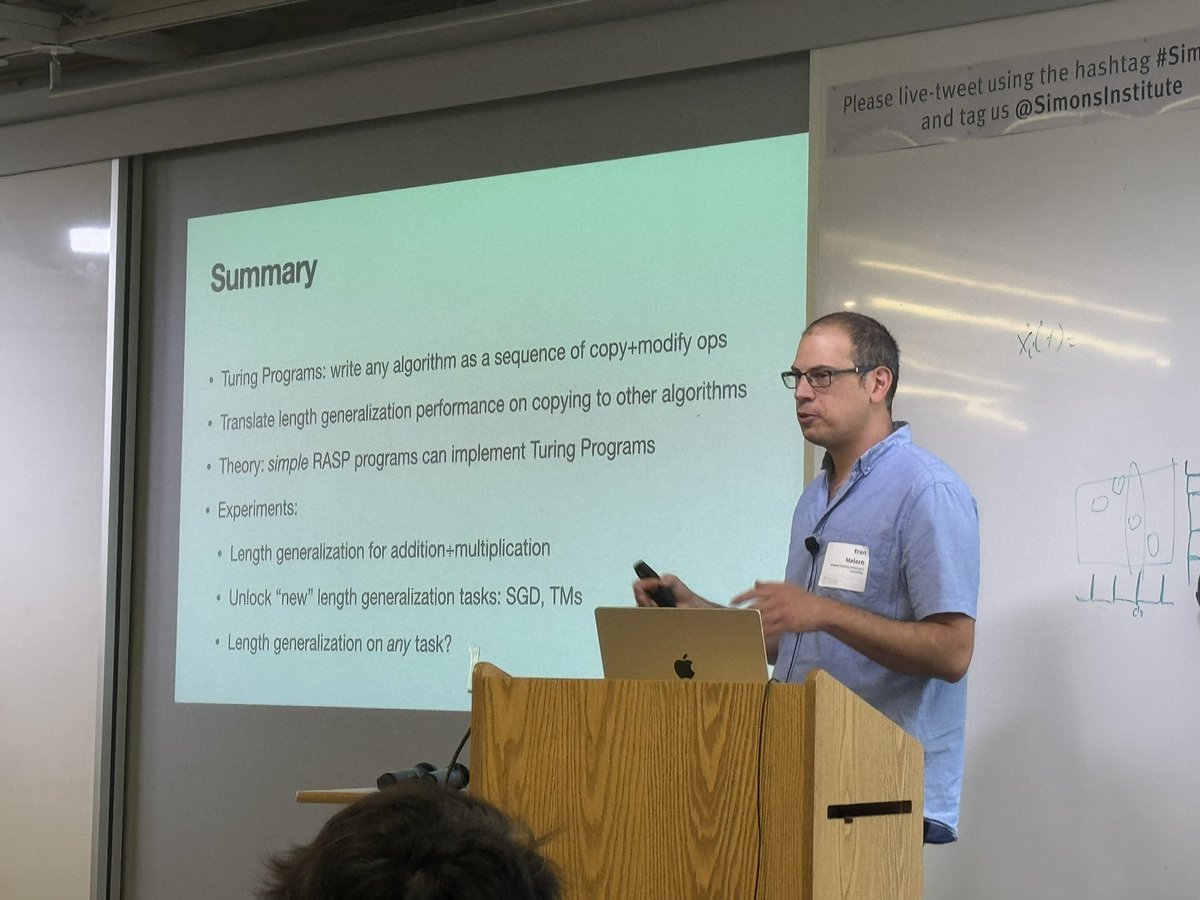
Eran Malach now giving a mechanistic explanation of how transformers solve copying and retrieval in practice and some examples of length generalization in various algorithmic tasks, using RASP as a programming language. #SimonsLive

4
476
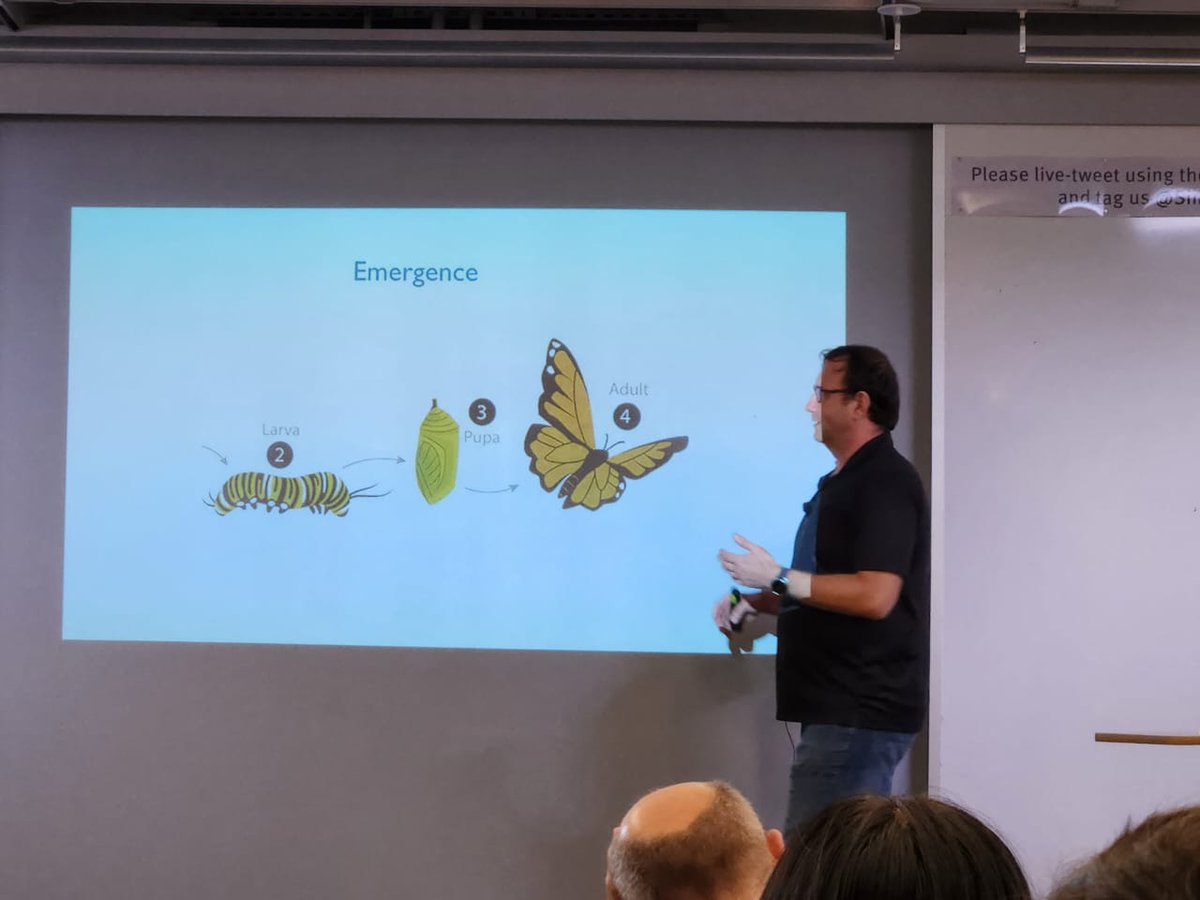
Misha Belkin on emergence in neural networks using an analogy (Larva—>Pupa—>Butterfly): Continuity is not reflected externally by what you can observe. There might be continuity internally. At the Simons Institute's workshop on "Transformers as a Computational Model" #SimonsLive
4
25
3,194
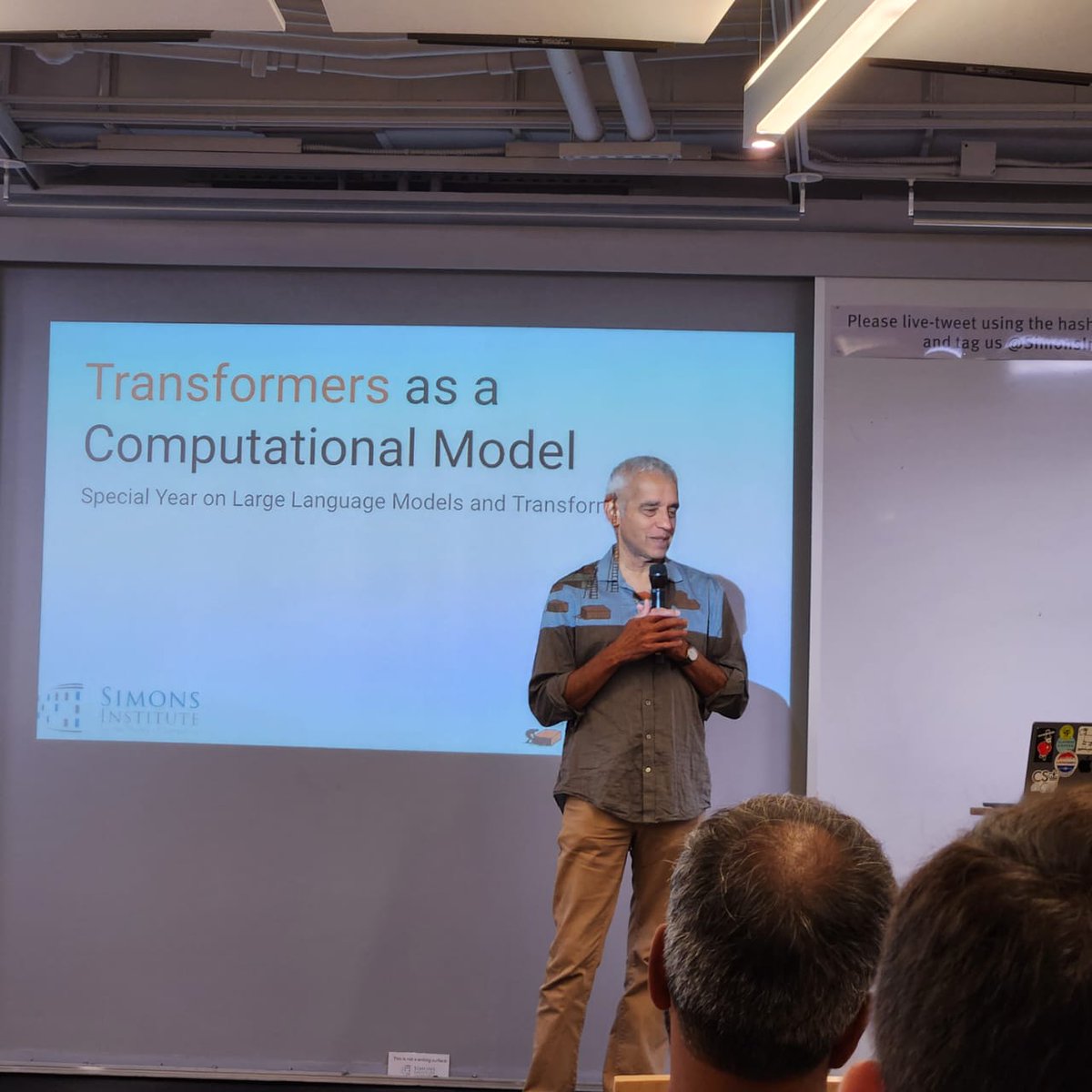
Sampath Kannan, Associate Director of the Simons Institute kicks off the workshop on "Transformers as a Computational Model" as part of the Special Year on Large Language Models and Transformers, Part 1. #SimonsLive
1
1
21
2,359

13 Sep 2024
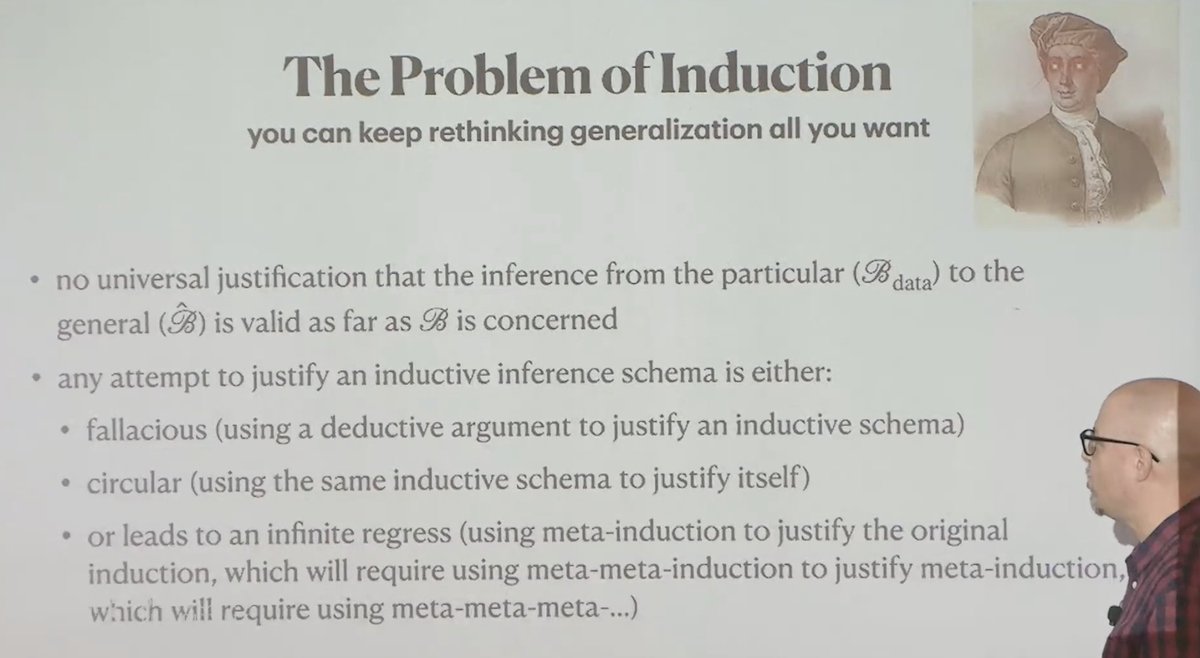
Loved @mraginsky's thought-provoking talk on Generalization from the Behavioral Perspective at @SimonsInstitute #SimonsLive. Inductive biases in learning systems set the epistemological bounds of any induction they can make, defining limits of generalization. The study of 1/3
4
12
55
15,930