
3 Dec 2025
I just put the citation finders from @sourcelyai and @SuperhumanHQ (Grammarly) to test with one real example ⬇️
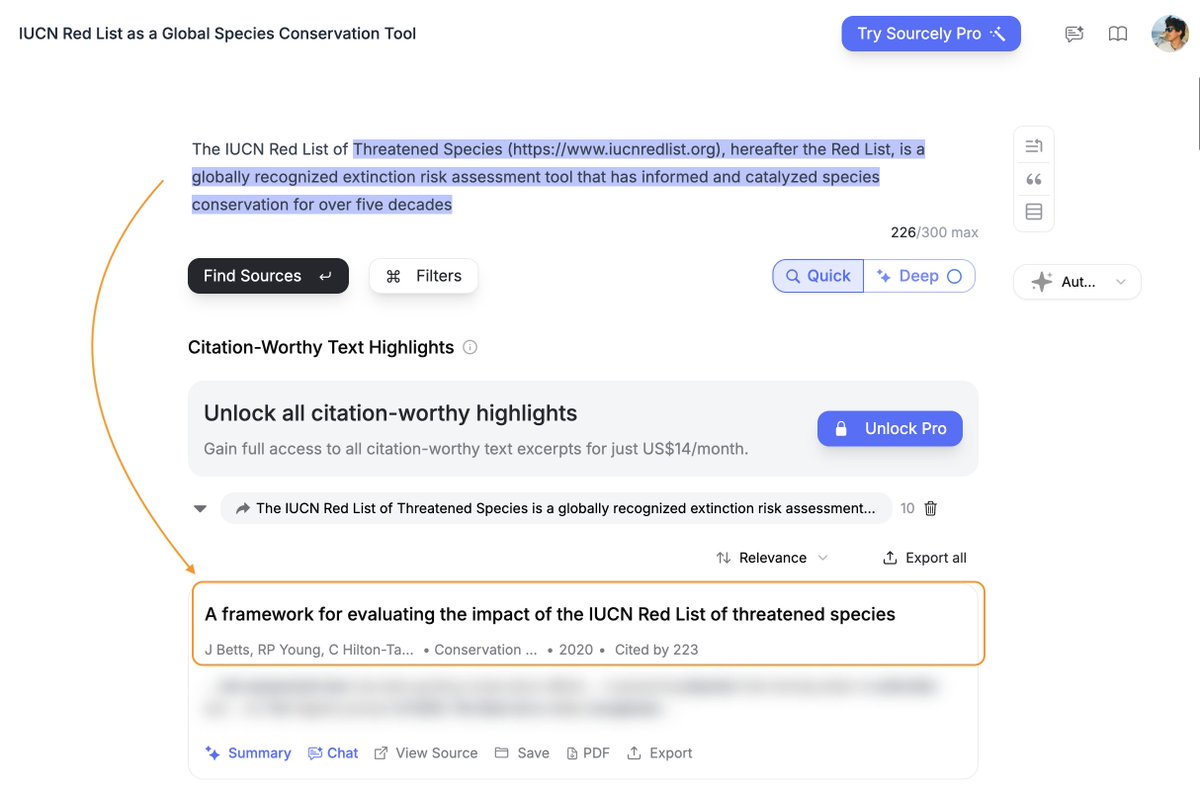
I pasted the opening lines of a manuscript I have on the Red List. The correct citation is clearly Betts et al. 2020.
Result:
✨ Sourcely nailed it.
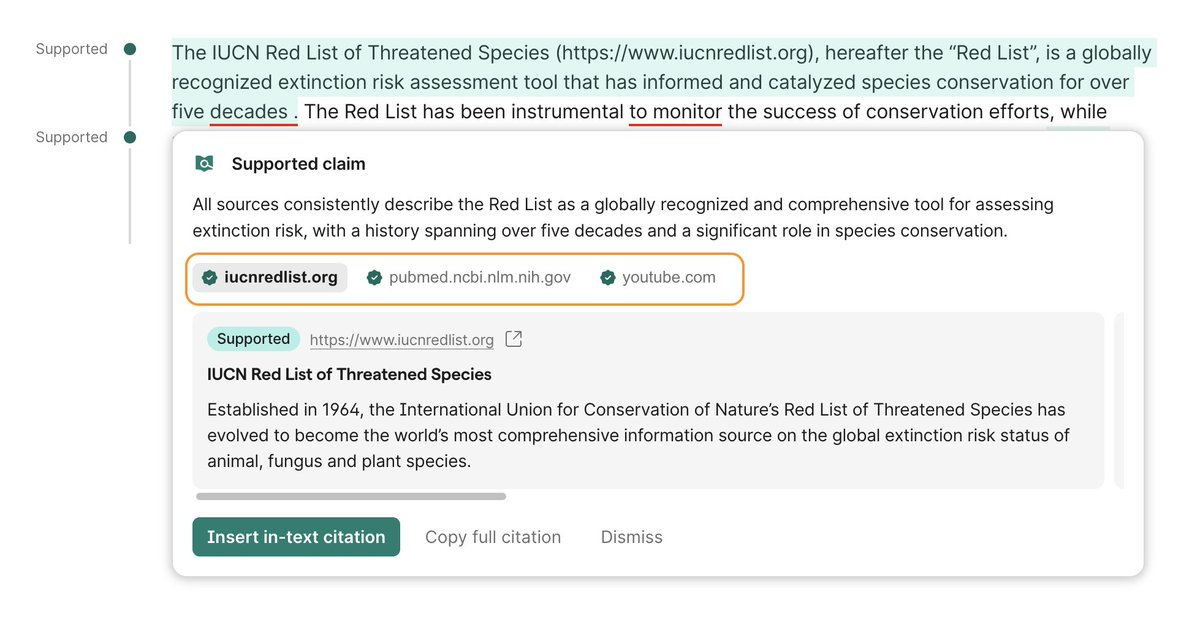
🤷♂️ Grammarly didn’t. It suggested:
• the Red List website
• a relevant paper (but not the right one)
• …and even a YouTube video (?!)
I wonder what Sourcely is doing right, that Grammarly is doing wrong?
1
4
530

28 Oct 2025
Learn the tools that bring you forward:
@LitmapsApp @scispace @ConsensusNLP @RsrchRabbit @sci_summary @sourcelyai @NotebookLM @UndermindAI @drawio @liner_app
More importantly, learn how these tools work together to form a powerful workflow.
1
4
961

18 Sep 2025
It’s a uniquely writing-first citation tool.
@sourcelyai helps you generate, preview, refine, and organise references directly from your draft.
Check it out: sourcely.net
Discount codes:
Use PHDPLACE20 for 20% off monthly
Use PHDPLACE40 for 40% off yearly
1
9
2,970
18 Sep 2025
I test a lot of AI tools for research. Most start with keywords or questions.
@sourcelyai is different. It starts with your writing. Paste in a paragraph, and it highlights the sentences that need citations.
In other words, it strengthens your draft with missing papers.
A🧵👇 #ad
2
10
51
28,908

1 Jun 2025
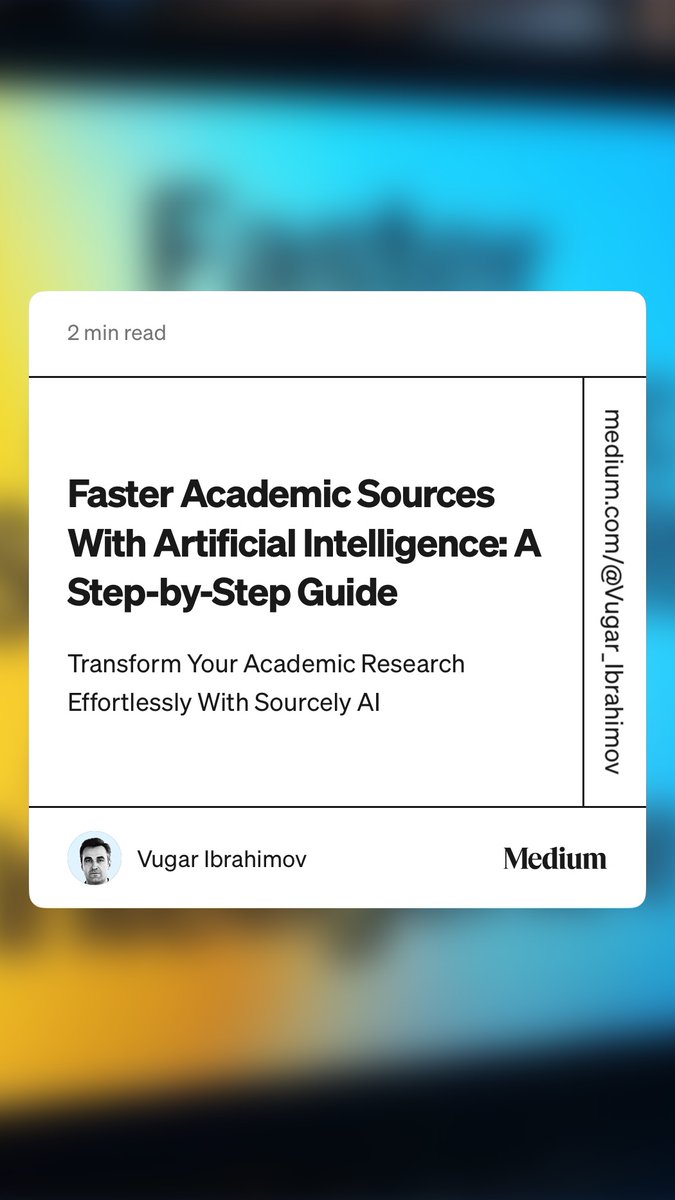
Finding trustworthy academic sources can be a challenging and time-consuming task.
Whether you’re a student, researcher or regular academic writer, identifying credible references quickly is vital.
@sourcelyai simplifies this daunting process.
2
2
5
226

28 May 2025
Paper Reading (My Top 3)
- PubReader : Transforms dense papers into readable formats with better navigation.
- Undermind AI @UndermindAI : AI assistant that extracts key insights from papers in minutes.
- Bohrium Science Navigator @Bohrium_AI4S : Lets you "chat" with research papers to find connections between studies.
Literature Review (My Top 3)
- PubMed: Precision filters for biomedical literature that find exactly what you need.
- Sourcely @sourcelyai : Streamlines citation management with smart tagging and formatting.
- SciSpace @scispace : Creates visual maps showing how papers connect across your field.
1
5
264

26 Mar 2025
Outdated references are a constant headache. I like how Sourcely flips the script - less searching, more writing!
Also, love how it highlights what actually needs updating. Useful video, Emmanuel.
1
1
95
26 Mar 2025
Tired spending hours searching for latest papers to update your lit review?
Meet @sourcelyai —a tool that’s changing the game for researchers.
2
9
31
4,246

9 Jan 2025
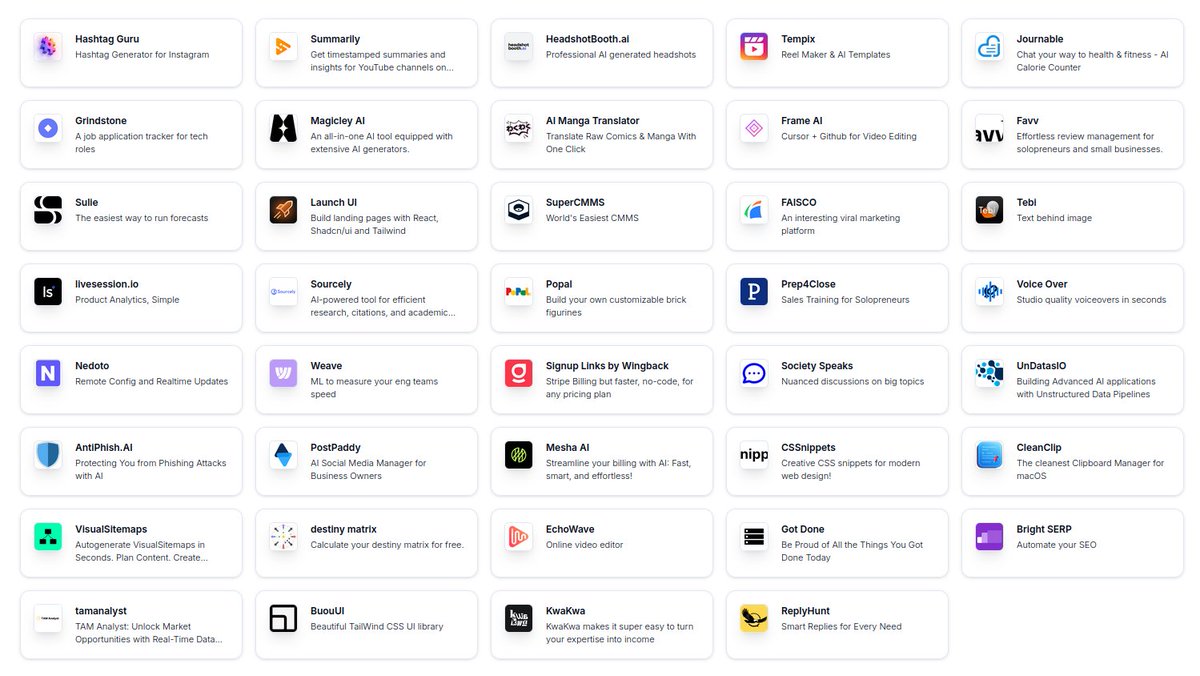
microlaunch.net — S13 mini batch 5/5👨🚀
Welcome to 39 new makers🔥
NEW
📢Get picked as Product of the Day by getting upvotes
LET'S GO
ask for feedback/upvotes/roasts [Y/n]🎮
setup first product deals
get exposure, make first sales💸
embed your challenger badges [hq/rewards]
HINT
- Ask for roasts (critical feedback) to boost your rank
- Use your launch as a marketing opportunity
- Let me know if I can help [DMs open]
Let's make this launch epic !
@IndieKim @Marton_Zeisler @AdamMoody @stevehoyek @WenzeLuke @sujingshen @_adishj @favv_one_ @fraromeo_ @mikolajdobrucki @B2bEcosystem @TheSuperCMMS @sourcelyai @Popal_AI @ismael_fi @eliezerord @adamcohen93 @nicomakerz @gohandizo @jojogh_007 @Shefali__J @tanmayparekh94 @s1ntone @echowaveio @timooweiss @tom_galland @dominiksafaric @antiphishai @wingbackapp @visualsitemaps @takeofftheStars @heykwakwa
5
8
32
2,725

28 Dec 2024
@kchonyc's blog on anxiety and frustration among late PhD students has caught attention over the last week, so I wanted to reflect on it as a former PhD student from Kyunghyun's class of 2020
indeed when i started doing ML research circa 2014/2015 there were relatively few experts in the field, AI largely wasn't on people's mind at all beyond sci fi. but at that time deep learning started shattering benchmarks and demonstrating new capabilities signaling that it was a matter of time before it would go mainstream.
before 2020s the AI conferences including were filled with very crazy and interesting ideas (example neural style, backpropagation with learned gradients, learning to ponder, and memory nets, among many others i am forgetting). researchers and practitioners of AI both from academia and industry were developing creative concepts we hadn't previously considered. but what was more impressive that these useful innovations that had a massive impact on the field (for example, Adam and ResNet were mostly developed on relatively small compute clusters
as the 2010s progressed, it became increasingly evident that those with greater compute consistently achieved more compelling results and wrote more impactful publications. Inventions like BERT in 2019, which required substantial compute (64 TPUs to train BERT-Large), demonstrated necessity of such resources for breakthroughs. as a result the field began shifting from clever ideas on a small compute cluster to scaling and optimization. note, i am not disregarding the impact of the idea, as BERT demonstrated a new MLM objective for transformers.
fast forward to today almost everyone is working on LLMs and foundation models in one way or another. there's nothing wrong with this; people naturally gravitate toward winning ideas, pushing and improving them. but as a result of focus on LLMs and foundation models, research job market has changed:
- people focus on scale because it potentially offers predictable returns and wins
- people focus on products because AI is delivering amazing commercial results (people pay for AI-native tools; ARR growth is record high for such products)
- core ML expertise is becoming less necessary, as prompting and ML tools these allow almost anyone to train AI models with little to no code and virtually no ML expertise
- the field is becoming more focused on optimizing existing ideas rather than generating new ones; there's less need for creative exploration and more for creative & useful optimizations
now as a phd student or ml practitioner you might be thinking that the research game is over as it is just a matter of further work optimizing foundation models before we get to AGI. that might be the case (who knows?), but overall, it doesn't negate the question of whether creativity and unique ideas are necessary in ML these days. what if it is a matter of creative optimizations.
so my advise for todays phd students and researchers:
- embrace LLMs and foundation models. i doubt they'll disappear anytime soon, and staying up-to-date on them is important. you don't need to know every detail (the field is vast), but having a good overview and expertise in one or two subtopics will put you in a great position. that said, nothing lasts forever, and i wouldn't be surprised if another meta takes over the AI space sooner or later.
- not all problems are simply "solved" with scale. Looking at the latest O1 report, I see that models that think more still hallucinate as badly as purely autoregressive LLMs. further out-of-the-box breakthroughs are necessary in this area. however, don't choose a topic that clearly improves with scale.
- learn skills beyond core ML, including product building, sales, UX understanding, and taste. it's clear that products, not just research, is playing a more central role in AI. with these skills, you can launch successful personal AI side projects like i did with @sourcelyai and @yomu_ai which generate profit. in the best-case scenario, they become very big. there's a lot of opportunity as we enter an age where AI is useful and is making everyone more productive.
based on my experience hiring at Amazon, the 2024 job market is much better than in 2022. when I attended NeurIPS in 2022, I had to decline internship offers and not interview great full-time candidates because of the hiring freezes due to the looming recession. now there is a path forward with more available positions; candidates just have to recognize and adapt to the fact that the field is no longer the same.
champions adjust.
good luck and have fun!
21 Dec 2024

feeling a bit under the weather this week … thus an increased level of activity on social media and blog: kyunghyuncho.me/i-sensed-anx…
1
3
35
5,345

7 Jul 2024
Utk LLMs, saran saya yg berbayar, semacam ChatGPT-Plus dgn GPT-4o atau @AnthropicAI Pro dgn versi Claude 3.5 Sonnet. Lebih akurat dgn tingkat halusinasi yg lebih rendah. Klopun mau @perplexity_ai, ttp yg Pro dgn spy bs 600x Pro Searches. Yg free hanya 5x saja.
1
4
716
7 Jul 2024
Utk smart citations: @Scite. Utk streamlining research workflow: @uselateral. Utk data analysis: @juliusai. Utk bikin presentasi: @gammaapp. Utk reference manager yg gratis: @zotero. AI-powered search engine: @wesearchsmart.
1
6
570
7 Jul 2024
Utk kebutuhan riset, bs coba @thinkanyai dan @thesify_ai mas. Ada yg free dan freemium, semacam @scispace dan @sourcelyai jg. Utk LitReview ada @Inciteful_xyz dan @scholarcy. Yg bs bantu nulis: @whoisjenniai. Utk bantu copyediting: @teampaperpal.
2
50
212
11,200

20 Jun 2024
10. Typedream AI / @TypedreamHQ
→ Create websites without writing a single piece of code using one AI prompt.
🔗 typedream.com
1
3
235

18 Jun 2024
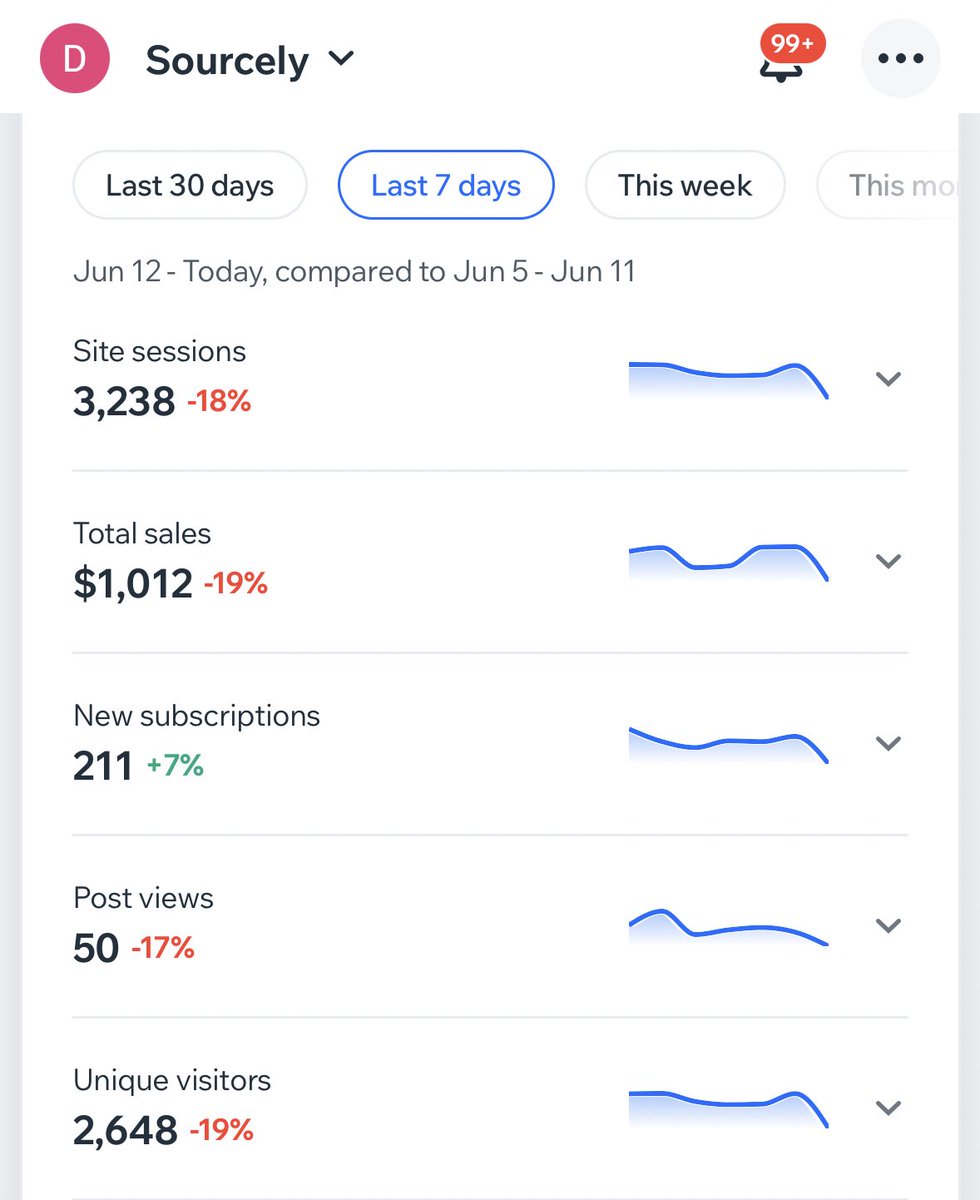
Haven’t shared @sourcelyai revenue in a minute
$1,000/ week for a micro SaaS we acquired for $4,000 on @acquiredotcom isnt too shabby
Interesting how consistent we stay despite the summer break in most colleges
6
469
26 May 2024
3. Well-defined target market
An extremely well-defined niche target market is essential.
This is something that has helped us a lot with @sourcelyai- Knowing that the target market is academics who regularly conduct research.
This is an extremely well-defined target audience and allows us to create a market that addresses their specific pain points.
This drastically improves our conversion rates such that those who are in our target market when they see our content or website are able to understand very quickly what it does and how it will help them.
Ideally, this target market is reachable online. You should know the online communities they belong to, where they hang out and talk about work.
1
2
446

17 May 2024
2. Sourcely - @sourcelyai
Tired of Google Scholar's limitations?
Try Sourcely!
- Upload your essay or notes to search for sources.
- Enjoy free PDF downloads and quick summaries for all sources.
🔗sourcely.net
1
2
125

16 May 2024
📚 10 AI Apps for Academic Research & Literature Review:
Scite @scite
Scispace @scispace
Sourcely @sourcelyai
Elicit @elicitorg
Scinapse @Scinapse_
ResearchRabbit @RsrchRabbit
Consensus @ConsensusNLP
Perplexity @perplexity_ai
Litmaps @LitmapsApp
Semantic Scholar @SemanticScholar
5
187