
THE WOMAN WHO DID NOT EXIST.
HOW A VICTORIAN MOTHER USED A PEN TO OUTARGUE THE LAW.
In 1836, a married woman in England occupied a curious legal position. She could breathe, walk, write, think, and pay taxes. What she could not do was own property, sign contracts, sue in court, or exercise much authority over her own children.
In short, she existed in all the practical ways and none of the legal ones.
One such woman was Caroline Norton, a poet, a writer, and granddaughter of the playwright Sheridan. Fate had given her talent, intelligence, and determination. The law had given her remarkably little else.
When her marriage collapsed, her husband exercised rights that Victorian law considered perfectly normal and everyone else would now consider astonishing. He took custody of their three sons. He controlled the money she earned through her writing. The law regarded this arrangement as entirely proper.
The law, after all, had been written by people who were not expecting Caroline Norton to start asking awkward questions.
Many people confronted by such circumstances would have surrendered. Others would have complained bitterly over tea. Caroline Norton chose a different approach. She decided to place the law itself in the dock.
Armed with pamphlets, essays, arguments, and an inconvenient talent for persuasion, she began exposing the absurdities of a system that treated mothers as legal spectators in the lives of their own children.
This was not a rapid process. Laws are rather like ancient tortoises. They do eventually move, but only after considerable encouragement and often while insisting they are standing still.
Yet move they did.
The Custody of Infants Act of 1839 began changing the position of mothers. The Matrimonial Causes Act of 1857 altered divorce law. Further reforms followed. By 1882, married women could finally own property in their own right.
The laws carried many fingerprints, but Caroline Norton's were among the clearest.
One of her most famous appeals was directed to Queen Victoria herself. It contained a line of remarkable power.
"I do not ask for my rights. I have no rights. I have only wrongs."
That sentence worked because it exposed a contradiction. A society that congratulated itself on justice had created a class of people whose grievances could not even be described as violations of rights because the rights themselves did not legally exist.
History often remembers generals, kings, and politicians. Statues tend to favour people who conquered territories or delivered lengthy speeches while pointing at maps.
Yet many of the freedoms people now consider ordinary arrived by a different route. They were written into law by individuals who first experienced life without them.
Caroline Norton never commanded an army. She never ruled a country. She never occupied a throne.
Instead, she did something far more dangerous.
She made an old legal system explain itself.
The law said she did not exist.
The statute book carries her fingerprints anyway.
[If you agree with the sentiment described above, then please 'quote', ‘restack’, 'share', 'repost' or 'forward'. The Left will accept these ideas when they are trending on social media. So, make it trend.
If you are going to comment, then please be polite. Agreement is not required, but politeness is a must. Those who are impolite, rude, or insulting to others will be blocked; not because we do not agree with your viewpoint, but because rudeness will not be tolerated.]
5

The missed penalty was correctly replayed because of encroachment from Croatia defender who headed the loose ball for a corner. Check the rules Alex. It helps if spectators know them

This rule is just ridiculous.
Kane can do whatever he wants in the run up. But when the GK reacts to his stutter steps and is 1cm off his line, Kane gets bailed out by VAR.
The most unfair rule in all of sports. Just benefiting the strikers.
12
USA250 Digital Impact Network retweeted

The strongest communities are not built by spectators.
They are built by people who participate.
@USA250DIN is an invitation to builders, creators, organizations, and everyday citizens who believe community support should be direct, transparent, and visible.
#USA250DIN
1
2
15
Hosna ⚖️ בניטה retweeted

🚨 MASSIVE CYCLING CRASH right in front of spectators! 😱
Peloton flying through town when boom — rider goes down hard on the pavement, bikes flying everywhere. The guy in orange is laid out while the pack keeps rolling and fans watch in shock (some with beers in hand 🍺). Brutal.
Is this the most dangerous part of racing — narrow roads close crowds? Or just racing incidents?
Who else is wincing at this?
#CyclingCrash #BikeRace #Peloton #CyclingFail #ViralVideo #TourDeWhatever
11
42
39
2,409


Arad Nikou retweeted

Jun 16
IRGC-linked player on U.S. soil makes a gun gesture at spectators, openly threatening violence. This is the Islamic Republic: wherever it goes, it spreads intimidation and terrorism. #IRGCTerrorists
#WorldCup2026
#IranRevolution2026
17
437
866
8,106

Canny Futurist retweeted

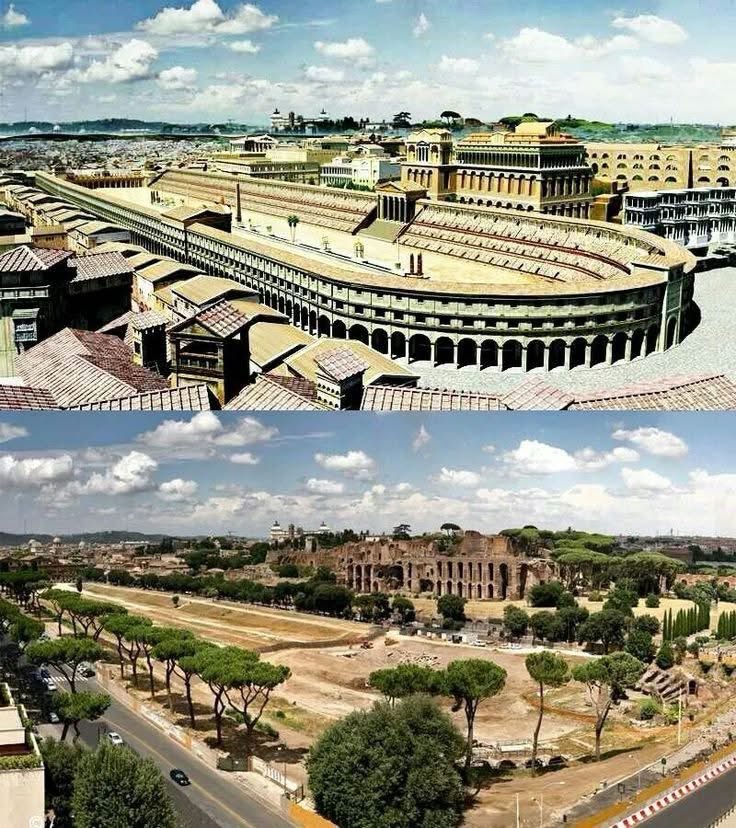
In the 4th century AD, up to 150,000 spectators could attend Rome's Circus Maximus for a day of chariot races.
1
6
170


Endless alphabet cult assassination incitement. They murdered father and husband Charlie Kirk, now they want their degenerates to murder these baseball players and spectators at the White House-UFC event. leftist democrat nazi-commies deserve everything that's coming to them.
8
Endless alphabet cult assassination incitement. They murdered father and husband Charlie Kirk, now they want their degenerates to murder these baseball players and spectators at the White House-UFC event. leftist democrat nazi-commies deserve everything that's coming to them.
8
Dr. Sarv👑 retweeted

In this terrorist regime's football team, a player who threatened spectators who oppose terrorism by waving his hand as if to shoot a gun is a disgrace to FIFA.
@FIFAcom
@FIFAWorldCup
@SecRubio
@nypost
@hrw
#تیم_واقعی_ایران
#JavidShah

این جام جهانی، برای ما یادآور تیم واقعی ایران است.
از شما دعوت میکنیم تیشرتهای سفید را با نام و شماره نمادینِ فوتبالیستها، ورزشکاران و جوانانی که به دست رژیم جمهوری اسلامی کشته، اعدام یا تحت آزار و سرکوب قرار گرفتند بر تن کنید.
روی هر تیشرت، یک کیوآرکد قرار دارد که دریچهای است به داستان زندگی هر یک از این قهرمانان ایران.
از شما میخواهیم پیراهنی با نام آنان بر تن کنید.
داستانشان را بازگو کنید.
به جهان نشان دهید که تیم واقعی ایران، مردم ایران هستند.
iranopasmigirim.com/fa/real-…
5
9
160

Endless alphabet cult assassination incitement. They murdered father and husband Charlie Kirk, now they want their degenerates to murder these baseball players and spectators at the White House-UFC event. leftist democrat nazi-commies deserve everything that's coming to them.
1
8

The most uncomfortable question raised by the rape gang scandal is not what the perpetrators did. We already know that. The more difficult question is why so many people looked away.
The instinctive response in Britain is to blame politicians, police chiefs, social workers, local councils, and prosecutors. They deserve scrutiny. But focusing exclusively on institutions allows the public to avoid a harder truth: institutions reflect the culture that sustains them.
For decades Britain has cultivated a political culture of deference. Generations were taught that authorities generally act in good faith, that official bodies deserve trust, and that raising uncomfortable questions risks causing division. The result was a society that became increasingly reluctant to challenge power, even when power was plainly failing.
The rape gang scandal exposed not merely institutional incompetence but a deeper social weakness. Victims were ignored, whistleblowers were discouraged, and communities often remained silent. Fear of being labelled racist, fear of confrontation, and fear of social disapproval frequently outweighed the duty to protect vulnerable children.
This is why the scandal cannot be explained solely as a failure of government. It was also a failure of civic courage and duty. A healthy society depends on citizens who are willing to question authority, challenge official narratives, and demand accountability when institutions fail. Too often, Britain produced the opposite: passive spectators, waiting for someone else to act.
The lesson is not that one political party, one institution, or one community is uniquely responsible. It is that a society which prioritises social comfort over truth eventually creates the conditions for profound injustice. The Muslim rape gang scandal was not simply a crime committed against tens of thousands of girls; it was a warning about what happens when a nation loses the confidence to confront uncomfortable realities.
If Britain is to learn anything from this tragedy, it is that accountability cannot be outsourced. Citizens who repeatedly reward failing institutions, excuse obvious failures, or remain silent in the face of wrongdoing cannot entirely separate themselves from the consequences. The question is whether Britain is prepared to rediscover the habits of scepticism, responsibility, outrage and civic courage that a truly free society demands.

1
1
4
38

Endless alphabet cult assassination incitement. They murdered father and husband Charlie Kirk, now they want their degenerates to murder these baseball players and spectators at the White House-UFC event. leftist democrat nazi-commies deserve everything that's coming to them.
2
22