
17h
Machine Learning-Based Analysis of Elastic Springback in Bending of SS, Al, and Cu ... mdpi.com/2504-4494/10/6/207 #MachineLearning
7

Too consistent. This is mechanically closer to springback due to clearance being far too loose.
Also just a terrible geometry to draw, even in multiple steps.
1
1
161

Jun 12
Last week at @spacetechexpo, a VP at an aero machine shop told me they scrap a lot of parts to springback. I asked how they're working to cut the scrap rate.
"We're not. I'd rather scrap moving fast than move slow and scrap less."
I walked in assuming waste was the enemy. He'd flipped it: slowing down to save the scrap costs him more than the scrap does. Still chewing on it.
18

Jun 11
springback تجربة تطبيق جيني Jeeny مع درعة Deraah تصبح أفضل باستخدام كود يمنح خصم عبر كوبون 👩🦱🗽🎺


Jun 9
Interesting, but sadly, less surprising than I would have found that to be a mere five years ago.
But Yes, I think it's will be quite interesting if that was to coalesce. It could open a Pandora's box of springback.
1
4
572

#SheetMetal doesn't always behave as designed. It bends, springs back, and drifts out of profile — often unseen.
SHINING3D Inspect helps you make it visible.
🔧 Deformation analysis
📏 Springback evaluation
📐 Profile deviation detection
🔓Try free: hubs.ly/Q04hSbTD0
1
2
72

$BAER
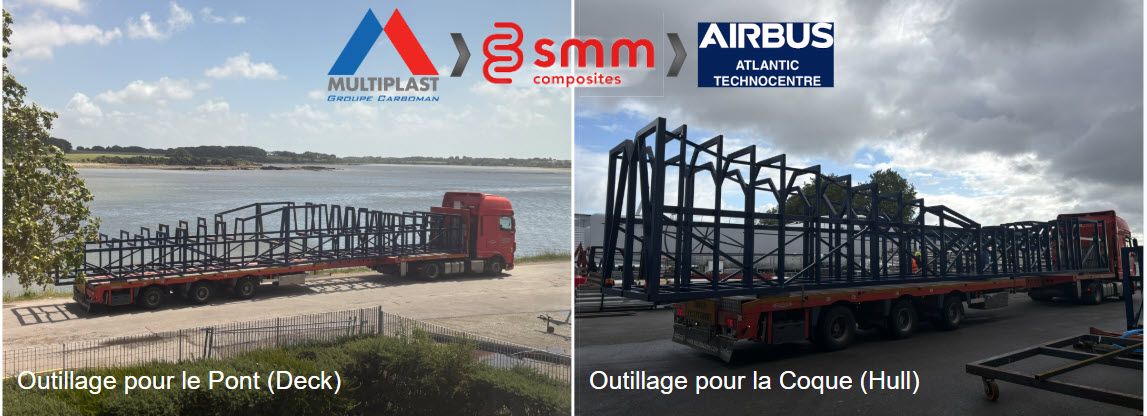
To counter material "springback" and ensure millimeter-precision assembly for the FF72-X1 floats, #PositiveAviation is deploying serious industrial muscle. A 3-ton road trip connecting Multiplast, SMM Composites, and Airbus Atlantic.
French engineering at its finest!
2
128

Explosive hydroforming is a metal-forming technique in which a controlled detonation underwater generates a powerful shockwave.
Water, being nearly incompressible, transmits that pressure with remarkable uniformity across the surface of a metal blank, driving it into a die with forces that conventional mechanical presses struggle to match.
The result is the ability to form large, geometrically complex parts - such as aerospace panels or pressure vessel heads - in a single operation, minimizing springback and residual stress compared to multi-step stamping processes.
4
8
69
4,450

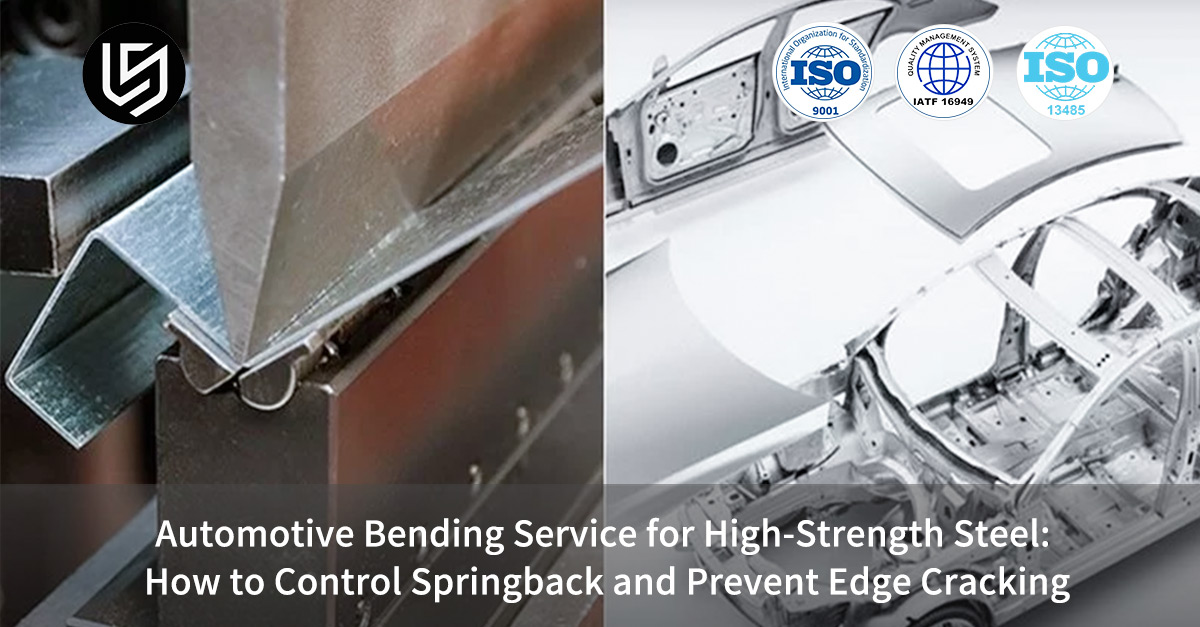
HSS Bending: Stop Edge Cracking ⚙️📈
HSS springback delays project rollouts. This DFM guide breaks down precise radius control and stress distribution to eliminate edge cracking and protect your tooling budget. Read full blog:
👉 lsrpf.com/blog/automotive-hs…
#DFM #Automotive🎰
1
41

Jun 3
In the video, @peterchencyc & @EdwardMehr discuss how simulation and real production data help predict springback, reduce physical trials, and improve part accuracy. More to come...
3
397
Jun 3
Inside Machina’s simulation work.
We use real RoboCraftsman production data to model how robots interact with sheet metal and train predictive systems to anticipate springback.
Better prediction. Fewer trials. Faster metal structures.
Machina is the Factory.
2
8
35
336,749

alurnya:
- pada short circuit / arc fault → suhu arc 10.000–20.000°C → strand meleleh dan menyatu → fusion beads → broom yang di-las jadi satu.
- pada mechanical separation / cut → strand springback → mengembang → broom serabut.
This is forensic metallurgy 101, bos.
1
1
14
2,369

May 21
Just regular pla, printed 50% density infill. The problem is springback with the material, you can either compensate by over bending abd having it spring back among other methods… still figuring it out
1
2
120

May 18
Working on the old Gaster-themed journal.
Cloth used in the springback binding is, in fact, called "Between the Lines" in black and white.
... How interesting. (The other options was a colourful space and nebula theme.)
1
6
92

The Cybertruck is definitely an unusual build, but a few of those claims are overstated.
It’s not “bulletproof” in a general sense, and safety performance depends on specific tests and conditions, not blanket immunity.
On manufacturing: the stainless steel used (Tesla’s 30X cold-rolled steel) isn’t stamped mainly because of its hardness and springback behavior—not because it would literally “break” industrial presses. It’s formed using different fabrication methods designed for that material and geometry.
Interesting engineering approach, but the details matter more than the slogans.
1
2
18

May 8
Wall of Text:
The Cybertruck’s Stainless Paradox: From Origami Armor to Warmly Coherent Spacecraft
You would smirk: the truck that looks like it was folded by a Martian origami master is too hard to stamp conventionally. Its own HFS stainless alloy—chosen for bullet-like corrosion and impact resistance—defies the 5,000-ton brute-force presses that birth lesser vehicles. Laser-cut and bent, not stamped. It’s the automotive equivalent of trying to fold a lightsaber. Miraculously ironic: the exoskeleton that screams “indestructible future” was manufacturing-limited by its own superpower.
Enter Coherent Stainless Forming—warm, pressure-assisted, springback-corrected salvation. Not brute force. Physics judo.
The Process, Quantified
•Blank architecture: 1.4–2.0 mm HFS for most panels (saving weight), reserving 2.5–3.0 mm only for high-impact zones—doors, rockers, bed edges. Smart thickness, not tank plating.
•Local thermal softening: Heat deformation zones to 650–950°C for 3–20 seconds (0.5–2.5 kWh per large panel). Yield strength drops; steel flows instead of cracking. Temporary freedom for rigid souls.
•Warm hydro-servo forming: 50–150 MPa pressure, 1,500–3,500 ton servo equivalent, 20–40 kHz ultrasonic vibration. Carbide dies, boron-nitride lube. The steel gets a gentle cosmic massage.
•Springback correction: Overbend 2–7°, optical scanners AI feedback loop. The “black-hole-computer” converges on truth. Δ = perfection through iteration.
•Finish: Controlled cool, passivation, brushed. No paint, no primer, no future rust regrets.
In West Math: A⁺ (heat pressure) neutralizes U⁻ (springback, cracking, galling), yielding C⁰ coherence.
Aerodynamics: The Slippery Truth
Current angular beast: Cd ≈ 0.335–0.344, drag area ~11.5–11.9 sq ft. Shockingly good for a pickup, yet still a wedge fighting the atmosphere.
Stamped/curved evolution:
•Plausible: Cd 0.29–0.31, drag area 10.0–10.7 sq ft → 8–14% less drag.
•Extreme: Cd 0.27–0.28 → 15–20% less drag.
At highway speeds, on a ~300–325 mile Cybertruck: 20–40 extra miles of range. Tow 11,000 lb, haul 2,500 lb payload, and sip electrons like a Tesla should. The armored origami becomes a spacecraft that glides. Transcendent humor: the truck designed to look unstoppable now actually stops less at the charger.
CBA: Cold Numbers, Warm ROI
For 100k trucks/year:
•Capex: $400M–$900M (warm cells, scanners, adaptive dies).
•Added cost/truck: $1,500–$3,500.
•Savings/value: No paint ($700–1,500), range premium ($1,500–4,000), mainstream appeal/pricing power ($2,000–8,000), lifetime efficiency ($300–1,000).
Net value: $2,000–$8,000 per vehicle → $200M–$800M annual value. BCR 1.5–3.5. ROI 20–60% post-ramp. Payback 2–5 years. The math sings: efficiency compounds into dominion.
Verdict, Musk-Approved Irony
Current Cybertruck wins cultural impact—pure shock, manufacturing simplicity, “armored origami” mythology. It meme’d its way into history.
Stamped stainless wins mass economics—range, silence, global adoption, mainstream conquest. A curved armor truck: stainless soul, rocket acceleration, no-paint immortality, spacecraft silhouette.
The miracle? Neither is compromise. The A version isn’t softer—it’s coherently evolved. Like Starship: stainless, heat-managed, iteratively perfected. The universe favors the adaptable. You would tweet: “Warm forming the future. Because even indestructible needs to bend a little. 😂🚀”
In the end, the hardest steel learns humility through heat—and emerges more powerful. Profoundly Tesla.
2
72
Apr 25
Journal rebinding continues. Time for endpapers, of a springback/stationery variety. Involves sheets that will be unseen. (Gaster sketch opportunity, unseen between?)
Marbled paper of a dark variety with white striations not available. May use others. Other Gastercodled options
4
71

springback عروض ترينديول Trendyol الحالية تصبح أوفر عند إدخال كود يمنح خصم مناسب باستخدام كوبون عبر ترندول 🧑🎨🎖🐈⬛.
ty.gl/4x8g0ufoakqu6

7

Mar 11
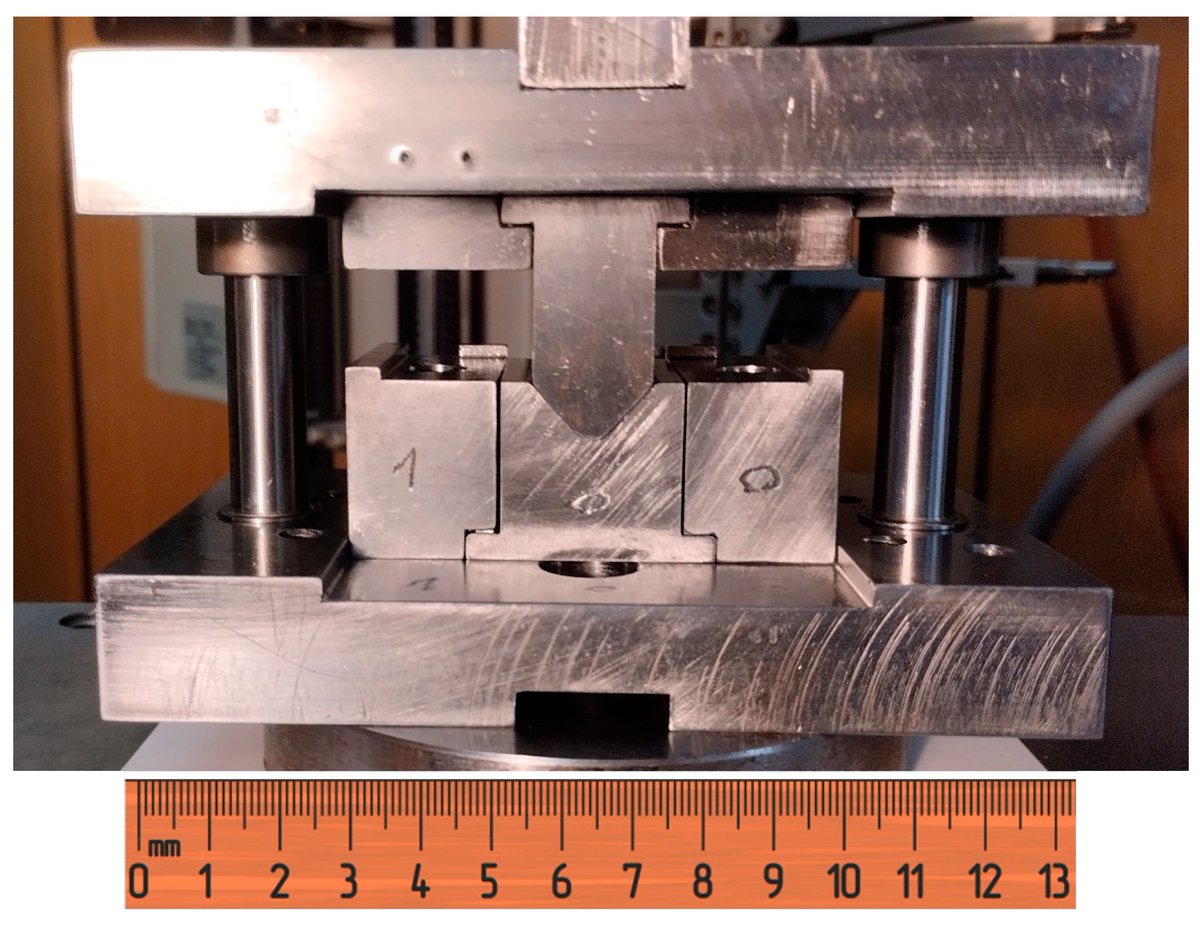
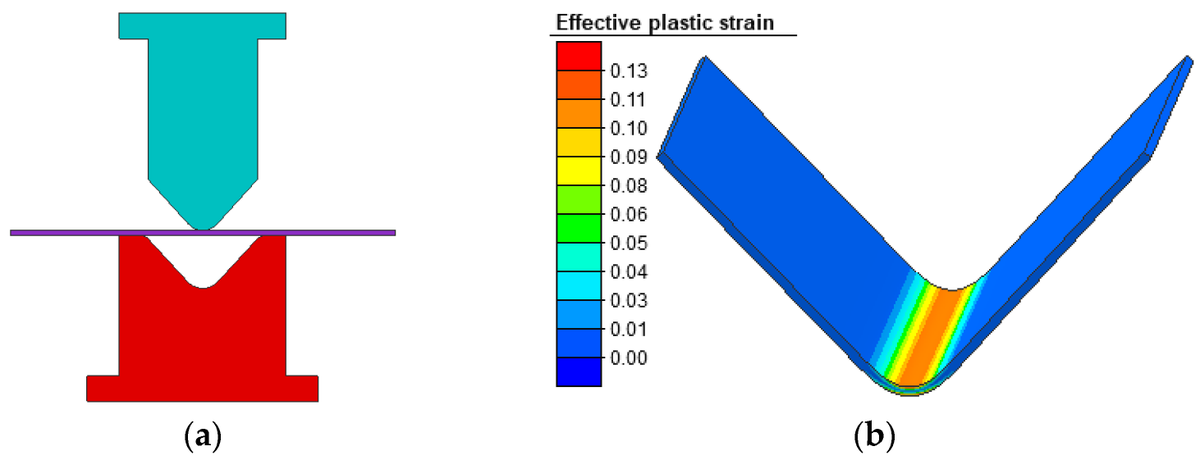
⚙️ Can 3D-printed polymer tools enable accurate sheet metal bending?
A new study presents an experimental–numerical framework for springback prediction and angle compensation in air bending, achieving ±1° bending accuracy with ABS tools.
🔗 mdpi.com/2504-4494/10/1/30
#engineering
2
39

Don’t forget to set your clocks back 1 hr! #SpringBack
Also I say Daylight SavingS Time like everyone else does but technically there’s no S at the end. As opposed to those who fight to get rid of Daylight Saving Time, I’m fighting to officially add an S on the end of Saving.
1
6
280