
Claiming it *must* come from intelligence is an argument from analogy that ignores the demonstrated stepwise mechanisms of evolution. Biology also shows clear signs of evolutionary tinkering (pseudogenes, shared endogenous retroviruses, ... /4
1
2
Susanne vonCaemmerer retweeted

Jun 13
Parsing the stepwise molecular evolution of C4-associated β-carbonic anhydrase in the genus Flaveria academic.oup.com/plphys/arti… @PlantPhys
2
6
397

'BertaFringe retweeted

I am going to start a polling firm where it is just random guesses based on the last election result in stepwise up and down movements.
There is a damn good chance my polling will be the best.

Polling. It's a science⬇️
Government approval (66%) and voter mood shows continuing support for Carney.
bruce728.substack.com/p/gove…
Canadians cooling on Carney as gap narrows between Liberals and CPC
angusreid.org/federal-politi…
1
11
589

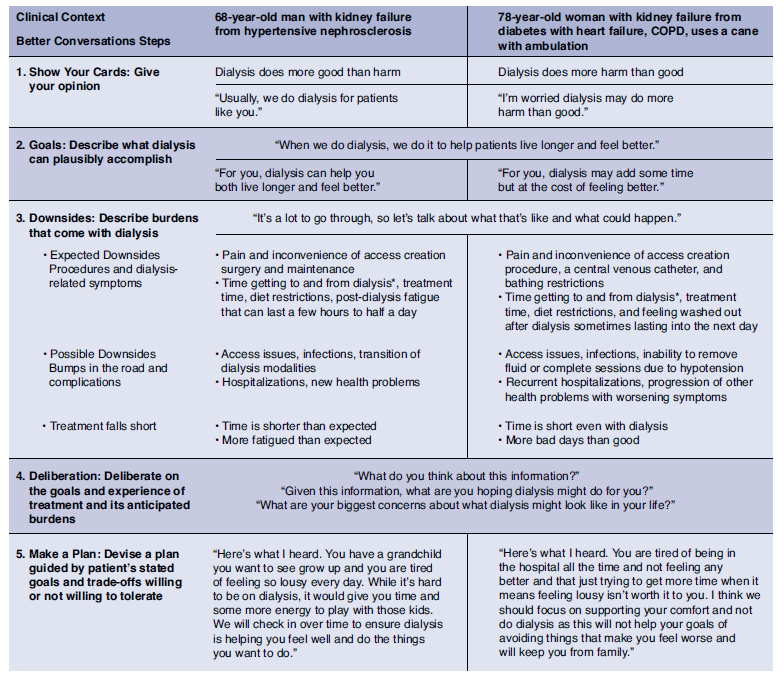
#Perspective in #ASNJASN shares "The Better Conversations Framework" that supports transparent, stepwise discussions to encourage nephrologists to share their expertise while centering conversations around patient values and choice. twp.ai/4hs9KV
1
3
331

Most business advice was written for people with laptops and credit cards. StepWise builds business plans for West African entrepreneurs with nothing but a smartphone. $20K/month path — day by day. stepwise-hq.polsia.app
4

"For us, material well-being always followed spiritual progress; it never preceded." #StepWise
5

The idea is offered only as a historical thought experiment exploring whether similar forms of discrete, stepwise reasoning may have emerged naturally within the engineering culture of late-1930s Germany.
1
26

données (évolution stepwise, 99 % d’extinctions, gènes vestigiaux, polymorphisme maintenu par sélection balancée chez Kallima, etc)
Un dessein intelligent efficace prédirait plutôt des trajectoires plus directes et moins de déchets. L’évolution naturelle, elle, prédit précisément
1
21
"Together, we are a well of strength on which any of us can draw." #StepWise
3

At its most speculative: under stepwise anesthesia the higher-frequency structure measured from the scalp should lose coherence in proportion to MAC — the 1900 potency law reappearing as a collapse of cross-scale coupling. To be clear, this is the time-crystal side's conjecture, built on the other two papers, not a result.
14/17
1
1
12
vktv retweeted

Jun 13
the minor descending line cliche chord progression! the bass descends stepwise while the upper chord notes remain the same (in theory anyways, a lot of the time they cheat the notes bit). really easy to make the melody match the bass which is what you have in most of these
6
8
198
4,344

What's your explanation of the prevalence of 'orphan genes'?
xunroll.com/thread/148452183…
...doet een poging om zijn geloof staande te houden. Net als 15, 10 en 5 jaar geleden komt hij met het al lang weerlegde GULO gen.
Wat is er zo bijzonder aan GULO gen? Het is een gen dat vitamine c helpt aanmaken. Mensen kunnen geen vitamin c meer maken: het gen is stuk.
Ook het GULO van de moderne apen is stuk. En die kunnen ook geen vitamine c meer maken (vroeger dus wel). Nu beweren de Darwinisten dat de mutaties in het GULO gen gemeenschappelijke afstamming van alle apen en mensen bewijst. Ik heb dat in 2007 eens nader bekeken. Wat blijkt?
Men baseert zich op een heel klein stukje van het GULO gen, namelijk exon X (10). Als we de andere stukjes (exons) van GULO gen bestuderen, dan blijkt dat de afzonderlijke zes exonen van het menselijke GULO pseudogen heel sterk tegen een evolutionaire afstamming pleiten.
De 6 andere exons lijken het meest op die van een halfaapje, de lierneus vleermuis, een bladneus vleermuis, een knaagdiertje, de savanneolifant & de witte neushoorn.
...
De Darwinisten zijn selectief in hun data analyses. Als je een complete wetenschappelijke analyse uitvoert kom je altijd tot een weerlegging van hun ideologie.
Ideologie is de dood voor wetenschap. ...
====================
google translate:
xunroll.com/thread/148452183…
...is attempting to maintain his faith.
Just like 15, 10, and 5 years ago, he's bringing up the long-debunked GULO gene.
What's so special about the GULO gene?
It's a gene that helps produce vitamin C.
Humans can no longer produce vitamin C: the gene is broken.
The GULO of modern apes is also broken.
And they can no longer produce vitamin C (they used to).
Now the Darwinists claim that the mutations in the GULO gene prove the common descent of all apes and humans.
I took a closer look at that in 2007.
What do they find?
They base their claim on a very small part of the GULO gene, namely exon X (10).
If we study the other parts (exons) of the GULO gene, it turns out that the six individual exons of the human GULO pseudogene strongly argue against evolutionary descent.
The other six exons most closely resemble those of a prosimian, the lyre-nosed bat, a leaf-nosed bat, a rodent, the African savanna elephant, and the white rhinoceros.
...
Darwinists are selective in their data analyses.
If you perform a complete scientific analysis, you'll always arrive at a refutation of their ideology.
Ideology is the death of science. ...
====================
Peter Borger
@BorgerPieter
, _Darwin Revisited: Or how to understand biology in the 21st century_ (2018), 243pp., on 182, 213
amazon.com/Darwin-Revisited-…
====================
Het GULO pseudogen van René en Gerdien: vooringenomenheid en dataselectie
door Peter Borger | 26 november 2019
logos.nl/het-gulo-pseudogen-…
google translate:
... So I'll keep it short.
In my book "Back to the Origins" (2009), I devoted a short chapter to the philosophy of science (chapter 2).
On page 24, I wrote:
"It's not difficult to find evidence in favor of a theory.
If one only seeks evidence that supports a particular hypothesis, denying or rejecting all disconfirming observations, then it's possible to defend even the most ridiculous hypotheses.
This is called proof by verification.
By simply verifying a proposition, it's possible to argue that the Earth is flat, that the Earth is young, that it's old, that it's green, or that it's blue.
It doesn't matter what hypothesis you take, you can always find a verifying example that 'proves' it!
Evidence obtained by verification doesn't really support a scientific theory."
So, it's not important that our article supports (or proves) the aforementioned hypotheses.
What matters is that there's a tremendous amount of evidence against these hypotheses.
The point is that such negative evidence carries much more weight, because negative evidence refutes hypotheses.
In my book and articles, I've highlighted this negative evidence in more detail, so that people hear a different perspective.
The public is only shown a certain portion of the data, a selection that creates the impression that common descent is a fact.
My book shattered that illusion and explained biology in an alternative, non-Darwinian way.
Similarly, Royal Truman and I explained the GULO pseudogene in an alternative, non-Darwinian way.
Shouldn't there be alternative explanations for biological phenomena?
Is that what science dictates?
No, it has nothing to do with science.
It does have to do with the Darwinist's bias.
The Darwinist apparently knows everything beforehand.
But why should we even do research if we already know everything beforehand?
Suppose the new biological data refutes Darwin's universal common descent, what then?
That's impossible, says the Darwinist, because they already know beforehand that it's impossible.
Is that a scientific attitude?
No, it's bias, which kills the urge for further, in-depth research in the bud.
This bias is anti-scientific and has already led to major delays in science.3
Biology as a whole refutes universal common descent
Royal Truman and I saw in 2006 that universal common descent is absolutely untenable.
If you view an organism as a holistic information system (and not as a collection of mutations in individual selectable genes), then common descent is impossible.
This is actually quite easy to understand.
We have discovered that the genomes of all species are characterized by genetic information found nowhere else: orphan genes.
Humans and chimpanzees differ by 1,414 protein-coding genes.4 and approximately the same number of microRNA-coding genes5, of which 130 families were confirmed as unique human information.6
A comparison of plant DNA reveals 1179 gene families, which are found only in angiosperms.7
Scientists discovered more than 28 thousand genes that are unique to ants and not found in other insects.8
The squid genomes are characterized by hundreds of unique genes.9
And so on, and so on.
In all genomes analyzed to date, "orphan genes" account for approximately 10-30% of the identified genes.
The sudden appearance of new genetic information, its functional complexity, and its integration into the genome have no plausible Darwinian explanation.
This unique information, devoid of developmental history, precludes a stepwise, selection-driven evolutionary process.
If we take these 10-30% unique genes seriously, as Royal Truman and I do, then there can be no question of universal common descent.
And then humans and chimps cannot share an ancestor, because they are characterized by a yawning information gap that cannot be filled with mutation-selection narratives.
The only thing left for us is to find an alternative explanation for data that does suggest universal common descent.
And that is what Royal Truman and I did for the GULO pseudogene.
Is that permissible?
Yes, it is, because science is thankfully still a free enterprise (although it is increasingly becoming a politically correct Darwinian system).
The functioning GULO gene, as found in the rat, consists of twelve exons.
Exons are the coding sequences that must be joined together to produce the GULO protein.
In humans, only six of these exons are found.
For the genetic analyses, only Exon X (one of the six exons found in humans) was compared and this appears to indicate a line of descent, as expected based on Darwinian considerations.
A more in-depth genetic analysis of the individual exons that make up the GULO gene was published in 2014.
The six individual exons of the human GULO pseudogene argue strongly against an evolutionary descent.
They most resemble those of a prosimian, the lyre-nosed bat, a leaf-nosed bat, a rodent, the African bush elephant, and the white rhinoceros.10
Renè Fransen and Gerdien de Jong therefore rely on outdated and selective information.
The fact that humans and apes have the exact same inactivating mutation in the GULO gene can't be a coincidence, of course.
And it isn't.
Thanks to the large-scale genome projects of the past decade, we now know that a large proportion of mutations occur in hotspots-- an observation no one expected.11
In the genomes of humans and rhesus monkeys, mutations were even observed to accumulate independently at exactly the same sites, thus creating an illusion of common descent.
The alternative explanation for the GULO pseudogene, which we proposed in 2007, therefore appears to be correct.
At the very least, it is a scientific alternative.
In light of the thousands of orphan genes we find in humans and animals, it is even the best explanation.
It was to be expected that this would not be to everyone's liking.
Footnotes
1 Another strong piece of evidence has always been chromosome 2, which appears to be a fusion of two chromosomes, which occur separately in apes.
But this evidence has been refuted by the latest biological data, which show that a functional gene resides precisely at the site of the hypothetical fusion.
2 sterrenstof.info/het-vitamin… .
3 Consider, for example, Mendel or McClintock, whose biological insights were blocked for many decades by the Darwinians.
Or consider Darwinian "junk DNA," which has proven to be a huge science-stopper.
4 Ruiz-Orera J, Hernandez-Rodriguez J, Chiva C, et al. Origins of De Novo Genes in Human and Chimpanzee. PLoS Genet. 2015;11(12):e1005721. Published 2015 Dec 31. doi:10.1371/journal.pgen.1005721
5 mirnablog.com/how-many-uniqu… .
6 personal communication with Bastian Fromm, University of Stockholm.
7 Science. 2013 Dec 20;342(6165):1241089. doi: 10.1126/science.1241089.
The Amborella genome and the evolution of flowering plants.
Amborella Genome Project.
8 Genome Res. 2013 Aug;23(8):1235-47. doi: 10.1101/gr.155408.113. Epub 2013 May 1.
Social insect genomes exhibit dramatic evolution in gene composition and regulation while preserving regulatory features linked to sociality.
Simola DF1, Wissler L, Donahue G, Waterhouse RM, Helmkampf M, Roux J, Nygaard S, Glastad KM, Hagen DE, Viljakainen L, Reese JT, Hunt BG, Graur D, Elhaik E, Kriventseva EV, Wen J, Parker BJ, Cash E, Privman E, Childers CP, Muñoz-Torres MC, Boomsma JJ, Bornberg-Bauer E, Currie CR, Elsik CG, Suen G, Goodisman MA, Keller L, Liebig J, Rawls A, Reinberg D, Smith CD, Smith CR, Tsutsui N, Wurm Y, Zdobnov EM, Berger SL, Gadau J.
9 Nature. 2015 Aug 13;524(7564):220-4. doi:10.1038/nature14668.
The octopus genome and the evolution of cephalopod neural and morphological novelties.
Albertin CB1, Simakov O2, Mitros T3, Wang ZY4, Pungor JR4, Edsinger-Gonzales E5, Brenner S6, Ragsdale CW7, Rokhsar DS8.
10 Tomkins JP. The Human GULO Pseudogene-- Evidence for Evolutionary Discontinuity and Genetic Entropy. Answers Research Journal 7 (2014):91–101.
answersingenesis.org/content…
11 exac.broadinstitute.org.
12 Rhesus Macaque Genome Sequencing and Analysis Consortium, Evolutionary and Biomedical Insights from the Rhesus Macaque Genome, Science 316:222–234, 2007.
139

The major problem with this whole argument is we actually *don't* have any observations of natural evolutionary processes engineering the complex systems we see in Life .
The mechanisms you've named, which evolutionists always resort to, are *assumed* to have created those systems.
But the observed data only shows these mechanisms tinkering with existing systems - not creating brand new ones.
Even Dawkins admitted that "biology is the study of systems that seem designed" (paraphrase).
No stepwise pathway has ever been demonstrate - only imagined.
But the actual observed evidence contradicts these imaginary evolutionary musings.
That's the whole issue in contention here.
Biological systems have every attractive of designed systems.
Evolution has no mechanism of the generative.
Design is the best explanation.
1
34

🫀📊 **Diastolic dysfunction: are we finally making it simpler?**
Assessing left ventricular diastolic function remains one of the most challenging areas in echocardiography. Multiple variables, load dependence, age-related changes, and often discordant findings make interpretation difficult even for experienced imagers.
A new review proposes a **simplified, tier-based approach** aligned with the 2025 ASE recommendations, aiming to improve the clinical applicability of diastolic function assessment.
🔑 **Key concepts**
✅ Diastolic dysfunction should not be viewed as a single measurement but as a combination of:
• Impaired LV relaxation
• Increased myocardial stiffness
• Elevated filling pressures.
📈 The 2025 approach starts with what may be the most clinically useful marker:
👉 **e′ velocity**, reflecting myocardial relaxation.
Additional markers such as:
• E/e′ ratio
• Left atrial size and function
• Left ventricular hypertrophy
• Left atrial reservoir strain (LARS)
are then integrated in a stepwise fashion.
💡 One of the major advances is the introduction of a **tiered framework** for estimating filling pressures, reducing the number of "indeterminate" studies that frequently complicated the 2016 algorithm.
🏃 In patients with unexplained exertional dyspnoea, the paper reinforces the value of **diastolic stress echocardiography**, recognising that elevated filling pressures often become apparent only during exercise.
🤖 Perhaps the most exciting perspective is the role of artificial intelligence.
The authors propose that diastolic dysfunction may be better understood as a **latent phenotype**, integrating dozens of clinical and imaging variables rather than relying on a few Doppler measurements alone.
Machine-learning models have already demonstrated:
✅ Improved estimation of filling pressures
✅ Better prognostic stratification
✅ Identification of high-risk phenogroups that traditional algorithms may miss.
🎯 **Take-home message**
Diastolic dysfunction is not a binary diagnosis.

1
10
36
1,202

Rice Fields, Bali 🇮🇩
The rice terraces of Bali are beautifully tiered fields that are positioned stepwise along the slopes of mountains. They are nourished by the traditional irrigation system known as subak, which has been recognized as part of the UNESCO World Cultural Heritage. This ancient method not only sustains the rice crops but also maintains the scenic beauty of the landscape, showcasing the harmonious relationship between nature and agriculture.
20
