
7 May 2025
FKSFold: Improving AlphaFold3-Type Predictions of Molecular Glue-Induced Ternary Complexes with Feynman-Kac-Steered Diffusion
1. FKSFold introduces a novel inference-time modification to AlphaFold3-type models using Feynman-Kac (FK) steering to improve prediction of ternary complexes induced by molecular glues—small molecules that bridge protein-protein interactions.
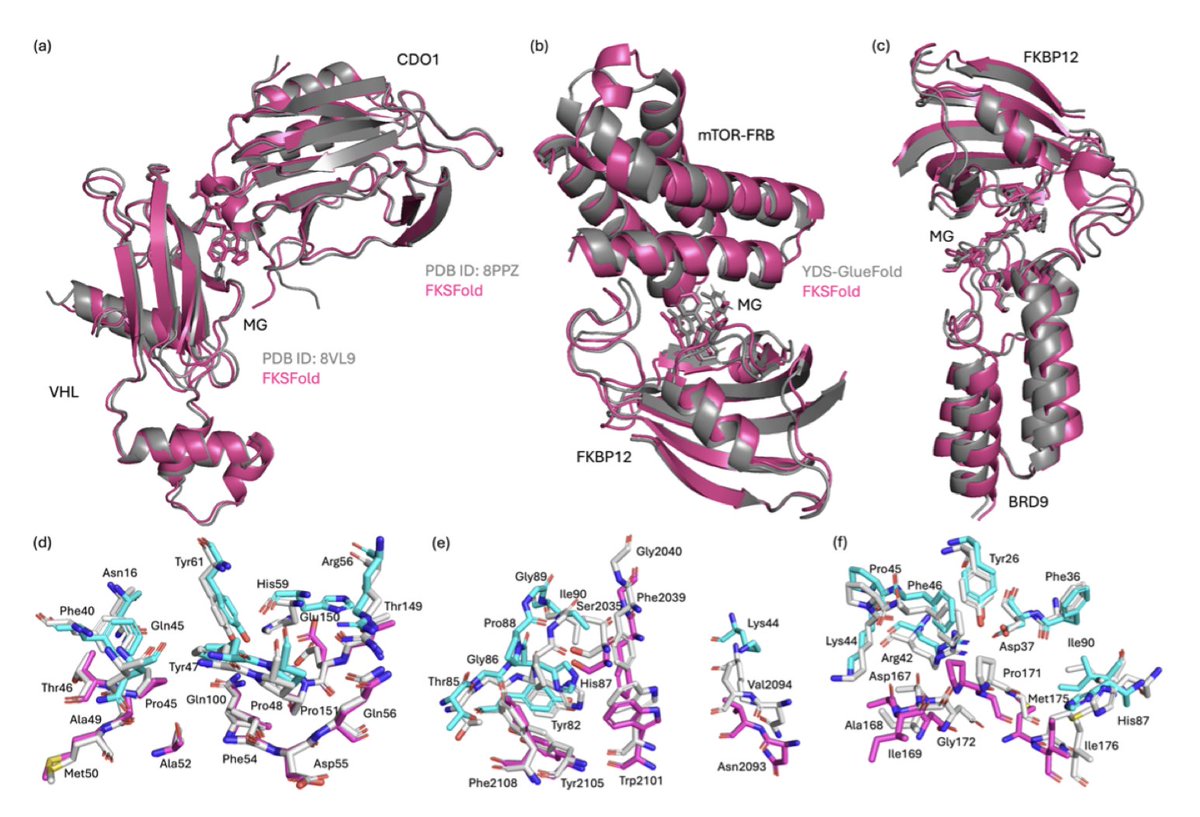
2. Standard AlphaFold3 struggles with modeling ternary complexes involving two proteins and a small molecule, failing to predict all 8 benchmark cases. FKSFold, by contrast, successfully predicted 3 of 8 with RMSD < 3Å using ipTM-guided FK diffusion.
3. The method uses ipTM (interface predicted TM-score) as a reward function in the reverse diffusion process to bias sampling toward high-quality protein-protein interfaces—crucial for capturing the mechanism of molecular glues.
4. FK steering leverages stochastic control theory, guiding the reverse diffusion path using gradients of a Feynman-Kac PDE. This introduces a principled way to encode biophysical and structural knowledge without retraining the base model.
5. FKSFold supports multi-objective steering through potential functions incorporating ipTM, physical clashes, pharmacophore constraints, and prior structural knowledge—each weighted dynamically to guide sampling.
6. Adaptive particle-based sampling combined with resampling based on ipTM scores balances exploration and exploitation, improving prediction convergence while retaining diversity of candidate conformations.
7. The method shows success in three challenging systems: VHL\:MG\:CDO1, FKBP12\:MG\:mTOR-FRB, and FKBP12\:MG\:BRD9—highlighting its ability to model both E3-ligase and non-E3-ligase ternary systems.
8. Hyperparameter sensitivity analysis reveals strong dependence on parameters like diffusion path length, particle number, potential function type, and sigma threshold—critical for tuning model behavior across protein systems.
9. Failure cases, such as CRBN\:MG\:NEK7 or KBTBD4\:MG\:HDAC1, involved large proteins or highly flexible regions, suggesting further improvements in conformational sampling or loop modeling are needed.
10. Although eventually superseded by the more successful YDS-GlueFold model, FKSFold marked an important milestone in rationalizing ternary complex formation using diffusion models, laying groundwork for future development.
11. This approach demonstrates how physics-inspired formalisms like FK theory can be integrated into diffusion inference to steer structure generation toward mechanistically relevant regions of biomolecular conformational space.
💻Code: github.com/YDS-Pharmatech/FK…
📜Paper: biorxiv.org/content/10.1101/…
#AlphaFold3 #TernaryComplex #MolecularGlues #ProteinStructure #DiffusionModels #StochasticControl #FeynmanKac #DrugDiscovery #ProteinLigandInteraction #ComputationalBiology #FKSFold

1
9
1,310
7 May 2025
FKSFold: Improving AlphaFold3-Type Predictions of Molecular Glue-Induced Ternary Complexes with Feynman-Kac-Steered Diffusion
1. FKSFold introduces a novel inference-time modification to AlphaFold3-type models using Feynman-Kac (FK) steering to improve prediction of ternary complexes induced by molecular glues—small molecules that bridge protein-protein interactions.
2. Standard AlphaFold3 struggles with modeling ternary complexes involving two proteins and a small molecule, failing to predict all 8 benchmark cases. FKSFold, by contrast, successfully predicted 3 of 8 with RMSD < 3Å using ipTM-guided FK diffusion.
3. The method uses ipTM (interface predicted TM-score) as a reward function in the reverse diffusion process to bias sampling toward high-quality protein-protein interfaces—crucial for capturing the mechanism of molecular glues.
4. FK steering leverages stochastic control theory, guiding the reverse diffusion path using gradients of a Feynman-Kac PDE. This introduces a principled way to encode biophysical and structural knowledge without retraining the base model.
5. FKSFold supports multi-objective steering through potential functions incorporating ipTM, physical clashes, pharmacophore constraints, and prior structural knowledge—each weighted dynamically to guide sampling.
6. Adaptive particle-based sampling combined with resampling based on ipTM scores balances exploration and exploitation, improving prediction convergence while retaining diversity of candidate conformations.
7. The method shows success in three challenging systems: VHL\:MG\:CDO1, FKBP12\:MG\:mTOR-FRB, and FKBP12\:MG\:BRD9—highlighting its ability to model both E3-ligase and non-E3-ligase ternary systems.
8. Hyperparameter sensitivity analysis reveals strong dependence on parameters like diffusion path length, particle number, potential function type, and sigma threshold—critical for tuning model behavior across protein systems.
9. Failure cases, such as CRBN\:MG\:NEK7 or KBTBD4\:MG\:HDAC1, involved large proteins or highly flexible regions, suggesting further improvements in conformational sampling or loop modeling are needed.
10. Although eventually superseded by the more successful YDS-GlueFold model, FKSFold marked an important milestone in rationalizing ternary complex formation using diffusion models, laying groundwork for future development.
11. This approach demonstrates how physics-inspired formalisms like FK theory can be integrated into diffusion inference to steer structure generation toward mechanistically relevant regions of biomolecular conformational space.
💻Code: github.com/YDS-Pharmatech/FK…
📜Paper: biorxiv.org/content/10.1101/…
#AlphaFold3 #TernaryComplex #MolecularGlues #ProteinStructure #DiffusionModels #StochasticControl #FeynmanKac #DrugDiscovery #ProteinLigandInteraction #ComputationalBiology #FKSFold
6
21
1,476

9 Jun 2022
Meet Harshad Khadilkar as he talks about his research interests at lnkd.in/ejDpTvHM
@iitmadras @ravi_iitm
#reinforcementlearning #operations, #networkedcontrol #stochasticcontrol
#weatrbcdsai #insiderbcdsai

2
10

29 Sep 2021
Upea työ. Onnittelut. Hienoa näin eläkeläisenä nähdä vanha kamu HJB twitterissä. Edesmennyt Seppo Suominen tuli mieleen. Hän näitä stokastisen kontrollin salaisuuksia meille avasi #stochasticcontrol
1
2

3 Sep 2021
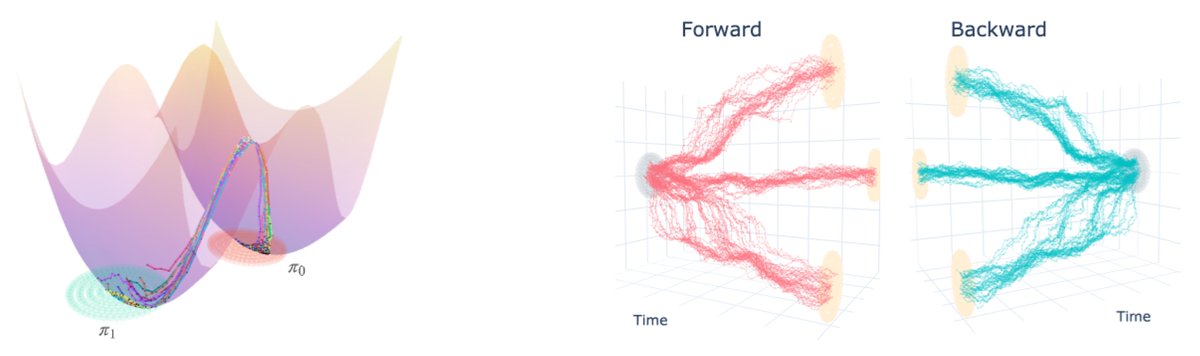
#mdpientropy "Solving Schrödinger Bridges via Maximum Likelihood" mdpi.com/1099-4300/23/9/1134
#Schrödinger bridges
#machinelearning
#stochasticcontrol
8
19

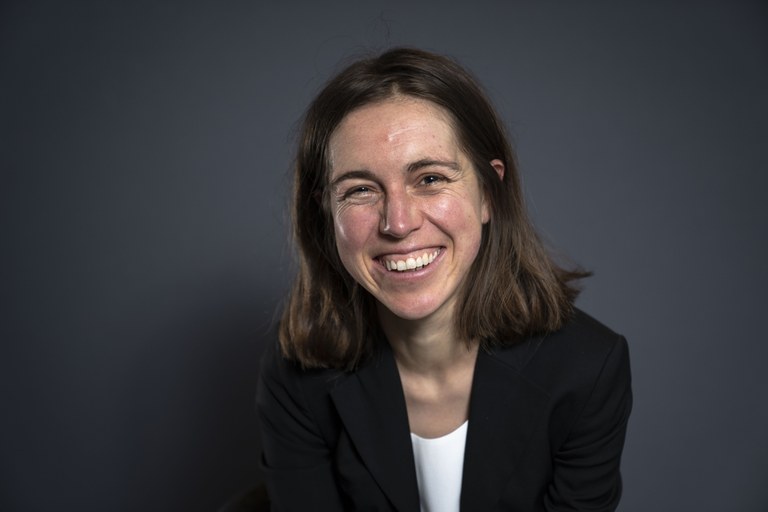
Claudia Strauch, Department of Mathematics receives Sapere Aude Research Leader grant of DKK 5.7 m for the project "Learning diffusion dynamics and strategies for optimal control". Congratulations! #NatSciAU #NaturalSciences #Mathematics #StochasticControl
dff.dk/en/grants/research-le…
1
6

6 Sep 2017
2
6 Sep 2017
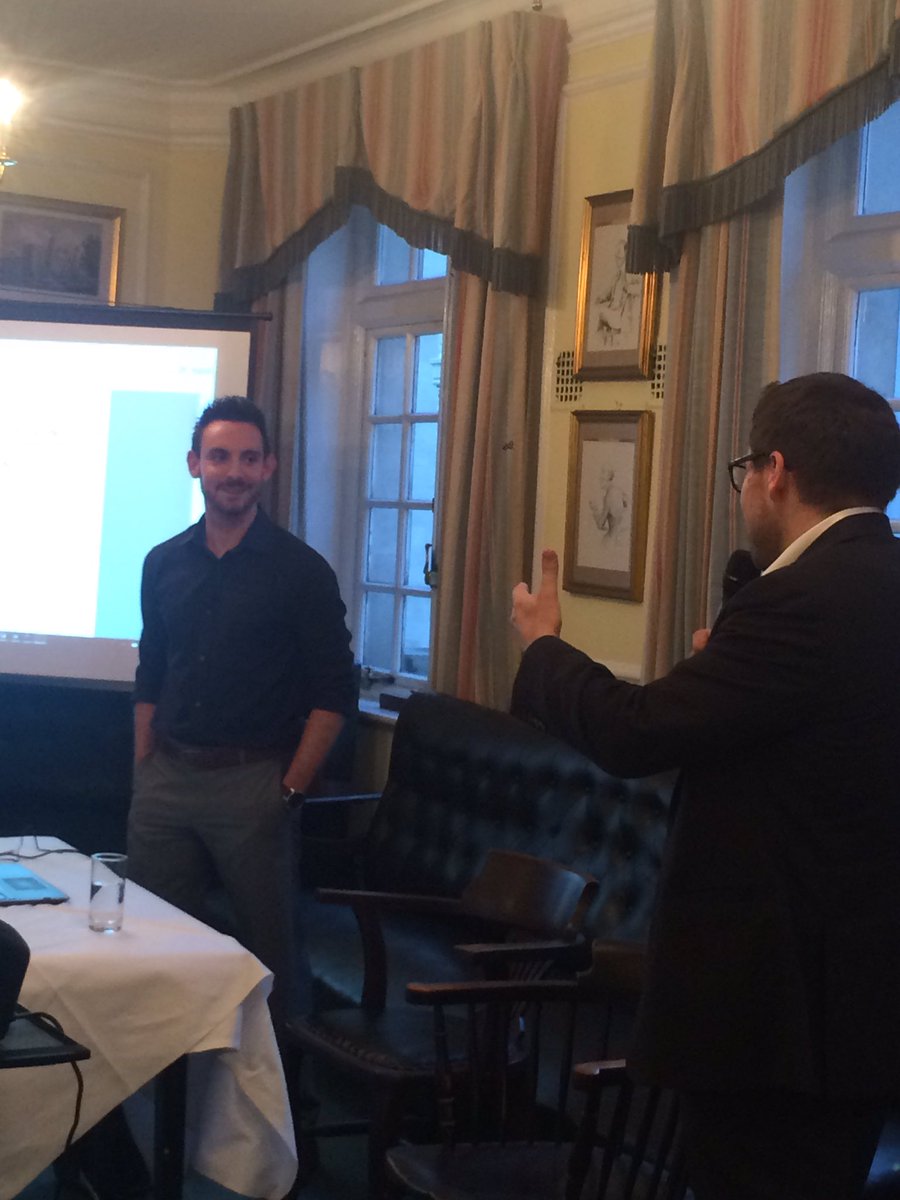
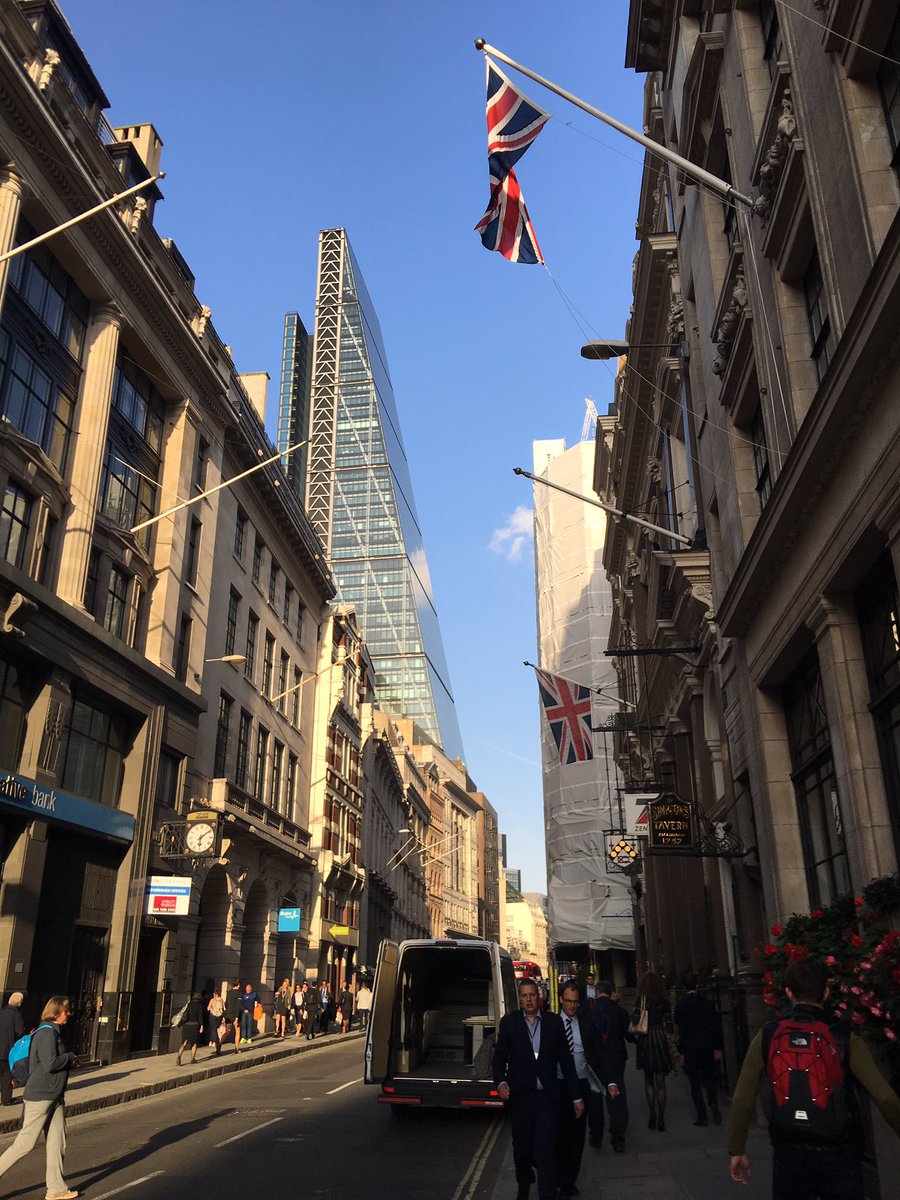
Kicking off Jason Ricci's @thalesians talk on #stochasticcontrol in #electronictrading - in the @cityoflondon
2