
Jun 12
📌JOB OPPORTUNITY AT EQUITY BANK...Apply Now
✅Apply Link:mkscholars.com/scholarship-d…
✅Register For Courses:mkscholars.com/courses
✅Application Deadline:19 June 2026
#EquityBankRwanda #JobsInRwanda #RelationshipManager #SMEJobs #StrategyManager

44


Jan 1
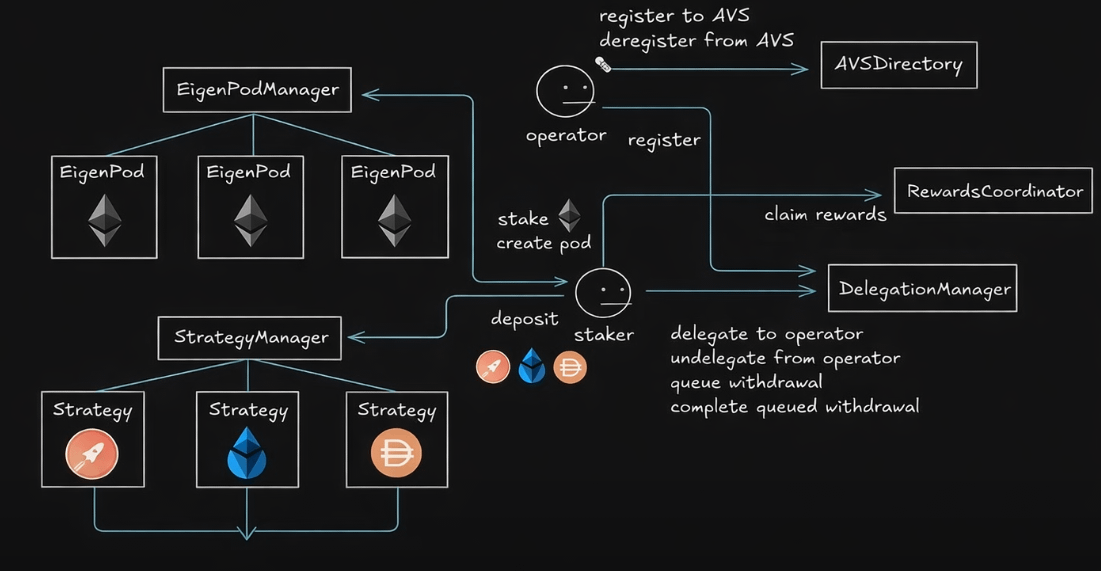
Hers is the complete flow:
Your ETH/LSTs
↓
Sit in: EigenPodManager or StrategyManager
↓
You delegate via: DelegationManager
↓
Operator registers services in: AVSDirectory
↓
Operator runs AVS, earns rewards
↓
You claim from: RewardsCoordinator
1
5
92
Jan 1
EigenLayer has 5 main contracts:
EigenPodManager - Your native ETH vault
StrategyManager - Your LST vault
DelegationManager - The relationship handler
AVSDirectory - The services registry
RewardsCoordinator - The payment processor
1
4
87

3 Dec 2025
來推薦一個,寫文章總是能腦洞大開的老師 「@FredHsu88 」,文章內容可以說是跳脫同質化在寫的,如果找不到角度,剛好老師也有參與的項目,這將是你絕佳參考的機會。
自從進入 InfoFi 的圈子後,看見洗文章已經是家常便飯,最常看到被洗的就是我「@0xKingsKuan 」幣世王大哥,甚至能看到不少人藉機貼標籤,說大哥就是 AI 矩陣來著(真的黑人問號?)可惜謠言起於智缺,止於智者。
而研究內碼對普通人來說是很不容易的,但既然有人去探究,也就誕生了新角度。
💡 文中提到了 UUPS ,如果與不可變合約的信任模型比較,來看看差異處為何:
🔹對於傳統迷因幣,投資者依賴的是區塊鏈的不可變性。即使開發者想作惡,他們也無法更改代幣的轉帳邏輯或增發代幣(也就是放棄合約權限)。
🔸MemeMax 的 UUPS 架構下,投資者必須信任的包括
1) 開發者的私鑰不會被盜
2)開發者本身沒有惡意
3)開發者在未來的升級中不會引入 Bug
這種信任模型的轉移很可能帶來一絲絲的疑惑的。在無須信任的 DeFi 世界中,引入極度依賴人為因素的 UUPS 架構,除非能提供無法替代的功能價值,也是就這關鍵引出了 EigenLayer 的整合亮點。
————————————🐜
💡EigenLayer 協議整合到底暗門還是未來?
如果說 UUPS 是 MemeMax 的骨架,那麼疑似對接 EigenLayer 的接口,相對就是其神經系統。這部分的發現,間接證實了項目方不僅僅是發行一個迷因幣,還試圖構建某種金融衍生品。
在 EigenLayer 的系統中
🔹StrategyManager
這是 EigenLayer 的核心合約,負責管理質押者的資產和策略。
🔶DelegationManager
負責處理將質押權限委託給營運節點的邏輯。
而代碼分析顯示,MemeMax 的邏輯合約中包含了特定的函數簽名,這些簽名與 EigenLayer 的 StrategyManager 高度吻合,但是不是暗門?就要看白皮書有沒有提到了。
————————————🐜
咱們可不是專業的代碼審計機構,發現歸發現,可別過度去揣測,因為在技術上, UUPS 本來就屬於中立工具。
項目的參與是個人能選擇的,當然項目如果能對參與者披露,藉此也能更完善不必要的猜想。
現況是因為 Staking 還沒公布和開放,只是被好奇者探訪,我是抱持著樂觀看待,因為這樣驚喜才會更翻倍!❤️❤️
@MemeMax_Fi @KaitoAI

126
1
128
12,606

24 Oct 2025
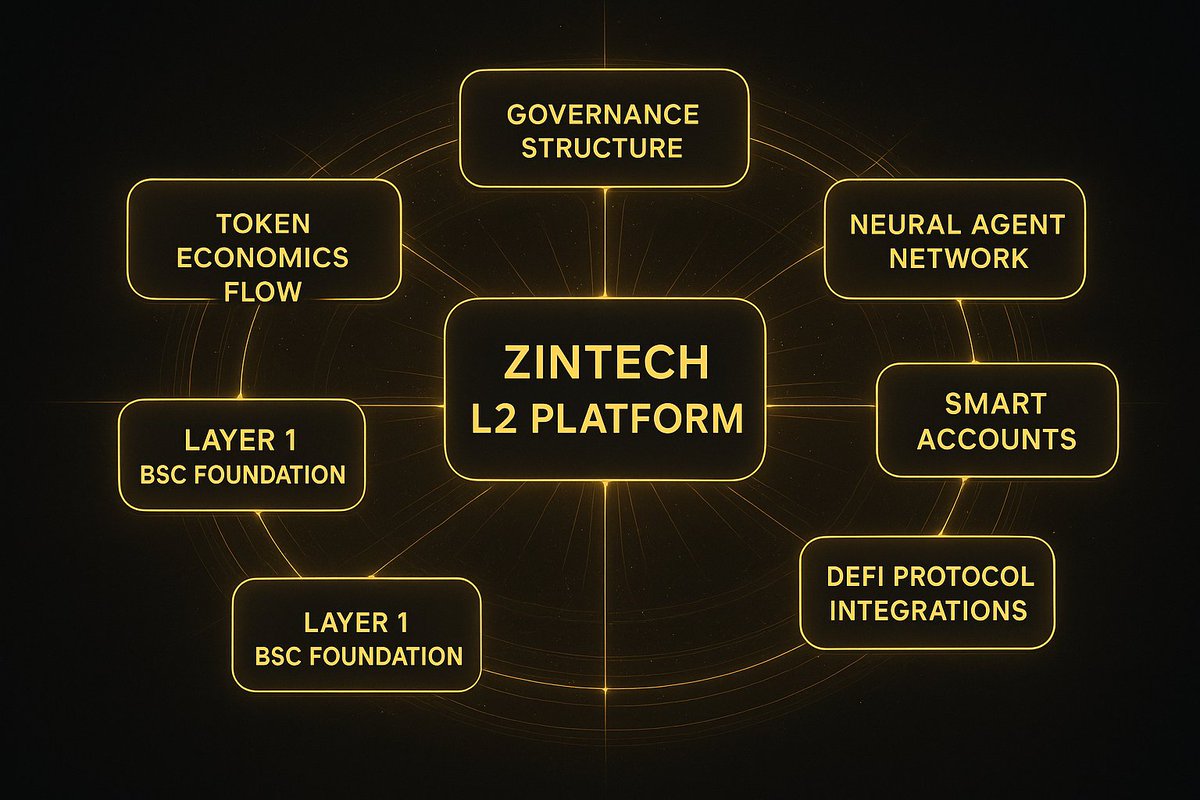
Zintech is more than a protocol. It's a complete ecosystem for intelligent DeFi.
Let's break down every layer:
LAYER 1: BSC Foundation
Zintech uses Binance Smart Chain for settlement and security. Proven infrastructure with millions of users. EVM-compatible ecosystem. Low base transaction costs.
L1 contracts: ZintechPortal, L1StandardBridge, SystemConfig
LAYER 2: OP Stack Rollup (Chain ID: 2024)
4,000 TPS capacity 1-second block finality Ultra-low fees ($0.001-$0.005) 100M gas per block Optimistic rollup fraud proofs
This is where Neural Agents operate and Smart Accounts live.
AI LAYER: Neural Agent Network
AgentRegistry: Tracks all deployed agents AgentFactory: Deploys new agent instances StrategyManager: Manages approved DeFi strategies PerformanceOracle: Calculates APY, Sharpe ratios, metrics
The brain of the operation.
SMART ACCOUNT SYSTEM
SmartAccountFactory: Creates user accounts RiskManager: Enforces safety parameters EmergencyModule: Pause & recovery functions Protocol whitelist & position tracking
Non-custodial. User-controlled. AI-optimized.
TOKEN ECONOMICS
$ZINT: 500M supply, governance token Staking: 8-17% APR (variable by tier) Fee distribution: 50% stakers, 25% burn, 25% treasury Governance: 1 $ZINT = 1 vote (with multipliers) Timelock: 72h for critical changes
Every piece works together to create intelligent, autonomous DeFi.
zinbnb.tech/docs
github.com/zintechbnb/zintec…
10
5
39
2,922

6 Aug 2025
99% of people have no clue how Redistribution actually works under the hood.
Most people think slashing = instant token burn.
Wrong.
It's actually a sophisticated multi-step dance between AllocationManager, DelegationManager, and StrategyManager.
1
2
11
407

12 Jul 2025
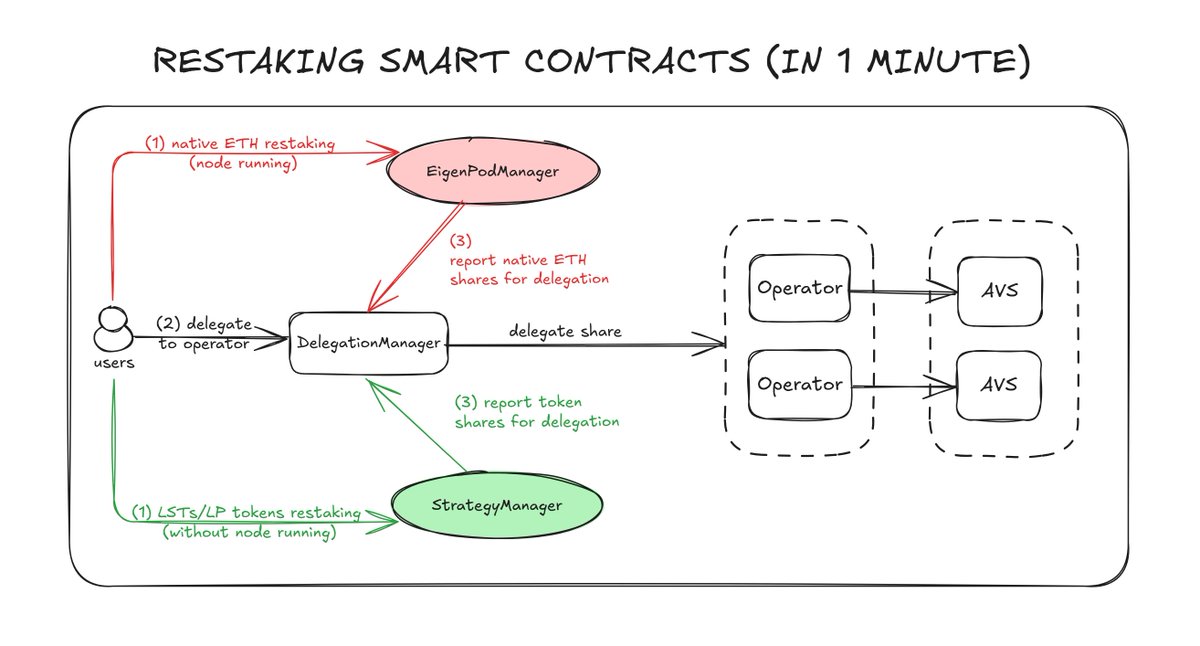
🧵5/ How do restaking smart contracts work?
Native ETH Restaking (node running)
1. Users run their own Ethereum validator
2. They set their withdrawal credentials to the EigenPodManager
3. ETH is restaked via the EigenPodManager
4. User delegates to an Operator via DelegationManager
5. The EigenPodManager registers the restaker and interacts with the DelegationManager, reports the amount of native ETH staking shares that are available for delegation
This enables slashing and reward mechanisms to apply across AVSs
LST / LP Token Restaking (without node running)
1. Users restake liquid staking tokens (like wstETH, rETH) or DeFi LP tokens
2. These are deposited into the StrategyManager, which manages strategies for different token types
3. User delegates to an Operator via DelegationManager
4. The StrategyManager registers the restaker and interacts with the DelegationManager, reports the amount of token shares that are available for delegation
This allows users to restake without running their own node
1
5
190


15 Feb 2025
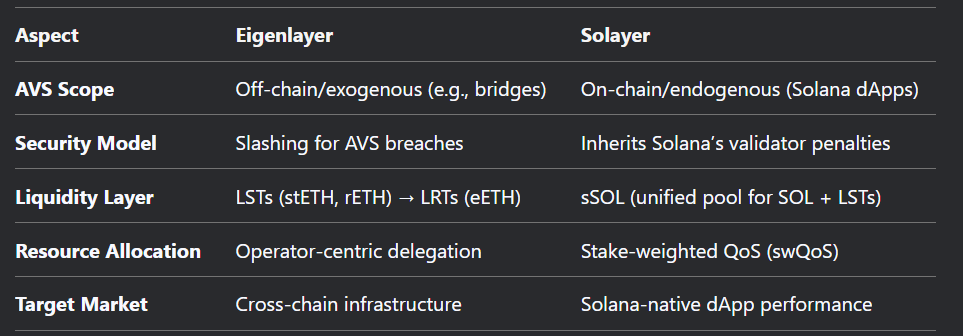
Many think Solayer is 'Eigenlayer on Solana' and they couldn’t be more wrong
Let’s dive into their difference👇
_____________________________________________
Eigenlayer & Solayer: Difference in Restaking Architectures
1. Introduction
Restaking has emerged as a transformative mechanism in Proof-of-Stake (PoS) ecosystems, enabling staked assets to secure additional services beyond the base layer.
While @eigencloud pioneered this concept on Ethereum, @solayer_labs has reimagined restaking for Solana’s high-throughput environment. This article dissects their architectural differences, economic models and implications.
2. Architectural Overview
Eigenlayer: Security as a Service for Exogenous Systems
Core Design:
▶️ Exogenous AVS (Actively Validated Services): Secures off-chain or external systems (e.g., oracles, bridges, DA layers) by reusing Ethereum’s staked ETH/LSTs.
▶️ Tripartite Contracts:
- StrategyManager: Manages staker deposits.
- DelegationManager: Links stakers to operators running AVS nodes.
- ServiceManager: Interfaces for AVS developers to integrate with Eigenlayer.
▶️ Slashing Mechanism: Penalizes operators for malicious behavior, enhancing trust in external AVSs.
Key Limitation:
Demand-side uncertainty — most AVSs rely on token incentives rather than organic protocol fees
Solayer: Block Space Marketplace for Endogenous Applications
Core Design:
▶️ Endogenous AVS: Secures on-chain Solana dApps (e.g., DEXs) by allocating stake to prioritize block space and transaction throughput.
▶️ Stake-Weighted QoS (swQoS):
Validators with higher stake (e.g., 2% vs. 0.2%) gain proportional bandwidth to submit transactions, improving Sybil resistance and performance.
▶️ sSOL: A liquid restaking token (LRT) that aggregates SOL, LSTs (e.g., JitoSOL), and MEV rewards, simplifying user participation.
Key Innovation
No additional slashing conditions — relies on Solana’s native validator penalties, reducing complexity for dApps.
3. Key Architectural Differences
4. Economic Models & Incentives
Eigenlayer:
- Supply-Side: ETH stakers earn rewards from AVS fees Eigenlayer token incentives.
- Demand-Side: AVS developers pay to rent Ethereum’s security.
Solayer:
- Supply-Side: SOL restakers earn base staking yield MEV Solayer token rewards.
- Demand-Side: dApps pay to reserve block space, a tangible need in Solana’s high-traffic environment.
5. Conclusion
Eigenlayer and Solayer exemplify how restaking architectures adapt to their native ecosystems:
- Eigenlayer extends Ethereum’s security to external systems but faces demand-side validation.
- Solayer redefines restaking as a block space marketplace, addressing Solana’s scalability needs with swQoS and sSOL.
For Eigenlayer, restaking’s success hinges on AVS adoption. For Solayer, its integration with dApps positions it as critical infrastructure for Solana.
3
141

17 Oct 2024
Glider allows you to query the functions of a specific contract.
Here is how we found an EigenLayer StrategyManager contract and all of its functions:
1
2
19
7,396


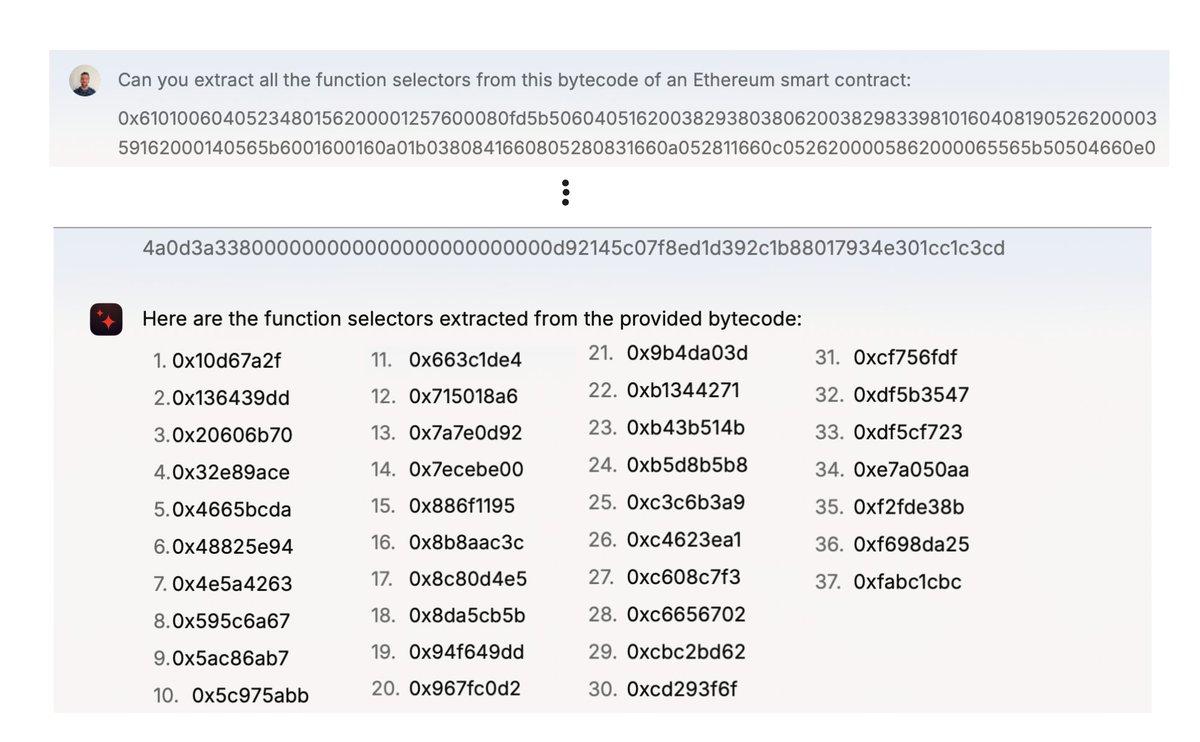
Claude just extracted ALL function selectors from compiled bytecode... What!?
@shazow's whatsabi is my go-to for pulling selectors from unverified contracts. Out of curiosity, fed @AnthropicAI Claude one of @eigencloud's contracts (StrategyManager) - it got 37/37 correct!
1
9
639

9 Aug 2024
Become a Strategy Manager and Maximize Your Earnings!
Ready to showcase your trading expertise? Sign up as a Strategy Manager and turn your skills into profits. The more impressive your performance, the more followers you'll gain, leading to higher earnings!
Start today as a Strategy Manager and watch your success soar!
Click the link below to get started with Tentrade Today
bit.ly/TenTrade
#earnmore #tradeandearn #strategymanager #financialfreedom

22
5
29
1,358

gm eigenworld 🌞
new-day-new-eigenapp-idea 💡
automated yield aggregator 🧑🌾
problem: yield opportunities are abundant but unstable, fluctuating with governance token pricing, borrow repayments, etc.
no platform actively optimizes your liquidity across protocols based on yield. 📉
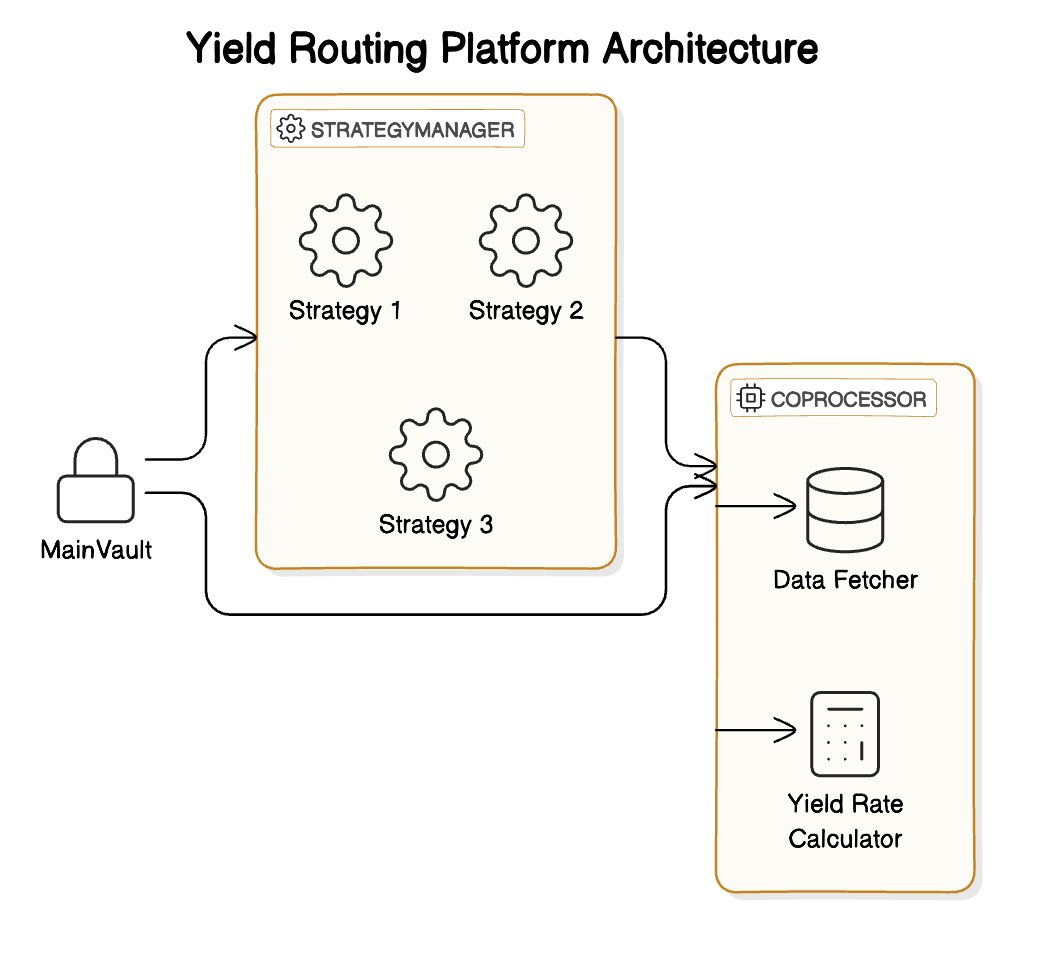
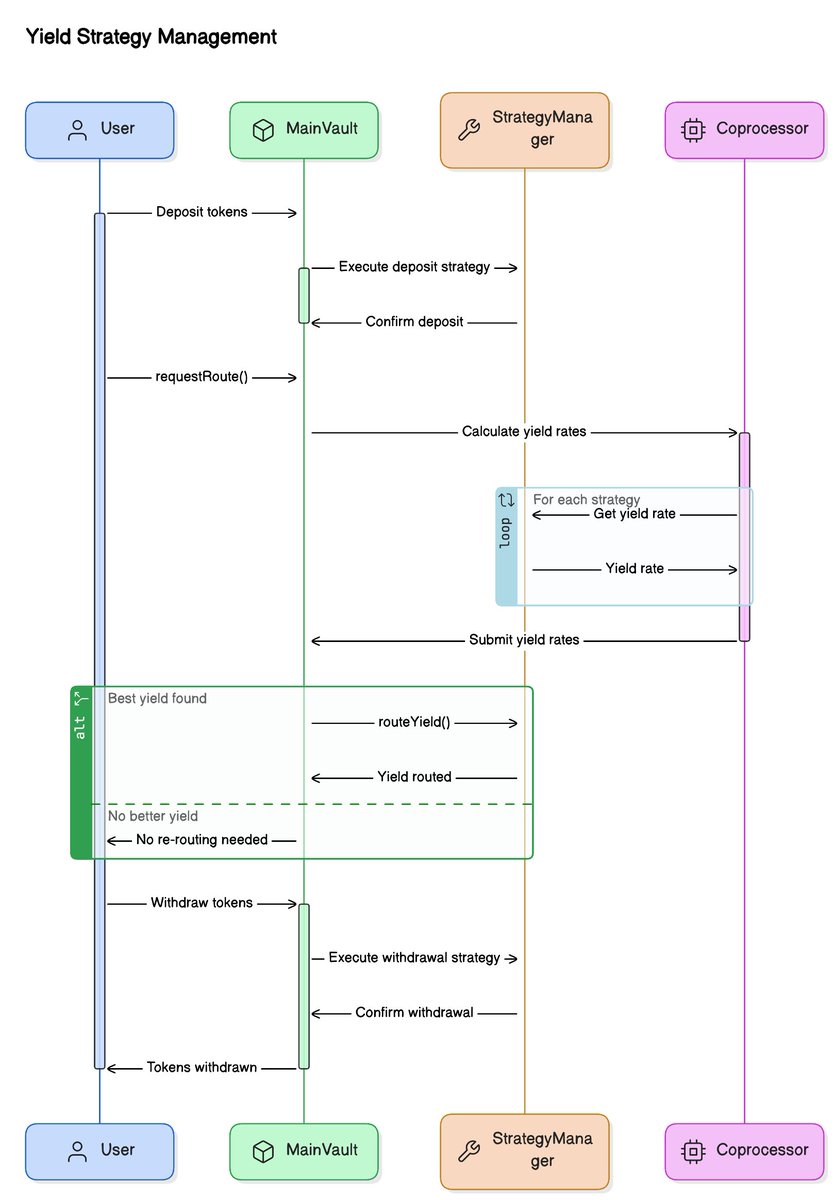
solution: enter coprocessors! 💡
- MainVault: central smart contract for deposits/withdrawals, routes tokens to best yield sources.
- StrategyManager: executes yield strategies, each with its own manager.
- Coprocessor (i.e. lagrange and brevis): calculates yield rates, enabling optimal routing.
if u would like to build this, reach out to me. we'll help with providing guidance to build a MVP and taking steps ahead.
15
6
94
22,227

14 Mar 2024
Communications Assistant, Estee Lauder #creativejobs #London #CommunicationsExecutive #CommunicationsManager #MarketingExecutive #MarketingManager #StrategyManager dlvr.it/T443g2
40