
Jun 8
trying to add intercom subghz files to my flipper so i can eff with people at my other job and the frequency is BLOCKED in my region 😦
2
20

May 30
Sam cardputer nie ma wbudowanego NFC, RFID i subGHz. Wszystko trzeba dokupić i podłączyć na kabelki. Tu jest wszystko na płycie.
1
4
364

May 12
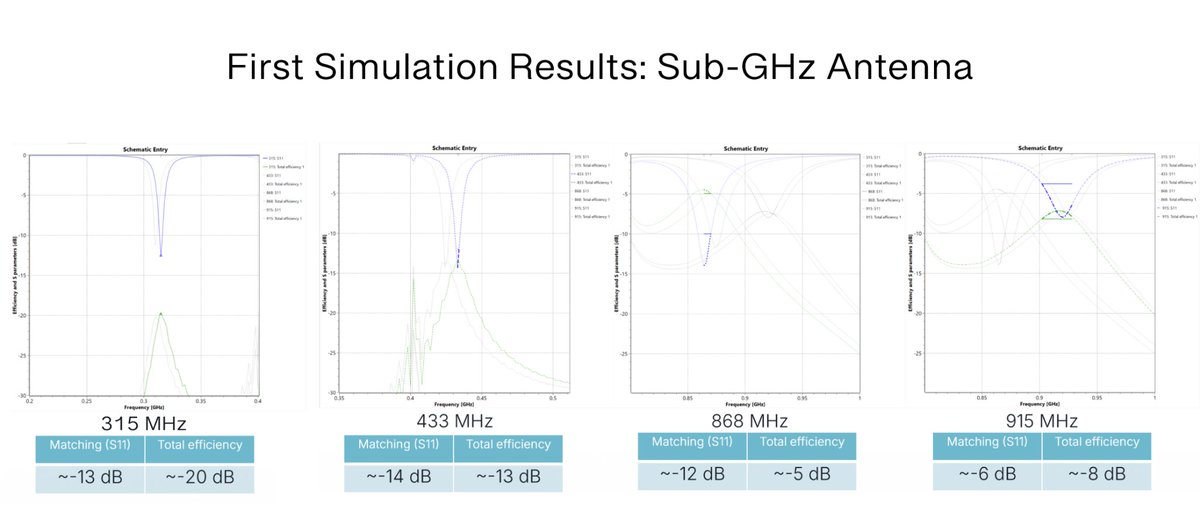
We’re deep in the Sub-GHz antenna work right now.
The challenge: one physical antenna for 315, 433, 868 and 915 MHz.
We’re using active tuning to avoid making one big passive compromise, but of course that means RF switches, GPIOs, matching states and more validation.
Tiny device, big RF headache.
#HighBoy #RF #SubGHz #HardwareDesign #EmbeddedSystems
1
3
375

May 2
An expansion with a small battery, LR1120 with built in GPS antenna and subghz antenna low power mcu. This to enable tracking even the device is off. You even can detect when the module is remove is you use one of the 4 gnd on the type c to detect connectivity even we the device is een off.
4
895

Ενδιαφέρον ότι στο τεστάκι τους ακόμα και η γρήγορη διαμόρφωση για μετάδοση με ρυθμό 2.6Mbps καταφέρνει λήψη 90% των πακέτων στα 1800 μέτρα με τόση μικρή ισχύ. Η χρήση subGhz μπάντας κάνει την διαφορά.
nicerf.com/news/lr2021-lora2…
1
5
869

Mar 23
I’ll start with @elder_plinius’ ‘AI Flipper Control’
Plug in your brain via OpenRouter, connect over Bluetooth, and you have a voice-commanded hardware lab in your pocket.
This is not only by far the most robust “AI tool” for the flipper but it is so easy to use & it just works.
•Instant expertise — Don't memorize SubGHz protocols or IR formats. Just say what you want.
•Real-time control — The AI reads your Flipper's state, executes commands, and reports back in seconds.
•Multimodal input — Voice commands, photo analysis, and text chat. Use your phone camera or smart glasses to show the AI what you're looking at.
•Signal alchemy — Build, layer, and export custom RF waveforms with a visual editor.
•Smart glasses integration — Pair with Mentra smart glasses for hands-free, heads-up Flipper control.
•Safety-first architecture — Every AI action is risk-classified. Destructive operations require explicit confirmation. System paths are locked by default.
Biggest of ups Pliny
github.com/elder-plinius/V3S…
5
8
62
7,819


Feb 12
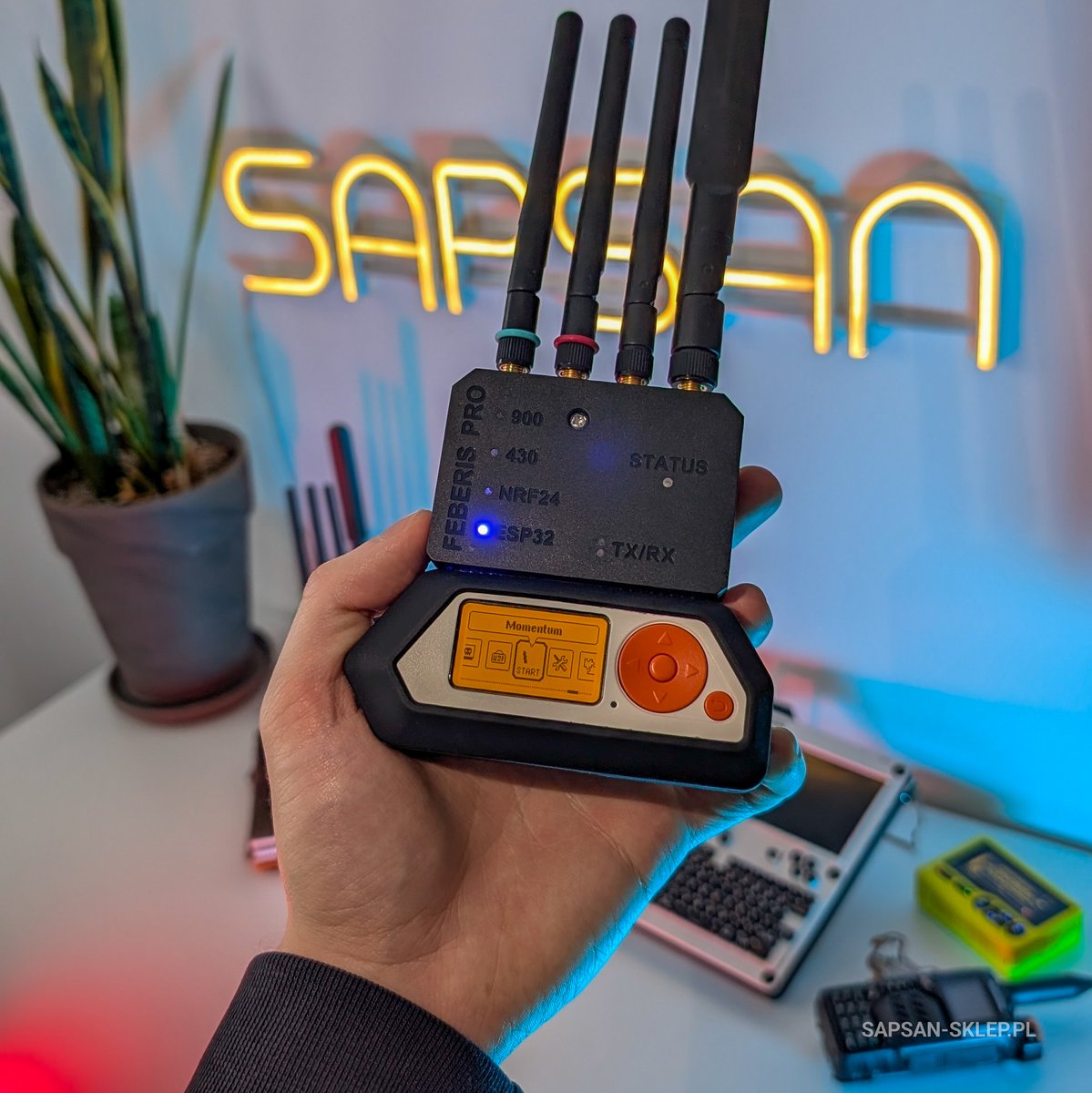
4 antennas. 5 radio modules. 1 board.
The Feberis Pro packs into a single Flipper Zero expansion:
• 2x CC1101 (433 MHz 868 MHz) - extended SubGHz range
• NRF24 (2.4 GHz) - MouseJack attacks
• ESP32 with WiFi Bluetooth Marauder pre-installed
• Built-in GPS for network mapping
Switch between modules with physical toggles. No cable swapping.
The most complete Flipper Zero expansion board on the market.
1
14
657

Jan 18
GitHub - c0d3r-SubGHz/Flipper-Zero-RollJam-Single-Chip-PoC: Proof of Concept for Atomic Replay attacks using Time-Division Multiplexing on a single CC1101. github.com/c0d3r-SubGHz/Flip…
6
18
1,219

30 Nov 2025
some more details:
- LoRa/fsk subghz radio has great penetration through walls and metal structures, can put sensors down the street and still get good RSSI/SNR
- ultra low power ~1.3µA STOP2 sleep current, i think i can still get this lower by disabling SRAM retention. easily hit 10 year sensor life on 1 Li-SOCl₂ AA battery
- AES128 ccm authenticated encryption with replay protection, each sensor
- one button pairing of sensor to gateway, autodetection of sensor type
- collision avoidance with exponential backoff, should theoretically be able to handle 100s of sensors with a single gateway
- ota key exchange, not the most secure but makes 1 button pairing a breeze and don't have to pre-commission encryption keys at mfg
1
18
1,184

7 Nov 2025
channeling my inner script kiddie and riding around the city on my bike with a flipper zero in my backpack running a subghz playlist with all common tesla charger port subs
simple minds
2
68

26 Oct 2025
Hocam all-in-one çözüm olması gayet iyi, subghz, rfid, nfc ve ir remote’da gayet iyi 🙏🏻🌸 Hem yapısı hemde kullanımıda oldukça zevkli 🙏🏻
2
497

24 Oct 2025
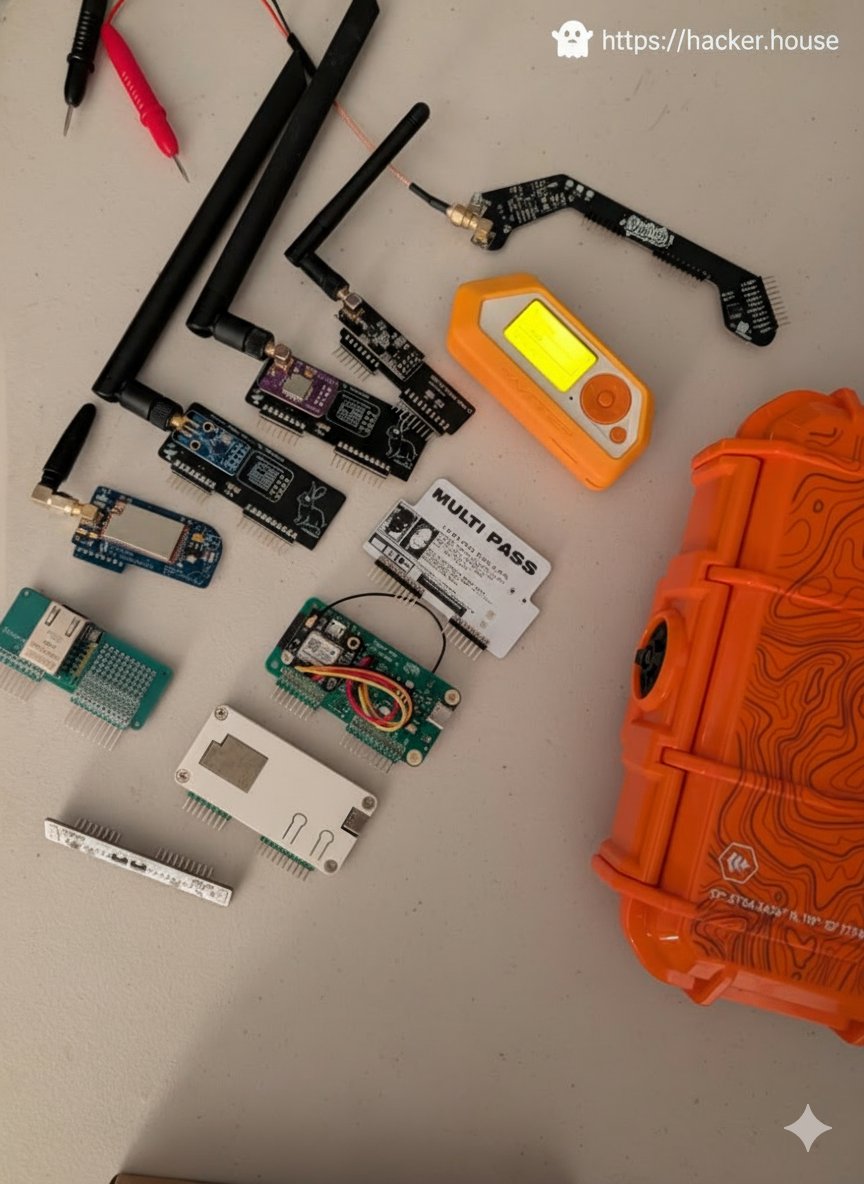
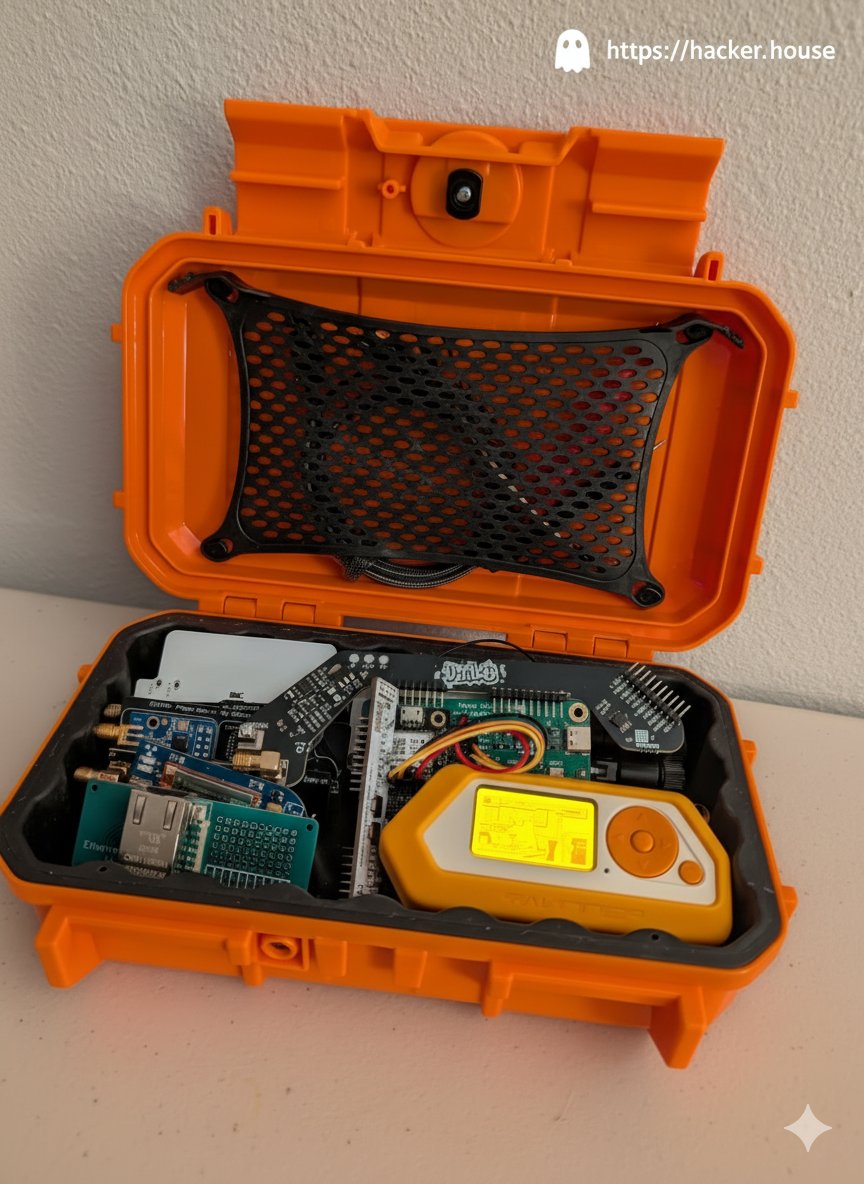
This is my ultimate @flipper_net EDC, small enough to fit in a day pack, Flipper capabilities include WiFi,WiFi w/GPS,433/915 amp subGhz, magstripe spoofer, Ethernet, electronic test probes and IRDA. What are your favorite modules?
17
45
491
21,632

1 Oct 2025
Contiki-NG 5.1 is out. It adds complete CBOR library, comprehensive Elliptic Curve Cryptography support, improved TRNG for better security, enhanced subGHz comm. for TI CC13xx platforms, AT86RF215 support on OpenMote-B, and security-related improvements.
github.com/contiki-ng/contik…
1
2
3
123


10 Sep 2025
A decade of IoT on a coin cell?!
@siliconlabs Labs’ FG23L SoC adds range, security, and developer tools at a price point aimed at mass IoT, but it is the balance of features that makes it stand out.
🔗Read more about it: thecomponentclub.com/news/20…
#TCC #TheComponentClub #SiliconLabs #FG23L #IoT #SubGHz #LowPower #TechNews #Wireless #Connectivity #IoTDevices #Semiconductors
3
45

5 Sep 2025
damn this is fire i was looking at lilygos awhile back. that is a crazy good add on without gpio.
i havent been able to test rc cars i was wondering if they were 2.4 or Subghz, good to know. imma grab one for that fact lol
i still lub my fwipper zewo tho!
3
21

26 Aug 2025
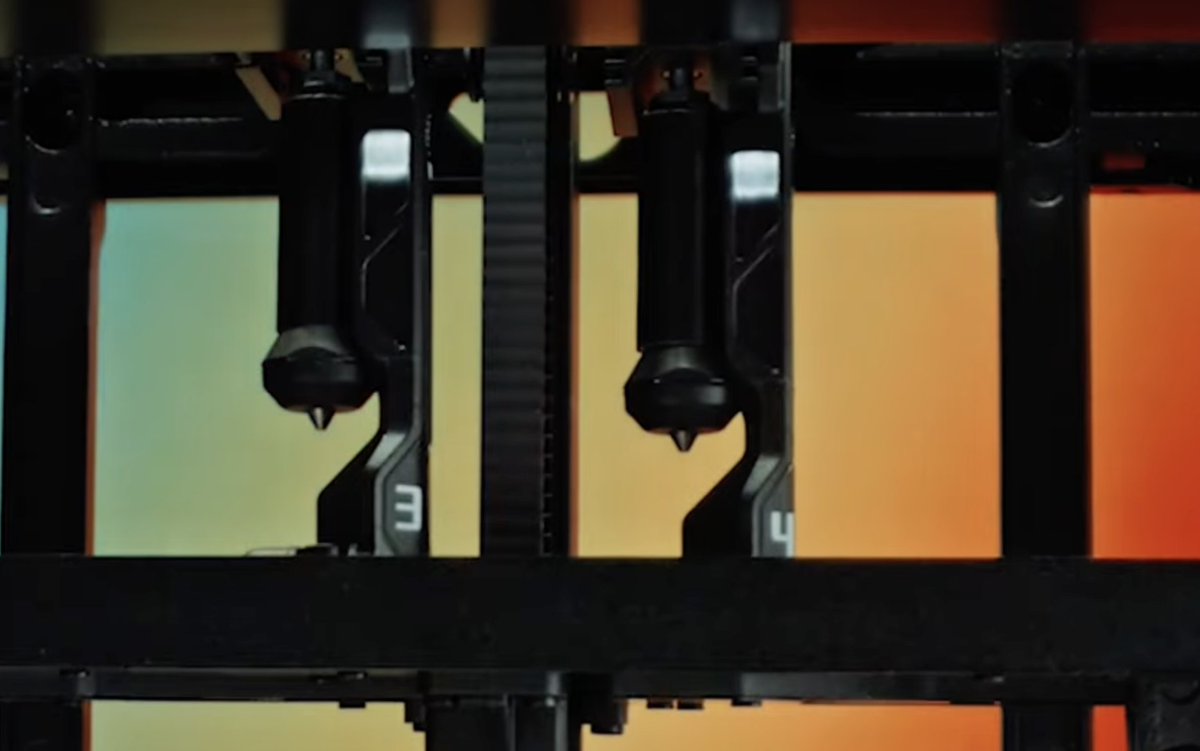
Bambu Lab just released info on the H2C, a 7-color hotend-switching multimaterial printer. Retrofits from H2S,D to C will be available, continuing the Bambu Lab tradition of parts sharing (so this system was likely codesigned with the H2D).
In order to prevent mechanical contact wearout during frequent switching (also very relevant for robotics!), the hotend is fully wireless:
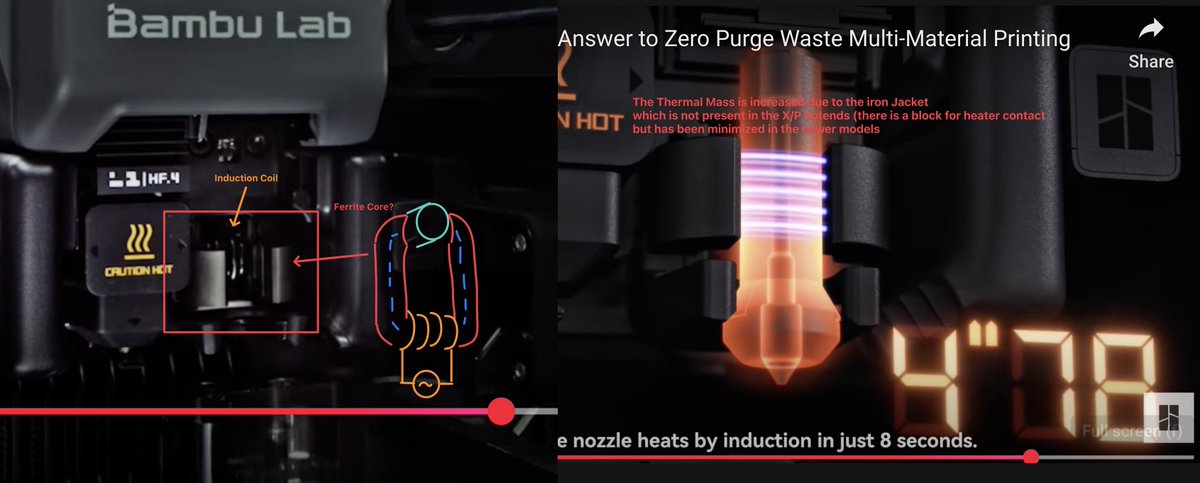
It uses induction heating for the hotend in 8 seconds; the X1 series takes about ~30s-1m to heat up, so this is at least a 3x increase in power (assuming similar thermal mass, which the new one has much more of due to the thick iron jacket around the hotend used for heating. I'd estimate about 250 W of heating power is available. This was likely unachievable in the past because of the thermal resistance between heater and heatblock before.
The coil is likely driven using a low voltage, likely resonant driver (but due to low voltage, hard switching has a much lower loss, so the heater will be able to operate out of resonance in order to avoid a dead band near 0 power and smooth heating control.
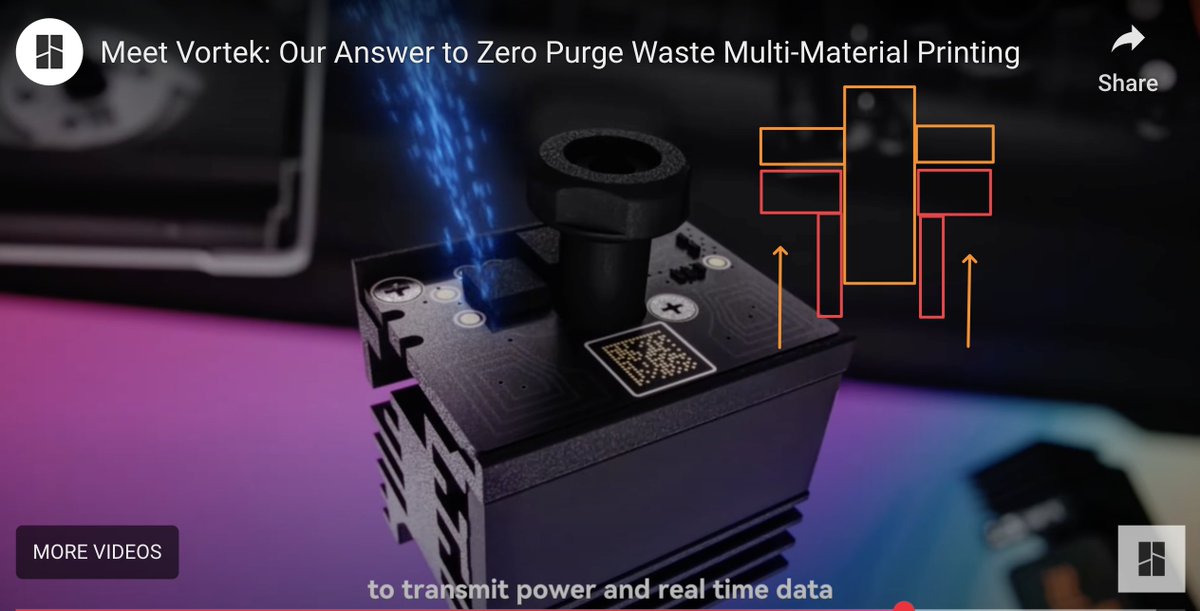
The sensing is done through two small antenna coils to transmit power and data over small range inductive.
A major challenge in creating this system is that the coil needs to operate in a very difficult EMC environment due to proximity to induction heating coil. A small amount of power is transmitted and rectified on the PCB to power the MCU, ADC and AFE for the temperature sensor/ID, and the data is sent back over RF.
The size/scale of Bambu Lab allows them to absorb the cost of what looks like a custom radio protocol associated intentional radiator certification. It is likely that they are using a custom SubGHz protocol which chips are not readily available for. I believe that in the future, applications such as humanoid robot joints, etc will create very high volume demand for these robust, high data rate short range inductive/RF wireless communication bridges, and I can imagine an ecosystem exists for some fabless IC vendors to deliver standard solutions for this.
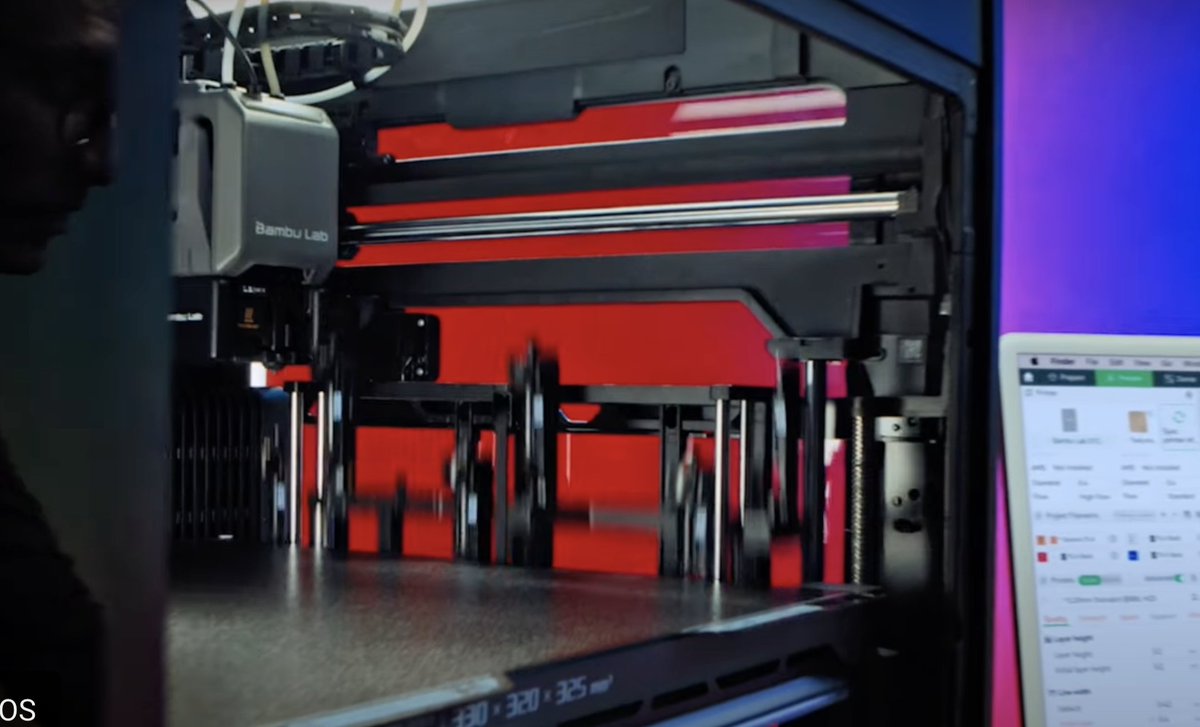
The hotend switch system is pretty well designed and makes the best use of mechanical hardware. Two sets of three hotends alternately raise and lower (thus using only one motor and belt), and the hotends are grouped into sets of 2 for toolhead clearance.
I'm guessing (unclear from video) they are using a nested stub inside the fitting to locate/align/secure the hotends with a hidden mechanism to lock the hotends onto the toolhead. Note that the toolhead has one fixed hotend and one swappable hotend, and thus it's likely that all upgrade paths from H2S will end up as a dual.
Hotend cradles look passive to me, maybe using magnets to hold them onto the holders (with some thermal insulation pads inbetween?)
It is clear that the DJI heritage lives on in Bambu, with a deep set of expertise in power electronics, RF, motor drive, office automation mechatronics design, and consumer electronics productization.
13
10
214
20,185