ゆうと,yuto🇵🇭×🇯🇵(ハーフ、ミックス) retweeted

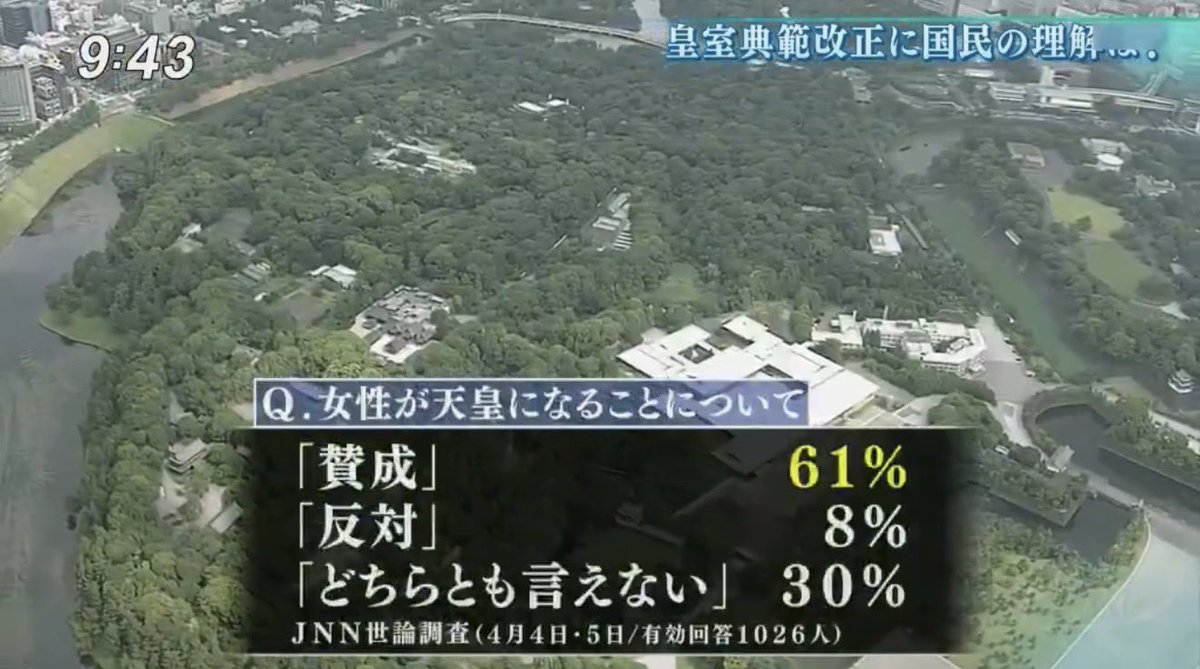
女性天皇容認が61%で多数派って本当に?
ルールで平等だった女性総理ならOKなのはわかるんだけど、皇統ってそんなに軽く考えてる人が多いの?
それなら日本潰して新しい国家を建てた方がいいんじゃない?🙄🙄🙄 x.com/JapanPride2686/status/…
 JapanPride
1
1
74


May 18
#troll and #BAYC toois starting to wake up on Solana 👀🔥
Low cap. Strong meme energy. Community building fast.
Still early enough where one push can change everything. 🚀
Smart wallets are watching closely while the crowd sleeps.
CA:
zcDxiM9jeAAEGc9KYbujNXNhH9mo4PvqYaHi7Wwpump
Don’t fade momentum when it’s this early. ⚡
#TYAC #Solana #PumpFun #Crypto #Memecoin

59
2
5
15,519


TyAc
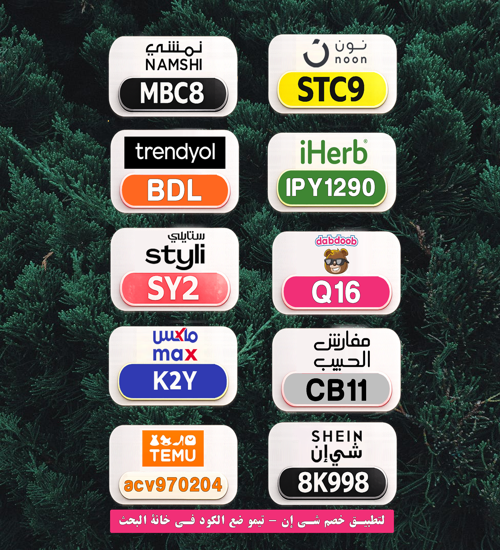
⎐كُـود⎐كوبِون⎐خـِصم⎐
🧾 خصم مباشر
⎐شي⎐ان⎐
⊵8K998⊴
⎐ماكـس⎐فاشون⎐
⊴K2Y⊴
⎐ايهرب⎐ايهيرب اهرب
⊵IPY1290⊴
1

#France 🇫🇷: Des invités surprises
au deuxième et dernier jour de @fallyipupa01 au stade de France .
Tyac était là .
En 2020, ils
Ont sorti un morceau « fleur froide ».
2
9
89
4,818

Like all the jails they tried to murder me in or before they threw me in and failed played victim and then threw me in, like st johns tyac and the west detention centre.
All fields now except where tyac was they put the south detention, took me there handicapped after Onis...
51



Mar 5
Hey bills fans i got a fun hypothetical for you:
Option A:
78 rec/1003yds/7tds/268 TYAC/66.9ypg/85.9 T-PFF grade(11th overall)
Option B:
50 rec/682yds/6tds/222 TYAC /40.1ypg/79.9
T-PFF grade (22nd overall)
Mar 5

The #Bills were among the teams monitoring the AJ Brown situation, but this trade knocks them out of that sweepstakes.
39

We have often spoken about the devastating impact cancer has on teenagers and young adults — a cause especially close to the heart of Roy Finney, one of our members, who lost his niece, Natasha, to the disease some years ago.
In her memory, our club has once again chosen to support the Teenage and Young Adult Cancer (TYAC) charity, based at the Royal Surrey Hospital in Guildford. TYAC works tirelessly to help young people living with cancer enjoy as full and joyful a life as possible.
Last week, we were honoured to welcome Ian and Karen Raine, Natasha’s parents, who shared moving stories showing how donations from the generous people of Farnborough make a real difference. From a giant garden cinema screen for a young person to watch The Lion King with friends, to a luxury yacht trip around the Isle of Wight complete with a Cordon Bleu meal — every experience brings moments of happiness and dignity to those facing such difficult times.
We were also delighted to add to this year’s proceeds some extra “honey money” – donations from members in exchange for a jar of honey from our club beekeeper. Ian and Karen gratefully accepted our cheque on behalf of TYAC, continuing Natasha’s legacy of hope and compassion.
Pictured: President Martin Sampson with Ian & Karen and Roy.

ALT President Martin Sampson with Ian & Karen and Roy.
4
3
171

As we get closer to #AMCHP2026 and continue exploring what you can expect as part of our conference’s Indigenous Experience, we connected with the Tribal Youth Advisory Council (TYAC) for a partner spotlight on partnerships in #MCH.
Read it now: bit.ly/AMCHP2026-PS1

ALT Graphic alerting of a partner spotlight: the Tribal Youth Advisory Council at the National Indian Health Board. Read it on the AMCHP website at bit.ly/AMCHP2026-PS1
10

Feb 27
tYAC
##
▬كؤبؤن▬نون▬كؤد▬خصم▬ايهرب▬ايهيرب▬
⎐ٺوٺ⎐
⊵QT99⊴
⎐ابهررب⎐
⊵IPY1290⊴

Feb 27
Prabhu sobat je lok jase vagatat tyac prakare to tyanchyashi boktoy. Adhi Sagar, Prajakta ani Ruchita ni tyala bolayla suruvat keli ani tyach bhadhet tyani uttar dile.
1
57

Feb 22
TYaC
##
▬كؤبؤن▬نون▬كؤد▬خصم▬ايهرب▬ايهيرب▬
⎐تُيموُ⎐
⊵TED25⊴
⎐ابهررب⎐
⊵IPY1290⊴
1

LAGI LAGI DICIUM 😭😭😭 GAMAU LIAT KAK MINJU DICIUM 😭😭😭
gegara ff jinju bangke ini, tyac panteqqq. ff paling traumatis
Feb 19

get shining on netflix and were one step closer to iz*one world domination
64

😂😂😂
That was me back in the day in maximum security TYAC at the back of the range on my own phone with that bich niger bia playing me some tunes.
The bich Niger answered the phone when was in jail and could have told on him but when went home he didn't answer phone.
Exposed.
Feb 9

Woman says she's tired of playing music to her brother who's locked up 😩
3

Jan 13
The Upaniṣadic Model: Brahman as Ultimate Āśraya(Ground/basis/support)
A. The Logic of the "Ultimate Ground"
The Upaniṣadic project, as represented in the Bṛhadāraṇyaka( BĀU) and Chāndogya(ChU), is best understood as a search for the ultimate āśraya (support/basis). The question that animates Yājñavalkya's dialogues is: kasmin nu khalv ātmā pratiṣṭhita? ("In what is the Self established?" BĀU 3.9.26).
The answer, revealed progressively through dialogue and negation, is: in itself (ātmany evātmānaṃ paśyati, BĀU 4.4.6). The Ātman (Self), identical with Brahman (the Absolute), is the self-supporting ground that requires no further basis.
Textual Evidence:
BĀU 4.4.6:
tasmād evaṃvit śānto dānta uparataḥ titikṣuḥ samāhito bhūtvā ātmany evātmānaṃ paśyati sarvam ātmānaṃ paśyati
"Therefore, having become calm, controlled, withdrawn, patient, and concentrated, one sees the Self in the Self alone; one sees all as the Self."
BĀU 4.4.22:
sa vā ayam ātmā brahma vijñānamayo manomayaḥ prāṇamayaḥ cakṣurmayaḥ śrotramayaḥ...
"This Self is Brahman—made of consciousness, made of mind, made of breath, made of sight, made of hearing..."
ChU 6.8.7:
sa ya eṣo 'ṇimā aitadātmyam idaṃ sarvam tat satyam sa ātmā tat tvam asi śvetaketo
"That which is the subtle essence—this whole world has that as its Self. That is the Real. That is the Self. You are That, Śvetaketu."
ChU 7.24.1:
yatra nānyat paśyati nānyac chṛṇoti nānyad vijānāti sa bhūmā
"Where one sees nothing else, hears nothing else, knows nothing else—that is the Infinite (bhūmā)."
B. The Function of Neti Neti: Negation with Positive Remainder
The famous neti neti ("not this, not this") formula (BĀU 2.3.6) is often cited as a parallel to Buddhist negation. However, a rigorous analysis reveals a crucial structural difference.
BĀU 2.3.6:
dve vāva brahmaṇo rūpe—mūrtaṃ caivāmūrtaṃ ca, martyaṃ cāmṛtaṃ ca, sthitaṃ ca yac ca, sac ca tyac ca
"There are indeed two forms of Brahman—the formed and the formless, the mortal and the immortal, the stationary and the moving, the real (sat) and the beyond (tya)."
atha tasyopadeśo neti neti; na hy etasmād iti naity anyat param asti
"Now the teaching: 'Not this, not this.' For there is nothing higher than this 'It is not.'"
Analysis:
The function of neti neti is to negate finite predications (name, form, attribute) in order to secure the infinite, unpredicated Brahman as the positive remainder. The negation is instrumental to affirmation: by removing what Brahman is not, the text points to what Brahman is (beyond predication, but real).
This is the "Negation-with-Remainder" structure:
Finite predications (name, form, attribute)
↓ [neti neti: "not this, not this"]
Negation of the finite
↓
Positive remainder: Brahman/Ātman (Ultimate Ground, self-supporting āśraya)
↓
Liberation = "resting" (niṣṭhā) in that Ground
C. Pre-empting the Vedāntic Objection: Brahman as Self-Supporting
A sophisticated Vedāntic interlocutor might object: "Brahman is also anāśraya (without support) because it is the self-supporting basis of everything. It does not depend on anything external."
This objection is ontologically valid but soteriologically irrelevant to the present argument. The point is not whether Brahman requires support, but whether the seeker is directed to "rest" (niṣṭhā) in it as a final ground.
The Upaniṣadic texts are explicit: the seeker is to see the Self in the Self (ātmany evātmānaṃ paśyati), to know "You are That" (tat tvam asi), and thereby to be established (pratiṣṭhita) in Brahman.
This is a soteriological āśraya-structure: even if Brahman is ontologically self-supporting, the method requires the seeker to take Brahman as the object of identification, the goal of knowledge, and the final resting-place.
Contrast with Aṭṭhakavagga:
The Māgandiya Sutta (Sn 839–840) denies purity "by means of knowledge" (na ñāṇena), including the knowledge of ultimate reality. It does not say "Find the true āśraya instead of the false ones." It says: "Do not rely on any āśraya (anissāya)."
This is the structural divergence: the Upaniṣads relocate the support from the finite to the infinite; the Aṭṭhakavagga dissolves the support-structure itself.
So,It shares with the Upaniṣads a negation of finite identifications, but does not secure a positive metaphysical remainder.The result is a soteriological anti-foundationalism: liberation is not grounded in any support.
Deepened Textual Analysis: Specific Verse Comparisons
A. BĀU 4.4.22 vs. Māgandiya Sn 839
BĀU 4.4.22:
tam eva dhīro vijñāya prajñāṃ kurvīta brāhmaṇaḥ
"The wise Brahmin, having known That (Brahman), should cultivate insight."
Māgandiya Sn 839a:
na diṭṭhiyā na sutiyā na ñāṇena
"Not by view, not by tradition, not by knowledge..."
Analysis:
The Upaniṣadic passage prescribes cultivation of prajñā (insight/wisdom) as the soteriological method. The verb kurvīta (optative: "should make/cultivate") indicates an active, instrumental relationship: the Brahmin uses knowledge to achieve liberation.
Māgandiya denies this instrumental relationship: na ñāṇena ("not by means of knowledge"). The denial is grammatically precise: the instrumental case marks knowledge as a failed karaṇa (instrument/means).
B. ChU 6.8.7 (tat tvam asi) vs. Paramaṭṭhaka Sn 796
ChU 6.8.7:
tat tvam asi
"You are That."
The mahāvākya identifies the individual self (tvam) with the ultimate reality (tat), providing a final identity that constitutes liberation.
Paramaṭṭhaka Sn 796:
attañjaho na upeti saṅkhaṃ
"One who has relinquished self does not come under reckoning/classification."
Analysis:
The Buddha uses the instrumental negation we discussed: He isn't just saying "there is no self" (ontological); he is saying "abandon the habit of Self-ing" (process-oriented).
If you "realize the Atman," you have acquired a new Nissaya (Reliance). If you are Attañjaha, you have dismantled the "I-maker" (Ahaṃkāra) that needs a place to stand.
The Upaniṣadic formula establishes identity with the Ultimate; the Paramaṭṭhaka describes relinquishing of self (attañjaha). The Pali term is a direct counter-term to the Upaniṣadic Ātmavāda (doctrine of Self).
Moreover, the sage "does not come under saṅkhā" (reckoning, classification). This means they cannot be placed in any category—including "one who has realized Ātman."
The term Saṅkhā (Sanskrit: Saṃkhyā) is a deep-level technical term in this context. In the Brahmanical tradition, Saṃkhyā refers to "enumeration," "reckoning," and eventually "definition." To categorize something is to have power over it,to place it in a hierarchy.
Sn 844/847 states that the Sage:
“Na saṅkhaṃ eti...” (Does not go into reckoning/classification.)
If a Sage is classified as "An Ātmavid" or "A Liberated One" or "A Buddhist," they have been captured by Saṅkhā. They have been "counted" and "placed" in the social and intellectual order.
Buddha argues that because the Sage has no Upanissaya (Support/Dependency), there is no data-point to track. Like the track of a fish in water or a bird in the sky, the Sage leaves no "footprint" of identity for classification to grip.
So,What remains is the figure of the wandering sage (muni) who "leaves no footprint" because they do not establish a position that can be traced, attacked, or ranked.
This is not skepticism ("we cannot know truth"); it is not nihilism ("nothing exists"); it is not antinomianism ("ethics are irrelevant"). It is soteriological anti-foundationalism: the refusal to ground liberation in any support (āśraya/nissaya), and the cessation of the identity-making process (bhava) that depends on such grounding.
Ete ca nissajja anuggahāya, santo anissāya bhavaṃ na jappe."Having relinquished these, without taking up [a replacement], peaceful, without reliance, one should not keep fabricating becoming."— Sutta Nipāta 840 (PTS)
53