
May 16
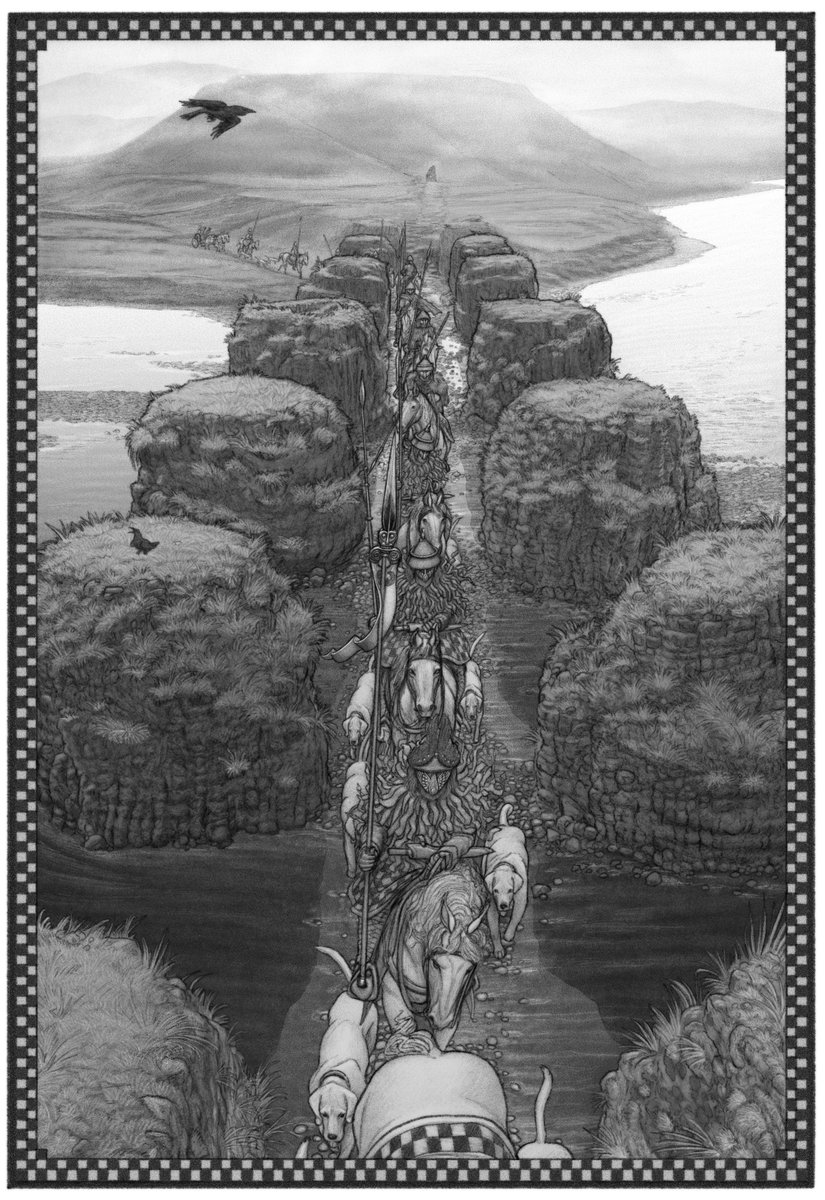
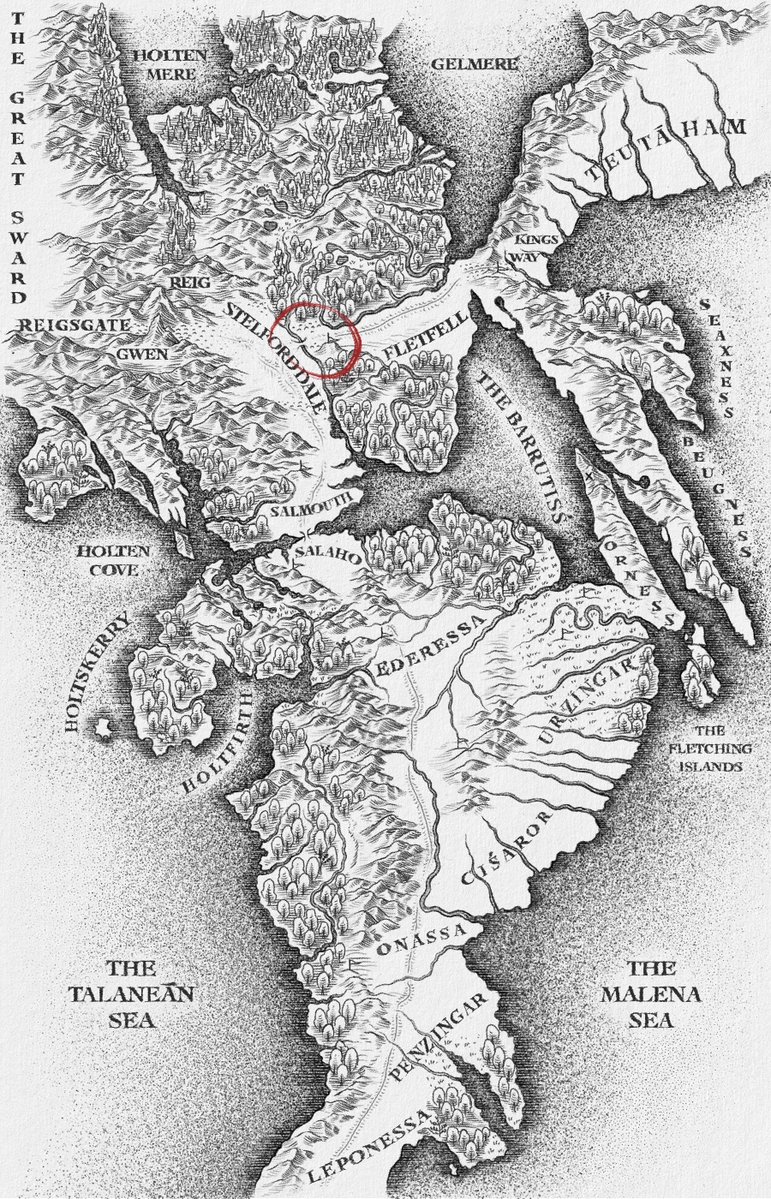
The morning mists swallowed the hillfort of Tableberg as the Teutā fighting men forded the Ēa. That great ford, which they called the Stelford, was once a bridge ere the great flood laid waste to it. Nought is left but its posts, which line the ford like the ribs of a dead thing.
12
250
6,749

Jan 22
Today in history: 23rd of January
1653.
From the diary of Jan van Riebeeck.
A northwest wind began to blow during the morning, and prevented the hunt from leaving for India.
A sheep and a cow of outstanding quality were exchanged the day of the Saldanhars.
1654.
From the diary of Jan van Riebeeck.
The wind was still blowing, and unusually from the south southeast.
1655.
From the diary of Jan van Riebeeck.
The weather improved significantly by dawn compared to the previous day.
However, the south southeast began to blow with great power later in the day.
About 150 sailors who walked ashore the previous day were stranded because of the wind.
1656.
From the diary of Jan van Riebeeck.
Daglumier brought a warm, dry day to the Cape.
No incidents are mentioned.
1657.
From the diary of Jan van Riebeeck.
The day is only described as pleasant, and the weather the same as the previous day.
1658.
From the diary of Jan van Riebeeck.
Dawn brought a warm pleasant day. The wind was blowing from the north.
The hunt that anchored at Robbeneieland the previous day was the Maria.
She brought a letter from the island with the following news.
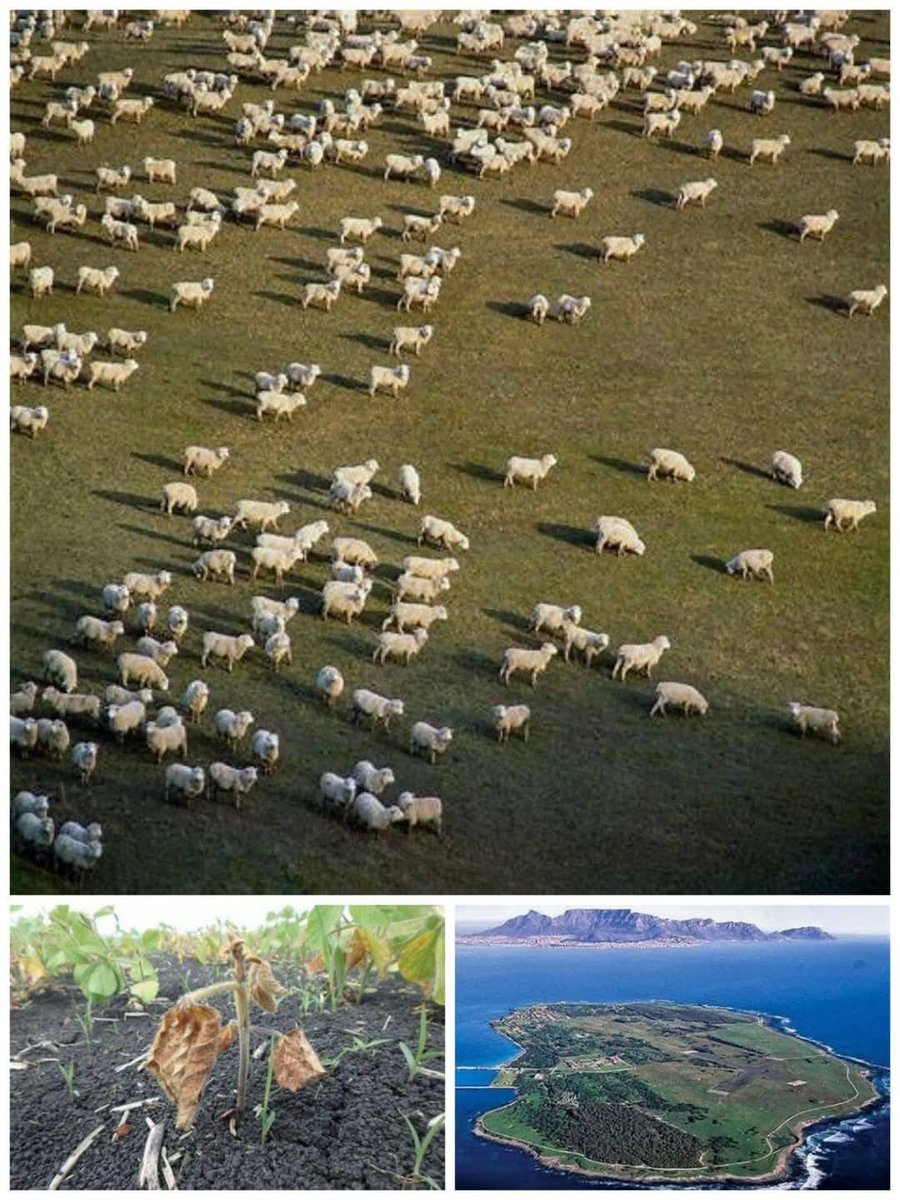
The sheep number stood at 415.
The vegetable gardens dried up due to a lack of rain.
Freeburgers returned during the day from Dasseneiland.
They brought along a number of dried fish (buckkoms) as well as (bird & penguin) eggs.
1659. From the diary of Jan van Riebeeck.
The 22nd and the 23rd of January 1659 are combined into a single date.
The days are described as pleasant and the wind is moderate from the north west.
1837.
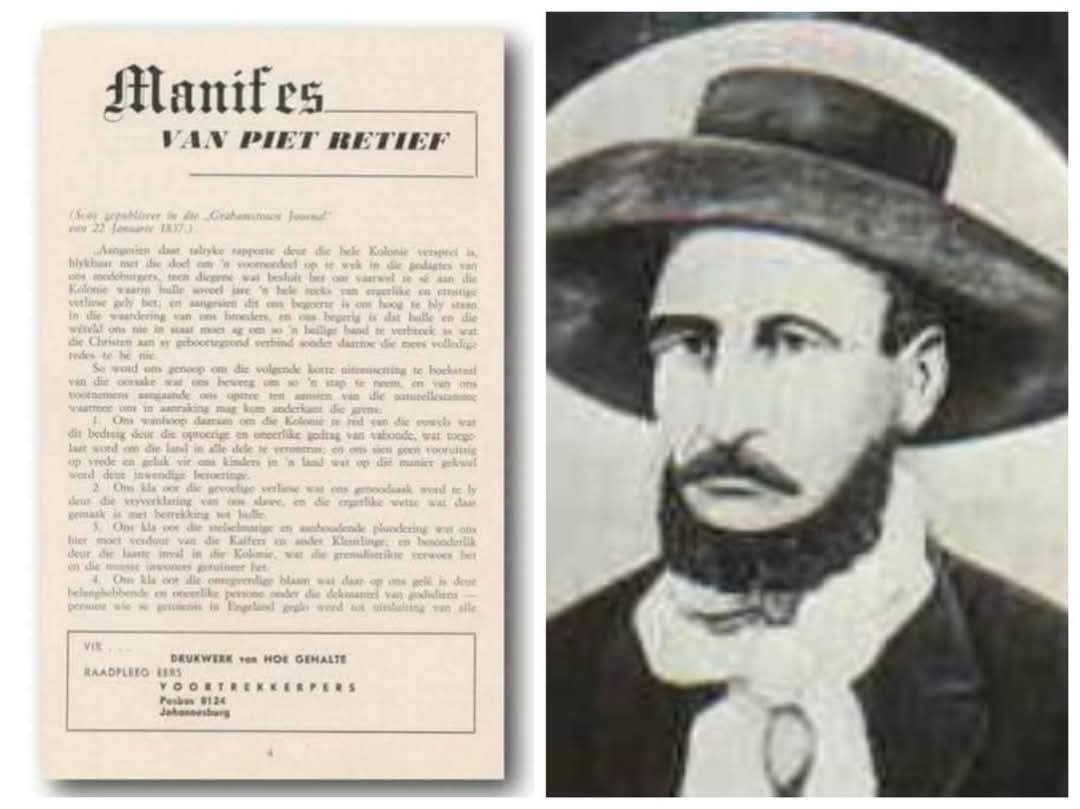
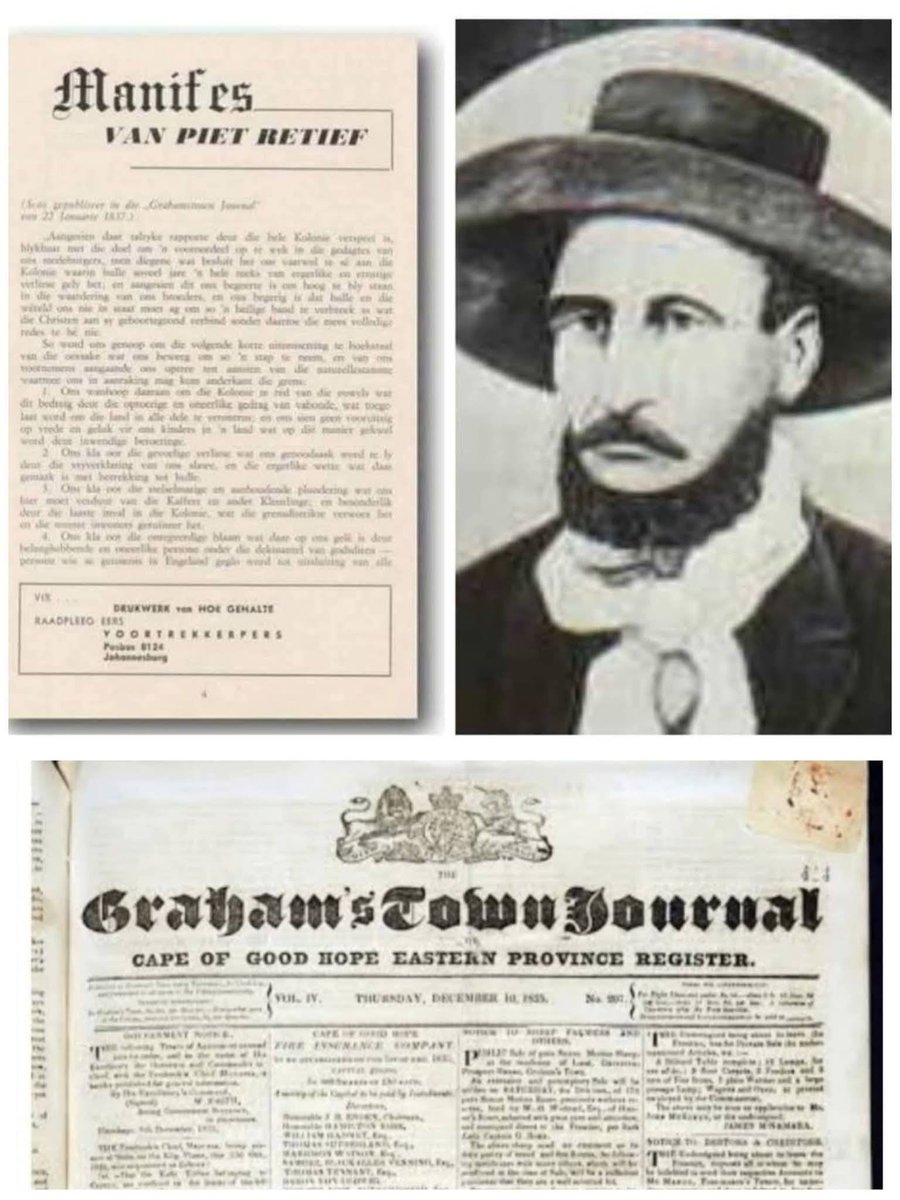
Piet Retief on this day completes his famous Manifestos, in which the reasons for the Great Trek are set out dot-wise.
The Retief Manifestes appeared on the 2nd February 1837 in the "Graham's Town Journal".
In short, the manifesto came down to that, especially the border farmers, were tired of the constant unrest, murder, theft, and unfair legislation.
The fact that complaints are brought against the border farmers by persons under the guise of Religion, and are believed,
As well as flawed legislation, everything has been described as unheard of.
In the "new country," no land would be violently taken, laws would be made, and peace would be lived.
1837.
No entries in Louis Tregardt's diary.
Monday, January 22, 1838.
From the diary of Louis Tregardt.
Botha walked down the mountain in the morning to fetch the oxen.
According to the diary, the road was finished.
Sunday, January 22, 1837.
From the diary of honorable Erasmus Smit.
An afternoon worship service was held by honorable Smit.
Revelation 3, verse 5 was presumed as a text verse. However, the service was cut short when it started raining.
Monday, January 22, 1838.
From the diary of honorable Erasmus Smit.
Reverend Smit writes that the day had hardly broken properly when there was a big stroke in the lower at Doornkop.
Many Voortrekker families, among whom several strangers arrived at the lower.
The arrival was anything but being deaf nuts.
The upcoming visit to Dingaan, as well as those who would go through the yet to be handed over cattle, were fully booked.
There was also an auction held the day of the eleven panegewere that were confiscated from Sikonyella.
The Voortrekker, B. Liebenberg has also handed over to honorable Smit a report in relation to the journey to Sekonyela.
Reverend Smit and his wife were also delighted to receive a letter dated the 31st August 1837 from their son George in the Colony.
During the afternoon, the clouds packed together as if in the blink of an eye and a tremendous thunderstorm erupted.
According to the diary, a nearby river came down, and the water flowed over the valleys.
Many of the visitors were caught off guard and found shelter with friends and family. It rained the rest of the day to almost sun under uninterrupted rain.
Because of the rain, the usual Biduur did not postpone either.
Wednesday, January 22, 1839.
From the diary of honorable Erasmus Smit.
Eerwaarde Smit writes that a soft moth rain has been ejected during the night.
He describes the morning as clean and fresh.
According to the diary, the mud was once too bad the day and there was no moving the day, but feel free.
Due to the rain and the gepaardgaande klamigheid the day is also described as particularly cold.
During the day there was also a letter dated the 15th January 1839, arrived from Port Natal.
This was written by Maj. Charters who occupied Port Natal and was directed to Andries Pretorius.
Maj. Chaters acknowledged receipt of Pretorius' letter, as well as a copy of the Retief-Dingaan treaty.
Maj. Charters also returned a portion of the gun that belonged to the Voortrekkers and that he had confiscated.
Andries Pretorius, however, had to first give the assurance that it would not be used against Dingaan and the Zuloes.
1948.
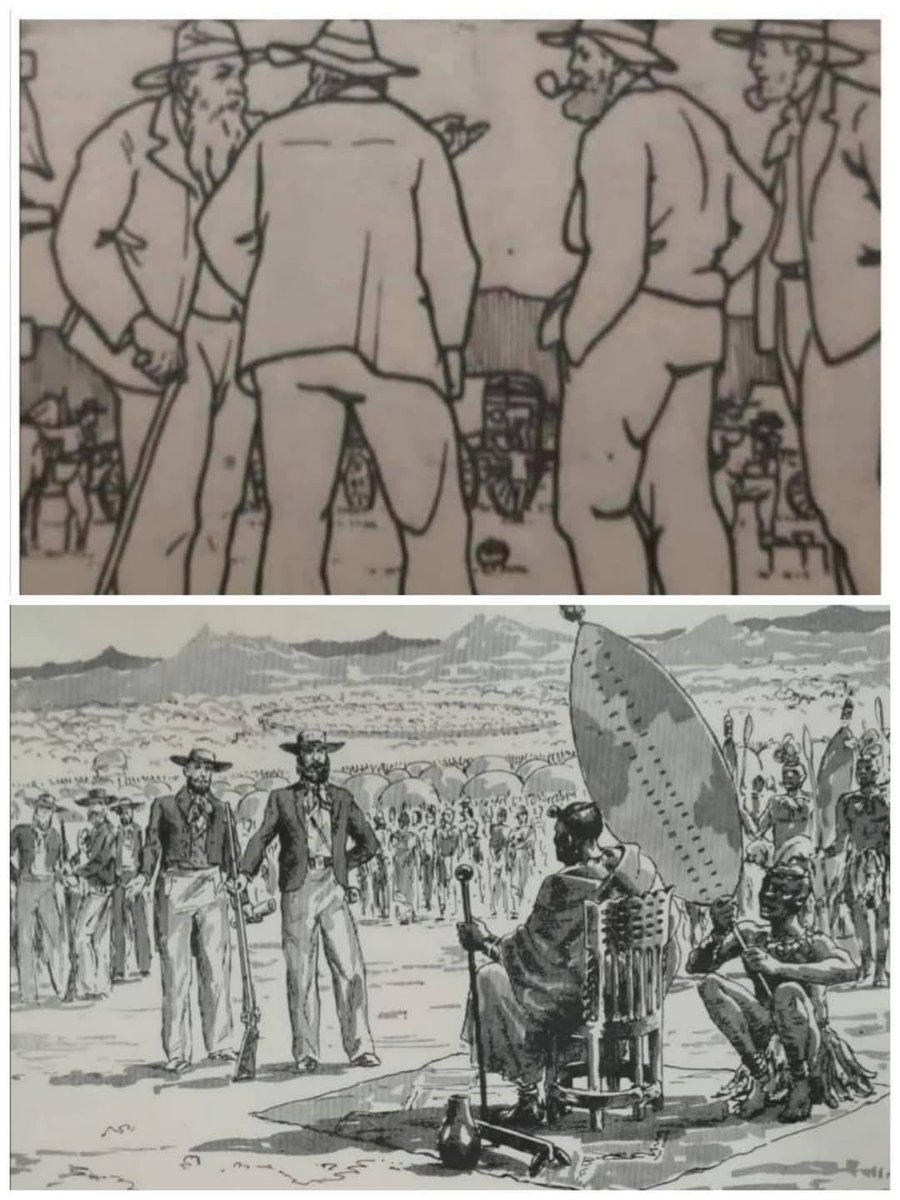
The Steytler report in relation to the routes as below followed by Piet Retief.
The Sand River is last mentioned on the 31st August
1837 in the diary of honorable Erasmus Smit.
From there was moved in the general direction of the opposite Senekal.
On the 1st of September 1837, arrived at a "gate of mountains in a pleasant green valley". This location is about 20 miles from Steam Pump and is where Senekal is today. Senekal is described by honorable Erasmus Smit as "Tweefontein".
The so-called "gate of mountains" is located between Biddulphsberg and Tableberg, (Ghwarriekop). This port is also indeed where the current N5 tar road was built.
1850.
The creation of the town of Rustenburg on the day.
The above follows a People's Council meeting on the day during 1850 in Potchefstroom.
A memory signed by 265 persons was submitted during the sitting.
The memory was to buy a farm on the Magaliesberg, from one H.C.W.Vermaas, build a church and establish a town.
The request has been granted.
Rustenburg was declared a town in 1851.
1879.
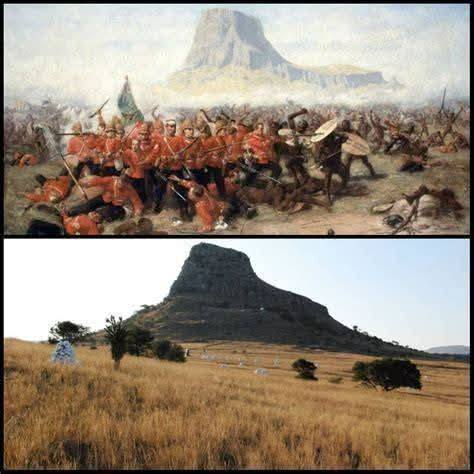
The battle of Isandlwana during the Zulu war.
Isandlwana is a day in British history that will not be forgotten.
About 1,271 British soldiers died, and the Zulus won a victory.
Monday, January 22, 1900.
Anglo-Boer War.
Day number 104 of the war.
*The third day of the Battle of Tabanyama.
Republican morale got renewed brute power the day by that Pres. M.T. Steyn visited the Citizens in the fields.
May-Gen. J.Talbot Coke joins him to the force of Warren and Dundonald.
Maj-Genl. Coke receives an order to occupy Sioenkop.
* The day also the 100th day of the siege of Mafiking.
Tuesday, January 22, 1901.
Anglo Boer War.
Day number 469 of the war.
* Genl. Ben Viljoen arrests Meyer de Kock. This follows after De Kock attempted to distribute peace letters among citizens,
And they also wanted to address the surrender and lay down the weapons.
* Genl. Beyers' commando sabotage a power station at Johannesburg.
* Emily Hobhouse leaves by train from the Cape to Bloemfontein with - 12 tonnes of supplies for the concentration camps.
Wednesday, January 22, 1902.
Anglo-Boer War.
Day number 834.
*Genl. Beyers and his commando of about 300 men occupy the concentration camp in Pietersburg.
The camp superintendent and his staff were taken as prisoners of war.
*. The government of the ZAR is near Dullstroom on the farm "Grady's Farm".
1909.
Born Pieter Johannes Meyer.
He is especially remembered for his leadership in relation to the creation of the Randse Afrikaans University (RAU).
Daamee, together with him, also served on various cultural and volksrades.
3
8
728
30 Dec 2025
Today in history.
1652.
From the diary of Jan van Riebeeck.
Van Riebeeck, together with some officials, visited the vegetable garden that day. The last few days' wind has blown the peas and beans literally and figuratively broken.
However, the lettuce, as well as spinach and radishes did a good display.
Some heads of lettuce and spinach leaves were harvested on the day.
Six pounds of butter was also carried the other day.
Some of the milk and vegetables were distributed to the persons in the sick ward.
The possibility of grinding wheat to bake bread was also taken into account and discussed.
Van Riebeeck sent out six armed soldiers to search for the lost cattle in the gap between Tableberg and Diuwelspiek.
By dusk, the wind that has been blowing constantly for the last six days has subsided.
1653.
From the diary of Jan van Riebeeck.
The south east calmed down during the early morning hours. Van Riebeeck writes that the day broke wonderfully clean, clear and wind still.
The Saldan resin arrived at the fort during the morning. Only one animal was swapped the day.
Since Harry's last robbery, the herd has expanded to seven cattle.
However, three cattle had to be forcefully displaced from the fleet in front of anchor.
The fleet stretched their sails shortly after the afternoon and left Table Bay.
Later in the afternoon the wind began to blow very badly from the south south east.
1654.
From the diary of Jan van Riebeeck.
The south south east was still blowing unopposed at dawn.
1655.
From the diary of Jan van Riebeeck.
Daglumier brought a light wind from the north west, and the sun baked pleasantly.
No incidents are mentioned.
1656.
From the diary of Jan van Riebeeck.
Early morning brought a warm pleasant sunny day to the Cape.
Majority of men have been in the woods dragging chopped beams to the side of the road.
1657.
From the diary of Jan van Riebeeck.
Morning dusk on the Cape has broken wonderfully clean and pleasant. The last of the wheat was harvested today.
1658.
From the diary of Jan van Riebeeck.
The south south east continued to rage like the previous day.
The Cochoquas brought in 23 sheep during the morning that they wanted to trade with.
They also reported that Odasoa was exploited by a lion.
Odasoa was Eva's brother-in-law and did his best to help the company.
1691.
Hugenote to the Cape sends a request to the Cape Governor Simon van der Stel to have its own congregation, church council and preacher.
Van der Stel stops the request, but the Lord XVII stops it as well.
On this day, 3 elders and 4 deacons are appointed for the new congregation of Drakenstein.
1831.
The well-known Eastern Cape newspaper,
The "Graham's Town Journal" appears on this day for the first time.
Piet Retief, famous Voortrekker leader, among other things, had his famous "Manifes" printed in it during January 1837.
Retief's Manifesto specifies the reasons he left the Kelonie.
Later, there are several other Pioneers also quoted in that because private letters, travelers reports and more are published in it.
The newspaper was known among the pro-British sentiments as the "Settlers Bible",
Because it has eventually become the spell tube of the Eastern Border Farming community.
Friday September 30, 1836.
From the diary of Louis Tregardt.
Pieta hung a lot of belts the day to knit.
Seretie has arrived at Louis' staning.
Later Rossetoe also arrived there with eight bokke.
Louis took two of them in reception.
Later Massouw, who was also there, asked Louis for one.
Saturday, December 30, 1837.
From the diary of Louis Tregardt.
Louis writes that they had a thunderstorm during the night, and that it rained.
Because it also rained during the day, not much was done.
Louis, however, mentions that their teacher has put Scheepers' jaw wagon back together.
Friday, December 30, 1836.
From the diary of honorable Erasmus Smit.
According to the diary, the honorable and his wife learned late in the afternoon that their son Salomon was looted as part of the commando against "Oemzilikats", Silkaats.
Salomon was fire and flame, though his parents had decided against
Jakob de Klerk arrived at dusk with a horse trailer all the way from the Colony, Beufort.
The journey from Beaufort to Blesberg took 15 days.
Saturday, December 30, 1837.
From the diary of honorable Erasmus Smit.
According to the diary, Piet Retief was planning to move the lower on the day.
However, it started raining during the early morning hours and there is the day forewarned.
However, some other families who were not part of the lower braved the rain, and made it past the staning.
Sunday, December 30, 1838.
No entries in Honorable Erasmus Smit's diary.
Sunday, December 30, 1838.
Andries Pretorius and the Winning Command are standing by for the day
The rat rat.
They were on their way to the primary and arrived there on the 7th of January 1839.
1877.
Lawyer Ian Hendrik Hofmeyr (Jannie) de Waal born in Somerset-West.
He is remembered as the first lawyer to plead a case in Afrikaans in the Supreme Court.
He is also remembered as a great fighter for
The Afrikaans Language, and a man who left no stone unturned to promote Afrikaans.
Saturday, December 30, 1899.
Anglo-Boer War.
Day number 81 of the war.
* Republican forces attack a British convoy near Dordrecht, Labuschagne's neck.
The fight ends indefinitely.
Sunday, December 30, 1900.
Anglo-Boer War.
Day number 446 of the war.
* Investigation continues to the day.
Nevertheless, I like to share the following.
General Metheun has on this December 1st 1900
genl. De la Rey's wife, Aunt Nonnie forbids to come within 10 miles (16km) of Lichtenburg.
Aunt Nonnie sprained her ox collar and wagon in the field for 19 months with her children.
General de la Rey always knew where she was, and her from time to time and how he could visit.
Aunt Nonnie spoke to the latter on the day Gen. Metheun prevented her from coming closer than 10 miles from Lichtenburg and asked that her farmhouse should not be burned down.
Metheun agreed to it and served the house as a military menace to British officers.
However, General de la Rey sent a few citizens to his farm on occasion to see how it is going there. The home was burgled and two British officers shot dead.
Metheun afterwards had the house demolished into the foundation.
That's how it happened then that genl. De la Rey's house was also demolished.
Monday, December 30, 1901.
Anglo-Boer War.
Day number 811 of the war.
* The reports "Bushveld Cabineers"' name is changed to the "Pietersburg Light Horse".
1932.
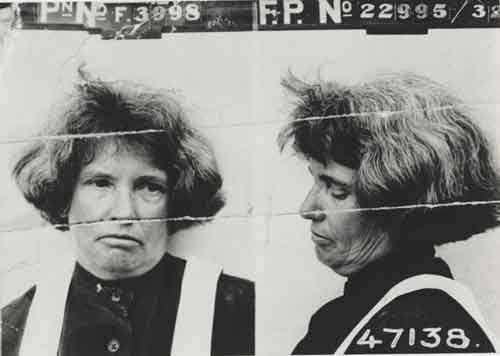
Daisy de Melker is hanged on this day.
This follows after she poisoned her spouse and son.
Her victims were William Cowle, Robert Sproat and her son Rhodes Cowle.
1
1
20
1,214

12 Oct 2025
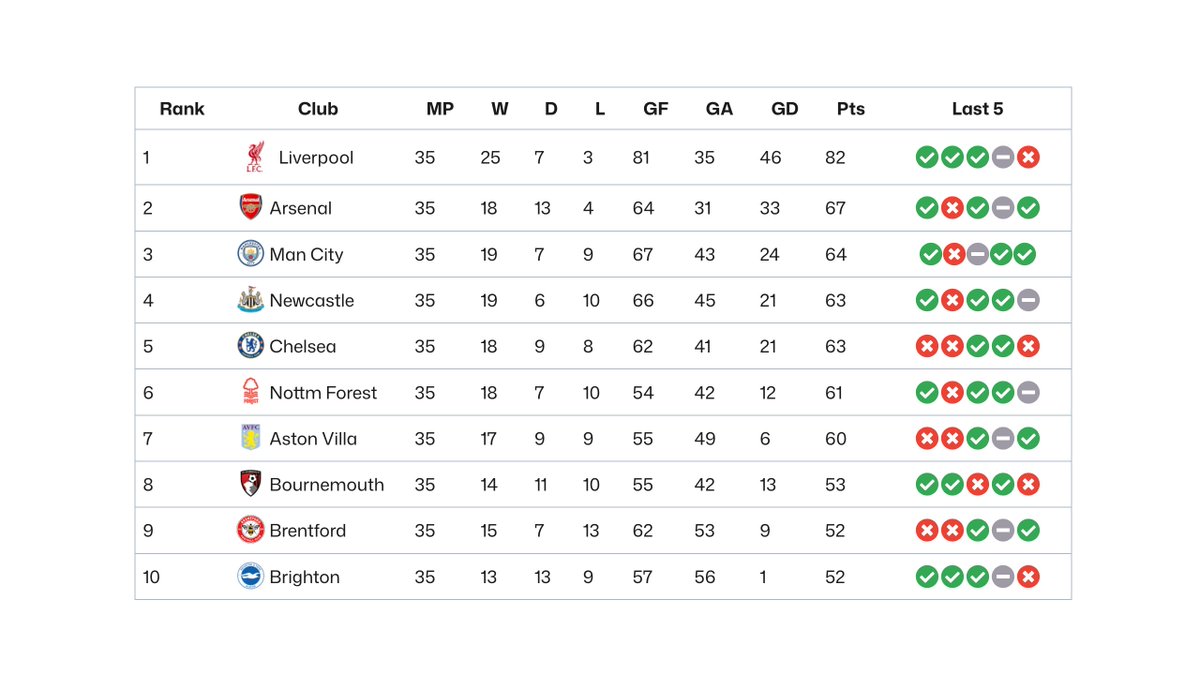
⚽ New Table Pattern!
Show league standings like a pro with the Premier League Standings Table — built using Tableberg. 🏆
👉 tableberg.com/table-patterns…
#WordPress #Gutenberg #Tableberg #PremierLeague
3
24
12 Oct 2025
Generate a table from your blog post content — in seconds! ⚡
That’s the power of Tableberg AI. 🧠
Generate smart, customizable tables right inside Gutenberg — no manual setup needed.
#WordPress #Gutenberg #Tableberg #AITables
4
54

7 Oct 2025
🚀 Big milestone! Tableberg just crossed 2,000 active installs on WordPress!
Recent highlights 👇
✅ Launched Woo Table
🤖 Introduced AI Tables
🎨 Released Tableberg Pattern Library
Next up: Post Table 🔥
#WordPress #Gutenberg #Tableberg

1
3
78
28 Aug 2025
🚀 New in Tableberg Pro (v0.6.6) → AI Table 🎉
Now you can create smart tables in seconds with AI:
✨ From a prompt
✨ From page content
✨ From an image
No more manual formatting — AI does it for you! 💜
👉 tableberg.com/introducing-ai…
#WordPress #Gutenberg #AI
3
37

13 Aug 2025
🎉Congrats to @Peter_Ingersoll, @MichaelKihl, and @TheGurjyot for winning the @Tableberg giveaway from InfluenceWP.
We will announce the next FREE giveaway from one of our amazing partners today, so stay tuned. 👇
influencewp.com/giveaways
2
7
251

11 Aug 2025
FREE Giveaway: Tableberg Pro (Unlimited Sites - Lifetime)
Seamlessly craft stunning, fully customizable tables with the Tableberg plugin and the WordPress block editor.
A @PineDigitalCo and @Tableberg collaboration.
Enter the giveaway. 👇 influencewp.com?rpid=20&rpr=…
3
46

5 Aug 2025
FREE Giveaway: Tableberg Pro (Unlimited Sites - Lifetime)
Seamlessly craft stunning, fully customizable tables with the Tableberg plugin and the WordPress block editor.
A @PineDigitalCo and @Tableberg collaboration.
Enter the giveaway. 👇 influencewp.com?rpid=20&rpr=…
3
59

28 Jul 2025
WP Weekly 253 issue is supported by community sponsors: mySites guru, InMotion Hosting, Kinsta, and Omnisend.
@mysitesguru @inmotionhosting @kinsta @omnisend
thewpweekly.com/issue-253/
1
6
336
28 Jul 2025
More #WordPress stories in WP Weekly 253 from: @ImranWebsites @JustinFerriman @hellowpmozo @helloelicus @westonruter @Tableberg @istiaak @WPInteractions @wppool_
thewpweekly.com/issue-253/
1
2
7
246
27 Jul 2025
I asked ChatGPT to install Tableberg and create a 5×5 table in WordPress.
It did the whole thing - install, activate, insert block, fill table, and publish the post.
All smooth. All hands-free. 🤯
#WordPress #Tableberg #AI #Gutenberg #chatgptagent
1
2
7
265

20 Jul 2025
Creating a Searchable Table in #WordPress Block Editor using @Tableberg
ultimateblocks.com/how-to-cr…
3
26
19 Jul 2025
We just launched our first WooCommerce feature: Product Table by Tableberg!
We’ve never used #WooCommerce before. So this took a lot of testing, trial & error.
And building it for #Gutenberg? That was another challenge. 😅
Anyway, v1 is ready. Excited to see how it evolves!
1
1
4
140

16 Jul 2025
Listed today on ToolsFave is 'Tableberg – The Best WordPress Gutenberg Table Block Plugin'
Tableberg is a powerful yet easy-to-use WordPress table plugin built for the modern block editor (Gutenberg).
Explore and vote
toolsfave.com/tableberg-the-…
1
1
6
265
14 Jul 2025
Ai Table by @Tableberg 😍
14 Jul 2025

Sneak peek: The AI Table feature is coming soon to Tableberg!
Just describe the table you need, and let AI do the rest. Effortless table creation is on the way.
Stay tuned!
#WordPress #Tableberg #AI #Gutenberg
1
4
163
13 Jul 2025
The first version of the 'Product Table by Tableberg' block is ready!
It will be available in the next version of Tableberg Pro.

2
18
1 Jul 2025
InfluenceWP First Look: Tableberg
@Tableberg is a WordPress plugin that allows users to create powerful and highly customizable tables using the default WordPress block editor (Gutenberg).
No Affiliation. No Sponsorship. Just Info.👇
influencewp.com/iwp/tableber…

2
147
