
14 Aug 2025
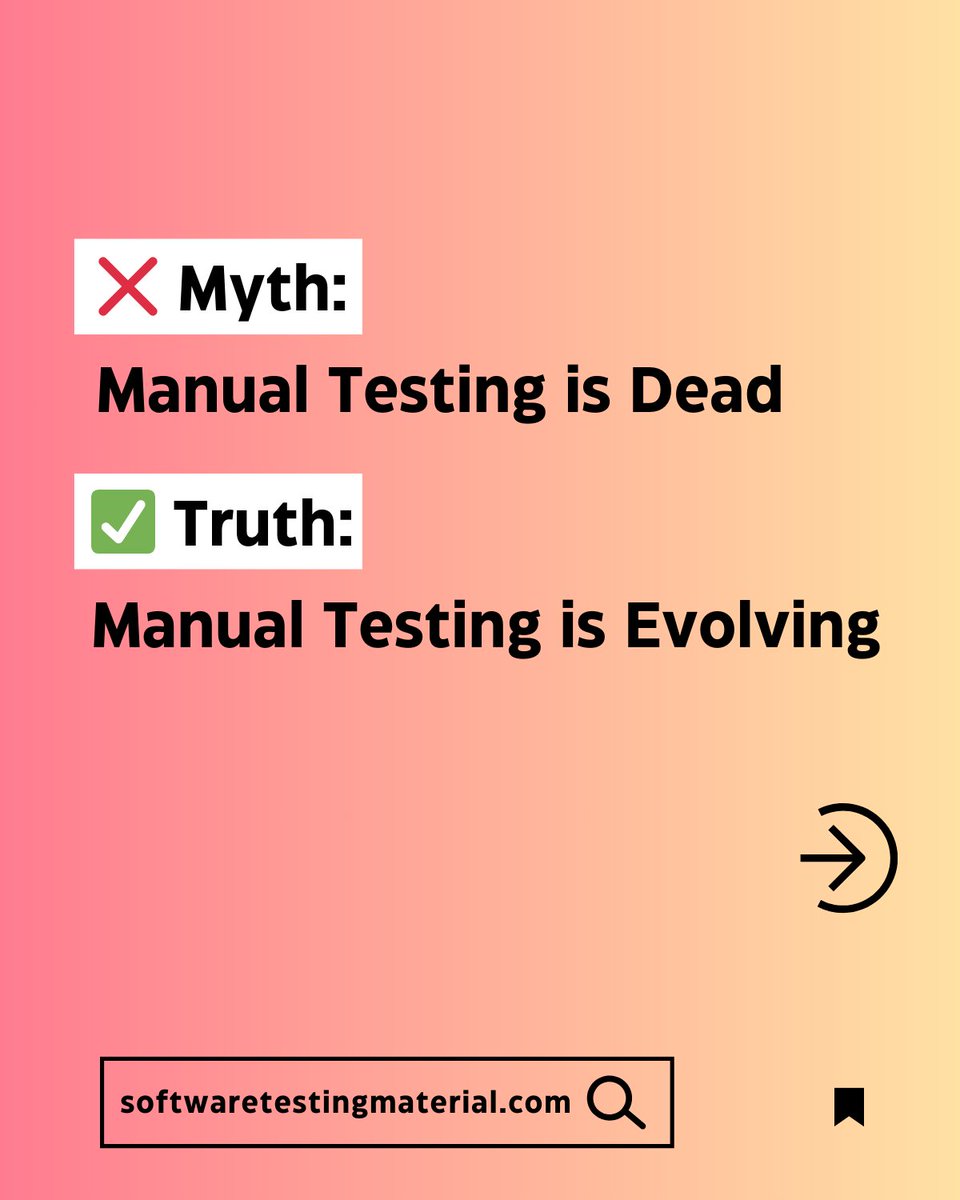
People say ‘Manual Testing is dead.’ Nope—it’s evolving.
Automation saves time, but only humans can test empathy, UX, and real-world scenarios.
#ManualTesting #AutomationTesting #QALife #TestingMindset
1
3
92

21 Sep 2024
Dev Testing vs QA Testing
Developers test to make the code work.
QA engineers test to break the code.
#DevTesting #QATesting #SoftwareQuality #TestingMindset #QACommunity #QualityAssurance #Testing
2
4
106

12 Jul 2024
For #SoftwareDevelopers
"Wetin concern bicycle with filling station"
Meaning: A Tester's job is to report bugs while developers are to fix the bug
#NigerianPidginProverbs #SoftwareDevelopment #developers , #softwaredeveloper, #TestingMindset #QA, #SoftwareEngineering
Show more
5
92
3 Jul 2024
Explaining Exploratory Testing with a Real-Life Scenario:
A Child Sent to Buy a Product at the Market
Exploratory testing is like going shopping for groceries without a specific list. Here’s how it works in simple terms:
Scenario: A Mother Sending Her Child to Buy Milk at the Market
Background: A mother sends her child to the local market to buy a carton of milk. This task involves several steps, choices to make, unforeseen issues, and potential unexpected situations, much like exploratory testing in software.
Step 1: The Task
Before the child leaves, the mother gives a brief overview of the task: “Go to the market and buy a carton of milk.” This is similar to setting a goal for exploratory testing. The child knows the main objective but not every detail of how to achieve it.
Step 2: Prepare for the Task
- The child ensures he has money with him in order to execute the task.
- The child is aware of the goal and some requirements to achieve it but remains open to exploring different paths to achieve it.
- The child thinks of which market he should go to and other alternatives
Step 3: Explore the Market
- Upon arriving at market, the child starts looking for stores that sell milk and also pays attention to signs, prices, and other products.
- The child notices the layout of the market, which shops have discounts, and where the dairy section might be.
- The child might ask a shopkeeper for directions or check different brands of milk to compare prices and quality.
This exploration is akin to exploratory testing, where the tester navigates through the application without a strict script, observing and interacting with various elements.
Step 4: Make Decisions on the Fly
The child faces several decisions:
- Choosing the Shop: The child sees multiple shops selling milk. Which one looks the most reliable?
- Choosing the Product: The child sees different types of milk, some are liquid while others are powdered milk. Which one looks the most reliable?
- Evaluating Options: Some cartons are cheaper but near their expiration date. Should the child buy a fresh but more expensive one?
These decisions are like the tester deciding which areas of the software to explore deeper based on initial findings. If you find a part of the application that seems confusing, you spend more time testing it to understand its behavior.
Step 5: Handle Unexpected Situations
The child encounters an unexpected situation: the usual brand of milk is out of stock or the only type of milk available is powdered . The child has to decide:
- Alternative Solution: Should they buy a different brand, or call the mother for advice?
This mirrors handling unexpected issues in exploratory testing, where the tester finds bugs or behavior that wasn’t anticipated and needs to decide how to proceed. If you encounter an error or something that doesn’t work as expected, you try different ways to reproduce it. You might find features that weren’t documented or that behave differently than anticipated.
Step 6: Completing the Task
Finally, the child buys a carton of milk, perhaps not exactly as initially planned but with all necessary considerations made. They return home with the milk and inform the mother about their experience, including any issues faced.
- You finish the session with valuable insights about how the application works, what issues need to be addressed, and potential areas for improvement.
- Your findings help improve the overall quality of the software.
#Exploratorytesting #SoftwareTesting #QualityAssurance, #TestersJourney, #TestingMindset #QACommunity, #TestingWisdom #QaTechBro
5
73
2 Jul 2024
For #SoftwareDevelopers
"Na only monkey wey climb tree know say branch strong."
Meaning: "Only a developer who tests their code knows its strength."
#NigerianPidginProverbs #SoftwareDevelopment #developers , #softwaredeveloper, #TestingMindset #QA, #SoftwareEngineering #QaTechBro
1
4
79
2 Jul 2024
For #SoftwareTesters:
"Who wan learn, go ask question."
Meaning: A good tester asks questions to understand the software better.
#NigerianPidginProverbs #SoftwareTesting #QualityAssurance, #TestersJourney, #TestingMindset #QACommunity, #TestingWisdom #QaTechBro
1
5
86
2 Jul 2024
For #SoftwareTesters:
As a Software tester, it is important to note that testing will always lead to failure, and failure will always lead to more understanding.
#SoftwareTesting #QualityAssurance #TestingLife #TestersJourney, #TestingMindset #QACommunity #SoftwareQA, #TestingWisdom #QaTechBro
5
67

24 Apr 2023
Sharing my experiences and perspectives on testing during an open house session was a rewarding experience.
"Testing takes time, but it's worth it: Why rushing can lead to software failures".
#testingmindset #openhousesession #salesforcetestingguy
4
93

25 Mar 2022
Want to improve your #testingmindset?
Check the video lectures from our courses on our Youtube channel and gain new skills in #softwaretesting with BBST! bit.ly/3pwFcBD
9

16 Feb 2022
My thoughts on the testing mindset after listening to the latest episode of the Testing Peers podcast @testingpeers #TestingMindset louisegibbstest.wordpress.co…
2
2
7
11 Feb 2022
”The #BBSTFoundations course presents their lessons in a quite interesting sequence. It makes a big idea easy to grasp while maintaining its intended impact on its students.”
Register to Foundations classes to challenge your #testingmindset! bit.ly/35GAqs6
10
20 Jan 2022
There is only one week left until we will start the next #BBSTFoundations class!
Register here and start your year with a refreshed #testingmindset!
👉 bbst.courses/bbst-foundation…
12
11 Jan 2022
⏰The countdown has begun!
In a few weeks we will start a new #BBSTFoundations class and we cannot wait to meet our new students! 🌎
Register and start your year with new knowledge and a refreshed #testingmindset!
👉 bbst.courses/bbst-foundation…
1
4
2 Jan 2022
In case you have some time these days that you want to dedicate to learning, check our YouTube. There are lots of video lectures from our courses and we are sure you will find there ideas that will change your #testingmindset.
youtube.com/channel/UCJDGVyP…
1
19
29 Dec 2021
"Before #BugAdvocacy class, I thought that all bugs must be fixed before releases, and I found bug deferrals disappointing as I felt my work was not valuable enough."
Read the rest of Dolly's confession and find out how #BBST changed her #testingmindset! bit.ly/3DkqweZ
6
5 Dec 2021
In case you have some time these days that you want to dedicate to learning, check our YouTube. There are lots of video lectures from our courses and we are sure you will find there ideas that will change your #testingmindset.
youtube.com/channel/UCJDGVyP…
1
2
9
24 Jun 2021
#BBST® Foundations is the go-to course for anyone who wishes to improve their #testingmindset and build up their skills.
Read more about our #testingcourses on our website! bit.ly/35GAqs6
#softwaretesting #softwaretesters #testautomation
5


28 Jan 2021
The #TestingMindset myth via @TestProject_io by @alanpage #SoftwareTesting
blog.testproject.io/2021/01/…

1
2

26 Jan 2021
Najnowszy ITea Morning czyli poranna porcja artykułów ze świata IT już jest!
youtu.be/c4A1cmJnoAc
#testowanie #tester #mindset #testingmindset #programowanie #lispolarny #softwaredelivery #arcticfox #agile #rozwój #casestudy #IT #ITeaMorning
2