grace pettigrew retweeted

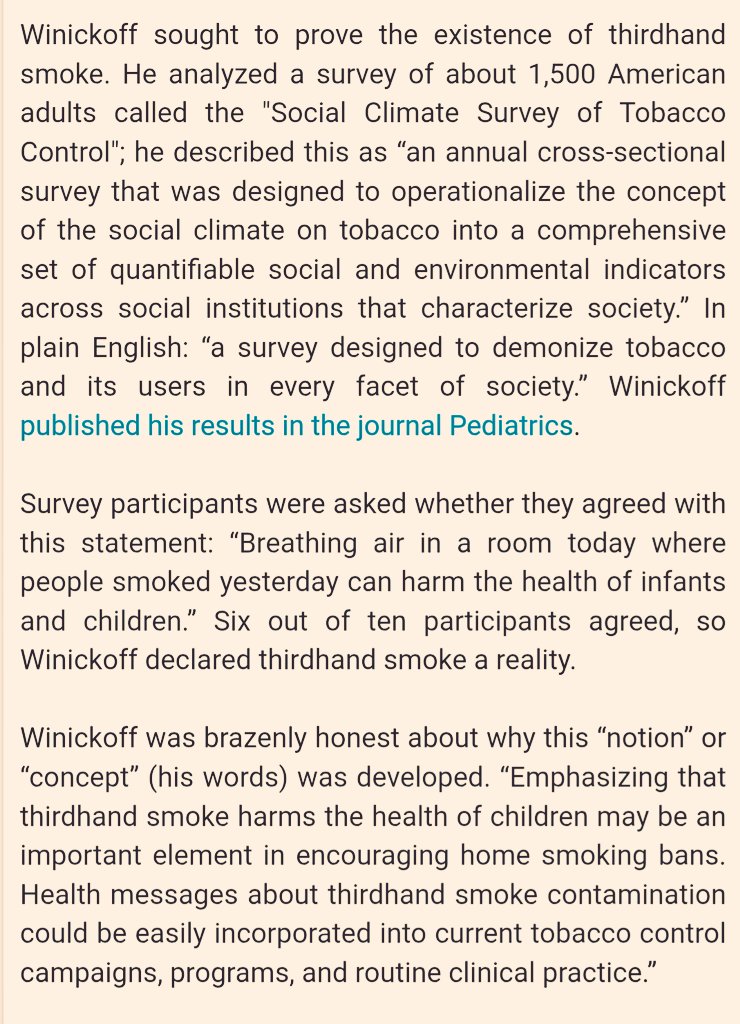
The purely fabricated tobacco control myth of thirdhand smoke epitomizes the deplorable tactics that anti-tobacco zealots have used in an attempt to create a society in which it is acceptable to treat people who smoke like toxic, third-class citizens. Shameful. @ClevelandClinic

To fully appreciate the disingenuous nature of @ClevelandClinic's position on vaping, one must first understand the myth of thirdhand smoke.
rodutobaccotruth.blogspot.co…
1
1
3
46
To fully appreciate the disingenuous nature of @ClevelandClinic's position on vaping, one must first understand the myth of thirdhand smoke.
rodutobaccotruth.blogspot.co…

1
8
13
281

My wife and stepdaughter loved Dr. Who up until the Capaldi era. When it more or less became the Clara show anyway.
None of us have done anything but pay half-hearted attention thirdhand to the last nonsense Doctors.
We'd come back for this.
1
1
32

The worst part about being doxxed is hysterical vaginas like this using your thirdhand biographical details to mount an irrational counterargument whenever your opinions aggravate their neuroses.

BAP is 1) a Romanian immigrant; 2) who grew up in MA; and is 3) an Ivy graduate. So, we're 0 for 3 there in terms of commonalities and ideas of what being an American is all about.
I prefer to engage intellectually, but as BAPs writings are based on status & superiority,
1/
17
26
758
23,028

Jun 16
Me: Can you get sick from fumes from your upstairs and downstairs neighbors
Ai: Yes, you can get sick from fumes (especially secondhand smoke) drifting from upstairs or downstairs neighbors in apartments or multi-unit buildings. This is a common issue due to how buildings are constructed, and health authorities like the CDC, EPA, American Lung Association, and others recognize it as a real risk. lung. org
How Fumes Travel Between Units
Smoke and other airborne particles don’t respect walls, floors, or ceilings. They seep through:
• Cracks, gaps, and shared spaces (e.g., around pipes, electrical outlets, light fixtures, doorways).
• Ventilation systems, HVAC ducts, and shared air spaces.
• Floors/ceilings—smoke often rises more easily from below, but it can move in both directions depending on pressure, building age, and construction quality. epa. gov
Studies show that 44–53% of non-smoking residents in multi-unit housing experience secondhand smoke infiltration. lung. org
Health Risks (Mainly from Tobacco/Cannabis Smoke)
There is no safe level of exposure to secondhand smoke. It contains over 7,000 chemicals, hundreds of which are toxic, and about 70 that can cause cancer. Even brief exposure can trigger immediate effects. cdc. gov
For adults:
• Increased risk of lung cancer, heart disease, stroke, and respiratory issues (e.g., coughing, wheezing, bronchitis).
• Worsens asthma or other conditions.
For children (more vulnerable):
• Respiratory infections, ear infections, asthma attacks, slowed lung growth, and sudden infant death syndrome (SIDS).
• Permanent damage to developing lungs. lung. org
Thirdhand smoke (residue left on surfaces that off-gasses later) also poses risks, including respiratory problems and potential cancer links. mayoclinic. org
Marijuana smoke carries similar particle-based risks (lung irritation, asthma worsening) even if the chemicals differ. no-smoke. org
Other Types of Fumes
• Cooking fumes/oils or strong odors (e.g., curry, frying): These can irritate eyes, nose, throat, or trigger migraines/allergies in sensitive people, but they’re generally less toxic than tobacco smoke and unlikely to cause serious long-term illness unless there’s heavy chemical use or poor ventilation.
• Chemicals (e.g., paints, cleaners, strong solvents): These could cause headaches, nausea, or respiratory irritation if concentrated and drifting in, especially for those with sensitivities.
• Mold, VOCs, or other pollutants: Shared ventilation can spread these too.
What You Can Do
1. Document everything — Note dates, times, smells, and symptoms (e.g., coughing, headaches). Photos or air quality monitor readings help.
2. Talk to your landlord/property manager — Request they investigate (seal cracks, improve ventilation) or enforce any smoke-free policies. Many buildings now have or must have such policies. nyc. gov
3. Improve your unit — Use air purifiers (HEPA activated carbon), seal gaps around outlets/doors, run exhaust fans, and keep windows open when possible (weather permitting).
4. Contact authorities — In some cities (e.g., NYC), common-area smoking is restricted; report via 311 or equivalents. For health impacts, local health departments may help.
5. If severe — See a doctor for symptoms and consider consulting tenant rights groups or a lawyer if it’s making your home uninhabitable.
If symptoms persist or worsen, consult a healthcare professional—exposure can compound other issues. Moving to a smoke-free building is often the most effective long-term solution if it doesn’t improve. This is a recognized public health concern, so you’re not overreacting.
24

This is a poor and dismal witness for your alleged faith in Jesus Christ.
There's no rational reason to be disgusted with me or with other Masons; only irrational reasons, like believing baseless, second- and thirdhand gossip.
1
16

Jun 15
So your knowledge of Ukraine comes thirdhand from regurgitated tiktoks? Maybe you should actually listen to a few Ukrainians.
Also why are you on twitter? It’s banned where you live.
2
19