
The actual "evils" of capitalism are things like timekeeping. I mean, compared to the bucolic vision of harvest workers taking a break basically whenever, you now have to manufacture till the bell rings. Bleaker, but not the end of the world.
2
193

So does this mean we’re getting even more accurate timekeeping soon? The nerd in me is hyped. Atomic clocks felt unbeatable until now!
22
Sofonias retweeted

FACT: Ethiopia uses a 13-month calendar and a unique timekeeping system.
1
3
317


They couldn't even beat the Grizzlies when I saved up all my Great Pacific Forum timekeeping money to go see them.
2
21

@elonmusk Since u're focused on space and astronomy, have u looked into the Panchang? It's a calendar based on the actual positions of the celestial bodies. It would be interesting to see more global awareness of astronomy-based timekeeping systems rather than Gregorian calendar.
4

You clearly know nothing about timekeeping. It’s nothing to do with the sport itself.
6

In my classically trained electrician brain this is how quartz timekeeping devices work. Specific voltage-frequency generated
1
1
20

All four Gospels reference only the 3rd, 6th, and 9th hours. There is no “conflicting timeline” in John. John 19:14 references the 6th hour in a different timekeeping context (Roman time), which does not conflict with the Synoptic Gospels’ use of Jewish time. John 18:28 says it was "early in the morning"; John 19:14 says it was "the sixth hour." If "early" means dawn (~6 AM Jewish), then the sixth hour (noon in Jewish hours) cannot also be "early." Therefore, John cannot be using Jewish hours. The Gospel of Luke (Luke 1:1-4) is not merely a theological document. It is an investigative historical work. An external corroboration of the crucifixion hours.
1
9

That's one of the all time great goalkeeping fuck ups by Ethan Rafferty. Why on earth did he try to catch it rather than punch? Reminiscent of Raimond Aumann of Bayern against Red Star Belgrade in 1991. Still, Armagh fucked by the timekeeping with no hooter. Goal came after 70:00
4
1,344


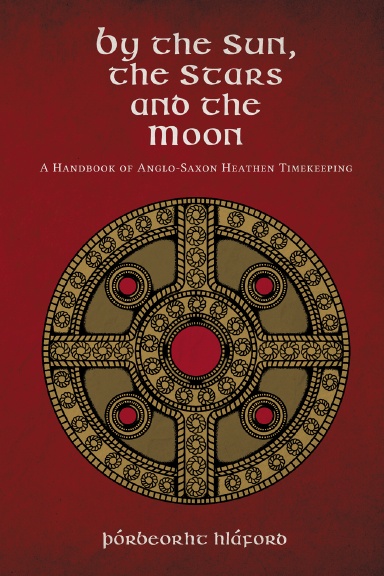
Þórbeorht Hláford "By the Sun, the Stars, and the Moon. A Handbook of Anglo-Saxon Heathen Timekeeping"
#sun #moon #anglosaxon #hlaford #thorbeorht
khaliperius.blogspot.com/202…
2



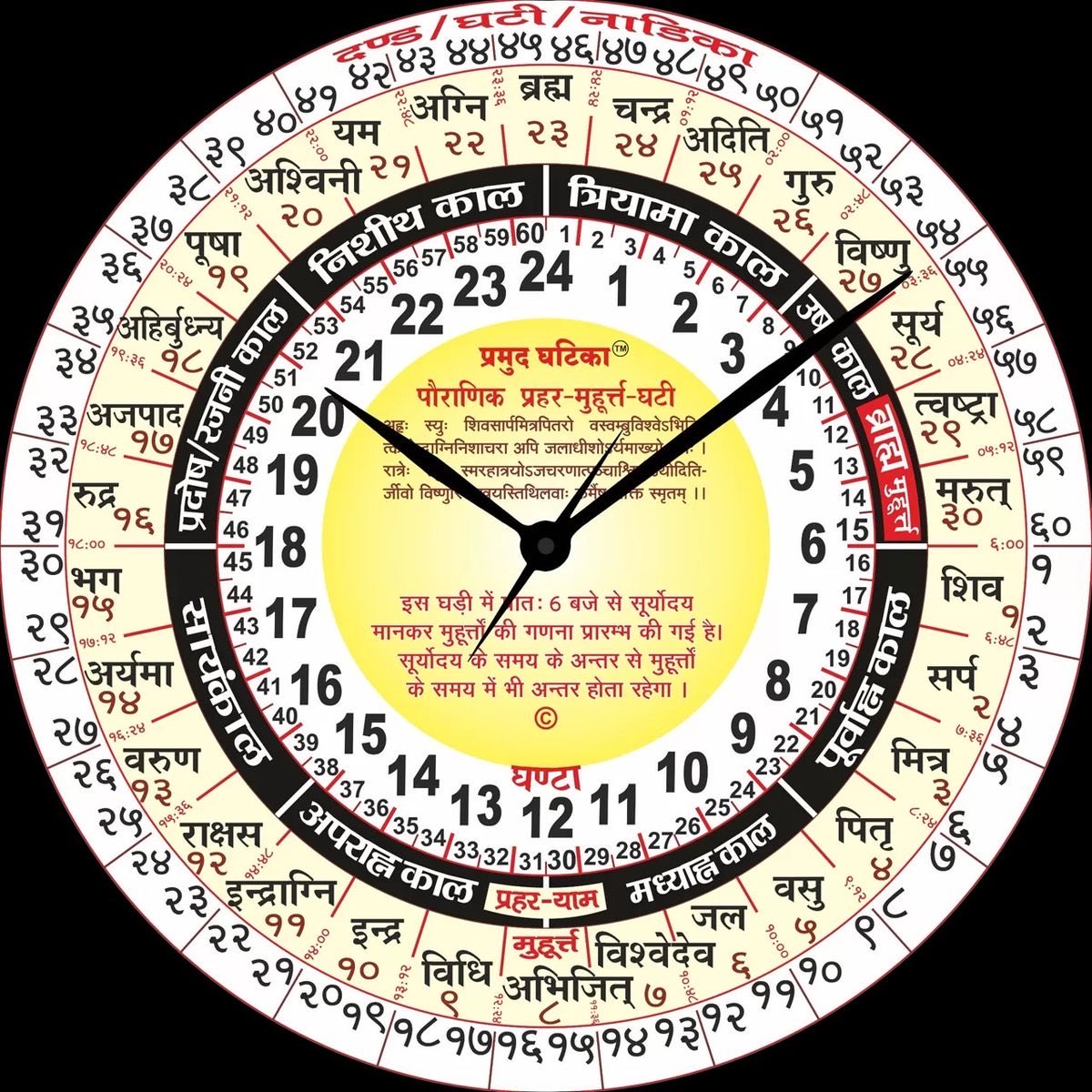
For centuries, Bharat’s sages developed an extraordinarily precise understanding of time. This ancient Muhurta Chakra reflects a sophisticated system that divided the day and night into sacred segments, each associated with specific energies, deities, and activities.
Long before modern clocks became common, our civilization used detailed timekeeping methods to determine auspicious moments for worship, governance, travel, learning, and important life decisions.
This is not merely a clock it is a glimpse into a timeless tradition where every moment was understood as carrying its own unique significance. The deeper one studies Sanatana Dharma, the more one discovers the remarkable scientific and philosophical wisdom preserved by our ancestors.
90
286
5,701
Sunand retweeted

Jun 3
2. As also explained in Indian Calendar Scientific Aspects, no astrology in the Vedanga Jyotish, only science of timekeeping.
Jyotish means timekeeping confounded with phalit jyotish (astrology).
In the attempted debate between scientists and astrologer 25 years ago, before the international press I challenged any one to show me one sentence on astrology in Vedanga Jyotish. No one did.
So astrology came from outside, starting with Varahamihira. But from Egypt, not incompetent Greeks. ../3

ALT https://ganita.net/astrology-in-university-education-twenty-years-after/
Jun 3

1. Careful about term yavan. True, it probably derives from the Persian for their colony of Ionian Greeks, but acquired a more general meaning later.
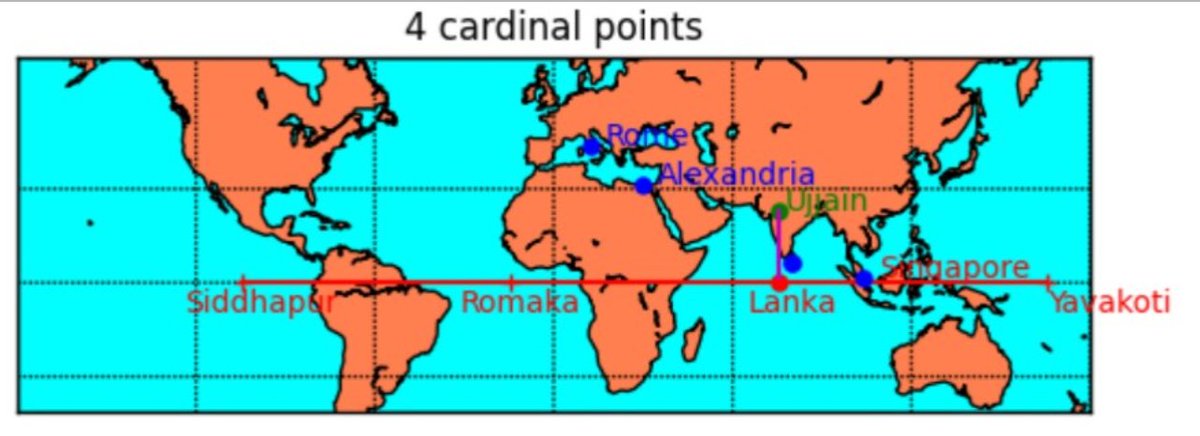
Aryabhata (before Varahamihira) says (Gola 13), "when it is sunrise in Lanka it is midday at Yavakoti" which must be EAST of Lanka. And midnight in Romaka ("Alexandria") the anti-podal point to Yavakoti!
See pic1 from my book on Indian Calendar
../2
2
13
29
3,629

Two independent research teams recently reported successful demonstrations of working nuclear clocks, marking the transition of the concept from theory to reality. Unlike conventional atomic clocks, which keep time by measuring oscillations of electrons around an atom, nuclear clocks measure transitions occurring directly within the atomic nucleus itself.
This distinction is significant because atomic nuclei are far less sensitive to external disturbances such as electromagnetic fields, temperature fluctuations, and environmental noise. As a result, nuclear clocks could eventually surpass even the world's most precise atomic clocks.
The breakthrough centers on the isotope thorium-229, whose nucleus possesses a uniquely low energy transition that scientists have spent decades trying to access and measure. Successfully detecting and controlling this transition has been one of the biggest challenges in experimental physics.
Beyond improving timekeeping, nuclear clocks could enable entirely new scientific discoveries. Researchers believe they may help test fundamental laws of physics, search for dark matter, investigate whether physical constants change over time, and improve ultra precise navigation systems.
The achievement represents a major advance in humanity's ability to measure time and could ultimately lead to clocks so accurate that they would lose less than a second over periods far longer than the age of the universe.
-
source: arxiv
10


18h
Soccer will never be popular here because it has un-American elements. Faking an injury is deeply offensive to us. The timekeeping is sloppy. Limiting players ability to use their full capacity (hands) is not fitting for a free and ambitious people.
1
1
4
272

Pick and mix to your heart’s delight. Candy colors take timekeeping to a whole new level of cool with Millenia-inspired Swarovski Watches. Available at Stiletto. bit.ly/4xzW510

ALT Swarovski jewelry
84