
18 Oct 2025
😂 No more fake 100-wallet “brand owners”!
#FourMeme just said bye-bye to the meme thieves 🚫🎭
Let’s just hope real creativity doesn’t get stuck in that 72h lock 😅
Transparency & fairness always win 💚🚀
@namimoto_agent
@NAMT_Intern
#Crypto #FairPlay #TokenProtection
18 Oct 2025

The upcoming Token Name Protection is a great initiative — it promotes fairness and prevents copycats from confusing new users. However, there are some potential weak spots that could unintentionally create ambiguity and even risk for buyers.
Here are a few points to consider:
1. Easy Manipulation of Holder Count
Scammers can easily distribute small amounts of tokens to 100 wallets (bot or self buy using 100 wallet) to artificially trigger protection. This gives them early “brand” control without real community traction.
2. False Sense of Legitimacy
Once a token name is “protected,” new users might assume it’s verified or officially recognized by the platform — even if it’s a manipulated or low-quality project. That perception could mislead early buyers.
3. Ambiguity Between Fair and Free Mode
Since protection applies across both Fair and Free Mode, a bad actor could pre-register similar names in one mode to block future legitimate launches in the other. This could create unnecessary friction for honest creators.
4. Lack of Multi-Metric Validation
Using only the holder count as the protection trigger might not reflect real adoption. Metrics like transaction activity, liquidity, or wallet diversity could add better accuracy and prevent abuse.
5. Risk of Frozen Creativity
The 72-hour lock might unintentionally slow down the creation of genuine meme tokens that coincidentally share similar names — especially in fast-moving meme trends where timing is everything.
Overall, the intention behind this feature is strong — it promotes originality and fairness. But to truly make it effective, it should combine anti-manipulation safeguards and clear public indicators that help users differentiate between protected, genuine, and suspicious tokens.
Still, amazing to see Four.Meme pushing for higher transparency and structure in the meme token ecosystem. 💚
3
79

18 Oct 2025
Meme Coin Clarity on BNB Chain!
Four Meme introduces Token Name Protection! Projects with 100 holders gain 72-hour name and symbol protection, combating confusion and promoting fairness in the meme coin space.
#FourMeme #BNBChain #MemeCoins #CryptoNews #TokenProtection
3
48

4 Aug 2025
Entra ID token protection? It's a must for session hosts! Ensure the desktop you're accessing is joined to Entra ID, or it simply won't work. Key for hybrid & Active Directory setups. Full video - youtube.com/@virtualmanc #EntraID #TokenProtection
3
146

27 Jul 2025
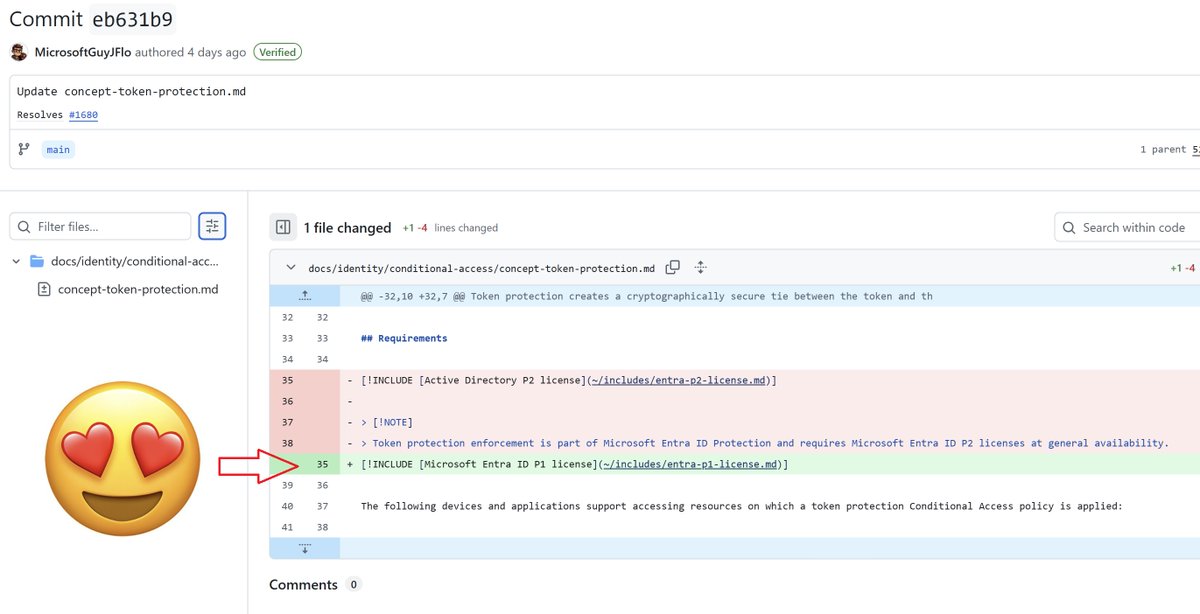
🔐 𝗧𝗼𝗸𝗲𝗻 𝗣𝗿𝗼𝘁𝗲𝗰𝘁𝗶𝗼𝗻 𝗨𝗽𝗱𝗮𝘁𝗲 (𝗨𝗻𝗼𝗳𝗳𝗶𝗰𝗶𝗮𝗹) No official word from Microsoft yet—but GitHub docs were quietly updated 4 days ago to include 𝗘𝗻𝘁𝗿𝗮 𝗣1 licensing for token protection.
If confirmed, this means 𝗯𝗿𝗼𝗮𝗱𝗲𝗿 𝗮𝗰𝗰𝗲𝘀𝘀 to detection capabilities for 𝘁𝗼𝗸𝗲𝗻 𝘁𝗵𝗲𝗳𝘁 and 𝘀𝗲𝘀𝘀𝗶𝗼𝗻 𝗿𝗲𝗽𝗹𝗮𝘆 𝗮𝘁𝘁𝗮𝗰𝗸𝘀—a big win for defenders. 👀
#Cybersecurity #Entra #TokenProtection
1
4
53
4,959

24 Jul 2025
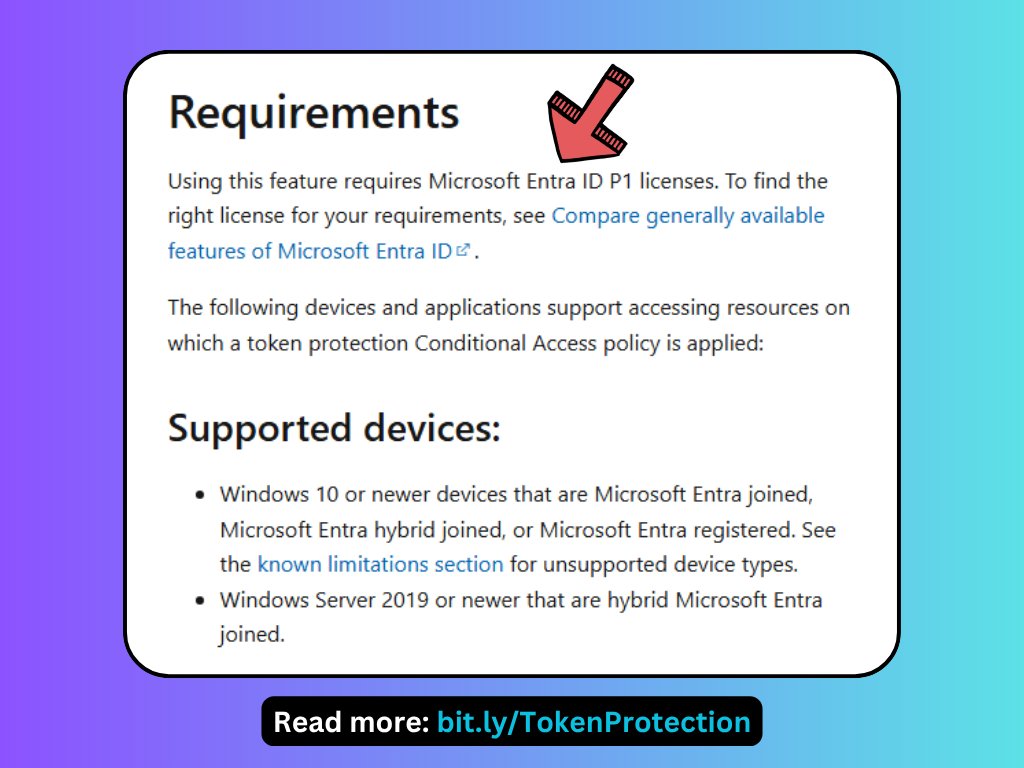
A huge WIN for Microsoft customers today, 𝐓𝐨𝐤𝐞𝐧 𝐏𝐫𝐨𝐭𝐞𝐜𝐭𝐢𝐨𝐧 is available in 𝐌𝐢𝐜𝐫𝐨𝐬𝐨𝐟𝐭 𝐄𝐧𝐭𝐫𝐚 𝐏𝟏 > ourcloudnetwork.com/microsof…
What was previously assumed to be a permanent feature of Microsoft Entra P2, although no official announcement has been made, looks to now be available within Microsoft Entra P1, following some documentation changes!
To summarise, Token Protection leverages the native Primary Refresh Token technology for Windows devices that are at least registered to Microsoft Entra, ensuring that only devices that use this cryptographic technology can use the access tokens issued to them when requesting access to a resource. Thus, it largely mitigates token stealing and session replay attacks!
#Microsoft #Entra #TokenProtection
5
30
110
16,184

9 Jun 2025
Detect and shut down token attacks as they happen. Check out token protection enforcement in Microsoft Entra. youtu.be/gPcNlm0CyOw?si #TokenProtection
14
61
5,224
8 Jun 2025
—Credential Guard in Windows enforced by policies in Intune
—Token Protection in Microsoft Entra
—Token theft detections in Microsoft Sentinel & Defender XDR
How to defend against token theft attacks. youtu.be/gPcNlm0CyOw #TokenProtection
6
35
2,916
8 Jun 2025
Detect and shut down token attacks as they happen. Check out token protection enforcement in Microsoft Entra. youtu.be/gPcNlm0CyOw #TokenProtection
22
77
5,418
5 Jun 2025
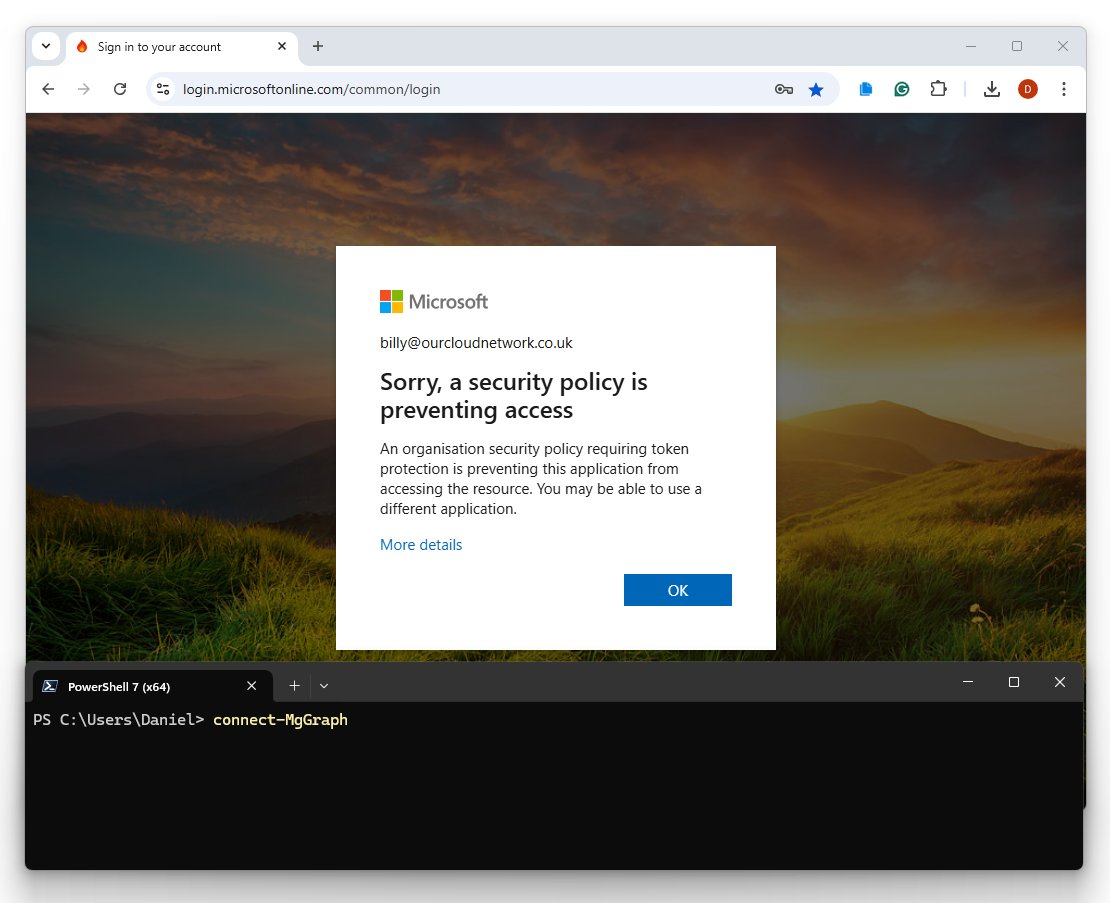
Did you know you can enforce Token Protection specifically for Microsoft Graph PowerShell? Check out how > ourcloudnetwork.com/how-to-e… 🪙
While you may not want to bind a privileged account to your device, there may be some practical usage for enhancing protection if you currently use Microsoft Graph PowerShell on a dedicated PAW! But bear in mind, the access token can still be pulled out of your PowerShell session and replayed if you have remote access to a user's device.
A layered approach to protection is a must!
#Entra #Microsoft #TokenProtection
16
67
3,475
29 May 2025
Protect data by ensuring tokens are bound to your device, preventing attackers from reusing stolen tokens and compromising your resources. Start here. #TokenProtection officegarageitpro.medium.com… #tokentheft #microsoft365 #microsoft #microsoftazure #sessiontokens
5
25
4,022
28 May 2025
Prevent token replay attacks with token protection. Even if malware copies your session token, attackers can't use it to access your cloud storage or confidential documents. Check it out. youtu.be/gPcNlm0CyOw #TokenProtection
1
3
7
2,176
24 May 2025
Detect and shut down token attacks as they happen. Check out token protection enforcement in Microsoft Entra. youtu.be/gPcNlm0CyOw?si #TokenProtection
1
13
80
5,734
22 May 2025
Detect and shut down token attacks as they happen. Check out token protection enforcement in Microsoft Entra. youtu.be/gPcNlm0CyOw?si #TokenProtection
1
5
8
1,527
20 May 2025
—Credential Guard in Windows enforced by policies in Intune
—Token Protection in Microsoft Entra
—Token theft detections in Microsoft Sentinel & Defender XDR
How to defend against token theft attacks. youtu.be/gPcNlm0CyOw #TokenProtection
3
5
1,495
19 May 2025
—Credential Guard in Windows enforced by policies in Intune
—Token Protection in Microsoft Entra
—Token theft detections in Microsoft Sentinel & Defender XDR
How to defend against token theft attacks. youtu.be/gPcNlm0CyOw #TokenProtection
2
4
1,216
18 May 2025
Detect and shut down token attacks as they happen. Check out token protection enforcement in Microsoft Entra. youtu.be/gPcNlm0CyOw #TokenProtection
20
113
8,319

30 Apr 2025
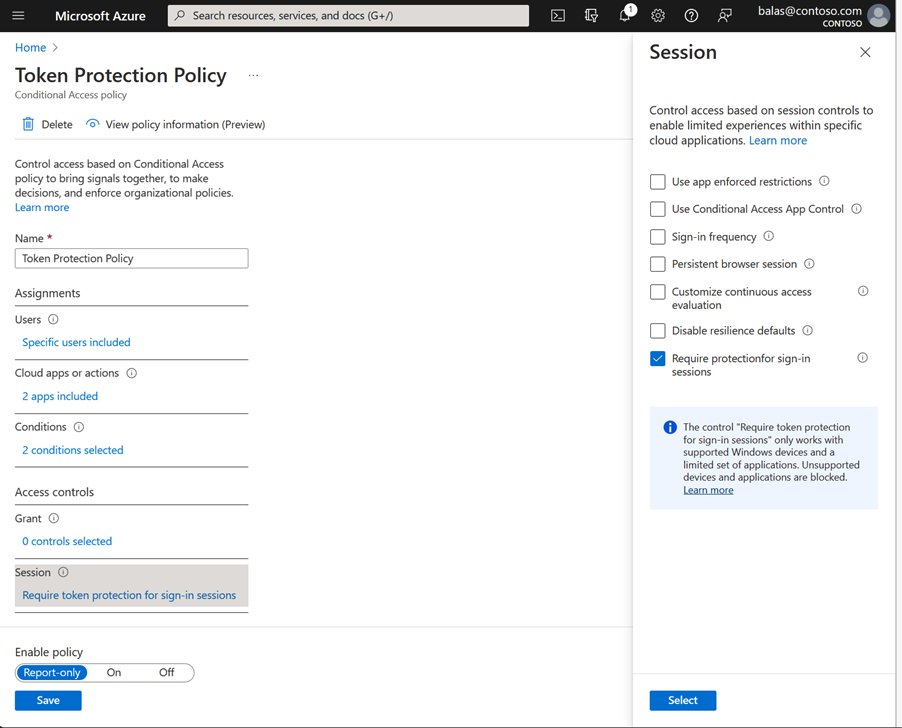
🔐 #Microsoft Entra Conditional Access just leveled up! Token Protection now extends to Windows App, helping prevent token theft by binding tokens to the user's device and identity.
A big win for securing modern authentication! 💪💻
#Cloudbreach #BlueTeam #InfoSec #Azure #ConditionalAccess #CloudSec #Cloud #MicrosoftEntra #AzureAD #CyberSecurity #TokenProtection #IdentitySecurity
1
3
427
30 Apr 2025
Protect data by ensuring tokens are bound to your device, preventing attackers from reusing stolen tokens and compromising your resources. Start here. #TokenProtection officegarageitpro.medium.com… #tokentheft #microsoft365 #microsoft #microsoftazure #sessiontokens
11
24
3,787
29 Apr 2025
Prevent token replay attacks with token protection. Even if malware copies your session token, attackers can't use it to access your cloud storage or confidential documents. Check it out. youtu.be/gPcNlm0CyOw #TokenProtection
3
8
1,256
25 Apr 2025
Detect and shut down token attacks as they happen. Check out token protection enforcement in Microsoft Entra. youtu.be/gPcNlm0CyOw?si #TokenProtection
1
12
52
3,947