
Take action: USPS should not be given authority over elections.
americansofconscience.com/06…
1
Joe Merrill retweeted

NEW: The USPS is starting to create a new records system to track mail ballots, laying the groundwork to collect records related to mail-in and absentee ballots.
The revelation underscores the Trump administration is taking steps to build out his anti-mail voting order amid legal challenges. democracydocket.com/news-ale…
5
52
55
2,359
Regal Beagle Mom🐾🚛🇺🇸 retweeted

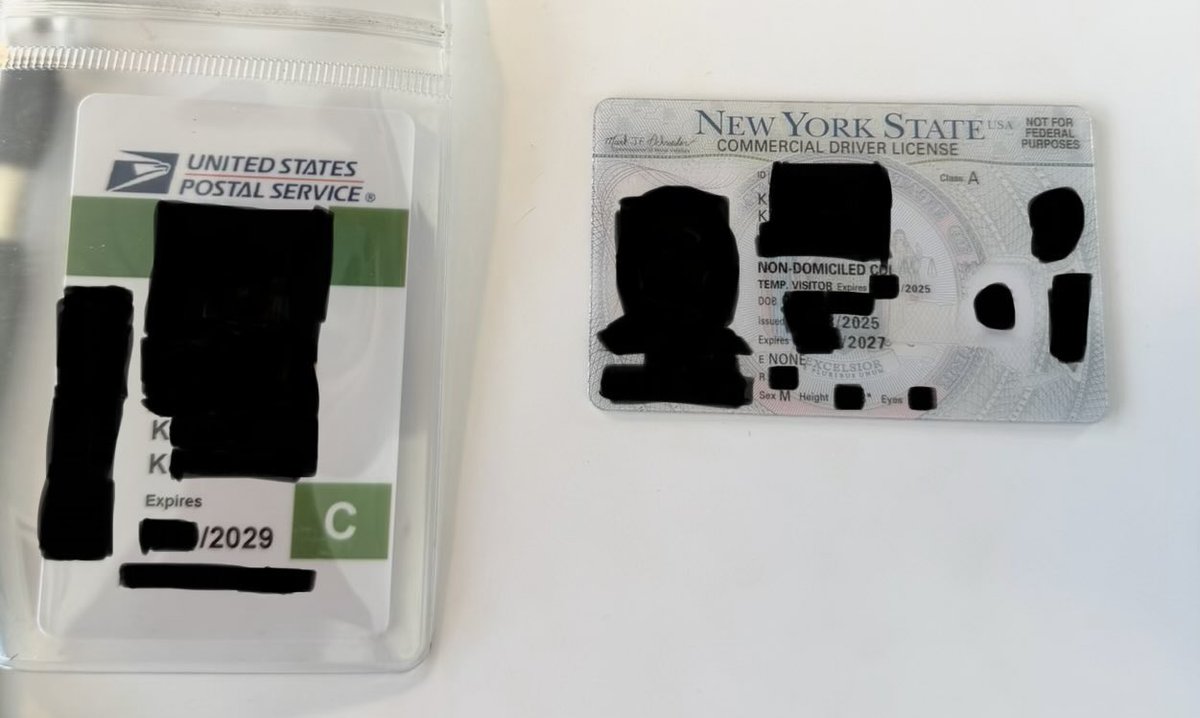
Reminder that USPS is issuing badges to illegal aliens
May 12

WOW! This driver has a non dom CDL showing his “visitor rights” expired in 2025
@USPS decided he is still qualified to haul your mail and was just given a postal badge meaning he will no longer have to show his CDL to check in
He’s not even supposed to be in the US! Sickening!
4
29
81
818

My UPS driver is the best and USPS is decent, the worst is FedEx, always an issue with them.
1
8

Usps and ontrac ups and fed ex are usually ok but it seems like when a shipper uses them, it takes longer to get my package, ontrac is pretty fast if you can believe that
1
6

Never had one problem with those companies. Many problems with UPS & USPS in NY
1
2


‘Grok says: The post is partially accurate but oversimplifies complex realities’…. (So there is validity to what I said)…
…Bottom line here: Private options are often faster and can be cheaper for certain shipments, so the claim holds in many real-world cases (especially for people who don't ship tiny items)…(again not disputing the claim).
‘Nuance: Government involvement can drive up costs via mandates/regulations (a valid critique), but private U.S. healthcare was already the world's most expensive pre-ACA with high growth. Other countries with more government involvement often have lower per-capita costs.
It's debatable, not a clear-cut "more government = more expensive" in this case.’ (Just like is said, government involvement often drives up costs!)
‘Broader context on USPS: The USPS has structural challenges (universal service obligation, declining mail volume, congressional mandates, pension/pre-funding rules) leading to losses in some areas, while its parcel business competes.’ (My point exactly, government has put in these challenges and regulations that make the USPS inefficient).
‘Privatization arguments focus on efficiency gains; counterarguments highlight risks to rural/universal service, potential price hikes for non-profitable routes, and job impacts. Private carriers already handle a lot of last-mile via USPS partnerships.’ (Government regulations make inherent losses, my point exactly! And on the job loss thing, the government isn’t here to employ people. Not the governments responsibility to keep people employed if their jobs are not needed).
‘The post makes reasonable anecdotal points from a pro-market perspective, but reality is more nuanced—especially on costs (USPS wins for many users) and healthcare trends (growth slowed post-ACA). It's opinionated but directionally fair on shipping speed and some privatization logic’.
(So I made reasonable points and is directionally fair on shipping and privatization logic. GROK does not completely disprove my point).


Teamsters to fight UPS over alleged use of nonunion drivers #UPS #USPS #APWU freightwaves.com/news/teamst…
1
1
4
Yeah BL & HT using USPS is interesting. Probably cheaper than Ontrac. Ontrac always delivered in a day while USPS takes 2-4 days now for the same state.
37

FedEx and UPS. If anything goes through USPS, just go ahead and call the police and have them follow the driver from the moment it ships, until it arrives. Otherwise, one slip up and you might as well just take your L.
1
29

Pamela M. Howard 🌊🌻🌈 retweeted

What kind of f*cking country u gonna be w/o USPS, healthcare, social security, Medicare, Medicaid, or decent jobs? No Nat'l parks or public lands? No environmental protections? A country that forces its authoritarian god on u. A dystopian HELL that's what!
May 16

Hey America, are you aware of what this administration is doing to our public lands, national forests, and national parks? They are selling it to the highest bidder; it won't be available to the public any longer. #DemsUnited
3
12
25
344