
AlphaGenome: Decoding DNA like never before
pubmed.ai/results?q=Advancin…
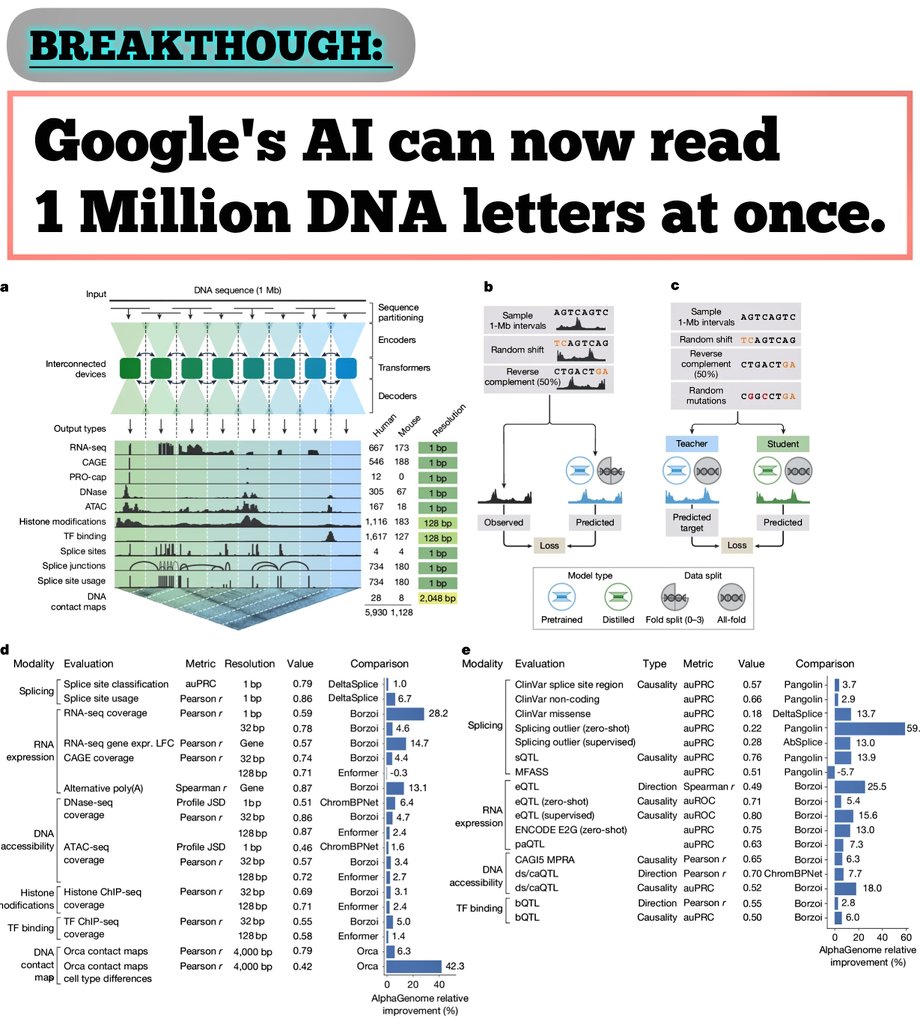
A new deep learning model, AlphaGenome, predicts the functional consequences of DNA sequence variants across thousands of genomic signals — from gene expression to chromatin state, splicing, and 3D genome contacts — all from raw genome sequences up to 1 million base pairs long.
Key Innovations
• Unified multimodal prediction: One model captures transcription, chromatin, histone marks, TF binding, and genome architecture.
• High resolution long-range context: Detects distal regulatory elements and fine-scale genomic features simultaneously.
• Validated across species: Performs strongly in both human and mouse genomes, matching or surpassing state-of-the-art tools.
Why It Matters
• Non-coding variants: Most human variation lies outside protein-coding regions. AlphaGenome predicts how these variants affect gene regulation, critical for understanding complex traits and disease.
• Disease genetics & therapeutics: Can help identify pathogenic mutations, inform diagnostics, and guide target discovery.
• Research acceleration: Scalable framework for functional genomics, rare disease studies, and synthetic biology.
Limitations & Next Steps
• Accuracy depends on training data; environmental and individual-specific effects remain challenging.
• Expanding species coverage and additional genomic features could further enhance utility.
Takeaway
AlphaGenome bridges long-range genomic context with base-level precision, transforming how we interpret DNA variation. It’s an open tool accelerating insights into genome regulation, disease biology, and functional genomics.
#Genomics #AIinBiology #FunctionalGenomics #VariantEffect #DeepLearning #NonCodingDNA #GenomeResearch

Jan 29

BREAKTHOUGH: Google's AI can now read 1 million DNA letters at once.
Google's DeepMind has unveiled a revolutionary deep learning model, AlphaGenome, which can analyze long sequences of DNA with remarkable accuracy.
A new peer reviewed study published in Nature, AlphaGenome can process up to 1 million base pairs (1 megabase) in a single input, capturing long range genetic interactions that previous models could not.
The system predicts how single letter DNA changes affect gene expression, RNA splicing, and chromatin regulation across 11 genomic signals, even within the 98% of the human genome that does not code for proteins. In benchmark tests, AlphaGenome matched or outperformed previous state of the art models at identifying functionally important genetic variants.
By making large sections of the non-coding genome interpretable, AlphaGenome could significantly accelerate disease variant discovery, cancer research, and precision medicine, moving genomics from sequence reading toward functional understanding.
2
8
1,371

28 Jul 2025
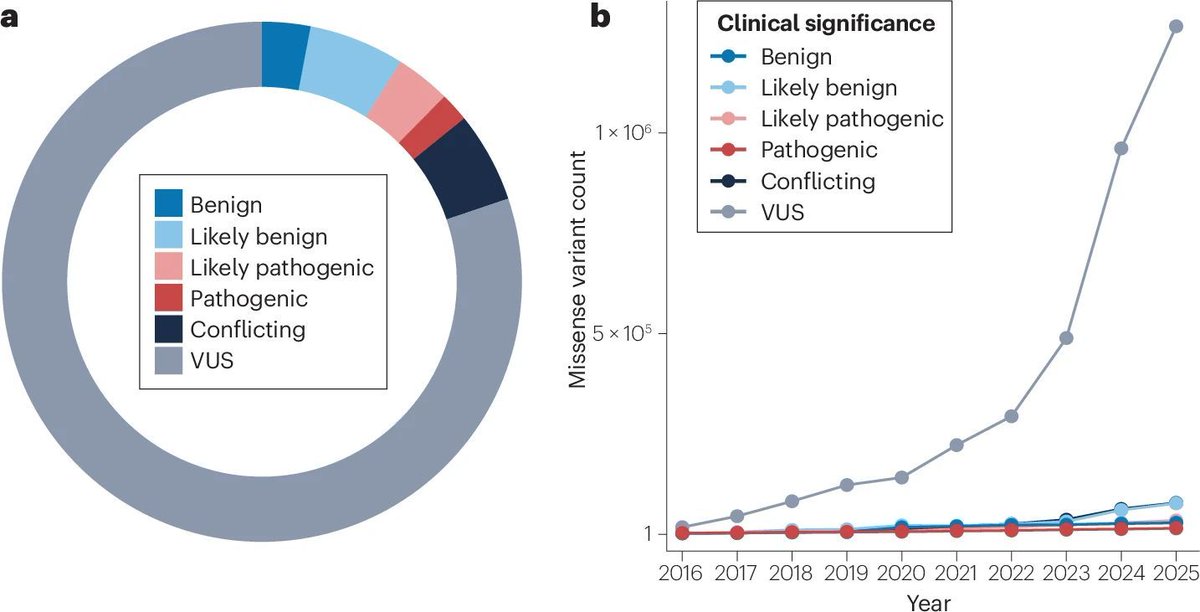
Multiplexed assays of variant effect for clinical variant interpretation. #VariantInterpretation #VariantEffect #Genetics @NatureRevGenet
nature.com/articles/s41576-0…
1
1
15
780

20 Sep 2023
🧬 Unlock the Power of MAVEs in Clinical Genetic Interpretation! 🌟 Dive into our latest blog to discover how can MAVEs help with variant classification. constantiambio.com/blog #Genomics #MAVEs #PrecisionMedicine #varianteffect #ACMG #VUS #genechat
1
3
121

5 Sep 2023
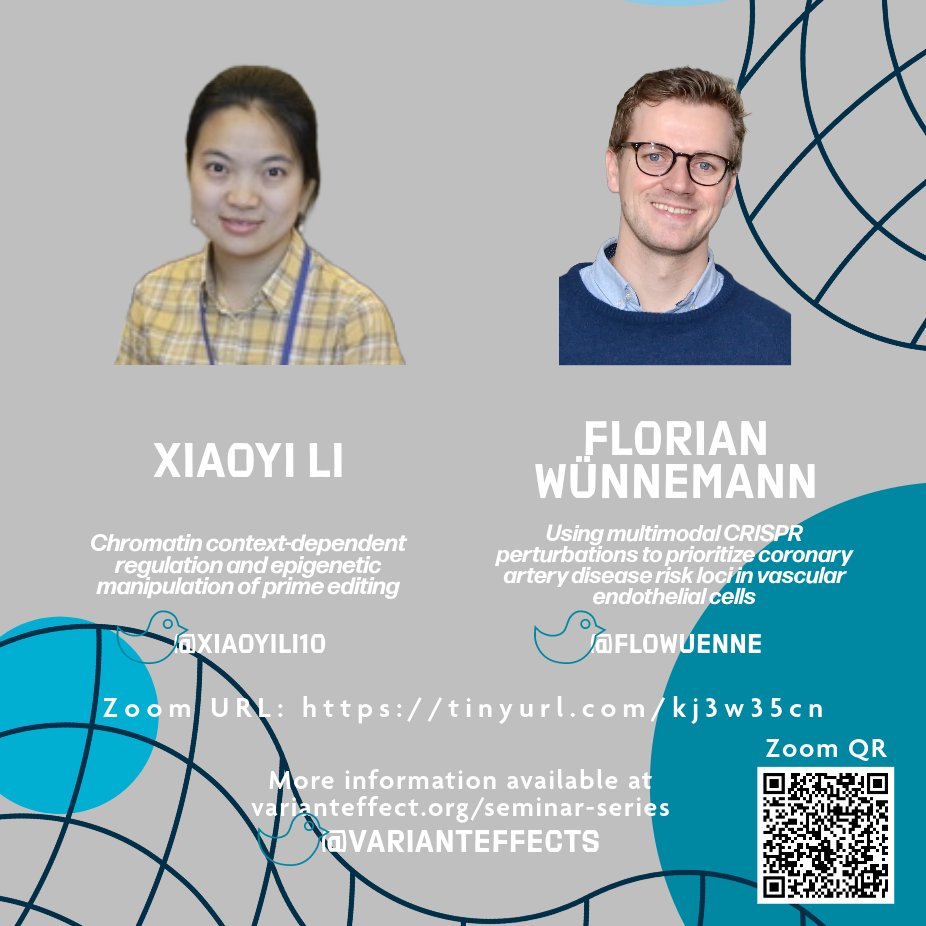
Starting soon! 9am PDT | 6pm CEST with speakers @XiaoyiLi10 @uwgenome and @Flowuenne @uniklinik_hd #PrimeEditing #Epigenetic #CRISPR #CoronaryDisease #VariantEffect #FunctionalGenomics @varianteffects ℹ️varianteffect.org/seminar-se…
2
1,387

11 Aug 2023
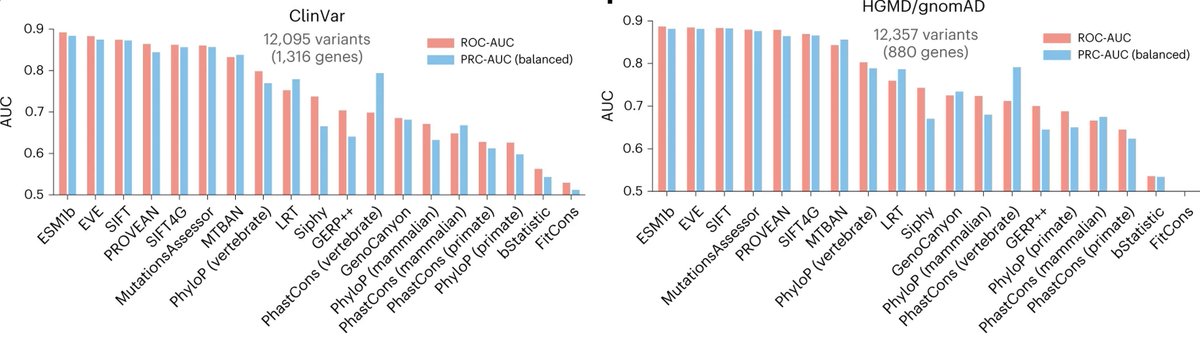
ESM1b outperforms other #VariantEffect prediction methods as a classifier of variant pathogenicity.
1
3
341
14 Jun 2023
We are honored to have presented at the most recent @cancervariants VICC-VTMB meeting on MAVEvidenceTM: A functional evidence platform for clinical variant interpretation. Watch the presentation here: link.constantiambio.com/VICC…
#varianteffect #GeneChat #VUS #clinicalgenetics
3
5
127
2 Jun 2023
MAVEvidenceTM aims to address a key challenge in genetic variant interpretation: spending too much time on searching & evaluating heterogeneous functional studies. A limited-time offer for evaluation license is now available. #GeneChat #varianteffect #VUS #clinicalgenetics
1
3
5
2,243

29 Aug 2022
Feature request for @NebulaGenomics: please consider integrating #VariantEffect predictions into the genome browser, thank you!
27 Aug 2022

Our new preprint is out!
We refined & evaluated the most accurate #VariantEffect predictor to date & made its predictions available for all 450M possible missense mutation effects in the human genome.
doi.org/10.1101/2022.08.25.5…
🧵
2
27 Aug 2022
Our new preprint is out!
We refined & evaluated the most accurate #VariantEffect predictor to date & made its predictions available for all 450M possible missense mutation effects in the human genome.
doi.org/10.1101/2022.08.25.5…
🧵
3
27
142
18 Feb 2022
That’s really one of the most impressive #singlecell works I’ve seen lately, using PerturbSeq to measure #VariantEffect.
I was even more impressed after downloading and analyzing their data, finding that it actually replicated.

Excited for our study to be out today, and thanks to reviewers for helping improve it! nature.com/articles/s41587-0…
1
2

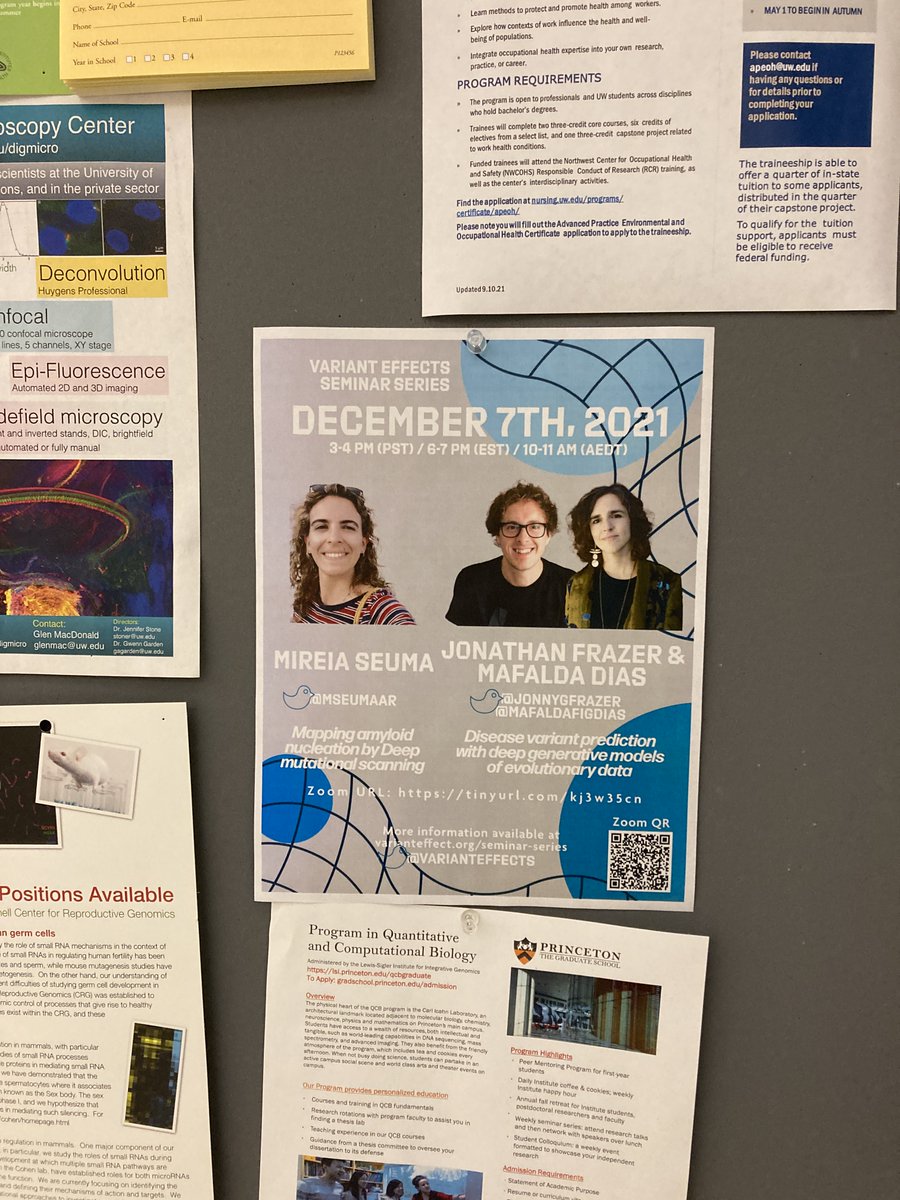
Sad you missed one of our seminars? No worries!
Catch up on our 📺YouTube Channel ▶️bit.ly/3s93ogE
#varianteffect #genomics #scicomm @varianteffects
1
8
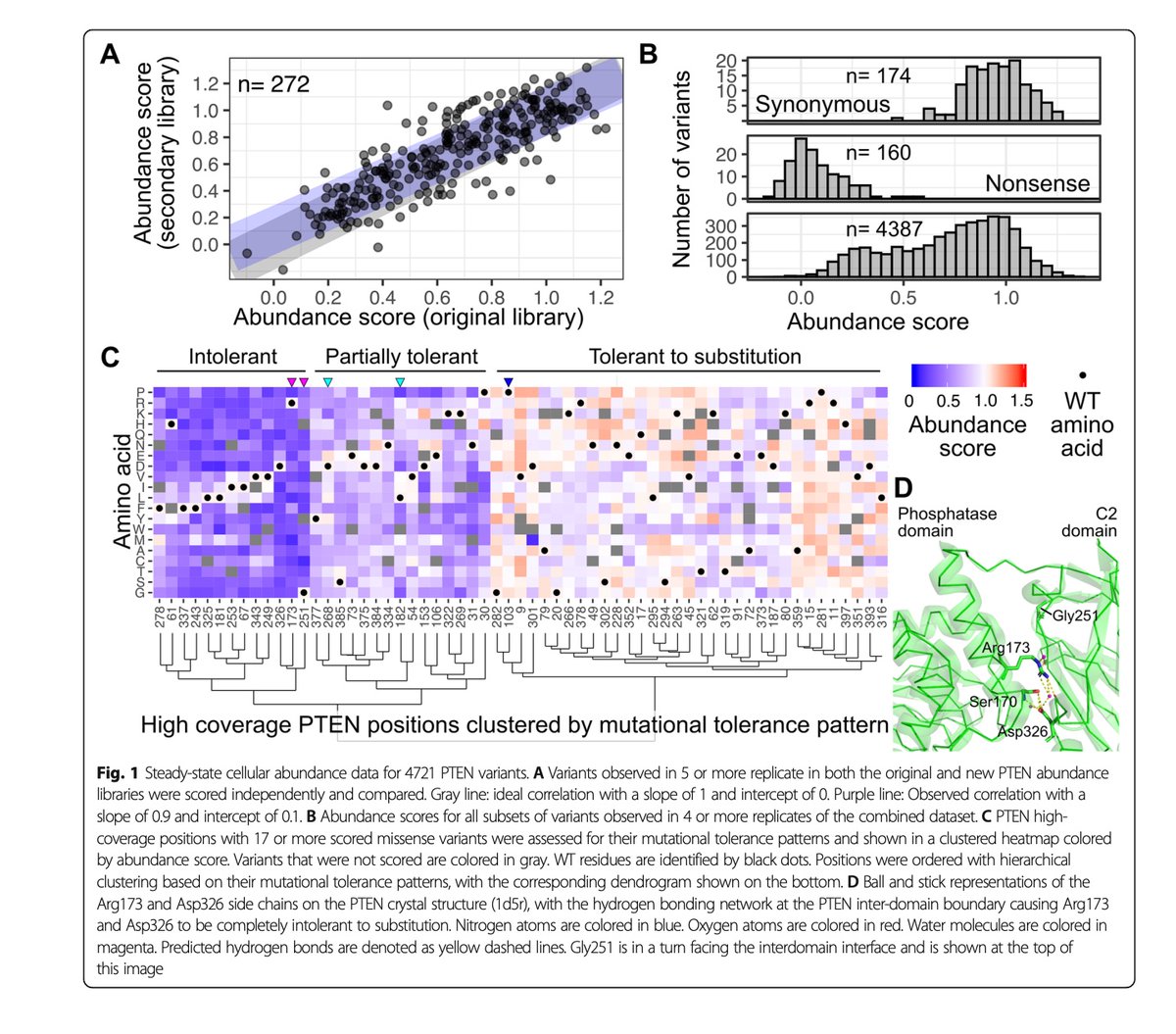
🔥Hot off the press! "Integrating thousands of PTEN variant activity and abundance measurements
reveals variant subgroups and new dominant negatives in cancers" #Multiplexassay #deepmutationalscanning #varianteffect @kmatreyek @dougfowler42 bit.ly/3mXIOM7
1
4
17
New Preprint! from @FPRoth lab group "Assessing computational variant effect predictors via a prospective human cohort" bit.ly/3ua1nQj #varianteffect
1
Today is #DNADay21. Did you know the Atlas of Variant Effects Alliance aims to advance the promise of the Human Genome Project by creating comprehensive variant effect maps for important regions of human & human pathogen genomes? Learn more! varianteffect.org/
#varianteffect

2
4

9 Apr 2021
Lecture 12 Disease Circuitry Dissection w/ @Zhou_Jian #GWAS #Inheritance #CommonVariants #RareVariants #LinkageAnalysis #LD #Haplotypes #Mendel #Darwin #Fisher #Polygenicity #FTOlocus #DeepSEA @OlgaTroyanskaya #VariantEffect #RegulatoryGenomics #Obesity youtube.com/watch?v=j3l1RpBi…
1
3
17