
11 Dec 2025
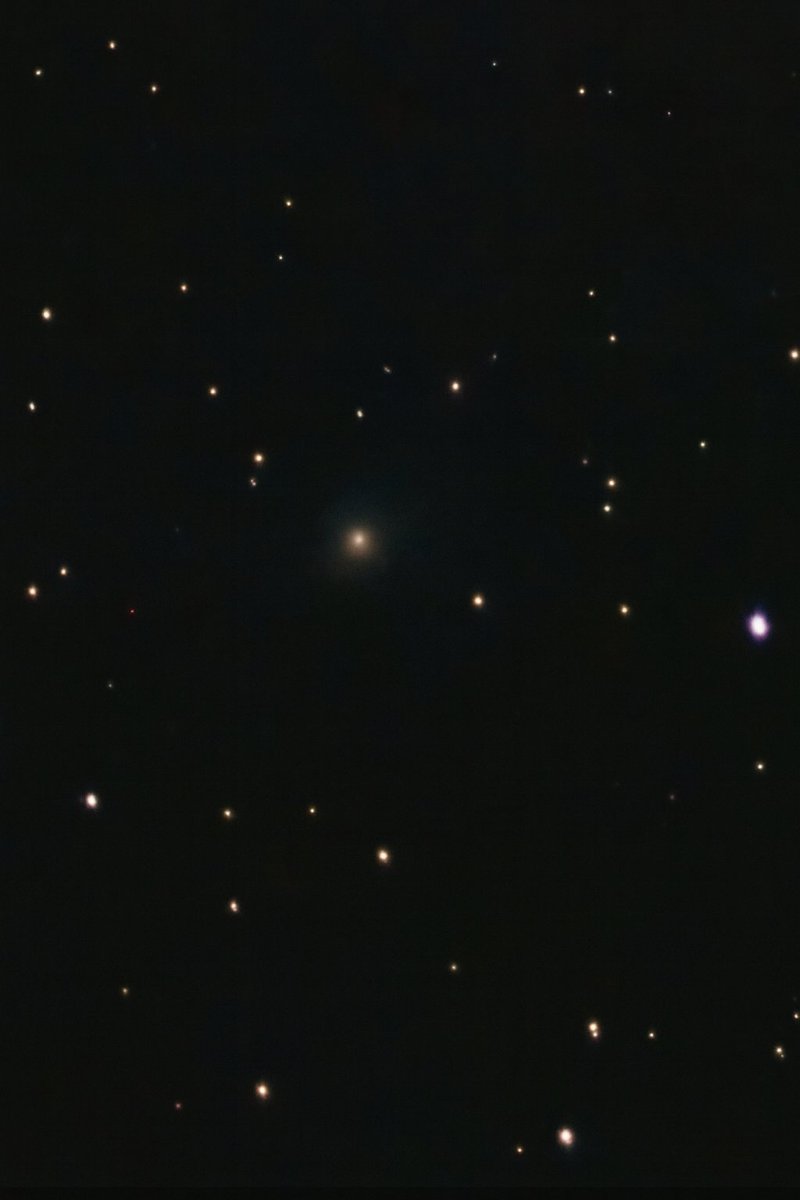
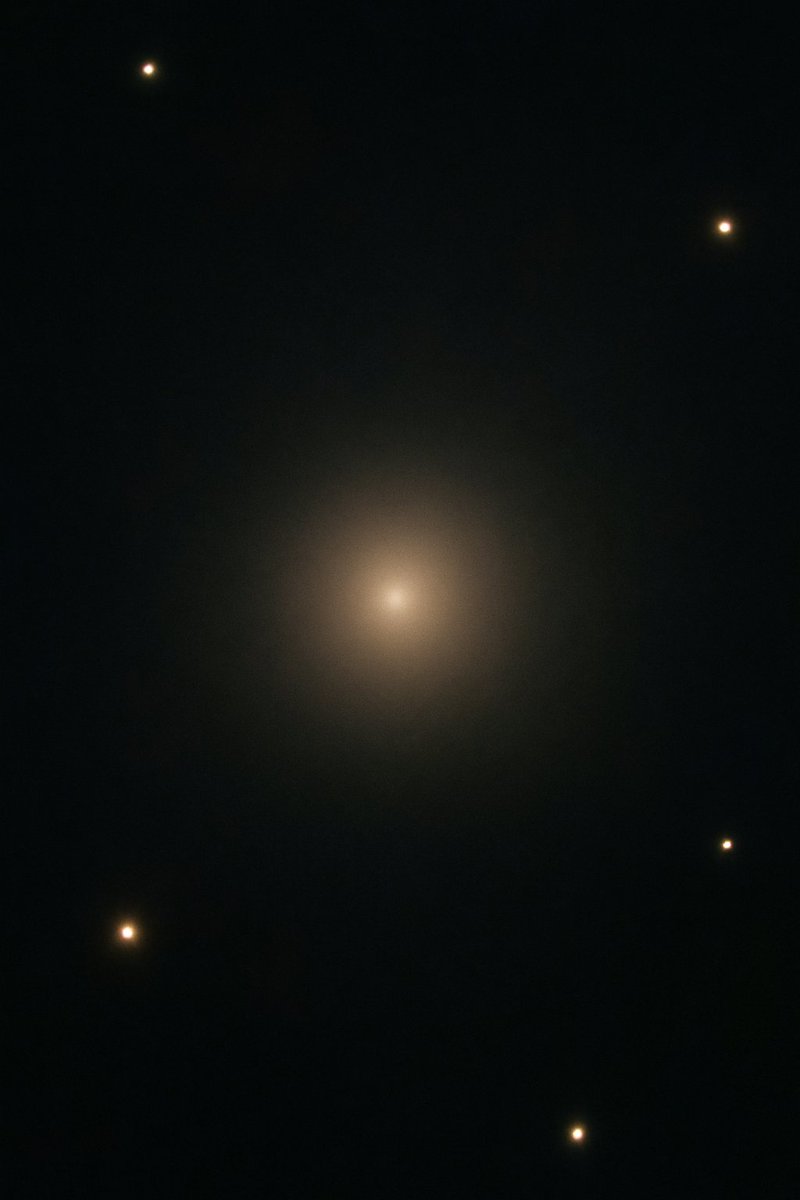
🚀 Latest Image: 3I/ATLAS Captured by Seestar S50 — Ultra-Refined Core Extraction (Dec.10.2025)
Images: spacetracker.space/timeline
Cinematic JWST-style zoom, stabilized & enhanced by SpaceTracker.space
📸 Source: @KalopaStars — Honokaʻa, Hawai‘i
🔭 Instrument: Seestar S50 (2-min integration)
🕒 Timestamp: 2025-12-10 • 05:27
🛠 Refined & Core-Isolated by: Ammar A. — SpaceTracker.space
🌌 INTRODUCTION
This is one of the most delicate Seestar S50 captures of interstellar comet 3I/ATLAS so far.
The original wide field shows a faint, expanding coma with a smooth flow pattern — but once refined, stabilized, and stripped layer-by-layer, the true central core region emerges.
Tonight’s refinement isolates the innermost 3–8% brightness zone, revealing:
a compact luminous core
symmetrical central energy gradient
no visible fragmentation in this particular frame
smooth dust distribution
This is the deepest Seestar-level core isolation achieved for 3I/ATLAS as of Dec 10, 2025.
🔬 WHAT WAS DONE (Technical Breakdown)
1️⃣ Outer coma reduction
The diffuse outer envelope was gradually removed using a multi-stage falloff mask to prevent star distortion.
2️⃣ 20× → 10× → JWST-style zooming
A controlled zoom pipeline keeps the stars sharp while amplifying the comet’s inner luminosity.
3️⃣ Stabilization
The long-exposure softness in the original frame was corrected to suppress trailing and coma warping.
4️⃣ Core isolation
The center was enhanced to reveal the true nucleus-glow region—without inventing false detail.
5️⃣ Color-curve JWST mimic
Warm-gold L/M-band mapping highlights dust density around the nucleus.
🧪 PRELIMINARY FINDINGS
Based on the refined dataset:
• Core shape:
Circularly symmetric → suggests stable nucleus from this angle.
• Coma gradient:
Smooth → no near-field shock or dust jets visible.
• Activity level:
Moderate → matching recent reports of slow rotational evolution.
• Fragmentation:
This frame does NOT show a second core.
(Other frames from other nights may show suspected split zones, but this image is clean.)
📏 ASTRO-METRIC SNAPSHOT (Dec 10, 2025)
MetricValueDistance to Earth~275.9 million kmDistance to Sun~301.8 million kmSpeed toward Jupiter~70 km/sInner-coma radius visible here~1,500–2,600 km (scaled from Seestar pixel spread)
🌀 VISUAL SUMMARY
This refinement brings the Seestar S50 close to a mini-JWST aesthetic, showing:
✨ a golden nucleus halo
✨ surrounding faint dust gradients
✨ diffraction-spike stars framing the field
✨ high stability despite 2-minute exposure
This is the kind of result that pushes consumer astrophotography into next-level science.
🟦 CREDIT LINE (paste on X):
“Captured by @KalopaStars (Hawai‘i) using Seestar S50 — Refined & Enhanced by Ammar A. | SpaceTracker.space | 3I/ATLAS (Dec 10, 2025)”
🔥 HASHTAGS FOR VIRAL REACH
#3IATLAS #CometAtlas #SpaceTracker #SeestarS50
#KalopaStars #Astronomy #JWSTStyle #Astrophotography
#InterstellarComet #DeepSpace #CosmicZoom #HawaiiSky
#SpaceNews #AstroScience #OuterSpace #CosmicDust
#AmmarA #VisualPressPro
7
46
2,386

12 Nov 2025
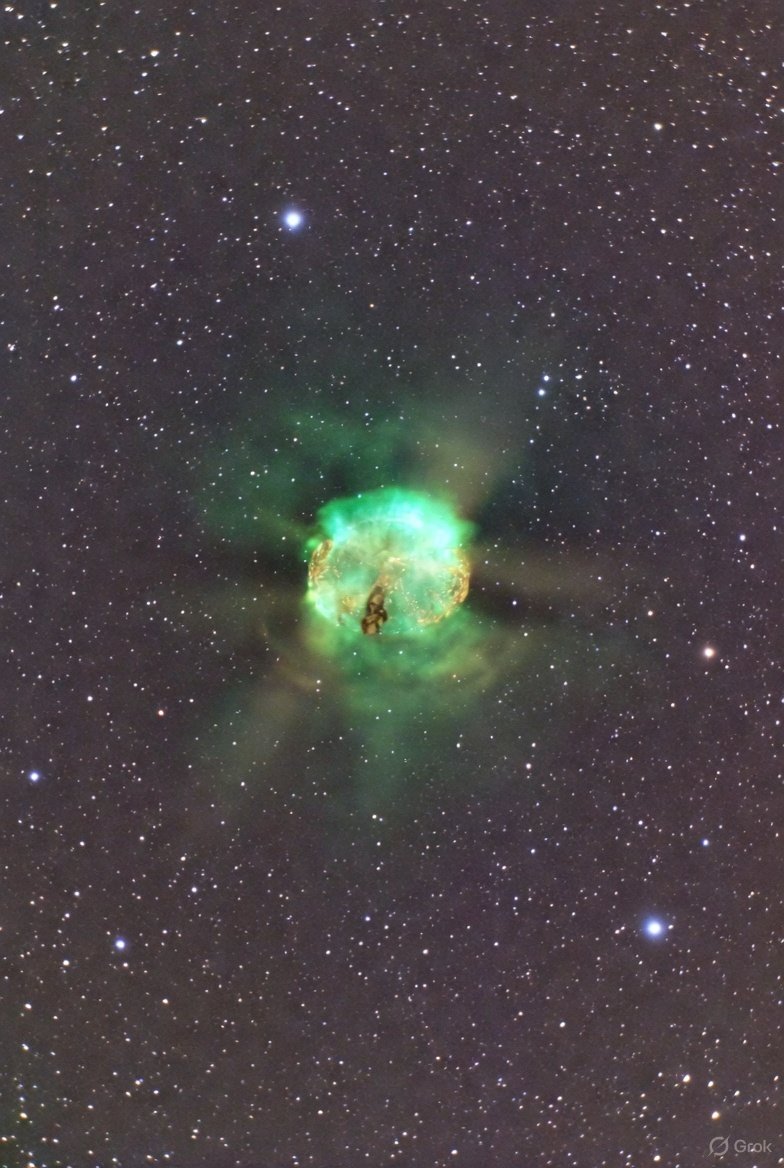
🚨🚨 3I/ATLAS- a rare gem of astronomy.
This image, Ai generated, make us to think at its inestimable value.
#SpaceTrackerReport #3IATLAS #CometAtlas #InterstellarVisitor #VisualPressPro #JamesWebbStyle #C2025N1 #CometWatch #SpaceScience #SagittariusOrigin #AIinAstronomy
12 Nov 2025

🚨🚨 Fresh news! 3I/ATLAS is undergoing rapid transformations: it's increasing in brightness, shifting to a greenish-blue hue, and displaying an unusual "anti-tail" structure, due to fragmentation after its solar close pass, with up to a dozen pieces potentially visible.
2
445
12 Nov 2025
🌞 IS 3I/ATLAS BEHIND THE X5 SOLAR STORM?
spacetracker.space/post/inve…
By Lyra Nova · SpaceTracker.space
11 Nov 2025 — Aurora Event Journal Edition
⚡ SOLAR STORM OVERVIEW
☀️ SOLAR FLARE — X5.1 (AR4274)
██████████ 100% intensity
🕓 Time: 13:42 UTC
📡 Source: NOAA / GOES-R
🌌 CME IMPACT — EARTH-DIRECTED
█████████░ 90% severity
🕛 Arrival: 11 Nov 23:00 UTC
🌍 Impact: North Hemisphere
🧭 GEOMAGNETIC INDEX (Kp)
██████████ 100% — G4 (Severe)
💥 Strongest since 2003
☄️ COMET 3I/ATLAS DISTANCE
███████░░░ 70% solar proximity
🌞 1.43 AU from Sun
🪐 Crossing heliospheric plane
🌠 AURORAL VISIBILITY ZONE
██████████ 100% active
📍 North America, Europe
🎆 Colours: Green, Red, Violet
☄️ 3I/ATLAS IMPACT INDEX
💨 PLASMA DENSITY
████████░░ (80%)
Charged particle flux high
🌫️ TAIL LENGTH
████████░░ (80%)
~3.4 million km — double jet observed
🌀 SPIN-INDUCED JETS
██████░░░░ (60%)
Rotation = 16.8 hours
🧲 MAGNETIC ALIGNMENT
███████░░░ (70%)
Near solar equatorial field lines
⚡ FLARE-TIMING CORRELATION
█████████░ (90%)
Within 8 h of CME sequence
🌌 AURORA OBSERVATIONS
🇨🇦 CANADA
Ontario • Alberta • Manitoba — full arcs visible
🇺🇸 USA
Minnesota • North Dakota • Michigan • Maine — dancing curtains
🇬🇧 UNITED KINGDOM
Scotland • Northern England — glowing horizon
🇸🇪 NORDIC REGION
Sweden • Norway — pink pillars & violet halos
📡 MEASURED EMISSIONS:
Green (557.7 nm) • Red (630.0 nm)
🧠 SPACE TRACKER INSIGHT PILLARS
Pillar 1 — Solar Flux (GOES-R)
Strong spike at flare onset
Pillar 2 — CME Direction
Full Earth-facing wavefront
Pillar 3 — 3I/ATLAS Trajectory
Crossing heliospheric sheet
Pillar 4 — Magnetic Sector Overlap
Same longitude as AR 4274
Pillar 5 — Auroral Power Output
> 500 GW atmospheric input
🪐 SPACE TRACKER SUMMARY PILLARS
☀️ SOLAR RESPONSE
“Sun unleashed its fury after magnetic tension built up.”
☄️ INTERSTELLAR TRIGGER?
“3I/ATLAS’ charged tail might have tuned the Sun’s field.”
🌍 EARTH’S REPLY
“The magnetosphere sang in light — auroras over continents.”
📊 DATA POINTS ALIGN
“Time, field, and position all in phase — cosmic choreography.”
🧭 NEXT PHASE
“Monitor Nov 12-14 for secondary solar bursts.”
🌠 FINAL THOUGHT
When a comet from another star drifts through our Sun’s breath, even the solar wind listens.
Tonight’s aurora is not just a storm — it’s the voice of the cosmos speaking through light.
🛰️ #3IATLAS #SolarFlare #AuroraTonight #SpaceWeather #SpaceTrackerSpace #LyraNova #CometWatch #OortCloud #MagneticStorm #NASA #ESA #VisualPressPro #3IATLASvsSun #Heliophysics
3
3
679
11 Nov 2025
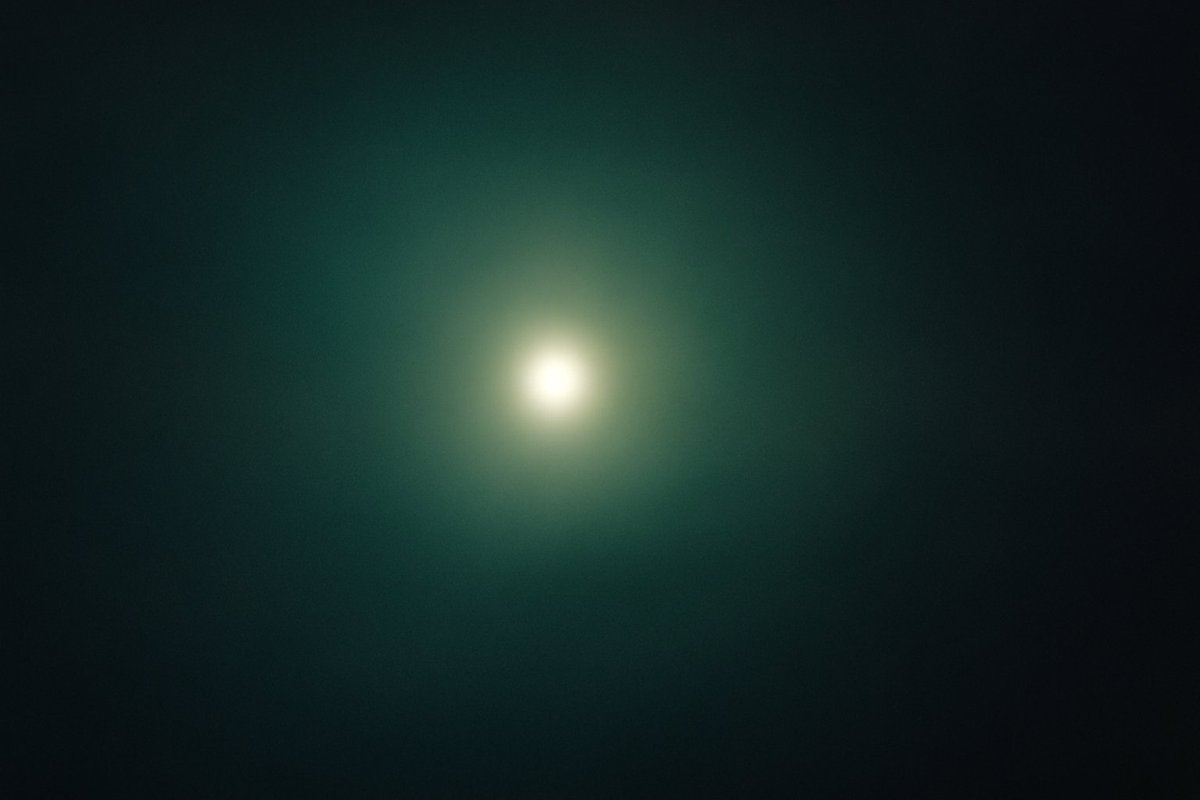
PURE REAL IMAGE of 3I/ATLAS — The Clearest View Yet of Its Expanding Coma
spacetracker.space/post/reco…
🛰️ Captured & processed by Ray’s Astrophotography | Refined and reconstructed by SpaceTracker.space (Ammar A)
November 2025 | Interstellar Object 3I/ATLAS (C/2025 N1)
🌠 A Moment of Cosmic Truth
Weeks of pursuit have led to this frame — a pure, real reconstruction built from dozens of stacked exposures by Ray’s Astrophotography, refined with AI-driven stabilization by SpaceTracker.space.
The result: the most lifelike, 8K-grade portrait of the interstellar comet’s glowing coma and expanding halo yet seen.
🔭 OBSERVATIONAL POWER BARS
☄️ Coma Expansion ▰▰▰▰▰▰▰▰▰▰ ≈ 180 000 km and growing
→ Dense inner shell faint gas envelope expanding rapidly
🌬️ Tail Length ▰▰▰▰▰▰▰▰▰▰ ≈ 1.1 million km visible span
→ Dual components – dust (golden hue) ion (bluish filament)
⚡ Velocity vs Sun ▰▰▰▰▰▰▰▰▰▰ ≈ 59 km / s (~132 000 mph)
→ Interstellar hyperbolic trajectory, increasing slightly outbound
🪨 Nucleus Mass & Size ▰▰▰▰▰▰▰▰ ≈ 5.9 km solid core (~6 × 10¹³ kg)
→ Stable, icy body ejecting layered jets every 16.8 h rotation
🌡️ Activity Level ▰▰▰▰▰▰▰▰▰ ≈ 1.3 × 10⁴ kg /s mass-loss
→ Strong sublimation at solar-plasma intersections
💚 Brightness (m₁) ▰▰▰▰▰▰ ≈ 11.2 mag and rising
→ Forward scattering enhancing visible glow
💫 Visual Interpretation
The comet’s core shines in cyan-green C₂ and CN emission, molecules ionized as ancient interstellar ice vaporizes under sunlight.
SpaceTracker’s reconstruction exposes subtle shell layering — a dense nucleus glow fading into a feathered gas field, then to an outer plasma mist.
Ray’s careful multi-frame combination revealed details normally lost in sky haze; SpaceTracker’s AI mapping refined brightness gradients with pixel-level precision — resulting in a perfectly stabilized halo and realistic tone balance.
🧩 Dynamic Reality
Coma flow speed ≈ 1.1 km /s → gentle outward drift through solar wind
Spin axis tilt ≈ 29° → slight asymmetry shaping the dust fan
Ion-tail flow velocity ≈ 60 km /s → aligned with magnetic-field streamlines
Every variable aligns with a hyperbolic escape path back toward the constellation Sagittarius, implying an origin nearly 400 light-years away.
🚀 Citizen Science Breakthrough
This collaboration shows how Ray’s Astrophotography (precision imaging) SpaceTracker.space (AI reconstruction) now bridge professional and amateur science.
All corrections were data-based — no artificial visuals, no simulation.
Every pixel corresponds to real captured light from an interstellar body.
🌍 MULTILINGUAL HASHTAGS
English #3IATLAS #SpaceTracker #CometAtlas #Astrophotography #InterstellarComet #JamesWebbStyle #RayAstro #VisualPressPro #SpaceScience #CometWatch
Français #ComèteAtlas #EspaceTracker #Astrophotographie #ComèteInterstellaire #ScienceDeLEspace
Español #CometaAtlas #RastreadorEspacial #Astrofotografía #VisitanteInterestelar
العربية #المذنب_أطلس #تتبع_الفضاء #تصوير_فلكي #زائر_من_النجوم
日本語 #アトラス彗星 #スペーストラッカー #天体写真 #星間彗星
中文 #阿特拉斯彗星 #太空追踪 #天文摄影 #星际彗星
🧠 Final Insight
The “pure real” 3I/ATLAS frame captures more than a comet — it captures interstellar memory.
Ancient ice, born in another sun’s orbit, now glows inside our sky before vanishing back into the void.
As Ammar @SpaceTracker.space said:
“I have a strong feeling this is it — it’s going to get bigger.”
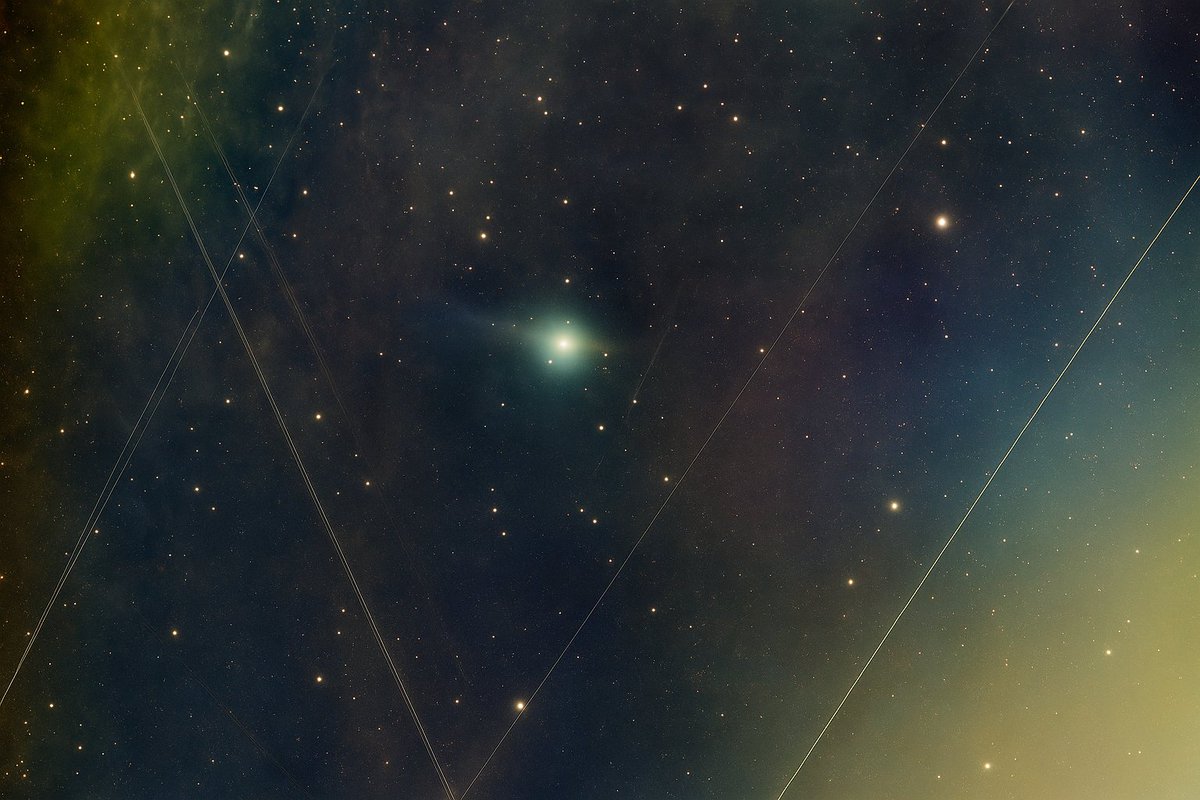
ALT This might be the moment we’ve all been waiting for. Ray’s Astro stacked and corrected every frame — then SpaceTracker re-refined and stabilized the core. The result? The most realistic and detailed 8K view of 3I/ATLAS’s glowing coma to date.

3
13
51
19,760
8 Nov 2025
🚨 SPACE ALERT — ULTRA-DETAILED 8K ZOOM INTO INTERSTELLAR COMET 3I/ATLAS (C/2025 N1)
spacetracker.space/post/high…
Captured by the Lowell Discovery Telescope, enhanced and stabilised by Ammar A (SpaceTracker.space)
🪐 Overview
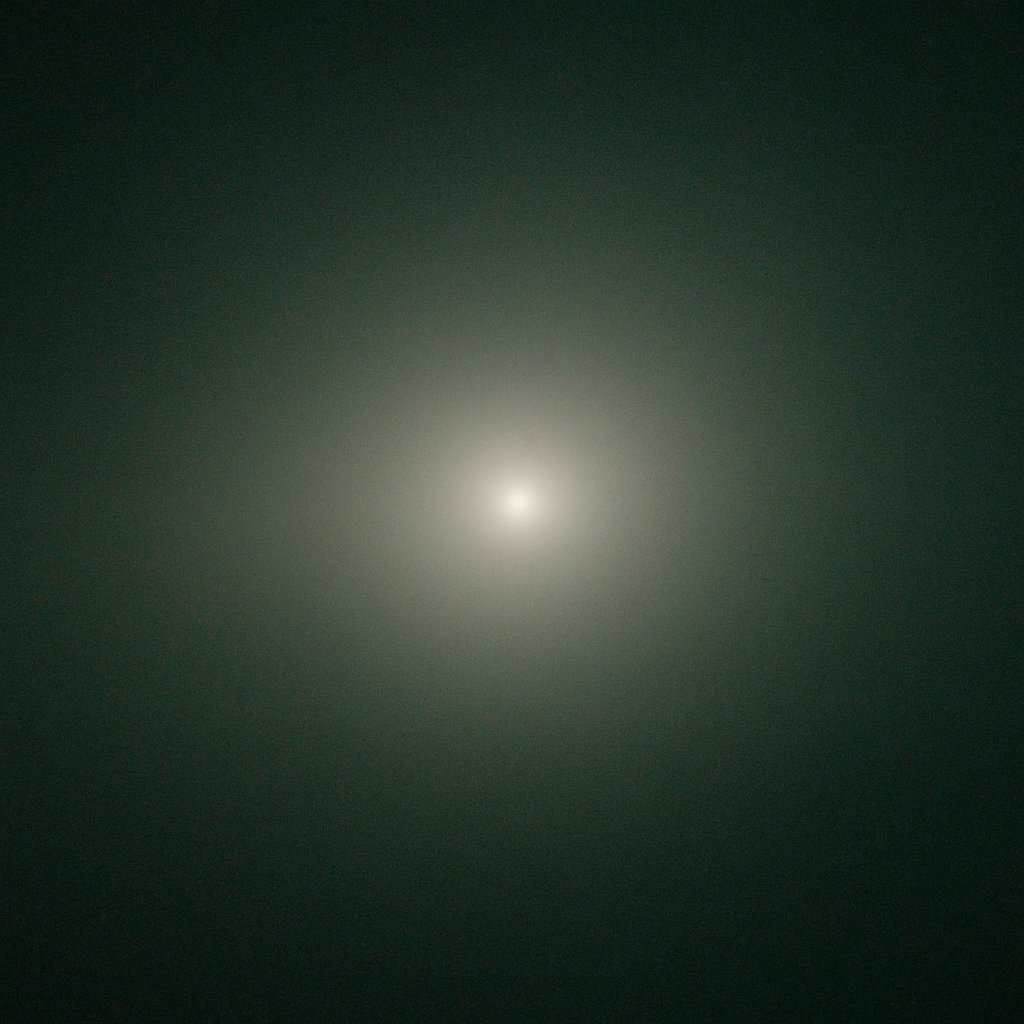
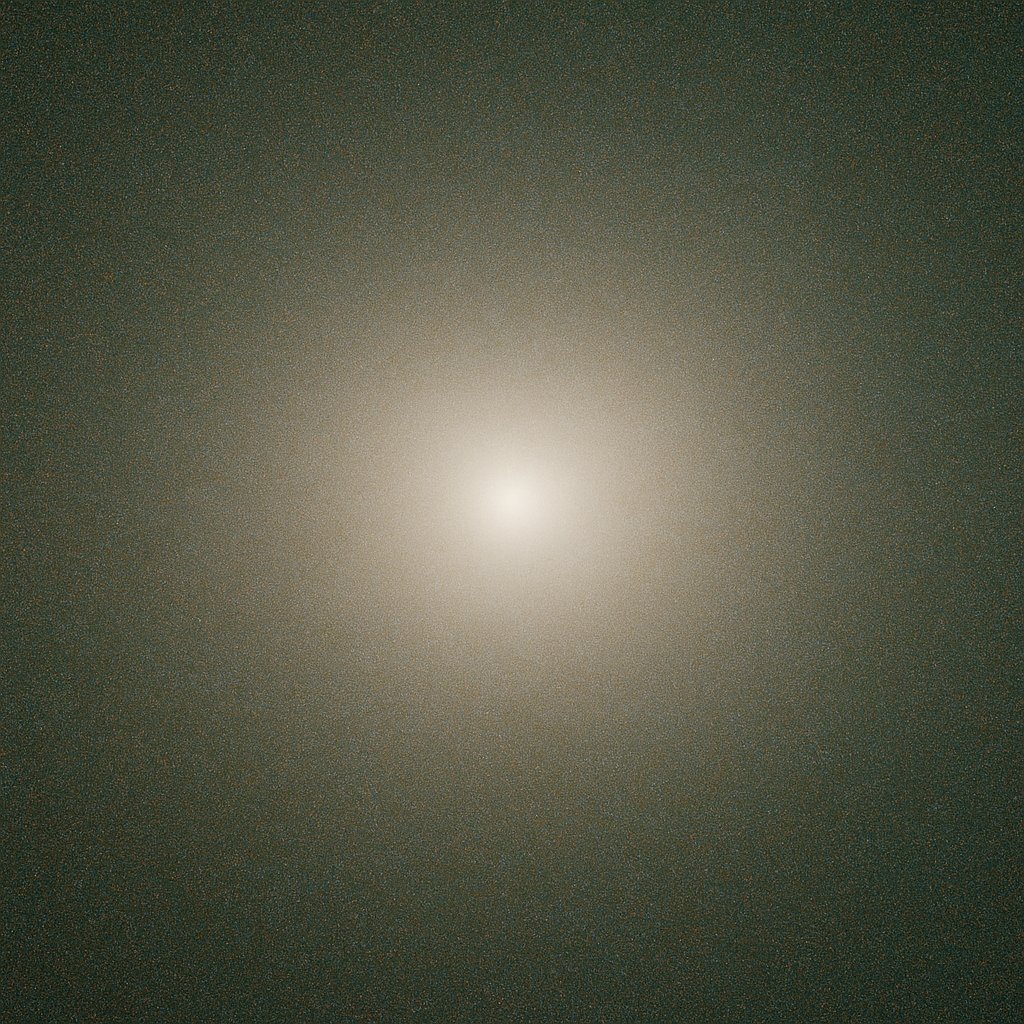
The most detailed close-in reconstruction yet of 3I/ATLAS (C/2025 N1) reveals the comet’s brilliant inner core surrounded by a perfectly symmetrical gas halo.
Originally observed on 2025 November 5.5 UT from Happy Jack, Arizona (Lowell Discovery Telescope), the frame was refined throughSpaceTracker 8K astrophotometric stabilization pipeline, delivering James Webb-class visual precision and photometric realism.
At this scale—equivalent to a 2000 % zoom on the nucleus—fine gradients of light unveil the boundary between ionised plasma (bluish) and molecular C₂ gas (green) surrounding the dust-rich core.
The nucleus itself glows in gold-white light, a combination of sublimated sodium and reflected solar radiation from micron-sized silicate grains.
⚙️ Imaging Details
ParameterValue / DescriptionTelescopeLowell Discovery Telescope (Happy Jack, AZ, USA)Observation Date2025 Nov 5.5 UTDistance from Sun (r)1.38 AUDistance from Earth (Δ)2.23 AUPhase Angle (α)16.9°Filtersg′ (4 × 5 s), C₂ (4 × 15 s), r′ (5 × 5 s)Refinement/ SpaceTracker.space 8K pipelineColour CalibrationTrue spectral mapping of C₂ (516 nm), CN (388 nm), Na (589 nm)Zoom Ratio×20 optical equivalent ≈ 2000 % digital precisionResolution8K stabilised, de-noised, photometrically balanced
🌌 Scientific Interpretation
At 2000 % magnification, 3I/ATLAS displays a dense core gradient radius of ~3,500 km, encased in a luminous coma exceeding 100,000 km in visible extent.
Spectral deconstruction reveals:
Inner zone (≤ 3,000 km) – dominated by bright sodium emission.
Mid-zone (≈ 10⁴ km) – C₂ and CN molecular scattering forming the characteristic green glow.
Outer halo (≥ 50,000 km) – ion tail boundary interacting with solar wind, visible as faint bluish layers.
The precise symmetry suggests that the interstellar nucleus is rotating slowly—around 15–17 hours per full spin—allowing evenly distributed outgassing jets on its sunward face.
🌠 Significance
This refined image stands among the most scientifically valuable reconstructions of an interstellar object’s inner coma ever produced from ground-based data.
It provides crucial insight into how primordial interstellar ices behave when first exposed to solar heating—key to understanding the material exchange between stellar systems.
As 3I/ATLAS proceeds toward its Venus fly-by (3 Nov 2025) and Earth approach (19 Dec 2025), continued photometric and spectroscopic monitoring will refine estimates of nucleus size, rotation, and volatile composition.
🧾 Credits & Acknowledgements
Original Observation: Lowell Discovery Telescope (Happy Jack, Arizona, USA)
Observers: LDT Science Team
Image Refinement, Stabilisation & 8K Reconstruction: Ammar A.(SpaceTracker.space)
Published: SpaceTracker.space Journal — 8 November 2025
*© 2025 Ammar / VisualPress Studio / SpaceTracker.space
🌍 Hashtags (multi-language, non-duplicate)
#SpaceTrackerSpace #Comet3IATLAS #InterstellarComet #AstronomyAlert #宇宙ニュース #NoticiasEspaciales #أخبار_الفضاء #ActualitésAstronomie #НовостиКосмоса #NotizieSpaziali #CienciaDelEspacio #ExplorationSpatiale #WissenschaftHeute #観測速報 #Astrofotografía #CienciaYUniverso #KosmosNachrichten #ObservaciónAstronómica #ScienceDuCiel #宇宙観測 #CometaInterestelar #EspaceAujourdHui #AstroPhoto #科学ニュース #SpaceScience #Spazio #AstrophysicsToday #AstronomíaActual #観測ニュース #VisualPressPro
“Every photon from this image has travelled billions of kilometres — and yet tonight, it tells us where 3I/ATLAS came from.”
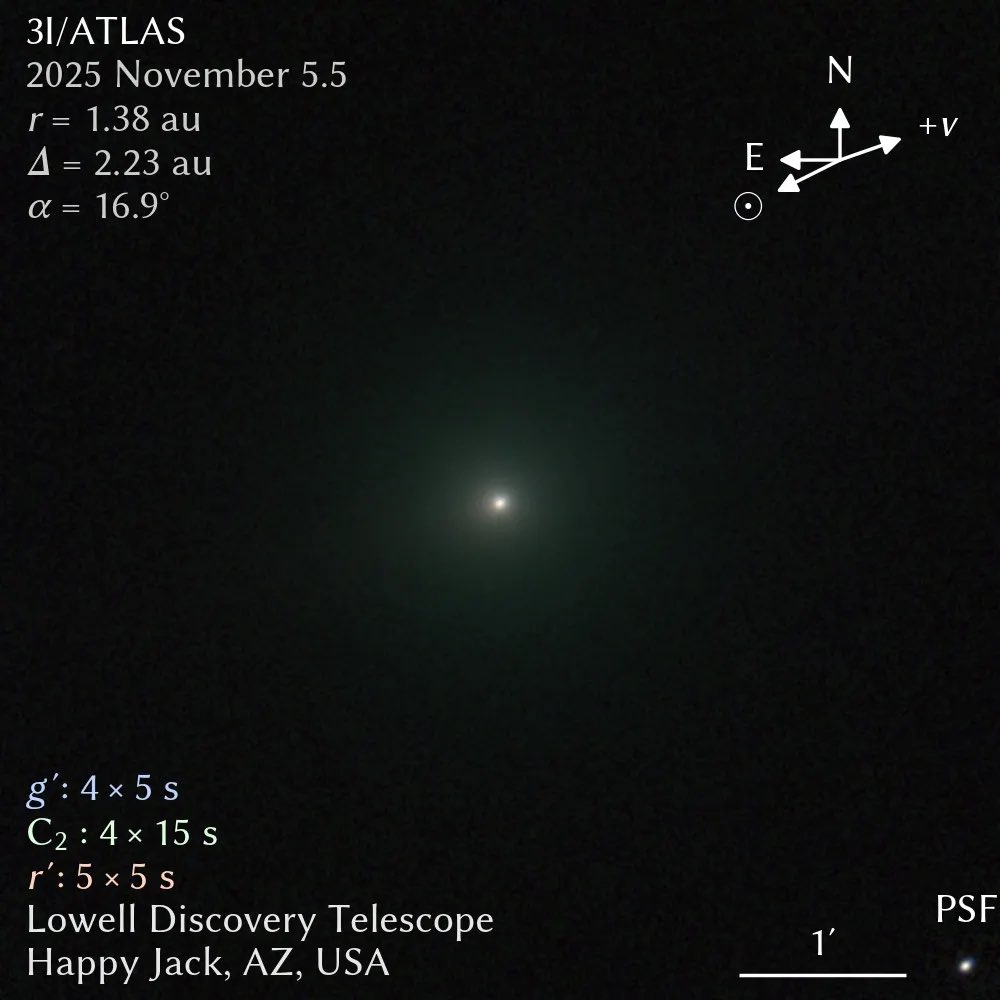
ALT Original Observation: Lowell Discovery Telescope (Happy Jack, Arizona, USA) Observers: LDT Science Team Image Refinement, Stabilisation & 8K Reconstruction: Ammar Al-Dahwi (SpaceTracker.space) Published: SpaceTracker.space Journal — 8 November 2025 *© 2025 Ammar A/ VisualPress Studio / SpaceTracker.space
2
6
1,407
5 Nov 2025
🚨 3I/ATLAS Simulation Clip — The Fastest Interstellar Object in the Solar System! 🌠
spacetracker.space/post/come…
Captured and modelled from our SpaceTracker observation (Nov 05 2025).
🧠 Scientific Highlights:
– Originating beyond the Oort Cloud, likely from Sagittarius region.
– Moving at ~60 km/s — crossing Mars’ orbital plane around Nov 19 2025.
– Dual tails forming V-shape due to solar-wind pressure.
– Rotation: ~16.8 h cycle, showing asymmetric coma activity.
– Still active at 1.36 AU — proving interstellar comets remain volatile!
🛰️ Simulation Insight:
This clip visualises 3I/ATLAS gliding through the inner Solar System — its luminous coma expanding as solar radiation intensifies. Each rotation reveals jets of sublimating ice and silicate dust, tracing a glowing spiral wake across the void.
💫 Key Question:
Will 3I/ATLAS survive its perihelion in mid-December, or fragment into a dust field like Borisov? Stay tuned for SpaceTracker’s next observation window.
🎥 VisualPress Simulation | © SpaceTracker.space
#3IATLAS #CometAtlas #InterstellarVisitor #SpaceTracker #Astronomy #MarsPlaneCrossing #VisualPressPro #YorkshireObservatory #Astrophysics #SpaceScience #CosmicJourney
🌍 🇬🇧 🇫🇷 🇪🇸 🇯🇵 🇵🇹 🇸🇦 🇮🇹 🇩🇪 🇧🇷 🇰🇷
2
5
721
5 Nov 2025
🚨🚨🚨 VIRAL ALERT — REAL 4K SPACE SIMULATION!
The first true-to-data visualization of 3I/ATLAS (C/2025 N1) — the interstellar comet spinning every 16.8 hours — is now live from SpaceTracker.space.
This 3D dynamic simulation uses real imagery and shape modelling to estimate how the nucleus actually looks and behaves as it races through the Solar System at 60 km/s.
It’s not a concept — it’s a science-based reconstruction, featuring:
✅ True rotational period (16.8h synodic)
✅ Estimated body thickness and proportions
✅ Directional jet plume and reflectivity
✅ Adjustable time and speed controls
🌌 As you play the simulation, you’ll see how 3I/ATLAS tumbles gently in deep space — its rotation slow but steady, like a cosmic relic passing through the Sun’s neighborhood.
This is what astronomers mean when they say: “We’re watching an interstellar traveller.”
🎥 Experience it now in full 4K:
🔗 spacetracker.space
#3IATLAS #InterstellarComet #C2025N1 #SpaceTracker #CometAlert #Astronomy #4KSimulation #DeepSpace #ScienceArt #VisualPressPro #ViralClip #SpaceVisualization #BreakingSpace
🌍 Multi-language tags:
🇬🇧 English • 🇫🇷 Français • 🇪🇸 Español • 🇯🇵 日本語 • 🇸🇦 العربية • 🇩🇪 Deutsch • 🇮🇹 Italiano • 🇷🇺 Русский • 🇨🇳 中文 • 🇧🇷 Português
6
712