

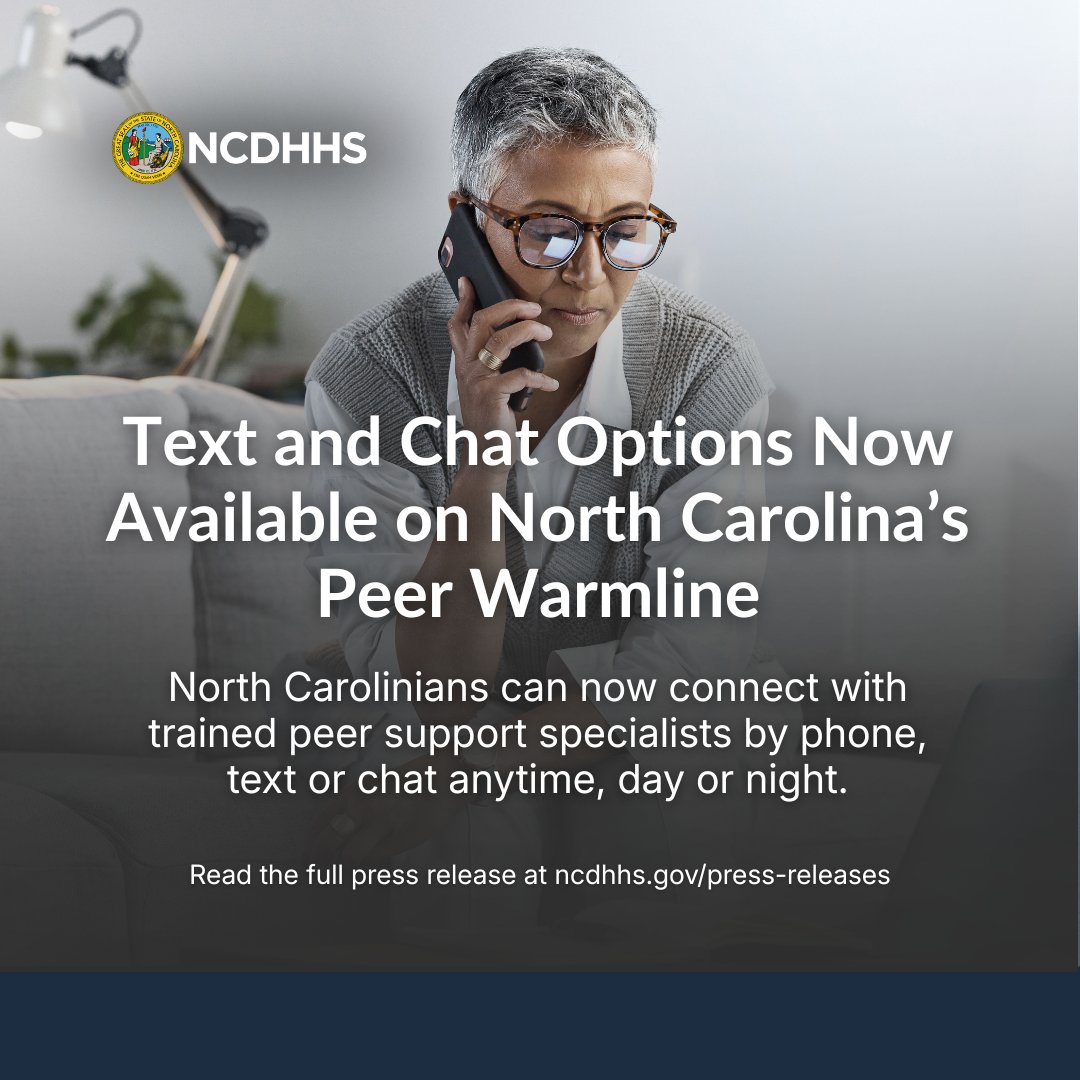
ALT A person with short hair and glasses is using a smartphone. The text reads: "Text and Chat Options Now Available on North Carolina’s Peer Warmline. North Carolinians can now connect with trained peer support specialists by phone, text or chat anytime, day or night." The North Carolina Department of Health and Human Services (NCDHHS) logo is visible at the top.
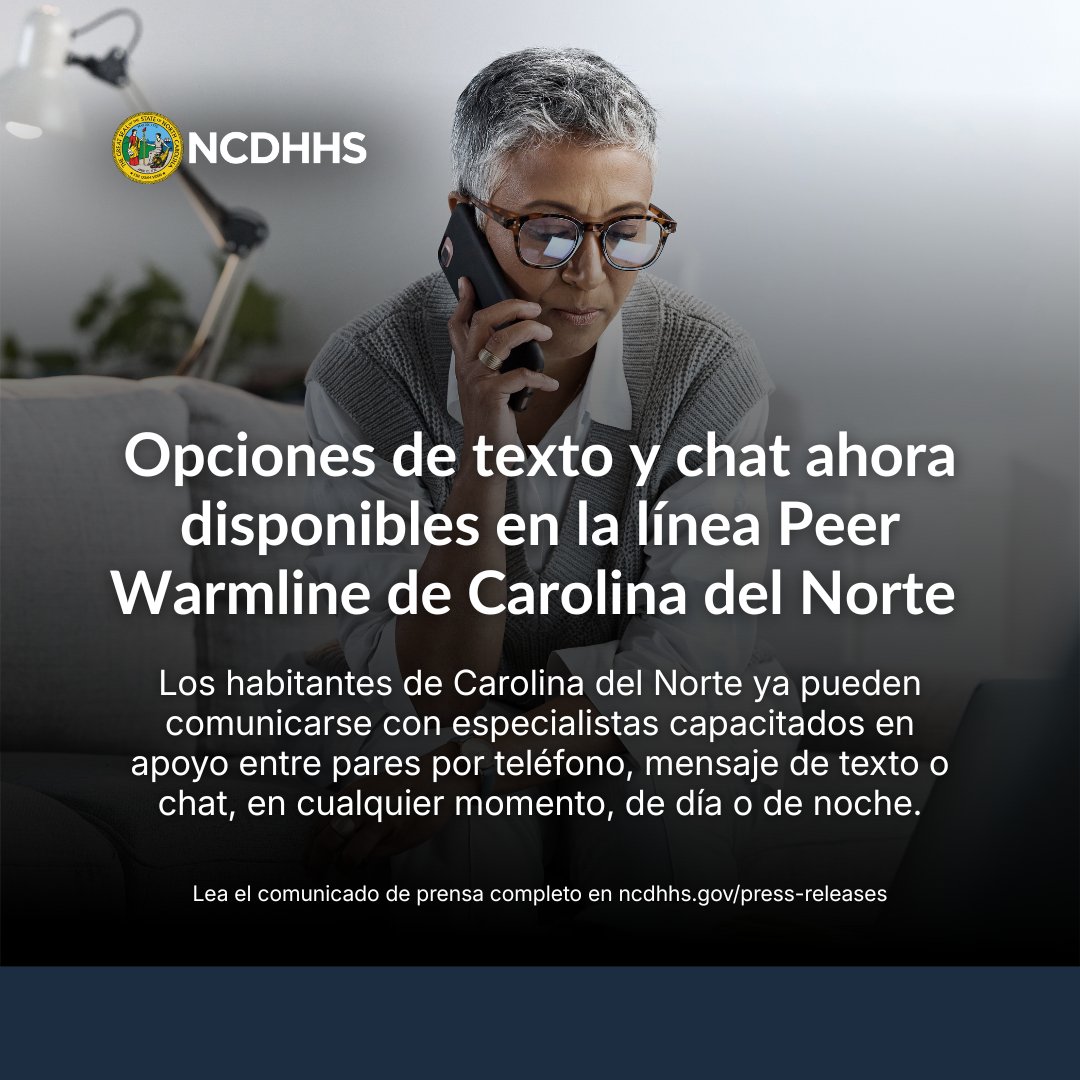
ALT Una persona con el cabello corto y gafas está usando un teléfono inteligente. El texto dice: "Opciones de mensajes de texto y chat ya disponibles en la línea de apoyo entre pares de Carolina del Norte. Los residentes de Carolina del Norte ahora pueden comunicarse con especialistas capacitados en apoyo entre pares por teléfono, mensaje de texto o chat en cualquier momento, de día o de noche". En la parte superior se ve el logotipo del Departamento de Salud y Servicios Humanos de Carolina del Norte (NCDHHS).


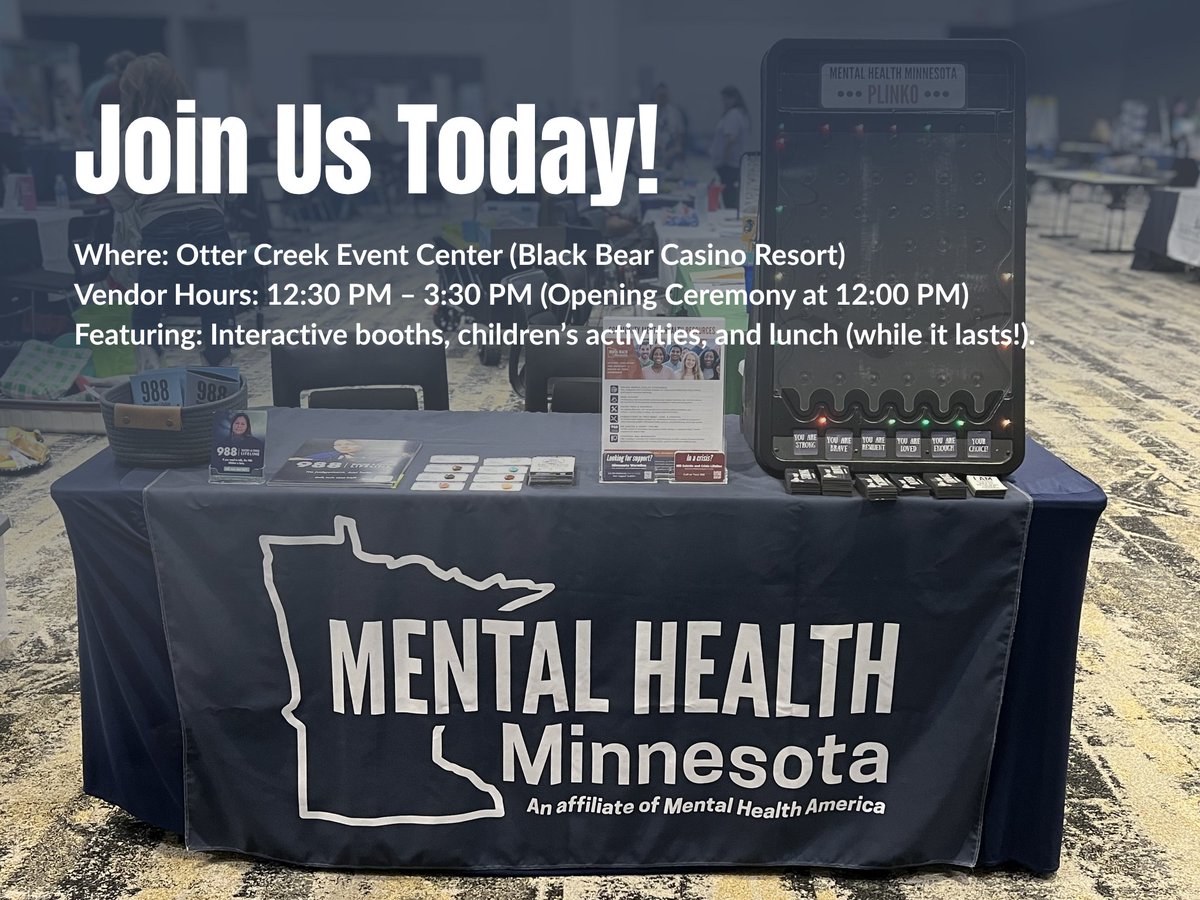
ALT An exhibition table for Mental Health Minnesota at an indoor health fair, with a dark blue overlay at the top featuring white text. The text reads: "Join Us Today! Where: Otter Creek Event Center (Black Bear Casino Resort). Vendor Hours: 12:30 PM – 3:30 PM (Opening Ceremony at 12:00 PM). Featuring: Interactive booths, children’s activities, and lunch (while it lasts!)." Below the text, the original image is visible, showing the dark blue tablecloth with the "Mental Health Minnesota" logo and a white outline of the state. On the table are 988 Lifeline pamphlets, community resources, and a tabletop Plinko game with flashing lights.

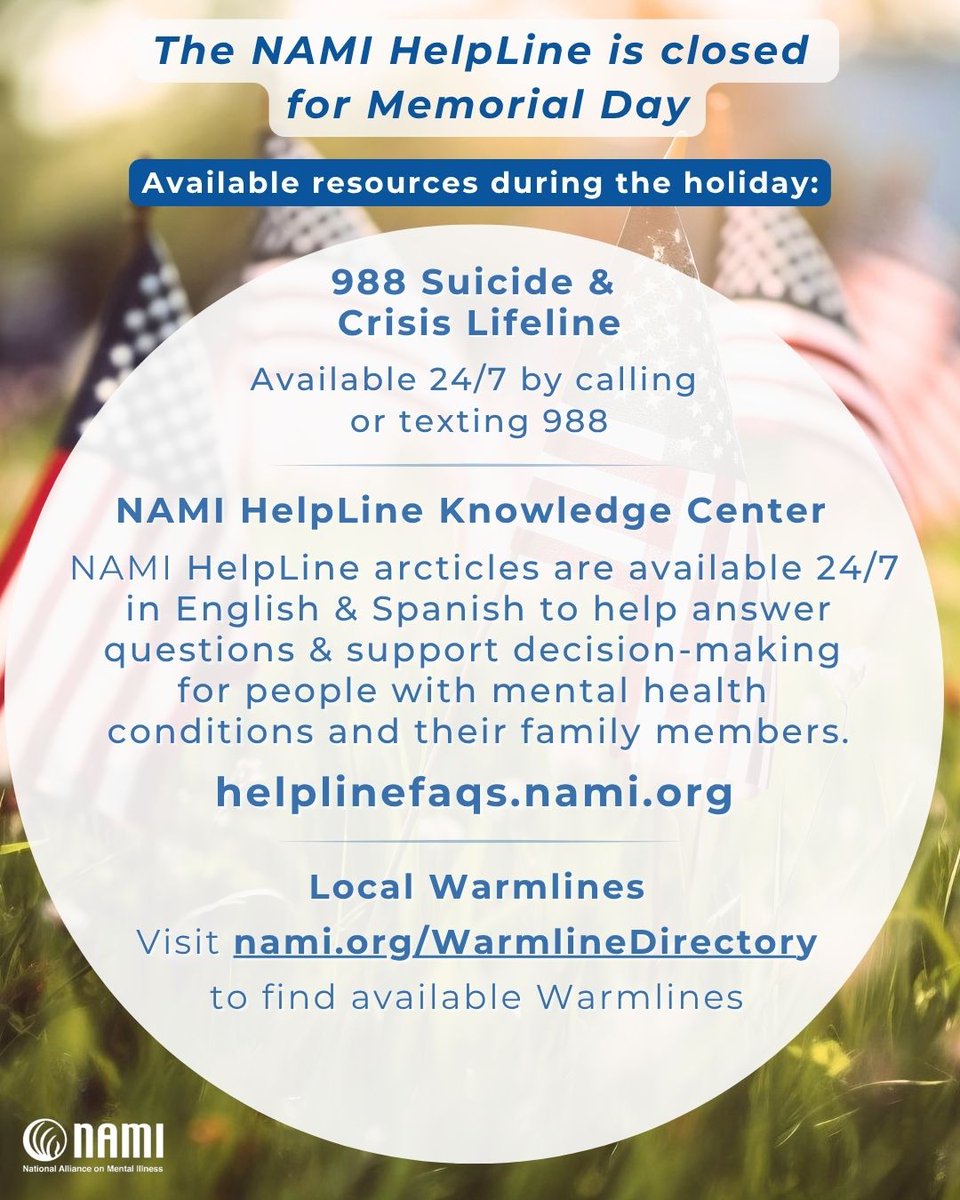
ALT The image provides information about the NAMI HelpLine being closed for Memorial Day. It lists available resources, including the 988 Suicide & Crisis Lifeline, available 24/7 by calling or texting 988. It mentions the NAMI HelpLine Knowledge Center, offering 24/7 articles in English and Spanish. Additionally, it mentions finding local warmlines at nami.org/WarmlineDirectory. The background features an American flag and grass.


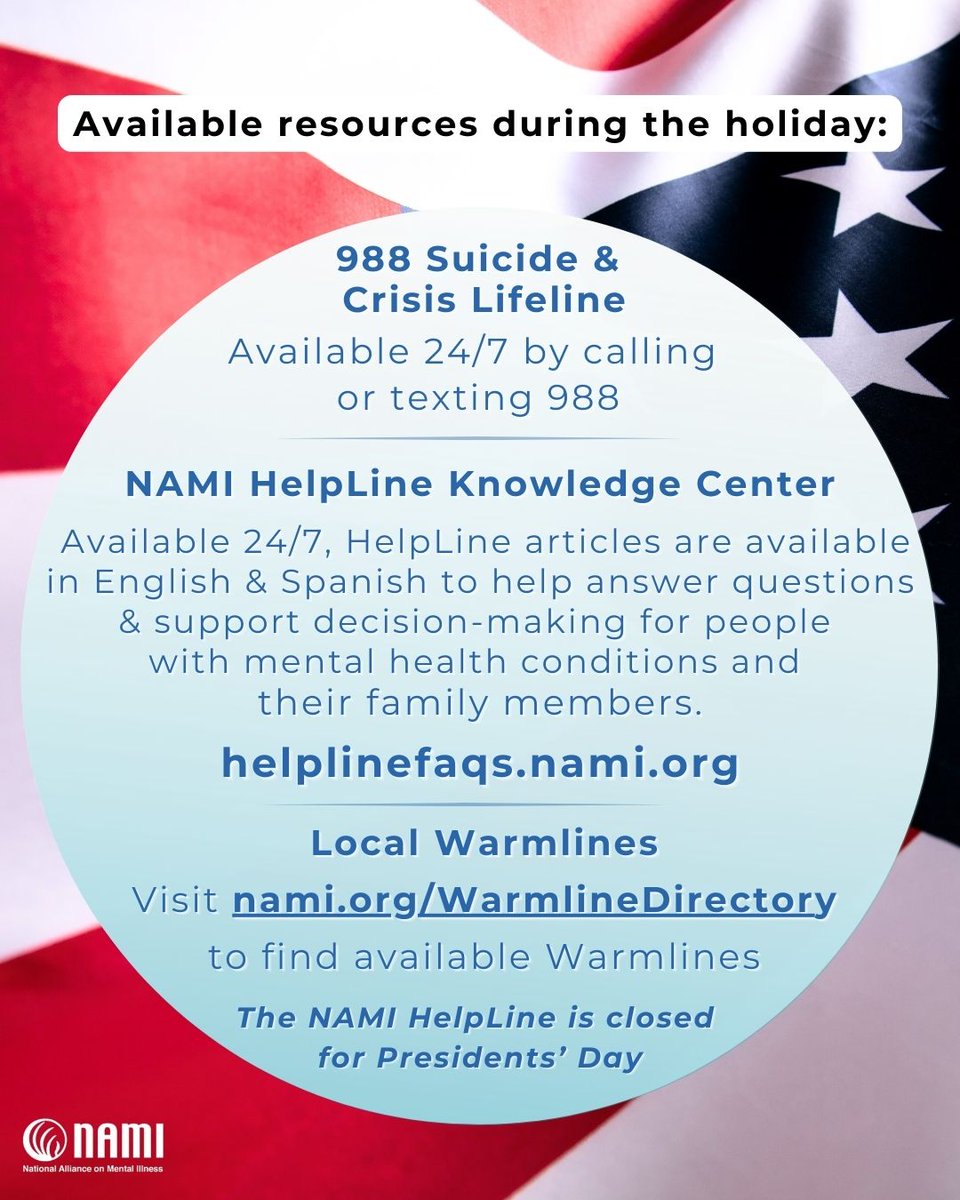
ALT A graphic listing mental health resources on an American flag background. It includes the 988 Suicide & Crisis Lifeline, the NAMI Helpline Knowledge Center with links to helplinefaqs.nami.org, and local warmlines via nami.org/WarmlinesDirectory. A note mentions the NAMI Helpline is closed for Presidents' Day.