
THE ARCHITECTURE IS READY. THE SCALE IS MASSIVE.
GM Humans ☕ Happy Friday! TGIF 🕋
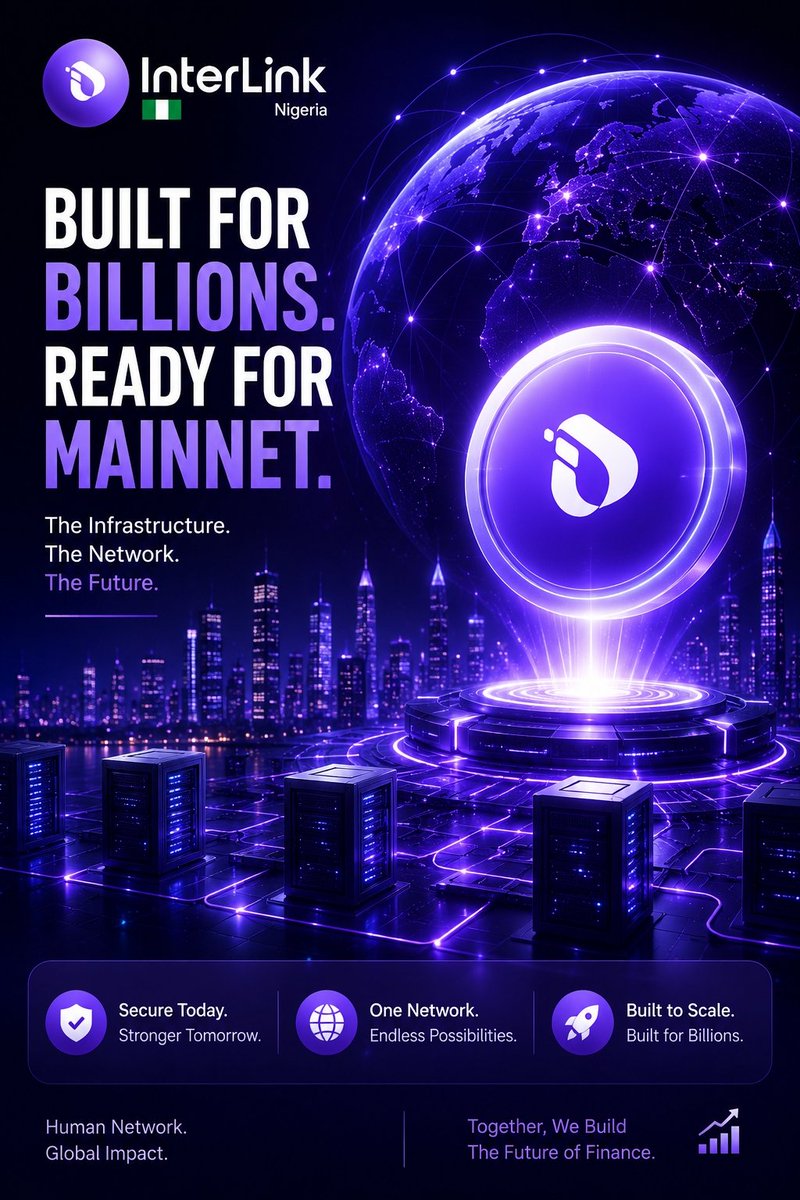
As we look toward the Private Mainnet, it’s clear that InterLink is not building for just thousands—we are building for billions. Our infrastructure is being stress-tested to ensure that when we go fully live, every transaction is seamless, secure, and instant.
The transition to Mainnet is the final step in proving that our Human Network can support a global economy. Every node you maintain and every active session you complete is a brick in this foundation. Let’s finish the week strong as we prepare for the next phase of our growth.
#InterLink #ITLG #ITL #PrivateMainnet #The8MEra #Web3Scale #Nigeria
1
2
13
620

23 Dec 2025
1/3 Whoa, Brevis just cranked out 280 MILLION ZK proofs talk about scaling beast mode! High throughput, cheap as chips, fully verified. 🚀 #BrevisZK #Web3Scale
22 Dec 2025

✅That's 280 MILLION proofs generated.
Brevis continues to scale verifiable compute in production: high throughput, low cost, and fully #ZK-verified.
📈From personalized #DeFi logic to verifiable #AI inference, proofs are compounding fast.
22
40
49

16 Dec 2025
Traffic surges are real.
Your product cannot pause when usage increases.
Gaya provides steady performance under load, so experiences remain smooth and predictable.
Stay reliable at scale.
Build on stable foundations.
#Web3Scale #Performance #BlockchainInfra #Gaya

3
12
494

16 Dec 2025
Big moments don’t just make headlines; they put blockchains to the test.
In this clip, @afscott, of @SuperteamAE, touches on why real-world stress moments matter for proving whether a network is actually built to scale.
The full breakdown? That’s in the episode of #HashItOver, the podcast by #UnchainedSummit, powered by @CoinEdition, coming out this Friday, 19th December.
Unchained Summit will take place on 1–2 May 2026 at W Dubai – The Palm.
Explore sponsorship opportunities with Unchained Summit here:
unchainedsummit.com/dubai/en…
#EventbyAeternum #CoinEdition #Solana #SolanaSuperteam #BlockchainInfrastructure #Web3Scale
2
5
97

15 Dec 2025
Stop waiting for the next big thing.
@wardenprotocol is the big thing.
We're providing the infrastructure for AI agents to achieve mass monetization and true scale.
Don't be late to the Agent Economy.
#AIEconomy #Web3Scale #WardenProtocol

3
1
5
18

10 Dec 2025
Day 55/100
A new era of decentralized identity begins with @idOS_network.
Web3 transforms personal data into a self sovereign asset fully owned, stored, and controlled by the individual. idOS safeguards encrypted identity data across independent nodes, accessible only through your private key.
Applications request only the specific attributes they need, with every permissioned action recorded on chain. Instead of exposing raw data, idOS provides cryptographic proofs that preserve privacy while enabling trust.
A unified identity layer designed for permissioned sharing, verifiable credentials, and Web3scale adoption.
With idOS, identity finally belongs to the user.
9 Dec 2025

Day 54/100
Good evening legends
1
1
2
124

23 Nov 2025
Don't just grow. Scale intelligently.
@Alignerz_ engineered a robust, future proof framework for Web3 expansion. Our IWO ensures projects can scale without compromise.
Built for tomorrow, today.
#Web3Scale #FutureProof
1
4
9
63

16 Nov 2025
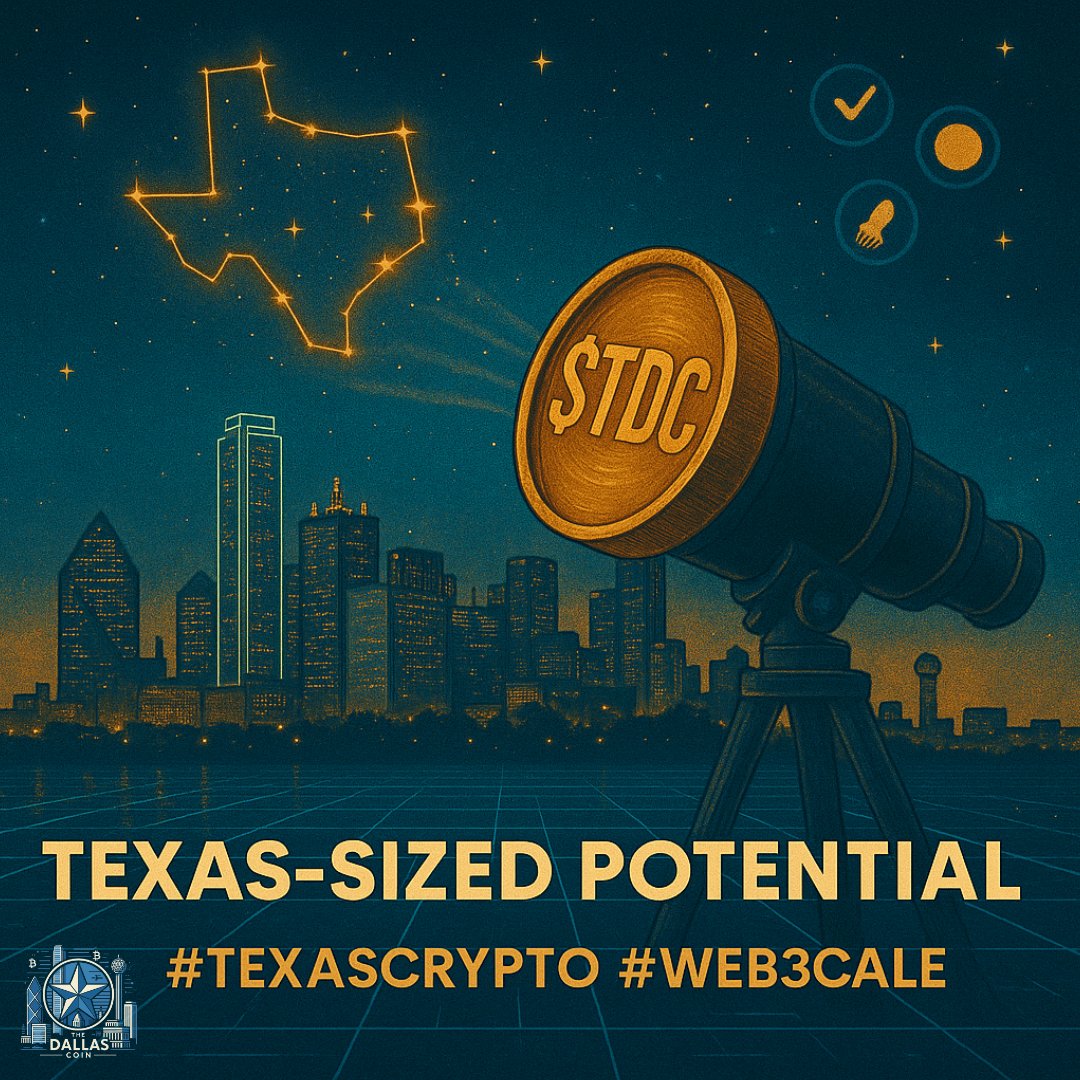
Everything's bigger in Texas. including the future of crypto.
The Dallas Coin is just getting started.
#dallascoin #dallas #texascrypto
#web3scale #texas
3
11
3,520

8 Nov 2025
Guys, @brevis_zk schooled us on the real hidden gem of ZK proofs, it’s not just privacy.
Beyond proving you’re 21 without an ID, it’s succinctness that scales everything.
💾 GB-heavy computation → KB proofs ⚡ Verified in milliseconds
Server rack nightmare? Shrunk to an SD card. Mind blown.
Thread gems:
🔹 ZK 101: Prove truth without spilling data, like solving a math problem without showing work.
🔹 Scalability: One prover does the grind, everyone verifies the tiny proof on their phone. No hardware wars.
🔹 App wins: DEX loyalty discounts? Off-chain crunch, on-chain verify for pennies. Personalized DeFi without gas murder.
Privacy grabs headlines, but succinctness makes chains fly, phones as validators, smart contracts actually smart.
Brevis built it; we’re living it. Who’s got a ZK use case that slaps? 👇
#BrevisZK #ZKProofs #Web3Scale

9
11
109

7 Nov 2025
Cysic is the missing link from ZK research → ZK production.
#Cysic #ZKEngineering #Web3Scale #CryptoInnovation
2
15

4 Nov 2025
When your institutional finance team finally discovers @CantonNetwork and all the emotions just go... JOY!
No more 😢 silos, no more 😡 friction. Just pure #Interoperability bliss!
Atomic settlement private interoperability = 🚀
#CantonMemeContest | #FinanceFusion | #Web3Scale
1
2
17

30 Oct 2025
idOS: Web3 Identity at Scale
@idOS_network = portable identity for stablecoins
✅ Verify Once
✅ Own Forever
✅ Reuse Everywhere
Pain:
❌ 80% KYC drop-off
❌ Siloed data
❌ No cross-chain trust
Solution:
✅ Self-custodial encryption
✅ Smart access grants
✅ Backed: Circle, Arbitrum, NEAR
Scale Web3 10x:
•Liquid users = billions onboarded
•Apps integrate in hours
•41% $IDOS to community
Join 75K users 👉 app.idos.network
gidOS #Web3Scale
30 Oct 2025

idOS: Web3 Identity at Scale
@idOS_network = portable identity for stablecoins
✅ Verify Once
✅ Own Forever
✅ Reuse Everywhere
Pain:
❌ 80% KYC drop-off
❌ Siloed data
❌ No cross-chain trust
Solution:
✅ Self-custodial encryption
✅ Smart access grants
✅ Backed: Circle, Arbitrum, NEAR
Scale Web3 10x:
•Liquid users = billions onboarded
•Apps integrate in hours
•41% $IDOS to community
Join 75K users 👉 app.idos.network
gidOS #Web3Scale
1
1
4
141

30 Oct 2025
idOS: Web3 Identity at Scale
@idOS_network = portable identity for stablecoins
✅ Verify Once
✅ Own Forever
✅ Reuse Everywhere
Pain:
❌ 80% KYC drop-off
❌ Siloed data
❌ No cross-chain trust
Solution:
✅ Self-custodial encryption
✅ Smart access grants
✅ Backed: Circle, Arbitrum, NEAR
Scale Web3 10x:
•Liquid users = billions onboarded
•Apps integrate in hours
•41% $IDOS to community
Join 75K users 👉 app.idos.network
gidOS #Web3Scale
30 Oct 2025
Unlocking Web3 Identity: @idOS_network
1/ idOS = decentralized ID OS for Web3. Chain-agnostic, self-custodial KYC for stablecoins. Verify once, transact everywhere.
2/ Problem: Fragmented identity kills adoption. Users redo KYC 10x per app. Builders waste months on compliance. Breaches regulators = stalled growth.
3/ idOS Solution:
•Decentralized L1 storage for encrypted creds
•$IDOS powers staking, grants, fees
•Revoke access instantly
•GDPR-compliant, 1M migrating users
4/ Scalability Revolution:
•Cross-chain reuse = explosive onboarding
•DeFi, neobanks, RWAs onboard millions
•Epoch 2 live = stack points for $IDOS airdrop
Create your profile 👉 app.idos.network
2
2
5
665

19 Oct 2025
Crypto doesn't need more ideas. It needs better execution around compliance and scale. #ZigChain #ZIG #ExecutionMatters #Web3Scale
3
34

11 Oct 2025
What If Blockchains Could Build Their Own Blockchains? Arbitrum Orbit Is Making It Real.
Back when Ethereum gas fees hit the roof, builders had two options - complain or innovate. That frustration gave birth to Layer 2s like @arbitrum, where speed met affordability.
But here’s the twist: even Layer 2s eventually hit limits. So, what happens when they start letting others build on top of them?
That’s exactly where Arbitrum Orbit comes in - a whole new era where projects aren’t just deploying apps; they’re launching their own chains. And right now, that ecosystem is expanding at lightspeed.
So, What Exactly Is Arbitrum Orbit?
Think of Arbitrum as a massive city - efficient, bustling, and secure. Now imagine each developer being able to build their own district inside it, with custom rules, fees, and economies.
That’s what an Orbit chain is; a Layer 3 blockchain that lives on top of Arbitrum’s Layer 2 infrastructure.
These Orbit chains use Arbitrum’s tech stack but can be tailored for specific needs gaming chains with ultra-fast transactions, DeFi zones with unique tokenomics, or even education-focused blockchains built for micro-certifications. All connected under one secure roof.
It’s modular scalability - build your own blockchain without starting from scratch.
Proof in the Data: Orbit Is Exploding
49 active Orbit chains now cross the ecosystem, including names like @plumenetwork, @ApeChainHUB, @educhain_xyz, @RariChain, @XAI_GAMES, @Superpositionso, and more.
$20.9B total value secured (TVS) across these chains - that’s value and assets being protected and hashed under Orbit’s umbrella.
The network averages over 103 user operations per second (UOps) meaning real activity, not just idle chains.
There’s $10B in stablecoin liquidity flowing across these Orbit chains, the backbone of real utility in any chain.
And builders aren’t pausing: over 25 new Orbit chains are lined up to launch soon.
This isn’t hype, it’s adoption.
What Makes Orbit Different / Why It Works
🔹Custom control, without reinventing the wheel. You get the flexibility of your own chain, but plug into Arbitrum’s stack.
🔹Interoperability baked in. Orbit chains talk to each other and to Arbitrum’s L2s.
🔹Tailored performance & economics. You can pick gas token, throughput, governance model, data availability choices.
🔹Scalable security composability. You lean on Arbitrum’s Nitro core, fraud proofs, and upgrades while still building unique chains.
🔹Revenue-sharing model with ecosystem alignment. Under the Arbitrum Expansion Program, new Orbit chains share ~10% of profits - 8% to the @arbitrumdao_gov, 2% to the developer guild.
Why This Shift Changes the Game
Orbit’s growth signals a shift: Ethereum scaling is no longer just vertical (bigger L2s); it’s horizontal, through customizable chains. Builders no longer need to compromise between autonomy and network effects.
When you see massive stablecoin flows, high UOps, and tens of billions in secured value, what you’re witnessing is infrastructure becoming invisible people just using what works. Orbit is moving toward being the canvas on which Web3 apps are painted.
My Take
Watching Orbit evolve this week reminds me: scaling isn’t just about throughput. It’s about creating ecosystems that adapt, interconnect, and empower. With 49 active chains, billions in TVS, and real usage, Orbit’s message is loud: custom chains built smartly will become the default, not the alternative.
We’re not just building dApps, we’re building new worlds, each on its own highway, all intertwined. And Arbitrum’s Orbit is proving that the road to scale is layered, interconnected, and alive.
#Orbit everywhere. 🌌
Follow @Ricardo__Gordon to stay updated.
Cc: x.com/Ricardo__Gordon/status…
#Arbitrum #Layer3 #Web3Scale #Builders
10 Oct 2025

.@Arbitrum Orbit chains are flying! 🪐
30D Stats:
→ $20.9B TVS across 49 chains incl. @plumenetwork, @ApeChainHUB, @educhain_xyz, @RariChain, @XAI_GAMES, @Superpositionso, Arbitrum One, Nova & more
→ 103.6 user ops/sec
→ $10B stablecoin TVS
25 more chains coming!
6
54
155
7 Sep 2025
Highways didn’t invent cars they made them scalable. Socket doesn’t build apps, it makes them usable across all chains. Infrastructure that unlocks real growth, not just theoretical potential. #Web3Scale
@SOCKETProtocol
4
1
8
89

15 Aug 2025
Ethereum tooling. Solana performance.
Monad is a next-gen L1 that delivers low-latency, high-throughput EVM execution — at scale.
If you’re building for mass adoption, build on Monad.
#Monad #L1 #EVMCompatibility #Web3Scale #OnchainFuture @monadscores_xyz @MonadSealsNFT
2
25

7 Aug 2025
🚀 Next-gen blockchain infra
@monad is building a blazing-fast EVM chain —
✅ Ultra-scalable
✅ Lightning-speed performance
✅ Built for DeFi, NFTs & everything in between
No limits. Just pure throughput.
#Monad #EVMInfra #Web3Scale
4
20
7 Aug 2025
🚀 Next-gen blockchain infra
@monad is building a blazing-fast EVM chain —
✅ Ultra-scalable
✅ Lightning-speed performance
✅ Built for DeFi, NFTs & everything in between
No limits. Just pure throughput.
#Monad #EVMInfra #Web3Scale
4
19

5 Aug 2025
@monad powers blazing-fast, scalable EVM chains with seamless composability and Ethereum compatibility.
Next-gen infra for next-gen decentralized apps.
#Monad #EVMInfra #Web3Scale #CryptoInfra
3
12