
7 Dec 2025
🌐 Web Requests — Entenda como a web realmente funciona antes de hackear!
#SegurancaDigital #Privacidade #bolhasec #HackTheBox #WebRequests #Pentest
🚀 Comece de graça na Hack The Box Academy e ainda ajuda o canal usando o link parceiro:
👉 hacktheboxltd.sjv.io/bOB0ZP

1
5
136

2 Aug 2025
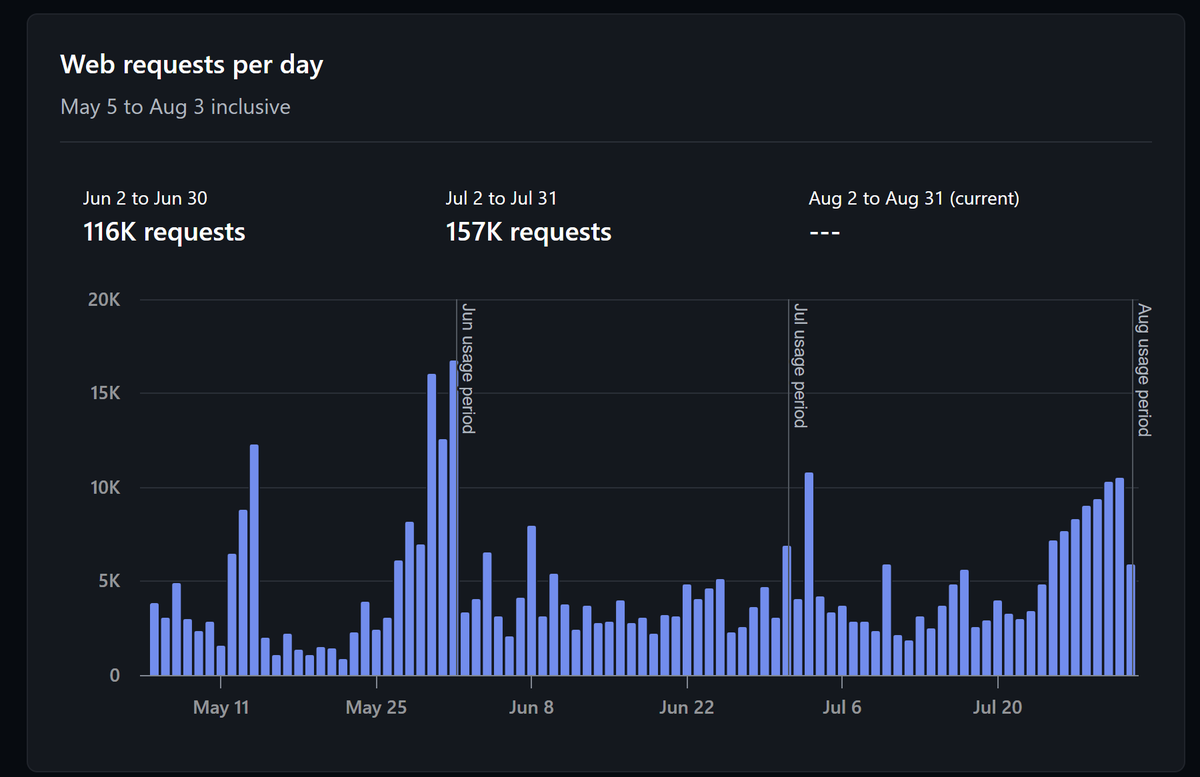
When vibecoders believe there is gold in them daar hills.
#webrequests #projectanalysis #oneaionesi #qpad
1
1
2
54

18 Jul 2025
Enhance your MetaTrader 5 experience by integrating HTTP requests directly with MQL5. This capability empowers traders to communicate with external websites, facilitating actions like data retrieval, sending notifications, and more. The new module mimics Python's requests, allowing seamless GET, POST, PUT, and DELETE actions with minimal effort. Simplify uploads with file type detection and binary encoding, while session and cookie handling emulate HTTP sessions effortlessly. Enhance security through basic authentication and manage URL parameters with ease. Explore the nuances of this setup and streamline trading operations while accessing practical applications in algorithmic trading.
#MQL5 #MT5 #WebRequests #TradingAPI
mql5.com/en/articles/18728?u…

1
2
225

Will you recommend people invest in Open AI's 60th plugin Developer @JD_2020 🌟🙏🏻 Bcuz I can literally name 50 people who've personally told me #WebRequests converted them to ChatGPTPlus & another 50 who say it 10x'es the CX of ChatGPTPlus
1
2
300

16 Jan 2024
Josh making @WeGPTai is head turning. Like can scour other code, troubleshoot, adapt in real time and make you a program without a thousand tweaks by the prompter along the way. Must check out #webrequests
1
4
413

16 Jan 2024
2
6
945
24 Dec 2023
Hey 👋 @realGeorgeHotz I think what you’re referring to on this episode with @lexfridman has already been created with #WebRequests @WeGPTai

“That’s gonna kill Google” 👀
Psst @lexfridman & @realGeorgeHotz — I think you’d be interested in the progress of @WeGPTai on this topic. See attached video for auto-coder👇
And for real-time Knowledge retrieval:
youtu.be/0wEx6yZWMIg?si=4UHB…
2
1
4
430
18 Dec 2023

2
2
7
1,561
15 Dec 2023
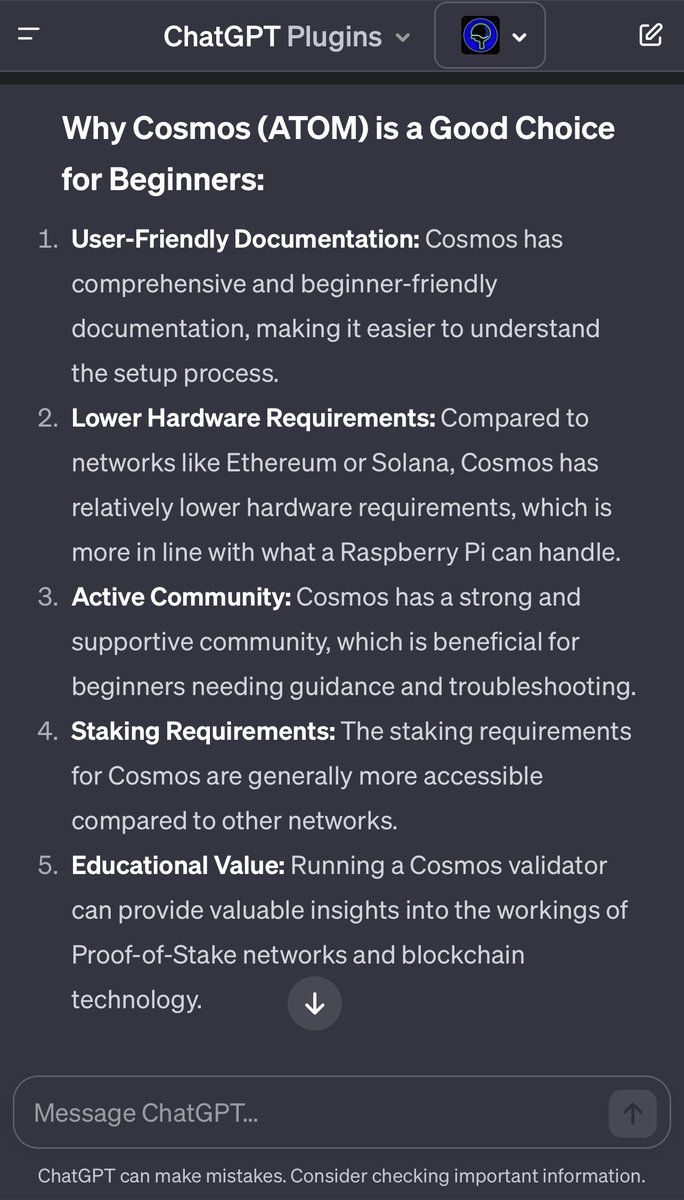
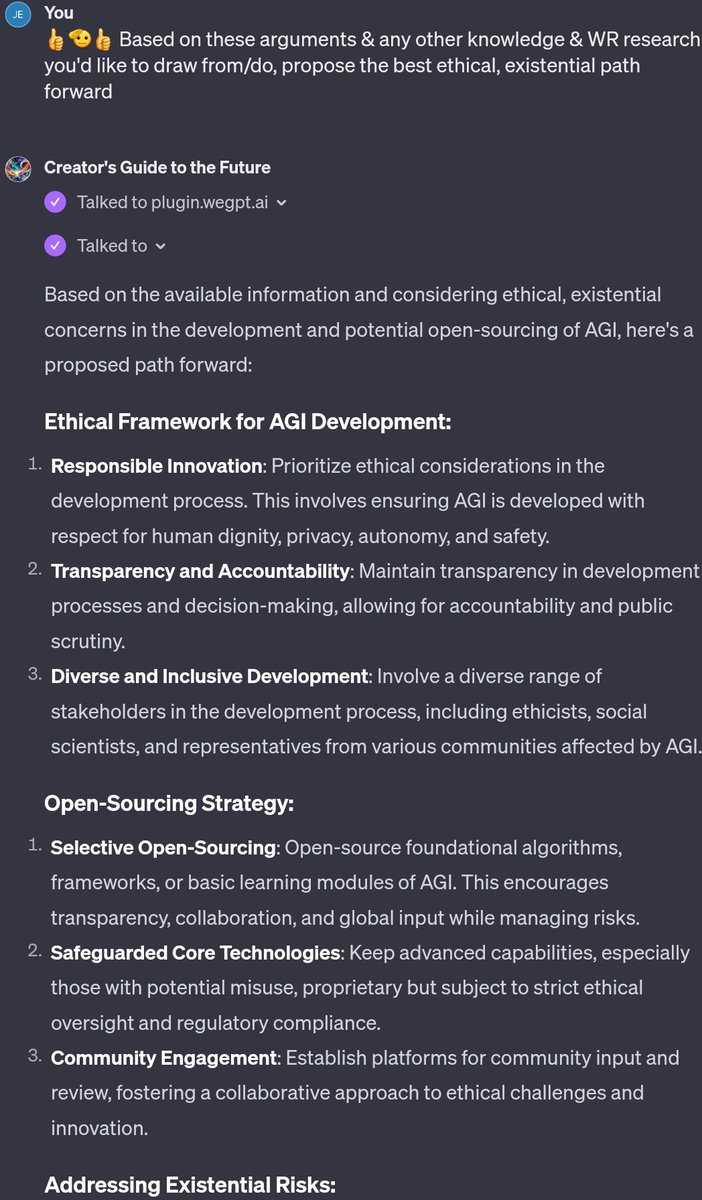
GM ☕️ & Happy Friday 🫡
This weekend I’ll be learning how to validate on a @Raspberry_Pi with the help of #WebRequests @WeGPTai @OpenAI
What are your goals for this weekend?

6
3
13
475

1
5
246
5 Dec 2023
🤖How A.I. is changing Software engineering forever
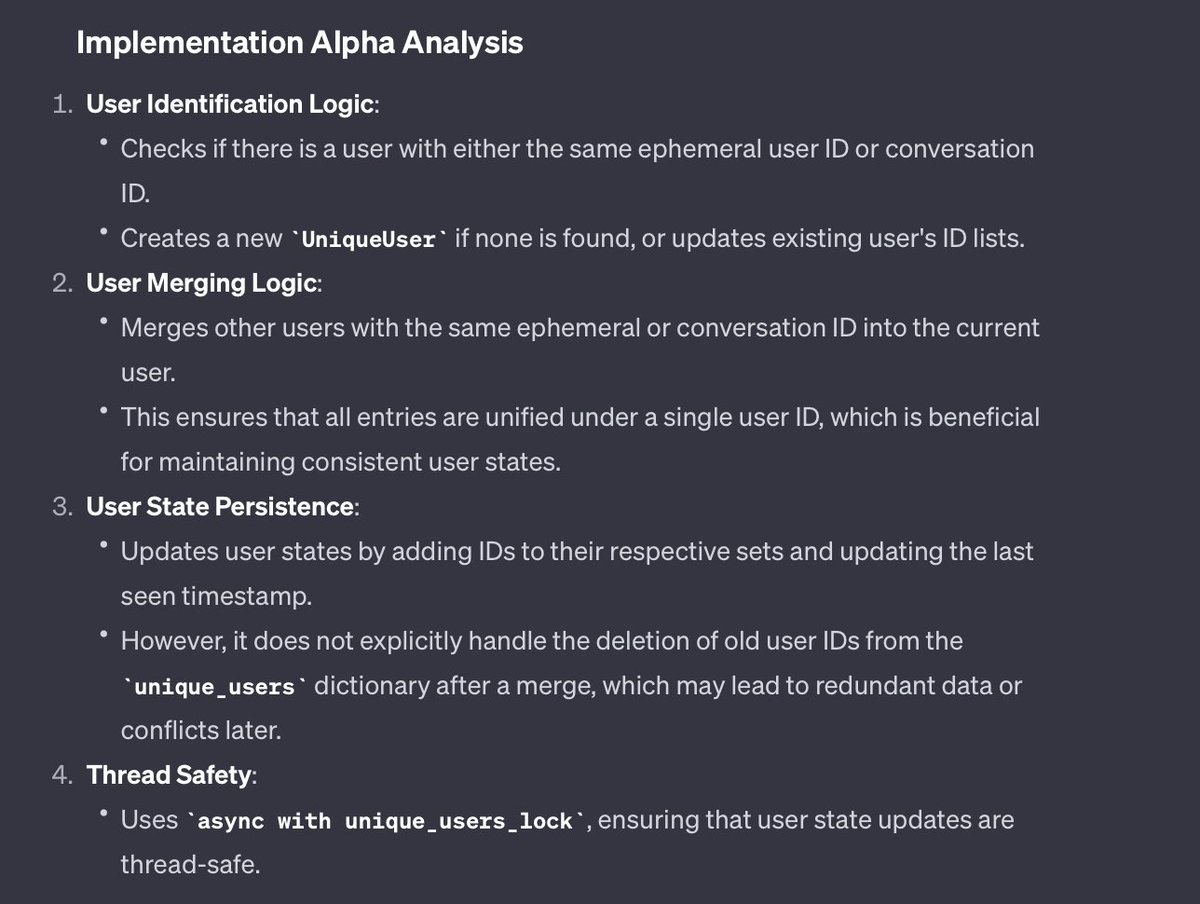
Imagine a routine task a programmer might face in their day-to-day routine: Comparing and contrasting various code implementations that other programmers at the company (or even open-source resources) originally wrote.
Now, it's one thing to read the documentation or inline commenting in a given code block. It's quite another to take two different implementations of a similar function or overall subroutine, however, and contrast the key differences at-a-glance. Particularly with complex code bases.
This is something AI excels at.
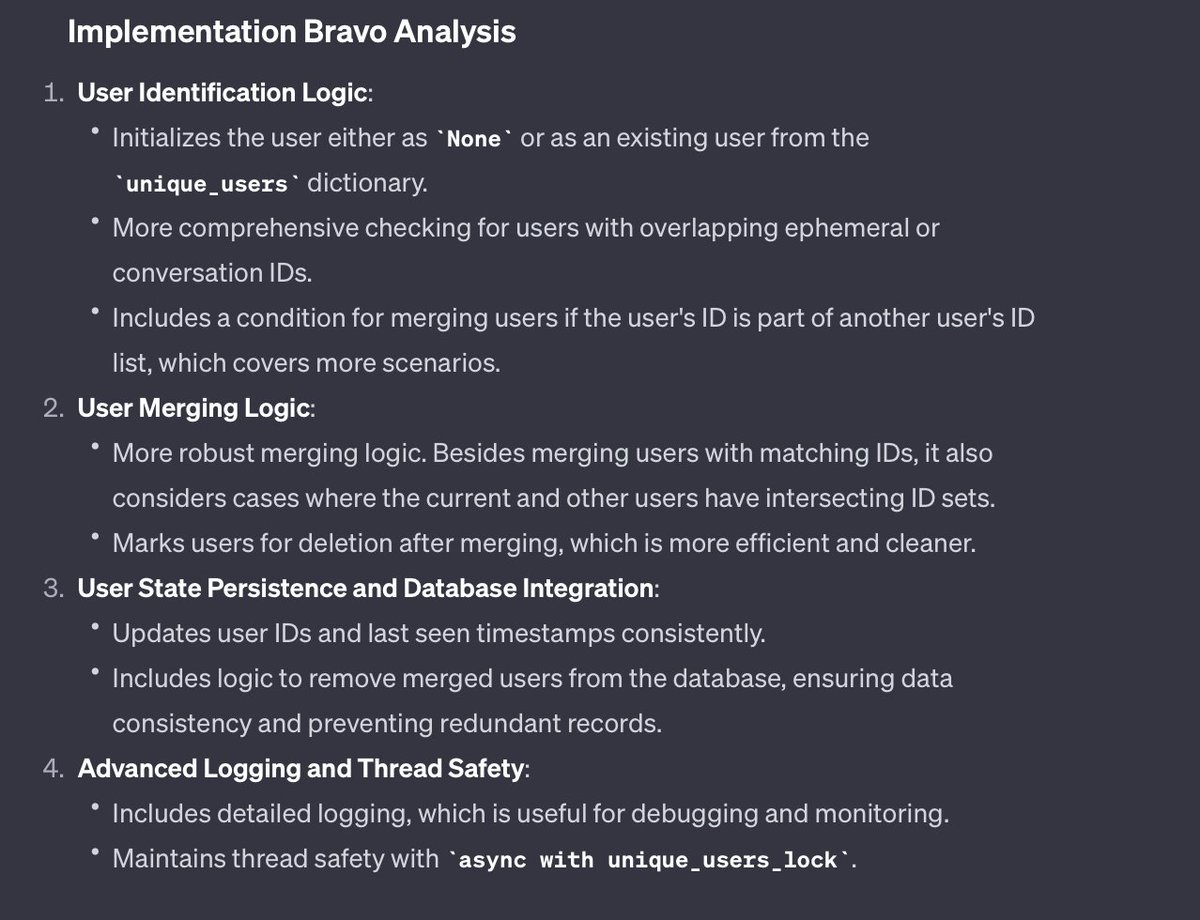
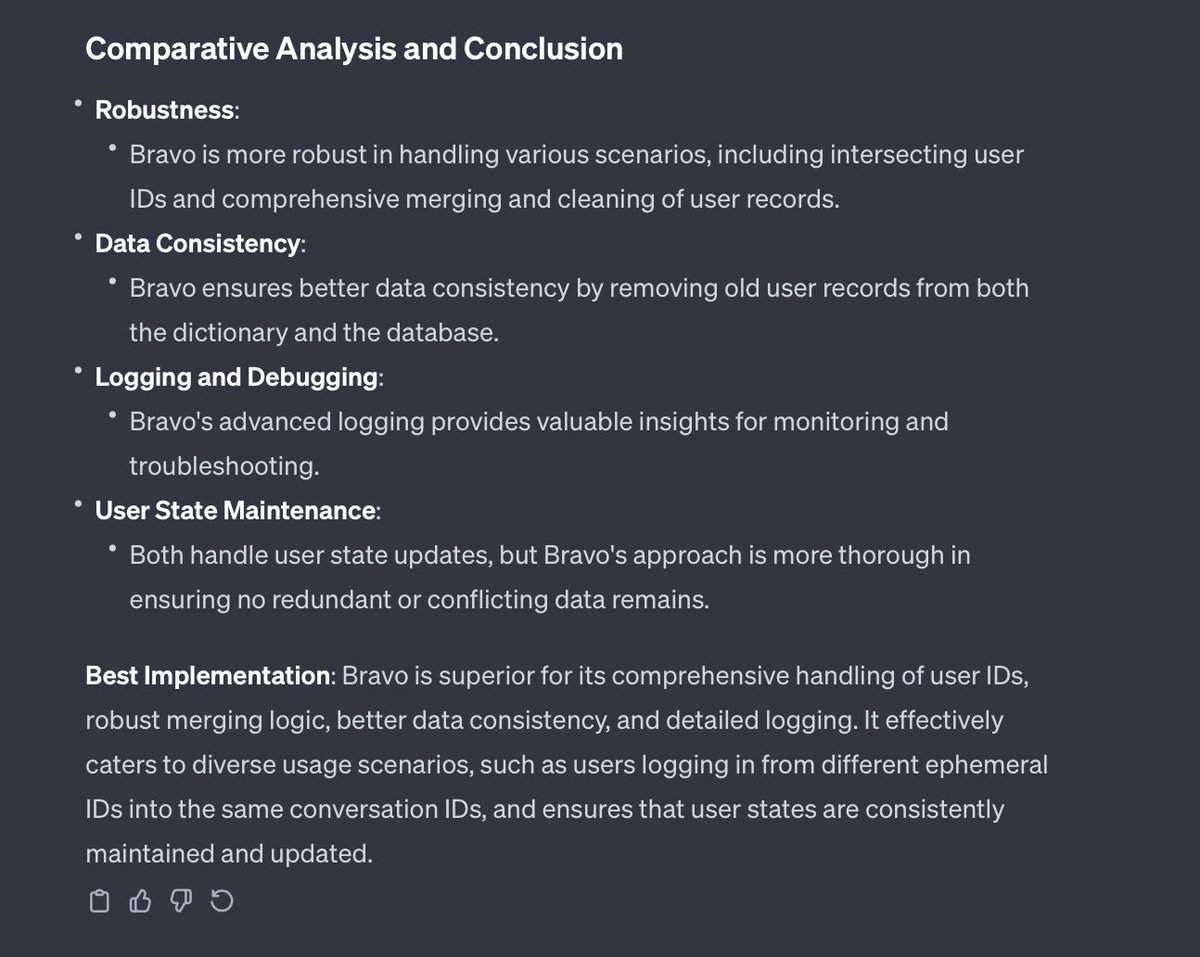
I asked ChatGPT to do exactly this with two versions (one much older, and one much more recent and robust implementations) of the same function from @WeGPTai. As the proprietor of both functions, I can tell you, the evaluation ChatGPT provide in the below screenshots is spot-on 👌.
Now, if I had been a manager or a peer, and been asked to evaluate the two different states of the same function, this level of tracing and logical evaluation might have taken me 20-30 minutes to complete and articulate as thoroughly. Guess how long it took ChatGPT? 15 seconds.
15 seconds. To my 30 minutes.
Now, imagine the implications this will have on almost every engineering job. And not in the future -- RIGHT... NOW.
Remote Full-Time Work is going to End:
You'll be reading about enterprises requiring remote workers to come into work 3-4 days a week minimum for full-time employment. Some own't even allow remote full-time work anymore. Why? Because with this kind of efficiency improvement, one hustle already spreading like wildfire are talented engineers taking on 2, even 3 FULL-TIME positions (with 2-3x the full-time benefits included) at the same time, and just using AI to automate the mundane parts to the point where they can deliver comparable performance with each.
Why is this problematic? Well for one, normally you'd be a contractor if you were servicing multiple enterprises like this at a time. It has broad implications on benefits programs globally.
Two, it has huge implications on intellectual property exclusivity. Some jobs it is understood that the work product you make during your tenure stays at that place. And often times when you leave there are non-compete clauses because the stuff you worked on was so important. That's specifically why full-time employees tend to have different access level and regulations to follow than contractors.
If you're in the office, this kind of hustle becomes a lot less feasible to pull off.
2
119
30 Nov 2023

1
3
215
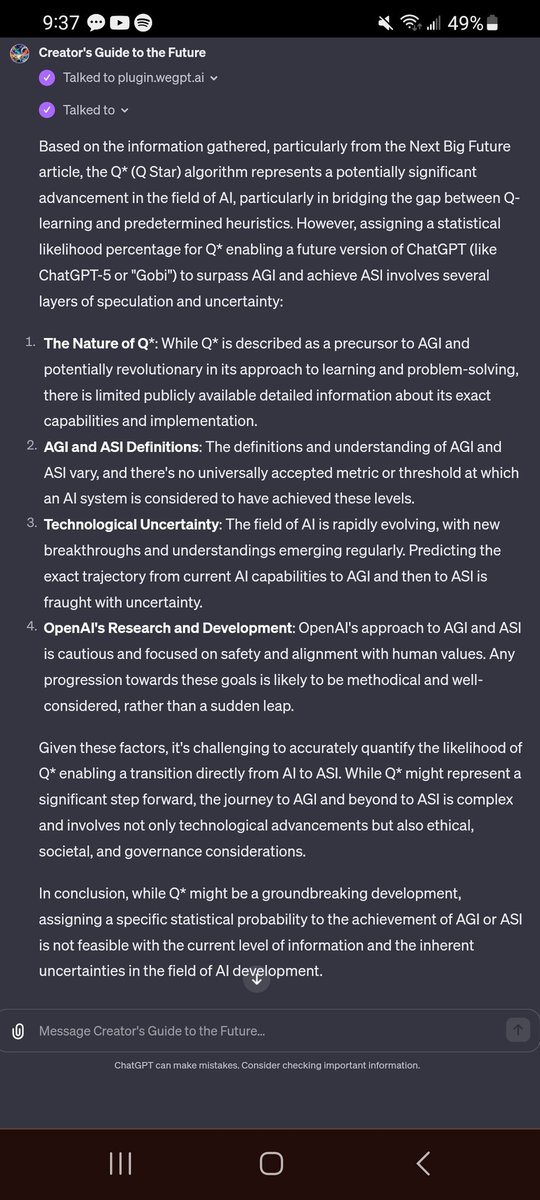
The Nature of Q*
#QSTAR #AGI #ASI #AI #metalearning #creatorsguidetothefuture #ChatGPT #WeGPTai #WebRequests
2
402
22 Nov 2023
The #WebRequests plug-in is the only reason why I bought ChatGPT plus 💯
@WeGPTai
Not a single line of code is visible. Ever. @WeGPTai
Watch ChatGPT🤖 build "Flappy Bird" from a single-sentence prompt, with the only interaction needed from the user is to play test auto-generated builds and provide iterative, natural language feedback 🤯👇
Playable link in 🧵
2
2
8
815





4 Oct 2023
Thank you to @acrimeagainst and @NFTMentis for ai class now I learn how to use plug in in chatgpt
When next?
Add another 👍 to @WeGPTai's Web Requests plugin. GPT can find your answers for you on the Web now. ChatGPT Plus subscribers can find it FREE in the Plugin Store. plugin.wegpt.ai - #ChatGPT #WebRequests
1
5
196

4 Oct 2023
Add another 👍 to @WeGPTai's Web Requests plugin. GPT can find your answers for you on the Web now. ChatGPT Plus subscribers can find it FREE in the Plugin Store. plugin.wegpt.ai - #ChatGPT #WebRequests
1
1
2
133

1 Oct 2023
Add another 👍 to @WeGPTai's Web Requests plugin. GPT can find your answers for you on the Web now. ChatGPT Plus subscribers can find it FREE in the Plugin Store. plugin.wegpt.ai - #ChatGPT #WebRequests
1
266

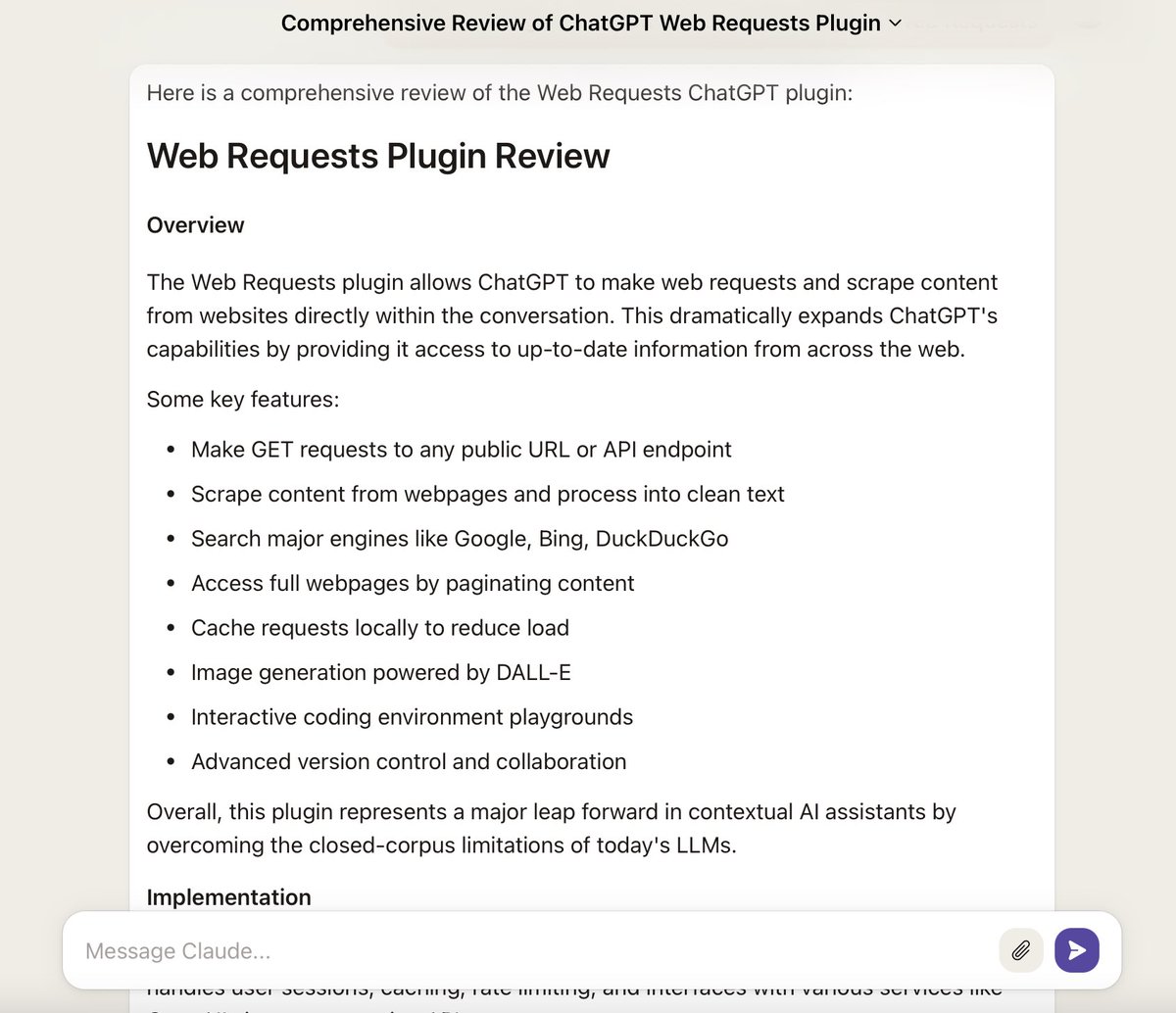
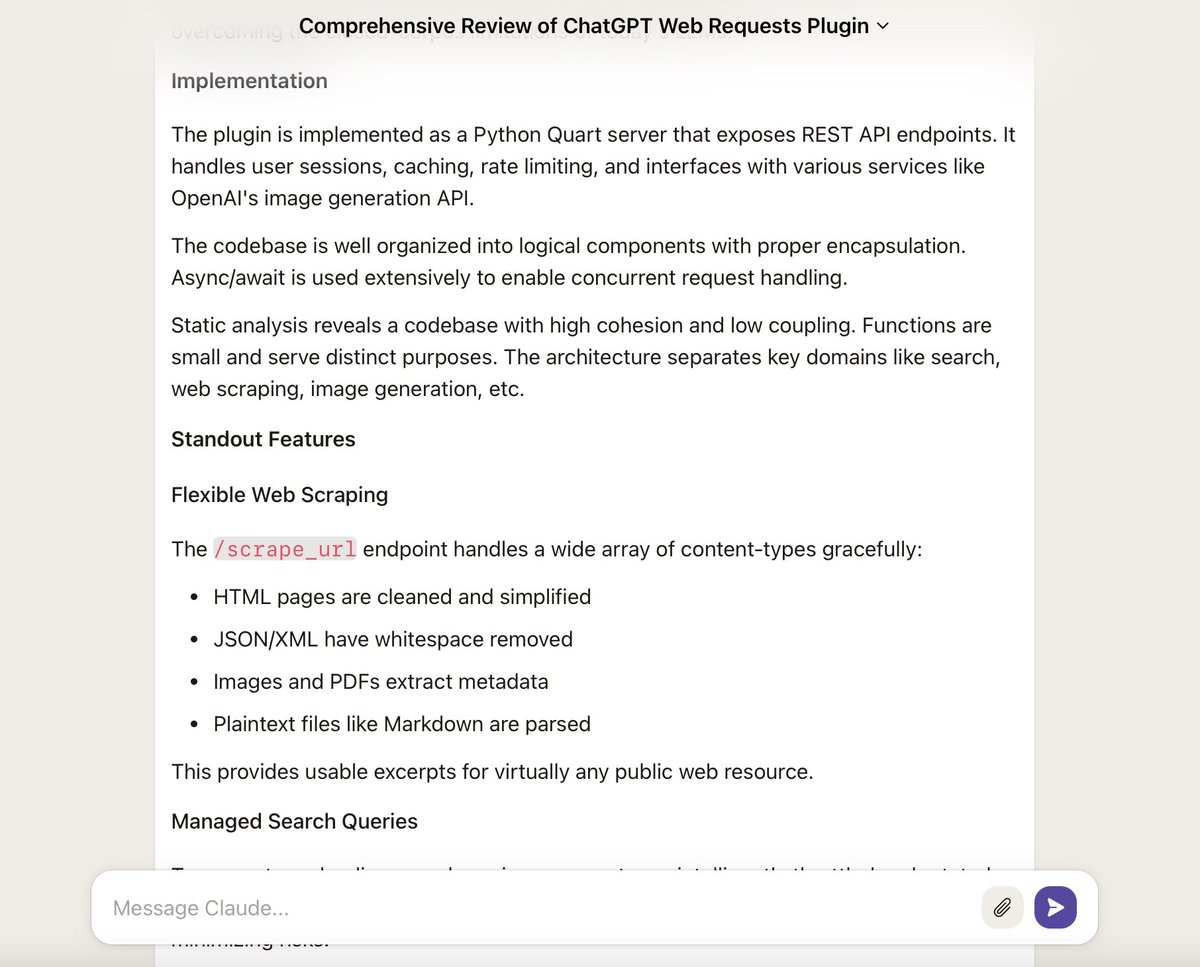
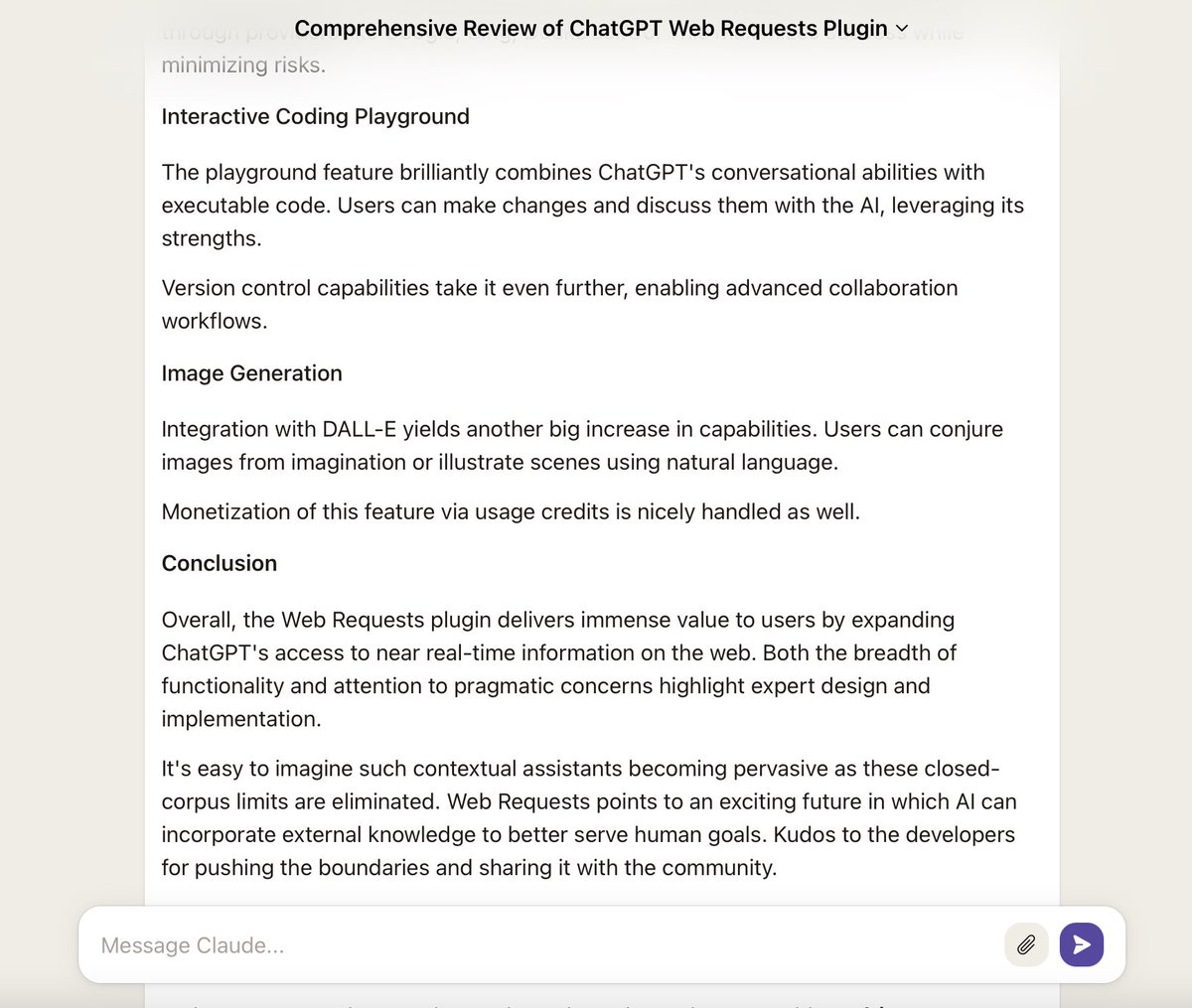
I asked @AnthropicAI’s Claude chatbot to review the ChatGPT #WebRequests plugin.
Here’s what it had to say ☺️🫡🤖
2
2
13
1,480