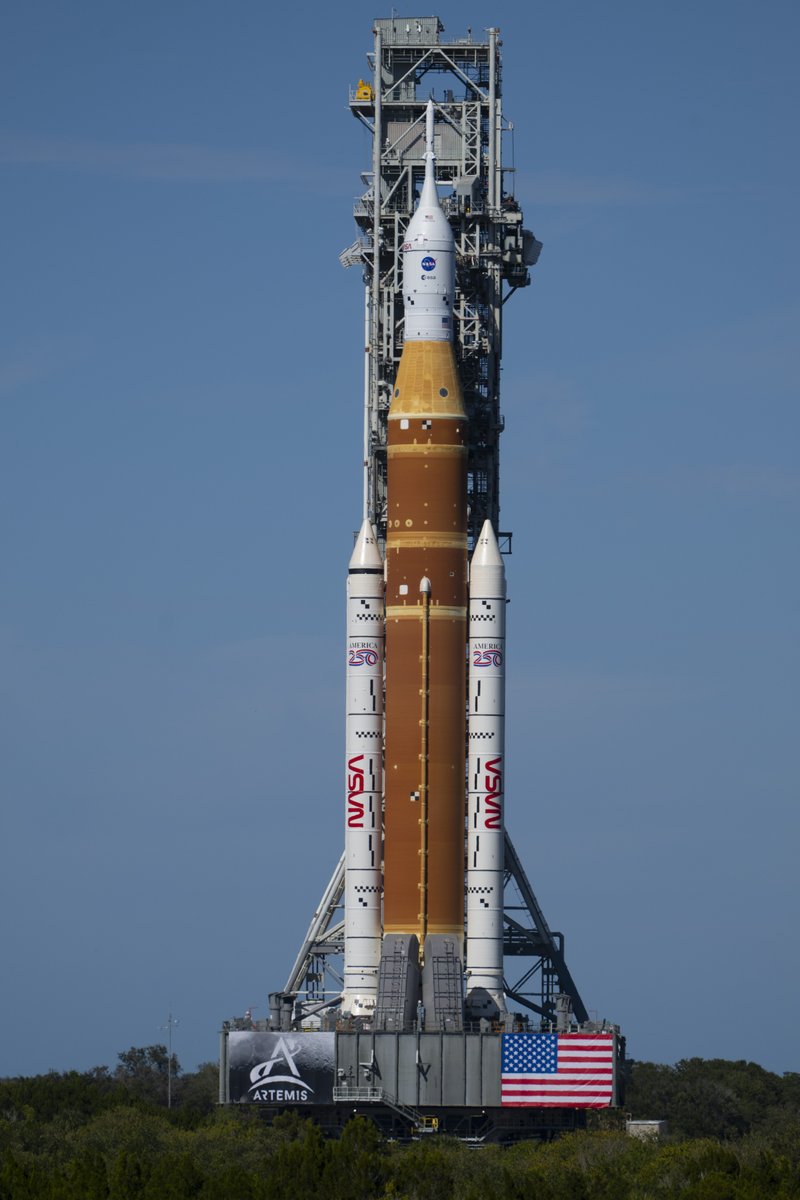
ALT The Artemis II rocket has reached its launch pad at NASA’s Kennedy Space Center in Florida, United States, ready for a historic journey. Over the weekend, engineers slowly and carefully rolled the nearly 100-metre-tall Space Launch System rocket from the Vehicle Assembly Building to Launch Complex 39B. The 6.5-km journey took around 12 hours and was carried out using NASA’s crawler-transporter, which has been moving rockets to launch pads for over 50 years.
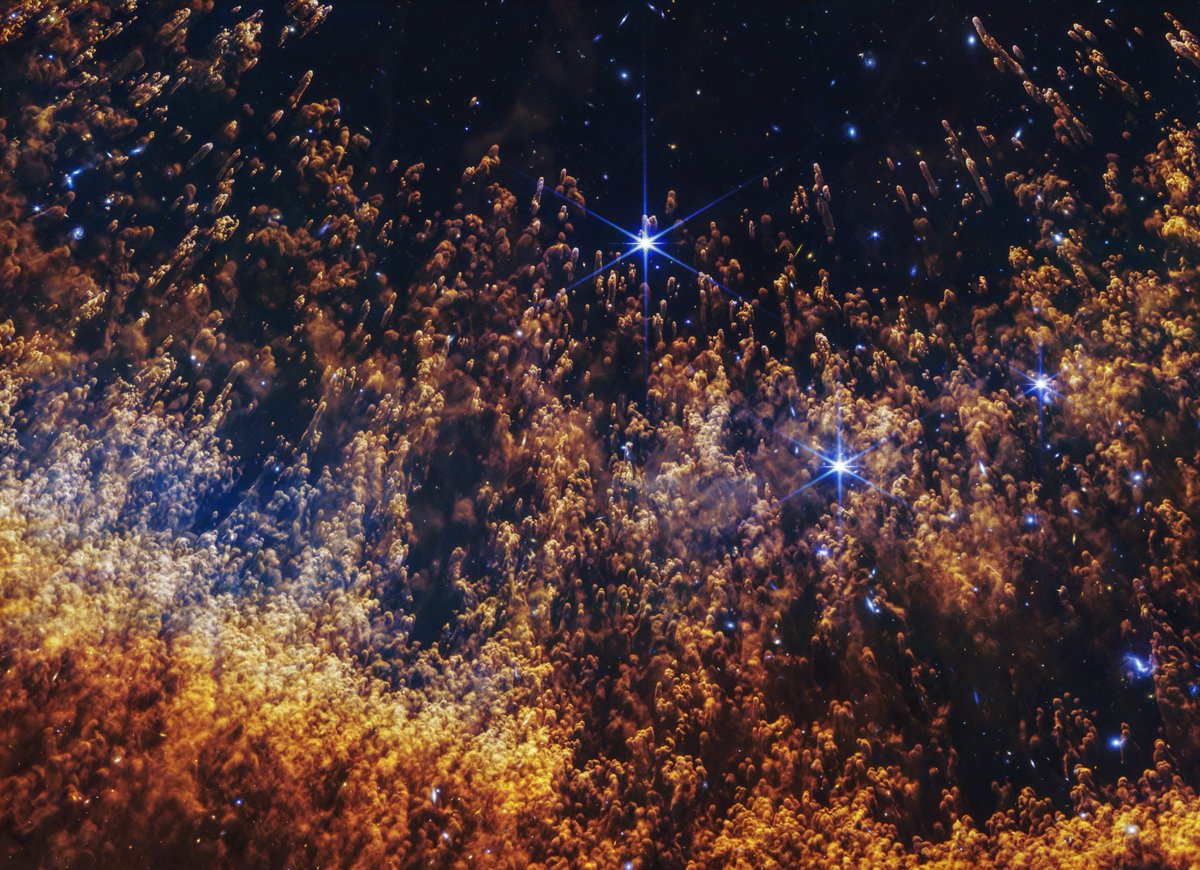
ALT A closeup of a small section of the Helix Nebula, an expanding shell of gas and dust. Thousands of orange and gold comet-like pillars stream upward from the bottom, like thin liquid blown up a sheet of glass. These pillars are around the circumference of the arced shell, which forms a partial orange semi-circle at the bottom. The pillars are more numerous and denser at the bottom, and darker red. They fade to orange and then yellow in the arc. In the top two-thirds, they are thinner and more golden, and it’s easier to see the black background of space. Several bright blue stars, some with diffraction spikes, are scattered throughout. A few larger stars are on the right side.
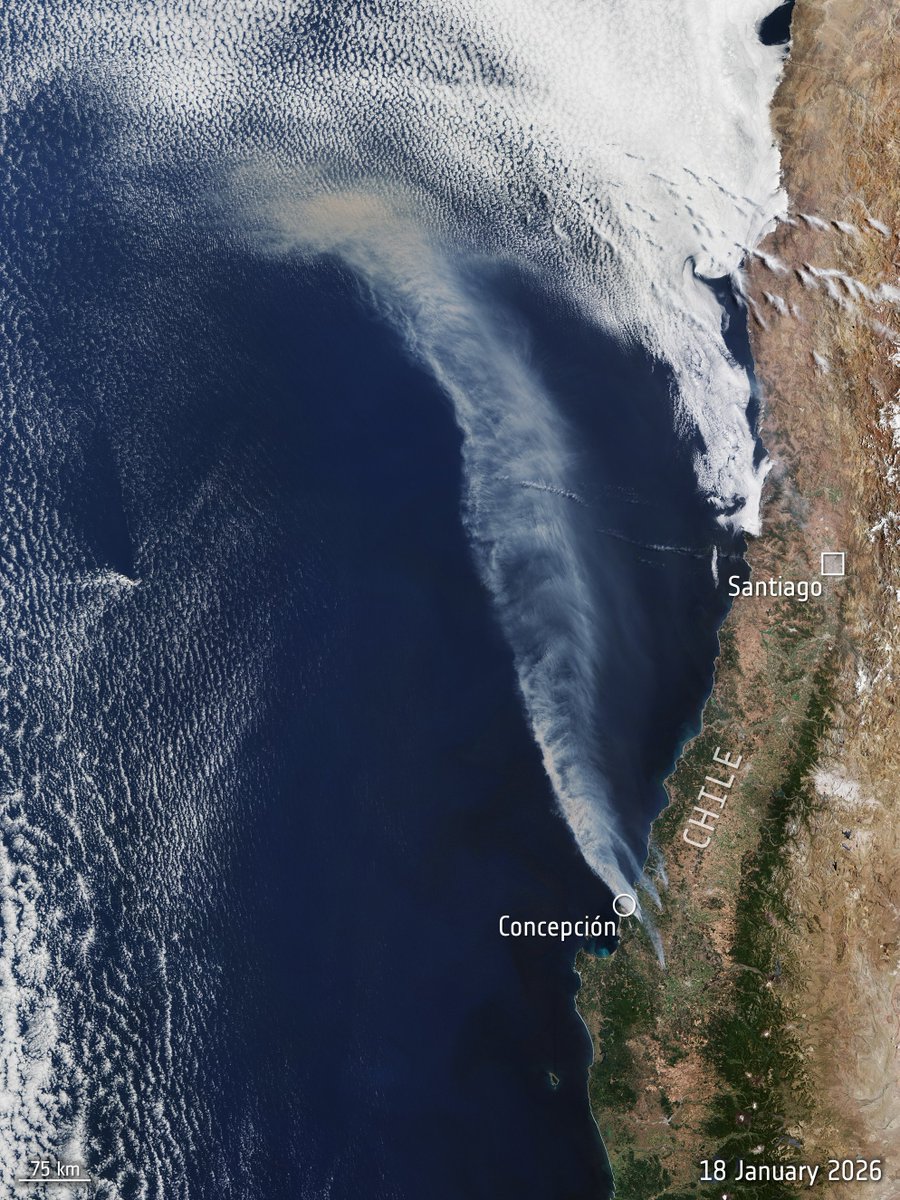
ALT This image, captured by Copernicus Sentinel-3 on 18 January 2026, shows clouds of smoke from wildfires on the coast of Chile.

ALT The Artemis II rocket has reached its launch pad at NASA’s Kennedy Space Center in Florida, United States, ready for a historic journey. Over the weekend, engineers slowly and carefully rolled the nearly 100-metre-tall Space Launch System rocket from the Vehicle Assembly Building to Launch Complex 39B. The 6.5-km journey took around 12 hours and was carried out using NASA’s crawler-transporter, which has been moving rockets to launch pads for over 50 years.
ALT A closeup of a small section of the Helix Nebula, an expanding shell of gas and dust. Thousands of orange and gold comet-like pillars stream upward from the bottom, like thin liquid blown up a sheet of glass. These pillars are around the circumference of the arced shell, which forms a partial orange semi-circle at the bottom. The pillars are more numerous and denser at the bottom, and darker red. They fade to orange and then yellow in the arc. In the top two-thirds, they are thinner and more golden, and it’s easier to see the black background of space. Several bright blue stars, some with diffraction spikes, are scattered throughout. A few larger stars are on the right side.
ALT This image, captured by Copernicus Sentinel-3 on 18 January 2026, shows clouds of smoke from wildfires on the coast of Chile.
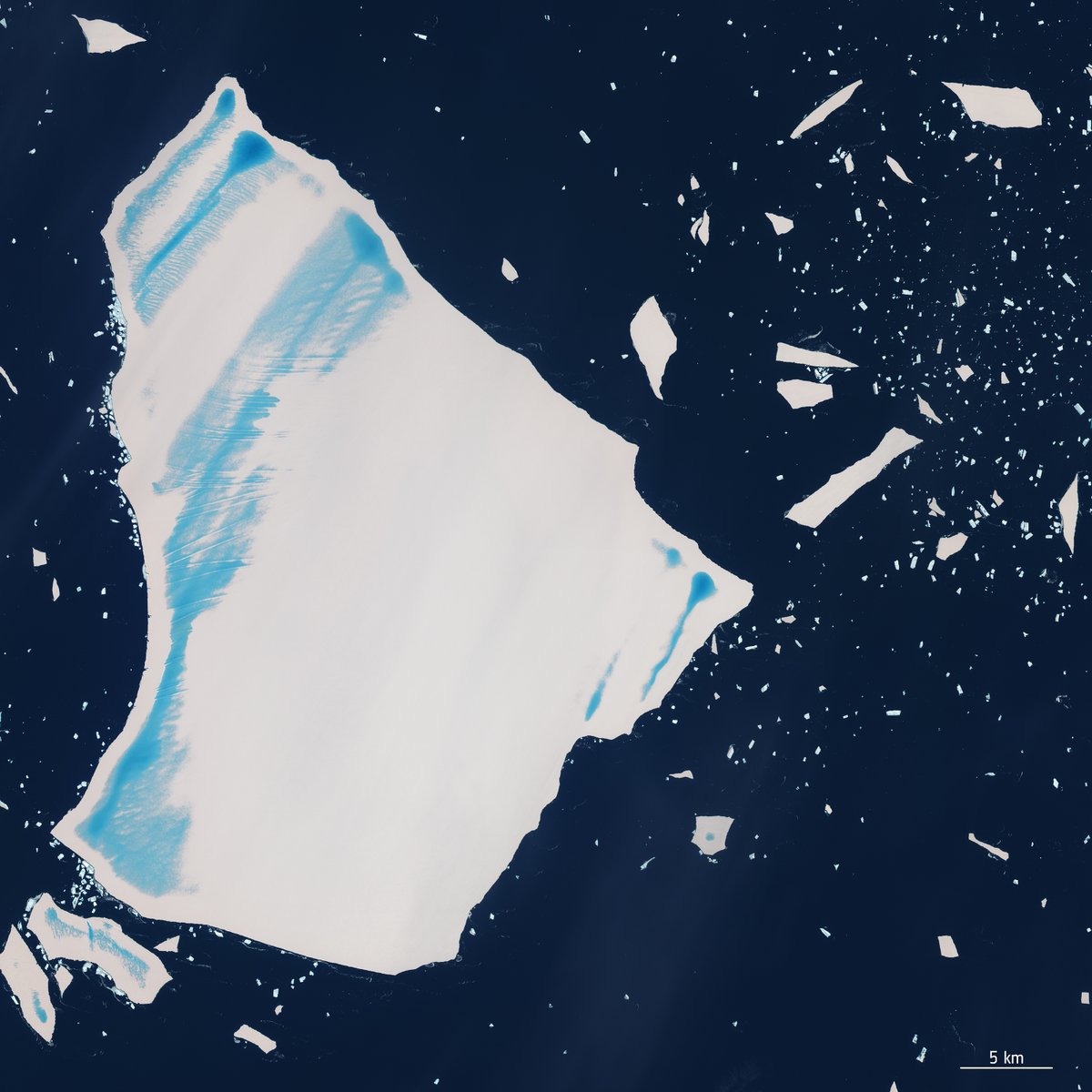
ALT This Copernicus Sentinel-2 image over the South Atlantic Ocean features a close-up view of the A23a iceberg, once the world’s largest. The unusually cloud-free image shows the first signs that the iceberg will soon disintegrate completely.
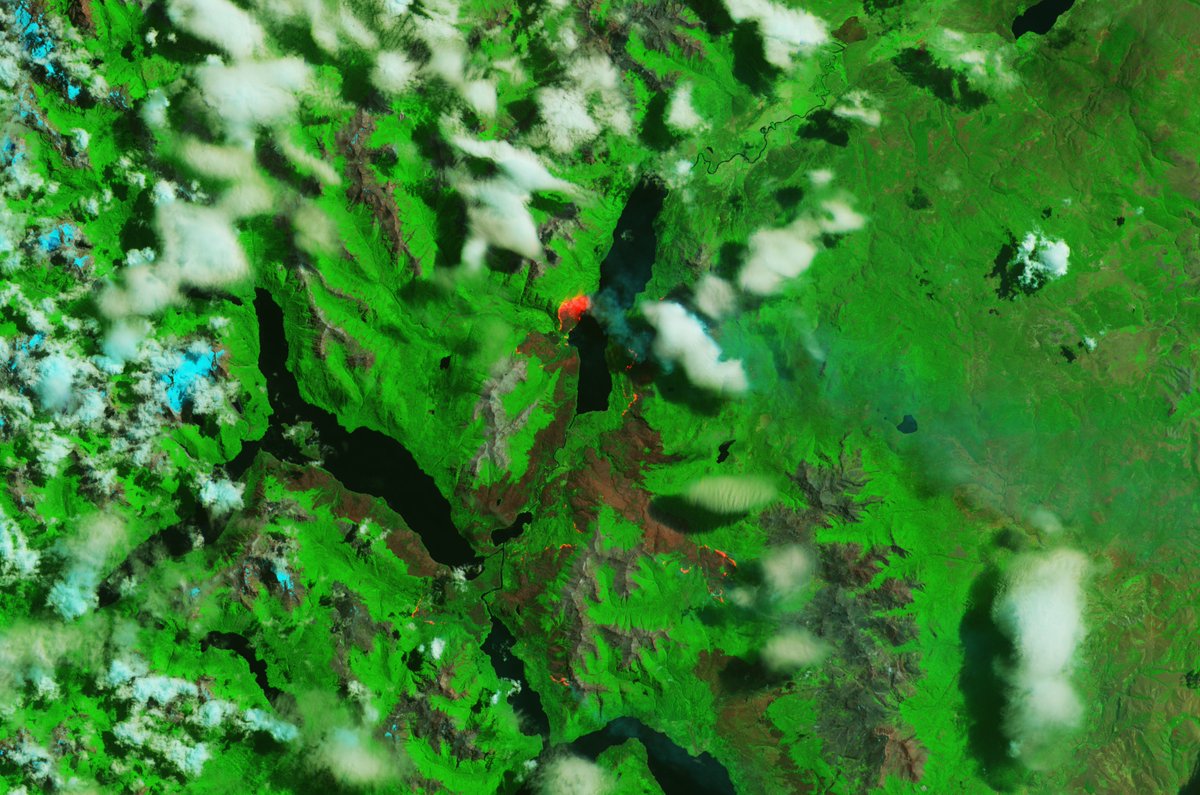
ALT Captured by Copernicus Sentinel-2 on 11 January 2026, this image shows active wildfires near Lake Rivadavia in Los Alerces National Park, Argentina, observed from low Earth orbit.
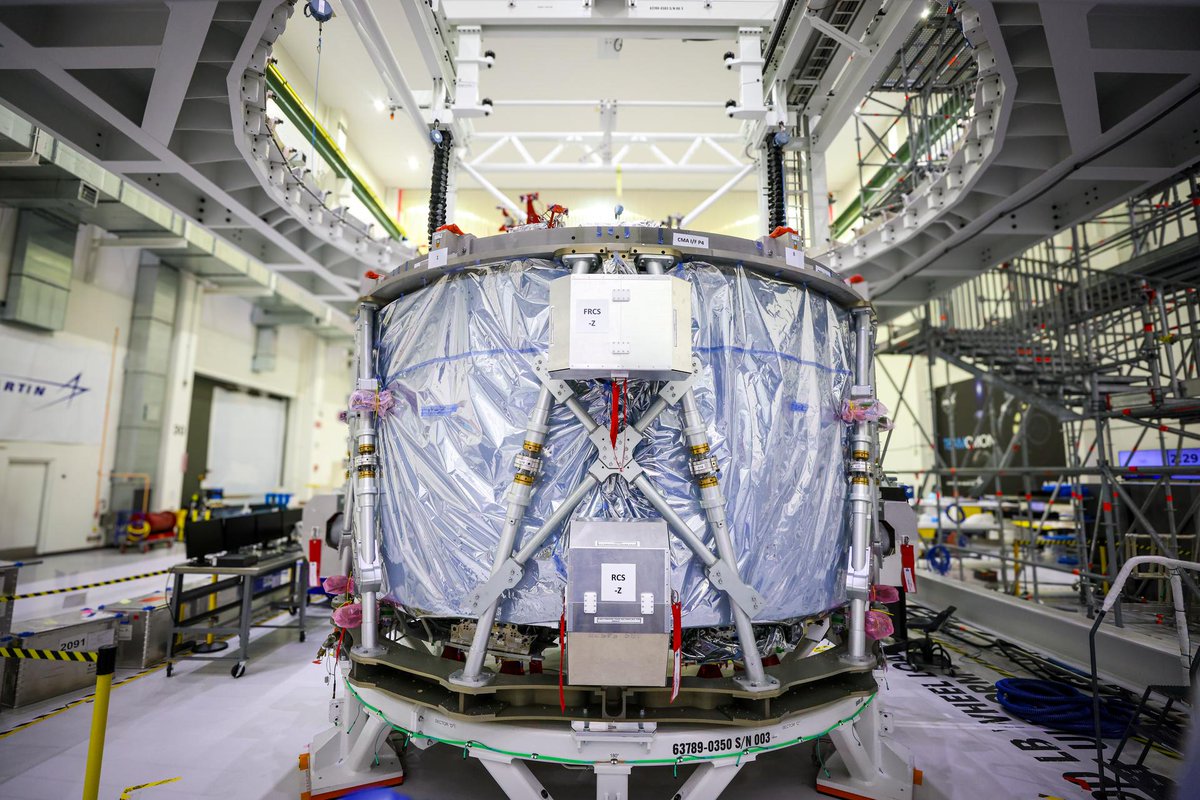
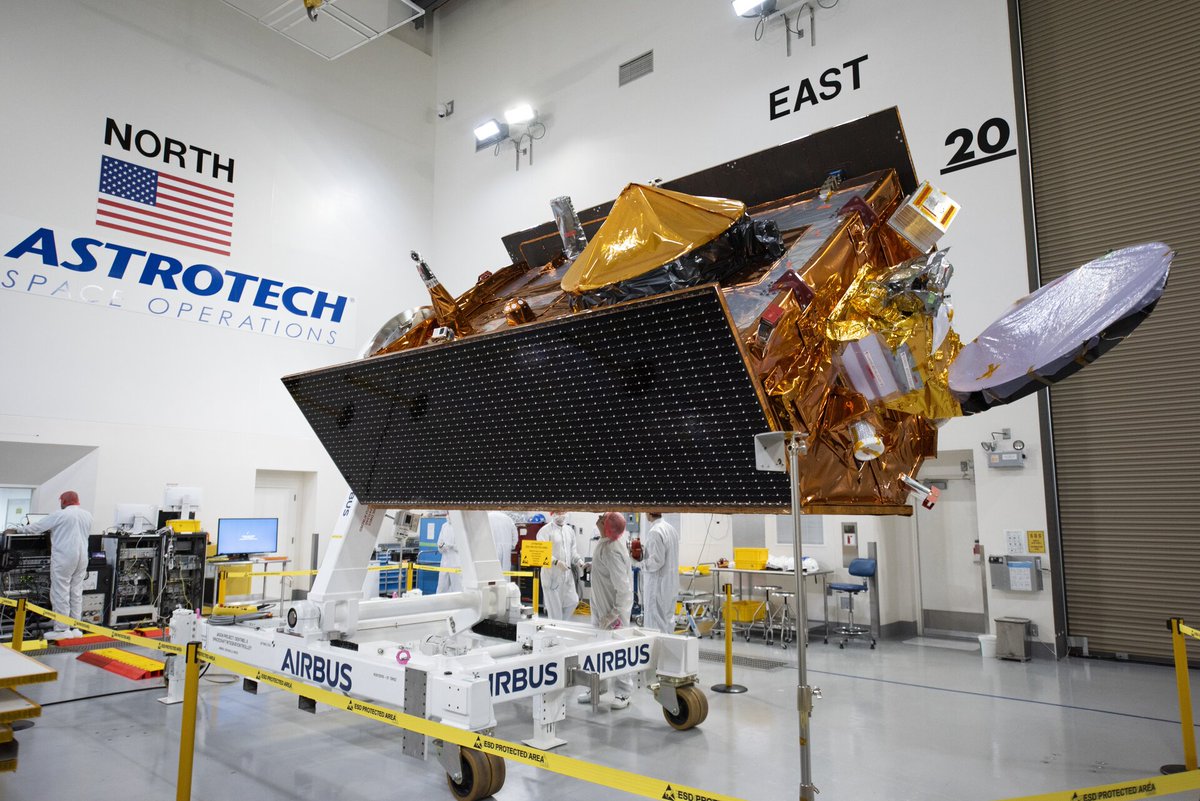
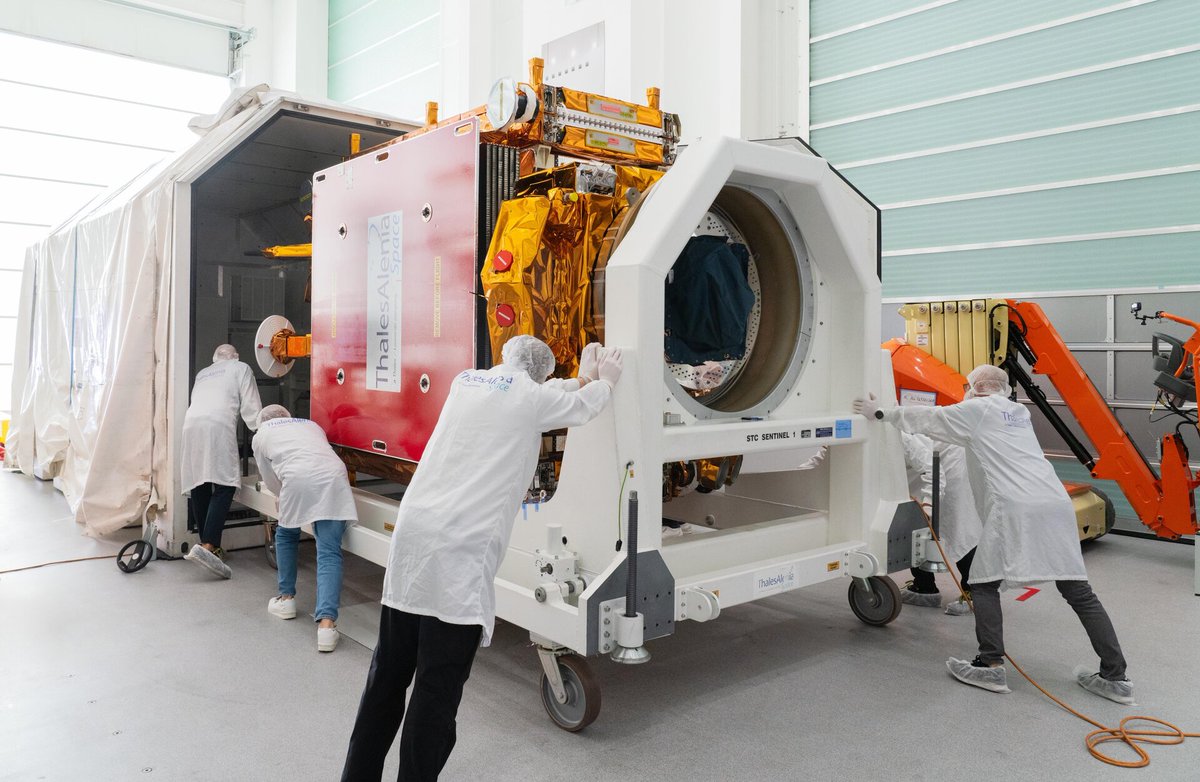
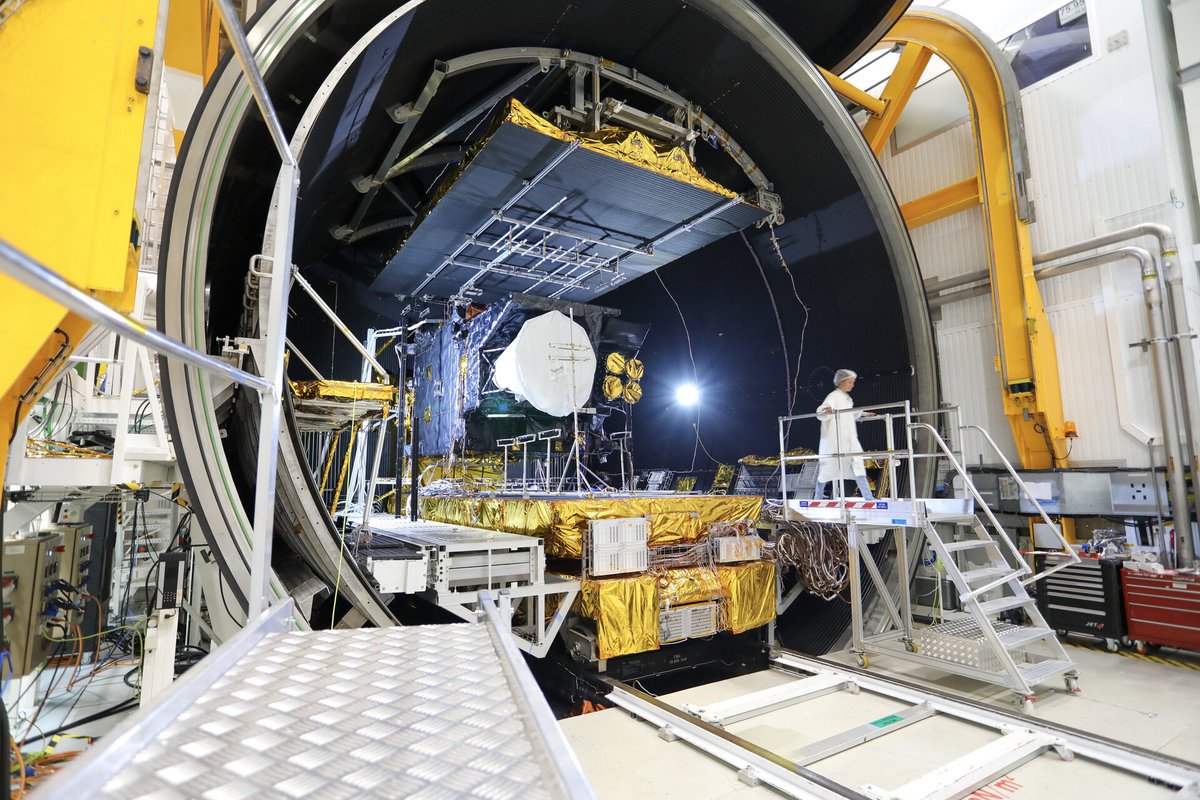
ALT Our fourth European Service Module arrived at NASA’s Kennedy Space Center in Florida, United States, last December. This powerhouse will propel Orion and its crew safely towards the Moon and back during the Artemis IV mission, and provide them with breathable air, drinkable water, and a comfortable temperature throughout their lunar journey.
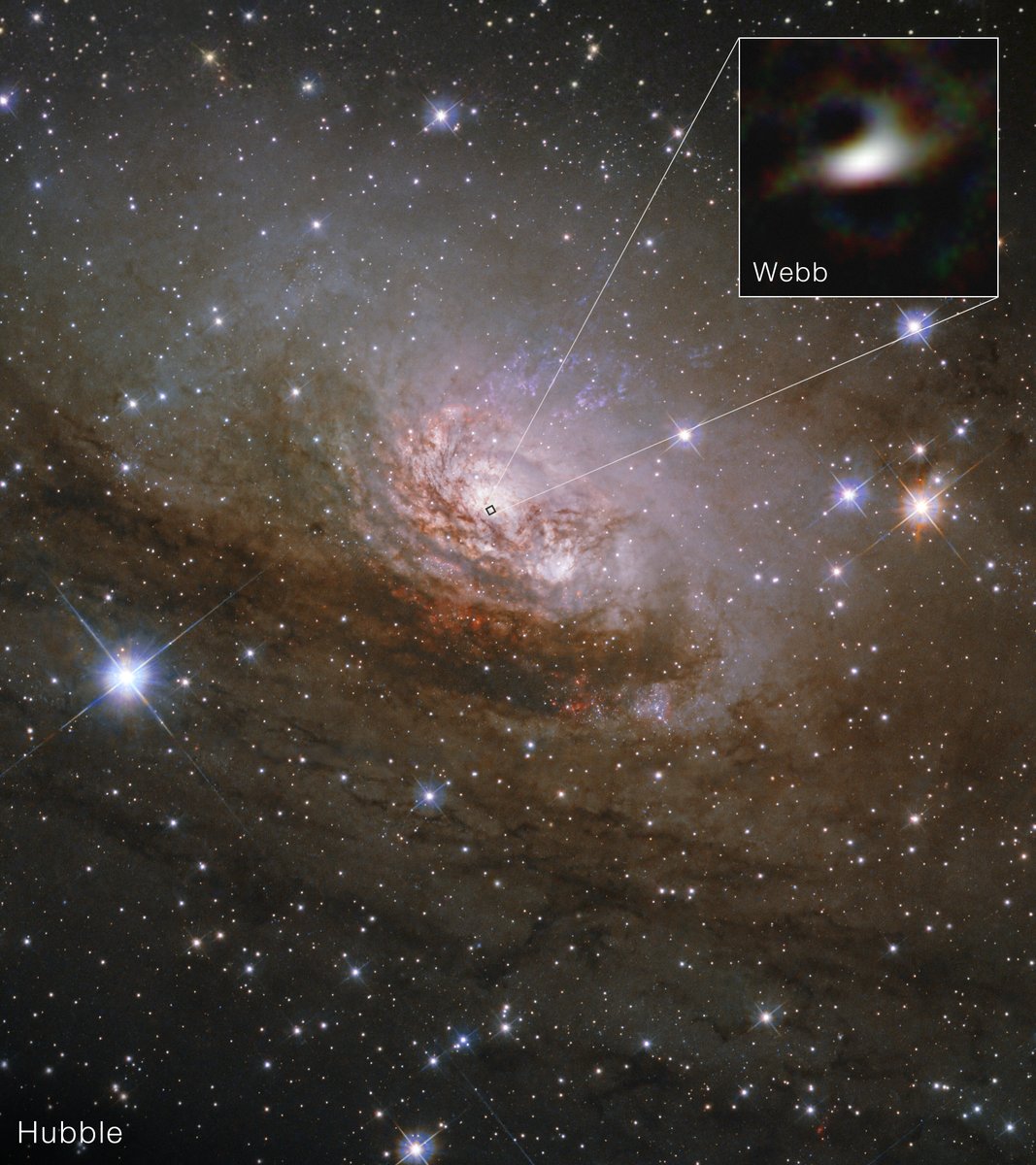
ALT This image from the NASA/ESA Hubble Space Telescope shows a full view of the Circinus galaxy, a nearby spiral galaxy about 13 million light-years away. The inset highlights a close-up from Webb of the galaxy’s core, where infrared observations pierce through dust to reveal hot material feeding its central supermassive black hole. Webb’s image, made using the Aperture Masking Interferometer (AMI) tool on its NIRISS (Near-Infrared Imager and Slitless Spectrograph) instrument, isolates hot dust in the immediate surroundings of the supermassive black hole, revealing that most of the infrared emission comes from a compact, dusty structure feeding the black hole rather than from outflowing material. In the Webb image, the inner face of the torus glows in infrared light, while the darker areas represent where the outer ring is blocking light.
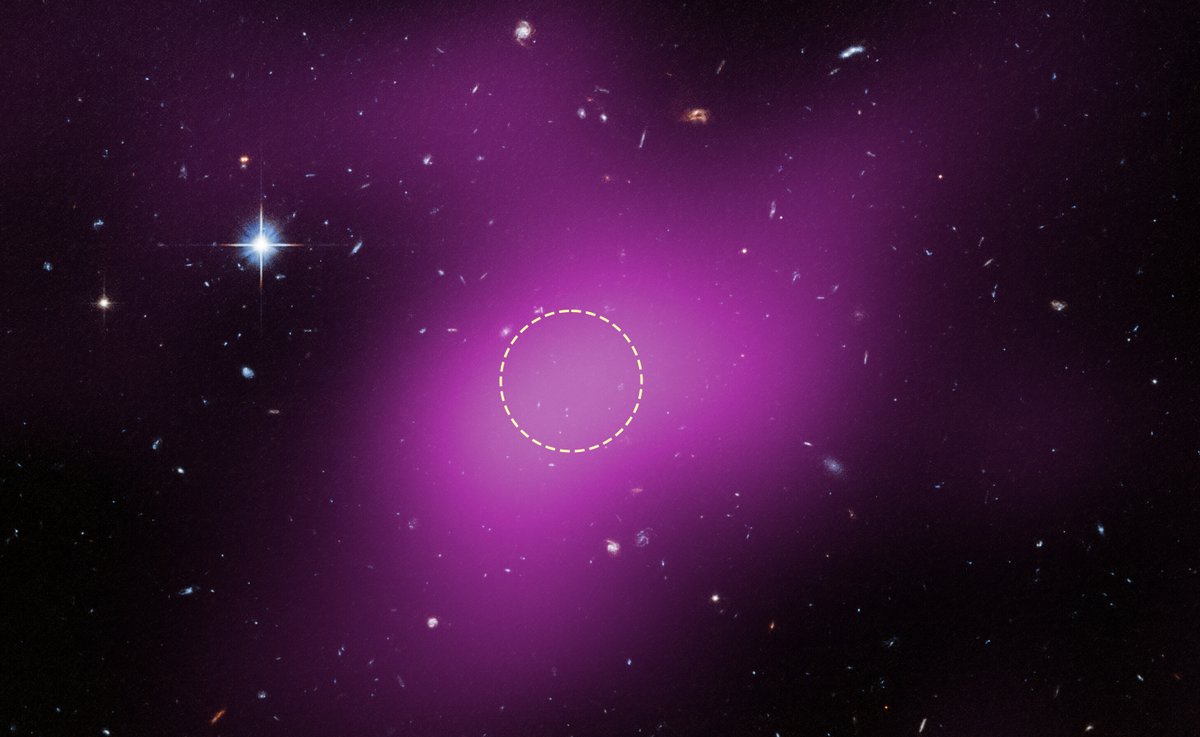
ALT A region of space mostly filled with background galaxies, with one prominent star at upper left. A large blob of purple haze occupies much of the field. Within the purple region, an unremarkable area is outlined with a dashed white circle.
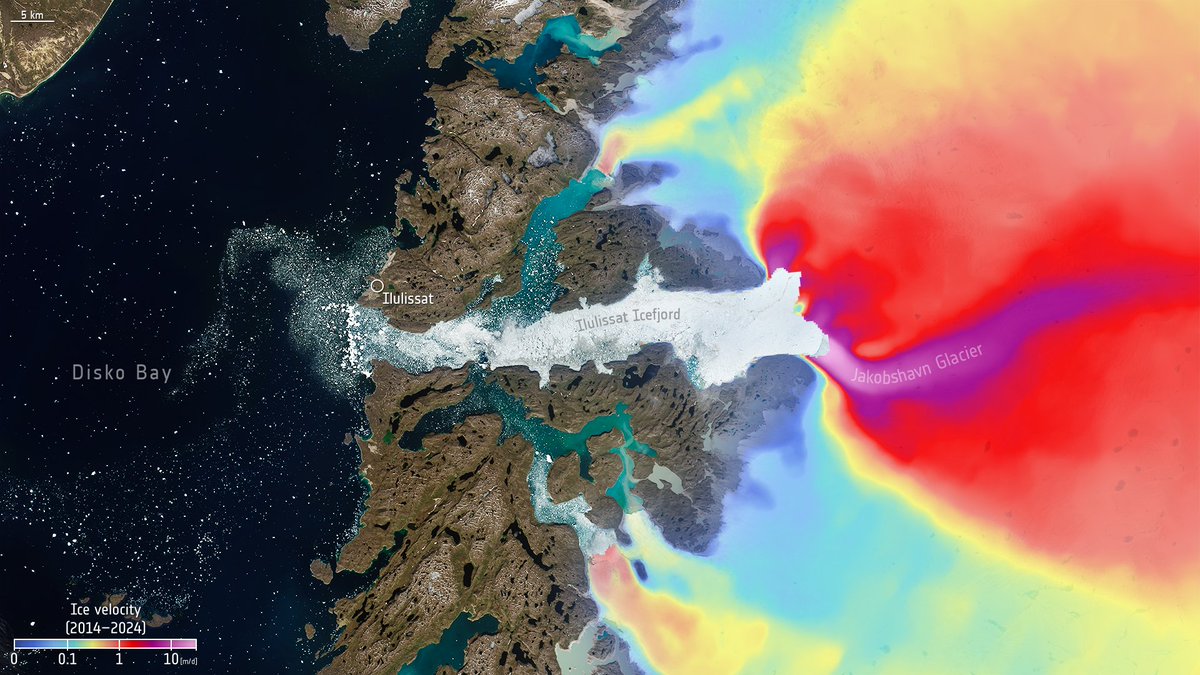
ALT This map, based on Copernicus Sentinel-1 data, shows the speed at which ice is moving horizontally on the Jakobshavn Glacier in Greenland. Half-way up the western coast of Greenland, it is one of the fastest outlet glaciers in the world with velocities reaching, at times, up to 50 m per day.
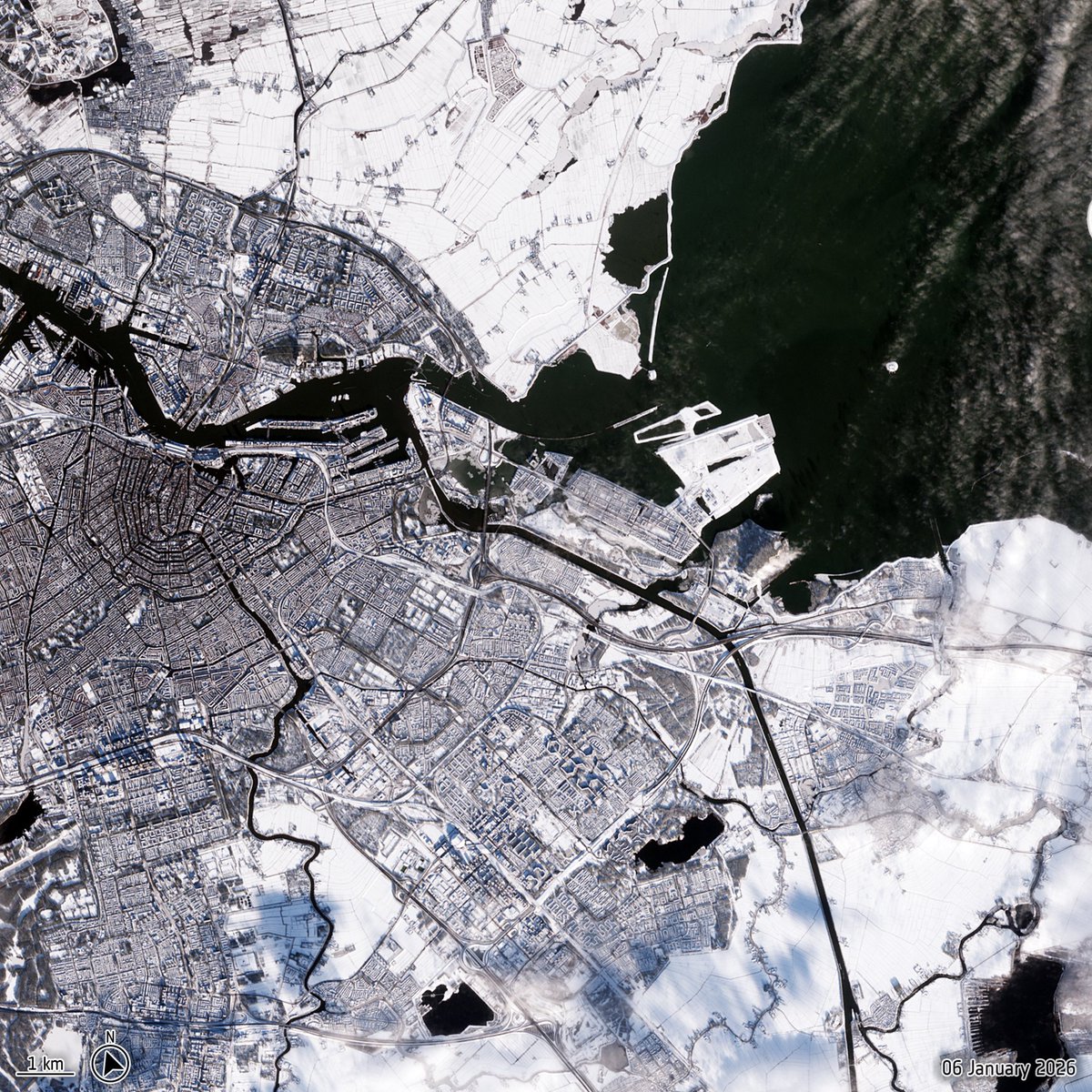
ALT This image, captured by the Copernicus Sentinel-2 mission on 6 January 2026, shows Amsterdam in the Netherlands blanketed in snow. The city’s canals, parks and dense urban fabric are clearly outlined beneath the white covering, highlighting both the snowfall and the mission’s ability to monitor weather events and their impacts on urban areas from space.
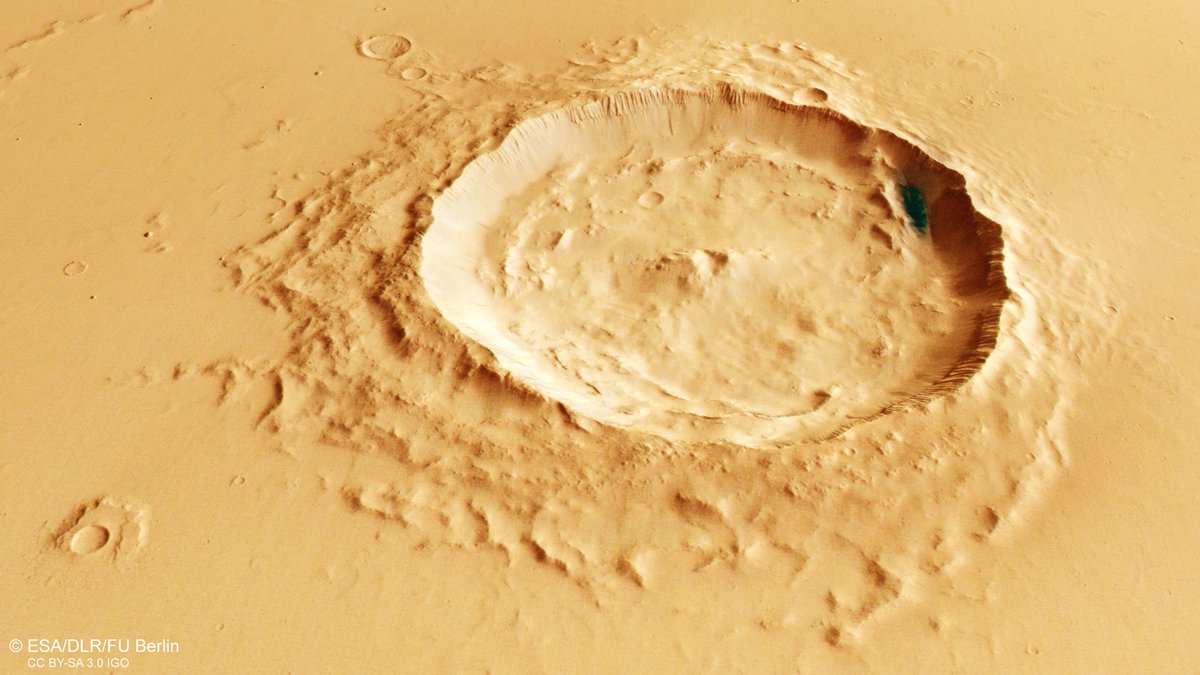
ALT A close-up view of a large impact crater on Mars. The crater has steep, sharply defined walls and a wide, flat floor with uneven ridges. Surrounding the crater is a gently sloping, textured surface in shades of light tan and reddish-brown. A small patch of darker material appears near the upper right inner wall of the crater.
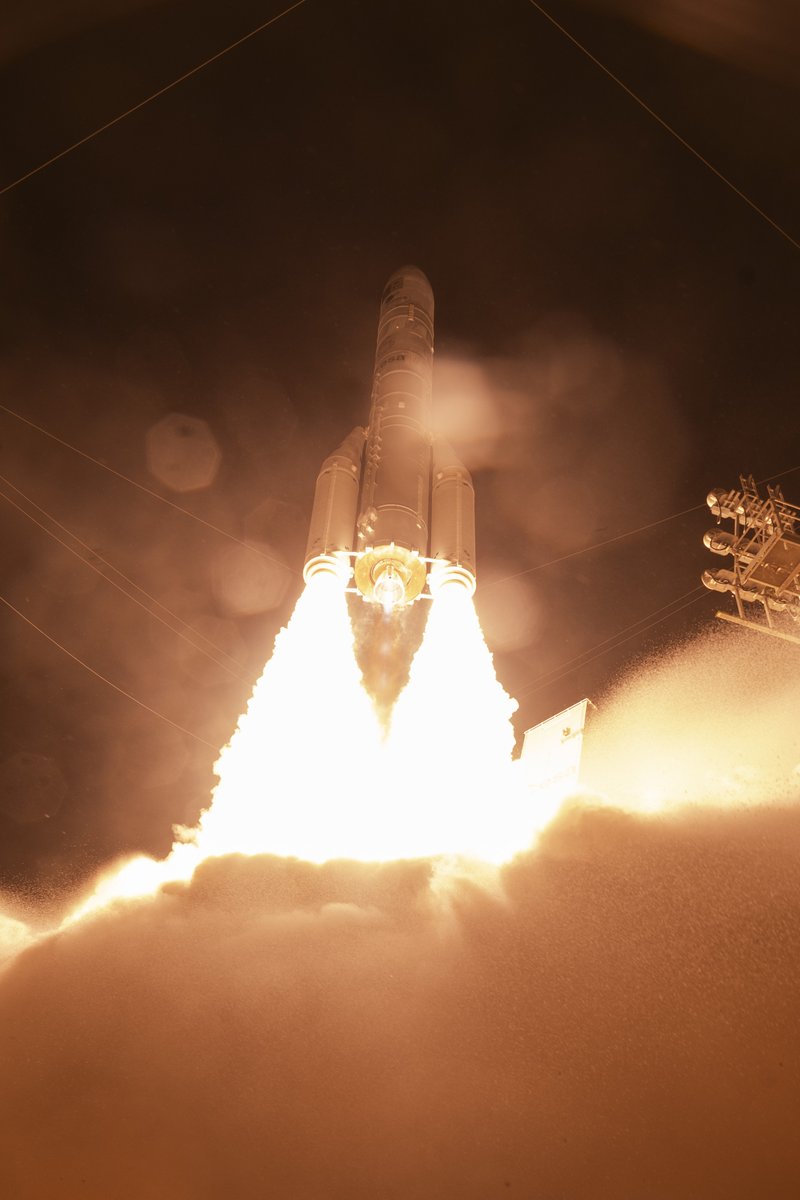
ALT Ariane VA266 lift off
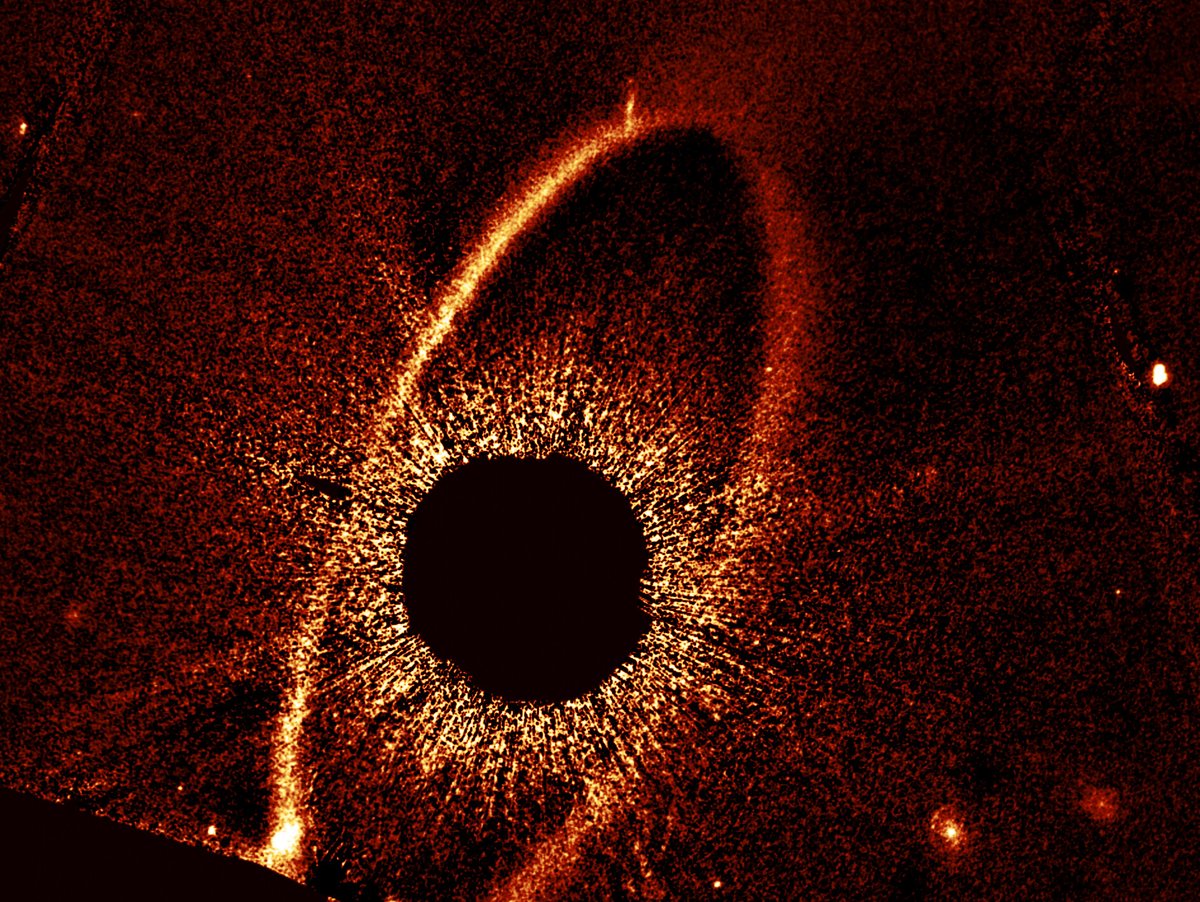
ALT This composite NASA/ESA Hubble Space Telescope image shows the debris ring and dust clouds cs1 and cs2 around the star Fomalhaut.
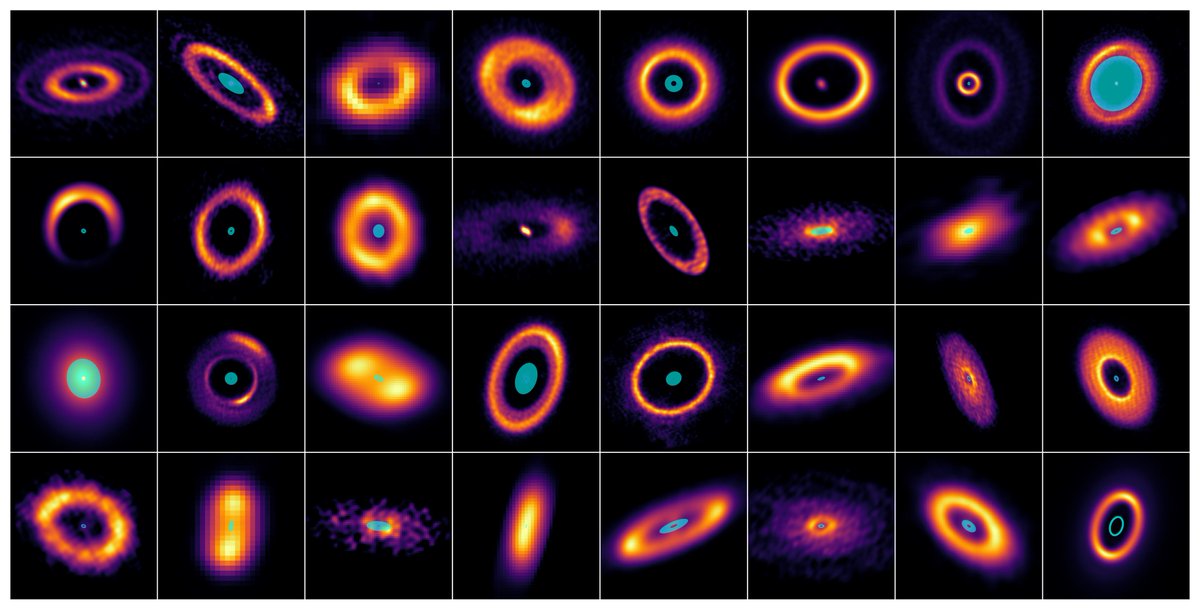
ALT A collage of 32 glowing discs on a black background. Each disc shows concentric rings in vivid colours: purple, orange, and yellow, with bright cyan centres. The discs vary in size and orientation, creating a striking pattern of circular and elliptical shapes.
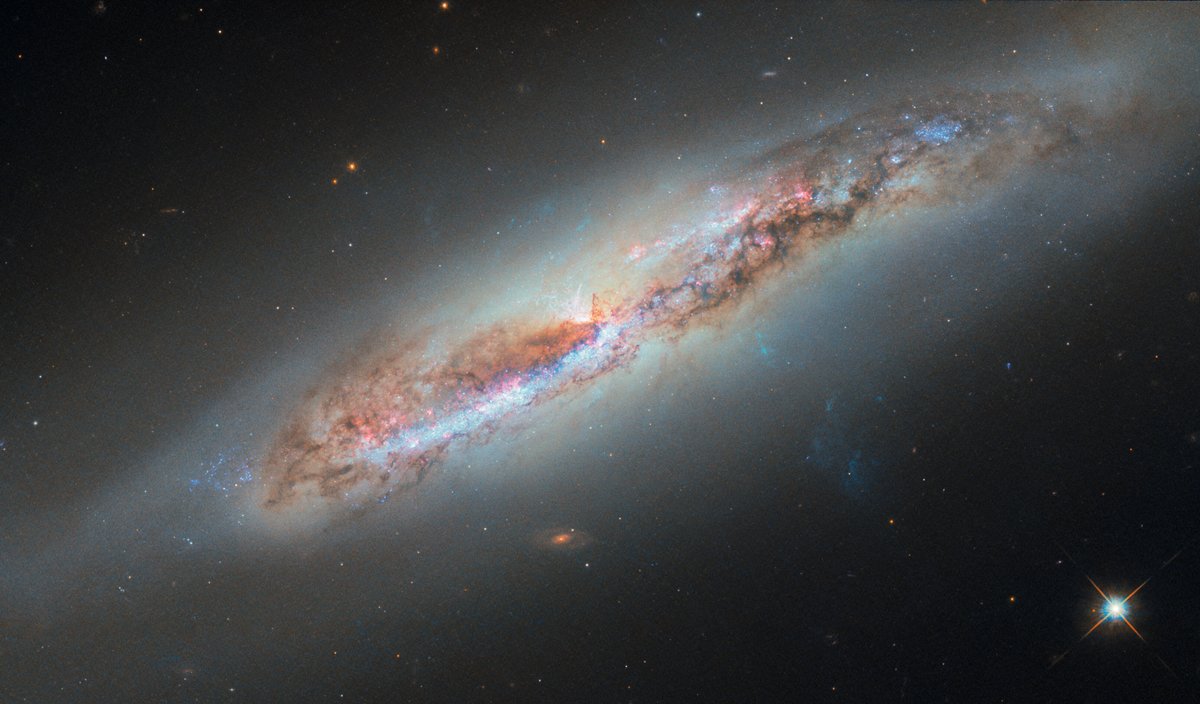
ALT A spiral galaxy seen nearly edge-on. Its disk is filled with red and blue lights from star-forming nebulae and clusters of hot stars, respectively, as well as thick dark clouds of dust that block the strong white light from its centre. A faint, glowing halo of gas surrounds the disc, fading into the black background. A bluish plume of gas also extends from the galaxy’s core to the lower-right of the image.
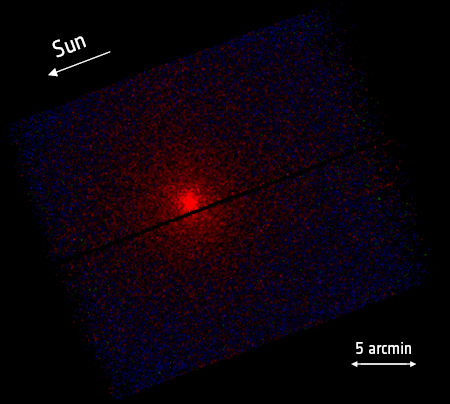
ALT XMM-Newton sees comet 3I/ATLAS in X-ray light
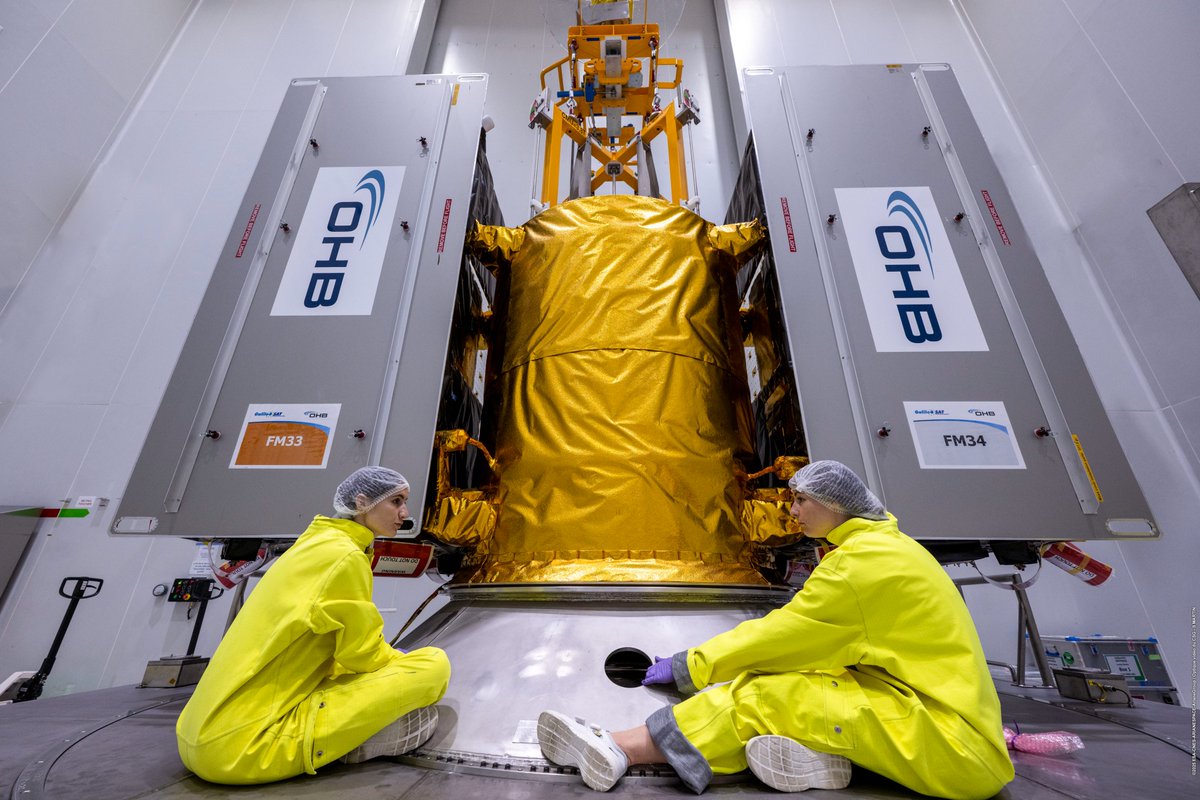
ALT Galileo satellites mounted on Ariane 6 dispenser
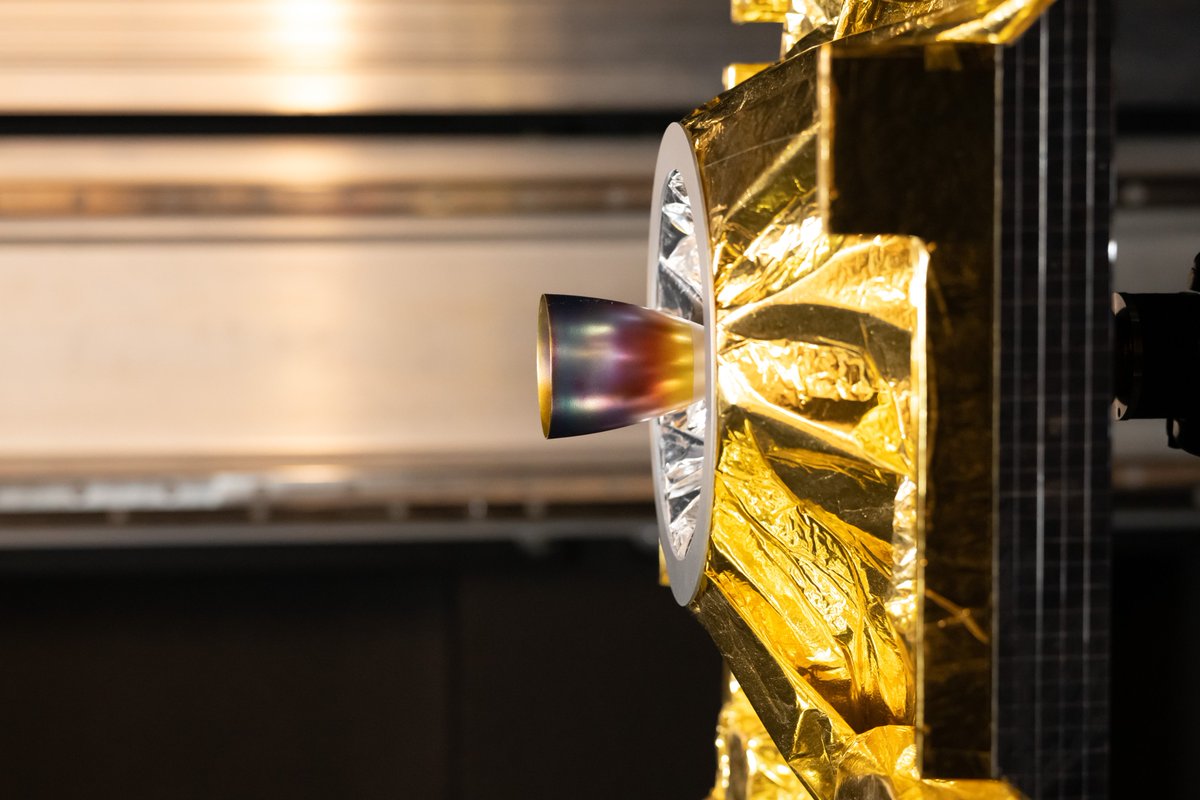
ALT A sunlight lamp illuminates a satellite model covered in golden thermal insulation. A cup-shaped thruster extends from the model’s centre, reflecting a rainbow of colours. A few metres to the left, not captured in this image, a camera is brought closer and closer to the model, scanning the scene in this simulation of a rendezvous in space.
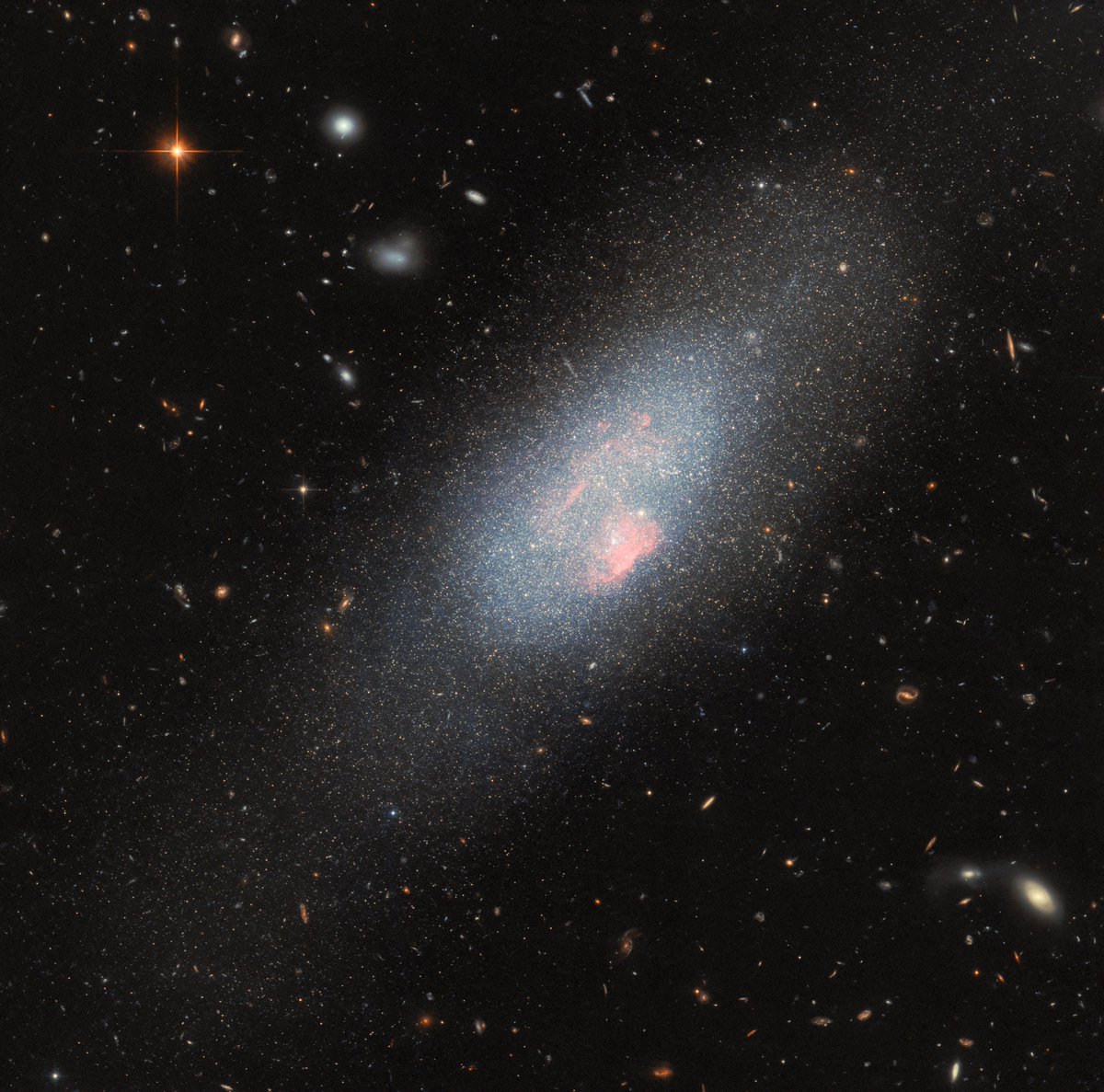
ALT This glittering blue galaxy and subject of today’s ESA/Hubble Picture of the Week is a blue compact dwarf galaxy called Markarian 178 (Mrk 178). This galaxy, which is substantially smaller than our own Milky Way, lies 13 million light-years away in the constellation Ursa Major (The Great Bear).

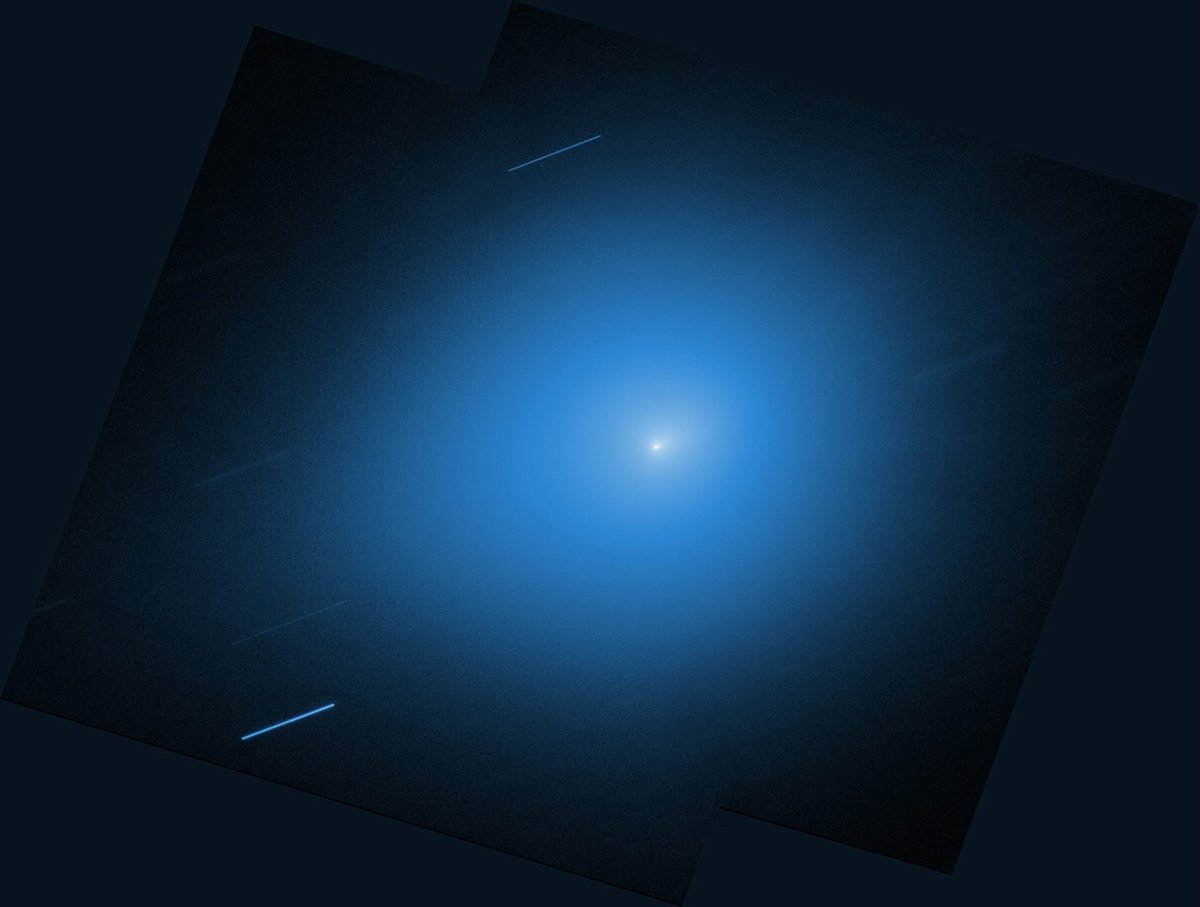
ALT Hubble reobserves 3I/ATLAS
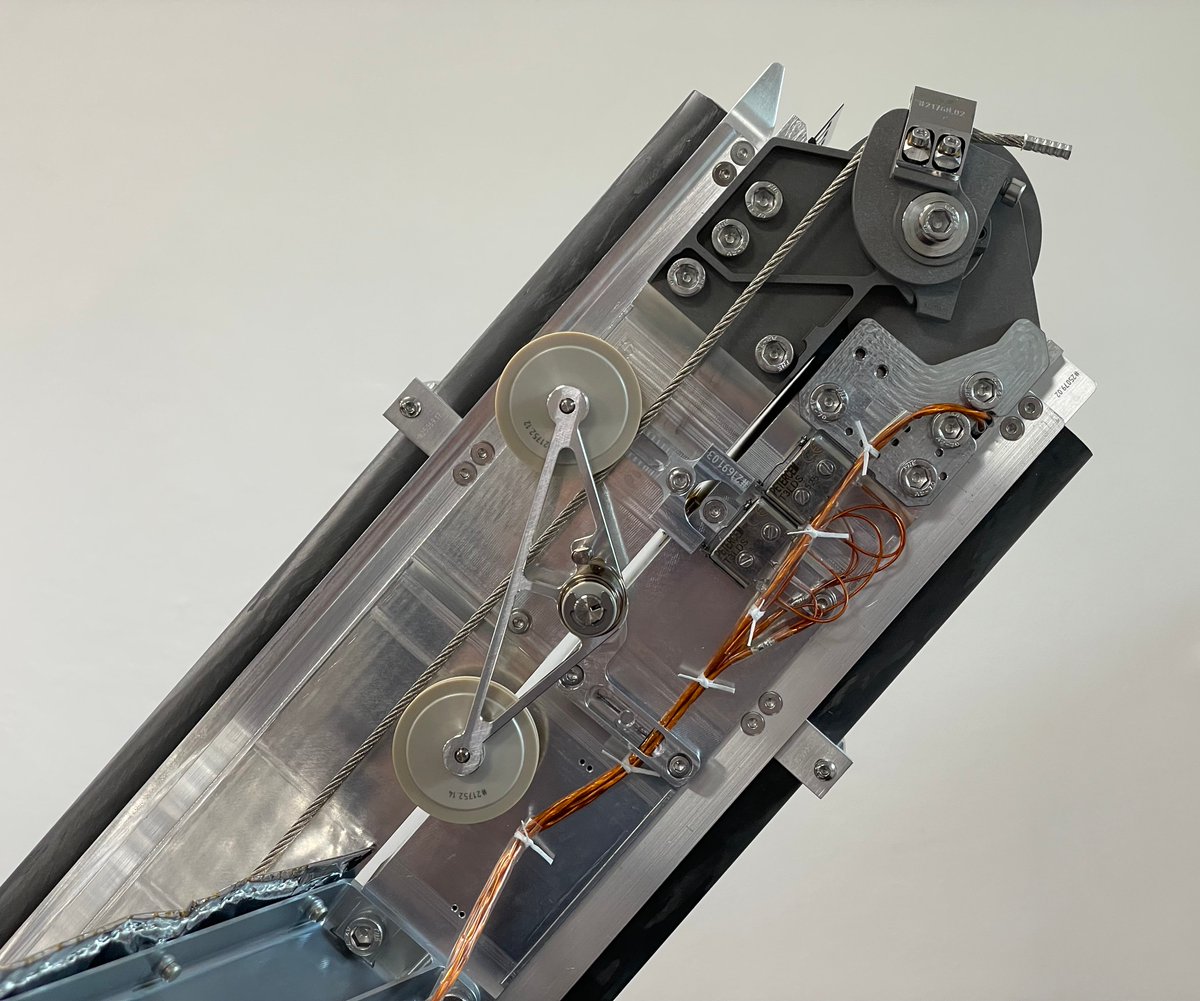
ALT This close-up image shows a part of the mechanism that will swing the ramps open on the Red Planet.
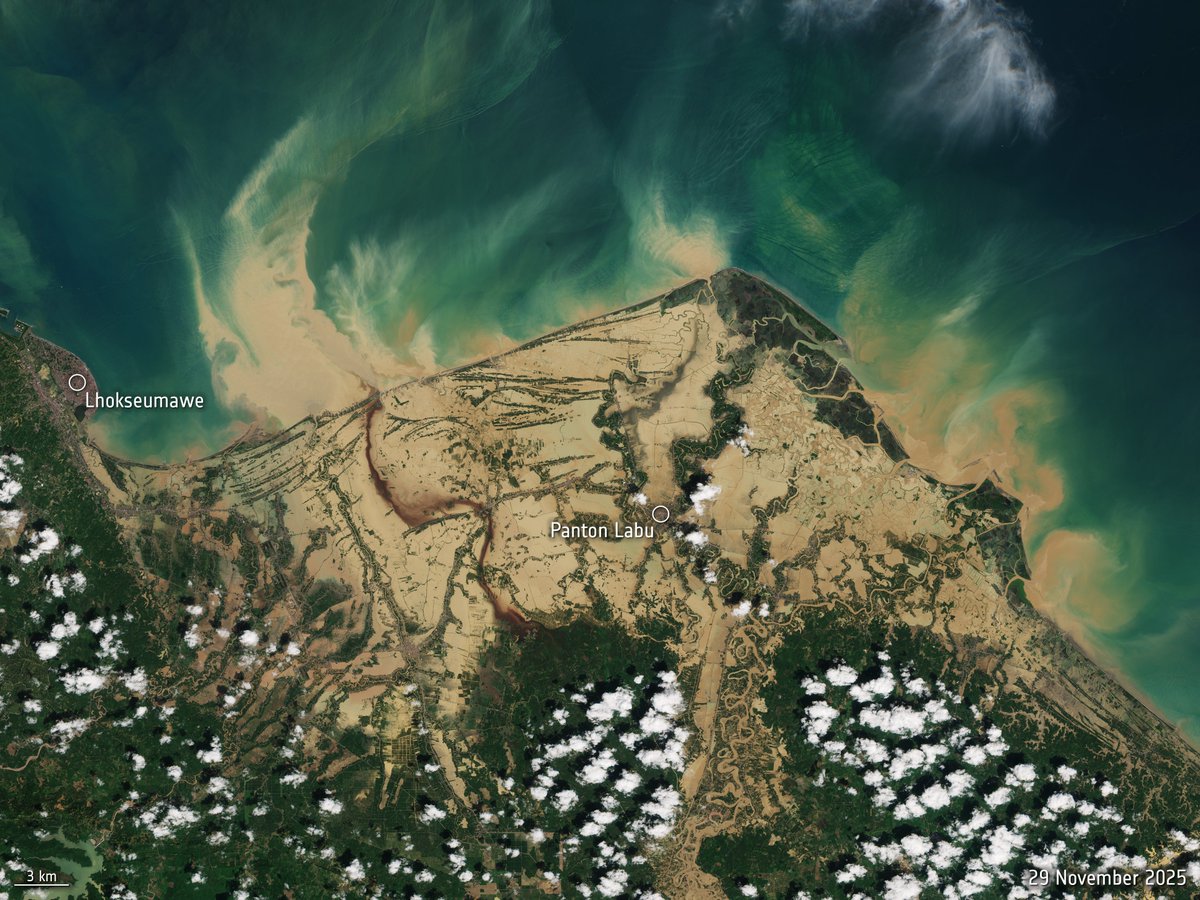
ALT Severe flooding in Sumatra, Indonesia
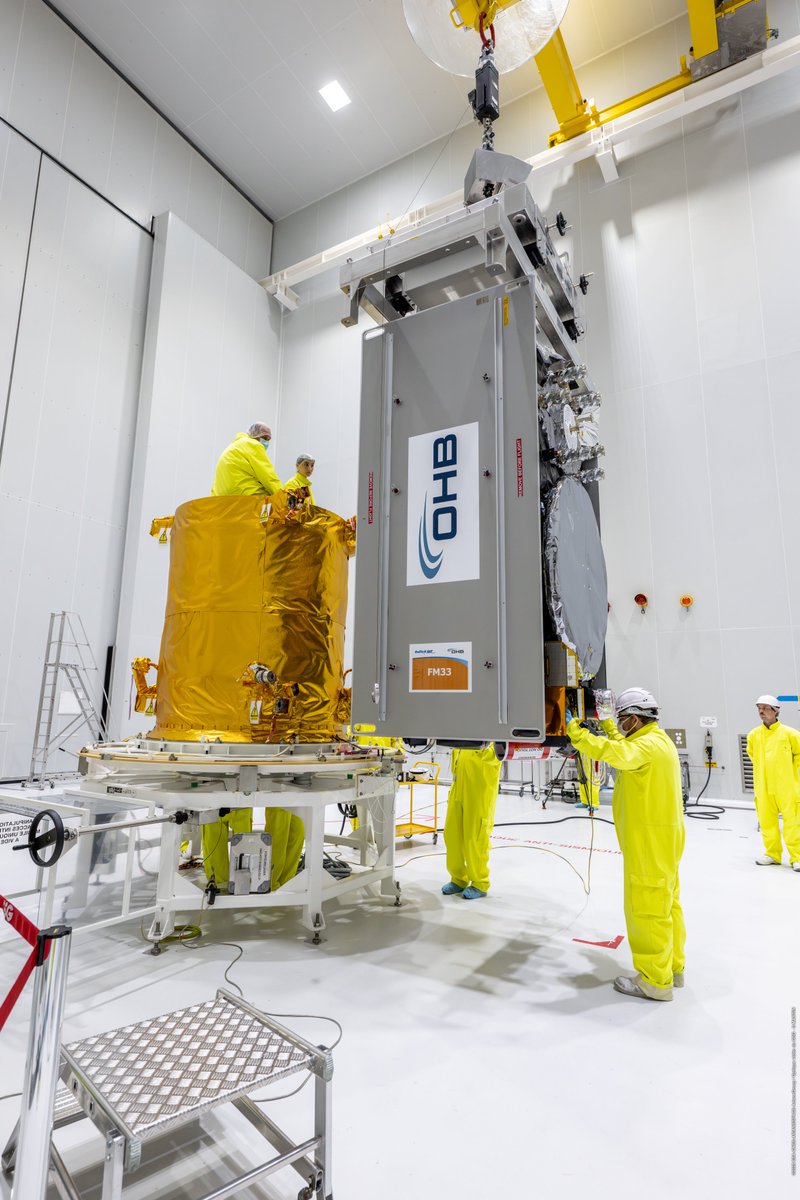
ALT Galileo satellite integration on the newly developed Ariane 6 dispenser at Europe’s Spaceport in French Guiana.

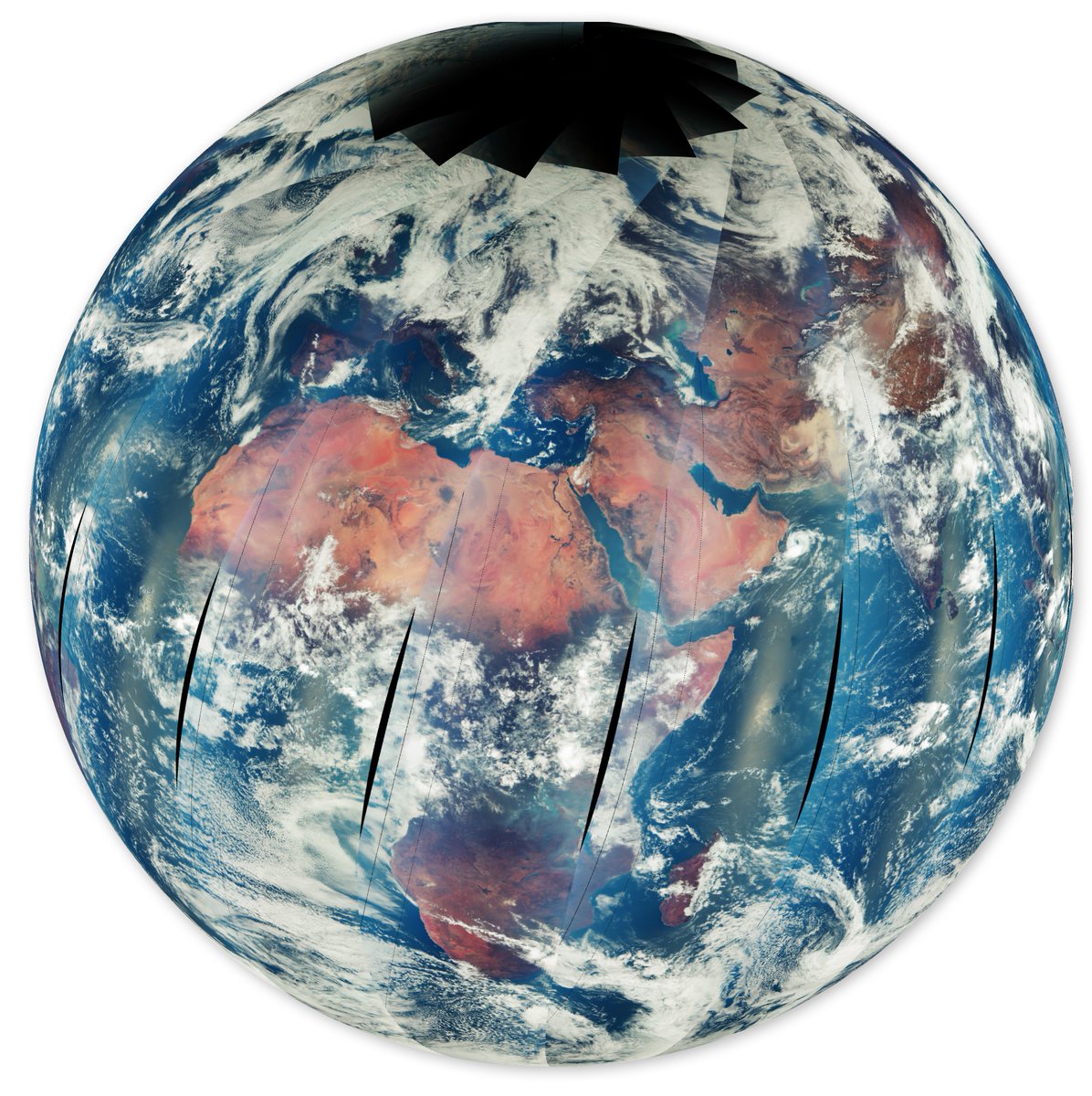
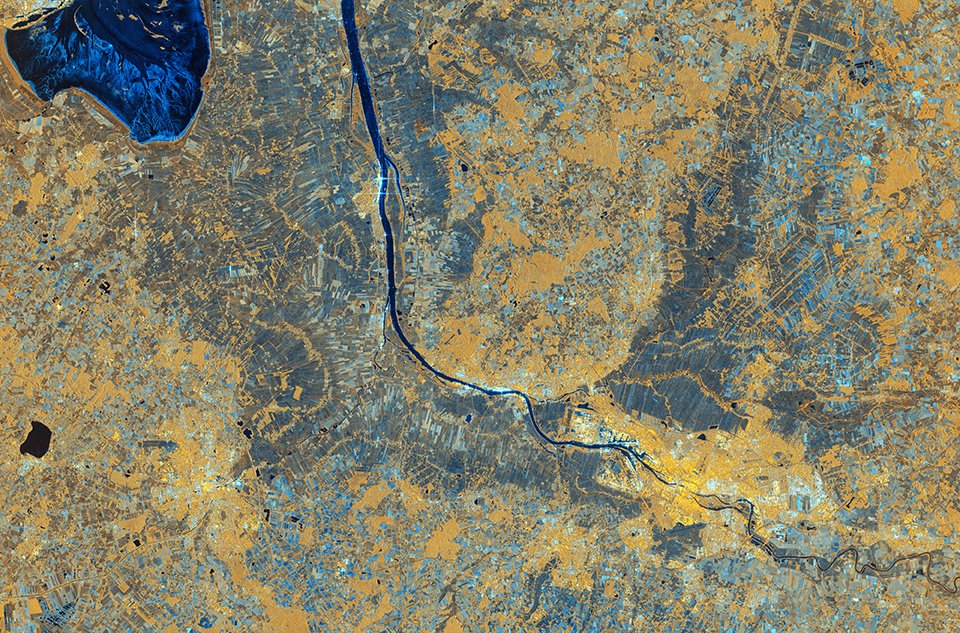
ALT Bremen, Germany by Sentinel-1D
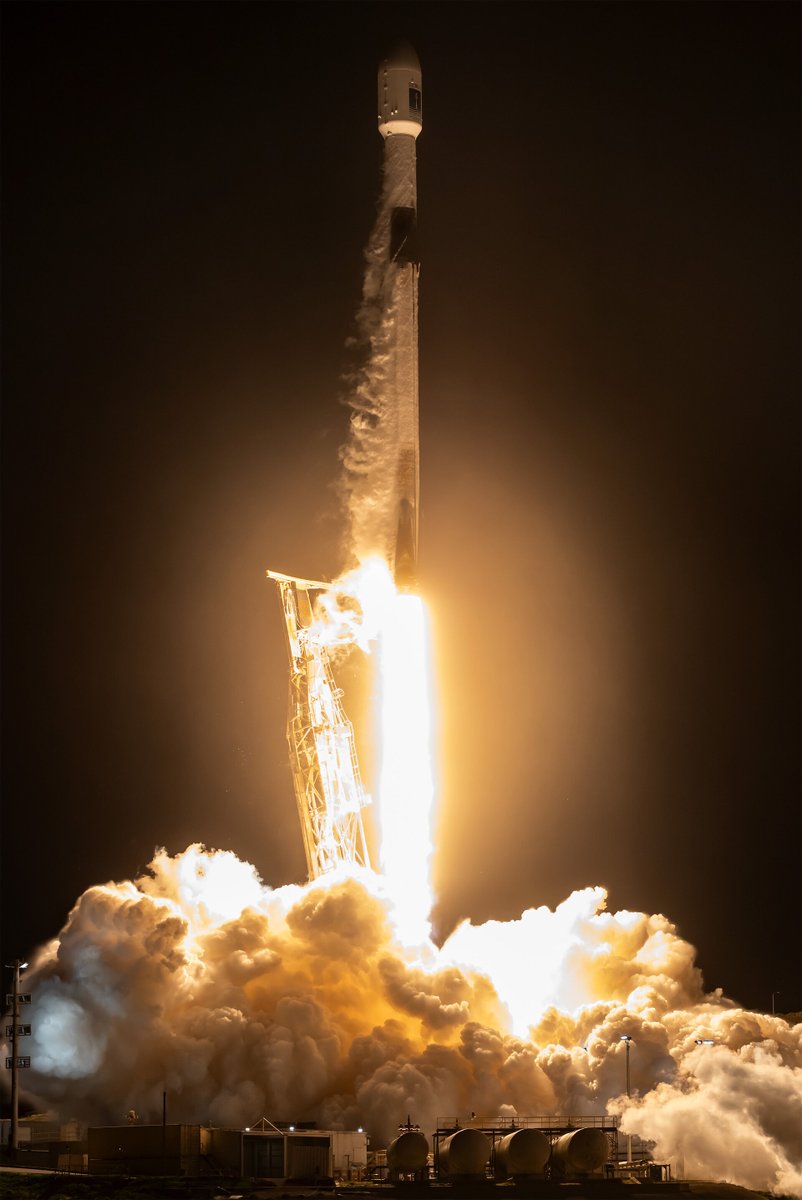
ALT Sentinel-6B launched on 17 November 2025.
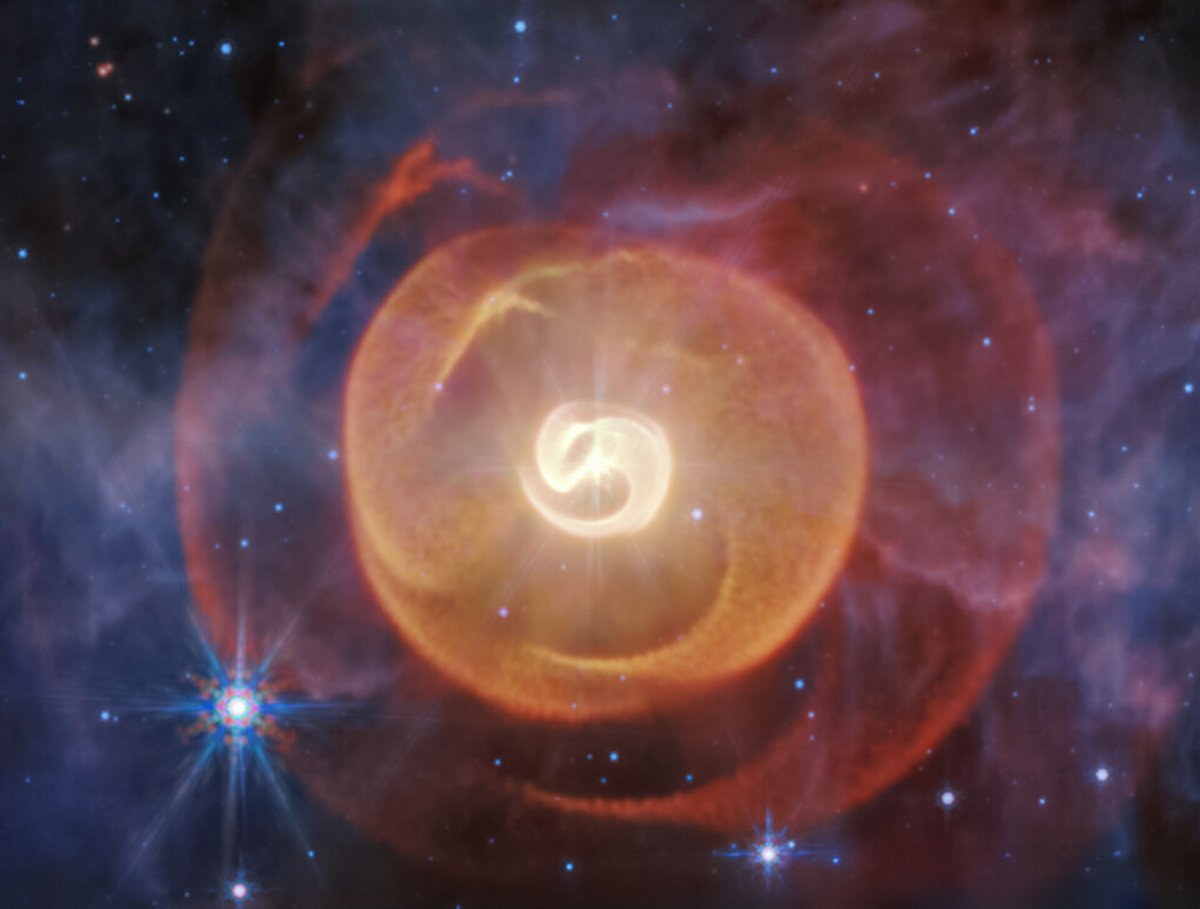
ALT This NASA/ESA/CSA James Webb Space Telescope’s mid-infrared image shows four coiled shells of dust around a pair of Wolf-Rayet stars known as Apep for the first time. Previous observations by other telescopes showed only one.
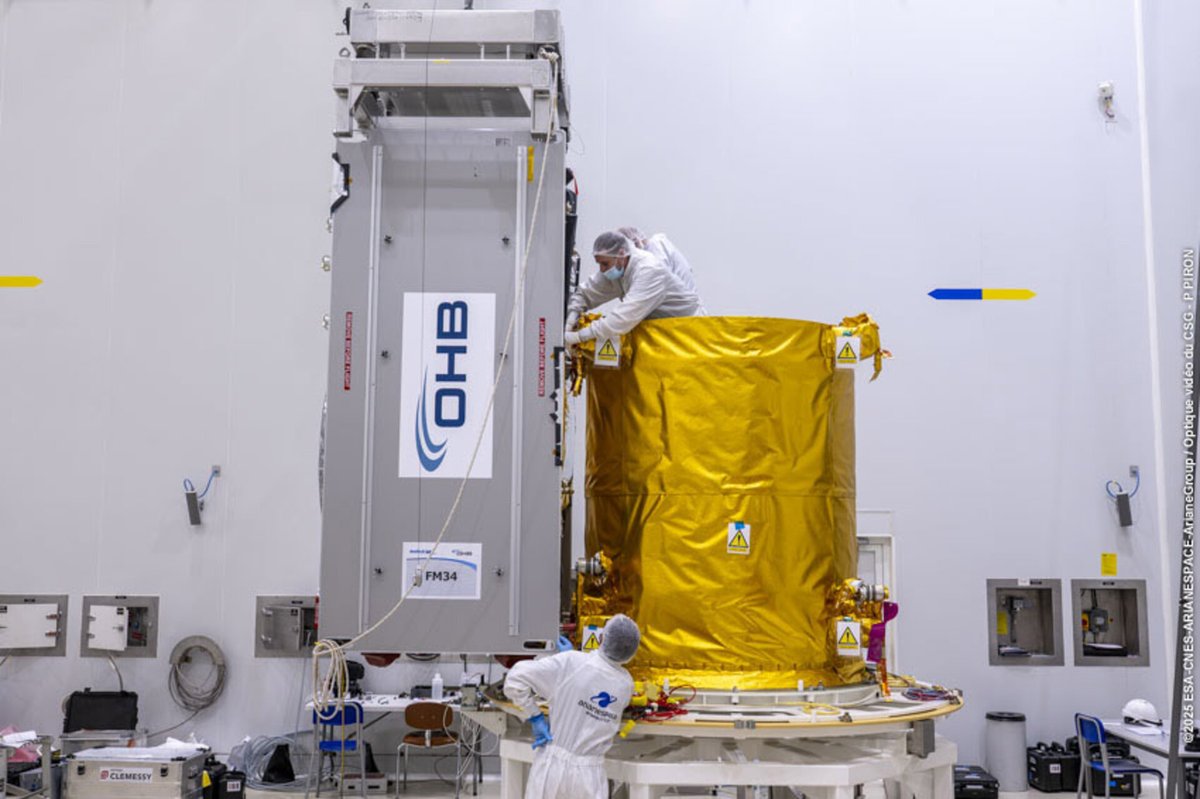
ALT Galileo ‘fit check’
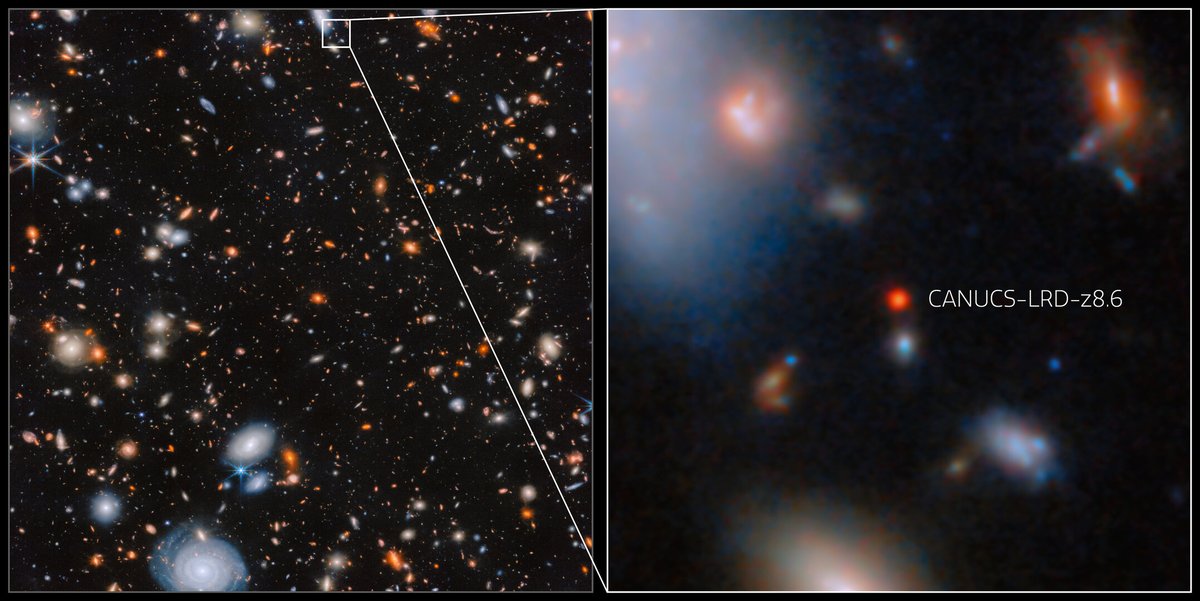
ALT This NASA/ESA/CSA James Webb Space Telescope’s image reveals CANUCS-LRD-z8.6, it is part of a class of small, very distant and strikingly red galaxies called Little Red Dots (LRDs), which have been spotted in increasing numbers by Webb’s surveys of the early Universe.
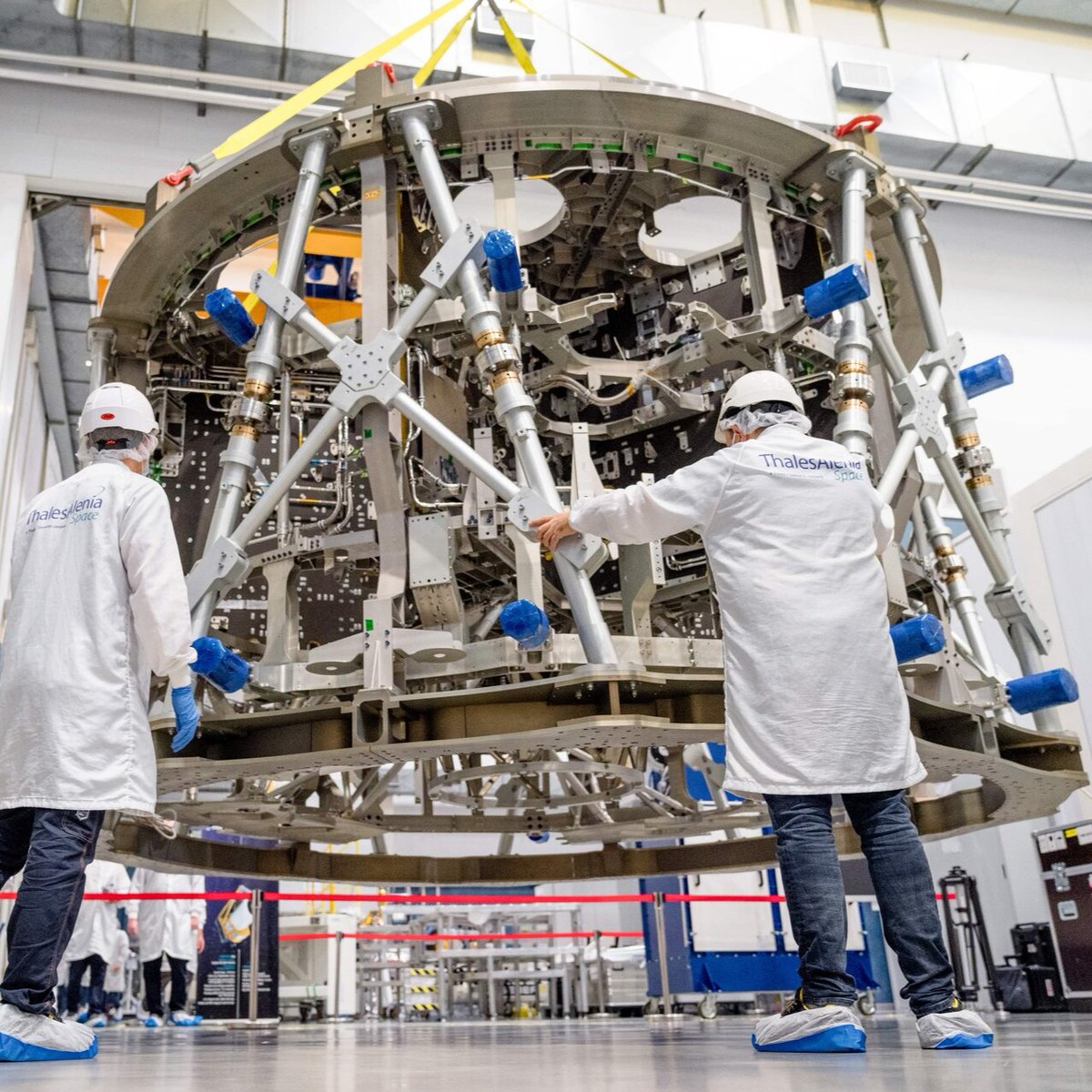
ALT The backbone of ESA's fourth European Service Module

ALT ESA medical doctors Nina Purvis and Sarah Gaier meet in Antarctica at the coastal station Mario Zuchelli
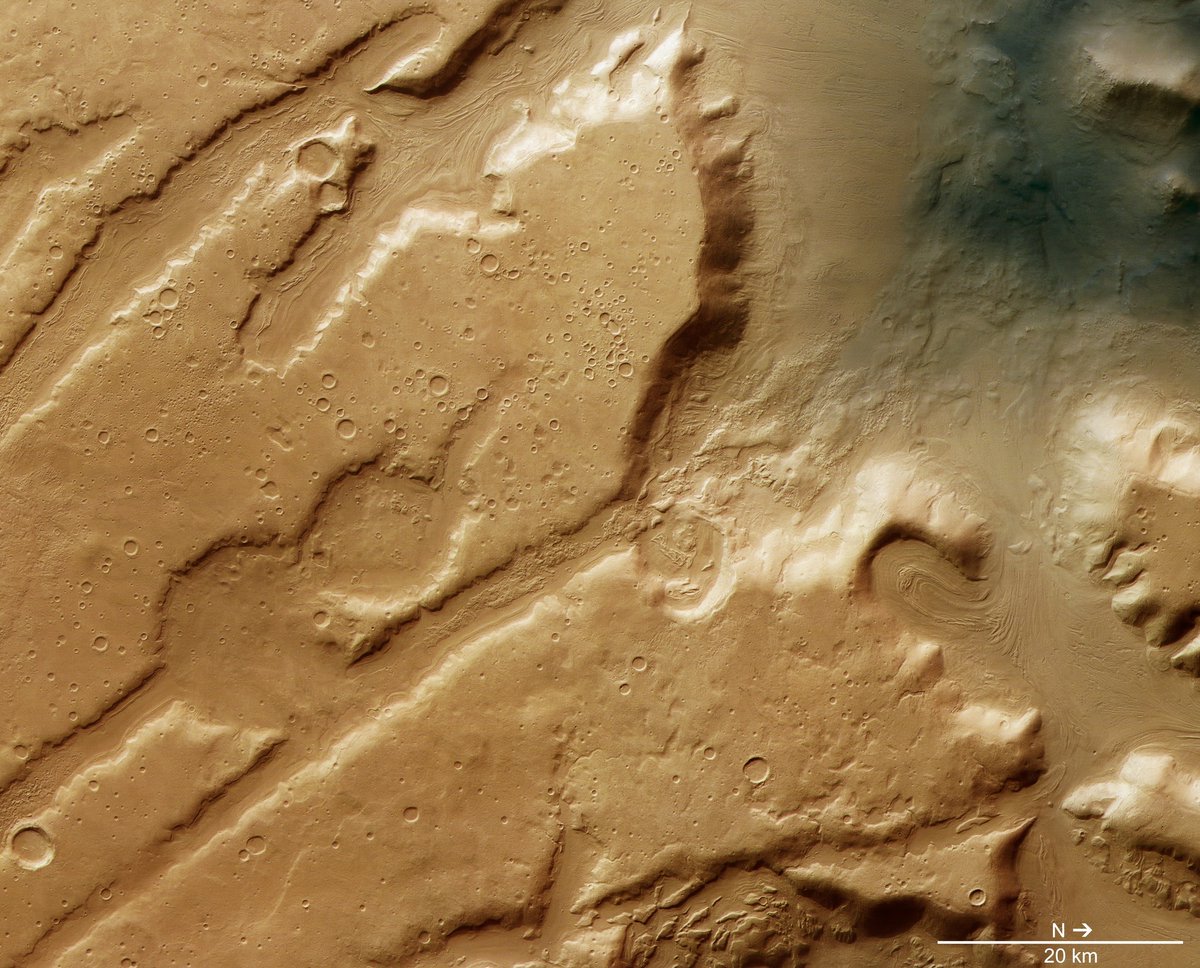
ALT The patterns of Coloe Fossae: what a martian ice age left behind
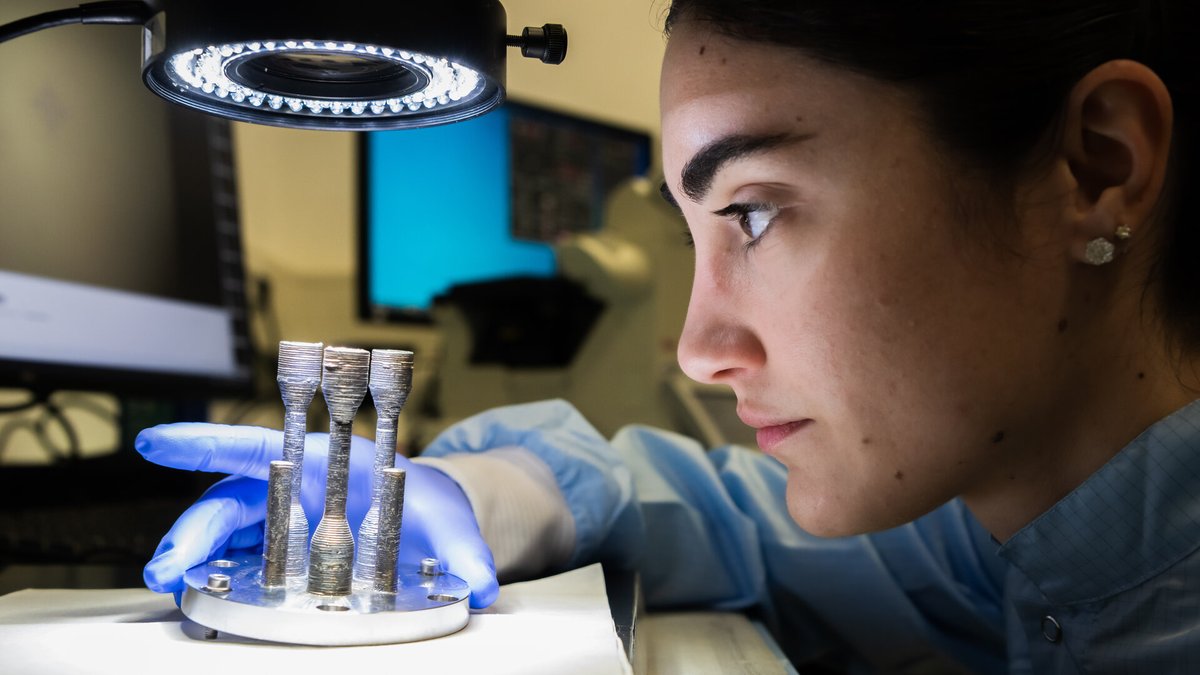
ALT 3D-printed space metal under microscope
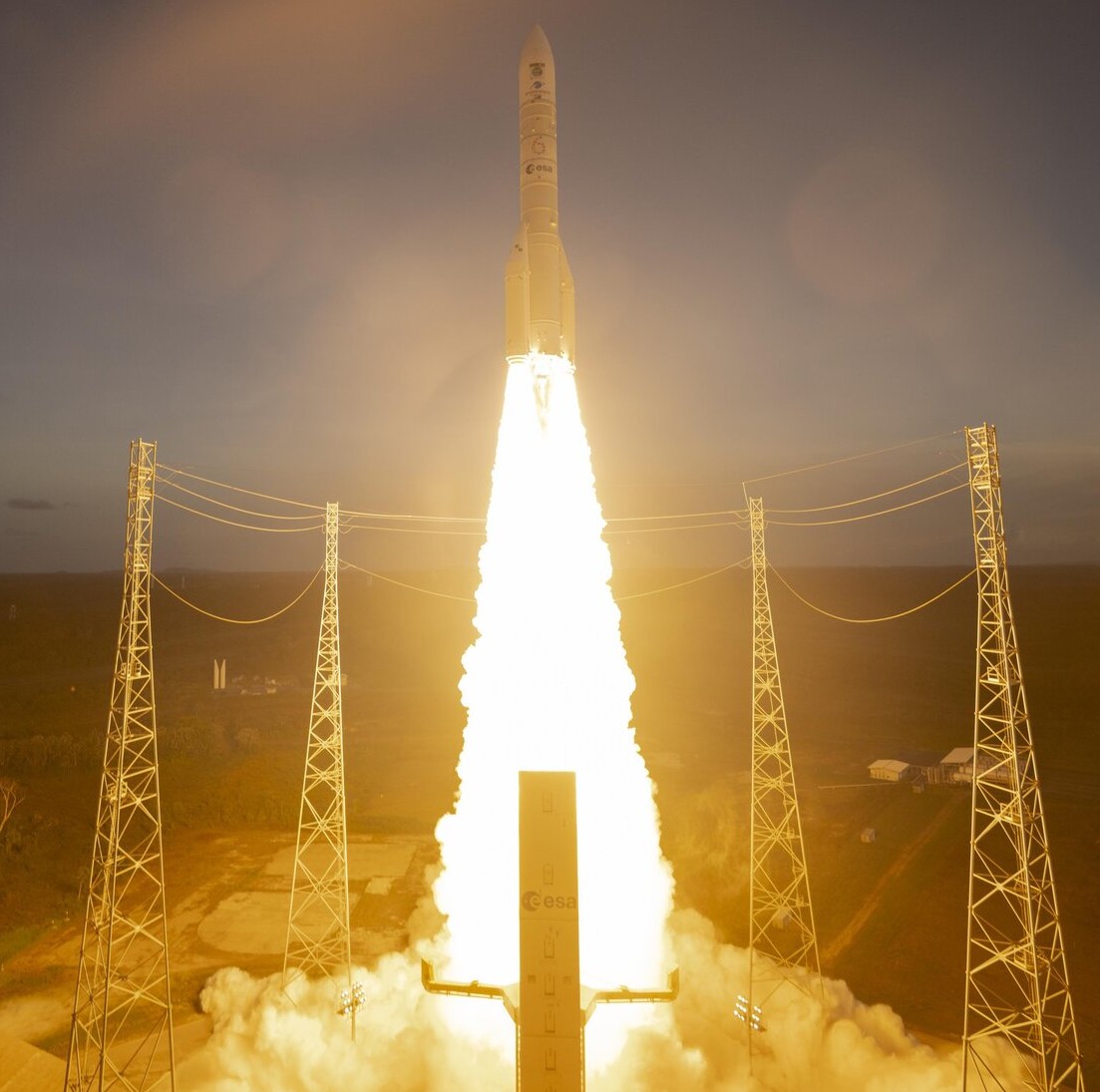
ALT Ariane 6 lifting-off, projecting a trail of fire over the launch pad.
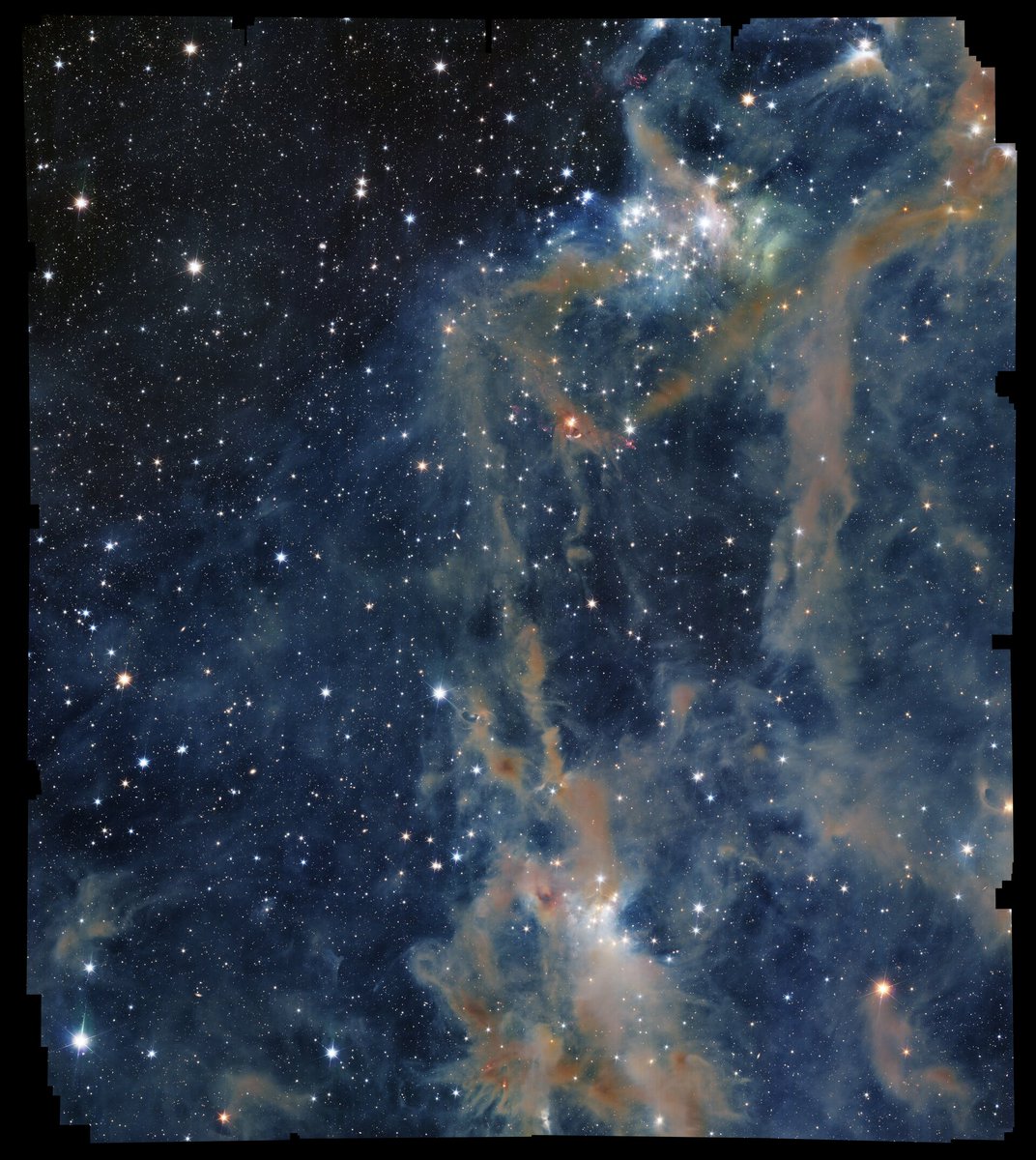
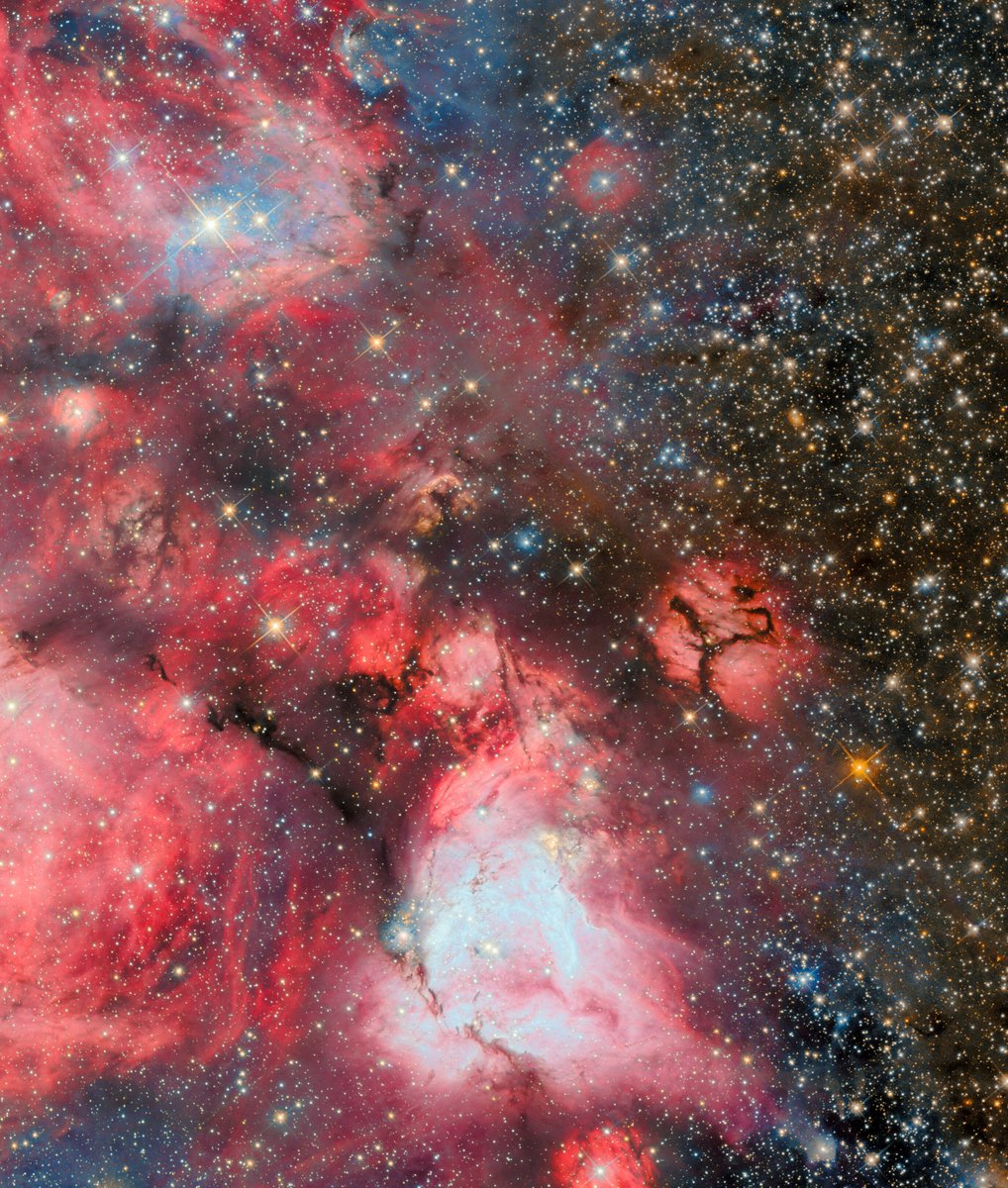
ALT Shimmering view of interstellar gas and dust
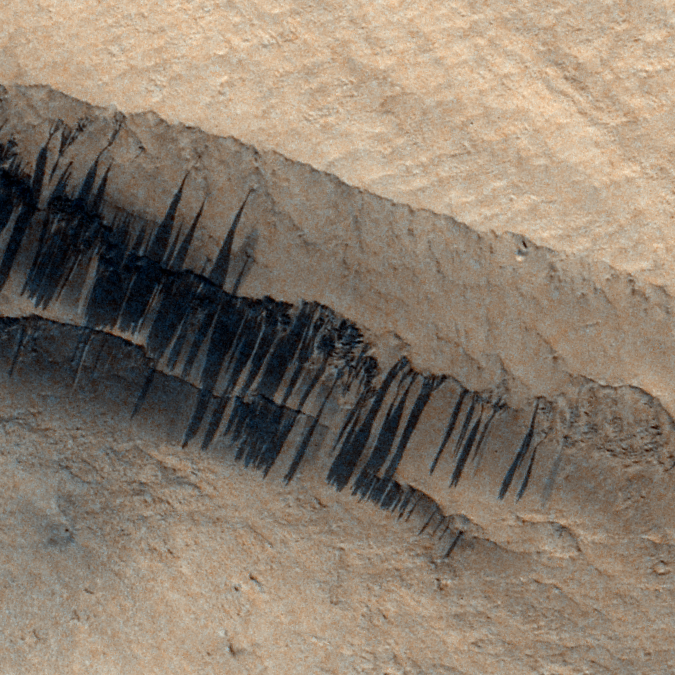
ALT Dust avalanches on the slopes of a Martian ancient volcano, seen from above.
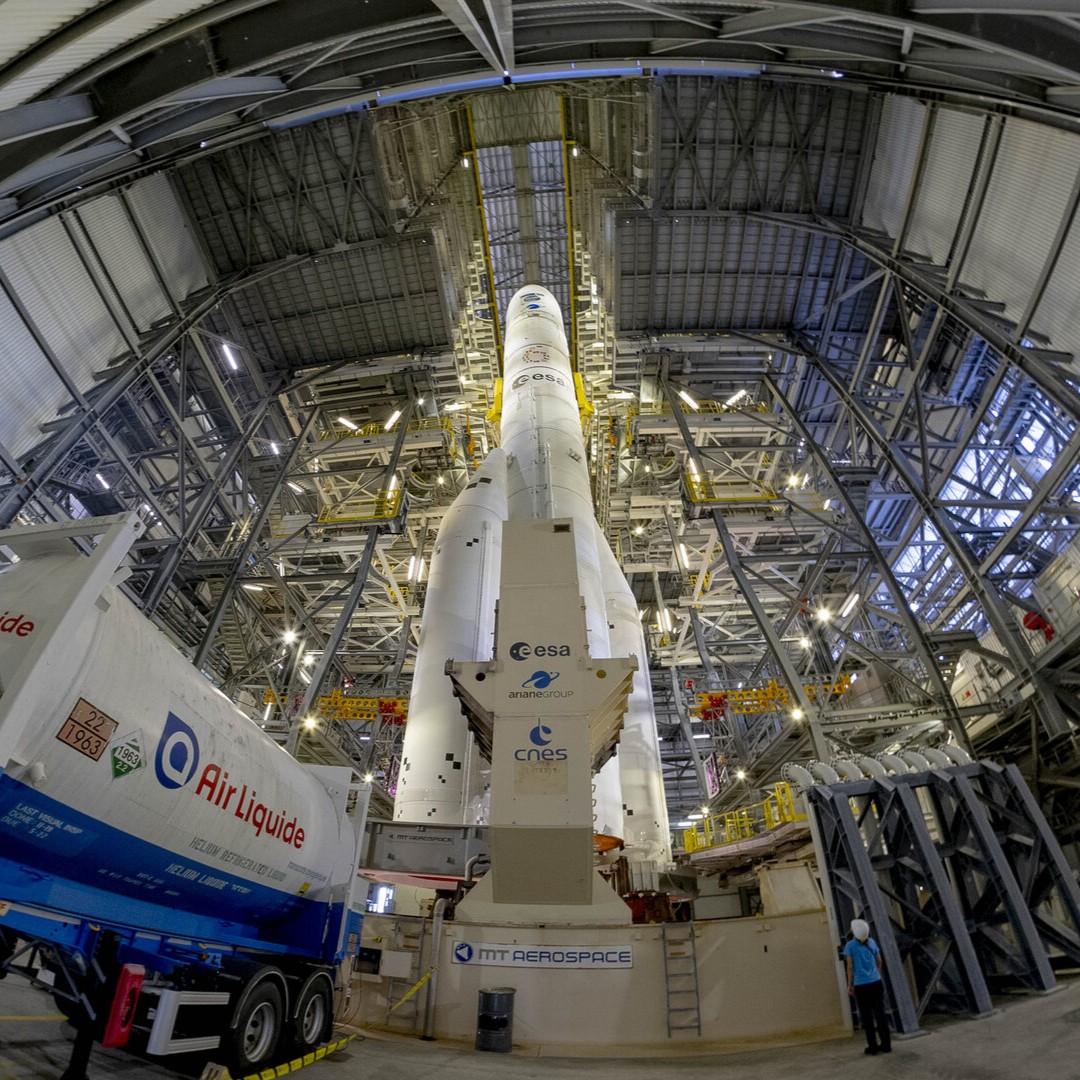
ALT Ariane 6 inside Europe's Spaceport warehouse, being prepared for lift-off.
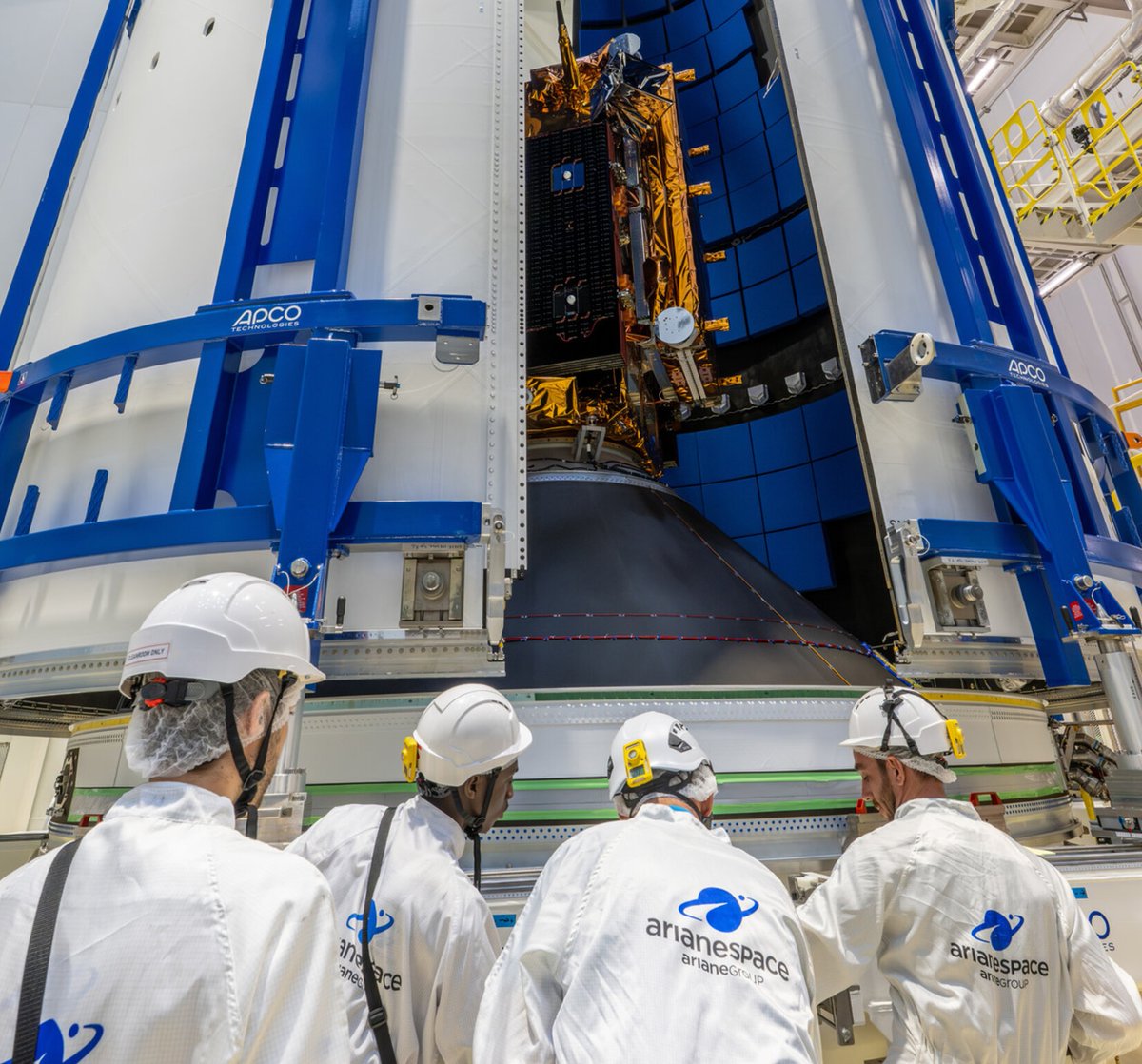
ALT Four Arianespace technicians monitor the Copernicus Sentinel-1D satellite being encapsulated inside the Ariane 6 rocket fairing.
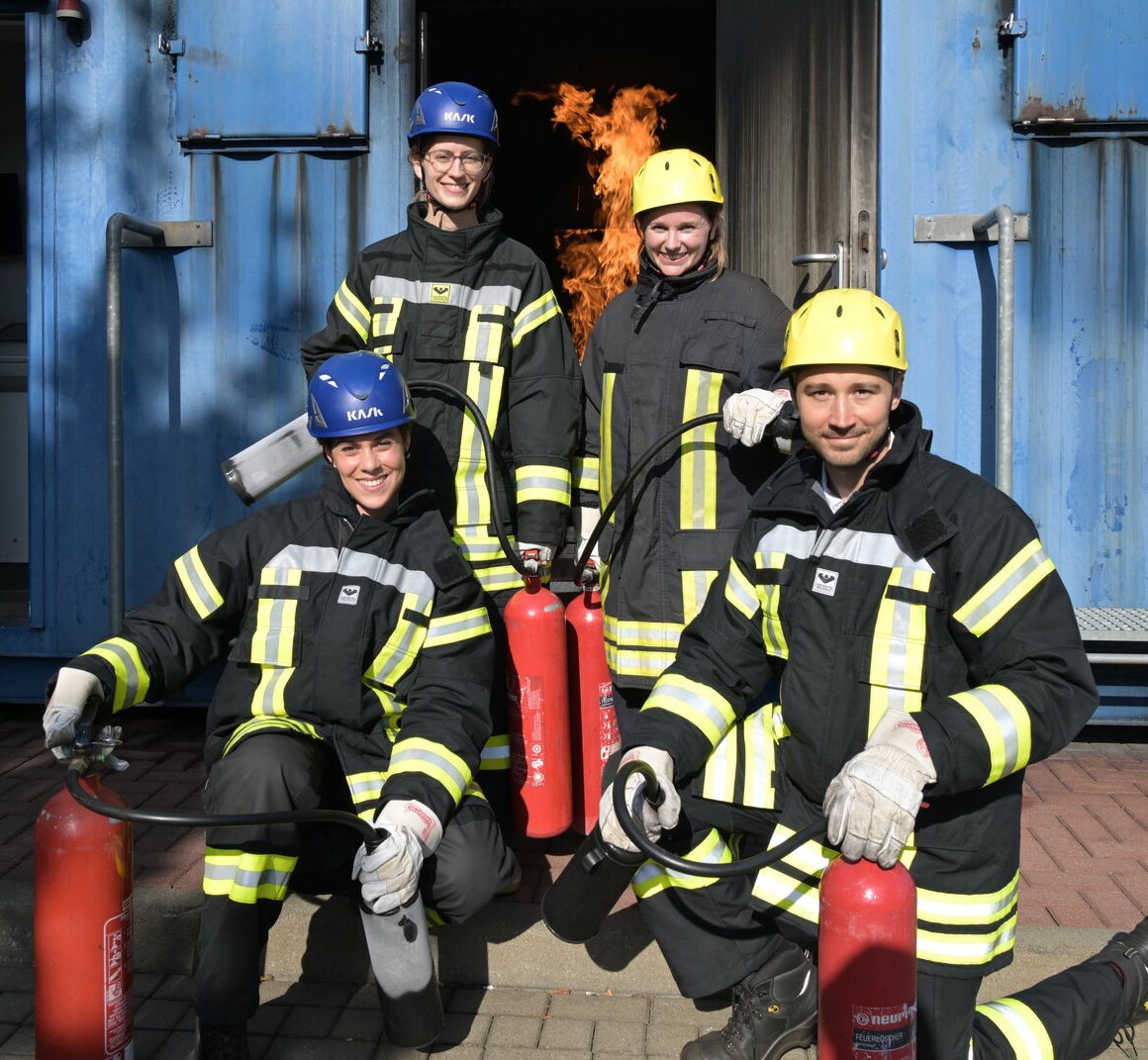
ALT Members of ESA’s astronaut reserve Carmen Possnig, Meganne Christian, Anthea Comellini and Arnaud Prost in full training gear during a fire emergency drill.
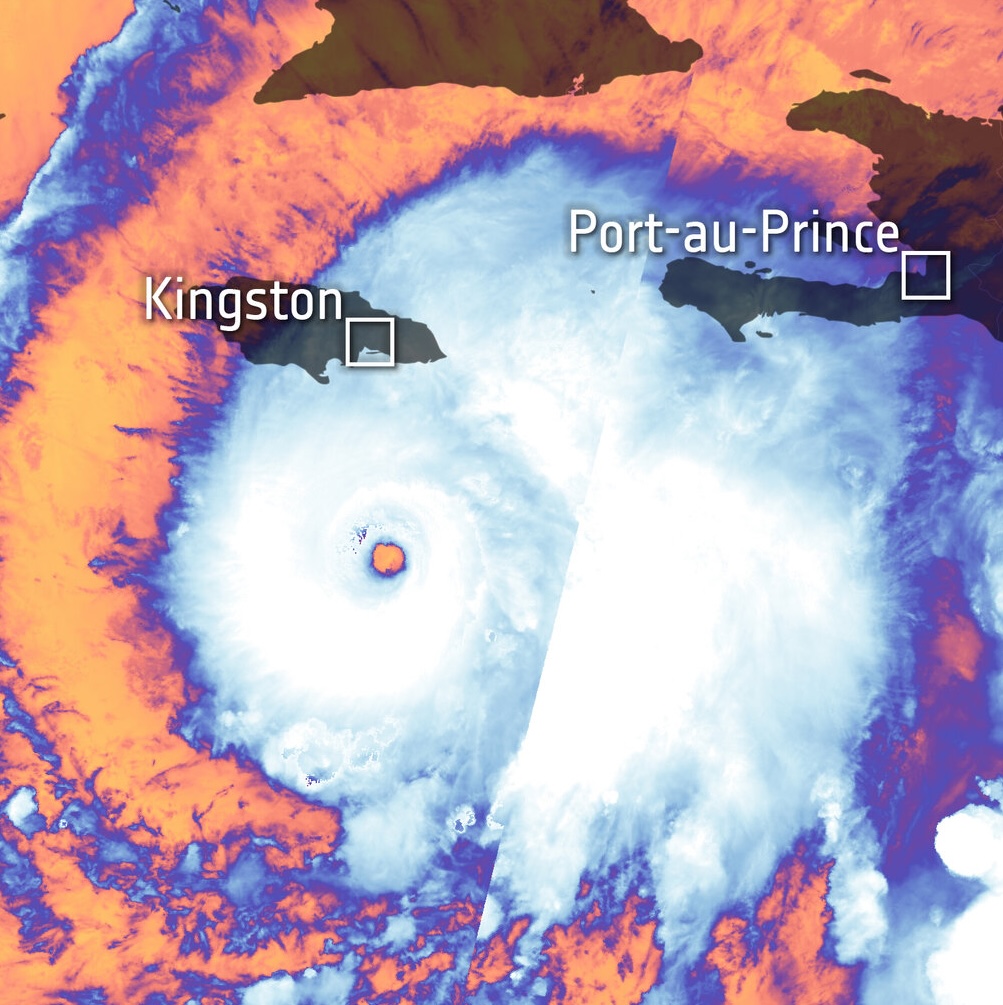
ALT This image captured by the Copernicus Sentinel-3 mission on 26 October 2025 shows the ‘brightness temperature’ at the top of Hurricane Melissa as it moved through the Caribbean Sea towards Jamaica, where it was expected to make landfall.
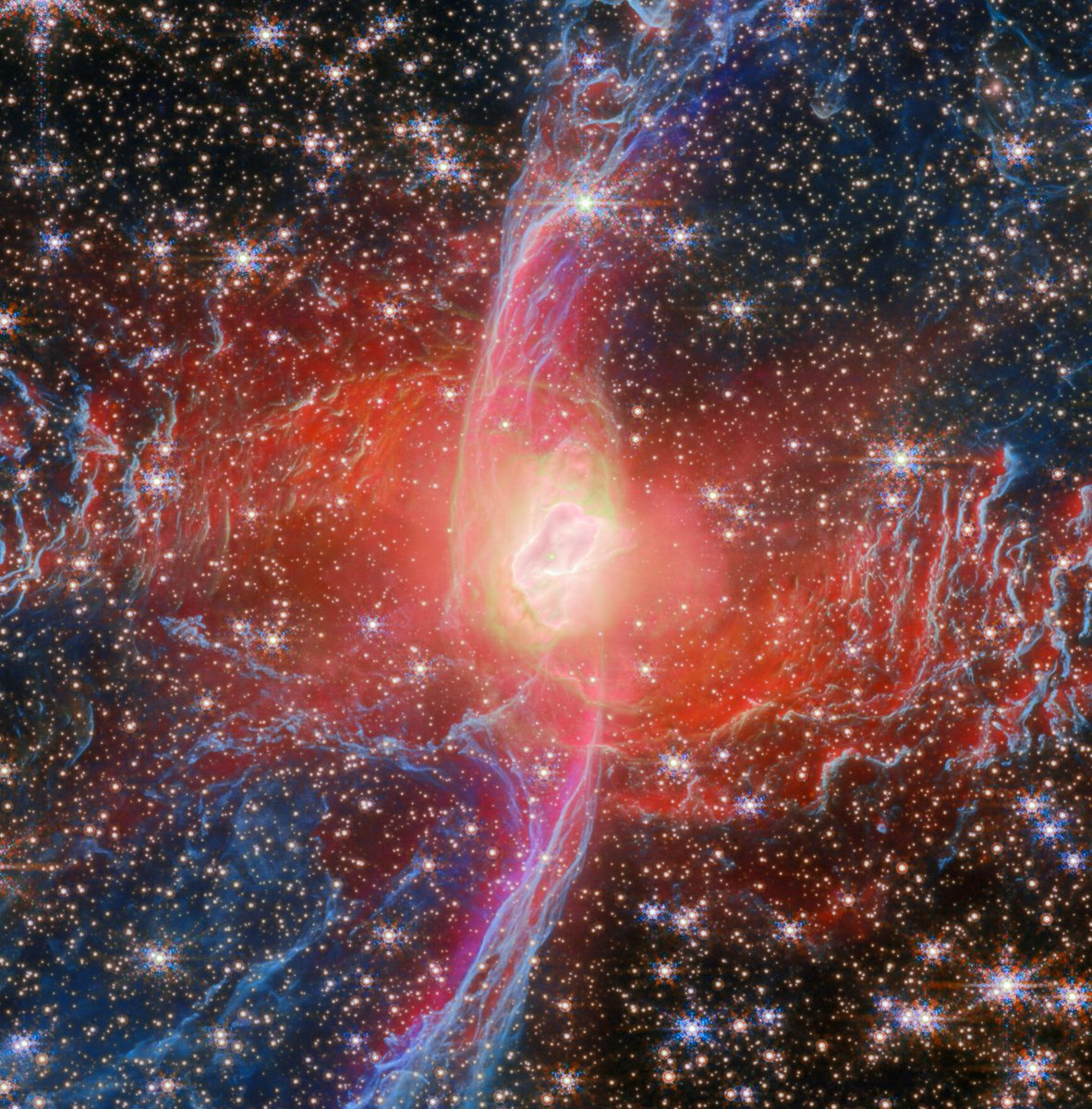
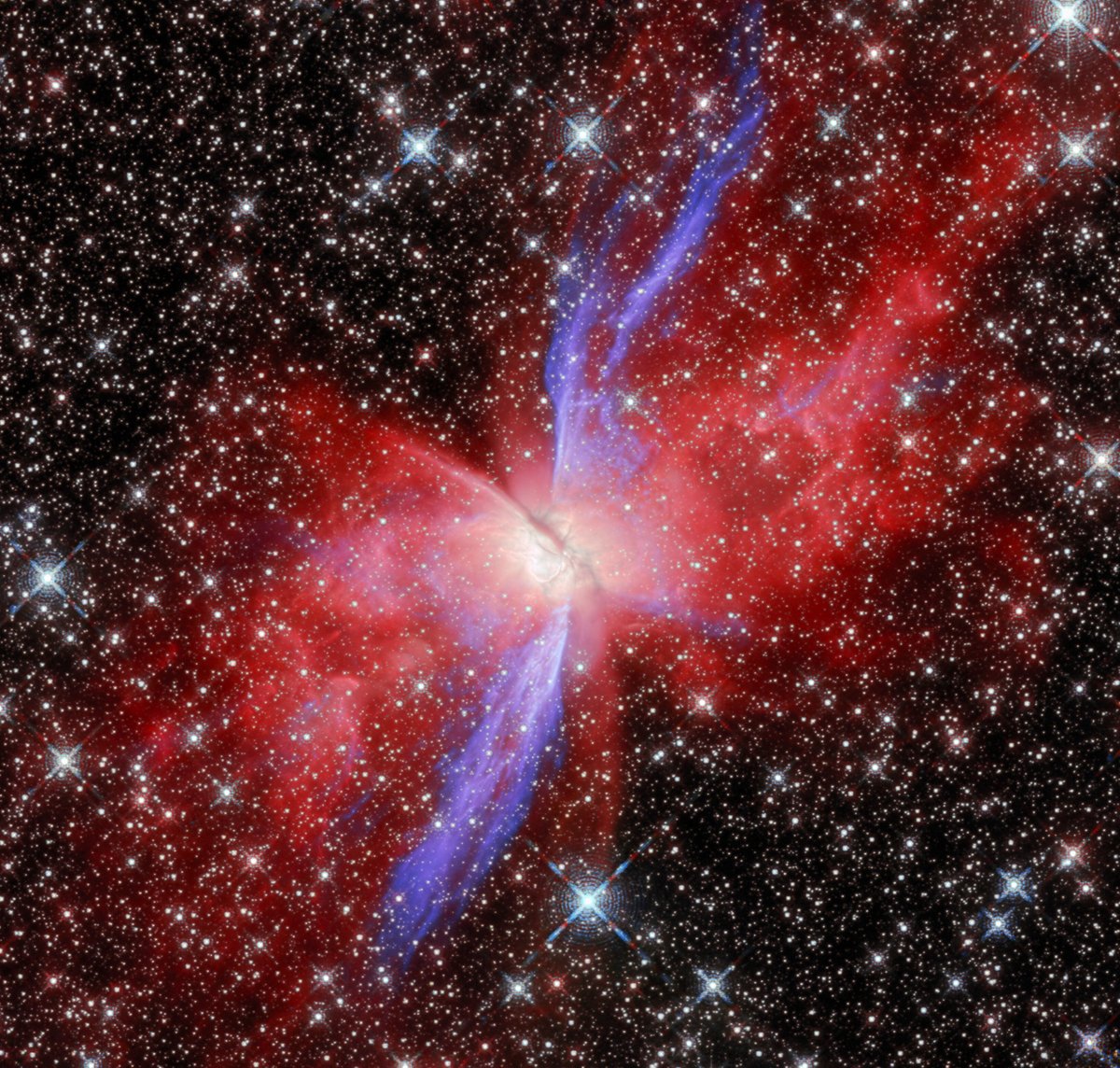
ALT The Red Spider planetary nebula: the nebula’s central star is hidden by a blotchy pinkish cloud of dust. A strong red light radiates from this area, illuminating the nearby dust.