
25 Nov 2023
"Considering Variations in Dental Age Estimation: The Impact of Geography, Nutrition, and Environmental Factors" by George A. Rauscher
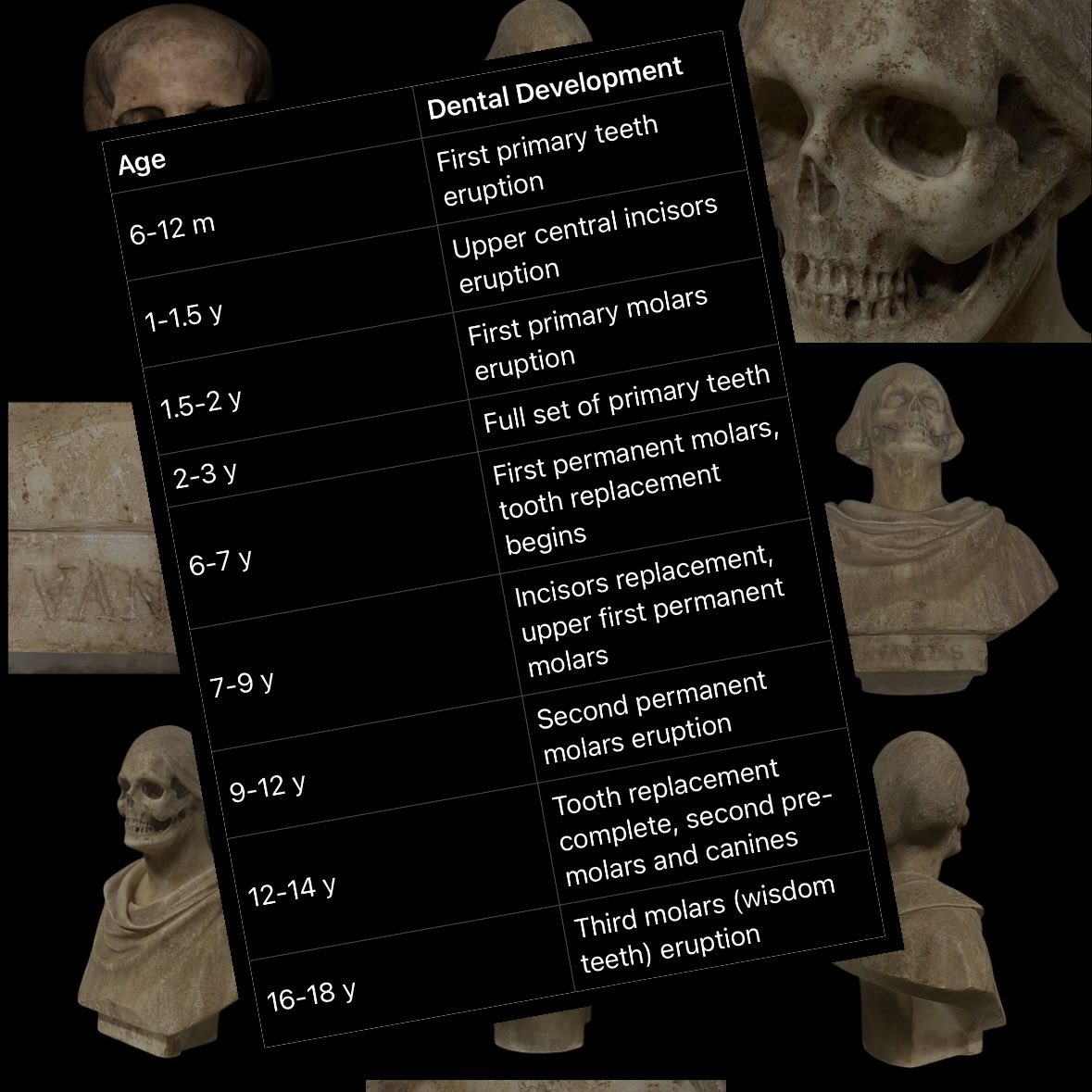
The table below summarizes key stages in dental development, used in forensic anthropology for age estimation in children. It outlines the typical ages at which various milestones in tooth eruption and replacement occur. These general timelines are based on average developmental stages and can vary due to individual genetic, nutritional, or health factors. The information draws from standard references in the field, including studies and charts by Gustafson and Koch, as well as Schour and Massler’s research on dental development. This provides a useful guideline for forensic analysis, although it should be noted that individual variation is common.
Additionally, it's important to acknowledge that dental development and the accuracy of age estimation methods can vary based on geographical origin, nutrition, and other environmental factors. This variation highlights the need for a comprehensive approach in forensic anthropology, considering the specific context and background of the individual being examined. Continuous research and adaptation of methods are essential to address these variations and ensure precise age estimations across diverse populations.
-
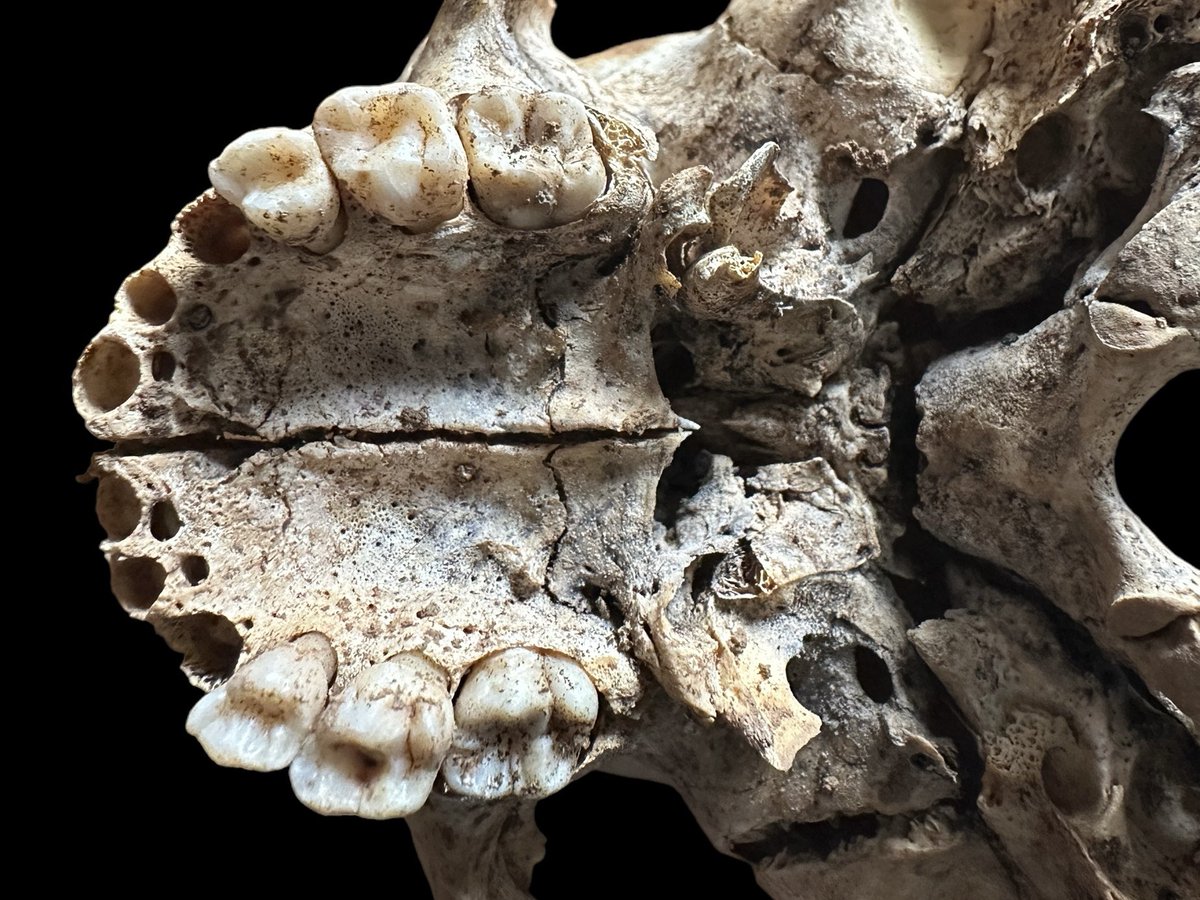
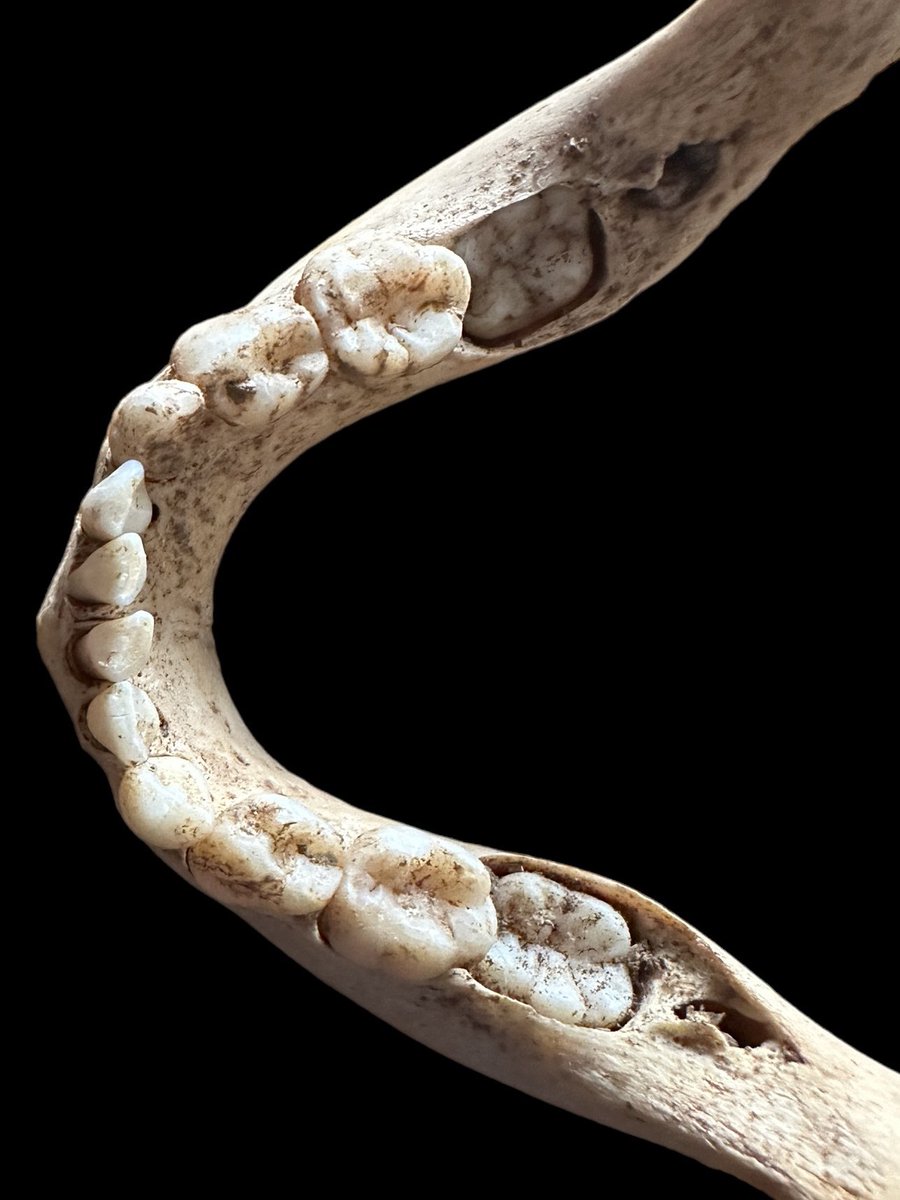
By the way, this skull also got a splashy post-excavation shower. I’m still scratching my head over how one can be bone-headed enough to not learn in school that water and bones are a no-go combo. This skull is drying out so much, it’s practically falling to pieces. I’ve got to prep this cranium this week before it turns into a jigsaw puzzle!
So, whether it's fresh from the dig, in a lab, at a university, or some dusty old basement, don't let me catch you giving a human skull a water bath. Seriously, folks, it's not a duck, it doesn't need to paddle in a pond!
In forensic anthropology, the estimation of age in children through dental development is a critical aspect, with numerous models and tables developed by scientists over the years. Beyond the classic models by Gustafson and Koch, and Schour and Massler, there are more contemporary approaches that enhance accuracy and applicability across diverse populations.
1.) Demirjian Method:
Introduced in the 1970s by Demirjian et al., this method is renowned for its precision in estimating the ages of children and adolescents by assessing dental maturity. It utilizes a scoring system that evaluates the development stage of teeth.
2.) London Atlas of Tooth Development and Eruption: Created by AlQahtani et al. in 2010, this atlas provides a detailed visual representation of tooth development stages. It’s particularly beneficial for its applicability in both clinical and forensic settings.
3.) Willems Method:
An Adaptation and refinement of the Demirjian Method, proposed by Willems et al., this approach adjusts the original scoring system to suit diverse populations, thereby enhancing its accuracy.
#ForensicAnthropology #DentalAgeEstimation #DemirjianMethod #LondonAtlas #WillemsMethod #ChildAgeAssessment #ForensicScience #ToothDevelopment #ScientificResearch #populationvariationnotrace
1
23
3,449

19 Sep 2015
Visita nuestra web y conoce el método Willems utem.es #música #métodoWillems #EdgarWillems #Willemsmethod
1
2