
ran into this exact problem scaling past prototypes. moved the spec verification part to Zencoder and it's the only way multi-file changes don't drift when you're running parallel agents
8

Jun 11
AI, and things like VIbe-Coding to me, are Personal "Self-enrichment" type things, not really something to be 'monetized' or 'capitalized' upon, unless you're exceptionally good.
Under ideal circumstances, just from my dealings with Javascript, HTML and CSS - I started using it to fix up bits of code I couldn't handle or figure out, or I think started using it to build entire modules for it; then I ended up building some Wordpress Plug-ins, which do work, really well.
Then I made some game prototypes, then some WoW Addons, then I eventually (this last April) made codemarauder.dev which is my Orev Triad Archive, it has a game I made.
I ahve another 2-6 years in recovery from nerve damage in my arm so I have to keep busy. I'm getting used to ChatGPT for it's personal utilities.
You can even use it to enhance your social groups, if gaming, I made a wow addon after codemarauder's concept idea came to me, because I like cards and I'm pretty good at Gambling.
The vibe-coding thing is to be used as like a "helper" I'm stuck, I need to solve this to move on, because zencoder and Watson are useless.
If you make a living as a Professional Programmer/Coder, you can benefit from it; just don't use it like an "Artist" or "Philosopher", even of the Armchair variety.
"Art" (sitaroundandlooktough.com)
A really big 'game' world, which can be built by me with my Titanforge 3DS/G app suite. It amuses me, not others - I imagine. (titanforge3dsg.warchief.dev)
32

Agentic coding is dead.
The AI agent discipline that replaced it requires something most teams haven't built yet..
The ones who figure it out first will widen the gap on everyone else.
Andrej Karpathy gave it a name earlier this year: Agentic Engineering.
Not "use an AI agent to write code faster." Something far more structured designing systems where AI agents plan, write, test, and ship under real human oversight.
The teams skipping this structure are producing AI slop. Code that looks right, handles no edge cases, and nobody can maintain six weeks later.
📌 Here's what agentic engineering actually looks like in practice:
1. Write specs before touching the agent
The agent doesn't know your codebase conventions, naming patterns, or business logic. A rules file tells it how your project thinks,before it writes a single line.
→ Use case: Onboarding a new module without breaking existing architecture
→ Tools: Claude Code, Cursor
2. Choose your review posture and stick to it
Two modes: watch the agent work and approve edits in real time, or let it run and review the final PR. Mixing them randomly is how codebases get messy fast.
→ Use case: Production features need "human in the loop." Internal tooling can go "agent first."
→ Tools: Devin, GitHub Copilot Workspace
3. Build test harnesses before scaling agent output
At agent speed, a 1% error rate causes real damage. Automated tests need to catch bad code before it merges, not after.
→ Use case: High-volume teams running 500 PRs weekly with quality control intact
→ Tools: Augment Code, Zencoder
4. Design for parallel agents, not a single session
Running multiple agents simultaneously requires clear task boundaries, isolated branches, and a merge strategy not just a bigger prompt.
→ Use case: One agent refactors auth, another builds the API layer, a third writes tests all at once
→ Tools: Cursor, Kilo Code
The AI agents are the workforce. Agentic engineering is the system they run on.
Teams winning right now aren't better at prompting. They built better rails first.
1
6
213

мне zencoder предложил пособеседоваться на стаффа с зп в 80к (B2B!), лол
это оскорбительно даже по французким меркам
6
56
10,949


May 23
On the left, WhatsApp chat for discussions with colleagues; in the middle, full code observation in Antigravity. On the right, Copilot, and in the second tab at the bottom right, the ZenCoder AI agent extension.
Life is way easier now. 🥂
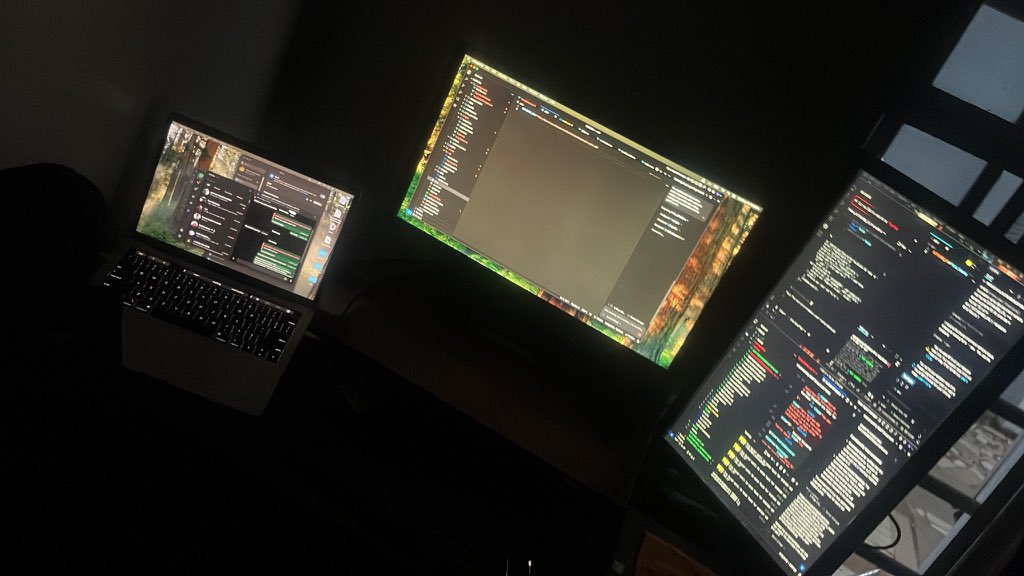

A 13-14 inches display is not enough for an IDE window anymore when vibe coding.
2
2
3
228

Is your AI agent drifting? 🤖
Join Archie Sharma @archiekins2007, COO at Zencoder, for "Autonomy Without a Spec Is Just Hope With a GPU Bill." Learn how to move from copilots to reliable AI coworkers in production environments
Don't miss this!
#devbcn26 buff.ly/nM7snwB

2
62

May 11
Stop paying frontier prices for autocomplete. zencoder routes every task to the right model - fast ones for the easy stuff, frontier ones when it matters. Same output. A fraction of the cost. Come see how at Web Summit Vancouver — Booth E369.

1
5
143

Apr 28
It’s always the same story.
Company gets acquired or goes IPO.
New management, new owners, nobody in charge gives a fuck anymore, company gets sqeezed for profits, everything goes to shit.
I’ve seen it up close with zencoder, zendesk, SendGrid, Mint, and so many more.
That’s why I don’t take outside funding for @sinpleroapp and I’m still loving what I do 17 years in!
2
17
1,224
Apr 22
We're exhibiting at Google Cloud Next! 🚀
If you're building with AI or thinking about how your eng team needs better orchestration - come find us.
We've got something waiting for you at the booth that you won't want to miss. 👀
See you there. #GoogleNext #Zencoder #AICode

2
1
4
259

Apr 21
The ultimate Vibecoding terminal is coming together, and $NBIS is the engine. 🚨
🔹 xAI locks in a massive $60B buyout option for Cursor.
🔹 Zencoder scales a massive multi-agent platform, heavily integrating Grok, Claude, and OpenAI.
The apps are getting the astronomical valuations, but Nebius is the one actually providing the compute for both of them.
@nebiusai x @cursor_ai x @zencoderai 🚀
$IREN $CRWV #ai #DataCenters

4
36
2,748

✨ Zencoder lanza Zenflow: ¡Ahora también para los que no programan!
thenewstack.io/zencoder-goes…
#NoCode #Productividad #Tecnologia #Innovacion
2
115

By interpreting distributed architectures and aligning actions with established workflows, the Multi-Repo AI Agent by Zencoder addresses operational realities in a way that supports scalability and long-term maintainability.

1
2
83
Apr 6
Codebases don’t fail because they’re complex.
They fail because they’re invisible.
You open a repo and you’re immediately asking:
Where does this start?
What depends on what?
What breaks if I touch this?
So we built something to make that visible.
With Zencoder CopilotKit:
Paste any GitHub repo →
Get a live, interactive map of the codebase
Not docs. Not static diagrams. A working surface.
Then ask a question and the UI updates itself.
No chat responses. No digging. Just movement.
This is less “AI assistant”
and more “interface for understanding code”
Read about it here 👇
Apr 6

JUST RELEASED: "Google Maps" for codebases
@zencoderai built a codebase explorer with @CopilotKit
Paste a GitHub URL, get a real dependency graph from actual imports and ask it anything.
4
9
951

AIコーディングツール会社Zencoderが半年間の実績を公開
メンバーを36人→30人に削減
一方でチームの生産性は1.7倍になった
「人を増やすことで解決する」という発想はもう通用しない
次に問われるのは、何をAIに渡し、何を人が持つか、ここに線を引けるかどうか

1
1
24
492
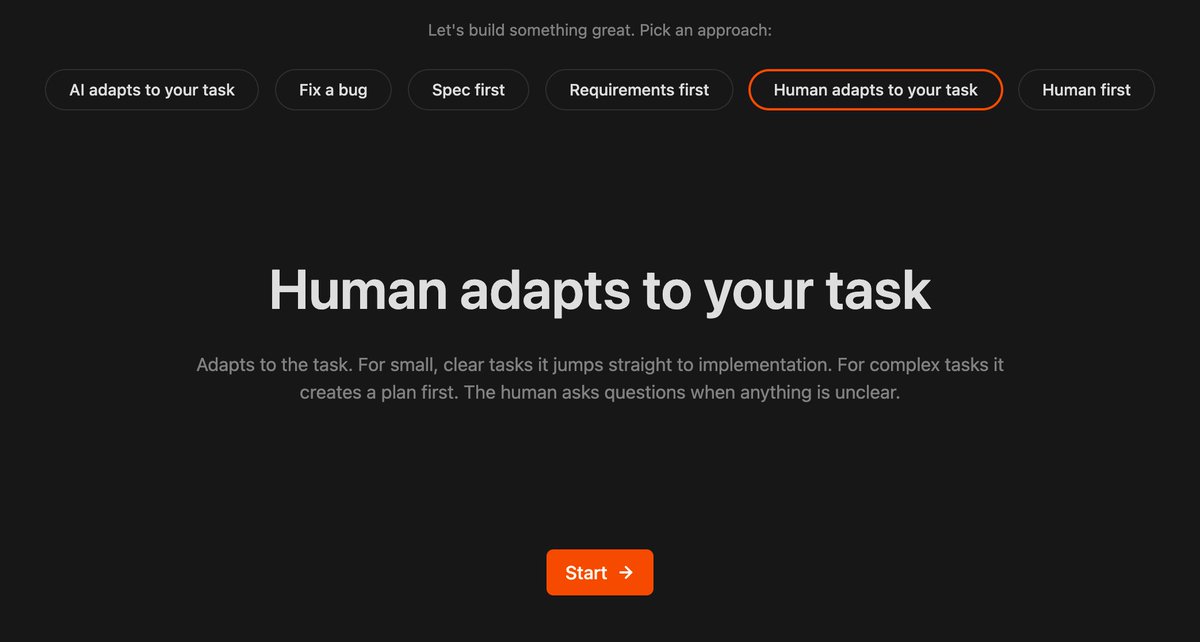
Launching our new feature demo in T-30 mins!
Super exited to showcase what we are building at Zencoder.
Turn on your notifications so that you don't miss the launch
3
335
Mar 25
Zencoder Roundtable: Community, Code & Conversations That Matter x.com/i/broadcasts/1RKZzjvwk…
1
3
143

Mar 25
Two things we're excited about at @zencoderai 🧵
The Zencoder Roundtable happening today at 10pm. No scripts, no sales pitches. Just developers talking honestly about tooling, workflows, and what's actually working.
Open discussions. Community spotlights. youtube.com/live/TBbdI84RIk8…
1
2
91
Mar 22
What we released in Zenflow this week, March 16-22?
- Zencoder subagents can use any model or CLI
- Save prompts and reuse them easily
- File explorer and spotlight-style search across tasks, projects, files
- Zenflow can keep your computer awake while agent is working
- Built-in spellcheck and autocorrect
- Fixes and improvements across performance and reliability
5
7
881

okay question idk how @frosteyszn did his backend the probability ya code rabbit or codex review wacha I add zencoder e2e testing missing such a bug is it high or low?
2
327