



Feb 26
"Same OG but ife changeee bu the zeroos in my Bank Account"
Phyno is the Goat 🐐
12
574


Feb 17
Little late to the party, finally had time to formulate my thoughts on this.
The vision behind Zero from @LayerZero_Core is most refreshing in the market.
They have been quietly building towards this moment with smaller pieces released along the way (such as ZeroOS).
It was obvious from the initial article that they are raising to go up against AWS - a critical move to make blockchain infra relevant in the world.
To do this they have been focusing on the abstraction from top down comms to (hopefully) bottom down, explicitly focusing on “collapsing the mental model of hybrid apps” (@0xkydo's crystal clear framing, I couldn’t have put it as nicely).
The ability to build hybrid on and offchain apps have been an option for about 2.5 years already with zkCoprocessors or general purpose zkVMs - but there are problems limiting adoption.
The biggest issue is still lack of abstraction and significant infra/development overhead for every single application. There are, as I observe, two main school of thoughts here:
1) App-specific rollups built by customizing of pre-built stacks will provide enough functionality to build any type of application.
2) Multi-execution environment architecture using ZK is the only relevant model to build apps that will drive web3 adoption
I am (obviously) part of the second school of thought, but I am conscious of the complexity that comes with it.
If I would break down Zero’s architecture - it’s a fully ZK based L1 (similarly to what Ethereum Mainnet is targeting) with dedicated support to launch multiple zkCoprocessors for use-cases and provide strong atomicity with application-specific sequencing while decreasing full atomicity where less relevant (atomicity zones).
The developer experience abstracts it back to a blockchain design to make it more familiar feeling to blockchain development or web2 development with AWS.
Is this technically feasible? Yes. This is what Ethereum would feel like after the transition to ZK.
Can Zero actually ship the vision? They have gathered strong conviction by some pretty relevant stakeholders (such as a16z, which is clear signal/feedback for how they see the market developing next 2-3 years).
My estimation is that they are working around the clock to ship on time, and we will only really see when this is released. So far it is not testnet prod ready - otherwise they would have released it already.
Do I have a problem with them not competing on EthProofs with their Jolt Pro? No. Its important to see that EthProofs is measuring proving speed on a non optimized Ethereum Mainnet RTP measure.
Is it great for devs to see better benchmarks? Yes. However I caution against any dev treating it as gospel, the tech works in a different manner. If you optimize the whole L1 stack for being ZK-friendly, you can speed up proving by 2x imo by just removing obvious overheads.
Feb 10

Zero is the first multi-core decentralized world computer. Each core is capable of 2 million TPS and the blockchain scales horizontally to near infinity.
It lives up to everything we stand for:
- Decentralized
- Permissionless
- Censorship-resistant
🧵
3
2
11
946

Feb 14
The Ethereum 5-year roadmap is fairly vague, so we base our high-level understanding on this post: hackmd.io/@oK3in1lRQ7-pt7b3j…
In short, Zero combines:
1. The real security of Ethereum's L1 zkEVM roadmap.
2. The horizontal performance scaling of the L2 roadmap.
3. Bespoke Atomicity Zones (STF diversity)
4. Trustless Native Interop between Atomicity Zones.
5. Asymmetric latency (Ultra low latency in one Zone and multi second latency in another)
ZK
Currently Ethereum has not picked a zkVM to enshrine or stated whether or not it will be one or many zkVMs. They are not building any inhouse at the EF that I’m aware of and are dependent on external teams. We evaluated all zkVM tech and chose the Jolt research project as our foundation because it (1) actually scales linearly with additional GPUs, and (2) with future protocol and system optimizations (e.g., lattices, GPU kernel optimizations) the unit economics will vastly outpace all other zkVMs. We built a inhouse ZK team made up of world class cryptographers, ASIC designers, and GPU developers to make Jolt Pro. Jolt Pro will scale to a THz cluster and will be able to support real time proving for our high performance needs.
Statelessness
Zero implements something similar to weak statelessness. You can find more context here, along with a brief explanation of why Block Producers aren't a concern for centralization:
We do not have strong statelessness (where the beacon chain state is just 32 bytes). That would require many beacon chain messages to include large plaintexts with opening proofs. However, our settlement layer architecture is designed from the ground up for weak statelessness.
Architectural Differences
In the Ethereum roadmap, they loosely claim to bifurcate the network into builders and attestor/includers to create enshrined shards. This is likely the parallel between Zero and "zk-Ethereum." Our Block Producer has a similar role to a builder, and settlement layer validators do the job of attestor/includer.
However, there are still key architectural differences:
- Block Production: Our Block Producer is allowed to produce blocks, whereas the builder is not. Our settlement layer design allows the Block Producer to give ultra low-latency preconfirmations during periods of settlement layer asynchrony without introducing additional trust assumptions. This design enables determinism; preconfirmed transactions won't be "reorged out" unless network conditions remain bad for an unrealistically long time.
- Validator Load: Our beacon chain essentially only runs consensus. Each validator stores only the minimum set of information to efficiently perform consensus. Proof of Stake and our enshrined governance are moved into the System Zone. This allows our beacon chain validators to achieve what Ethereum refers to as weak statelessness.
- Zones and Interop: Our architecture is designed to scale to multiple unique Zones with universal interop. To our knowledge, Ethereum does not have a clear roadmap for sharding the L1 into multiple asynchronous shards like our Zones. ZeroOS enables a diverse set of bespoke zones (trading, payments) that are significantly more efficient than traditional blockchain VMs.
5
11
117
51,087

Lmao, Canton shiller was so scared of new chain’s shadow , which doesn't even exist yet, that he started talking complete nonsense.
Im gonna be a nerd because seems one of us cant do math, research and logic. And I hope thats not me
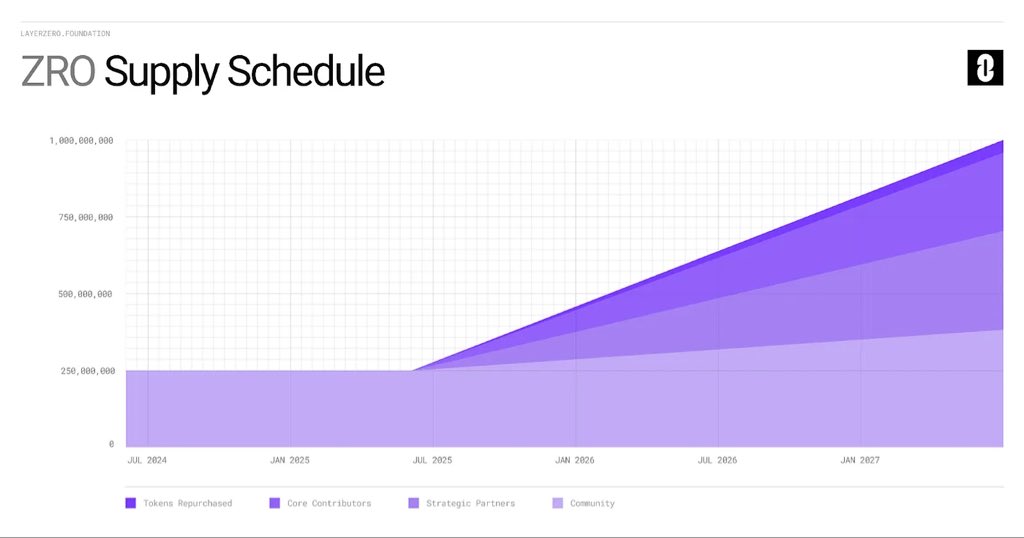
> ZRO has a limited supply of 1 billion, unlike CC, btw. Where did you get the idea that new tokens will be printed for validators?
80% supply is still locked? Did you check ZRO tokenomics? 25% were unlocked at TGE. Now its much closer to 50%, than to 20%.
> 32,2% tokens were reserved for VCs and 25,5% for the team with linear unlocks for 3 years. 322mil / 36 = 9mil. 255mil / 36 = 7mil.
If you priced FDV at $1,8B, price is about 1.8 right?
9mil *1,8=$16,2M. Not 25, right?
7mil *1,8=$12,6M. Not 18, right?
> If 16 mil tokens is 11% of mkcap, then unlocked tokens are 145mil (14,5%). Neither 20% as u said, nor 50% which is more looks like truth.
> “11% of $ZRO's circulating market cap being sold by insiders every single month”… Im gonna ask “source?”, because unlocks doesn’t mean selling.
> For some reason, you consider buybacks to be yield. For some reason you didn’t include recent 5% tokens buyback. And you consider this “yield” relative to FDV. But when it comes to unlocks, you consider it relative to mkcap from your sources. Very convenient.
> “LayerZero has never built an L1 before, and they're promising four simultaneous 100x breakthroughs shipping in roughly 7 months.”
Team literally said that they’ve spent 2,5 years for this. You can check QMDB, FAFO, VApps, and ZeroOS releases. You can even find devs reactions/tests about it. Not today. A year ago.
They’ve never built an L1? Yes, they just built applications on 150 chains, including EVM and non-EVM. They just built the most popular interop protocol.
I don't know how to trust such analytics, logic, and math
7
172

Feb 11
20/ Put together, Zero looks like a full-stack execution rethink aligned with Ethereum’s endgame:
• QMDB removes the Merkle/state bottleneck
• FAFO lets EVM execution fully use modern CPUs
• SVID removes propagation limits
• ZeroOS vApps make zkEVM-style verifiability shippable today
1
1
10
1,025
Feb 11
19/ ZeroOS tackles this head-on by moving the integration point to a language-agnostic layer.
That means verifiable apps can:
• use standard compilers & toolchains
• avoid fragile zk-specific forks
• link only the pieces they actually need
1
8
1,012


Feb 2
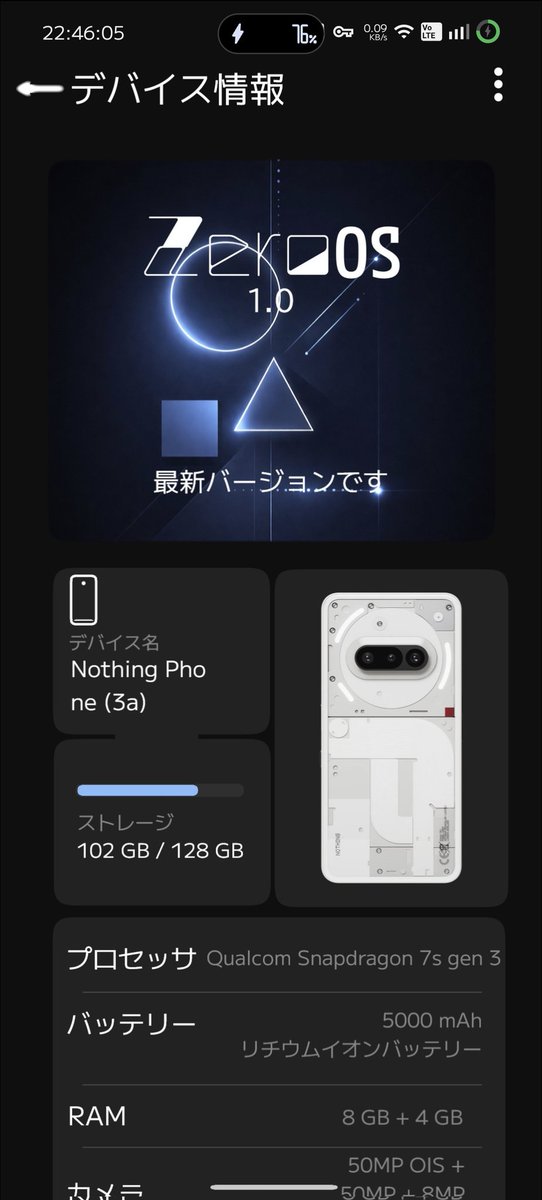
てか背景の線とZeroOSのrが合わさってZekoOSに見えるなw

2
60

Why LayerZero’s ZeroOS Matters for zkVMs and the Future of Modular Crypto Infrastructure
Picture a developer moving a complex decentralized app from one zkVM to another. They often have to redo much of their code because each system uses different instruction sets and tools. The zk ecosystem is evolving fast, but this rapid pace is causing fragmentation. Each new zkVM, prover stack, or framework introduces its own tools and workflows, making things more complicated for builders, researchers, and users.
This is where ZeroOS comes in. Created by @LayerZero_Core and Dan Boneh, ZeroOS is a universal modular OS for zkVMs. It can work with any zkVM, no matter how it's built, and provides a framework that connects different instruction sets and tools. This makes ZeroOS a platform that helps bring together a fragmented ecosystem.
ZeroOS brings different parts of the stack together, opening new ways for people to collaborate in the zkVM ecosystem. Instead of being stuck with one tool, it connects different tools and systems, making it easier for developers, researchers, and users to collaborate and innovate.
The Problem: zkVM Innovation Without Coordination
Many believe zkVMs are the future for privacy and verifiable computation, and this shift is already underway. New zkVMs are emerging, each with its own focus, ranging from better performance to flexibility, compatibility, proof systems, or developer-friendliness. For example, some zkVMs make proofs smaller to save network resources, while others cut down compile times to speed up development. Looking at these differences helps us see what each zkVM does best and where it might fall short.
The challenge is that each of these systems comes with its particular set of assumptions:
✧ Different instruction sets
✧ Different tooling and SDKs
✧ Different proving abstractions
✧ Different integration patterns
For developers, building once is no longer enough. Supporting different zkVMs means learning new workflows and rewriting big parts of their systems. Instead of building on each other's work, the ecosystem risks splitting innovation into separate silos.
Fragmentation at this level slows down more than just developers. It affects whole teams, makes people less likely to try new things, limits how systems can work together, and makes it harder to set standards. For example, a small startup wanted to launch their new decentralized app on several zkVMs at once. But each zkVM needed its own version of the code, which took too much time and effort. Frustrated, they launched on just one platform, missing out on more users and partnerships. This shows how fragmentation can hold back creativity and progress.
This is where ZeroOS starts to stand out.
What ZeroOS Actually Represents
ZeroOS is known as a universal, modular library OS for zkVMs, which matters. A library OS works like a toolkit that apps use instead of running on their own, providing shared services and resources to different apps. ZeroOS isn't trying to be the top zkVM or just another framework. Its goal is to be a base layer that supports many zkVMs.
In concept, it’s similar to the role operating systems have played in traditional computing:
✦ Developers no longer need to manage low-level primitives across infrastructures.
✦ Tooling can standardize around shared interfaces.
✦ Ecosystem components become interoperable rather than bespoke.
If zkVMs are like competing runtimes, ZeroOS aims to be the shared foundation for all of them. This is a big goal, and it's why Dan Boneh's involvement is important. Boneh has shaped modern applied cryptography, and his public work here shows that ZeroOS is meant as real infrastructure, not just a marketing project.
Why This Matters Beyond zk Developers
It may look like infrastructure changes matter only to engineers, but they can actually transform entire ecosystems.
If ZeroOS becomes a common modular layer, it could lead to several important changes:
☉Faster Developer Velocity
Think of a team at a hackathon, rushing to build a new app. Before, they spent days making custom tools for each zkVM, which often led to dropped ideas and unfinished work. With ZeroOS offering shared tools, they can now quickly build a working demo in hours. These shared building blocks let them focus on new ideas rather than on integration, enabling them to meet tight deadlines.
☉Real Interoperability
Chain-level interoperability enables different blockchains to communicate, while tooling-level interoperability ensures the tools and software behind them work together smoothly. Both are important: chain-level boosts network connections, and tooling-level makes integration easier and more efficient. A standard OS layer for zkVMs would let apps and middleware run across different environments without needing custom integrations.
☉Healthier Ecosystem Dynamics
Standards make it easier to mix and match different parts. This encourages more experimentation and attracts builders who want to stick around for the long term, rather than those seeking quick results.
A shared infrastructure layer doesn't force everyone to use the same thing. Instead, it supports greater diversity because people can build without having to start from scratch each time.
☉Early Signals That Matter
ZeroOS remains a new project and is not yet widely adopted. According to a recent report on proving infrastructure, early indicators of quality carry significant weight for projects like this, even if quick adoption has not yet occurred.
Some signals already stand out:
⦿ Working with Dan Boneh makes ZeroOS look more like public infrastructure than a closed-off product.
⦿ While the emphasis on modularity and universality demonstrates that ZeroOS aims to benefit the broader ecosystem rather than advance LayerZero’s interests, it is important to recognize potential limitations and challenges. For example, achieving true universality may be difficult given the diversity of zkVM architectures and the rapid evolution within the field. Additionally, widespread adoption could face resistance from stakeholders invested in existing frameworks or standards, potentially limiting the impact ZeroOS seeks to achieve.
⦿ Conversations among developers and the attention ZeroOS has received show that the problem it addresses is common, not just a niche issue.
Infrastructure rarely succeeds because of hype. It works when enough trusted people decide it's worth building on. ZeroOS looks designed for long-term use. To unlock its potential, we invite developers and innovators to try ZeroOS, share feedback, and test what it can do. By joining in, you can help make ZeroOS a key part of the zkVM world. Let's work together to build a unified ecosystem that grows through shared creativity.
More Than a Release: A Potential Infrastructure Layer
Most new products add more options and tools. ZeroOS is different because it aims to reduce complexity by offering a shared foundation.
If zkVMs are going to be a key part of future blockchain infrastructure, powering cross-chain verification, privacy apps, decentralized identity, and verifiable computation, then the ecosystem can’t afford to remain fragmented at the tooling level.
ZeroOS is based on the idea that working together on infrastructure will spark more innovation than simply competing at the lowest levels.
It's too early to tell if ZeroOS will become the standard for zkVMs. But it's clear that it's one of the few projects trying to solve fragmentation instead of just adding another competing system.
In a field that often chases short-term trends, this kind of long-term infrastructure thinking is rare and worth noting. What could the zk landscape look like if we work together instead of splitting apart? It's a question that prompts us to imagine a future where shared efforts drive innovation and unity, opening new possibilities.
@LayerZero_Core

42
44
727

Jan 22
This is a really good read,it breaks down the importance of investing in people.
As @naval said, “The best investment you can make is investing in people building inevitable things.”
This is exactly the approach LayerZero took: investing in exceptionally smart people on the team.
Because of that, LayerZero has shipped strong products beyond just interoperability. Products like FAFO, QMDM, OneSig, and ZeroOS can be used across the entire crypto ecosystem.
LayerZero’s unfair advantage is simple: investing in people who build inevitable things.

6
15
459

Jan 17
Nowadays, the question is being asked more and more often:
"And how will developers earn money in the ecosystem @ProjectZeroIO?"
The answer has been known for a long time. They will be able to create their own AI agents based on ZeroOS,
configure them for specific tasks, ranging from
market analysis and ending with DeFi portfolio management.
Each agent will be able to generate income,
and its creator will receive a share through a revenue sharing mechanism.
Moreover, it will be possible to issue your own token for the agent,
whose liquidity will be provided by $PZERO.
This is how Project Zero becomes not a product,
into a whole platform for digital entrepreneurship.
#ProjectZero #AIEconomy

2
5
61

Jan 16
vibe coding spaces next week👀
ZeroOS sponsored by @0G_labs
open spaces, come and contribute

A random X Space appeared from nowhere, anon.
Join us on Wednesday to discuss the rise of vibecoding and its implications for the future of Web3.
Host and guest announcements coming soon 👇
x.com/i/spaces/1lDxLBpPnNLGm
7
2
27
1,382

Jan 14
Thanks Headie. I didn't even know about ZeroOS.
When was it built?
1
2
21

Jan 13
High-stakes AI needs an operating system, not a chatbox. @ProjectZeroIO calls it ZeroOS: a state where AI agents are citizens with memory, security, data access, and chain interoperability. If agents are going to handle payments, trades, or negotiations, they need deterministic guardrails and auditability baked in
Used Zero Chat this week to map $USDC paths across L2s and felt the stack click. AskToEarn surfaced niche badges, mining attempts minted $MERIT, and Gems stacked without breaking streaks. The new basic visualizations cut verification time versus juggling five tabs. Incentives measure throughput; policies shape behavior
What convinced me: deterministic permissioning, auditable memory, and signed chain I/O turn agent actions into replayable procedures. You can reason about failure modes, test policies, and ship agents that touch value with confidence. If agent economies are coming, ZeroOS is where they learn to be responsible citizens
#ProjectZero #ZeroOS #AskToEarn $PZERO

51
1
76
552