
Hindi can get you the job done in all states except for the five southern ones, that have limited acceptability for it.
A language is meant to bind people of the region together, including Hindus and non-Hindus, which is invariably Hindi.
1
9

stereotypes arent edgy. the US is the most multicultural country on the planet. everybody and their fucking mother knows about stereotypes. edgy would be something that pushes the boundaries of social acceptability, not milquetoast tired stereotypical tropes.
142

There’s a paragliding launch 1/2 hour from me that I could fly regularly and it’s well within my abilities, but I deem it incredibly sketchy and high consequence and so after flying it once I crossed it off my list of acceptability
That launch is a HAIR safer than BASE
2
53

The Vinaya, the earliest monastic code, also restricts ordination for certain individuals, including those with ambiguous sexual characteristics, primarily to maintain the sangha’s public image and social acceptability this is Buddhism
1
16

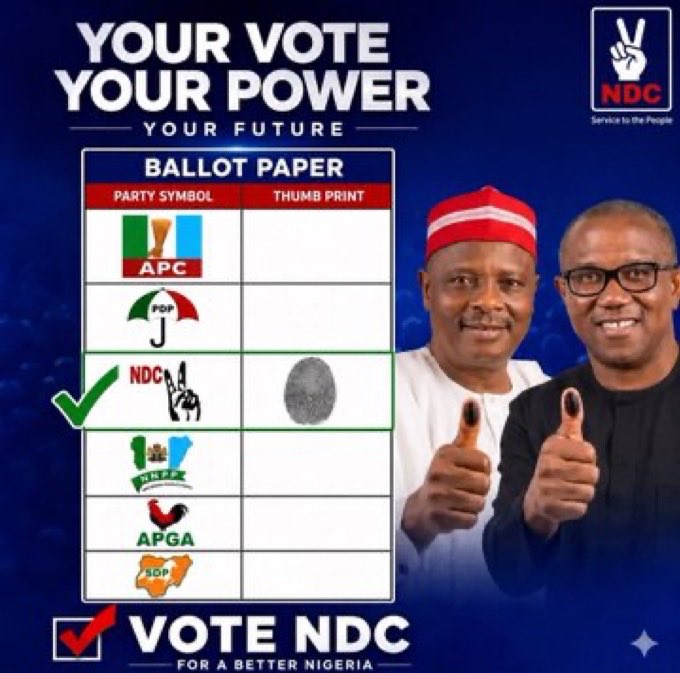
Exactly 💯. On one hand, they dismiss the opposition as irrelevant. On another hand,they are having regular nightmares, realizing the public valuation and acceptability of Obi. The constant attacks on him are not for nothing.

You can only be afraid and scared of who is better than you in any contest !
APC is sore afraid and scared of the impeccable leadership and character of HE Peter Obi and HE RMK
We move regardless ✌️✌️
1
1
1
10

Autism: The Pays Too Little Or Too Much Attention Disorder
It'd be kinder and more effective to be concerned with capability rather than diagnoses and/or social acceptability.

tech industry has put way too low value on being cool
people even act like what they imagine autistic people are like
everything could be so much easier and smoother if this culture was corrected
8
It only shows that they are actually aware of the public valuation and acceptability of the opponent.

A government and Party members that have forfeited their position to an 'inconsequential opponent' yet are loosing sleep and have nightmares over the same man.
Somebody please make this make sense to me.
2
2
22
Elizabeth M Collins retweeted

Acceptability and efficacy of low-dose zinc with or without probiotics in acute watery diarrhoea—a prospective comparative study academic.oup.com/tropej/arti…
@DrEMCollins @OUPAcademic @OxfordMedSci @OxfordJournals
#gastroenterology #childhealth #diarrhoealdisease #QualityTreatmemt
2
3
31

IT'S NOT ONLY THAT....IT'S THE DECADES OF METHODICALLY SHIFTING THE SPECTRUM OF BAD BEHAVIORS TOWARDS ACCEPTABILITY, BY CONVINCING TENS OF MILLIONS OF THAT
11

No. It's not 'just a term'. It is so grossly and dangerously inaccurate it must be challenged. It has allowed the T and Q to Trojan Horse its way into acceptability by leeching on gay rights.
3
39
Alison moses retweeted

💯💯. Never any acceptability. That's why people should revolt and war like it's Babylon. Nothing will change otherwise
1
1
8

Indeed, If you listen to Atiku Abubakar or Donald Duke speak about Nigeria, one thing becomes clear: vision is different from vibes.
You may agree or disagree with him politically, but you cannot deny the clarity of his thoughts. He speaks like someone who understands that Nigeria’s problem is not solved by emotions, slogans, victimhood or regional excitement. He speaks about institutions, economy, productivity, governance, national cohesion, infrastructure and the kind of leadership that can move a complicated country from crisis to recovery.
That is the kind of conversation Nigeria should be having.
Unfortunately, Peter Obi’s politics has become too dependent on emotional appeal and regional sentiment. His supporters may not like hearing this, but politics is not only about who can trend. Presidency is not awarded to the loudest online army. Nigeria is too large, too diverse and too wounded to be led through narrow political energy disguised as national movement.
Obi’s biggest weakness remains national depth. Outside his strongest comfort zones, his message often struggles to convert into broad trust. He is admired by many, yes, but admiration is not the same as national acceptability. He has passionate followers, yes, but passion is not the same as structure. He has urban noise, yes, but urban noise is not the same as electoral spread.
That is why the comparison with someone like Donald Duke is important. Duke sounds like a man trying to present a countrywide vision. Obi often sounds like a man still speaking to the people who already believe in him.
A presidential candidate must be able to reassure every region. He must be able to speak to the North without sounding like an outsider. He must be able to speak to the South West without triggering suspicion. He must be able to speak to the South South, Middle Belt, North East and North West with the same level of confidence and credibility. Leadership must not look like a regional project wearing national clothing.
Nigeria does not need a president whose main political strength is built around sympathy and identity politics. Nigeria needs a president who can pull farmers, traders, workers, students, industrialists, civil servants, religious communities and ethnic groups into one serious national direction.
This is where Obi’s project keeps failing the test.
His supporters mistake criticism for hatred. They mistake questions for attacks. They mistake regional enthusiasm for national consensus. But the map is bigger than their timeline, and Nigeria’s presidency is bigger than moral grandstanding.
Donald Duke’s clarity should remind Nigerians that 2027 must be about competence, calm vision, national spread and realistic leadership.
Not noise.
Not regional emotion.
Not online pressure.
Not political illusions.
Data is brutal.

If you listen to Donald Duke of the PRP, you will appreciate the clarity of his mission and vision for Nigeria, in contrast to Peter Obi, whose political appeal relies largely on regional support.
6
1
3
598

The girls keep trying to launder him into acceptability because they love a mean self hating gay and I won't have it
1
19

To prove Bitcoin is still decentralized. AND it arguably improves bitcoin acceptability and fungibility just a little.
1
7
186

When CANADIANS are vocal about immigration/ invasion, you know the limit of acceptability was reached a long time ago.
4

12h
And yet Popper undermined his entire credibility with misguided “paradox of tolerance”
One cannot, ought not, argue with someone speaking nonsense or absurdity, *maybe*
That doesn’t equate to someone speaking far-right views or views outside an artificial window of acceptability
2
130
fox retweeted

I am not letting you motherfuckers meme raceplay into acceptability I will fucking kill you
6
9
85
2,351
The Atiku/Amaechi ticket is beginning to look like the most balanced national ticket for 2027, and the numbers are starting to explain why.
Across North and South, the mood is shifting from noise to calculation. Nigerians are no longer asking who can trend for one week. They are asking who can build a national coalition strong enough to defeat Tinubu’s APC government.
According to our recent polls, the Atiku/Amaechi ticket is winning the North East, North West and North Central overwhelmingly. That is not a small political signal. That is the backbone of Nigeria’s presidential map. Any serious path to Aso Rock must begin with commanding strength across the North, and Atiku remains one of the few politicians with deep roots, name recognition, structure and acceptability across those zones.
But the bigger story is what is happening in the South South.
Polling at 42% in the South South shows that this is not just a northern ticket. It is becoming a national ticket with real southern penetration. Rotimi Amaechi brings experience, courage, political network, South South identity and federal-level exposure. He is not a decorative running mate. He is a political force with his own weight.
That is what makes the ticket dangerous for APC.
Atiku brings national reach, economic experience, northern depth and long-standing political structure. Amaechi brings southern balance, energy, executive experience and a strong reformist record. Together, they offer something that Tinubu’s APC cannot easily dismiss: a serious national coalition with spread, structure and electoral logic.
Politics is not won by emotions alone. Presidency is won by geography, numbers, alliances, turnout and structure. On that map, Atiku/Amaechi is already looking more viable than the loud tickets built on social media excitement and regional sentiment.
The North is moving. The South South is opening. The Middle Belt is listening. Across the country, Nigerians are tired of hardship, insecurity, taxation without relief, and excuses without results.
2027 will not be about empty propaganda. It will be about who can unite enough Nigerians to remove a failing government.
From the numbers we are seeing, Atiku/Amaechi is not just in the race.
They are becoming the ticket to beat.
Data is brutal.

E say na panic🤣🤣🤣
Which state can Rotimi Amaechi win for Atiku?
3
2
10
1,884

If this talks is true, then he needs to be cautioned, people should stop making inciting comments against other tribes that may leads to causing problems, The hospitality given to people should not be overlooked and taken for granted, The Yorubas are really accommodating, that is why you see all ethnic tribes leaving peacefully in all their lands, we have to tell ourselves the truth, The igbos elder statesmen should please caution those young kids that doesn't want to leave in peace with others, It is not that people doesn't want to built industries or houses in the south east, but because they dont sell lands to any outsider, there level of acceptability and accommodations are very low if not none, to be honest with ourselves the only region that doesn't allow others to build or even sales lands to others is the south east,
4
9
584