
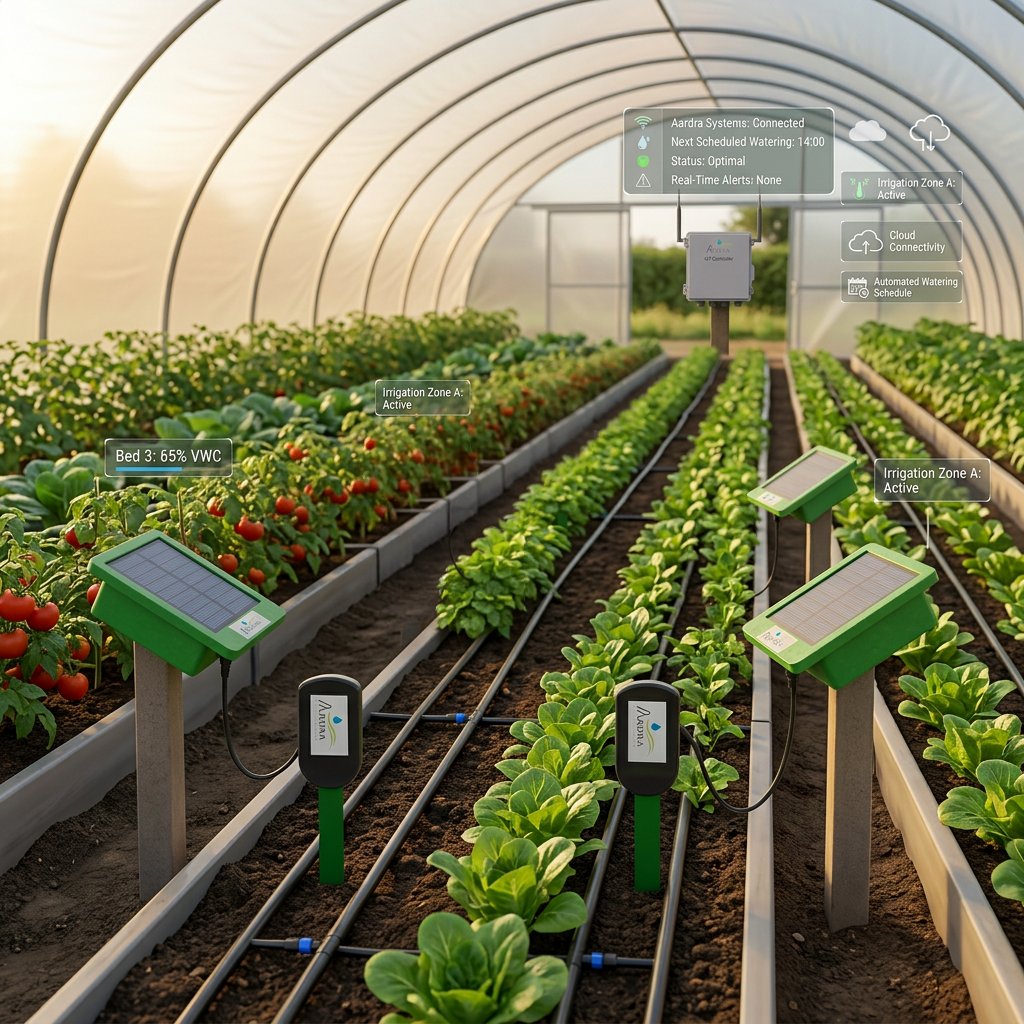
Under cover, conditions change fast. 🌱 Aardra manages every zone, every bed — automatically. Smarter protected cropping. #GreatBigGreenWeek #AardraSystems #Polyhouse #AgTech


#AgTech in Action!!! How ⚽️#FIFA is engineering natural grass for the 2026 #WorldCup. Check it out at facebook.com/xyioncapital
24
HARUNA. retweeted

11h
Agtech is very hard, especially in Nigeria.
Building is never the issue; it’s the adoption process.
Today, @smartfarmai has 20 farms with almost 100k birds. That’s over 750M naira in asset value with real farmers who trust us with their investment.
One thing I’ve focused on is user feedback. Features like finance and insurance for agribusiness weren’t anticipated, but users want them. It’s amazing to see things grow gradually over time.
7
6
73
2,458
DuoJet views are mine alone, non binding. retweeted

17 Jul 2025
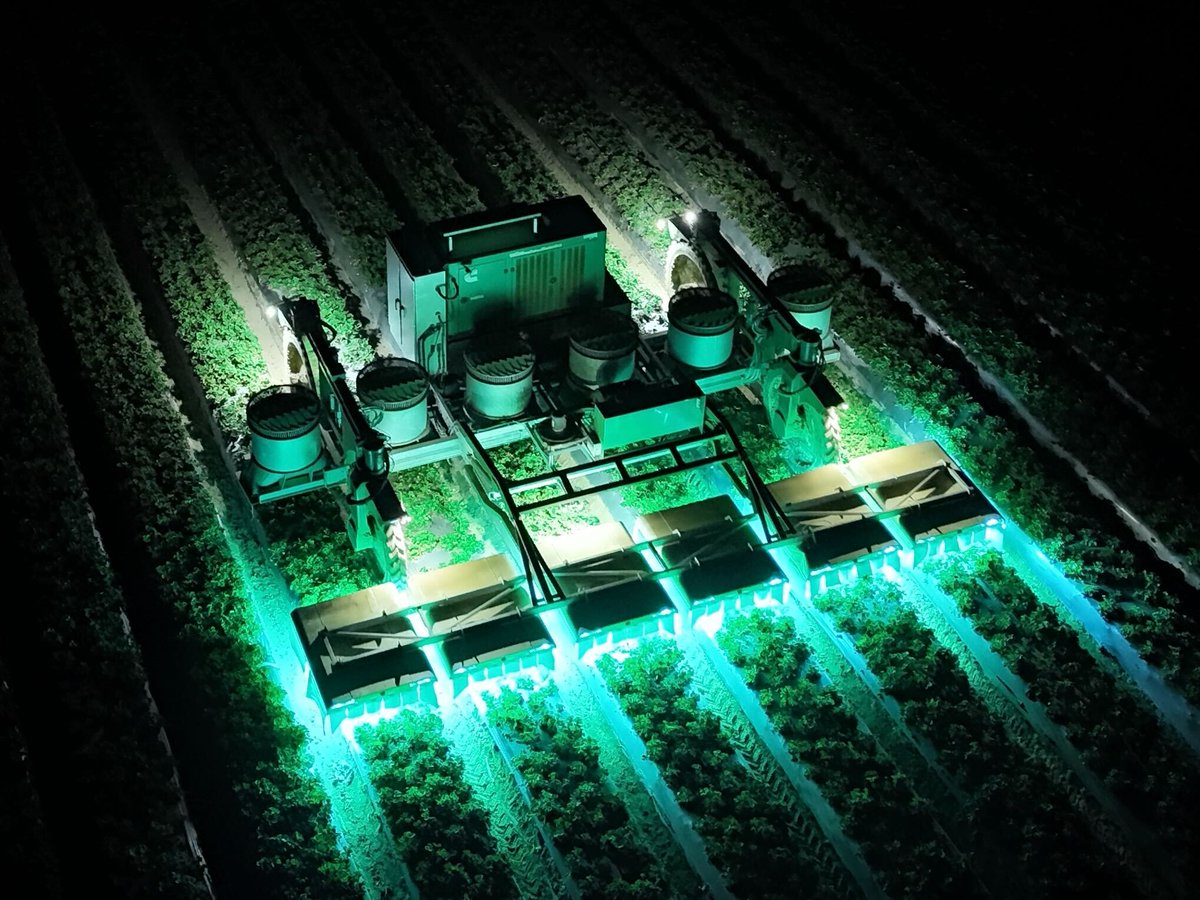
The future of pest and disease control is light and it looks so right.
#agtech #robotics #organicfarming
1
5
846
Version One Ventures retweeted

This is what the transformation of agtech looks like: @tricrobotics
Such proud investors @VersionOneVC
Jun 12

autonomous robot driving through the field at night. no chemicals. no pesticides. just UV light killing pathogens and pests while everyone sleeps. this is @tricrobotics.
this is what chemical-free pest control looks like at scale.
2
1
6
323
K. McIntire, M.S.Ed 🔬🧪⚙️🧩 retweeted

New dog, new tricks.
Meet Agtom's newest rover: the future of agnetic farming.
agtom.io/
#AgTech #ReservoirFarms
2
7
54
4,349

Lincoln Nebraska Coder </> Jerbs
Lincoln actually has a remarkably vibrant and tight-knit tech scene—often wrapped up in what folks call the "Silicon Prairie." Whether you are looking for homegrown product shops, established enterprise anchors, or fast-scaling startups, the city has a lot of distinct pockets for software engineering.
Here is a breakdown of some of the top places and sectors to look into for engineering roles right here in Lincoln:
Homegrown Tech & Product Shops
Don't Panic Labs: A highly respected software product developer and incubator in the Haymarket. They are big proponents of disciplined software engineering practices, architecture, and mentoring. They build products for startups and enterprises alike.
Hudl: One of Lincoln's biggest homegrown success stories. Headquartered right in the Railyard, they build video analysis and software tools for sports teams at every level worldwide (from high schools to the English Premier League). They run a massive, modern engineering stack.
Agilx: A solid local custom software and cloud development firm located downtown that focuses on building bespoke web and mobile applications for various business sectors.
RentVision: A tech company focused on the multifamily housing industry, building predictive analytics, dynamic pricing tools, and marketing software.
Enterprise & Major Employers
Nelnet: Headquartered downtown, Nelnet is far more than just a student loan servicer these days—it's essentially a massive fintech and diversified technology company. They have a huge local engineering footprint working on massive scale applications, payment processing, and cloud infrastructure.
Allstate / National General: They maintain a significant tech and operations presence in Lincoln, offering stable corporate software engineering roles, particularly if you are interested in enterprise systems and large-scale data.
NRG Media / Broadcast Tech: Because Lincoln is a hub for regional business, various media, logistics, and data firms maintain internal software teams here.
Biotech, AgTech, & Specialized Engineering
LI-COR Biosciences: If you like where software meets hardware, LI-COR is a global leader in designing scientific instrumentation, climate monitoring systems, and imaging software. Their engineering teams work on complex data analysis tools and environmental monitoring software.
AgTech Startups: Given Nebraska's roots, the intersection of agriculture and software is huge. Companies spinning out of the Nebraska Innovation Campus (NIC) frequently hire software engineers to work on IoT, GIS mapping, and predictive data models for farming.
Community Hubs for the Local Scene
If you are looking to network or see who is actively hiring in the area, a couple of local anchors are worth keeping tabs on:
Nebraska Innovation Campus (NIC): A major hub for startups, research partnerships, and tech spin-offs.
The Turbine Flats: A collaborative workspace just east of downtown that houses several independent developers, small tech agencies, and creative startups.
Are you looking for a specific type of environment, like a smaller product-focused team, or a larger corporate stack?
37
Lincoln Nebraska Coder </> Jerbs
Not at all! While Python is incredibly popular right now—especially for machine learning, data science, and scripting—the local engineering ecosystem in Lincoln is actually incredibly diverse. Different companies choose their stacks based on what they are building, whether it's massive enterprise infrastructure, real-time data streaming, or custom web platforms.
If you look at the major tech employers in town, the language landscape breaks down into a few distinct camps:
1. The Enterprise & Heavy-Lifting Giants: C# / .NET and Java
For large-scale, highly reliable backends—especially in fintech, logistics, and insurance—compiled, strongly-typed languages rule the roost.
Who uses it: Nelnet relies heavily on C# and the .NET framework for their massive transactional applications, paired with robust relational databases like SQL Server. Don't Panic Labs is also a major champion of disciplined software architecture using the .NET stack.
Why: They offer incredible performance, type safety, and massive enterprise support frameworks necessary for handling complex business logic and secure data processing.
2. Modern Product Engineering: TypeScript / Node.js
For building responsive, fast-iterating web applications, JavaScript’s modern evolution, TypeScript, is virtually everywhere. It allows teams to use a single ecosystem for both the frontend (what the user sees) and the backend server architecture via Node.js.
Who uses it: Hudl uses a diverse, cutting-edge stack that heavily features TypeScript and React to manage their web and mobile applications, dealing with complex video playback and massive global user traffic.
Why: TypeScript catches bugs early through static typing while maintaining the massive ecosystem and rapid deployment speed of Node.js.
3. The Web & CMS Workhorses: PHP and Ruby
There is a massive world of custom application development, content management systems (CMS), and e-commerce infrastructure built entirely on classic web-native languages.
Who uses it: Many local custom digital agencies, independent shops, and companies like RentVision lean on robust web frameworks. You'll find a lot of production environments running PHP (especially backed by modern architectures like Laravel) or Ruby (on Rails) for rapid application deployment.
Why: These languages were built specifically for the web from day one. They excel at spinning up custom business logic, database-driven applications, and tailored content platforms incredibly fast.
4. Specialized & Functional Systems: Clojure, C , and Go
When you get into specialized domains like hardware integrations or high-volume data ingestion, you find more niche programming paradigms.
Who uses it:
Hudl famously utilizes Clojure (a functional language that runs on the Java Virtual Machine) for some of their complex background data scaling services.
LI-COR Biosciences relies on lower-level languages like C and C because their software directly talks to physical scientific instrumentation, optical sensors, and climate monitoring hardware where bare-metal performance and memory management are critical.
Where Python Does Fit In
Python is still very present in Lincoln, but usually as a specialized tool rather than the sole language a company is built on. You'll see it heavily utilized at the Nebraska Innovation Campus (NIC) by AgTech and biotech startups for data pipelines, GIS mapping data, and predictive machine learning models.
Ultimately, the Lincoln market values polyglot engineers—people who understand foundational software architecture, clean code principles, and design patterns, and can adapt to whatever language fits the specific problem they are trying to solve.
1
47

Farm data is only valuable when it becomes usable.
@LeafAgriculture raised a $13M Series B led by @LeapsByBayer as @gbstockdale, Luiz Santana, Mike Santostefano, and @alexwimbush scale a unified farm data API processing data across more than 20% of global crop acres annually.
The next AgTech winners will not just collect farm data. They will make it clean, standardized, and useful enough to power the next generation of agricultural decisions.
1
1
25

The farm bill is important to bringing connectivity to rural areas, writes American Farm Bureau Federation’s Bernt Nelson […]
The post Farm Bill: Precision Agriculture Deserves Prompt Pol... @GlobalAgTech #Agtech #Agritech f.mtr.cool/xubzdreqgf
16


Compliance is strongest when it is provable.
Integrate with ERPs and existing tools instead of replacing them. DeFarm turns that into a usable signal, not just a record.
#Interoperability #AgTech
6

9h
AgTech potential is massive in our country.
One thing I know for sure is 🇳🇬 must solve its food insecurity challenge, and the founders who build here will win big! 💚💛🚜
1
2
116

AgTech is much needed and neglected
You should connect with the folks at Proto-Town (s of Austin)
38