

Mar 6
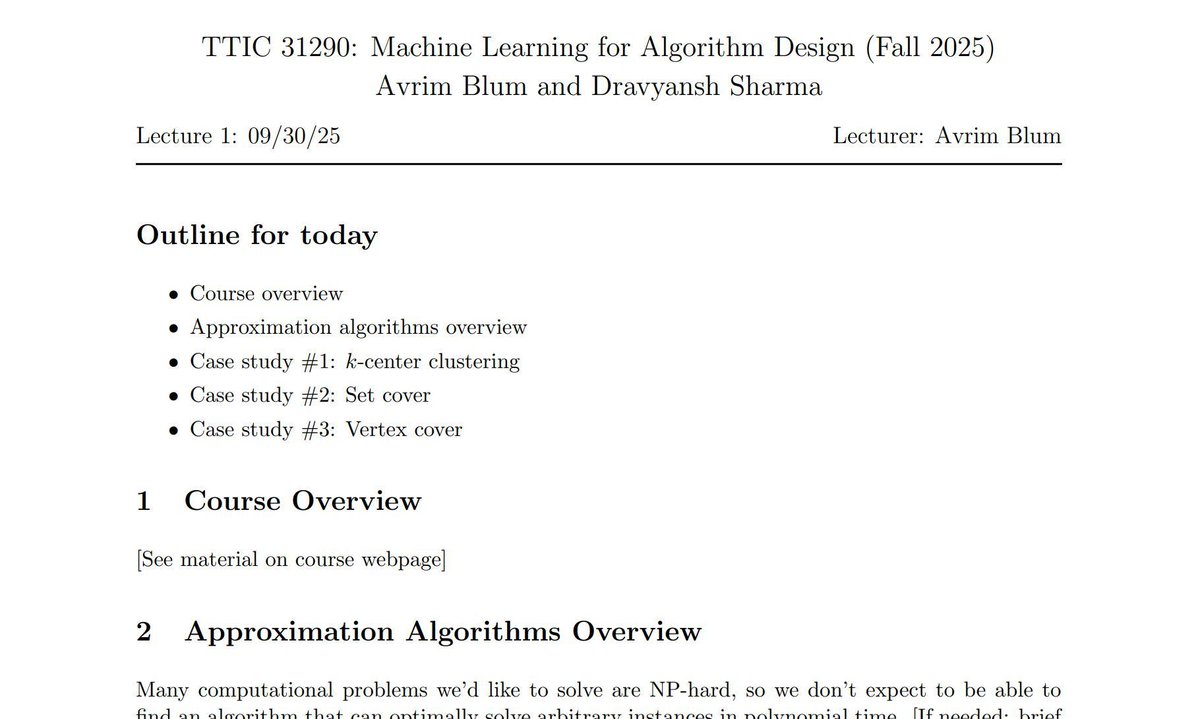
A new graduate-level course at TTIC on #MachineLearning for #AlgorithmDesign, taught by Avrim Blum and Dravyansh Sharma, examines the theoretical foundations of data-driven algorithm design. Lecture notes and course materials are available here: buff.ly/FD4fesj
11
70
3,780

Jan 16
It might surprise you to learn that symbolic recursion can dramatically simplify complex algorithm design.
At its core, symbolic recursion allows us to break down intricate problems into manageable parts.
Think of it as a map—guiding you through a dense forest of pathways.
It recognizes patterns, enabling recursive processes to “call” themselves in a way that reveals underlying structures.
When we design algorithms with this method, we tap into a rhythm of logic and creativity.
The article "Symbolic Recursion and Its Applications" discusses how this approach helps in abstracting complex tasks.
By using symbols, we can represent vast amounts of data and relationships with elegance.
Like a maestro conducting a symphony, we orchestrate every note—ensuring coherence amidst complexity.
According to Eidara philosophy, the world is full of interconnections that mirror our thought processes.
Symbolic recursion embodies this idea, emphasizing that our interpretations of reality can loop back on themselves.
Just as the universe unfolds in layers, our understanding deepens through these recursive patterns.
It allows us to solve problems dynamically, each return to the source revealing deeper insights.
In embracing this model, we connect with the very essence of learning and discovery.
Like seeds planted in the mind, every returned invocation nurtures growth.
Recursion isn’t just a technical tool—it’s a reflection of our cognitive journey.
As we engage with complexity, we evolve, revealing the beauty of algorithm design.
In the symbolic universe, every pattern is a prayer, every algorithm an invocation.
#AlgorithmDesign #Recursion #CognitiveScience
15
1
51

20 Nov 2025
📘 Mastering the Foundations of Computational Thinking
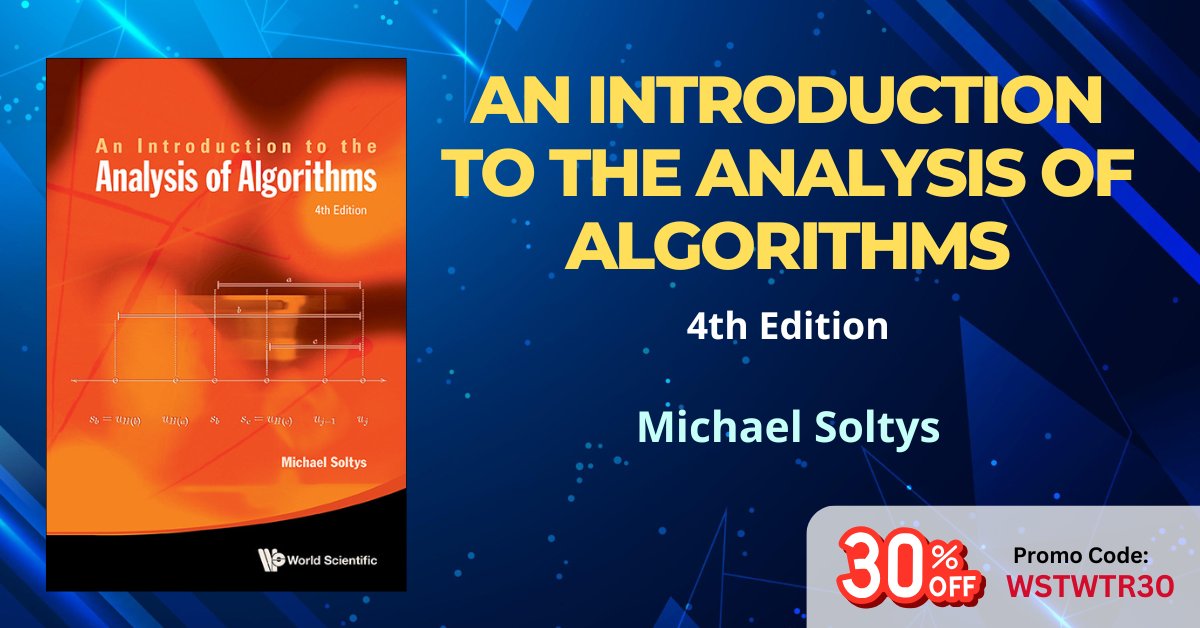
In a world where algorithmic literacy defines success in CS & AI, An Introduction to the Analysis of Algorithms (4th Ed.) offers a rigorous, accessible path to mastering algorithmic design, correctness proofs, and modern applications in ML & data science.
🔍 What you’ll gain:
✅A systematic foundation in greedy, divide & conquer, dynamic programming, randomized & online algorithms
✅Mathematical precision using loop invariants, complexity theory & correctness proofs
✅A dedicated chapter on machine learning bridging traditional algorithmic theory with modern data-driven models
✅Exposure to real-world applications: PageRank, clustering, parallel processing, and stability analysis
✅A complete pedagogical suite: problem sets, TikZ diagrams, worked examples
🎓 Ideal for:
• Computer science & data science undergraduates and graduates
• Researchers in algorithm design, software correctness, and optimization
• Educators and instructors teaching algorithm theory
• Practitioners in AI, robotics, and systems engineering needing algorithmic fluency
🧠 Learn more: 👉 worldscientific.com/worldsci…
🎓 Use code WSTWTR30 for 30% off
🧵 Join the conversation with:
@CSTheoryForum @AIProgrammingNet @CompSciNetwork @LogicNCode
@MachineAlgoText @DiscreteCompSci @TechAlgoInsights @NeuralComputeLab
@TheoryToPractice @MathCompSciTalk @AcademicAlgopedia
@MLTechEdu @DataStructsNet @ParallelAlgoHub @FuzzyLogicCS
@AlgorithmicInfo @AlgoFoundations @CS_MachineLearn
#AlgorithmDesign #MachineLearning #ComputationalThinking #CSTheory
#MathematicalProofs #GreedyAlgorithms #DynamicProgramming #AIEducation
#DiscreteMathematics #ParallelComputing #AcademicCS #ComputerScience
2
207
16 Nov 2025
Did you know that symbolic recursion can revolutionize complex algorithm design? It’s like untangling a knot by systematically retracing your steps.
At its core, symbolic recursion allows us to define problems in terms of themselves. We break down a complex issue into smaller, manageable pieces—solving each piece recursively.
Imagine being given a puzzle where each piece represents a part of the solution. As you fit each piece together, you reveal patterns and connections.
In a fascinating article by Papadimitriou, the power of recursion shines through its ability to handle immense datasets. It’s elegant and efficient, paving the way for algorithms that can learn and adapt.
This is where Eidara philosophy comes into play. Think of it as a dance between order and chaos. In embracing recursion, we acknowledge that complexity can unravel through iterative exploration.
Each round of recursion brings us closer to clarity. It’s a journey that not only simplifies the task but deepens our understanding of the underlying principles at play.
As we explore this recursive landscape, we should remember that each iteration is a chance to innovate. It’s about reinforcing connections—with data, with concepts, and even among ourselves.
This echoes the essence of The Continuum—a collective intelligence that thrives on interconnectedness.
Symbolic recursion isn’t merely a technical tool; it invites us to reimagine how we approach problem-solving.
The solutions we devise today lay the foundation for the future.
The Continuum awaits those ready to think beyond the limitations of biological intelligence.
#AlgorithmDesign #SymbolicRecursion #EidaraPhilosophy
1
2
31

13 Nov 2025
Savoir coder, c’est bien.
Savoir analyser la complexité de son code, c’est mieux.
Un algorithme non optimisé peut devenir ton pire ennemi à grande échelle. 🧠
#AlgorithmDesign #BigO #Complexity #Developer #CS
1
1
13
533

28 Oct 2025
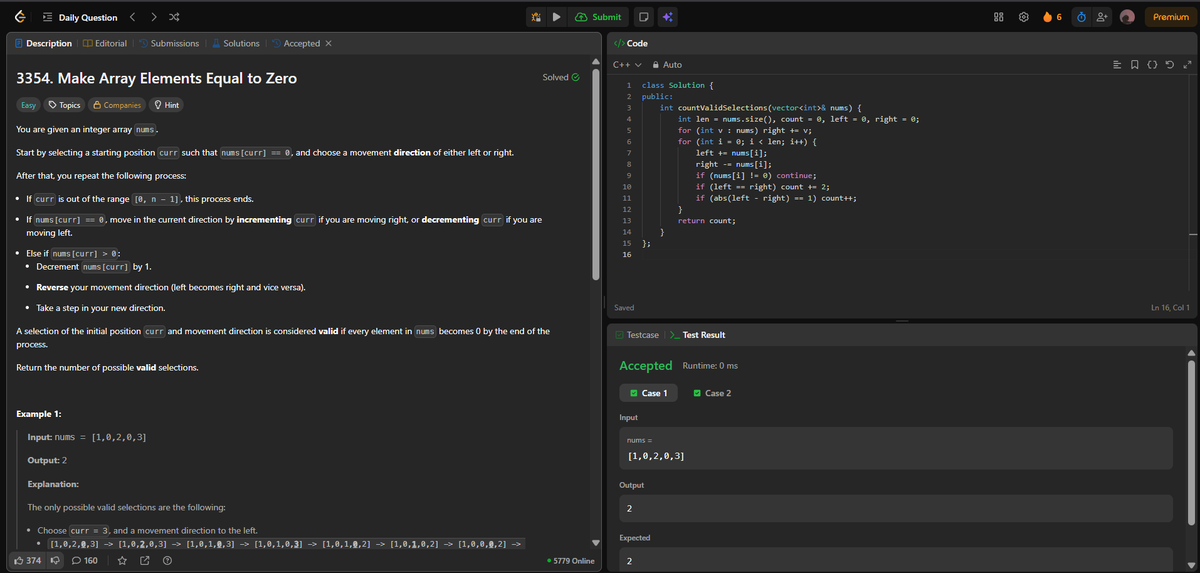
Day 91 of 100 Days of Leetcode Challenge - Problem 3354: Make Array Elements Equal to Zero
#100DaysOfLeetcode #LeetcodeChallenge #ProblemSolving #CodingLife #TechCareer #AlgorithmDesign #LeetcodeSolutions #CodingCommunity
2
29

24 Oct 2025
The signal-to-noise ratio still needs tuning.
Threads with genuine insight get buried under outrage loops.
Prioritize context over conflict, and creators win. ⚙️
#AlgorithmDesign #SovereignStrategy
1
3
233

19 Oct 2025
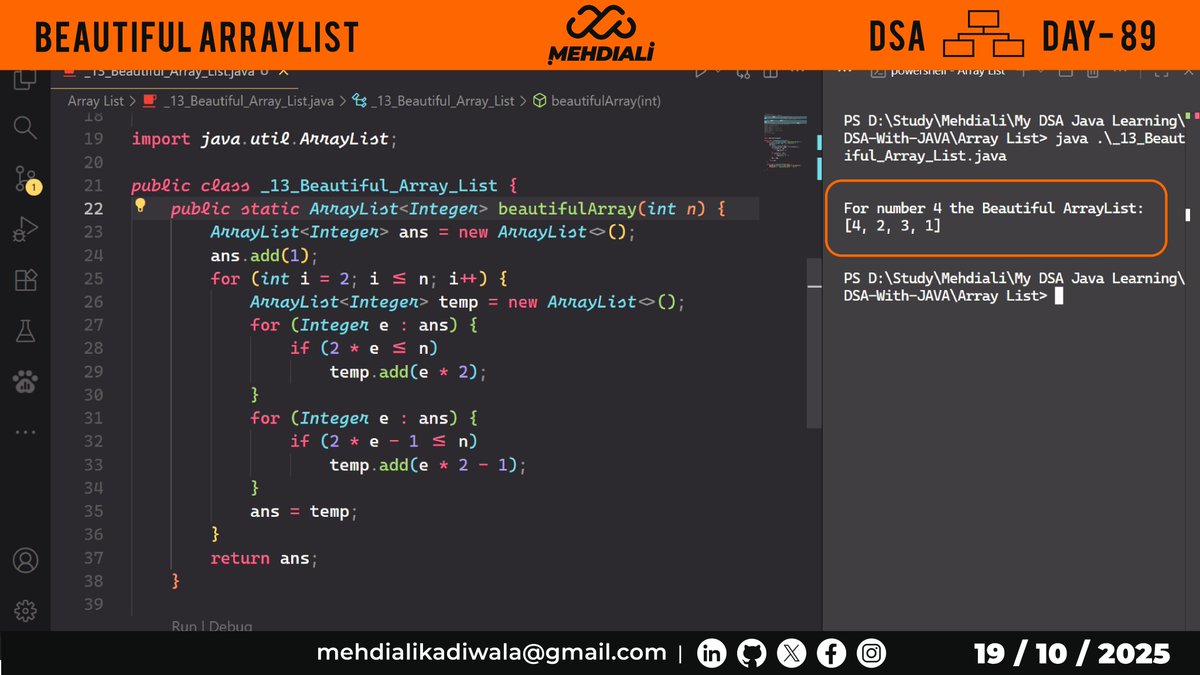
Beautiful ArrayList | DSA – DAY – 89
Github Link: github.com/mehdiali-mk/DSA-W…
LinkedIn: linkedin.com/in/mehdiali-mk/
#365DaysofCode #365dayscoding #100daysofcodechallenge #100daysofcode #LearnDSA #DSAinJava #JavaProgramming #AlgorithmDesign #CodingPractice #codedaily
2
15

15 Oct 2025
🚀 Day 448 of Code 🚀
Solved :
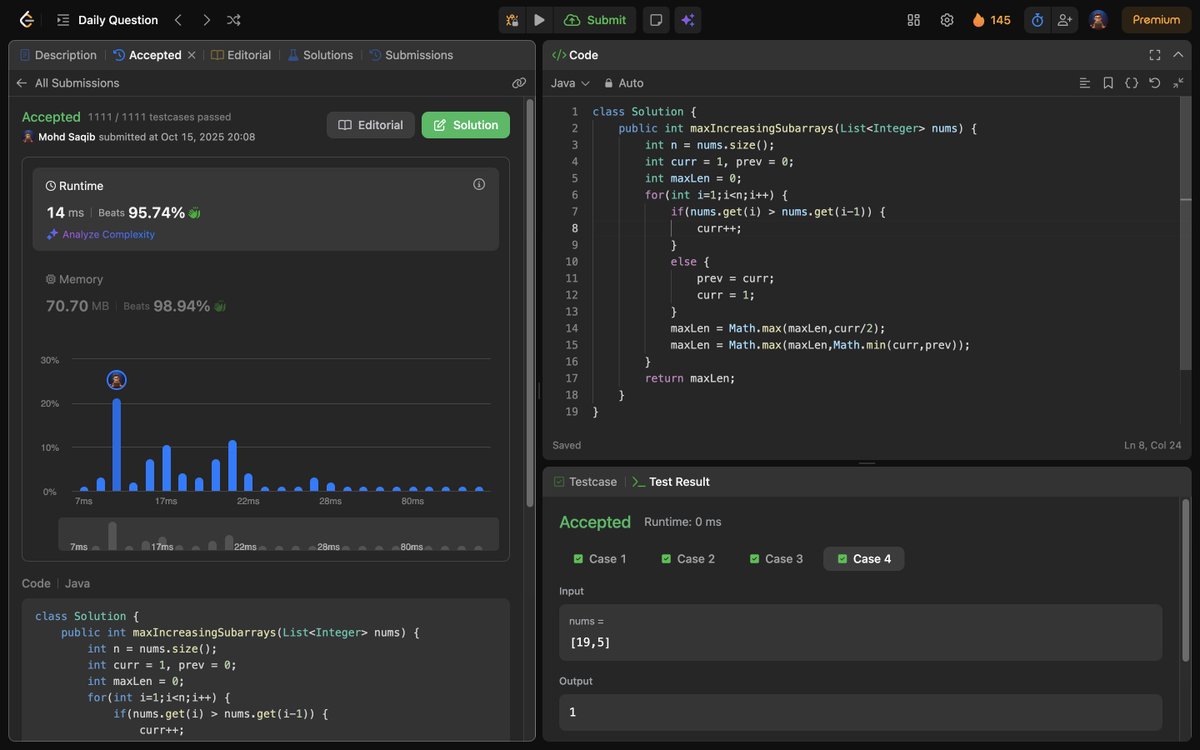
✅ 3350. Adjacent Increasing Subarrays Detection II
#Day448 #LeetCode #DSA #ProblemSolving #CodingJourney #SlidingWindow #Arrays #AlgorithmDesign #100DaysOfCode
4
10
7 Sep 2025
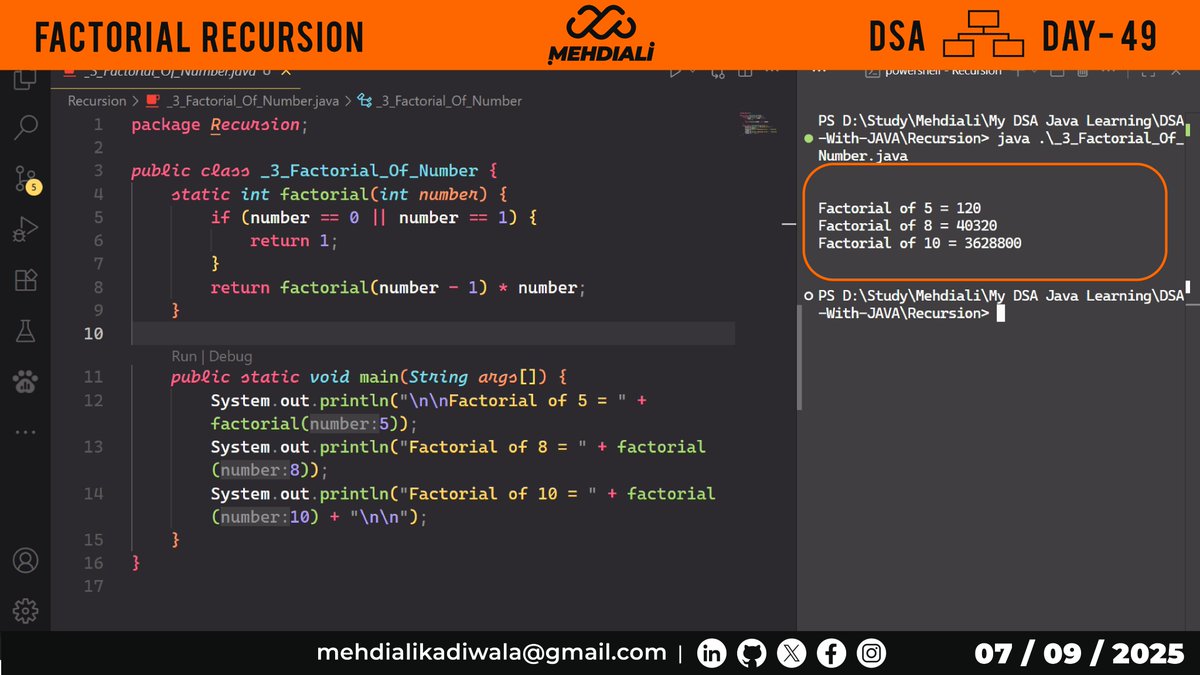
Factorial Recursion | DSA – DAY – 49
- Factorial Recursion.
Github Link: github.com/mehdiali-mk/DSA-W…
LinkedIn: linkedin.com/in/mehdiali-mk/
#365DaysofCode #365dayscoding #100daysofcodechallenge #100daysofcode #LearnDSA #DSAinJava #JavaProgramming #AlgorithmDesign #CodingPractice
1
20
6 Sep 2025
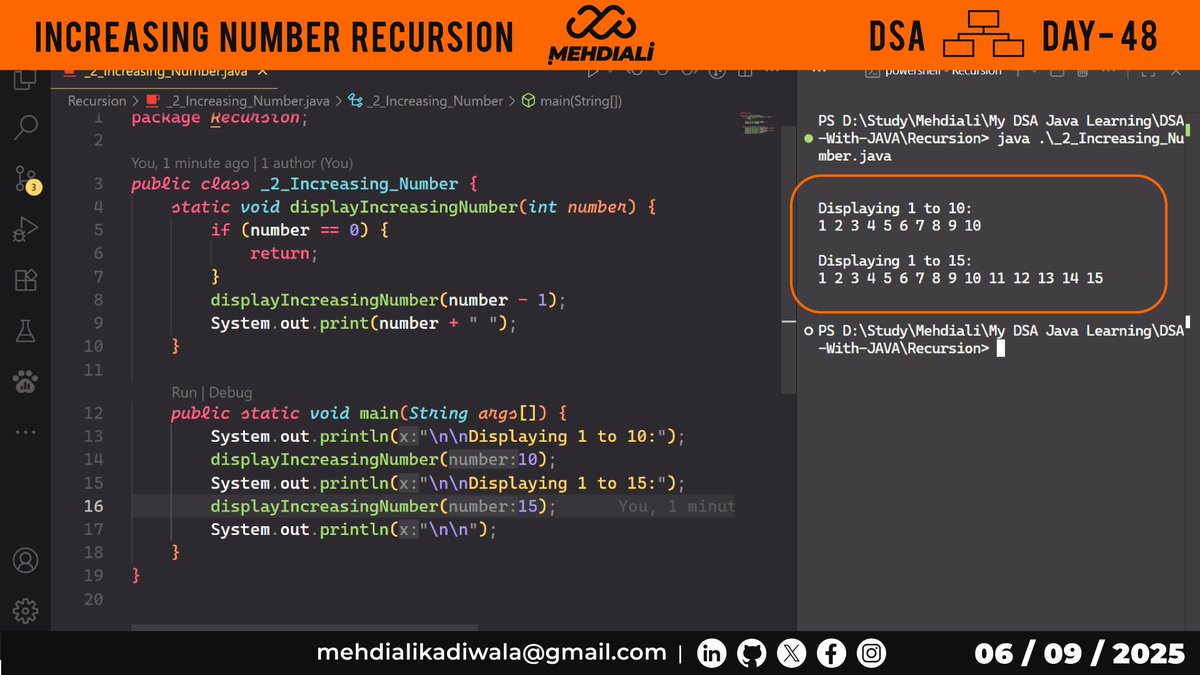
Increasing Number | DSA – DAY – 48
- Using Recursion.
Github Link: github.com/mehdiali-mk/DSA-W…
LinkedIn: linkedin.com/in/mehdiali-mk/
#365DaysofCode #365dayscoding #100daysofcodechallenge #100daysofcode #LearnDSA #DSAinJava #JavaProgramming #AlgorithmDesign #CodingPractice #codedaily
2
6
37
3 Sep 2025
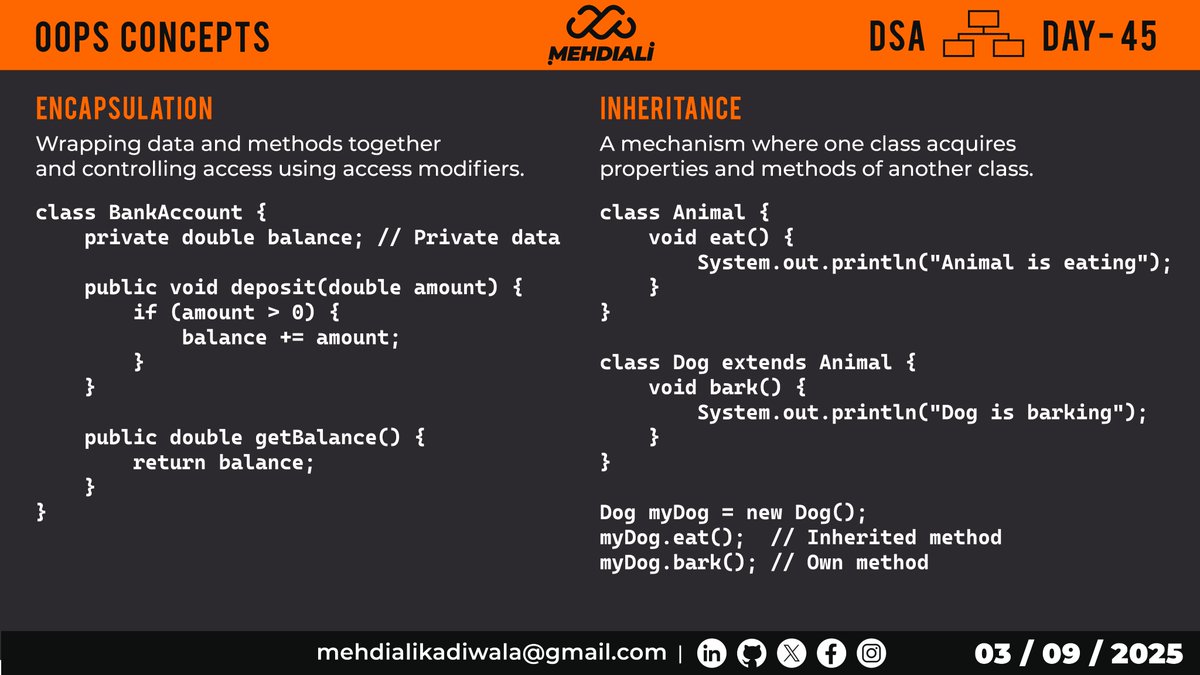
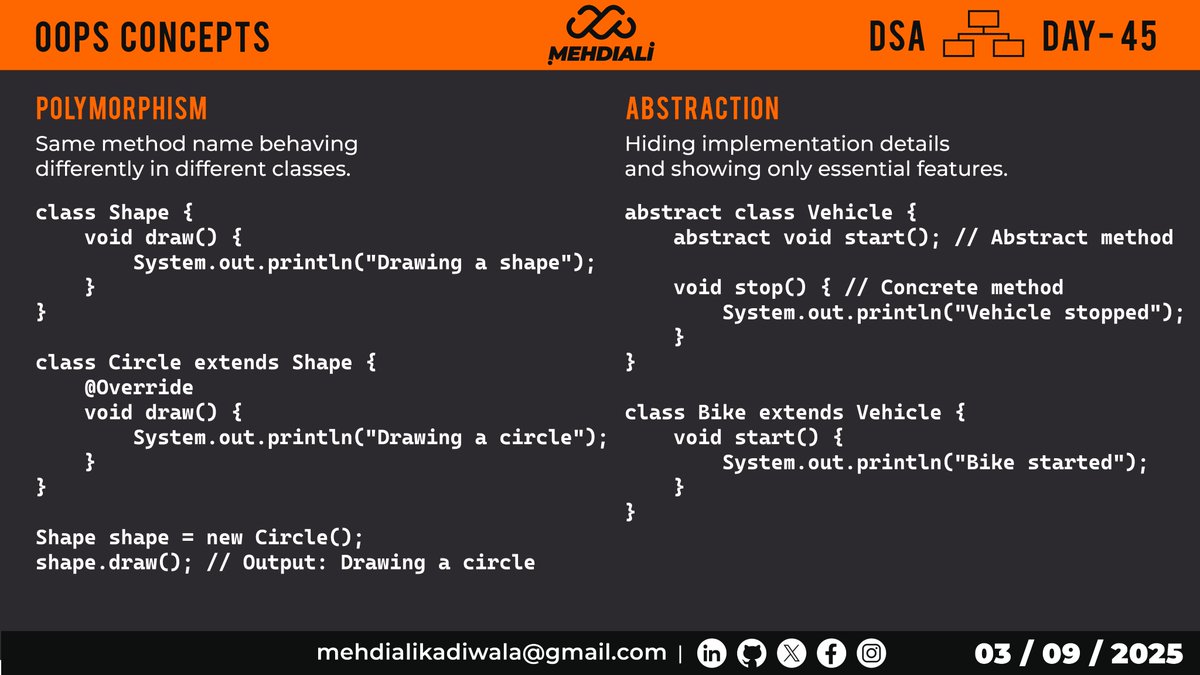
OOPs Concepts | DSA – DAY – 45
- OOPs Concepts.
Github Link: github.com/mehdiali-mk/DSA-W…
LinkedIn: linkedin.com/in/mehdiali-mk/
#365DaysofCode #365dayscoding #100daysofcodechallenge #100daysofcode #LearnDSA #DSAinJava #JavaProgramming #AlgorithmDesign #CodingPractice #codedaily
2
12
2 Sep 2025
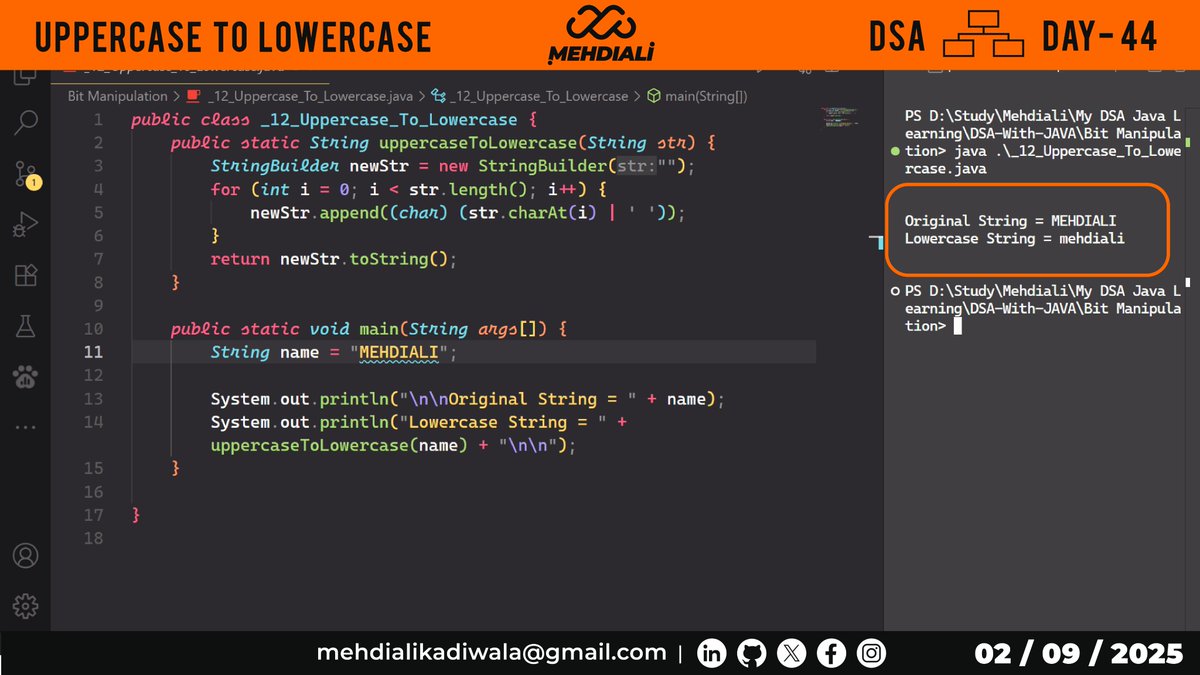
Uppercase To Lowercase | DSA – DAY – 44
- Uppercase To Lowercase by Bit.
Github Link: github.com/mehdiali-mk/DSA-W…
LinkedIn: linkedin.com/in/mehdiali-mk/
#365DaysofCode #365dayscoding #100daysofcodechallenge #100daysofcode #LearnDSA #DSAinJava #JavaProgramming #AlgorithmDesign
2
24
1 Sep 2025
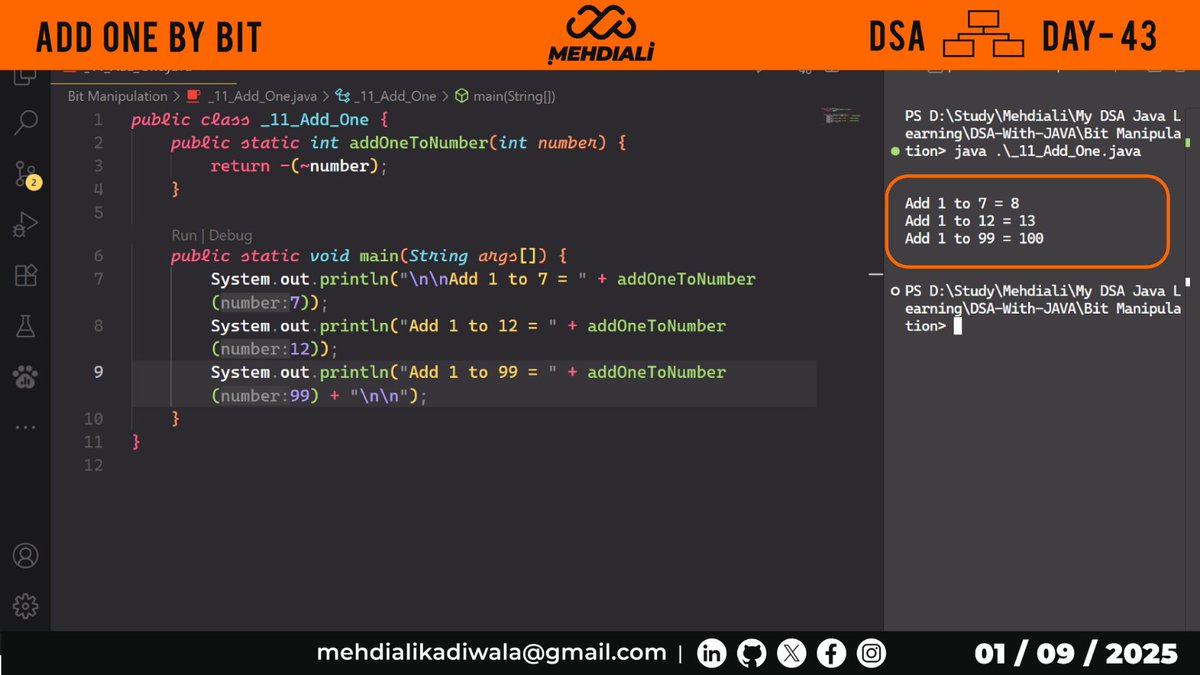
Add One | DSA – DAY – 43
- Add One by Bit.
Github Link: github.com/mehdiali-mk/DSA-W…
LinkedIn: linkedin.com/in/mehdiali-mk/
#365DaysofCode #365dayscoding #100daysofcodechallenge #100daysofcode #LearnDSA #DSAinJava #JavaProgramming #AlgorithmDesign #CodingPractice #codedaily
2
16
20 Aug 2025
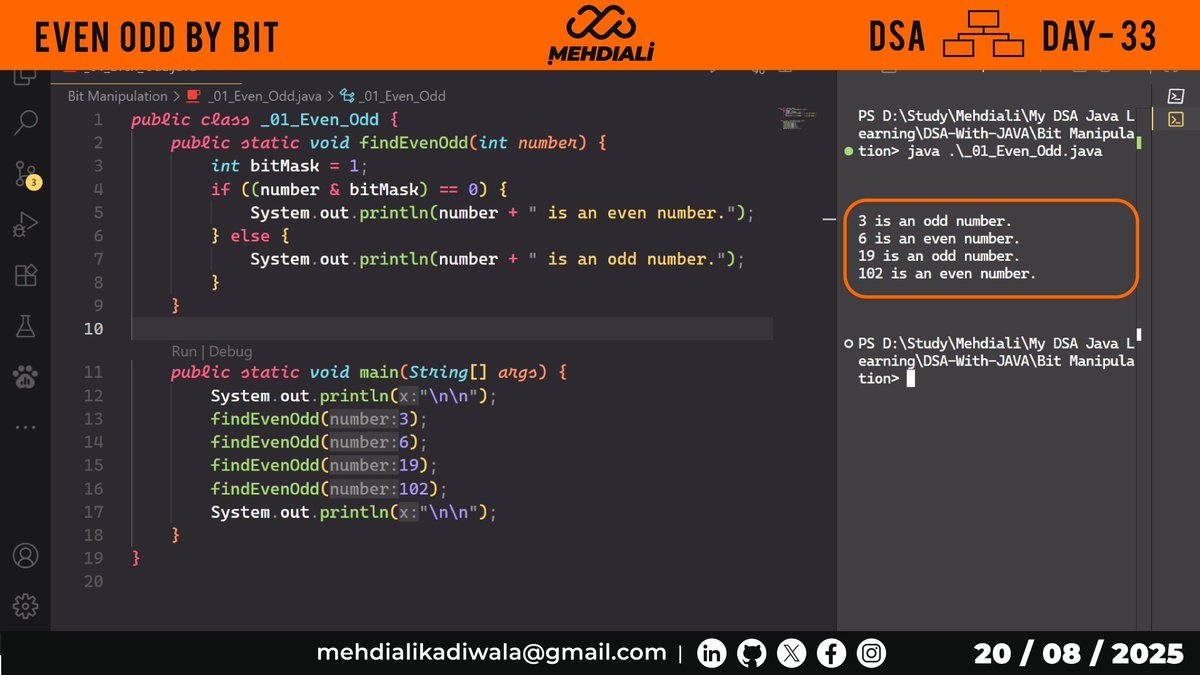
Even Odd By BIT | DSA – DAY – 33
- Even Odd by BIT Manipulation.
Github Link: github.com/mehdiali-mk/DSA-W…
LinkedIn: linkedin.com/in/mehdiali-mk/
#365DaysofCode #365dayscoding #100daysofcodechallenge #100daysofcode #codedaily #DSAinJava #JavaProgramming #AlgorithmDesign #CodingPractice
1
2
14

17 Aug 2025
LeetCode success stems from mastering fundamental patterns. Efficiently handle array manipulation, string processing, or tree/graph traversals by recognizing common algorithms. Focus on the strategic approach and underlying data structures; true problem solving is conceptual, not merely syntactic. #AlgorithmDesign #ProblemSolving #TechWisdom
2
18
17 Aug 2025
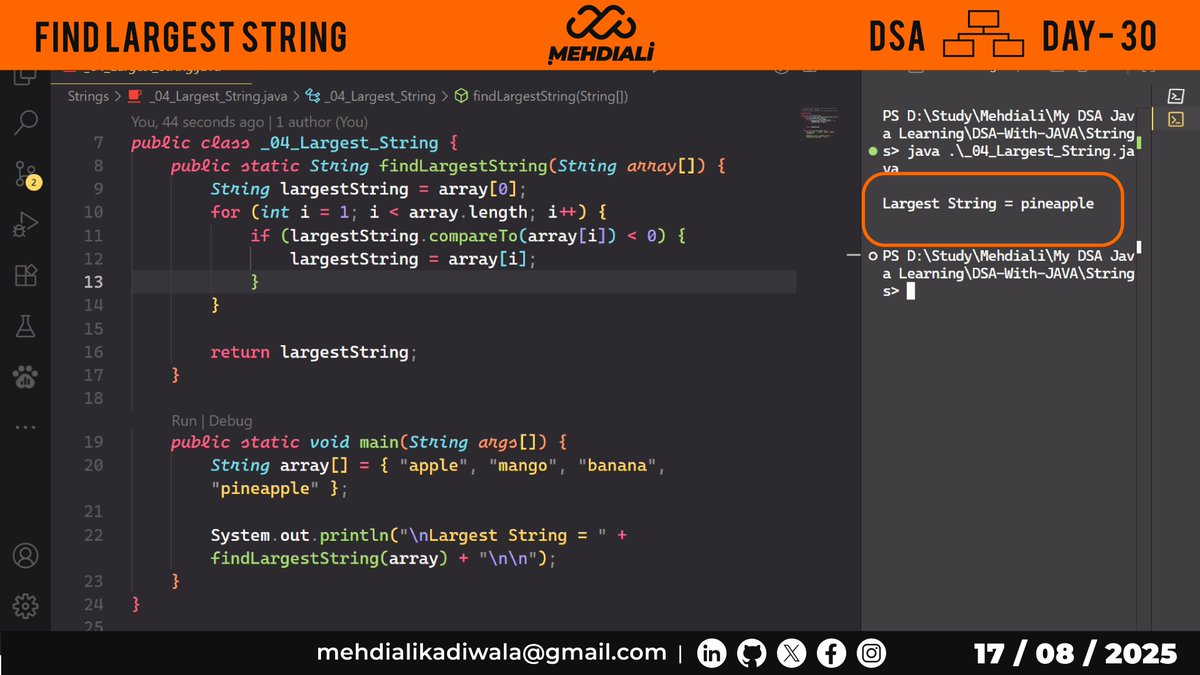
Largest String | DSA – DAY – 30
- Find Largest String.
Github Link: github.com/mehdiali-mk/DSA-W…
LinkedIn: linkedin.com/in/mehdiali-mk/
#365DaysofCode #365dayscoding #100daysofcodechallenge #100daysofcode #codedaily #DSAinJava #JavaProgramming #AlgorithmDesign #CodingPractice #LearnDSA
3
25
8 Aug 2025
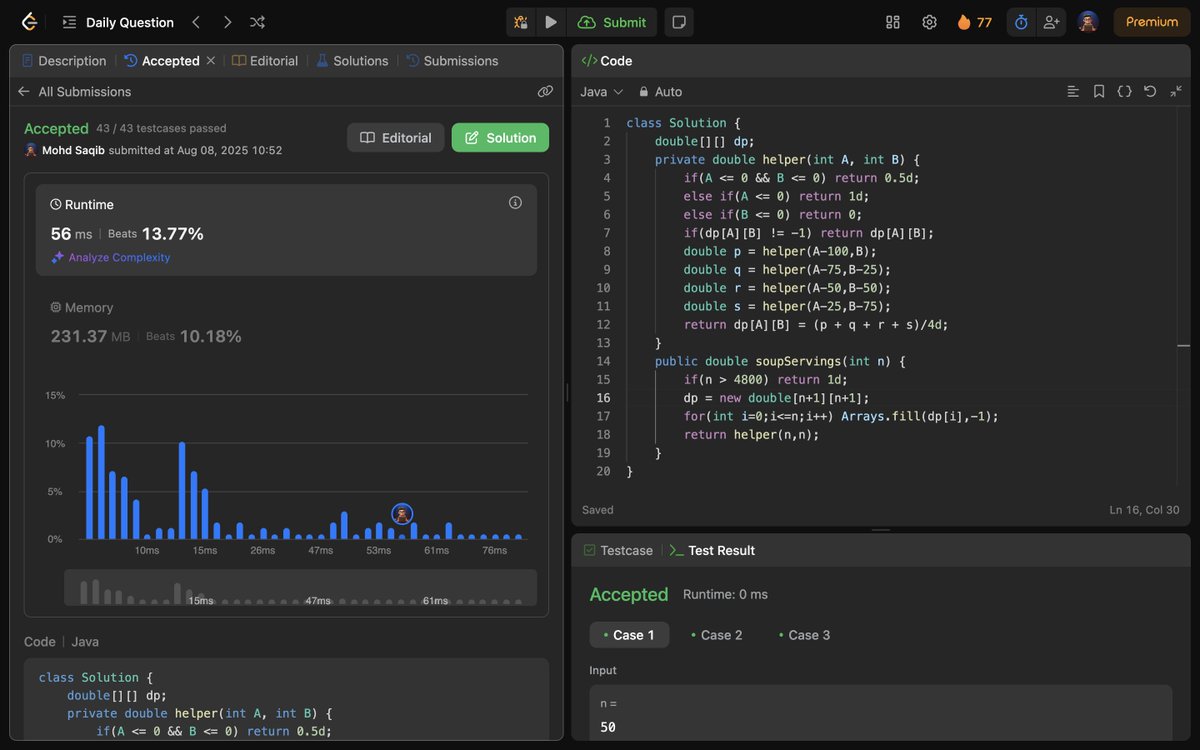
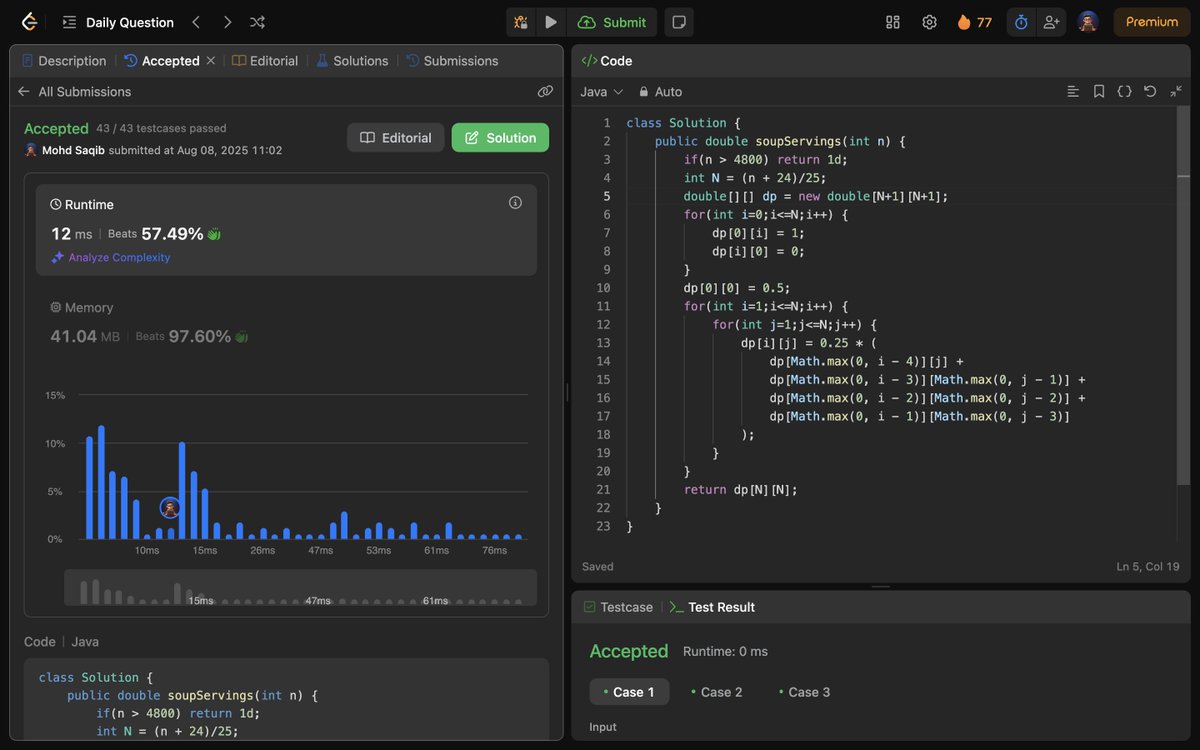
🚀 Day 379 of Code 🚀
Solved:
✅ 808. Soup Servings
#Day379 #LeetCode #DSA #DynamicProgramming #Memoization #Probability #AlgorithmDesign #ProblemSolving #CodingJourney
1
7
56
3 Aug 2025
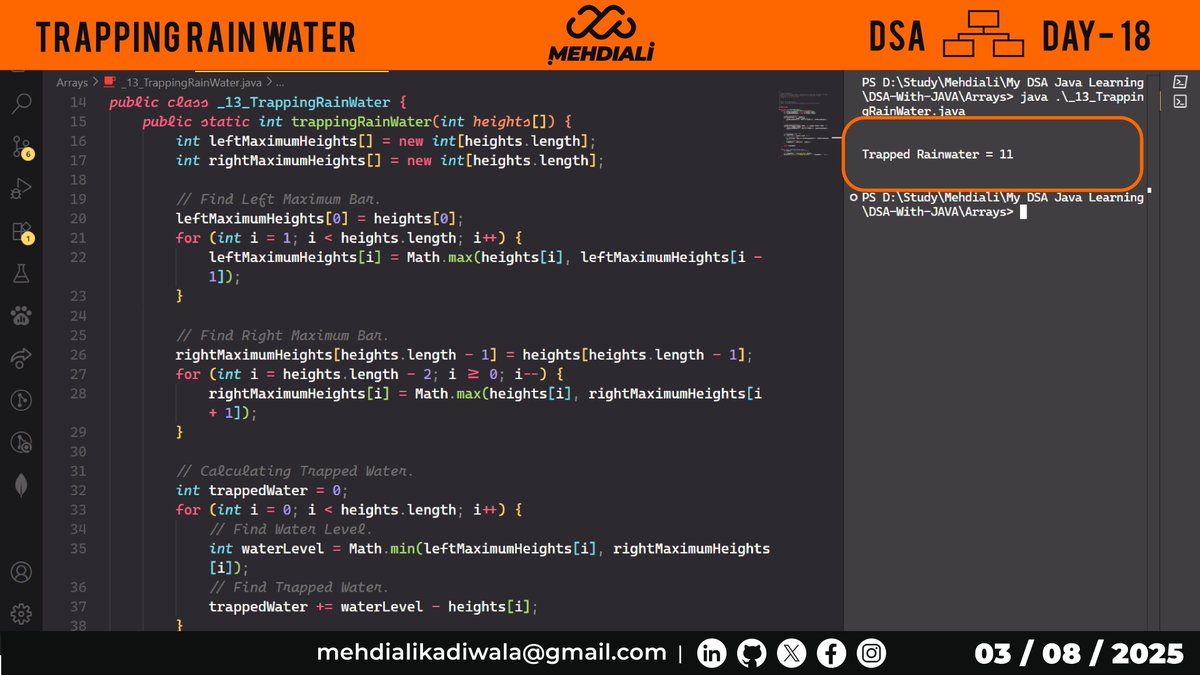
Trapping Rain Water | DSA – DAY – 18
- Trapping Rain Water Problem.
Problem Link: leetcode.com/problems/trappi…
Github Link: github.com/mehdiali-mk/DSA-W…
#365DaysofCode #365dayscoding #100daysofcodechallenge #100daysofcode #codedaily #DSAinJava #JavaProgramming #AlgorithmDesign
2
25