
"It's fine. Only one of them am I amicable with. The rest, I'd rather not say."

"Good, I'm glad everything is clear. I'm not too familiar with your friends there, so I will leave them be for the time being. Don't wanna cause a bad impression since they are with you."
36

RT @Karthika_s1: എല്ലാവർക്കും,
സൗമ്യമായ, രമ്യതയുളള ദിനം ആശംസിക്കുന്നു...
💚🌹🌹💚🌹🌹💚🌹🌹💚🌹🌹💚
Wishing you all an Amiable and Amicable day ❤️ http…
76
Jerry Wallace retweeted

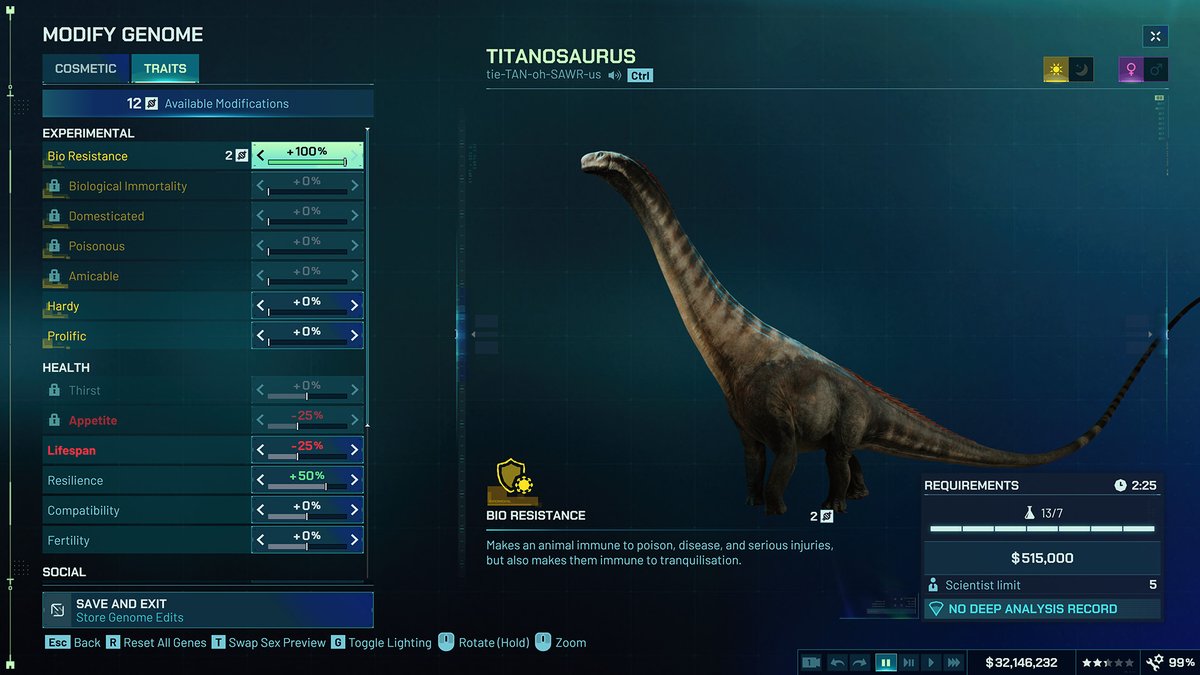
Coming back to this. If I shoot up the Indominus with the amicable gene does that mean she'll just be chill with everything I throw in???

The Jurassic World Evolution 3: Rebirth Expansion introduces new experimental traits to enhance your prehistoric species and push the boundaries of scientific research!
Learn more: fron.dev/94ef
3
3
202
8,650

Dear @matinyarare ,
The public gesture from Paul Tungwarara — the luxury Toyota Land Cruiser (and reported cash settlement) — perfectly illustrates the perpetual patronage machine that has kept Zimbabwe trapped in cycles of dependency, elite capture, and compromised voices.
What is presented as “amicable resolution” or “appreciation for past work” is, in the eyes of many ordinary Zimbabweans, a classic transaction: criticism softens, attacks pivot conveniently (e.g., toward Tagwirei or others), and another influential voice is folded into the system.
This is not isolated generosity. It is the same pattern that has sustained centralized power, unaccountable appointments, and the dilution of constitutional safeguards. CAB3 embodies this threat on a national scale: extending terms to seven years, shifting presidential elections from the people to Parliament, weakening judicial checks, and enabling more executive control over institutions. It is an existential threat to freedom, democracy, and genuine self-governance because it:
• Steals popular sovereignty — replacing one-person-one-vote with MP selection of the President.
• Entrenches personality cults over constitutionalism and term limits.
• Undermines devolution and rule of law by tightening Harare’s grip rather than empowering provinces and communities.
• Normalizes elite patronage as the currency of politics, where dissent is bought rather than debated.
• Betrays future generations by locking in the status quo of emigration, corruption, and economic stagnation.
True reconciliation and unity cannot be built on gifts from presidential advisors while the Constitution itself is being mutilated without a referendum. The people of Zimbabwe — youth, workers, farmers, and the diaspora — see through these optics. We have endured too many “gestures” while hospitals crumble, jobs vanish, and power concentrates.
Rutendo, your earlier principled stand against CAB3 resonated because it spoke to the truth of many Zimbabweans: the Constitution belongs to the people, term limits protect freedom, an independent judiciary guards liberty, corruption must end, and youth deserve opportunity at home — not more of the same. Accepting patronage risks turning that voice into another tool of the very system many are fighting to reform.
Zimbabwe deserves leaders and influencers who prioritize constitutional supremacy, economic freedom, and self-governance over personal settlements. Reject the transactional politics. Stand with the people for a referendum on profound changes, genuine devolution, secure property rights, and institutions that outlast any individual or advisor.
The nation is watching. History will judge whether this moment was a bought compromise or a renewed commitment to principles that outlive any car or cash.

𝗙𝗔𝗖𝗧𝗦 𝗔𝗥𝗢𝗨𝗡𝗗 𝗥𝗨𝗧𝗘𝗡𝗗𝗢 𝗔𝗡𝗗 𝗗𝗥 𝗧𝗨𝗡𝗚𝗪𝗔𝗥𝗔𝗥𝗔’𝗦 𝗘𝗡𝗚𝗔𝗚𝗘𝗠𝗘𝗡𝗧.
First, let me start by saying that I had never met or spoken to Presidential Advisor Dr Paul Tungwarara until he approached me online yesterday. During this public engagement, like a true leader, he extended a hand of reconciliation through the gesture of a vehicle, which he said was in recognition of the work I have done for the country.
He then invited me to a roundtable discussion to understand why I am publicly opposing CAB3, critiquing the President’s work, and expressing my separate frustrations regarding the government's non-payment in relation to my fight against sanctions.
We subsequently had another discussion offline, during which he explained to me that the President is not responsible for my non-payment for the sanctions work, but that responsibility lies with Kuda Tagwirei, whom was mandated to work with me.
Additionally, he informed me that he would engage the President and all stakeholders on the way forward. As a result, in the same way that talks between ZAPU and ZANU led to the Unity Accord, and discussions between MDC and ZANU-PF led to the Government of National Unity, we are going to have frank discussions and seek a suitable way to navigate our differing political positions around CAB3.
I also informed him that, contrary to the perceptions of some, I have no issue with the President, the First Lady, or the First Family. I have merely expressed the same constructive criticism on certain issues that I have raised since President Mnangagwa assumed office. And he has never taken issue with me criticizing him before because he has always been a listening President who allows open and frank discourse.
I also conceded that if, indeed, the President or Amai feel that any of my critique bordered on disrespect, I, as a child of Zimbabwe who has served the country loyally, would be willing to apologize publicly to eliminate any notion that the I advocate for the disrespect of our leaders.
I am a leader in our society and all the work I have done—from fighting sanctions; combating xenophobia and the expulsion of ZEP holders in South Africa; defending brand Zimbabwe; Telling The Good Zimbabwe story through documentaries on Trabablas, Geo Pomona, Champion Foods, Manhize, David Whitehead, Khaya Cement, and others, to travelling to Congo and Rwanda to assist efforts to end the conflict—has been done to advance Zimbabwe and support the President’s work because I believe in his vision for the country.
My views on CAB3 do not stem from the non-payment issues, as has been suggested by those who attacked me in defence of Kuda Tagwirei but it has been based on my own political outlook.
I understand from the Presidential Advisor that he intends to engage all the relevant stakeholders in an effort to reconcile us and restore and strengthen the unity we have always enjoyed.
Lastly, the false notion that Dr Tungwarara and I knew each other beforehand, or that he sent me to air my views against CAB3 or the performance of the President, is unfortunate. The man now appears to be facing criticism simply for attempting to reconcile me with the party and a President whom I have supported since he came into office.
All the President’s advisor is trying to do is foster reconciliation between one of the country’s strongest advocates and its leadership, in much the same way that the President himself has pursued re-engagement with the Western world and with those in the political opposition with whom he has previously differed.
Our nation has a long history of reconciliation, from the Unity Accord in 1987 to the Government of National Unity in 2009 and POLAD, which I worked closely with in efforts to bring an end to sanctions on Zimbabwe. What the Presidential Advisor is doing aligns with the spirit of Zimbabwe, and I applaud it. Let those who seek to divide us not succeed in sowing division.

1
17

Why don’t you tell the same to the international arsenal players many of whom watched arsenal while growing up. Really amicable that you think Premier league would’ve been the best league in the world without international fan viewership. Tinpot island dweller.
4

Sadly it stopped being amicable when I found out he was a lying, cheating and manipulative POS but hey ho, life goes on
1
43


Reminds me of this movie😂😂
But these characters look amicable movie wise.
He just looks evil😂😂


friendly? More like amicable — he's not going to play pretend or sugarcoat anything he desires.
It's definitely to get her drunk and let the night unfold as it would.
It's very easy to sway tipsy people.
“though, I could never give you anything weak. The best drink, I'll »»
1
8

[insert GUSTO MACHO old papa voice] -- YO-HEY, HEYYYYYY-- it's Koba-San-Sama time, you know?? We gotta' chime to the K to the O to the B--to the A-A-A-hey-A-San, you know...? ? Those papa and mamma Monster-Chan got spaghetti legs as strong as their arm-pumps too--- you know...? (•̅灬•̅ ) Monster-Sama's got a taste of Koba-San's A spectacularly with every hearty cry, they were wailing out...The pure united symphony of AA--AAAAAAA--- between Koba-San and Monster-Sama's really mustered up to be tangilicious melted honey for the ears... For the soul, for Heart-Chan, too....--Koba-San; Koba-San's live and Koba-San's heartedly tongue-teasing melody's was immensely satisfying...MWAH MWAH chef kiss....! ! 🤌💛 Thank you so much for taking your time to share this moment with us; for your warm care, working beyond your best, long, long, loooooong patience and endurance. I'm really grateful for how Koba-San carefully considers each moment, interaction and how they affect each instance/person. Thank you so much deeply. 👐 spooOOkktacular job (teamwork) GGGGWP...! ! 💛✨👏👏👏👏
LN3's world's vibe TRULY... A little like Fried Koba-San, it leaves you really.. really starving for more, even one deliciously mouthwatering Monster-Sama appetiser doesn't feel like it's quite enough, huh... There's something.. really refreshingly enticing about LN3'S INTENSE eery energy, even how the eery life-like-esque features of Akacchan... QuasimoSumo 🥔... it's really intriguingly fascinating, in how they respond to Koba-San.. admittedly... I don't know if this is okay to say, but it's very excitingly scary, how Monster-Sama and LN3 feels realistic or connective to life in a way...--you never really knowing what's lurking.. or not being able to gage right away...D...does Koba-San feel like 👶 wanted to try their version of"Red light green light" with Koba-San..? The way they POUNCED and scrawled over menacingly, really makes you wonder what kind of milk they've been drinking... S...so...so scary...╥╥ t...though... Instances like this... It was also SPICY to see elements of these foes personalities flowing out.. Koba-San's enduringly HOT patience expressed "Eye for an eye, a tooth for a tooth" fabulously passionately to the point they'll be getting firm scolding beautifully... Papa Koba-San's firm HYUAAP HYUAAP warning, along the timing was fantastically SUBLIME ✨✨💛
Koba-San's amazing rollercoaster ride really took the catastrophically GRAND slide ROYALLY....--i...it was INSANELY edgy of all edggyyyy with how eerily high tension each moment was..how's Koba-San's heart not trying out for the MEGA Tango dance competition, HUUUH ? ? ʕ´• ᴥ•̥`ʔ 💛 naturally, naturally ~~ Koba-San has a really sharp, yet amicable way of picking up on patterns & thinking outside of the box.. so it was really intriguing to see how you approached, with careful...sneaky sneaky proceeding when things got a little rowdy...similar to change of patterns in person, it was really awe-sensational to see how Koba-San doesn't allow any one to intimidate you... I really like a lot and feel inspired by how you find humour, or joy in those actions... It was really beyond delightful to see how radiantly entwined Koba-San was, as you embraced each moment daringly. I'm really curious how it's going to go for you...👁️👁️✨✨
This time too.. it's probably not much..but it takes a lot each day, each moment to be able to manage.. or deal with certain hardships, changes and trying your best to manage or have a balance that not only works for Koba-San, but works to help everyone...those kind of gestures Koba-San's made is really, honestly.. considerably deeply kind-hearted of you and from my heart.. I really hope that Koba-San gets to treat yourself with kind hearted care, it's okay to feel how you feel. Hope Koba-San got to have a really lovely rest--I hope the day looks over Koba-San with warm-hearted care and understanding, thank you so kindly again. Please take care. 😁💛
1
46

He also chose to take the route of attorneys, where we could have easily had an amicable split between ourselves. Not only was I forced to lawyer up myself, I also had to help settle his attorney fees so we could finalize the process bc he couldn't afford her 🫠
84


Nooo I’m sorry dude I’m happy it was amicable but that does suck 😔
1
4

Mohamed Marandi on Daniel Davis Deep Dive just said Israel has to refrain from hitting Lebanon and to evacuate Lebanon otherwise the Iranians will still choke the Strait of Hormuz. How this will be achieved is beyond understanding as Israel is fighting an existential battle against a belligerent Regime in Iran. From where im sitting this is a non negotiable request and Israel has every right to defend its right to exist and its sovereignty. This war will resume again until Iran has a Regime that is more amicable to Israel
25

Trump is trying to save his political career for the midterms so he needs this to look like a win. This is why Pakistani social media accounts that are handled by the ISI are promoting this as a 47 year end to hostilities between Iran and the US which is utter delusion and nonsense. The decision to end hostilities doesn't rest in Washington but in Tel Aviv. The Iranian Regime and its proxies are an existential threat to Israel and not The US. There might be a few bulls but whether this week, month, year or 5 years from today this conflict will again rear its ugly head until a Regime comes into power in Iran that is more amicable to the State of Israel.
22
Mr. R. Martin retweeted

It blows me away that Carney & co are hell bent on blowing this amicable relationship right out the window. For what? Cozy up to the EU and or China. The EU is over. China will walk all over our current government. An utter mess.
1
1
1
50
The Honeybun Empress retweeted

Woke people couldn't handle amicable disagreement with him. For holding the wrong beliefs, they have to pretend he's the second coming of Hitler and must discredit all his achievements, even retroactively.
He didn't fumble, woke people just completely sperged out when he was honest and refused to cave.
3
1
7
1,843