
Asking horny dudes if they wanna see my naked tits and then backtracking and saying actually I learned that that's abuse because if I don't actually have sex with u I'm subjecting them to significant fucked up pains or whatever
30
Bill retweeted

Carney backtracking on calling Ireland Home now. If Pierre called another country home he would be crucified by the media,if Pierre watched the US soccer game Pierre would have been crucified by the media,so is our media giving Carney and Trudeau a pass??

County Mayo made my family. It’s great to be back.
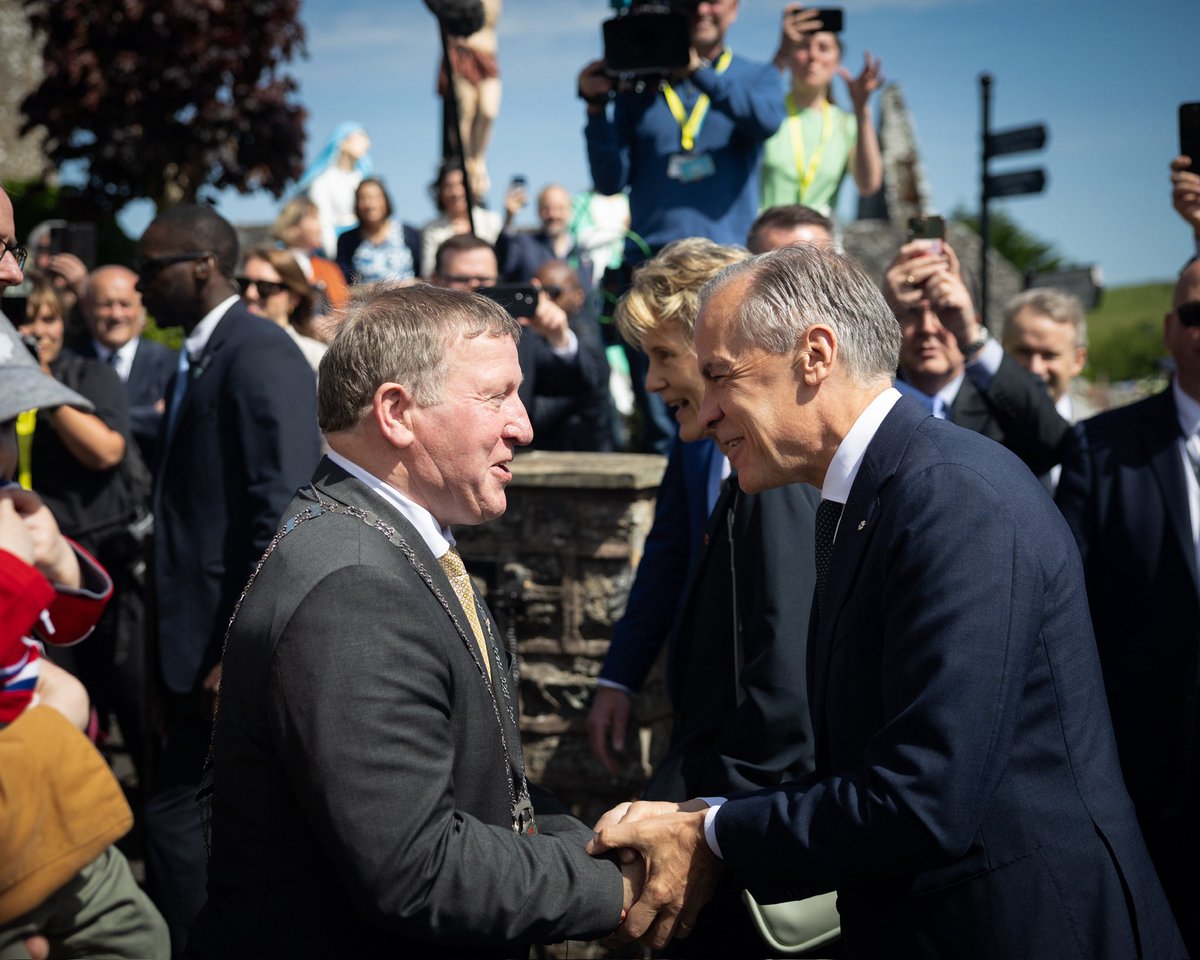
ALT Prime Minister Carney meets and shakes hands with members of the community in County Mayo, Ireland.

ALT Prime Minister Carney meets and shakes hands with members of the community in County Mayo, Ireland.

ALT Prime Minister Carney meets and shakes hands with members of the community in County Mayo, Ireland.
53
89
326
5,505

They probably would have done all this shit at Qatar if they hadnt lied to the world and said alcohol would be available before backtracking months ahead of time and fucking over everybody., idk who you’re specifically blaming in America but i doubt they even care about World Cup
1
1

I never said you couldn’t respond. I was questioning the rationale of your response. All I received from you was, “because I can”. Now you characterize me as an “Islamic apologist.” Your last sentence is also confusing to me. Are you backtracking and implying I am now sane?
1
11

and for people to so easily fall for it. this is extremely harmful. i fully believe they were planning on fueling the rumors until things got out of hands and the fake pics spread too far. then they started backtracking saying it was a social experiment.
1
8
131
some of yall are way too calm abt the fact that someone admitted they created ai generated images of taehyung and jungkook to make it look like they were on a date together and is only now backtracking and claiming it was a social experiment cause things got out of hand btw…
5
8
34
369

Who cares, he did it to win a broad church. That’s purely it. Anyone with a brain cells can see that. Rupert also bringing in some Tories now, and keep backtracking.
7

Womp womp womp 🫵🏿😂 got caught in a lie and now you're backtracking, you reclassified shit eaters are hilarious
1
5

Well, that’s an odd fucking way to say “every single foreigner”. More jewish backtracking bullshit as usual i see. Paid puppets. Who will all be dealt with in due time. Just wait & see.
47

The video said theres no renting, you made a false claim. Stop backtracking. Landlords exist in China, rent properties, and become rich off that. Stop lying.
1
7
You said theres no landlords amd renting. Now youre backtracking, dont run away from your claim.
2
13
. retweeted

Wemby hate is weirdly force, they keep backtracking/rewriting their statement in every game is pretty fucking stupid ngl
12
22
1,693
29,668


> Besides, can you really push someone to give birth to a baby? There are 1000 natural ways to kill a baby if a woman really wants.
Your words, buddy.
You’d be much better off NOT BACKTRACKING and trying to make an argument for why you believe baby murder is justified
1
6

I love how you’re backtracking

I also want to add even Olympic SRY guidelines allows a SRY positive woman with a DSD to compete in women's sports following appeal. Its in the testing guidelines. Look it up.
1

In contemporary times, global ministries like Kenneth Hagin Ministries (Rhema) and John Hagee Ministries heavily mirror this legacy. Kenneth Hagin Sr. was succeeded by his son, Kenneth Hagin Jr., while John Hagee has positioned his son, Matthew Hagee, to carry the mantle forward. These examples prove that a biological handoff can preserve a ministry's core doctrinal integrity during crucial transitional phases.However, it is vital to recognize that Pentecostalism is still relatively new in Africa compared to Europe and America. Because many ministries are just crossing the threshold of their first or second generation, the current trend suggests that biological succession may continue for at least two generations across the continent. The immediate family often remains the closest custodian of the founder's initial vision and sacrifices.
Ultimately, the focus of the Church should not be a legalistic crusade telling ministries to stop limiting succession to family members. Instead, the supreme objective is for the Church to discern exactly what God is saying. Ministry is a divine stewardship, and human structures must always bow to a sovereign, heavenly directive. The ultimate decider for any church, family-led or otherwise, will always remain a true "Thus saith the Lord."
The Paradox of Absolute Pronouncements:
History has an uncanny way of repeating itself, especially within institutions that build their foundations on rigid, absolute proclamations. For decades, the Deeper Christian Life Ministry (DCLM) operated under the unyielding doctrine that the television was the "devil’s box". It was a tool of corruption, entirely incompatible with a life of holiness. Yet, fast forward to the present day, and the very ministry that once shunned the screen has transformed into an internet-savvy, media-forward organization. DCLM adapted aggressively to the current direction of the digital world, leveraging social media and global broadcasts to spread its message. The "devil’s box" was quietly recontextualized as a tool for the gospel.A similar theological and structural corner is being painted today, not with media, but with the burning question of leadership transition.
In a recent, widely publicized address, the Founder and General Superintendent, Pastor William Kumuyi, seemed to have firmly shut the door on family-based succession. "The church doesn’t belong to me. It’s Jesus’ church. Nobody has the right to hand it over to his son," he stated, drawing a sharp theological line by adding that early apostles like Peter, Paul, and John never passed leadership to their biological children.
While intended to protect the ministry from becoming a hereditary business dynasty—a valid critique of many contemporary megachurches—the sweeping nature of this statement carries a deep, latent danger.The real damage of Kumuyi's absolute statement is that it inadvertently places a limit on sovereignty. By explicitly declaring that a biological descendant cannot and will not inherit this leadership, the ministry has established a rigid legal and cultural filter.
Consider a future scenario: decades from now, a biological grandson of William Kumuyi arises. This individual is profoundly anointed, exceptionally capable, and explicitly chosen by God through undeniable divine direction to lead Deeper Life into its next epoch. However, because of the strict, unyielding letter of the law laid down in 2026, this future leader would face immediate disqualification. The church would find its hands tied by its own historical rhetoric.If that day comes, Deeper Life will be forced into a familiar cycle of backtracking. Only then will the leadership rise to frantically put the 2026 statement into a "new context," arguing that the founder merely meant leadership shouldn't be automatically handed down as a personal estate, rather than forbidding God from choosing a descendant.
1
63

Reform are not the right 🤬
They are frauds liars 🤬lost count of the backtracking. Grooming gang inquiry was worst one 🤬bastards. We have 1 right ✅️ wing party
RESTORE PARTY
🤬🤬🤬🤬🤬🤬🤬🤬🤬🤬

3