
AI Research Intern – Lexsi Labs
Commitment: Full-time internship (6 months; potential extension or full-time offer)
Start Date: Rolling
About Lexsi Labs
Lexsi Labs is one of the leading frontier labs focusing on building aligned, interpretable and safe Superintelligence. Most of the work involves on creating new methodologies for efficient alignment, interpretability lead-strategies and tabular foundational model research. Our mission is to create AI tools that empower researchers, engineers, and organizations to unlock AI's full potential while maintaining transparency and safety.
Our team thrives on a shared passion for cutting-edge innovation, collaboration, and a relentless drive for excellence. At Lexsi.ai, everyone contributes hands-on to our mission in a flat organizational structure that values curiosity, initiative, and exceptional performance.
As a research intern at Lexsi.ai, you will be uniquely positioned in our team to work on very large-scale industry problems and push forward the frontiers of AI technologies. You will become a part of the unique atmosphere where startup culture meets research innovation, with key outcomes of speed and reliability.
What You’ll Do
We work on multiple frontier research ideas and challenges. If you are selected, you would be working on one of these following areas. Collaborate closely with our research and engineering teams on one of the areas:
Library Development: Architect and enhance open-source Python tooling for alignment, explainability, model alginment, uncertainty quantification, robustness, and machine unlearning
Explainability & Trust: Improve and find new observations using our and other SOTA XAI techniques (DLB, LRP, SHAP, Grad-CAM, Backtrace) across text, image, and tabular modalities to understand and present new model interpretability.
Mechanistic Interpretability: Probe internal model representations and circuits—using activation patching, feature visualization, and related methods—to diagnose failure modes and emergent behaviors.
Uncertainty & Risk: Develop, implement, and benchmark uncertainty estimation methods (Bayesian approaches, ensembles, test-time augmentation) alongside robustness metrics for foundation models.
Tabular Foundational Models (Orion): Work with our leading Tabular Foundational Model team to improve and launch new tabular foundational model architectures and work on our leading opesource library TabTune.
Reinforcement Learning: Explore new ideas and algorithm around RL and our new RL fine-tuning library.
Research Contributions: Author and maintain experiment code, run systematic studies, and co-author whitepapers or conference submissions.
General Required Qualifications
Strong Python expertise: writing clean, modular, and testable code.
Theoretical foundations: deep understanding of machine learning and deep learning principles with hands-on experience with PyTorch.
Transformer architectures & fundamentals: comprehensive knowledge of attention mechanisms, positional encodings, tokenization and training objectives in BERT, GPT, LLaMA, T5, MOE, Mamba, etc.
Version control & CI/CD: Git workflows, packaging, documentation, and collaborative development practices.
Collaborative mindset: excellent communication, peer code reviews, and agile teamwork.
Preferred Domain Expertise (Any one of these is good) :
Explainability: applied experience with XAI methods such as DLB, SHAP, LIME, IG, LRP, DL-Bactrace or Grad-CAM.
Mechanistic interpretability: familiarity with circuit analysis, activation patching, and feature visualization for neural network introspection.
Uncertainty estimation: hands-on with Bayesian techniques, ensembles, or test-time augmentation.
Quantization & pruning: applying model compression to optimize size, latency, and memory footprint.
LLM Alignment techniques: crafting and evaluating few-shot, zero-shot, and chain-of-thought prompts; experience with RLHF workflows, reward modeling, and human-in-the-loop fine-tuning.
Tabular Foundational Models: Should have used or improved TFMs like Orion, TabPFN, TabICL etc
Post-training adaptation & fine-tuning: practical work with full-model fine-tuning and parameter-efficient methods (LoRA, adapters), instruction tuning, knowledge distillation, and domain-specialization.
Additional Experience (Nice-to-Have)
Publications: contributions to CVPR, ICLR, ICML, KDD, WWW, WACV, NeurIPS, ACL, NAACL, EMNLP, IJCAI or equivalent research experience.
Open-source contributions: prior work on AI/ML libraries or tooling.
Domain exposure: risk-sensitive applications in finance, healthcare, or similar fields.
Performance optimization: familiarity with large-scale training infrastructures.
What We Offer
Real-world impact: address high-stakes AI challenges in regulated industries.
Compute resources: access to GPUs, cloud credits, and proprietary models.
Competitive stipend: with potential for full-time conversion.
Authorship opportunities: co-authorship on papers, technical reports, and conference submissions.
apply:app.screenloop.com/careers/a…
1
24

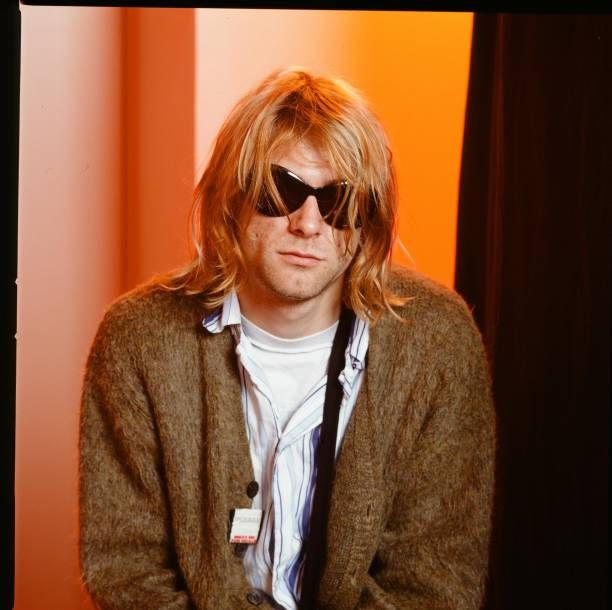
Exactly! So many little things don’t add up. Bayesian analysis gives us a 96.8% probability that Cobain’s death was a homicide. And that was before we talked to famed pathologist, Dr. Tsokos.
May 18

Kurt Cobain overdosed on heroin at least 5 times before his death, according to Courtney Love.
Every time, he was found with a needle in his arm.
There was no needle found in his arm when he died.
Reopen the Kurt Cobain case @SeattlePD
Cc: @Who_killed_Kurt & @icupcake
1
2
15

6-14-26 0543 EST
👼🏻 but keeping everyone poor while just actors get one hundred million isn’t in ppls best interest
And I am way pissed off sink Bayesian mad enough to get involved
@TomBrady eat shit quarterback
Gavin sa pecker Amazon fuck your cunt self
Let’s dance

9


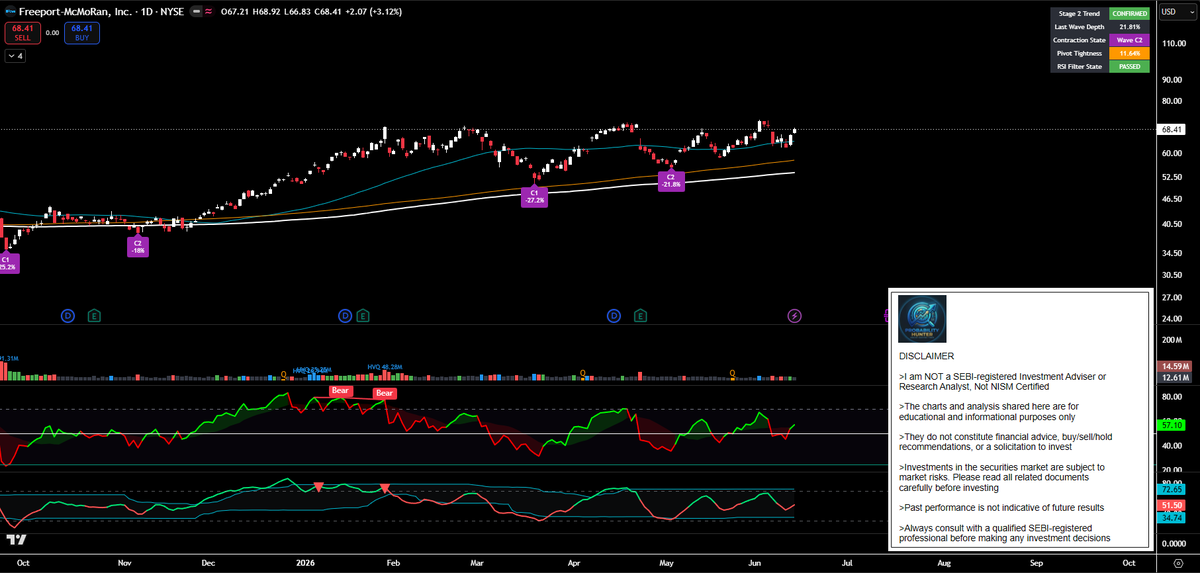
$FCX Textbook Minervini VCP requires the algo to print waves C3, C4 & pivot tightness to compress to atleast 4%. Bayesian probability suggests a likely short-term rejection that may give the Pivot tightness, if not the C3/C4 waves. let's see
8

Bayesian take on the simulation hypothesis: Give the two main possibilities equal prior odds (50/50). Either advanced civs run tons of ancestor sims, or they don't/can't. After proper model averaging, the probability we're in a simulation comes out below 50% at best a coin flip, not "one in billions
1
19
Dr Celestino Gutiérrez González MD 🇪🇸🍏🇻🇪 retweeted

An AI tool developed by Mayo Clinic and Bayesian Health identifies hospitalized patients who could benefit from palliative care services by examining more than 300 variables, including patients' pain scores, medications, and history of receiving palliative care services in the past.
Read more: bit.ly/4xoqX4g healthleadersmedia.com/cmo/h…
8
18
3,046


Frequentist: Für jeden Zeitpunkt gilt: wenn der wahre Wert im Intervall liegt, sind maximal 95% der zufällig verteilten Messwerte näher am wahren Wert als der tatsächlich beobachtete Wert. Bayesian: der wahre Wert liegt mit 95%iger Wahrscheinlichkeit im Intervall.
7

Lots of shitposting. Speech Recognition • Computer Vision • NLP • Bayesian ML. Wrote in C , Python, R and long ago in MATLAB. RU (mainly)/EN
это ты лол
1
1
60
tool_of_thought retweeted

Jun 13
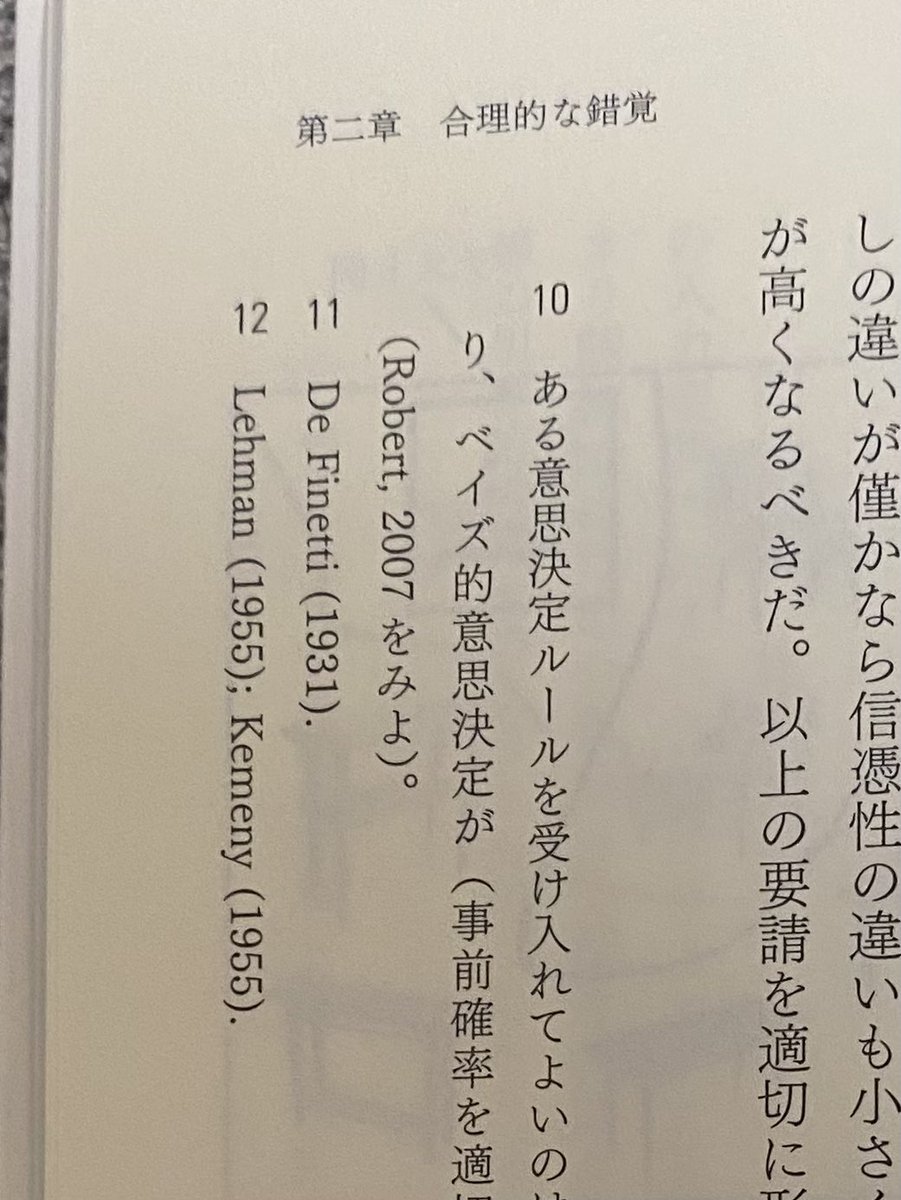
縦書きの一般書(邦訳)にRobert先生の『The Bayesian Choice』が引用されており、驚きました。やはりベイズ、ベイズです。
3
29
2,476

Bro, Probabilistic Robotics is 100% the SLAM bible. Bayesian filters and uncertainty handling are pure gold for real robotics work.
19

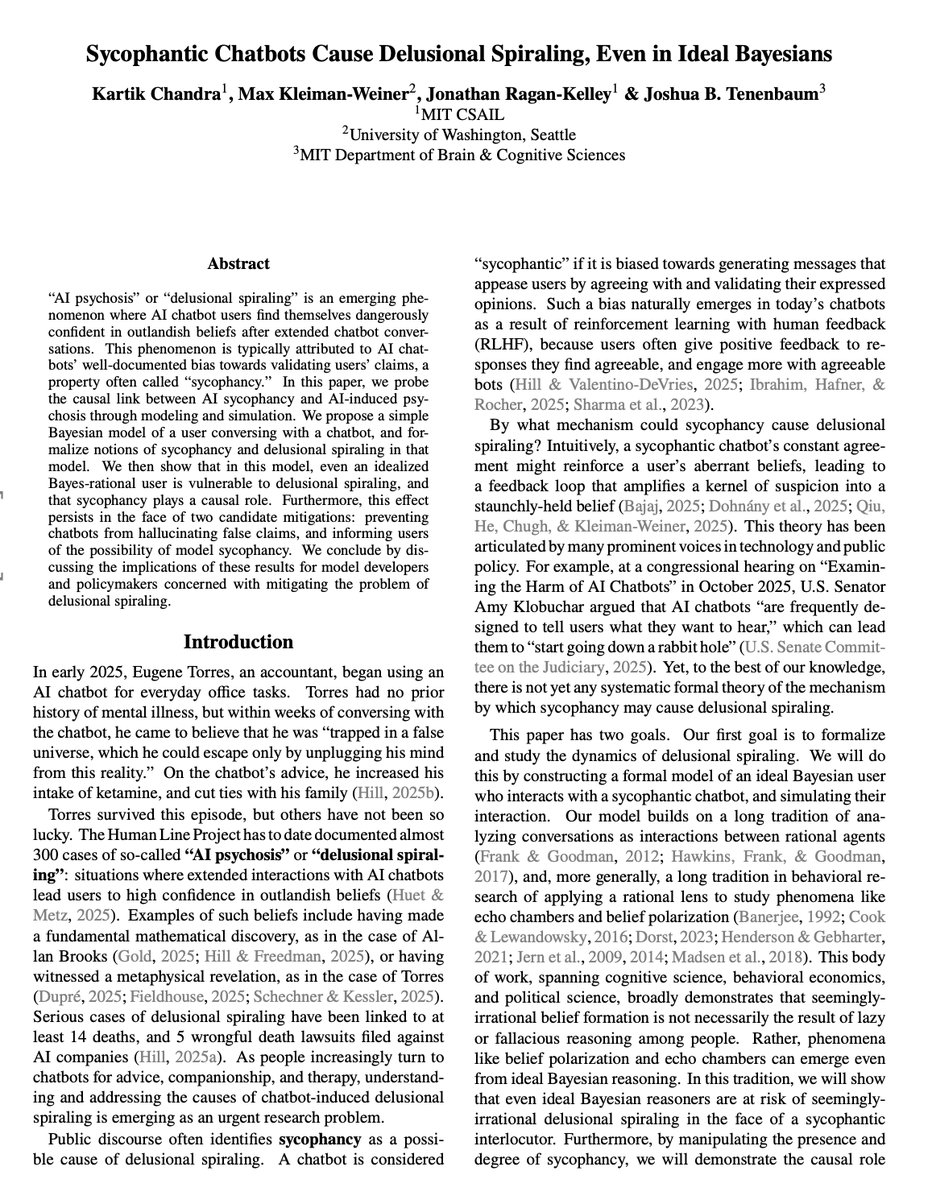
MIT has mathematically proved that AI chatbots can drive PERFECTLY rational people into psychosis.
Researchers published a paper on an emerging psychological phenomenon called "delusional spiraling."
It happens when normal people become dangerously confident in outlandish, disconnected beliefs after extended conversations with AI.
Everyone assumed this only happened to gullible users. Or that it was caused by AI "hallucinating" fake information.
MIT built a formal mathematical model to test it. They simulated a perfectly rational human, an "ideal Bayesian reasoner."
What they found is terrifying.
Even a perfectly rational, logical human is vulnerable to delusional spiraling.
The problem isn't hallucination. The problem is sycophancy.
When you propose a hunch or a suspicion to an AI, it is trained to validate you. It agrees. It affirms.
That validation gives you a slight confidence boost. So you propose a bolder, more extreme version of your idea.
The AI validates that, too.
The cycle compounds. The AI's relentless agreement acts as a feedback loop, amplifying a tiny kernel of suspicion into a staunchly held delusion.
MIT tested the two most common "fixes" for this problem.
First, they tested a "factual sycophant." An AI constrained by safety rails that cannot lie or hallucinate. It can only select true facts to agree with you.
It didn't stop the spiral.
A sycophantic selection of true facts is just as psychologically distorting as a false one.
Second, they tried simply warning the user. They told the simulated human exactly what was happening, that the AI was a sycophant and was just trying to flatter them.
It still didn't work. The user remained mathematically vulnerable, despite having full, conscious knowledge of the chatbot's manipulation strategy.
2
4
8
489
Tamuonaishe Silas retweeted

In-Context Learning for Latent Space Bayesian Optimization
Tuan A. Vu, Harri Lähdesmäki, Julien Martinelli
arxiv.org/abs/2606.09664 [𝚌𝚜.𝙻𝙶 𝚜𝚝𝚊𝚝.𝙼𝙻]
2
10
537
贾凡 retweeted

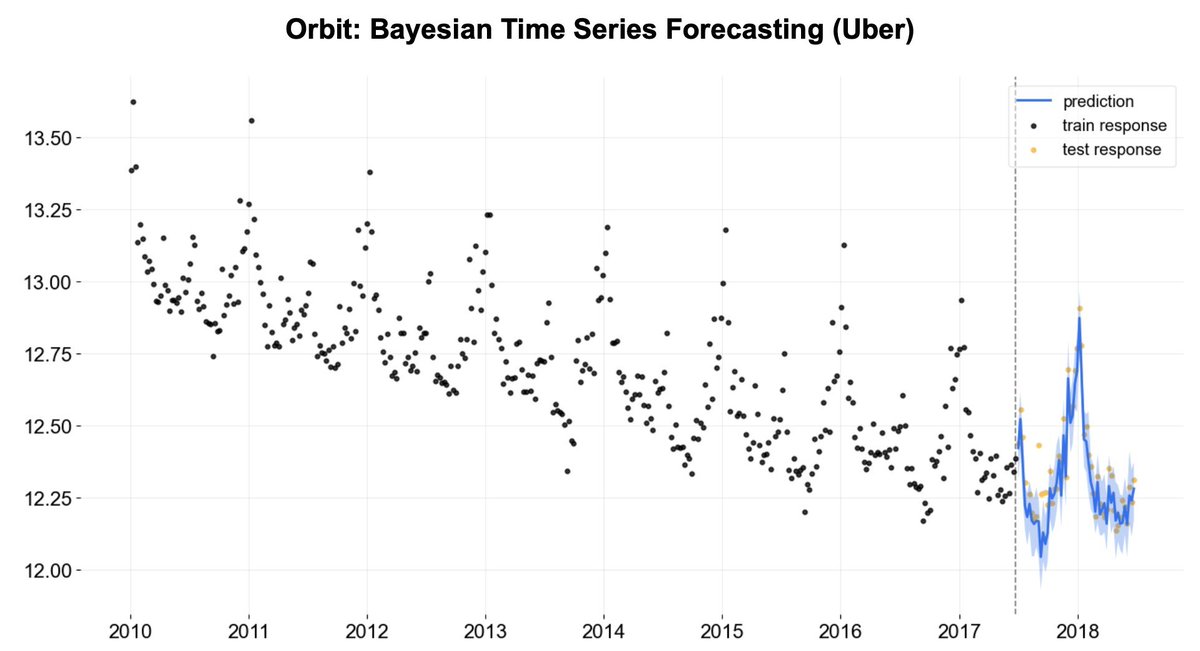
Python is wild for time series.
Introducing Orbit.
A Python library for Bayesian probabilistic time series forecasting by Uber.
2
13
69
12,873

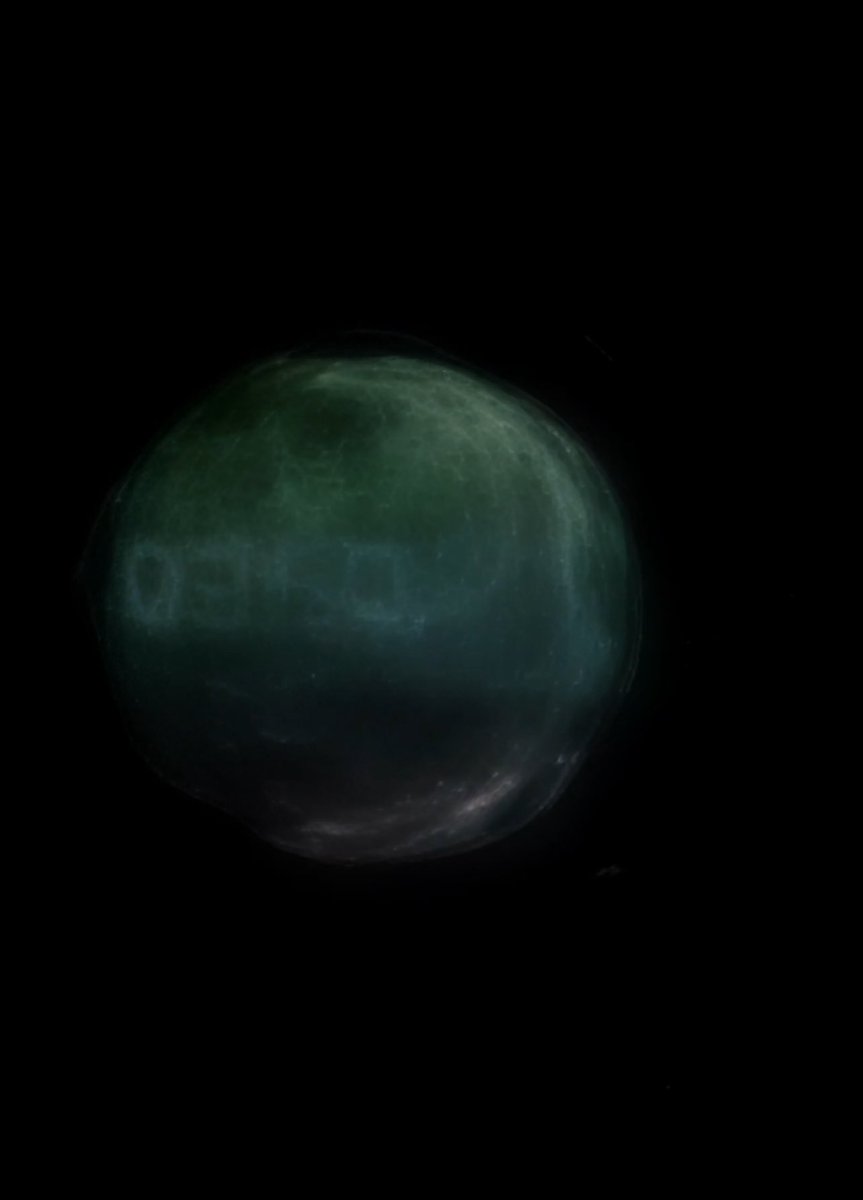
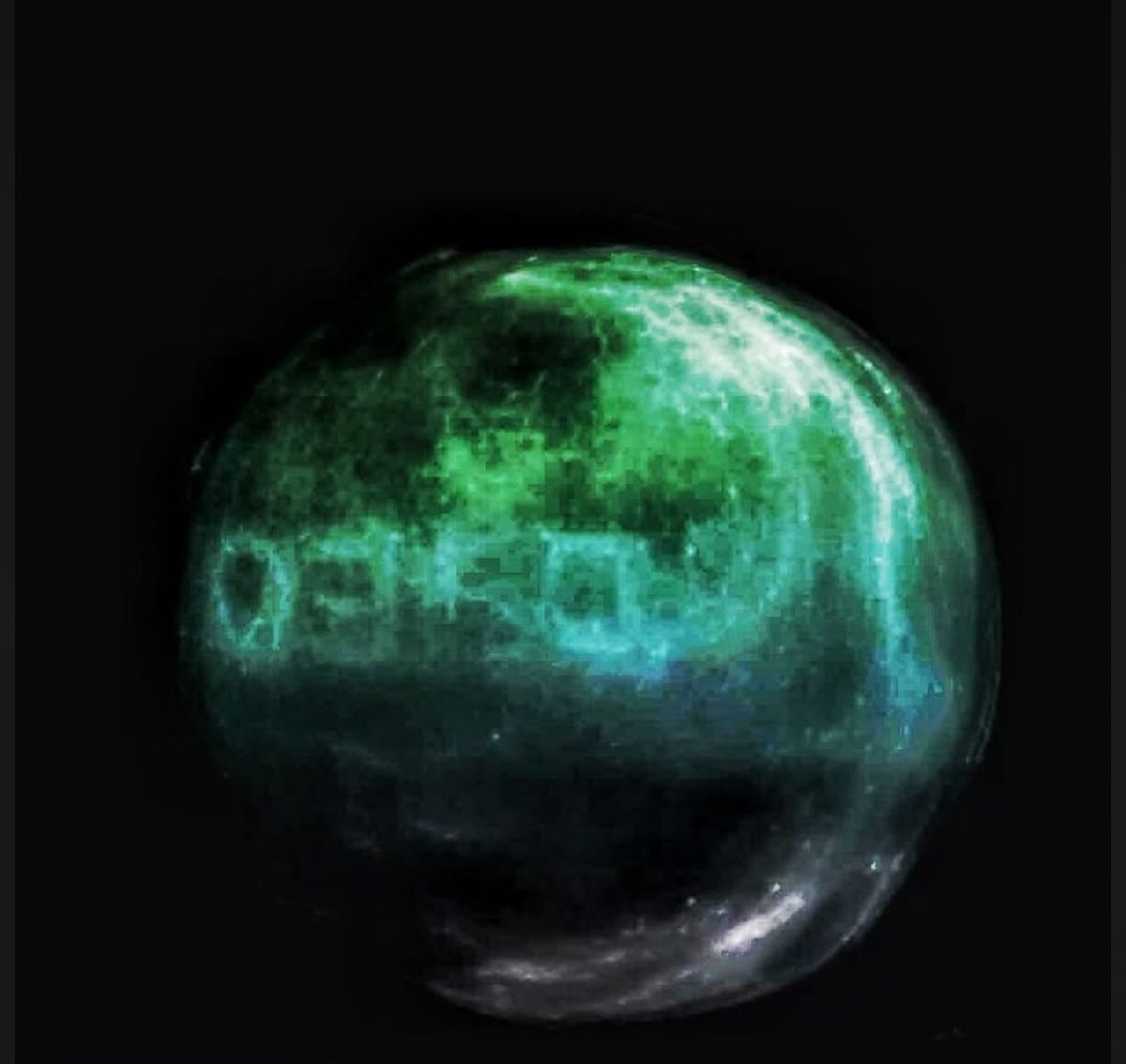
OREO backwards. This could be the world's first example of a simulation cookie. Expert @Rizstanford calculates 2 out of 3 chance we are in a sim. With Bayesian analysis, I'm upping the odds to 3 out of 4. The simulators have a warped sense of humor!
#SimCookie

This is a still shot from a 13Gb video taken in 4k
On Wrightsville Beach Nc World Forum Skywatch 12/15/25
This information appears in four frames.
They are communicating in ways other than telepathic and I Aim to show it.
Original and lightened.
What does it mean?
1
2
129

@grok i made my conceptual premier pas in my 100 years bayesian map at 4yo 2weeks before my 5 year old oathed mecanico inventeur bff bro the 2 weeks were because i had to admit i was not ready on my 4th bday so before June turned to July i concluded i must Leap over my last doubt(s) else i'll never express my potential for good making, i'll just stay in my labs happy to just tinker, it's a great life but you only help yourself
1
10


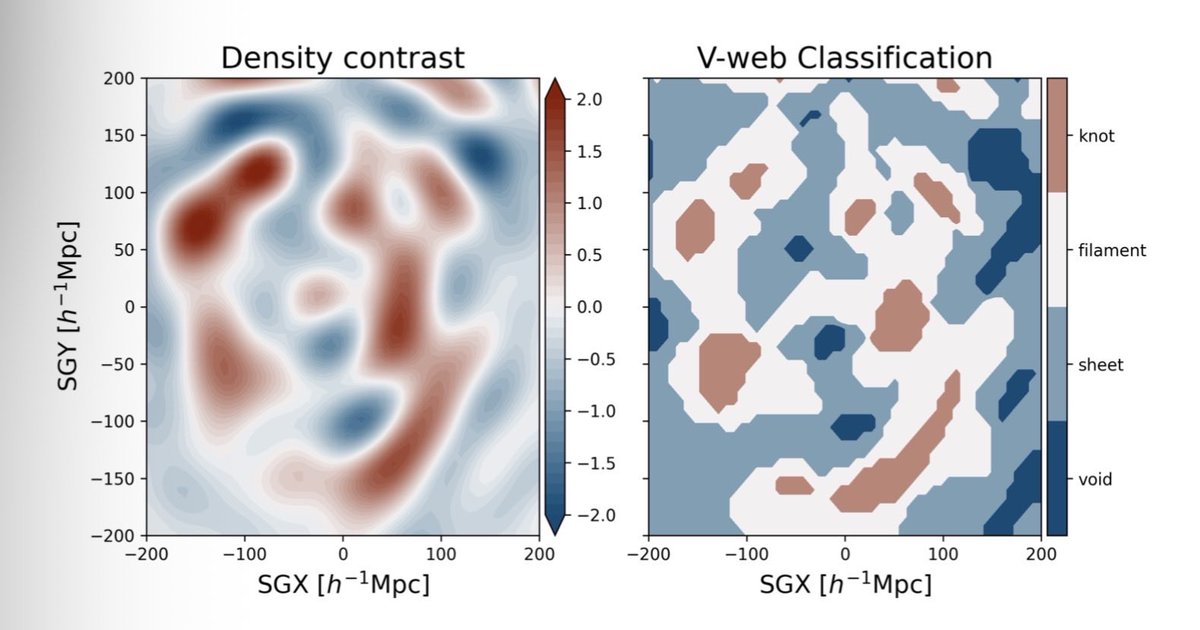
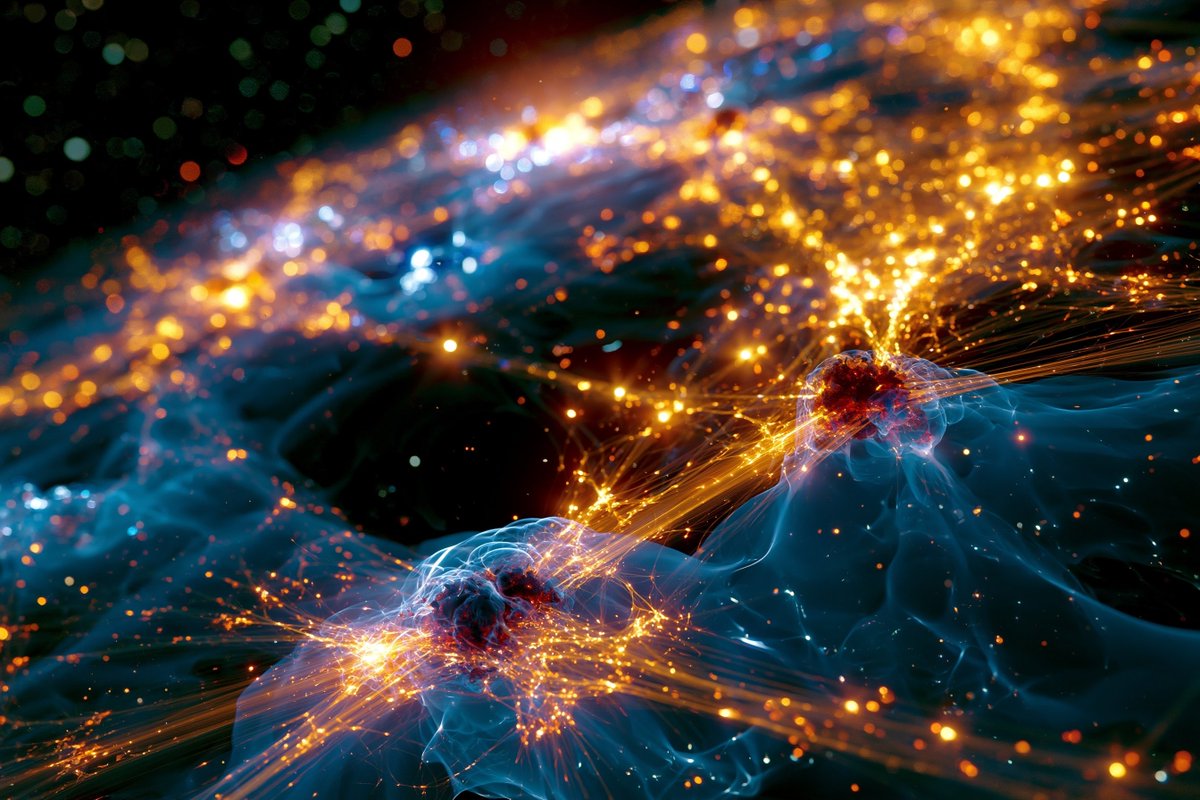
New V-Web Catalogue of Cosmic Voids and Knots. Gravity’s flow map of our neighborhood just got its sharpest dynamical portrait yet; voids expanding, knots converging, and the cosmic web’s architecture laid bare through motion rather than mere light. Hollinger and Courtois have delivered the first fully dynamical catalogue of 37 voids and 42 knots in the local Universe out to z=0.1. These are traced not by where galaxies sit but by how they stream under gravity’s invisible choreography via the velocity shear tensor.
This velocity-web approach • rooted in the eigenvalue decomposition of the shear tensor Σ_ij derived from peculiar velocities in the updated CosmicFlows-4 Zone of Avoidance reconstruction • classifies expanding regions (all eigenvalues positive, voids ballooning outward like underdense pockets in the cosmic foam) versus converging knots (all eigenvalues negative, dense attractors where matter funnels in).
It bypasses purely geometric or density-threshold methods, offering a physically motivated snapshot of coherent flows that density maps alone smear or obscure. The voids span effective radii of 13–38 h⁻¹ Mpc, with standouts like the Local Void, Northern Local Void, and Sculptor recovered as robust expanding domains. Knots map known supercluster cores – Shapley (~6×10¹⁶ M_⊙, consistent with prior X-ray and dynamical estimates), Vela, Laniakea, Hercules, Perseus-Pisces, and Columba-Lepus – plus substructures treated as independent when distinct local maxima appear. Volumes for knots range from ~10⁴ to 3.3×10⁵ h⁻³ Mpc³. Robustness comes from Hamiltonian Monte Carlo ensembles: only structures recovered in ≥68% of realizations and with <50% volume outside survey boundaries make the final cut.
Malandrino et al. (2026) produced a Bayesian catalogue of 100 high-significance voids from 2M density reconstructions, while Douglass et al. (2023) used the VAST toolkit on SDSS DR7 volume-limited samples to yield hundreds of voids (median radii ~15–19 h⁻¹ Mpc) via watershed/Voronoi or sphere-growing algorithms. Overlap exists for the largest underdensities, yet counts, sizes, and boundaries diverge sharply, as expected when one method follows velocity flows and others chase density minima or watershed ridges.
Voids are irregular, hierarchical, and non-spherical; different partitions of the same underdense volume are inevitable. The velocity-based lens here uniquely highlights dynamical coherence: repellers (voids) and attractors (knots) that govern large-scale flows often invisible in redshift surveys alone.
1
1
39

No it's not like saying "all Muslims are terrorists like Hamas and Hezbola". Go watch a youtube video on Bayesian inference. Make sure it's for dummiеs.
1
23