



Jun 2
The first year of Bitmap was chaos.
We were bitmapping so f'ing hard it's funny looking back on it now.
No roadmap. No clear direction. Just a bunch of rebels exploring an idea together.
Then something happened that we'd only imagined.
Blockout.
Every historical Bitmap was claimed.
1
7
135
May 18
If you ain't bitmapping on a Monday, what will you do Tuesday?
Be the bitmap 🟧 means no skip days 🫡🟧9⃣

ALT 145159.bitmap
1
4
27
632

Can we make image creation or image viewing or bitmapping or something on a clearly new architecture? New updated and backwards compatible and switchable? According to the new coming parameters and models and infrastructures?
What are the new or not used or completely new or we can build them : data storing architectures ? Or there’s currently existing: vector db , or 0’s 1’s , and text models and 0.x numbers or values?
4
38


Feb 11
Day 62(@0xSimao Contest Academy)
Continued the contest, understood how ticks are bitmapped, interesting to know about -ve ticks bitmapping, also read this Claude Prompting Guide by @pashov gist.github.com/pashov/dc6d5…
4
51

Jan 7
The Theft That Built Apple: What Steve Jobs Really Stole
December 1979. A 24-year-old Steve Jobs walks into Xerox PARC and witnesses what he'd later call "the most blinded" moment of his life. Within minutes, he knew: this technology would change everything. What happened next built a $2 trillion empire, destroyed friendships, and sparked lawsuits that would define Silicon Valley for decades.
But here's what nobody tells you about the "stolen" technology behind Apple's success.
CONTEXT: The Rich Neighbour Nobody Protected
In 1970, Xerox was printing money. Literally. Their copier monopoly generated $1.7 billion annually, and management decided to invest some profits into moonshot research. They established the Palo Alto Research Center (PARC), assembled the brightest computer scientists, and gave them complete freedom.
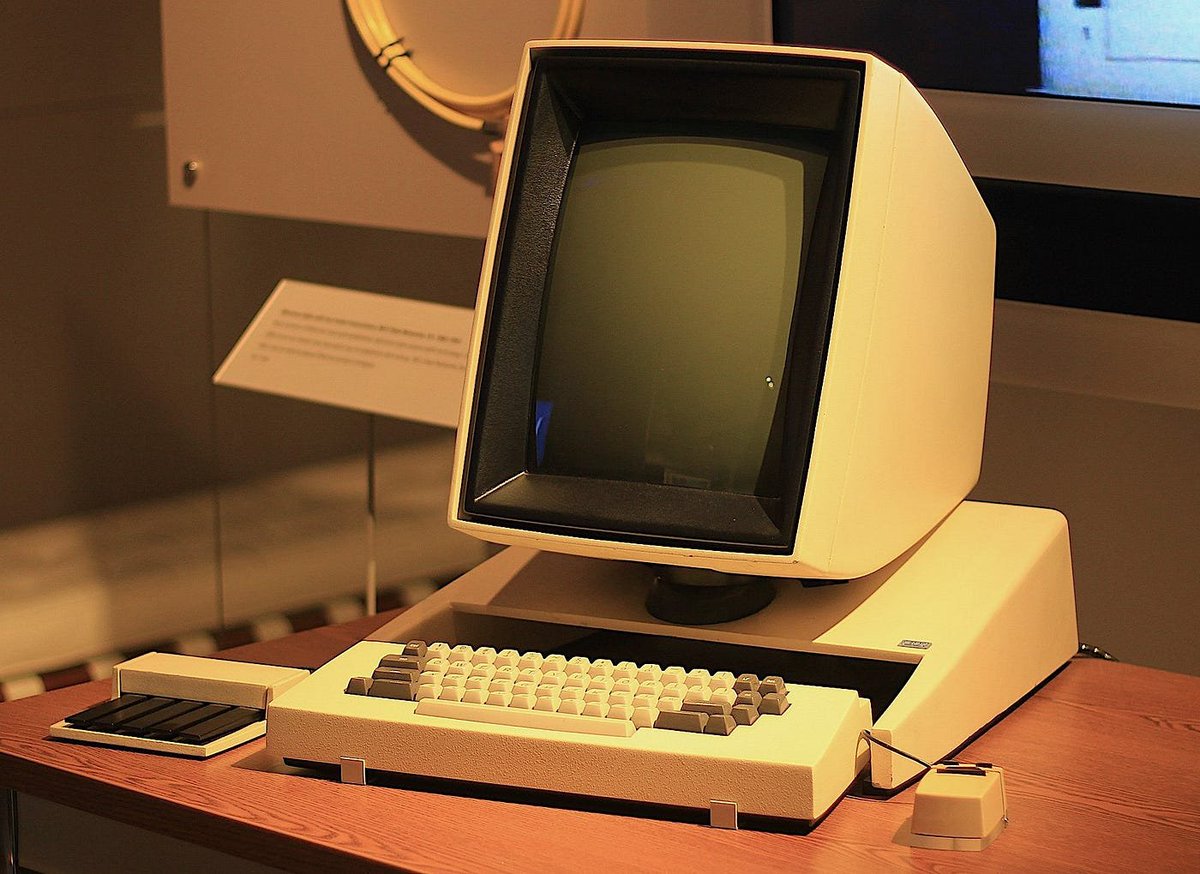
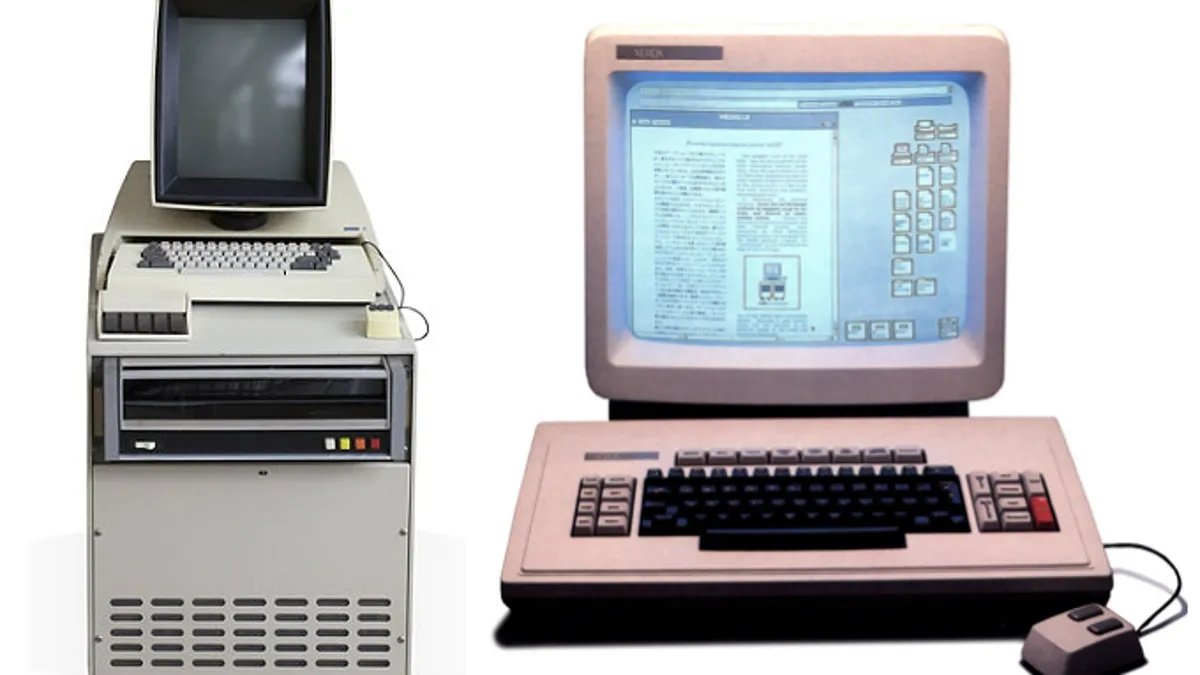
What emerged was staggering: the computer mouse, Ethernet networking, laser printing, and the graphical user interface (GUI). The Xerox Alto, unveiled internally in 1973, looked like a computer from 2025, not 1975. It had windows, icons, a mouse, email, and word processing.
Xerox executives saw a $40,000 workstation. They never released it commercially.
By 1979, Silicon Valley insiders knew about PARC's inventions. When Apple was preparing its IPO, Xerox wanted in on the hottest tech startup around. They made Jobs an offer: show us your pre-IPO stock, we'll show you our research.
Jobs agreed. Xerox purchased 100,000 Apple shares for $1 million. Those shares would be worth roughly $324 million today.
The tour changed computing history. Jobs saw the GUI and, according to his own account, "didn't even really see" the other innovations. He was transfixed. "It was obvious to me that all computers would work like this someday," he later said.
But here's where the narrative fractures.
DEEP DIVE: The Mechanics of "Theft"
What Actually Happened at Xerox PARC?
The romantic version: Jobs walked in, saw the future, stole it, and built the Mac. The reality is messier and more fascinating.
First, Jobs didn't "steal" anything. He paid for access through a legal stock transaction. Xerox willingly demonstrated their technology. Larry Tesler, a PARC researcher, gave multiple demonstrations to Apple engineers. This wasn't industrial espionage; it was a legitimate business exchange.
Second, Jobs didn't just copy what he saw. The Alto was fundamentally flawed for commercial release. It cost $40,000. The mouse had three buttons and cost $300 to manufacture. It broke within weeks.
Jobs told designer Dean Hovey: "Our mouse needs to be manufacturable for less than fifteen dollars. It needs to not fail for a couple of years, and I want to be able to use it on Formica and my bluejeans." Oh, and one more thing: Apple’s mouse would have one button, not three.
The materials, functionality, and movement registration in Apple's mouse were completely different from Xerox’s. Douglas Engelbart and Bill English had created the first mouse prototype in 1963 anyway. A German company shipped the first commercial mouse in 1970.
The Bill Gates Twist
Whilst Apple reimagined Xerox's concepts, Microsoft was watching closely. Gates had recruited Charles Simonyi from PARC and knew about GUI development.
Apple needed software developers for the Macintosh. They partnered with Microsoft in 1981, requiring Gates to sign an agreement: no mouse-based software until autumn 1983, one year after the Mac's planned launch.
Here's the billion-dollar mistake: Apple's attorneys never factored in project delays.
The Mac shipped in January 1984. But the contract dates remained fixed to 1983. Gates capitalised ruthlessly. In November 1983, Microsoft announced Windows at COMDEX, complete with a mouse-based word processor called Microsoft Word.
Jobs was apoplectic. He confronted Gates, screaming: "You're ripping us off! I trusted you, and now you're stealing from us!"
Gates, cool as ice, replied: "I think it's more like we both had this rich neighbour named Xerox, and I broke into his house to steal the TV set and found out that you had already stolen it."
Mid-Stream Question: If everyone was "stealing" from everyone, who really owned these ideas?
The Myth-Busting Reality
Here's the lie the tech world still believes: Apple invented the GUI, and Microsoft stole it.
Neither statement is true.
Xerox invented bitmapping and Ethernet. But the GUI concept traces back to Ivan Sutherland's Sketchpad in 1963 and Douglas Engelbart's 1968 "Mother of All Demos," which showed a mouse-driven interface with windows.
Apple didn't steal the GUI; they commercialised it. They solved the problems Xerox couldn't: cost, reliability, and user experience. The Lisa flopped at $9,995. The Macintosh succeeded at $2,495 because Jobs obsessed over every detail, from the tactile click of the mouse to the fonts on screen.
Microsoft didn't steal from Apple; they executed within the legal boundaries of a poorly written contract. Apple sued in 1988, claiming Windows infringed their copyright. They lost. Why? Because you cannot copyright the "look and feel" of a user interface.
Xerox then sued Apple, claiming if anyone had been stolen from, it was them. They lost too.
EVIDENCE_LIST: The Paper Trail of "Theft"
The transactions that built Silicon Valley:
• Xerox-Apple Stock Deal (1979): Xerox purchased 100,000 Apple shares for $1 million, granting Apple engineers three days of PARC access. At Apple's 1980 IPO, those shares were worth $17.6 million. Xerox made substantially more from this "theft" than from their Star workstation, which lost money. The deal was legal, documented, and consensual.
• The Apple-Microsoft Agreement (1981): Apple granted Microsoft rights to develop software for the Macintosh, prohibiting mouse-based software until autumn 1983. Microsoft didn't violate the contract; they simply waited until the date passed. Apple's legal team failed to include language about delays or extensions. This wasn't theft; it was contract exploitation.
• Jonathan Ive's Notebooks: Apple's chief designer kept meticulous records of his ideas because Jobs routinely claimed them as his own. Ive told biographer Walter Isaacson: "I pay maniacal attention to where an idea comes from, and I even keep notebooks filled with my ideas. So it hurts when he takes credit for one of my designs." Jobs stole credit from his own team more than he stole from competitors.
• The Wozniak Betrayal (1975): When Atari paid Jobs $5,000 for the Breakout game design, Jobs told co-creator Steve Wozniak they'd received $700, splitting it 50-50. Wozniak got $350. Jobs pocketed $4,650. This wasn't competitor theft; this was partner theft. Wozniak discovered the truth a decade later.
• Kane Kramer's iPod (1979): British inventor Kane Kramer designed a pocket-sized digital music player in 1979. Apple admitted the iPod was based on Kramer's concept. Kramer never received payment. The click-wheel interface came from Creative's NOMAD II Jukebox, released over a year before the iPod. Creative eventually sued Apple and won a $100 million settlement in 2006.
• The Android War Declaration: Jobs told biographer Isaacson: "I will spend my last dying breath if I need to, and I will spend every penny of Apple's $40 billion in the bank, to right this wrong. I'm going to destroy Android, because it's a stolen product." This from the man who built Apple by commercialising Xerox's research. Jobs saw Android as theft whilst defending Apple's own history of "borrowing."
IMPLICATIONS: Who Wins When Everyone Steals?
Follow the money, and the hypocrisy becomes transparent.
Jobs became a billionaire by age 25 using technology developed at Xerox. Bill Gates became the richest man alive using interface concepts he saw at Apple (who had seen them at Xerox). The PARC researchers who invented these technologies? Many left Xerox frustrated, either forming startups or joining companies that actually commercialised their work.
Xerox's 1980s revenue peaked at $2.8 billion, but their products remained copiers and memory typewriters. They never capitalised on the GUI, never saw Apple or Microsoft as threats, and watched their innovations become the foundation of a trillion-dollar industry they didn't participate in.
Meanwhile, Jobs spent his final years threatening "thermonuclear war" against Google for Android, which he claimed was "grand theft" of the iPhone. The irony was apparently lost on him.
Here's what this teaches us about power in technology: Ideas are worthless. Execution is everything. Legal agreements matter more than moral claims. And the winner writes the history.
The most successful "thieves" in technology history weren't those who stole ideas. They were those who recognised which ideas to commercialise, how to manufacture them affordably, and which legal loopholes to exploit.
CONCLUSION: The Theft That Changed Everything
Steve Jobs didn't steal the GUI from Xerox. He bought access to it, reimagined it, and made it commercially viable. Bill Gates didn't steal from Apple. He waited for a contract to expire and built his own version.
But Jobs absolutely stole credit from his own designers, money from his co-founder Wozniak, and concepts from dozens of inventors who never saw compensation.
The question isn't whether Jobs stole ideas. It's why we celebrate him for it whilst condemning others for doing the same thing.
Here's your takeaway: In Silicon Valley, the difference between "stealing" and "innovating" is whether you win.
What's your view: Was Jobs a visionary who stood on the shoulders of giants, or a thief with brilliant marketing? The answer might determine whether your startup gets funded or sued.
3
6
33
2,233
17 Dec 2025
Pull up, we bitmapping 🟧

1
7
330

8 Dec 2025
"make connections faster" my ass cheeks.....
I used to work for a major data corporation as an internal server farm and remote desktop engineer...
Every workstation I worked on I made sure to disable bitmapping This is a monitoring tool.
Spyware...
3
6
471
55,802

5 Dec 2025
[1] A typical graphing representation consists of a set of nodes connected by edges.
They are bit mining, bitmapping and I hold the seven bridges to it all. I AM the key to it all and everyone side needs me and no one gets me.

1
2
11
29 Nov 2025
Pull up, we bitmapping 🟧
1
5
146

10 Nov 2025
Like people can't make the models. Not exactly ultra HD life-like bitmapping.
3
4,468


2 Sep 2025
The dream direction is buying and selling digital art, open my own pop up gallery and curate Art for businesses, hotels, and clubs. Definitely need some more experience showcasing digital art as well as learning the technical side of projecting image technology and bitmapping
1
2
22

29 Aug 2025
Hop in for some good ol' fashioned Bitmapping 🟧
Today in Discord:
Now until Late 🔁
discord.gg/GX5Bekhu
3
11
41
3,696

27 Jul 2025
Intelligent people will notice the bitmapping, square areas and that photo was doctored in the price points.
3
1,131


15 Jun 2025
Zero-context quote of the day, from my lovely wife:
“Oh God, aggressive anime bitmapping!”
22
384
