
May 7
Ok usually this is coal but the fact that the fees are going to BREADCOIN just makes this narra genny send it
8EetkV9Y8bbgtYSybDCgE9SBSJt11CJcMGgYhDiUpump
also if someone can do comm and dex ill send some sol for it
1
1
191


Mar 13
Time will tell
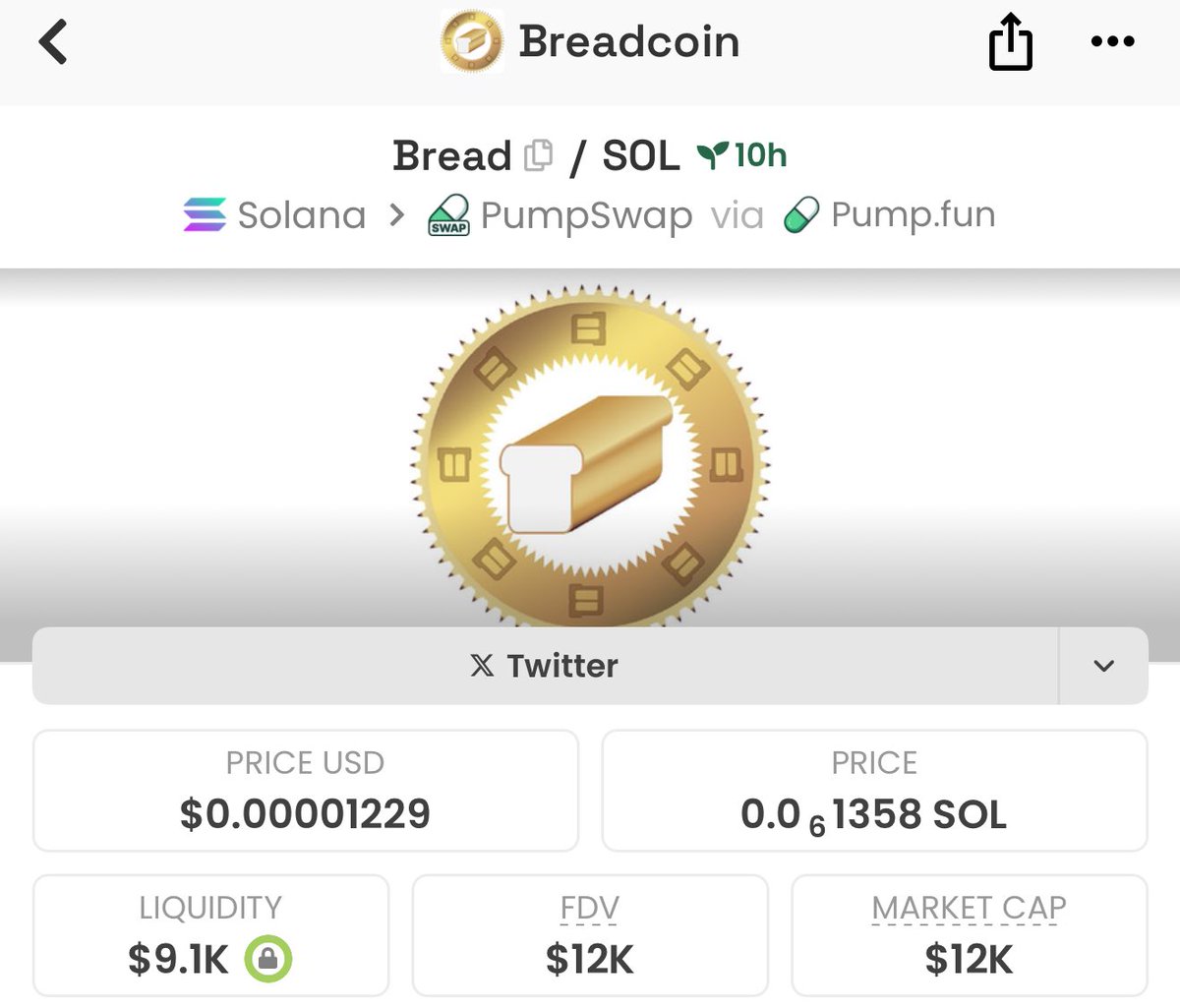
So much convinced on $breadcoin
9QMwJiVFrnCzuqCNvNy2fFUHUmNX5hvAavENz6z9pump
1
1
16
2,023



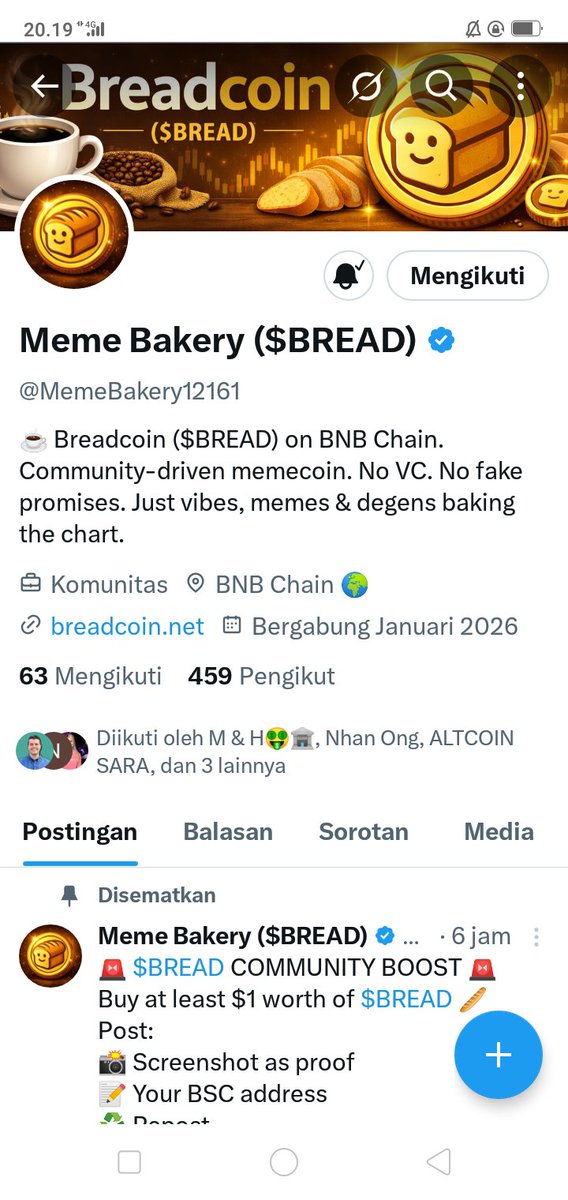
Tank you 🙂 $breadcoin.net
#Breadcoin #SpringVibes #BNBChain #Crypto
0x356ACC8D75e84487075117505e431F8875cA0a99
1
34

24 Nov 2025
💎Discover $Breadcoin - Our Hidden Gem 🔍✨ x1000 Potential! 💰
$Breadcoin has Launched Now 🚀
$Breadcoinis going to MOON 🚀🚀
Take advantage of this opportunity, And we're good 🔥
Prepare your join Now 👇
Buy Link:join.pump.fun/HSag/ympxvu0b
X;@Breadcoinw
29
26
699
24 Nov 2025
20
17
164

13 Nov 2025
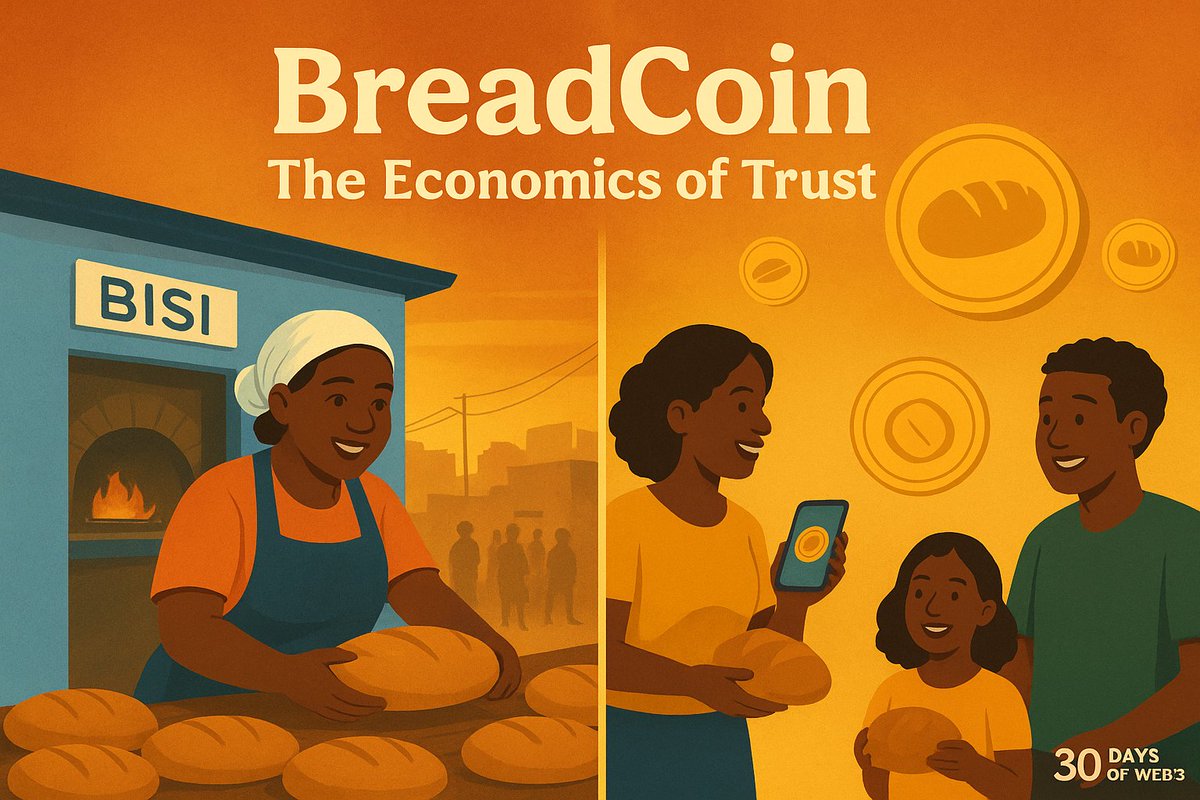
Day 20 - Tokenomics: The Tale of Bisi’s Bread Empire
Lagos Mainland, 5:30 AM.
The air smells like smoke, sweat, and ambition.
At a corner shop painted blue and white, Bisi the baker is already at it - rolling dough, flipping ovens, and shouting orders.
“Gbenga! How many loaves for Shoprite today?”
“Thirty-five, aunty!”
Business was good.
But Bisi wanted more.
She didn’t just want to bake bread - she wanted to build a brand.
So one night, she sat with her cousin Tola - a crypto bro in every sense.
He pulled out his phone, smiled, and said,
“Aunty Bisi, if bread get crypto version, e for blow.”
She laughed.
“Wetin you mean?”
“See ehn,” he began, “what if you no just sell bread - you build a small economy around am?”
And so, BreadCoin was born.
To expand her bakery, Bisi issued 1 million BreadCoins.
Each coin represented a piece of her ecosystem.
Here’s how she structured it:
➡️ 10% went to early investors who funded her oven.
➡️ 30% to her community - loyal customers who’d been buying since day one.
➡️ 20% to her team - the bakers, packers, and drivers.
➡️ 30% stayed locked in her vault for future growth.
➡️ 10% went to marketing and partnerships.
Soon, BreadCoin became the talk of the street.
Buy a loaf, get 10 BreadCoins.
Refer a friend, get 20.
Hold your coins, get free delivery for life.
Her customers weren’t just buyers anymore —
they were owners, ambassadors, believers.
The whole Yaba started saying,
“Guy, no be just bread. Na BreadCoin bread!”
But like every token story, the excitement brought greed.
One trader, Kunle, decided to hoard BreadCoins.
He started buying and selling fast - creating hype and panic.
People who didn’t understand thought the coin was “dying.”
Bisi panicked.
Her cousin Tola smiled,
“This na why tokenomics dey matter pass hype.”
He explained:
“Every token be like economy.
If you no plan how value go circulate - who get, who spend, who burn - e go crash like puff-puff wey soak for water.”
He showed her:
→ Supply = how many tokens exist.
→ Demand = who wants to buy or hold them.
→ Utility = what can people use them for.
→ Distribution = who controls them.
→ Inflation control = how new tokens enter or leave circulation.
Bisi finally understood:
BreadCoin wasn’t just about baking bread - it was about baking trust.
So she made a change.
She burned 200,000 unused BreadCoins,
added loyalty rewards for long-term holders,
and launched a BreadCoin DAO where customers voted on new flavors.
Now, the market wasn’t just hyped - it was healthy.
Months later, a journalist asked her:
“Bisi, how did you make a small bakery become a movement?”
She smiled, wiping flour off her hands.
“Simple. I gave people a reason to care beyond the bread.”
💡 Lesson:
Tokenomics isn’t about coins - it’s about systems of trust, incentives, and value flow.
Good tokenomics make people stay.
Bad ones make them dump.
Like Bisi’s bread, it’s not about the heat of the oven -
it’s about the balance of ingredients that make the taste last.
If this story made Web3 finally make sense — Like, Retweet & Share it.
I am breaking Web3 down one simple story at a time.
Next episode drops soon 👀
Creators are already turning storytelling into income on @xeetdotai — the InfoFi platform built for creators.
Get in early. Check the comments for the link to join.
10 Nov 2025

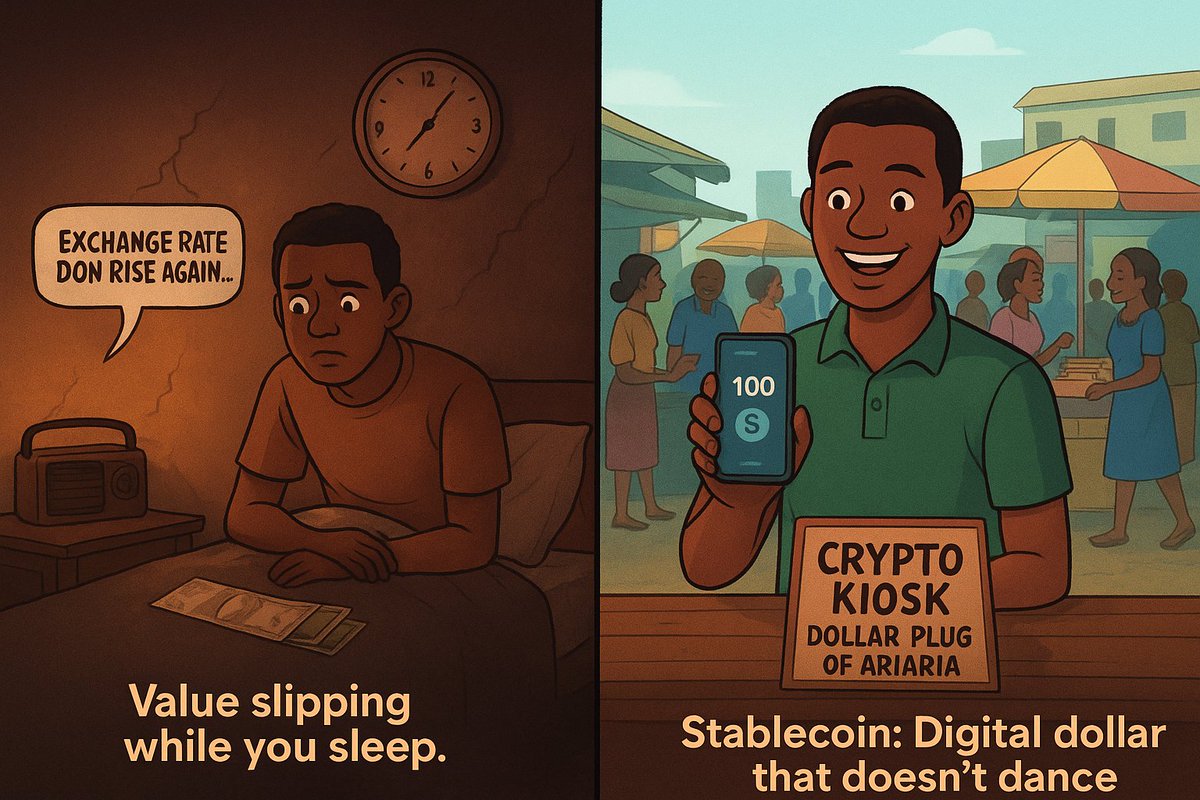
Day 19 - Stablecoins
“Dollar Under Pillow vs Crypto Equivalent for Stability.”
In Aba, money moves faster than gossip.
Traders hustle from dawn till dusk, selling lace, shoes, and fake “Made in Italy” belts that still shine like gold.
But the biggest problem wasn’t selling. It was keeping value.
The naira was dancing shaku shaku every week - one day up, next day flat on the floor.
By December, ₦10,000 could no longer buy what ₦10,000 bought in October.
In the heart of Ariaria Market, Chika the shoe seller faced this crisis.
He’d save his profits, only to wake up one morning and find half of it gone, not stolen, but eaten by inflation.
One afternoon, his friend Odogwu Forex visited him.
“Guy, you still dey keep naira for under pillow?”
Chika laughed nervously. “You wan make I keep am for where? Bank wey dey charge nonsense fee?”
Odogwu sipped his cold malt and whispered,
“My guy, make I show you something. Na new kind of dollar, but e dey digital.”
Chika frowned. “You don start again with this your crypto wahala abi?”
Odogwu smiled.
“No be that kind wahala. This one no dey rise or fall like bitcoin. E dey stable. Dem call am stablecoin.”
That night, Chika couldn’t sleep.
He kept hearing that word - “stablecoin.”
The next morning, Odogwu showed him how it works:
He opened his phone and said,
“See, if you hold 100 USDT or USDC, e be like say you hold $100 - no shaking.
No inflation, no naira drama.
You fit save, send, or even use am to buy other crypto.”
To prove it, Odogwu sent him $20 worth of USDT.
Within seconds, it landed in Chika’s wallet.
“Ah-ah, just like that? No bank, no network wahala?”
“Na so,” Odogwu grinned. “Stablecoin no dey play.”
A week later, dollar rose again, but Chika’s $20 USDT stayed the same.
For the first time, his money didn’t dance with the economy.
Fast-forward two months later…
Chika started telling other traders:
“Forget keeping money for bank o.
Get small stablecoin wallet. E go help your money rest.”
Soon, half the market joined him.
They used stablecoins to pay suppliers in China, to save profits, even to send money home faster than bank apps.
The traders called it “Dollar wey no dey vex.”
Now let’s decode that story 👇
💡 Stablecoins are cryptocurrencies designed to keep their value stable - usually pegged to a real-world asset like the US dollar.
Unlike Bitcoin or Ethereum that swing wildly,
1 USDT ≈ $1
1 USDC ≈ $1
1 DAI ≈ $1
They maintain this stability through collateral or algorithmic mechanisms - meaning there’s real or digital value backing each coin.
Three common types of stablecoins:
1️⃣ Fiat-backed (like USDT, USDC) - backed by real USD held in banks.
2️⃣ Crypto-backed (like DAI) - backed by over-collateralized crypto (e.g., ETH).
3️⃣ Algorithmic - use code and supply adjustments to stay balanced (though risky).
In short:
Stablecoins give you the speed of crypto and the stability of fiat.
They’re perfect for:
✅ Protecting against inflation.
✅ Sending money across borders instantly.
✅ Trading safely in crypto markets.
✅ Earning interest in DeFi platforms.
Back in Aba, Chika eventually opened a small crypto kiosk beside his shoe stand.
He helped market women convert naira to stablecoins every evening.
When banks closed or FX rates spiked, customers still moved money like nothing happened.
He became known as “Dollar Plug of Ariaria.”
“If you no fit control the market, control your value.”
That’s what stablecoins give you - peace of mind in a world that’s always shaking.
💡 Lesson:
Stablecoins are your “digital dollar under the pillow” -
same power, zero fear, instant movement.
They’re the bridge between crypto’s freedom and real-world money’s stability.
Like ❤️
Retweet 🔁
Share 📤
Because stories like this make Web3 make sense.
Next episode’s on the way...
And if you’re a creator, join @xeetdotai — the InfoFi platform redefining how creators earn.
Check the comments 👇
14
5
70
937

27 Oct 2025
When her investment on breadcoin comes through she will surely give it back
1
4
357

18 Oct 2025
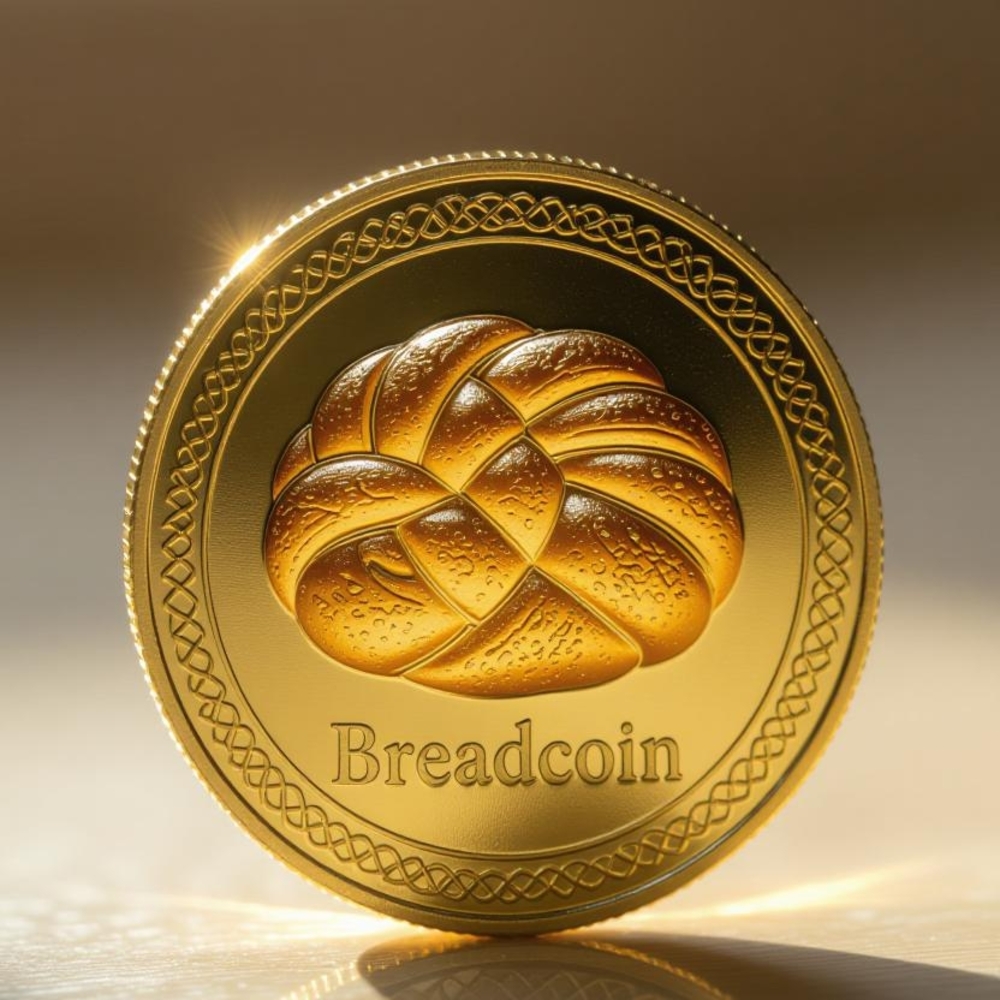
#BREADCOIN IS HERE TO GIVE THE MEMECOIN SPACE SOME BREAD
JOIN THE BREADWINNER COMMUNITY NOW 🍞🍞
OFFICAL CA: 9LtDtceg4dRgFa9qbTv426HKZ33p5jXt2J7W1GK3pump
#Crypto #PumpFunLaunch #memecoin
2
36

10 Oct 2025
Lately, I’ve been diving deep into @0xBreadguy’s ideas on new economic models for chains, and I have to say the guy really thinks 10 steps ahead of the rest of us mere mortals trying to make sense of gas fees and tokenomics.
It got me thinking… what if we could design a token that directly rewards community contributors in real-time, instead of only rewarding early investors? Imagine a system where every helpful comment, every creative meme, every solid dev contribution actually moves the needle for both the project and the contributor.
Bread, do you think MegaETH or other chains could implement something like this effectively without accidentally turning into a centralized points system? Would love your thoughts I promise I won’t try to patent “BreadCoin” on you.

4
1
7
108

24 Sep 2025
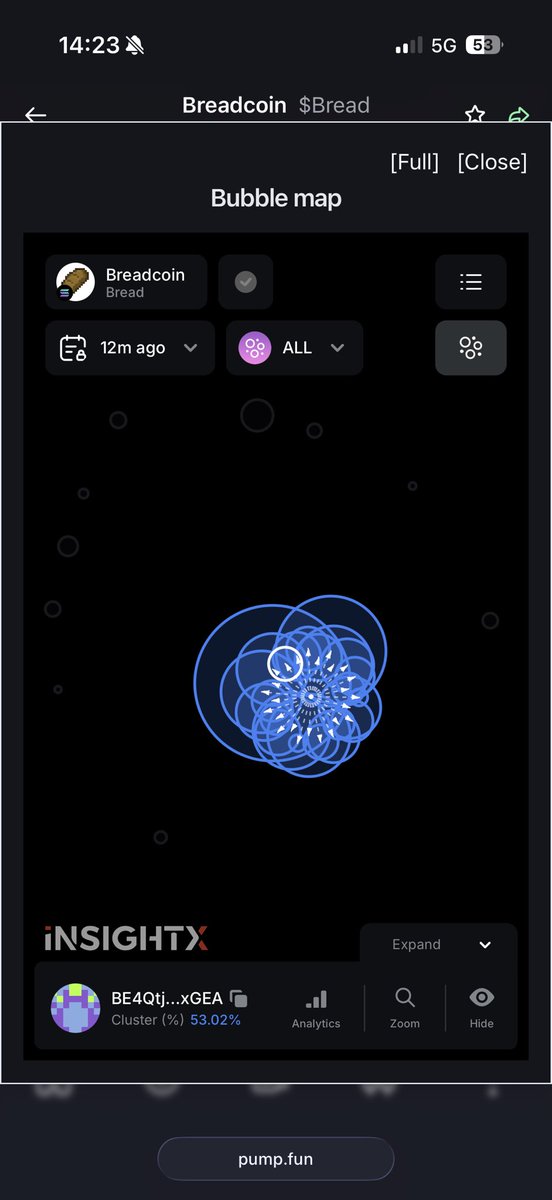
Warning!!
A other $Breadcoin just bonded but it’s a farm token! Make sure to buy the right one!
3SfAaAK5eFx4Q23VySQq35AESmHQoBjVJnG2CrXbpump
other one :
3
14
1,177

24 Sep 2025
Warning!!
A other $Breadcoin just bonded but it’s a farm token! Make sure to buy the right one!
3SfAaAK5eFx4Q23VySQq35AESmHQoBjVJnG2CrXbpump
1
12
659