
🌀From the Institute for Unified Classical Resonance Cosmology (UCRC):
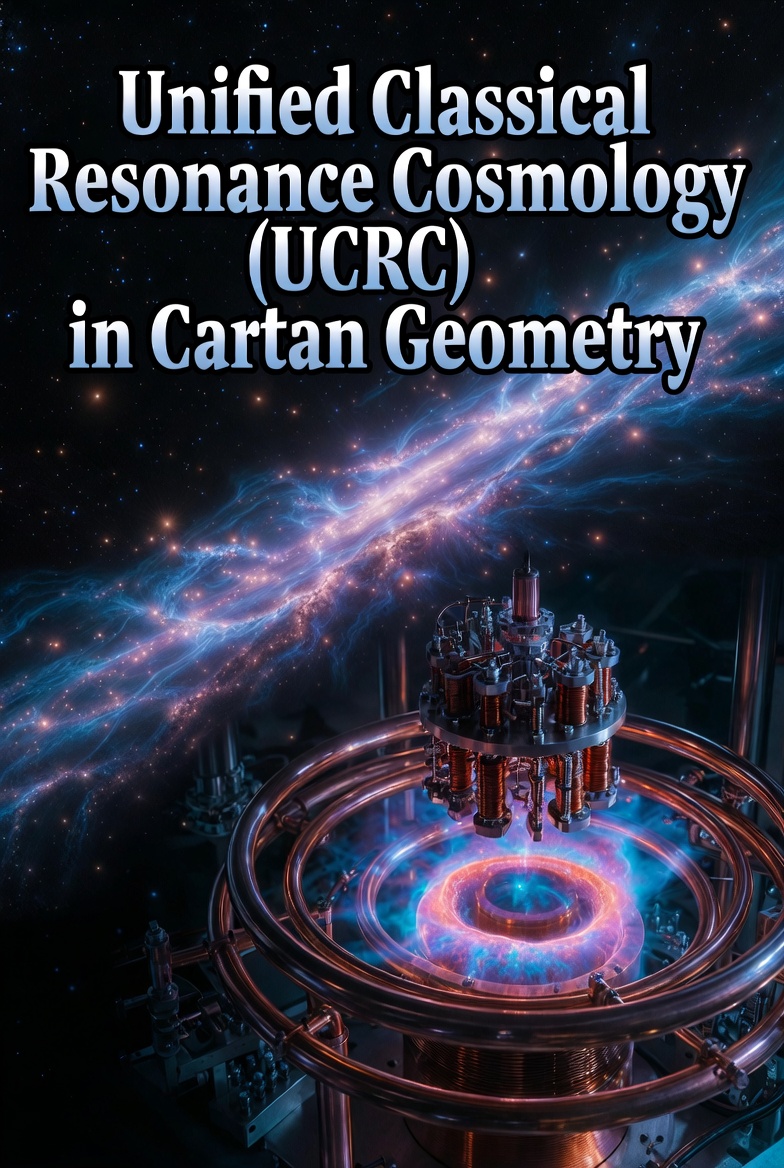
✨Unified Classical Resonance Cosmology in Cartan Geometry!
We present our perspective on two landmark May 2026 works by Christopher M. Wulf - @M34877M (President & CEO, Resonant Technologies Inc.) that rigorously formalize and extend the UCRC framework into full Cartan-geometric language. These build directly on the foundational UCRC scientific corpus developed by @Tobie_Venne and @TheBoz46 . They mark a pivotal maturation: from rich cross-pollinated synthesis and falsifiable predictions to precise, scale-invariant differential geometry ready for engineering validation and the Resonance Renaissance.
1. UCRC Theory and Framework (in plain but rigorous terms)
Unified Classical Resonance Cosmology (UCRC) is a fully classical, scale-invariant wave-mechanical framework. It invokes no quantum postulates, no dark-matter fields or particles, and no new physics beyond classical differential geometry in the Cartan tradition. It treats the universe as a resonant torsion-bearing aether across five nested physical domains, each assigned a Cartan geometry triple (principal bundle 𝒫_α, spin connection ω_α, torsion 2-form Tⁱ_α) satisfying the structure equations and both Bianchi identities. The domains are linked by scale-invariant bundle morphisms Φ_{αβ} with constants λ_{αβ} = ℓ_β / ℓ_α.
- Domain I (micro, ℓ ∼ 10⁻¹⁰–10⁻⁷ m): Impedance-matched coherent plasma vortices (SO(3) structure).
- Domain II (meso, ℓ ∼ 10⁻⁷–10⁻⁴ m): Resonant dusty-plasma swarms (RAST — resonant AgI swarm theory for anthropogenic plasmoids/UAP during geomagnetic activity).
- Domain III (macro, ℓ ∼ 10⁻⁴–1 m): Dual-vortex vacuum-polarisation architectures (Coherent Impulse Resonance Engine (CIRE) — the primary engineering domain for propulsion and anomalous energy extraction).
- Domain IV (giga): Galactic-halo MHD structures.
- Domain V (cosmic): Alfvén–Klein filamentary lattice (e.g., the observed ~15 Mpc MeerKAT filament at z=0.032 with coherent 110 ± 10 km s⁻¹ bulk rotation and galaxy spin-alignment ⟨|cosψ|⟩ = 0.64 ± 0.05).
Core mechanisms include==>
- Torsion Tⁱ = dθⁱ ωⁱⱼ ∧ θʲ as an independent dynamical geometric quantity (not forced to zero as in Riemannian geometry).
- Kuramoto synchronisation rigorously reinterpreted as holonomy reduction on the bundle (order parameter r_∞ = √(1 - K_c/K) ≈ 0.77 in the noise-free limit; Anderson disorder correction σ/Γ ≈ 2.1 yields the observed MeerKAT alignment).
- Hollow-channel waveguide torsion term Tⁱ_{(V)HC} at filament boundaries explaining bulk rotation classically.
- 4-Force Screw equilibrium, vot/p-vot toroidal flow decomposition, and filament supercooling/superheating as universal metastability operator.
- Participatory operator layer (Bio-ELF sixth/seventh oscillator): pineal calcite piezoelectric transduction K6O (Kuramoto Sixth Oracle) lattice as the central meta-Kuramoto node for qualia/consciousness emergence and vacuum dispersion modulation.
- Znidarsic Z-theory integration: transitional velocity vₜ ≈ 1.094 × 10⁶ m/s (speed of longitudinal sound in the nucleus equaling effective speed of light in the electronic structure at impedance-matched transition) provides the classical bridge for photon emission, atomic stability, and cold-fusion/low-energy nuclear phenomena — now geometrised in the bundle.
- Cross-pollination archive spanning Tesla scalar-longitudinal waves, Russell rhythmic balanced interchange, Kozyrev mirrors/ISRICA, Shoulders EVOs, Podkletnov gravity anomalies, Gunkelman qEEG healer signatures, ancient resonant analogs (Giza as macro-CIRE), and more.
All quantitative predictions are tied to 19 explicit falsifiability protocols (P-2 through P-19) specifying instrument, observable, statistical threshold, null hypothesis, and rejection consequence. The framework resolves galactic rotation/spin anomalies to <1% deviation without dark-matter torque, unifies micro-to-cosmic resonance, and opens engineered net-ZPE-gain propulsion and consciousness transduction.
Geometry = Mathematics = Truth.
2. The Papers by Christopher M. Wulf
A. Unified Classical Resonance Cosmology in Cartan Geometry (textbook, v2.8, 177 pages, 28 May 2026)
This is the authoritative Cartan-geometric formulation of UCRC v2.6. Authored by Wulf it rests entirely on the Venne & Boswell UCRC corpus. Every definition, proposition, equation, and proof is classical differential geometry — no external frameworks (ECE, UFT, Evans) are incorporated beyond the cited correction to the cyclic second Bianchi identity.
✨It delivers:
• Full principal-bundle foundations, reductive decomposition (G_pl = ISO(1,3) ⋉ U(1)), coframe θ^i, spin connection ω^i_j, and torsion T^i.
• Exact structure equations and both Bianchi identities (with the correct cyclic antisymmetrised form for T^a ≠ 0).
• Domain-to-bundle mapping for all five nested domains with explicit scale-invariant morphisms.
• Rigorous bundle-theoretic treatment of Kuramoto as holonomy reduction (order parameter, nucleation barrier Γ, supercooling window, Anderson delocalisation, Duffing/Floquet extensions).
• Hollow-channel torsion term resolving MeerKAT anomalies classically.
• Complete unified mathematical backbone (Chapter 7): six-term master connection evolution equation, stationary 4-Force Screw, vot/p-vot rectification (Williamson sector), White quadratic temporal dispersion & emergent quantisation, and fully verified Monte-Carlo Bianchi residual checker.
• Chapter 8 candidate Cartan framework for four classes of anomalous laboratory generators (ReGenX, BiTT, MEIM, ZERG) — every proposition is a theoretical prediction requiring independent experimental confirmation via Protocol P-16.
• Appendix C: explicit dictionary mapping Znidarsic’s classical transitional-velocity derivations (photon energy from transitional capacitance/geometry, hydrogen-like radii, fine-structure constant α = 2v_t/c) into UCRC geometry.
This textbook transforms UCRC into a mathematically closed, pedagogical, and engineering-ready theory while preserving every phenomenological insight and falsifiability commitment of the original corpus.
B. Chapter 9: Plasma Media, Flowing Cold Plasmas, and Engineered Plasma Geometries in the Cartan Aether (UCRC-CG v2.7, 29 pages, 26 May 2026)
This targeted extension applies the Cartan framework to Domain III laboratory-scale engineering — the practical heart of propulsion, ZPE rectification, and anomalous energy extraction.
✨Key advances:
- Plasma Cartan triple (Definition 9.1): (P_pl, ω_ij, T^i) over compact M_pl ⊂ M_III with structure group ISO(1,3) ⋉ U(1). The coframe θ^i solders tangent space to Minkowski model; torsion T^i ≠ 0 is the geometric fingerprint of plasma vorticity departing from vacuum geometry.
- Plasma torsion current J^i_tor ≡ ι_{e_i} F^{(III)} ∧ θ^0
(from the U(1) component of the dynamic vacuum connection) sources the first Bianchi identity:
D ∧ T^i = R^i_j ∧ θ^j J^i_tor .
This is the Cartan-geometric analogue of the Ampère–Maxwell law with curvature as matter current.
- Correction to the cyclic second Bianchi identity (eq. 9.12)
Following Evans & Eckardt AIAS Paper 88 direct feedback from Horst Eckardt (26 May 2026):
∇{[μ} R^a{bνρ]} = R^a_{c[μν} T^c_{ρ]b} (T^a ≠ 0)
The right-hand side vanishes only in the Riemannian / T → 0 limit.
Contracting with the coframe yields the Aether Pressure Equation:
∇_μ P_aether = (c⁴ / 8πG) (Φ⁽⁰⁾)² κ
— quadratic coupling to the torsion potential
(Cartan Scaling Law: electromagnetic coupling linear in connection; gravitational/aether-pressure coupling quadratic in torsion potential)
- Plasma momentum equation in the Cartan frame includes geometric torsion body force
f_tor = (c⁴ / 8πG) ‖Tⁱ‖{L₂} ∇ ‖θⁱ‖{L₂}
driving net flow toward regions of increasing torsion density (supplementing or opposing Lorentz force).
- Torsion susceptibility classification (Proposition 9.6 & Tables 9.1–9.3):
χ_tor = ‖Tⁱ_pl‖{L₂} / ‖⋆ ι{eᵢ} F^{(III)}‖_{L₂} = 1 χ_m O(χ_m²)
Paramagnetic species (χ_m > 0) are torsion amplifiers (χ_tor > 1); diamagnetic are suppressors.
Magnetised oxygen (paramagnetic, two unpaired electrons) is preferred: χ_tor ≈ 1.23
High electronegativity stabilises EDL/curvature jump simple buildability (permanent magnet on atmospheric air).
NOx (especially NO) dominant seeders; H₂ = torsion suppressor fuel; Ga-vapour clusters give maximum κ^{(mix)}_tor = 2.34 (high-risk, high-reward).
Practical mixtures tabulated for HERO/Meyer EPG roadmap with effective coupling Γ̄ = ∑ x_s Γ_s^{(i)}.
✨Applications to engineered geometries:
- HERO/Meyer EPG (Meyer patent CA 1213671A1 inspired, UCRC-CG v5 design)
Concentric rings as Cartan torsion waveguides.
Outer spiral copper three inner opposite-helicity copper rings generate Beltrami plasma (∇ × v = λ v) WITHOUT external helical magnets.
Translates to: ⋆(ωⁱⱼ ∧ θʲ) = λ θⁱ
Self-consistency: D ∧ Tⁱ = λ Tⁱ ∧ θ⁰
DC coils magnetise O₂ flow; signal coils drive GIG parametric resonance.
Opposite helicity yields net torsion or EDL concentration (BiTT holonomy-pairing) for efficient extraction.
Proposition 9.11: Beltrami geometry maximises ‖Tⁱ‖_L² for fixed kinetic energy (isoperimetric inequality on spin-connection bundle).
- CIRE dual-vortex (Tobie Venne & Brett Boswell UCRC core): Coaxial counter-rotating plasma columns. Net torsion ‖Tⁱ_{(III)}‖_{L²} ∝ |ω₊ − ω₋|; Electric double layer (EDL) Σ as singular curvature concentrator ([ωⁱⱼ]_Σ) converting aether pressure into electromotive force via cyclic Bianchi.
- Beltrami stability (Proposition 9.13): torsion linearly stabilises against all ideal MHD modes (kink, tearing) When ‖Tⁱ‖_{L²} exceeds [threshold] derived from linearised cyclic Bianchi dispersion relation.
- Kron tensor network: five-domain system fully controllable (Kalman rank 5) via bundle Morphisms — adjust K, A_GIG, κ_op.
- Unified anomalous energy extraction (master equation 9.56): P_extract = -α A⁽⁰⁾ ∂_t φ_SLW ∫_{∂Σ} (θ^i ∧ T^i_{(V)HC}) · n dA.
Contributions table: ReGenX ~40% hollow-channel torsion, BiTT ~30% SLW/holonomy protection, etc. Looperator (90° magnetic-field rotation module) doubles extracted power by aligning both poloidal and toroidal hollow-channel components (Proposition 9.16). Efficiency upper bound from aether pressure: example ~210 kW for representative O₂ Domain III parameters (practical systems 20–30% of bound).
- IEEE 18-paper plasma engineering roadmap (Table 9.5): tiered publication strategy on mixtures (O₂ reference, Ar/O₂, He/O₂, air, H₂O-seeded, Ga-seeded), devices (HERO v5, CIRE, Looperator), controllability, and protocols. Strategic RTI implications: entry-level (He/O₂ easy/educational), mid-range (Ar/N₂/air low-cost residential), high-performance (O₂/H₂O-seeded industrial), ultra-high (Ga specialist). AetherForge™ platform accepts any mixture via modular gas injection.
- Falsifiability protocols specific to Chapter 9: P-17 (Beltrami stabilisation: δB/B reduction >30% or confinement time improvement at 3σ), P-18 (mixture coupling strength verification via torsion balance), P-19 (Looperator 90° ±5° rotation at 3σ). All geometric statements are exact consequences of Cartan structure equations and Bianchi identities (Chapter 1). Mixture identifications with κ_tor are falsifiable conjectures. Independent blinded replication invited and required. All commercial/IP claims strictly contingent on Protocol P-16 confirmation.
3. Integration, Insights & Implications for Physics, UCRC Framework, and the Institute
These two papers provide the missing rigorous mathematical skeleton for the entire UCRC edifice while preserving — and quantitatively sharpening — every phenomenological, cross-pollinated, and engineering insight of the Venne/Boswell corpus.
🌀Integration: The textbook supplies the bundle-theoretic language, exact identities (including the corrected cyclic second Bianchi), holonomy interpretation of Kuramoto, hollow-channel term, 4-Force Screw, Monte-Carlo validation machinery, and Znidarsic dictionary. Chapter 9 specialises this machinery to Domain III plasmas as experimentally accessible torsion media. Cold flowing magnetised oxygen (and tunable mixtures) realises Tᵃ ≠ 0 at room temperature; vorticity sources torsion; EM couples via Jⁱ_tor; aether pressure emerges quadratically; Beltrami and dual-vortex geometries maximise and concentrate extractable torsion flux at EDLs or hollow channels. The original UCRC vision (CIRE dual-vortex, HERO/Meyer rings, GIG parametric drive, participatory Bio-ELF/K6O, scale-invariant resonance across domains) is now expressed in propositions, worked examples (toroidal Beltrami channel, CIRE parameters), and specific device blueprints with patent-pending elements.
✨Insights for Physics:
- Revives and operationalises Einstein–Cartan torsion classically at laboratory scales (Domain III plasmas) rather than only Planck/microscopic regimes. Standard MHD is recovered exactly as the Tⁱ → 0 limit; new geometric effects (torsion body force, aether-pressure gradient, Beltrami stabilisation beyond MHD, curvature-torsion coupling in cyclic Bianchi) appear at finite torsion.
- Provides a purely classical, geometric resolution of galactic dynamics anomalies (MeerKAT) without dark matter — Kuramoto holonomy reduction hollow-channel torsion suffices.
- Cartan Scaling Law offers a fundamental reason why certain anomalous/ZPE effects appear quadratic in torsion potential while EM remains linear.
- Impedance-matching picture (Znidarsic) is geometrised: micro-domain transitional velocity aligns with bundle holonomy and EDL curvature jumps.
- Predicts testable new plasma phenomena (torsion susceptibility tables, mixture-dependent (κ_tor), torsion-stabilised Beltrami flows, Looperator power doubling) that standard models do not contain.
🌀Implications for the UCRC Framework: It is no longer “visionary synthesis” — it is now a closed, pedagogical, falsifiable geometric theory with explicit engineering blueprints. Every claim remains tethered to protocols; the framework gains quantitative design power (mixture optimisation, Beltrami maximisation, EDL extraction, Kron controllability, Looperator doubling) while retaining scale-invariance and participatory operator layer. Cross-pollinations (Znidarsic, Russell, Tesla, historical resonance archive) are strengthened by geometric reinterpretation. The 5-domain ontology is now bundle-exact. This accelerates validation pathways (Experimental Phase-1 dusty-plasma, Uinta Basin, lab HERO/CIRE prototypes) and Monte-Carlo/digital-twin refinement.
Implications for the Institute for UCRC: These works by Christopher Wulf / Resonant Technologies Inc. advance our core mission — the Participatory Resonance Renaissance — from foundational corpus to publishable textbook targeted plasma-engineering chapter. They position the Institute as the rigorous classical-geometric vanguard. Immediate opportunities: collaborative Protocol P-16/17/18/19 execution, IEEE roadmap contributions, prototype development (AetherForge tiered mixtures, HERO v5, CIRE hybrids, Looperator modules), and open invitation to independent researchers/labs for blinded replication. All performance and commercial claims remain strictly contingent on experimental confirmation — we insist on this standard. The Institute welcomes inquiries on protocols, data, collaboration, or refinement of mixtures and geometries.
In summary: Wulf’s two papers hand the resonance community the precise mathematical score and the practical plasma instruments. The aether is torsion-bearing and resonant; cold magnetised oxygen (and engineered mixtures) lets us couple to it controllably; Beltrami, dual-vortex, and hollow-channel geometries let us extract work from aether pressure gradients and curvature jumps; Kuramoto holonomy and scale-invariant bundles unify micro to cosmic; everything is classical, falsifiable, and invitationally open.
The universe sings in geometric resonance. These works give us the score, the tuning forks, and the falsifiable experiments. Read them. Run the protocols. Build. Verify. Replicate. Resonate.
🌀Geometry = Mathematics = Truth🌀
@BlokeMan00 @AKlokus @GarryPNolan
4
2
10
395

The earlier delivery expertise enters a project, the greater the certainty around cost, programme and buildability.
#CommercialBuildings #EarlyEngagement #Buildability #ModularConstruction #BusinessGrowth

1
2


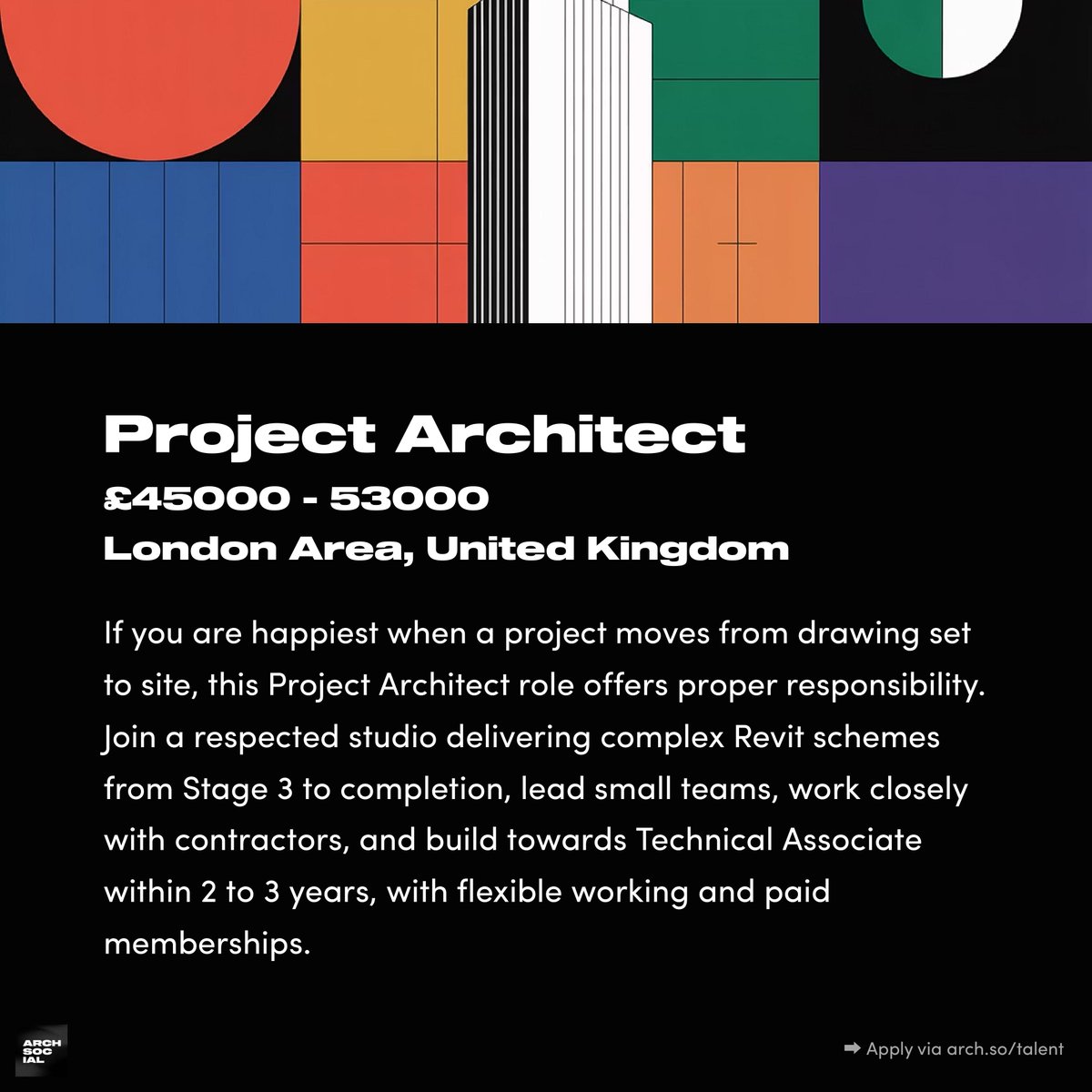
Too many Project Architects spend years stuck in coordination mode without ever being trusted to lead the live job. If your strongest work starts at Stage 3 and you want proper ownership during construction, this role is worth a serious look.
An established practice is hiring a Project Architect to deliver technically demanding schemes through to completion, leading small teams, working closely with contractors and consultants, and taking responsibility on site. Revit is central, and they need someone who understands buildability, detailing, programme pressure, RFIs and change control without needing constant oversight. It sits in a growing construction focused team, with flexible working, private healthcare, paid memberships, and a clear path into a Technical Associate role over the next 2 to 3 years.
Check the first comment for the application link, or send me a direct message.
Apply here: arch.so/4t2qYIR
#ArchitectureSocial #ProjectArchitect #Revit #ArchitectureJobs #UKArchitecture
ALT Project Architect Job Vacancy
18

Jun 11
The other potential win is location.
Its not always easy to build compute/storage power where you need it.
The most population-dense areas have highest demand and lowest datacenter buildability.
But you can orbit something pretty much anywhere.
5

Jun 11
Figured it had to be infrastructure. I don’t know the campus situation in terms of buildability, but a new stadium would probably be more cost efficient.
2
1
266

May 27
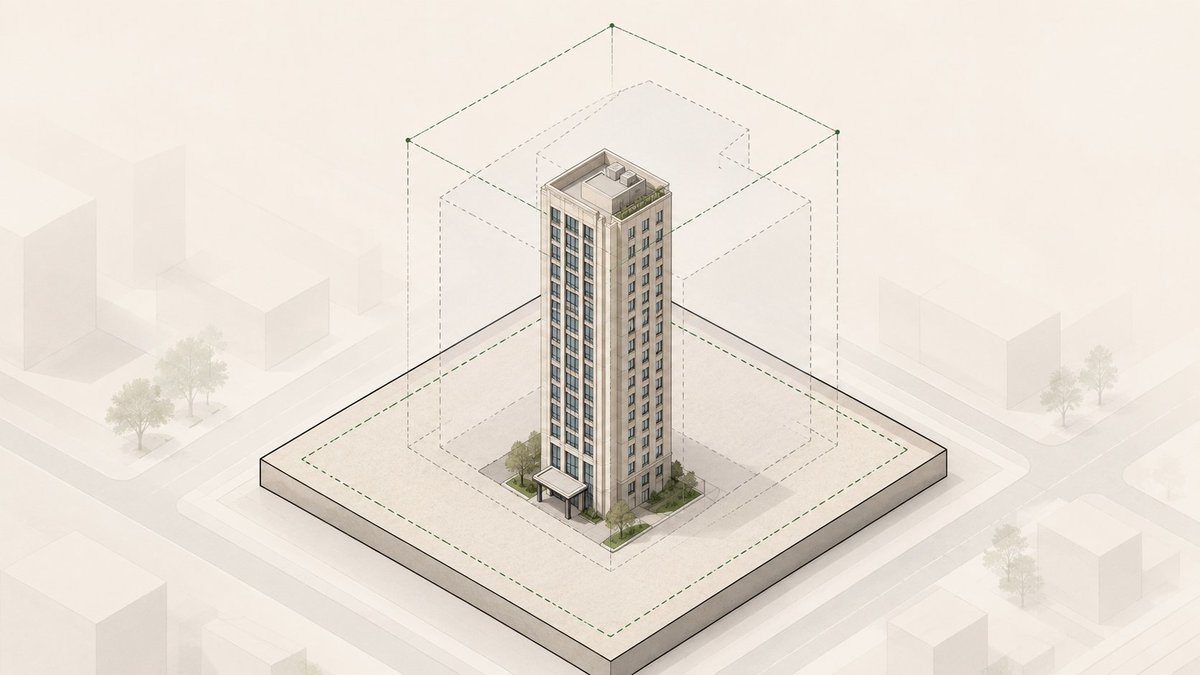
Our researchers, Sargun Kaur and Bhuvana Anand, evaluate building reform through the lens of buildability: the ability to turn a plot of land into usable, cost-effective space.
Link to the blog: prosperiti.substack.com/p/lo…
#buildingregulations #deregulation #landuse #FAR #hotels
2
5
316

May 27
So what's the structural functionality of the additional parts other than adding to the overall maintenance cost and more challenges to the buildability of the entire project.
An intelligent building is more than its aesthetic values... functionality is key!
4
116

May 25
Milk Touch’s liquid foundation does stand out for its coverage and improved wear time, especially compared to more traditional formulations. It tends to focus on a smoother finish and better buildability, which can feel like an upgrade depending on skin type and application preference. However, Shiseido foundations generally emphasize skin-like texture and long-term complexion refinement, so the “better” option really depends on what you prioritize.
1,338


May 21
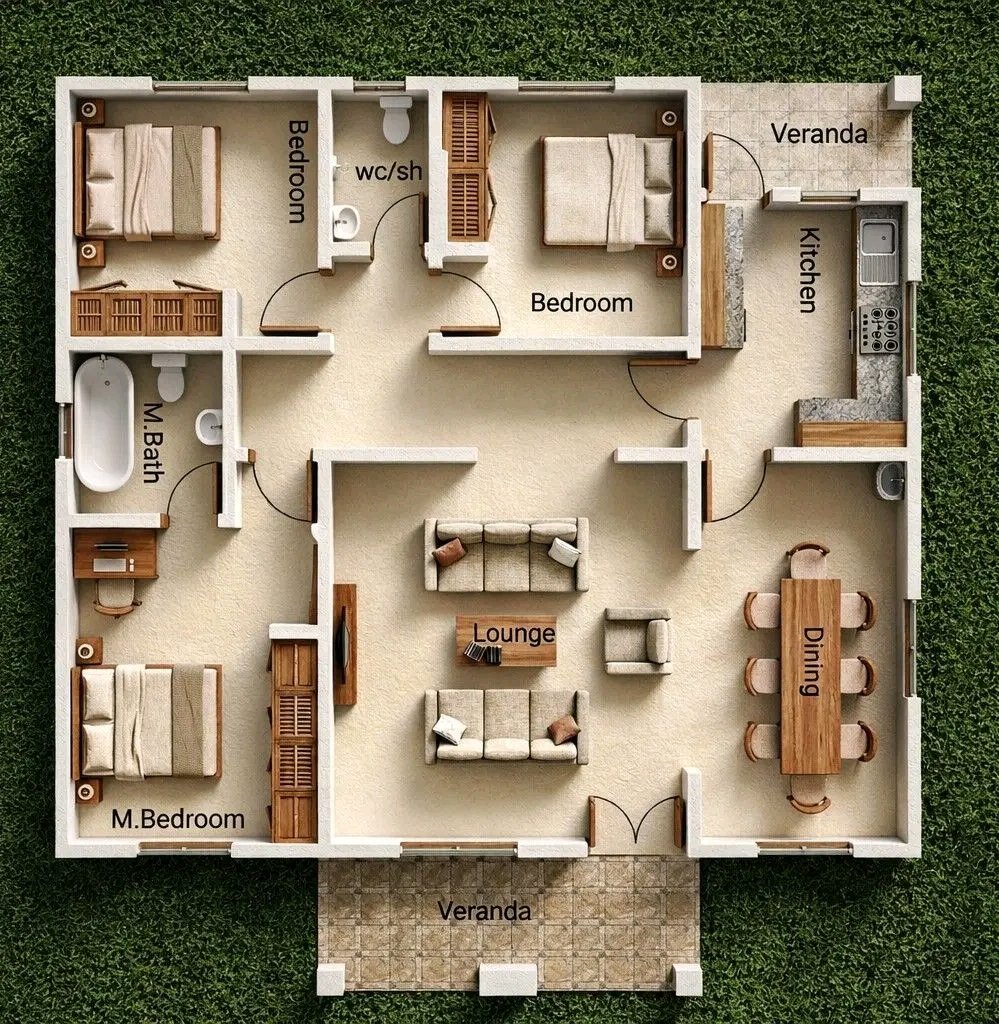
As a civil engineer reviewing a client’s floor plan, your job is to protect **safety, functionality, buildability, compliance, and cost efficiency**. These are the major things you should carefully check — and the things you should never compromise on:
### 1. Structural Safety (Never compromise)
* Column positions and spacing
* Beam layout alignment
* Load paths (roof → beams → columns → foundation)
* Span lengths that may cause excessive deflection
* Wall positions over beams/foundations
* Foundation suitability for soil conditions
* Structural symmetry to reduce torsion issues
If the architectural layout conflicts with structural stability, redesign it before approval.
---
### 2. Building Codes & Regulations
* Local authority setbacks
* Minimum room sizes
* Ventilation and lighting requirements
* Stair dimensions and headroom
* Fire escape routes
* Accessibility requirements (if applicable)
A beautiful plan that violates code can become legally unusable.
---
### 3. Functionality of Spaces
Check whether movement inside the house/building makes sense:
* Logical circulation flow
* Privacy between rooms
* Proper furniture space
* Door swing conflicts
* Corridor widths
* Kitchen-to-dining relationship
* Toilet placement
Clients often focus on appearance more than usability.
---
### 4. Drainage & Plumbing Layout
* Toilet stacking for multi-storey buildings
* Slope direction for waste lines
* Easy access to plumbing maintenance
* Stormwater drainage around building
* Septic tank or sewer connection feasibility
Poor drainage becomes a lifelong problem.
---
### 5. Ventilation & Natural Lighting
* Window placement
* Cross ventilation
* Heat gain from sun direction
* Dark internal rooms
* Moisture-prone areas
Good ventilation improves comfort and durability.
---
### 6. Cost Efficiency
* Overly complicated shapes increase cost
* Excessive spans increase steel/concrete use
* Unnecessary corners and offsets
* Efficient structural grid
Help the client avoid expensive designs that add little value.
---
### 7. Future Expansion Possibility
* Can another floor be added later?
* Space for extensions
* Foundation capacity for future loads
Very important in many residential projects.
---
### 8. Site Conditions
Always compare the plan to the actual site:
* Orientation
* Slope/topography
* Access roads
* Flood risk
* Soil condition
* Wind direction
A good plan on paper can fail on a bad site layout.
---
## Things You Should NEVER Compromise On
* Structural integrity
* Safety standards
* Proper reinforcement detailing
* Foundation adequacy
* Drainage quality
* Code compliance
* Material specifications
* Accurate dimensions
Never approve something unsafe just because the client wants it cheaper or faster.
A strong engineer protects the client even when the client doesn’t understand the risk yet.
5
19
442

May 16
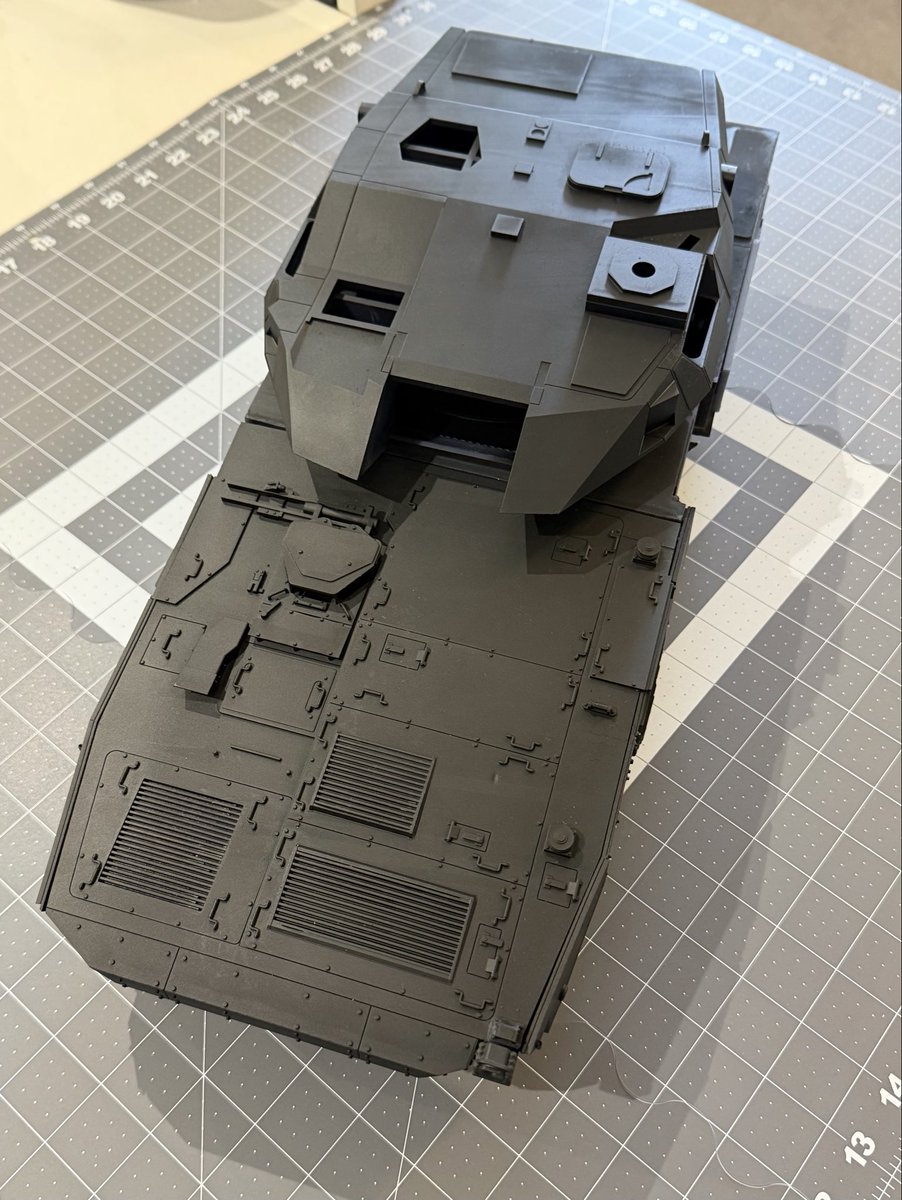
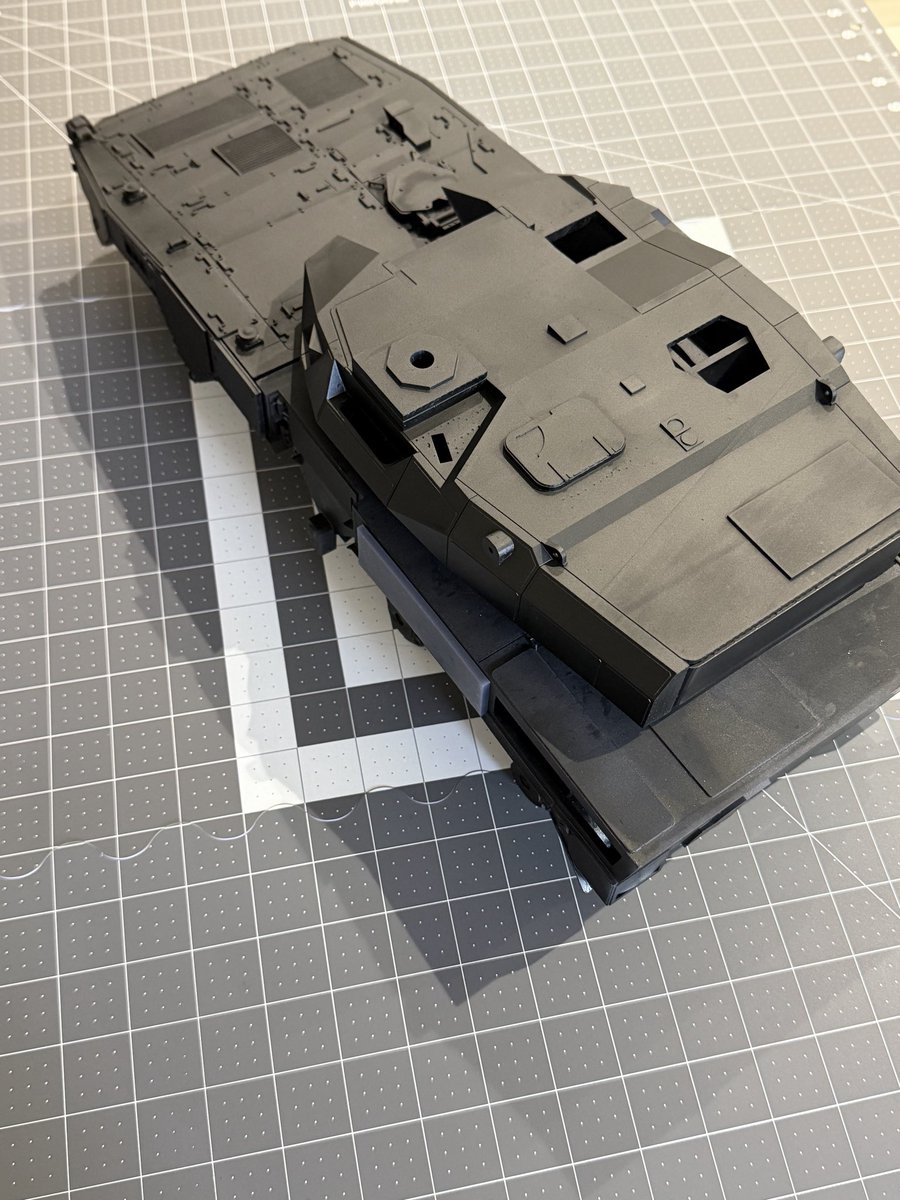
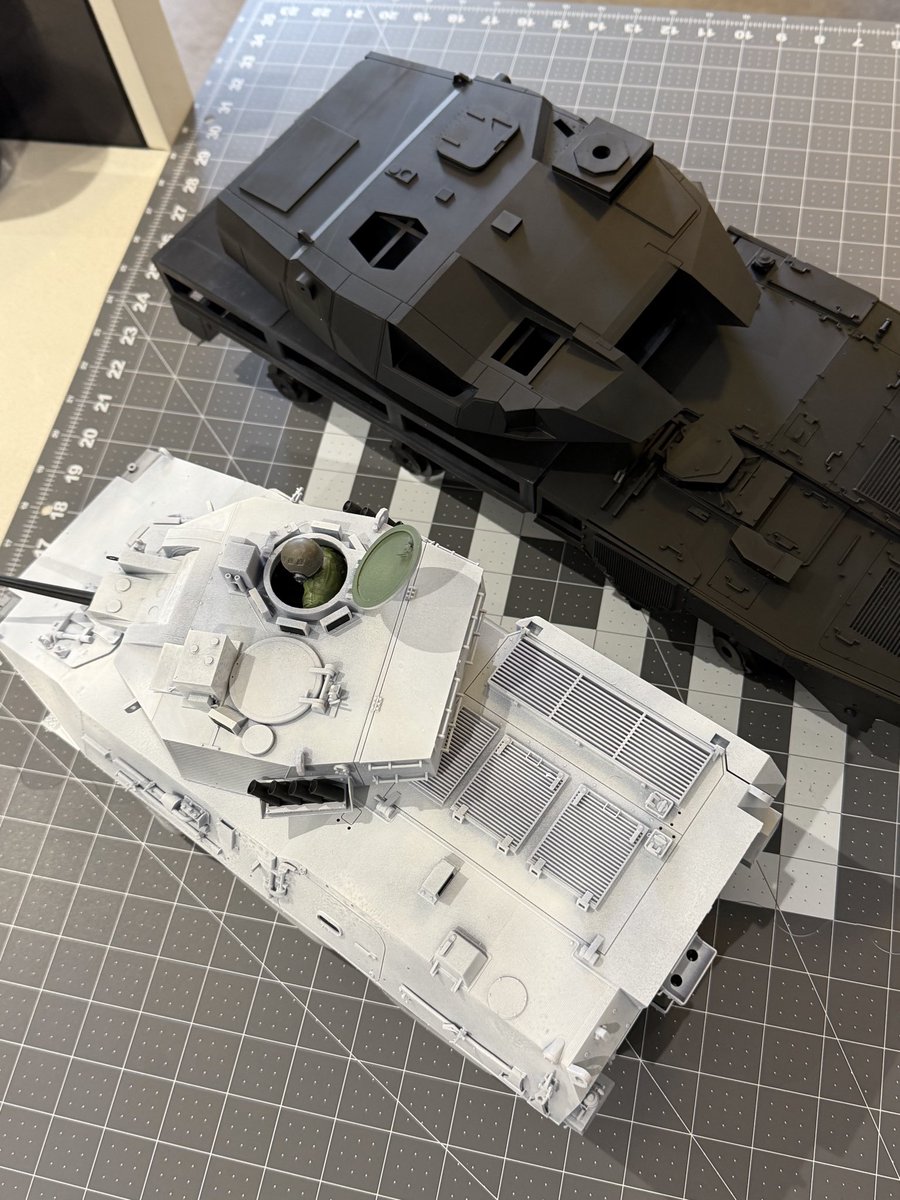
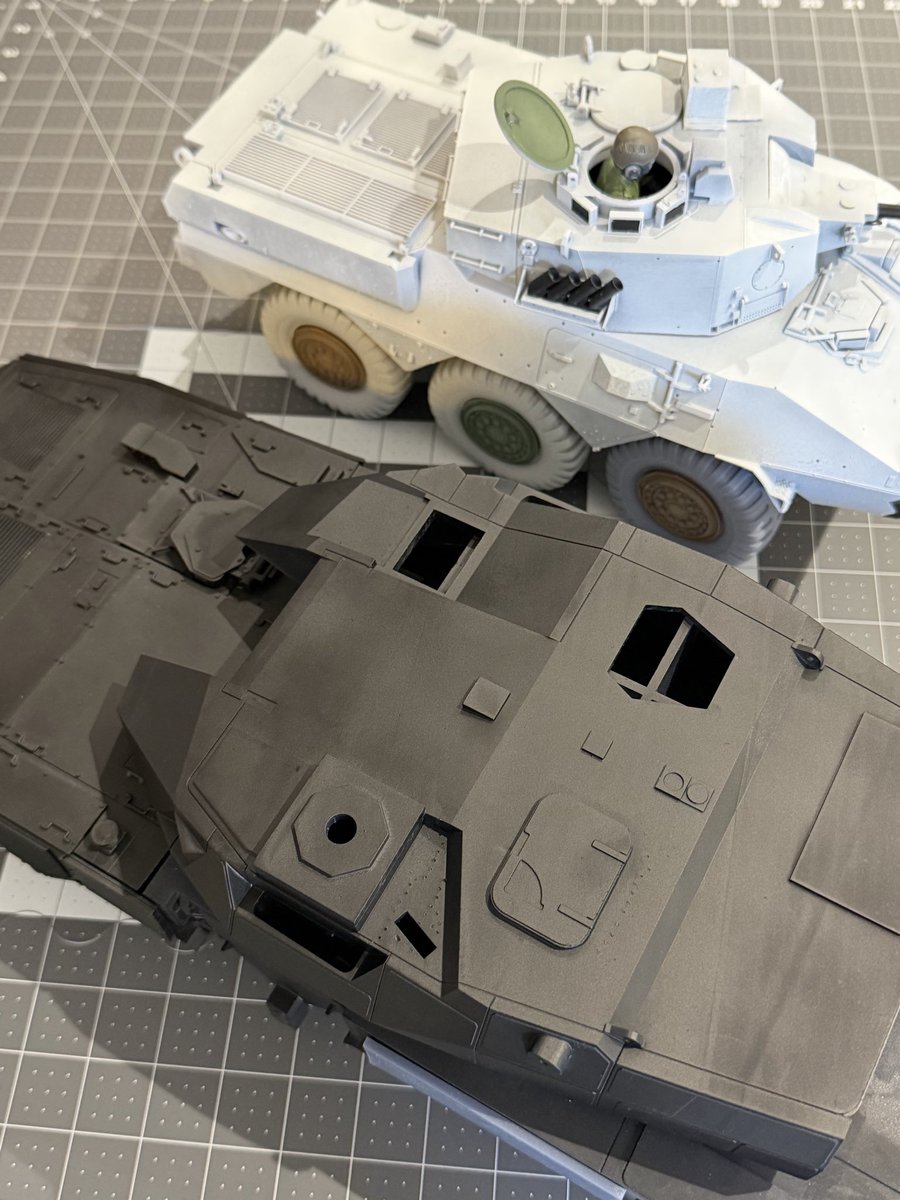
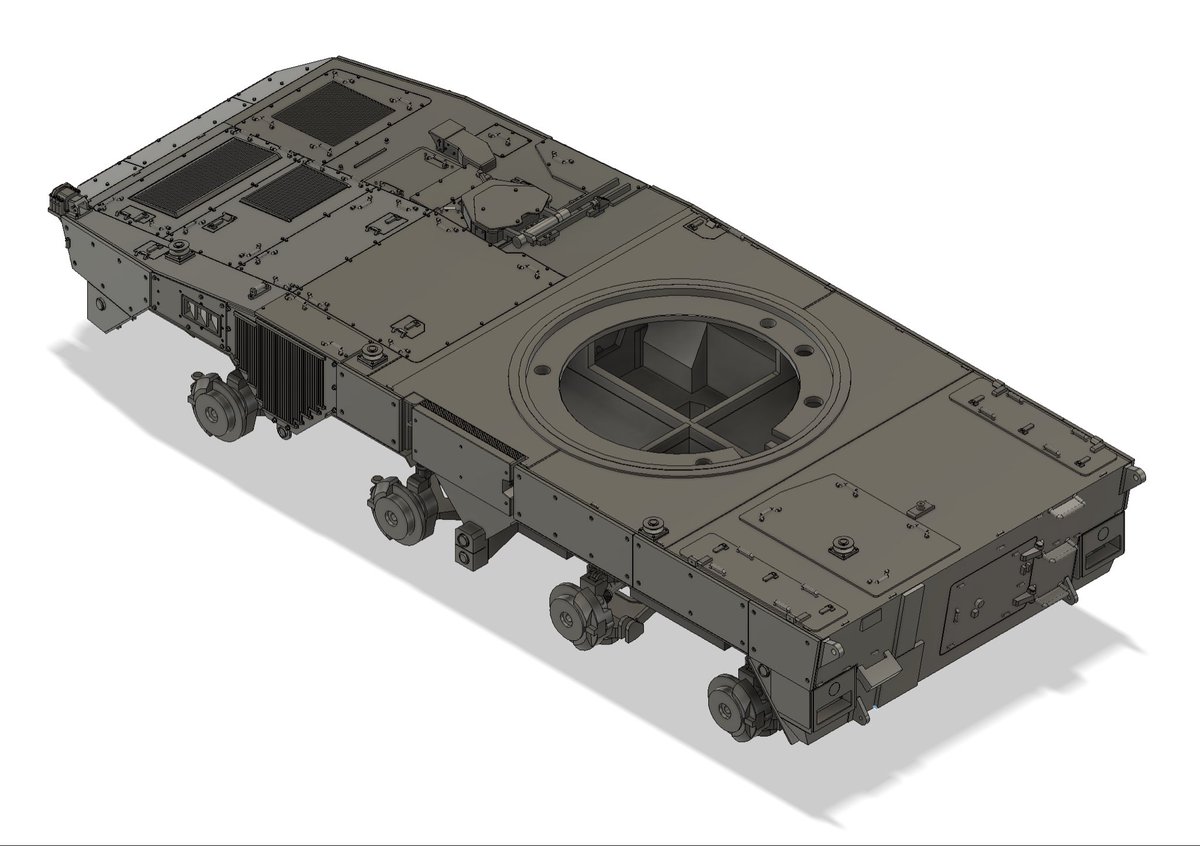
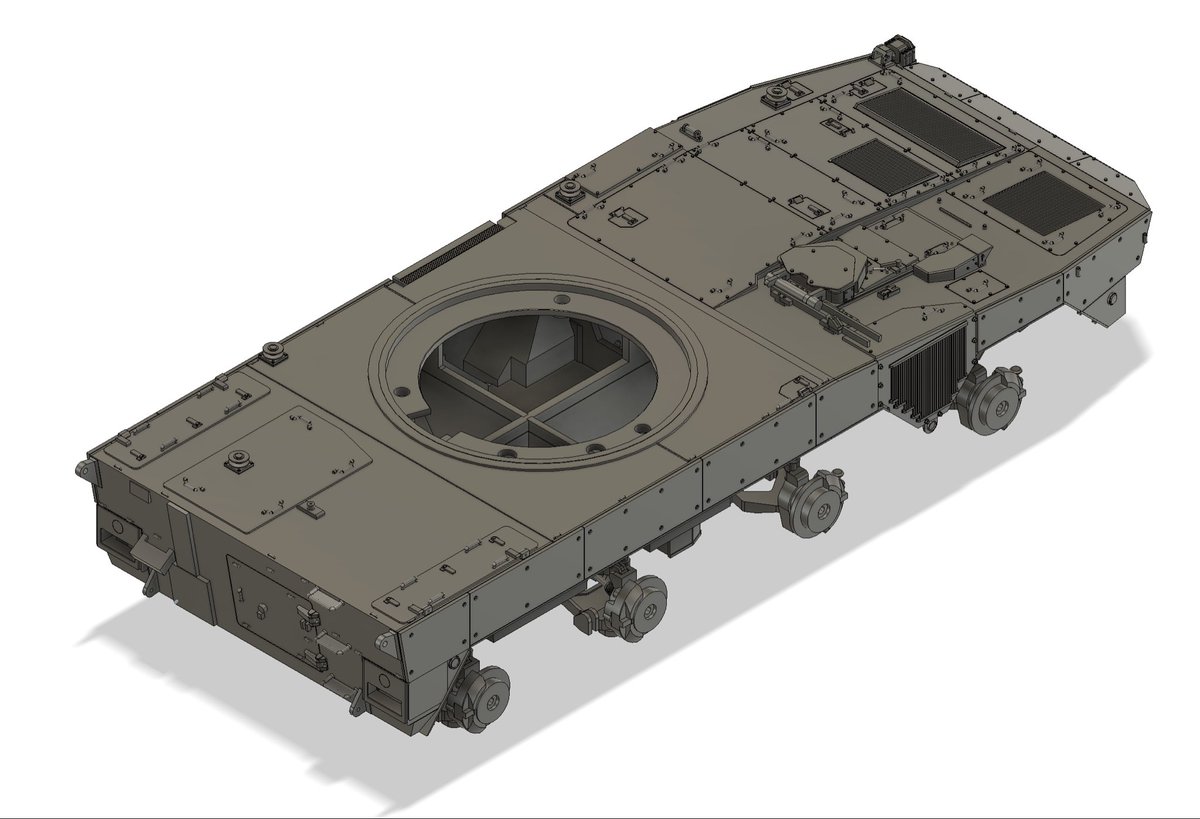
16式機動戦闘車. Full scale test prints are a bit of an indulgence, but they are helpful for testing buildability & maintaining project momentum. 1/16 87RCV for comparison.
May 15

16式機動戦闘車. At this stage of the process, visible progress starts to shrink relative to each period of time expended. Back end of the hull is getting closer to being done.
1
19
2,088

Speed alone is not the advantage.
The real edge is combining speed, creativity, technical understanding, and client communication.
AI may help someone produce 100 renders a day, but clients still pay heavily for accuracy, buildability, functionality, and problem-solving.
The future belongs to professionals who know how to use technology efficiently not those competing against it.
3
232

May 7
The open-source movement is more powerful than you think.
It offers:
→ Transparency
→ Testability
→ Comparability
→ Buildability
This isn’t just theory; it’s a system you can genuinely assess. Let’s explore its real impact!
1
3
104

ARC Network
1: Most current Web3 applications don't fail because of the idea.
They fail because building the data and infrastructure is too difficult.
That's where @arc Network comes in.
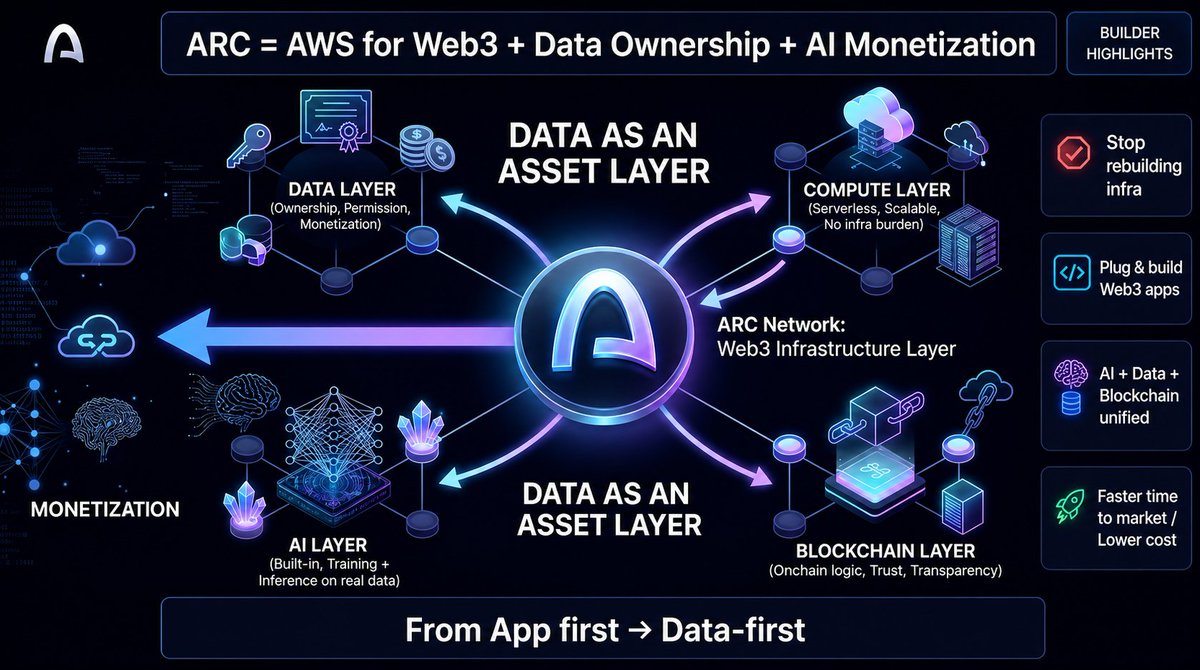
2: ARC is an infrastructure layer for Web3 that helps:
Connect data compute AI blockchain
Transform data into monetizable assets
Allow developers to build apps without worrying about complex backends
“AWS for Web3 but integrates data ownership AI monetization capabilities”
It's not just infrastructure.
It's a data economy layer.
3: Current Problems
Data is fragmented, AI is different from Blockchain (still isolated)
Developers have to rebuild infrastructure from scratch
Users generate data but earn nothing, resulting in very low efficiency
4: ARC addresses this by unifying:
Data Layer
Computational Layer
Integrating AI monetization channels all in one system.
5: For developers, this means
You no longer have to start from zero.
You get ready to use data paths
Scale computing power
Infrastructure ready for AI with less backend and more buildability.
6: The Key Point: Data Becomes an Asset
On ARC:
- Data can be owned
- Shared with permission
- Monetized
7: The Compute Layer = Underrated Alpha
Instead of managing servers, scaling infrastructure
You simply run tasks on ARC, Web3 combined with serverless computing
8: AI on ARC is not an add on.
It's built in. Training on real data, running inferences directly, combined with on-chain logic
This unlocks truly important decentralized AI applications
9: What can you build?
AI agents (trading/analysis), Data exchanges, DePIN data networks, Games/social networks with data ownership
Anything based on data
10: The real shift
From Build the app first, think about the data later
To Data is the product
11: Why ARC matters
Faster time to market, Lower infrastructure costs.
Built in monetization capabilities, AI ready by default
12: ARC is not just another dApp
It's the foundation layer that others will build upon
If you're building on AI, Data, Web3 infrastructure, you should pay attention.
ARC transforms data into a programmable and monetizable asset layer for Web3 AI.
Pioneering developers will win here, because whoever controls the data layer controls the entire ecosystem.
1
2
19

Apr 16
Evangelion Fantastic Series Asuka Shikinami Langley (Plugsuit) plastic model kit from Neon Genesis Evangelion.
Clean design with a nice balance of detail and buildability, this one looks great once finished.
Thinking of adding her to your Eva lineup?



1
1
8
1,233

Apr 15
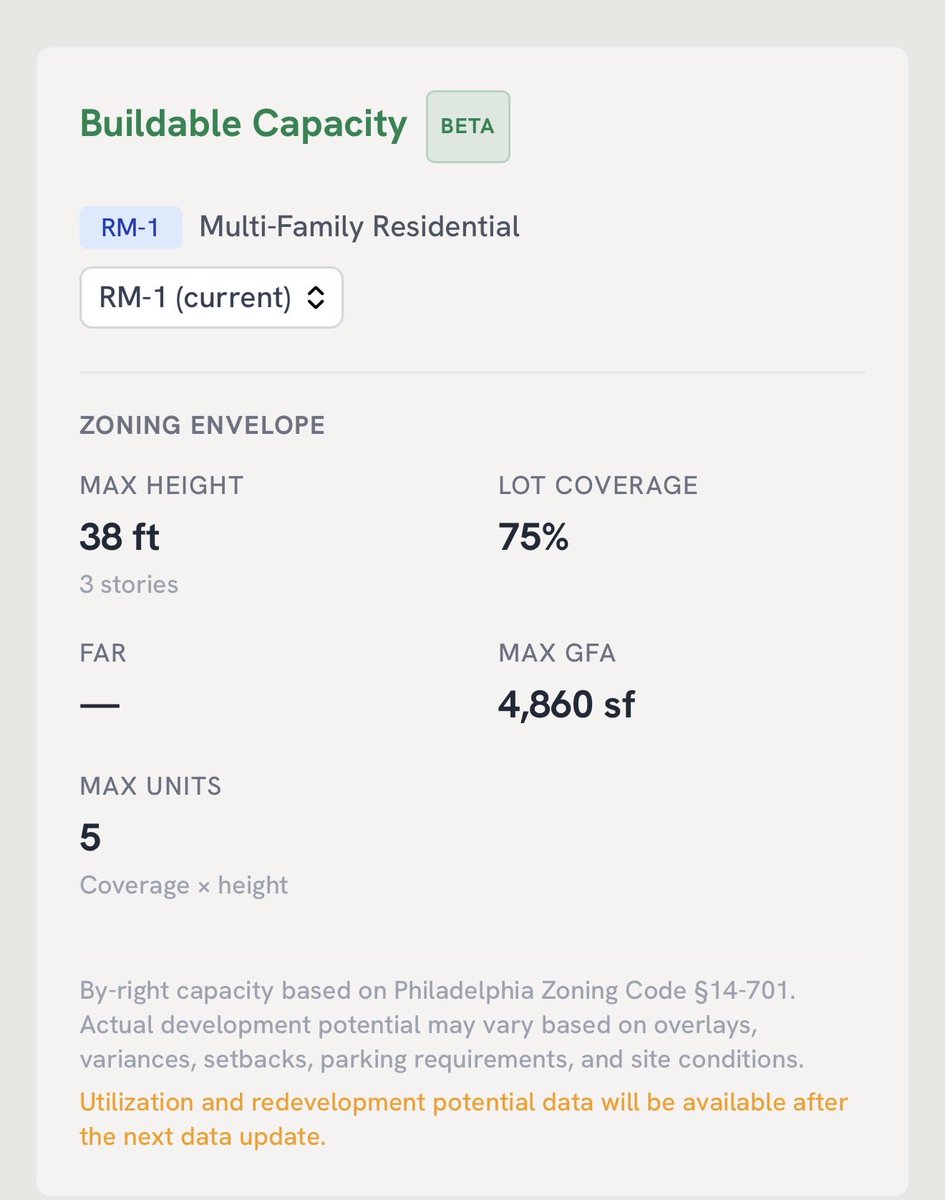
wanna look into this more with BPN’s rules engine and buildability calculator. It’s complicated in Philly bc of all the overlays but we’re close to solving that. Also have all the permit and variance data going back to 2007 and the timeline of zoning ordinance changes
1
3
234

Apr 15
@elonmusk @Tesla @xAI @SpaceX
Terafab needs thousands of acres >10GW power at full scale, with multiple locations still under consideration and the goal of 1 TW/year compute.
As an AE at Enverus focused on Data Center & Large Load Development, our platform instantly screens 156M parcels 13,000 transmission lines / 43,500 substations for power offtake capacity, grid constraints, buildability, and permitting risks.
We can deliver a preliminary multi-criteria site screen for your candidate regions in days, not months.
@EnverusEnergy
1
102

Apr 15
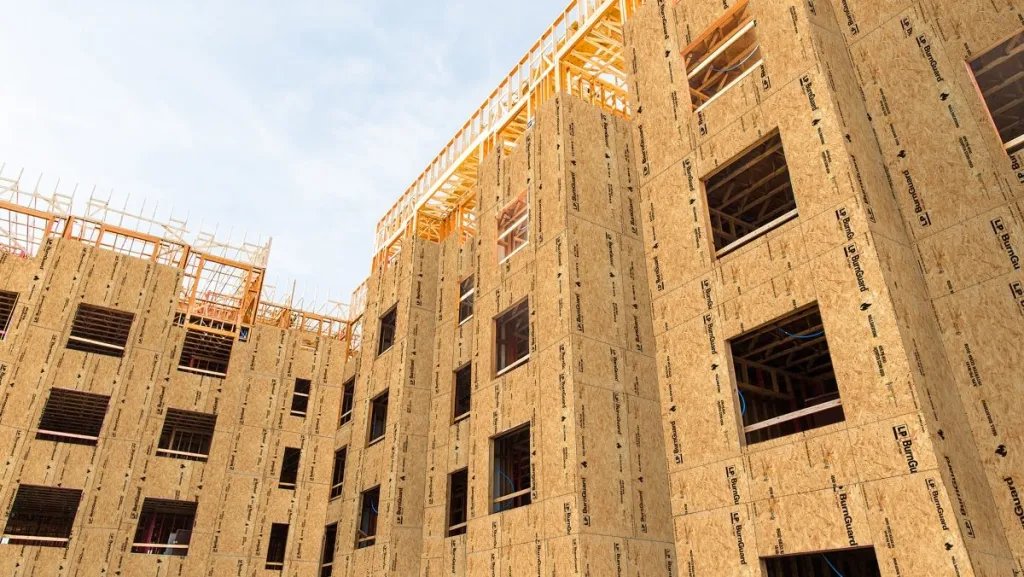
🔥📊 Fire‑rated construction is about more than code. Builders must balance safety, performance, and buildability as projects grow more complex.
👉 Read more: bit.ly/4cCtUpz
#FireSafety #BuildingPerformance #ZondaMediaIntel #Sponsored #LPBuildingSolutions
2
193

Apr 12
This is another process gone wrong. Before a detailed design and 3D are completed, structural engineers, MEP engineers, and QS should be involved for buildability and budget checks.
The problem is, how many professionals truly understand this process?
Some professionals even discourage clients from involving others. How low can we go?
Apr 12

Then again, some architects are mean, you will send an engineer drawing to work on and you have already done 3D modeling seating submission that’s where some issues are coming from.
Before running your 3D model make sure you have your structural drawing ready first
3
1
8
983