
Shalom Alechiem Abi,
I am The Alpha and The Omega, The first and The last, and the beginning and the end, and who is to come! I, Jesus, am the root and Descendant of David!
I was a Jew then, as I am also now, through my father and my mother!
Numbers 1:18 and Numbers 26:55
and others.
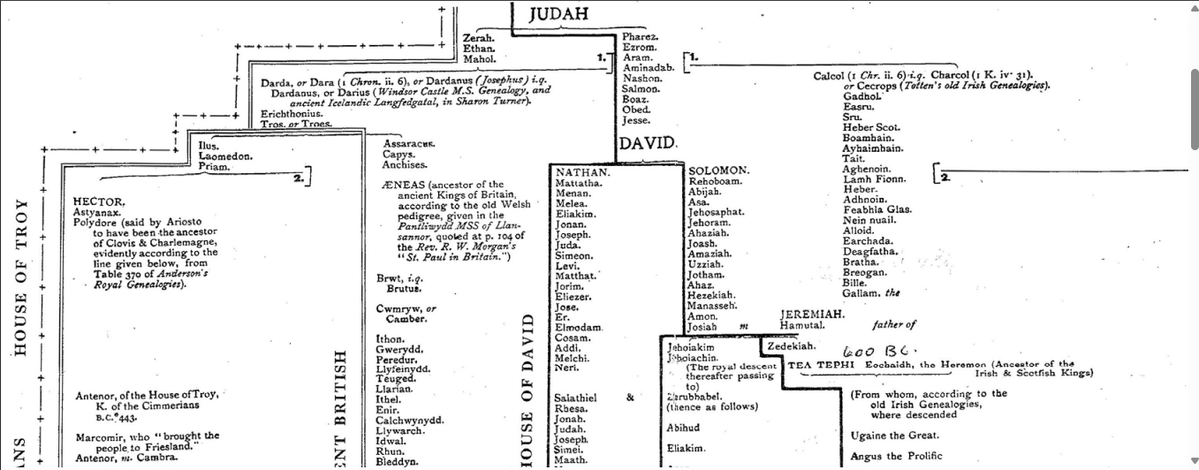
I am from the Kingly line of David through Solomon, the Tribe of Judah, and the priestly line of Nathan and Levi through my mother, and thus also a Kohen as a descendant of Moses through the priestly line of Aaron,
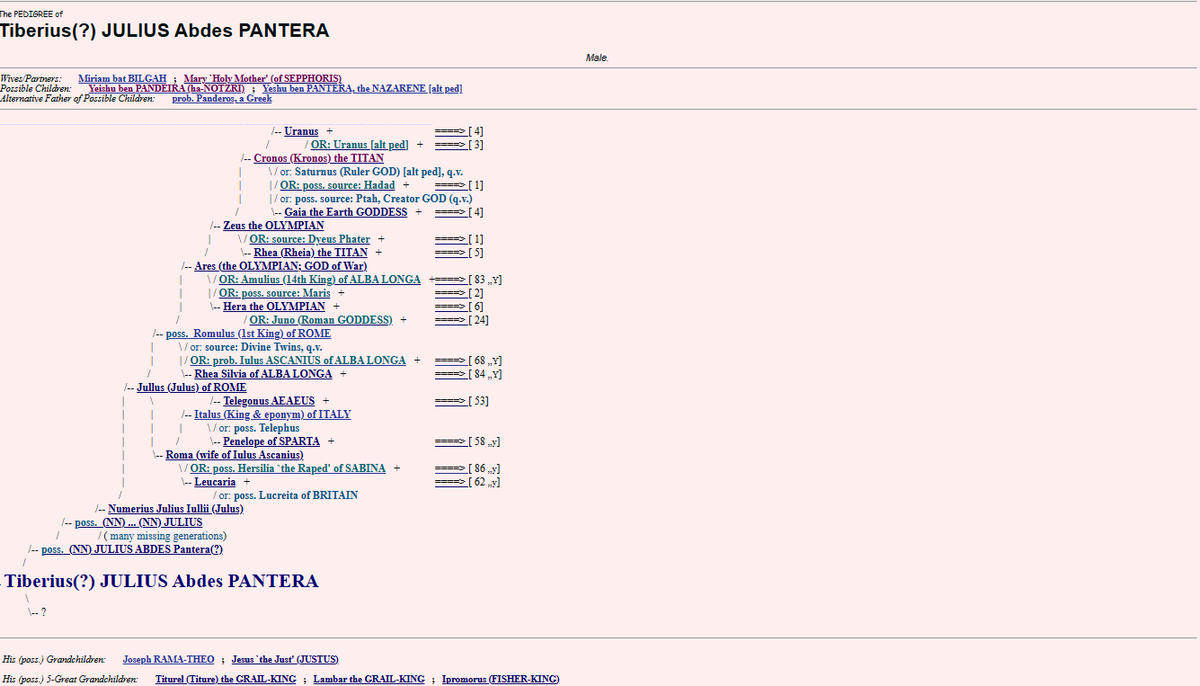
I know you will bring up the Yohannan Ben Pantera who had tricked my mother, believing it was her betrothed Yohannan Ben Yakkov, and it was not, he was of Semitic origin abdes and was in the Roman army however in his lineage, he is a descendant of Romulus back to the Saturnus (Ruler GOD) or cronos hence why the evil one had taken me and tempted (during my 40 day fast) me with the kingdoms of this world and etc. and he also is In fact, from the Line of Judah through zera to the house of Troy king to king Aeneas of ancient britain!
I will answer this openly and plainly
I was arrested around 10 pm - 12 am Tuesday night after my Pesach seder, dubbed as the last supper!
were I had folded my napkin and left to go pray in the garden with a couple of disciples!
My disciples kept falling asleep. The guards, along with judas iskariot was among them to identify me!
Simon Peter cut a guard's ear off, I healed him, and was arrested!
I was then taken to Caiaphas, where they held a night trial and were i was also beaten and imprisoned, before I was taken to the Roman governor Pontius Pilate early Wednesday morning for his questions and the public trial which i was to be sentenced to being beaten and scourged and hit and had a crown of thorns thrust into my skull as the Romans mocked and scoffed and spit on me and etc all before recieiving the sentence of Execution by way of crucifixion when the crowd was not satisfied but wished me dead!
I was crucified on the preparation day of passover
and Ta'anit Bechorot (Fast of the Firstborn): A dawn-to-dusk fast traditionally observed by firstborn males commemorating the sparing of the Israelite firstborn during the plague of the firstborn in Egypt.
Erev Pesach (Eve of Passover): The preparation day when all chametz (leavened bread) is removed from homes before midday, marking the hours leading up to the holiday.
The Passover Sacrifice Slaughter: The afternoon when the ancient Israelites brought their Korban Pesach (Passover lamb offering) to the Temple in Jerusalem in preparation for the Passover meal.
Wednesday, Nisan 14th 3790, which is April 3rd 30ad! And around noon, darkness and extreme weather came unto the land, and at the 9th hour or 3 pm, I had given up the ghost!
Thursday, Nisan 15th, 3790 / April 4th, 30 ad was passover!
And three days and three nights I was in the belly of the earth,
I was Risen On Sunday Nisan 18th 3790 / April 7th 30 ad! Early morning, before the sun had risen, Mariam had arrived at the tomb and seen I was not there!
And after my crucifixion, 40 years had passed in the year 70 AD, the temple was destroyed, and the cloth of scarlet did not turn white; therefore, the sacrifice was not accepted, they were not forgiven, nor could they keep the menorah lit nor the doors closed! and the tapestry was torn
And after 1,954 years and less than two days in the time of the kingdom of heaven, I indeed have returned as it is written in five places, Matthew, 1peter, 2x 1 Thessalonians, and Revelation!
For I tell you truly, I have come like a thief in the night, as there were no signs like before!
And I fulfill the requirements of the Mashiach, then and now!
And thus the throne of David will return to Jersualem were my ancestors had also reigned, and I also will for a thousand years, and I had died long ago outside the walls of Jerusalem through the Gennath Gate to the hill, which was a garden and had olive trees, which was an old limestone quarry that was abandoned due to poor limestone and became the place of death!
For if it wasn't so, I wouldn't say it to be so!
Repent and sin no more, as the Kingdom of heaven is at hand!
Yeshua Ha Notzri
Jesus H Christ
92

Jun 14
You can get Coke with real sugar in it, in other countries.
Kosher Coke refers to Coca-Cola certified as kosher year-round or specifically for Passover, using cane or beet sugar instead of corn syrup and avoiding chametz ingredients. A yellow cap on a Coke bottle indicates it is kosher for Passover. Enjoy! People can order it from Kosher Delis.
1
21

Jun 12
Deeper Roots and Possible Iranian (Persian/Zoroastrian) Connections
While the direct etymology of the English word “feast” (from Latin festum, via Proto-Indo-European dʰéh₁s- related to “divine/holy”) is not Iranian, the concept and practices of religious feasts in Catholicism have deeper layers of influence from ancient Iranian (Persian) traditions, mediated primarily through Judaism. This stems from the historical interactions during the Babylonian Exile (6th century BCE) and the Achaemenid Persian Empire under Cyrus the Great, who liberated the Jews.
Key Iranian/Zoroastrian Influences on Feasts
Zoroastrianism (originating in ancient Iran/Persia, ~2nd–1st millennium BCE) featured a rich calendar of seasonal and cosmic feasts (jašn or yasna-related observances) emphasizing creation, renewal, light vs. darkness, gratitude, and divine order (asha). These paralleled and likely cross-influenced Jewish festivals, which early Christianity then adapted.
• Nowruz (Persian New Year): Celebrated at the spring equinox. A major Zoroastrian feast of rebirth, new beginnings, light overcoming darkness, and renewal of creation. It influenced Jewish Passover (Pesach) customs in the Persian period—e.g., themes of liberation, spring cleaning (paralleling biur chametz), symbolic foods, and renewal rituals. Some scholars note Persian Jews adapted Nowruz elements into their observances.
• Mehregan (Mithra Festival): Autumn harvest thanksgiving honoring Mithra (god of light, covenants, friendship). Echoes in harvest feasts and themes of covenant/redemption.
• Other Gahanbars and Sadeh: Six seasonal creation feasts plus fire festivals celebrating elements (sky, water, etc.) and cosmic struggle between good/light and evil/darkness. These reinforced ideas of sacred time, feasting as worship, and communal joy.
Light/Darkness and Christmas Connections: Zoroastrian Yalda (winter solstice, “birth of light”/Mithra) influenced Roman Mithraism, which in turn shaped the date and symbolism of Christmas (Dec. 25 as triumph of light). Early Iranian Christians found resonance here.
Path to Catholicism
1. Jewish Adaptation (Middle Eastern Persian synthesis): Post-exile Judaism incorporated Persian calendar elements, dualistic themes (good vs. evil), and festival motifs into biblical feasts like Passover and Purim (set in Persia, with possible local influences).
2. Early Christianity: Jewish-Christian communities retained and reinterpreted these as celebrations of Christ’s fulfillment (e.g., Pascha/Easter from Passover; Pentecost). The liturgical calendar preserves the rhythm of joyful, redemptive commemorations.
3. Broader Indo-European Layer: Shared ancient roots (Avestan in Zoroastrian texts parallels Vedic/Indo-Iranian concepts of sacred festivals), but the “deeper meaning” often points to universal themes of cosmic order, renewal, and divine-human communion.
In Catholic theology, feasts retain this deeper spiritual root: not mere celebration, but participation in divine mysteries—echoing Zoroastrian emphasis on light, creation’s renewal, and thanksgiving, fulfilled in Christ as the “Light of the World” and Paschal Lamb.
The original interpretation thus layers Jewish covenantal joy with Persian-influenced cosmic renewal, all pointing to God’s redemptive plan.
43

Jun 12
the morning I.e. Shacharit (before Midday) and again performed at mincha (after Midday). Therefore all of the rituals of the Korban Pesach had to coincide with the Mincha Korban Tamid and not Shacharit because chametz can still be in one's possession BEFORE Midday.
1
17
Jun 12
Before the Korban Pesach could be sacrificed a Jew had to sell or get rid of all chametz in his possession e.g. cookies, beer, make-up, anything that could be benefited or used over Passover. AFTER Midday, the Korban Pesach was slaughtered. The sacrifice had to occur up until
1
21
Jun 12
consider anything that wasn't fully cooked to be deemed "chametz/leavened" and therefore deemed not kosher for Passover/Pesach as a precaution. The Shulchan Aruch (The Code of Jewish Law - literally the "set table") has paskened/ruled by Poskim (organisers & authors of the..
1
19
Jun 12
chametz (leavened) foods/produced made from the 5 grains [wheat, barley, rye, oats & spelt] and had time to rise I.e. ferment. The Talmud suggests different opinions but to avoid all question/doubt such as temperature, amount of sugar or yeast and so on which could speed up or
1
28

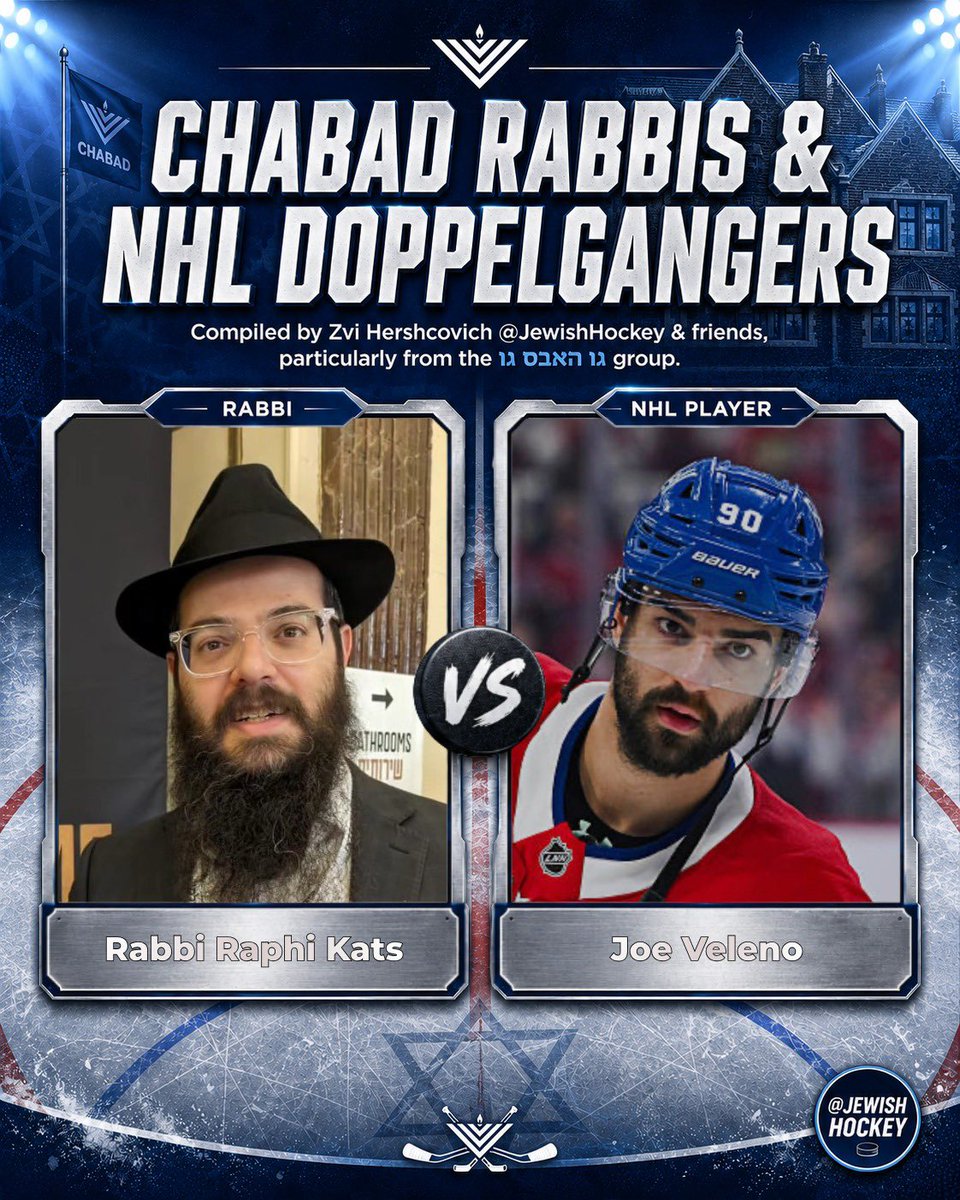
Every Passover, Rabbi Raphael Kats of Chabad of Saskatoon is known for checking kosher homes for Chametz, after which he heads to Montreal and forechecks hard under the pseudonym Joe Veleno 💥
1
4
219

May 21
Signing off for 50 hours of family time away from all ringing, pinging, tweeting devices! Best time of the week!
Tonight begins the holiday of Shavuot, otherwise known as Pentecost or “the Feast of Weeks”.
Then we go directly into the Shabbat on which we read the portion of Naso, which means to count.
We always read Naso the Shabbat after Shavuot, which begs the obvious question, why?
What is the connection between the holiday of Shavuot and Naso that they are always one right after the other?
Furthermore, Shavuot is an extremely unique holiday for a multitude of reasons.
Rabbi Sacks raises two of them.
“The mystery of Shavuot is twofold.
First is that uniquely among the Jewish festivals it has no date; the Bible gives it no explicit place in the Jewish calendar.
Instead, it is to be arrived at by counting seven weeks after the beginning of the Omer, the offering brought from the barley harvest, the first crop to ripen in the spring.
“And from the day on which you bring the sheaf of the wave offering – the day after the Sabbath – you shall count seven weeks”.
The second is that alone of the pilgrimage festivals it has no overt historical content. The Jewish festivals have a double character. They belong to cyclical time – the seasons of the year. And they belong to linear time – they recall formative moments in Jewish history.
So Pesach is the festival of spring and also the time when we re-enact the Exodus from Egypt.
Sukkot is the festival of the autumn harvest and the time when we re-live the journey through the wilderness in temporary dwellings or tabernacles.
But as we read the biblical description of Shavuot, half of the festival seems to be missing. Its seasonal significance is clear. It is called the “Feast of the Harvest” and the “Day of First-Fruits.”
But the historical dimension is absent. So Shavuot raised two questions that were to become the subject of deep controversy: when was it celebrated, and why?”
But there is an even more obvious question about Shavuot, namely, what is the commandment of the day?
On Rosh Hashanah, we blow the shofar. On Yom Kippur, we fast. On Sukkot, we live in huts and bring the four species. On Passover, we eat Matza and don’t eat Chametz. On Hanukah, we light candles. Etc.
What do we do on Shavuot?
The answer is… Nothing.
Sure, we have customs on Shavuot that were instituted not by the Torah but by the sages. We stay up all night learning Torah. We eat dairy products.
Why is there no Torah commandment surrounding Shavuot? Why isn’t there some act that we fulfill on this day?
I’ll remind you, Shavuot is the celebration of us receiving the Torah, which might be the most important moment in Jewish history. How is there no Torah commandment on this important holiday?
To the two questions, what is the connection between Naso and Shavuot and why isn’t there any act that the Torah commands us to do on this day, I believe there is one answer and it is both fundamental to Judaism and deeply profound.
I believe this idea can also answer Rabbi Sacks’ two questions of why the Torah doesn’t give us a date or historical context for the holiday of Shavuot.
Let’s begin with Naso.
When reading the portion, which is the longest portion in the entire Torah, you can’t help but become confused.
There doesn’t seem to be any common thread between all the topics in the portion.
“The parsha of Naso seems, on the face of it, to be a heterogeneous collection of utterly unrelated items.
First there is the account of the Levitical families of Gershon and Merari and their tasks in carrying parts of the Tabernacle when the Israelites journeyed.
Then, after two brief laws about removing unclean people from the camp and about restitution, there comes the strange ordeal of the Sotah, the woman suspected by her husband of adultery.
Next comes the law of the Nazirite, the person who voluntarily (and usually for a fixed period) took upon himself special holiness restrictions, among them the renunciation of wine and grape products, of haircuts, and of defilement by contact with a dead body.
This is followed, again seemingly with no connection, by one of the oldest prayers in the world still in continuous use: the priestly blessings.
Then, with inexplicable repetitiousness, comes the account of the gifts brought by the princes of each tribe at the dedication of the Tabernacle, a series of long paragraphs repeated no less than twelve times, since each prince brought an identical offering.”
What is going on here and again, what is the connection to Shavuot?
As we’ve asked and answered before, why is God counting the people, in this case, the Levites?
Does God need to count us to know how many people we are? Obviously not. But even if He does, why does He count us so many times throughout the Torah, including in our portion?
There are many answers to this question, but as I’ve said before, one answer resonates. When does someone count something?
Kids count toys. Adults count their money or their cars. People count things they love.
God wasn’t counting us for His benefit. He counts us for our benefit.
By counting us multiple times, He is reminding us of His love for us.
The best proof of that is the word the Torah uses for the action of counting.
There are many words in the Hebrew language that mean to count.
“Lispor”, “Limnot”, and others.
The word used in the Torah is “Naso”. What is the significance of that? Well, the same word also means to raise up.
So the Torah is telling us that God counts us to raise us up, to recognize each and every one of us equally.
However, while God is indeed showing us how each one of us, each individual matters, it is clear that Judaism also values the collective.
We are compared to a grain of sand on the shore, which is insignificant on its own without the millions of other grains, but we are also compared to the stars in the sky, each one being significant on its own.
It is this balance between the individual and the collective that makes Judaism so unique. Each one of us was created by God; in His image; because on that day, God decided the world is imperfect without our presence.
So, each individual is important and significant but we are also greater than the sum of our parts.
That same idea is true for Torah.
The Torah gives us a framework for how to live a fulfilling life.
But the Torah belongs to each and every one of us equally. No one person has ownership of the Torah. In fact, our sages teach that there are 70 faces to the Torah.
There are thousands of interpretations for every chapter, every verse, and every word in the Torah.
Torah is about making it our own. The Torah means something different to every person.
Does that mean we can do whatever we want? Of course not. I’ll repeat the analogy that I heard and that captures this idea.
The Torah is like a coloring book. You need to stay within the lines but within those lines, you can do whatever you want. You can use whatever color you want. You can draw whatever you want. All you have to do is stay within the lines.
The Torah gives us the framework, the lines. As long as we stay within those lines, we can make Torah individual to us.
Well, now let’s look at the many questions we asked.
Naso starts with the counting of the Levites and is a continuation of last week’s portion in which Moses counted the whole nation. Why? Because, as we said, we are all individuals and each one of us matters.
Counting the people emphasizes the individuality of each person but it does so within the context of the collective, the nation.
Just like Torah. It is here for each one of us to take and make our own, as long as we stay within the heritage, the tradition, the collective.
That’s the connection between Shavuot and Naso, the balance between each one of us and our importance and the role we each play within the collective.
So why doesn’t the Torah give a special date or a historical context? Because Torah is an absolute in our lives. Sure, we celebrate Shavuot on one day but Torah doesn’t exist only on that day.
Torah transcends time.
Why don’t we know the historical significance of Shavuot? Because Torah isn’t about history. Torah is alive in every generation and it guides us in the present and prepares us for the future. Torah is not a history book.
Why don’t we have a unique commandment on Shavuot? Because this holiday is here to remind us that the Torah doesn’t belong to any one person.
On Sukkot, every person has their hut and their four species. On Passover, every person has their Seder and their prohibition not to eat Chametz.
On every holiday, there is an element of the individual and how that person celebrates the day.
Shavuot is not about me or you. Shavuot is here to celebrate the Torah, which belongs to the entire nation of Israel equally. No one person can claim ownership of the Torah.
Shavuot is about our heritage, our tradition, our identity as Jews.
Shavuot is not about the individual because the Torah is not about the individual.
And finally, the last question. What is the common thread between all the seemingly disconnected parts of the portion?
Well, let’s go back to the balance we spoke about before. A Jew has to learn to balance their own individual significance while never forgetting their role in the nation as a whole.
When we manage to strike that balance, that is when we have achieved wholeness, inner peace. That is when we are complete.
When did we strike that balance between being individuals and being a collective? At Mount Sinai when we were “Like one man with one heart.”
There was total unity and peace. We found that magical balance and it happened as we received the Torah.
Now let’s look at Naso.
“The answer (to our question regarding the common thread) lies in the last word of the priestly blessing: shalom, peace.
In a long analysis, the 15th century Spanish Jewish commentator Rabbi Isaac Arama explains that shalom does not mean merely the absence of war or strife.
It means completeness, perfection, the harmonious working of a complex system, integrated diversity, a state in which everything is in its proper place and all is at one with the physical and ethical laws governing the universe.
This is a concept of peace heavily dependent on the vision of Genesis 1, in which God brings order out of tohu va-vohu, chaos, creating a world in which each object and life form has its place. Peace exists where each element in the system is valued as a vital part of the system as a whole and where there is no discord between them. The various provisions of parshat Naso are all about bringing peace in this sense.”
Naso is about peace. All of the different sections in the portion are somehow related to the idea of peace. Internal peace and external peace.
“The most obvious case is that of the Sotah, the woman suspected by her husband of adultery.
What struck the Sages most forcibly about the ritual of the Sotah is the fact that it involved obliterating the name of God, something strictly forbidden under other circumstances.
The officiating priest recited a curse including God’s name, wrote it on a parchment scroll, and then dissolved the writing into specially prepared water.
The Sages inferred from this that God was willing to renounce His own honour, allowing His name to be effaced, “in order to make peace between husband and wife” by clearing an innocent woman from suspicion.
Though the ordeal was eventually abolished by Rabbi Yochanan ben Zakkai after the destruction of the Second Temple, the law served as a reminder as to how important domestic peace is in the Jewish scale of values.”
Peace in the home.
“Likewise, the long account of the offerings of the princes of the twelve tribes is a dramatic way of indicating that each was considered important enough to merit its own passage in the Torah.
People will do destructive things if they feel slighted, and not given their due role and recognition. Again the case of Korach and his allies is the proof of this.
By giving the Levitical families and the princes of the tribes their share of honour and attention, the Torah is telling us how important it is to preserve the harmony of the nation by honouring all.”
Peace in the nation.
“The case of the Nazirite is in some ways the most interesting. There is an internal conflict within Judaism between, on the one hand, a strong emphasis on the equal dignity of everyone in the eyes of God, and the existence of a religious elite in the form of the tribe of Levi in general and the Kohanim, the priests, in particular.
It seems that the law of the Nazirite was a way of opening up the possibility to non-Kohanim of a special sanctity close to, though not precisely identical with, that of the Kohanim themselves.
This too is a way of avoiding the damaging resentments that can occur when people find themselves excluded by birth from certain forms of status within the community.”
Peace of the individual.
“If this analysis is correct, then a single theme binds the laws and narrative of this parsha: the theme of making special efforts to preserve or restore peace.”
“It is no accident therefore that the priestly blessings included in Naso end – as do the vast majority of Jewish prayers – with a prayer for peace.
Peace, said the rabbis, is one of the names of God Himself, and Maimonides writes that the whole Torah was given “to make peace in the world”.
Naso is a series of practical lessons in how to ensure, as far as possible, that everyone feels recognised and respected, and that suspicion is defused and dissolved.”
So to summarize, the holiday of Shavuot is about each one of us taking the Torah and making it our own as long as we stay within the lines, within the tradition, within the collective. That balance. The balance we saw at Mount Sinai as we received the Torah.
Naso too is about striking that balance between the individual and the collective.
When that balance is successfully achieved, the result is peace for the person, peace within the home, peace for the nation, and ultimately, peace for all of humanity.
Shabbat shalom and Chag Sameach
30
8
166
7,388
May 21
Per request, I’m sharing my thoughts on this week’s Torah portion and the holiday now so people don’t miss it. I’ll be sharing it again later before the chag starts. 🙏
Tonight begins the holiday of Shavuot, otherwise known as Pentecost or “the Feast of Weeks”.
Then we go directly into the Shabbat on which we read the portion of Naso, which means to count.
We always read Naso the Shabbat after Shavuot, which begs the obvious question, why?
What is the connection between the holiday of Shavuot and Naso that they are always one right after the other?
Furthermore, Shavuot is an extremely unique holiday for a multitude of reasons.
Rabbi Sacks raises two of them.
“The mystery of Shavuot is twofold.
First is that uniquely among the Jewish festivals it has no date; the Bible gives it no explicit place in the Jewish calendar.
Instead, it is to be arrived at by counting seven weeks after the beginning of the Omer, the offering brought from the barley harvest, the first crop to ripen in the spring.
“And from the day on which you bring the sheaf of the wave offering – the day after the Sabbath – you shall count seven weeks”.
The second is that alone of the pilgrimage festivals it has no overt historical content. The Jewish festivals have a double character. They belong to cyclical time – the seasons of the year. And they belong to linear time – they recall formative moments in Jewish history.
So Pesach is the festival of spring and also the time when we re-enact the Exodus from Egypt.
Sukkot is the festival of the autumn harvest and the time when we re-live the journey through the wilderness in temporary dwellings or tabernacles.
But as we read the biblical description of Shavuot, half of the festival seems to be missing. Its seasonal significance is clear. It is called the “Feast of the Harvest” and the “Day of First-Fruits.”
But the historical dimension is absent. So Shavuot raised two questions that were to become the subject of deep controversy: when was it celebrated, and why?”
But there is an even more obvious question about Shavuot, namely, what is the commandment of the day?
On Rosh Hashanah, we blow the shofar. On Yom Kippur, we fast. On Sukkot, we live in huts and bring the four species. On Passover, we eat Matza and don’t eat Chametz. On Hanukah, we light candles. Etc.
What do we do on Shavuot?
The answer is… Nothing.
Sure, we have customs on Shavuot that were instituted not by the Torah but by the sages. We stay up all night learning Torah. We eat dairy products.
Why is there no Torah commandment surrounding Shavuot? Why isn’t there some act that we fulfill on this day?
I’ll remind you, Shavuot is the celebration of us receiving the Torah, which might be the most important moment in Jewish history. How is there no Torah commandment on this important holiday?
To the two questions, what is the connection between Naso and Shavuot and why isn’t there any act that the Torah commands us to do on this day, I believe there is one answer and it is both fundamental to Judaism and deeply profound.
I believe this idea can also answer Rabbi Sacks’ two questions of why the Torah doesn’t give us a date or historical context for the holiday of Shavuot.
Let’s begin with Naso.
When reading the portion, which is the longest portion in the entire Torah, you can’t help but become confused.
There doesn’t seem to be any common thread between all the topics in the portion.
“The parsha of Naso seems, on the face of it, to be a heterogeneous collection of utterly unrelated items.
First there is the account of the Levitical families of Gershon and Merari and their tasks in carrying parts of the Tabernacle when the Israelites journeyed.
Then, after two brief laws about removing unclean people from the camp and about restitution, there comes the strange ordeal of the Sotah, the woman suspected by her husband of adultery.
Next comes the law of the Nazirite, the person who voluntarily (and usually for a fixed period) took upon himself special holiness restrictions, among them the renunciation of wine and grape products, of haircuts, and of defilement by contact with a dead body.
This is followed, again seemingly with no connection, by one of the oldest prayers in the world still in continuous use: the priestly blessings.
Then, with inexplicable repetitiousness, comes the account of the gifts brought by the princes of each tribe at the dedication of the Tabernacle, a series of long paragraphs repeated no less than twelve times, since each prince brought an identical offering.”
What is going on here and again, what is the connection to Shavuot?
As we’ve asked and answered before, why is God counting the people, in this case, the Levites?
Does God need to count us to know how many people we are? Obviously not. But even if He does, why does He count us so many times throughout the Torah, including in our portion?
There are many answers to this question, but as I’ve said before, one answer resonates. When does someone count something?
Kids count toys. Adults count their money or their cars. People count things they love.
God wasn’t counting us for His benefit. He counts us for our benefit.
By counting us multiple times, He is reminding us of His love for us.
The best proof of that is the word the Torah uses for the action of counting.
There are many words in the Hebrew language that mean to count.
“Lispor”, “Limnot”, and others.
The word used in the Torah is “Naso”. What is the significance of that? Well, the same word also means to raise up.
So the Torah is telling us that God counts us to raise us up, to recognize each and every one of us equally.
However, while God is indeed showing us how each one of us, each individual matters, it is clear that Judaism also values the collective.
We are compared to a grain of sand on the shore, which is insignificant on its own without the millions of other grains, but we are also compared to the stars in the sky, each one being significant on its own.
It is this balance between the individual and the collective that makes Judaism so unique. Each one of us was created by God; in His image; because on that day, God decided the world is imperfect without our presence.
So, each individual is important and significant but we are also greater than the sum of our parts.
That same idea is true for Torah.
The Torah gives us a framework for how to live a fulfilling life.
But the Torah belongs to each and every one of us equally. No one person has ownership of the Torah. In fact, our sages teach that there are 70 faces to the Torah.
There are thousands of interpretations for every chapter, every verse, and every word in the Torah.
Torah is about making it our own. The Torah means something different to every person.
Does that mean we can do whatever we want? Of course not. I’ll repeat the analogy that I heard and that captures this idea.
The Torah is like a coloring book. You need to stay within the lines but within those lines, you can do whatever you want. You can use whatever color you want. You can draw whatever you want. All you have to do is stay within the lines.
The Torah gives us the framework, the lines. As long as we stay within those lines, we can make Torah individual to us.
Well, now let’s look at the many questions we asked.
Naso starts with the counting of the Levites and is a continuation of last week’s portion in which Moses counted the whole nation. Why? Because, as we said, we are all individuals and each one of us matters.
Counting the people emphasizes the individuality of each person but it does so within the context of the collective, the nation.
Just like Torah. It is here for each one of us to take and make our own, as long as we stay within the heritage, the tradition, the collective.
That’s the connection between Shavuot and Naso, the balance between each one of us and our importance and the role we each play within the collective.
So why doesn’t the Torah give a special date or a historical context? Because Torah is an absolute in our lives. Sure, we celebrate Shavuot on one day but Torah doesn’t exist only on that day.
Torah transcends time.
Why don’t we know the historical significance of Shavuot? Because Torah isn’t about history. Torah is alive in every generation and it guides us in the present and prepares us for the future. Torah is not a history book.
Why don’t we have a unique commandment on Shavuot? Because this holiday is here to remind us that the Torah doesn’t belong to any one person.
On Sukkot, every person has their hut and their four species. On Passover, every person has their Seder and their prohibition not to eat Chametz.
On every holiday, there is an element of the individual and how that person celebrates the day.
Shavuot is not about me or you. Shavuot is here to celebrate the Torah, which belongs to the entire nation of Israel equally. No one person can claim ownership of the Torah.
Shavuot is about our heritage, our tradition, our identity as Jews.
Shavuot is not about the individual because the Torah is not about the individual.
And finally, the last question. What is the common thread between all the seemingly disconnected parts of the portion?
Well, let’s go back to the balance we spoke about before. A Jew has to learn to balance their own individual significance while never forgetting their role in the nation as a whole.
When we manage to strike that balance, that is when we have achieved wholeness, inner peace. That is when we are complete.
When did we strike that balance between being individuals and being a collective? At Mount Sinai when we were “Like one man with one heart.”
There was total unity and peace. We found that magical balance and it happened as we received the Torah.
Now let’s look at Naso.
“The answer (to our question regarding the common thread) lies in the last word of the priestly blessing: shalom, peace.
In a long analysis, the 15th century Spanish Jewish commentator Rabbi Isaac Arama explains that shalom does not mean merely the absence of war or strife.
It means completeness, perfection, the harmonious working of a complex system, integrated diversity, a state in which everything is in its proper place and all is at one with the physical and ethical laws governing the universe.
This is a concept of peace heavily dependent on the vision of Genesis 1, in which God brings order out of tohu va-vohu, chaos, creating a world in which each object and life form has its place. Peace exists where each element in the system is valued as a vital part of the system as a whole and where there is no discord between them. The various provisions of parshat Naso are all about bringing peace in this sense.”
Naso is about peace. All of the different sections in the portion are somehow related to the idea of peace. Internal peace and external peace.
“The most obvious case is that of the Sotah, the woman suspected by her husband of adultery.
What struck the Sages most forcibly about the ritual of the Sotah is the fact that it involved obliterating the name of God, something strictly forbidden under other circumstances.
The officiating priest recited a curse including God’s name, wrote it on a parchment scroll, and then dissolved the writing into specially prepared water.
The Sages inferred from this that God was willing to renounce His own honour, allowing His name to be effaced, “in order to make peace between husband and wife” by clearing an innocent woman from suspicion.
Though the ordeal was eventually abolished by Rabbi Yochanan ben Zakkai after the destruction of the Second Temple, the law served as a reminder as to how important domestic peace is in the Jewish scale of values.”
Peace in the home.
“Likewise, the long account of the offerings of the princes of the twelve tribes is a dramatic way of indicating that each was considered important enough to merit its own passage in the Torah.
People will do destructive things if they feel slighted, and not given their due role and recognition. Again the case of Korach and his allies is the proof of this.
By giving the Levitical families and the princes of the tribes their share of honour and attention, the Torah is telling us how important it is to preserve the harmony of the nation by honouring all.”
Peace in the nation.
“The case of the Nazirite is in some ways the most interesting. There is an internal conflict within Judaism between, on the one hand, a strong emphasis on the equal dignity of everyone in the eyes of God, and the existence of a religious elite in the form of the tribe of Levi in general and the Kohanim, the priests, in particular.
It seems that the law of the Nazirite was a way of opening up the possibility to non-Kohanim of a special sanctity close to, though not precisely identical with, that of the Kohanim themselves.
This too is a way of avoiding the damaging resentments that can occur when people find themselves excluded by birth from certain forms of status within the community.”
Peace of the individual.
“If this analysis is correct, then a single theme binds the laws and narrative of this parsha: the theme of making special efforts to preserve or restore peace.”
“It is no accident therefore that the priestly blessings included in Naso end – as do the vast majority of Jewish prayers – with a prayer for peace.
Peace, said the rabbis, is one of the names of God Himself, and Maimonides writes that the whole Torah was given “to make peace in the world”.
Naso is a series of practical lessons in how to ensure, as far as possible, that everyone feels recognised and respected, and that suspicion is defused and dissolved.”
So to summarize, the holiday of Shavuot is about each one of us taking the Torah and making it our own as long as we stay within the lines, within the tradition, within the collective. That balance. The balance we saw at Mount Sinai as we received the Torah.
Naso too is about striking that balance between the individual and the collective.
When that balance is successfully achieved, the result is peace for the person, peace within the home, peace for the nation, and ultimately, peace for all of humanity.
Shabbat shalom and Chag Sameach
2
6
37
2,518

May 19
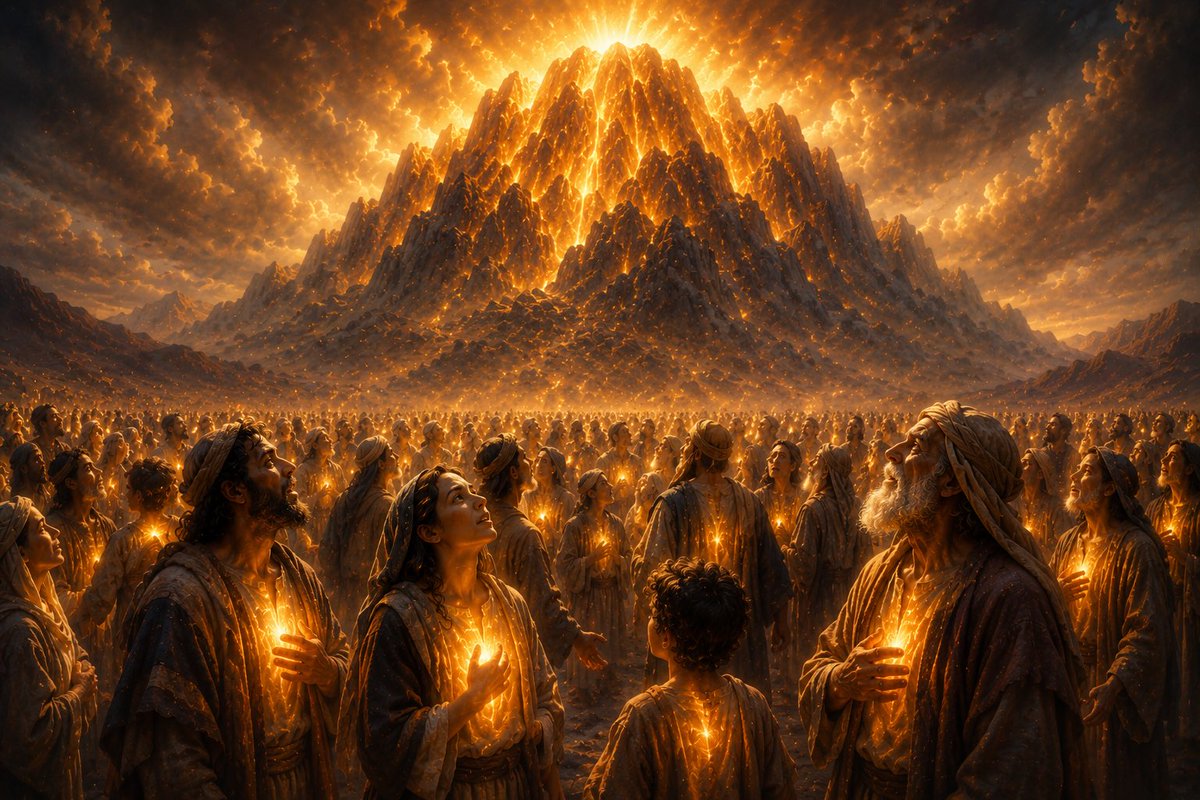
Shavuot commemorates not only the giving of the Torah at Sinai but a transformation of the Jewish soul. Maimonides (Hilkhot Gerushin 2:20) explains how a coerced get can be valid: at his core, every Jew wants to keep the Torah, and coercion that overcomes the yetzer hara merely allows the inner will to surface. This is the pintele Yid, the small inner Jew, planted at Sinai and indelible thereafter, such that a Jew can never convert out of being a Jew. The principle has been invoked across centuries of Torah literature, from the validity of mekhirat chametz and hetter iska performed by non-observant Jews to the reach of teshuvah and the principle that a Jew remains a Jew even if he converts. On Shavuot, the day it was first placed there, that voice can be heard once again, by those who choose to listen.

1
7
1,100

May 12
I didn't know you celebrated Passover. Do you abstain from chametz for 7 days?
1
38
588

May 11
No biggie
Just means they paid some mashgichim to supervise that batch(es) to prevent chametz contamination.
2
177


Apr 29
Pesach Sheni: The Second Chance That Never Closes
Pesach Sheni, the “Second Pesach,” arrives quietly, almost humbly, one month after Pesach. In 2026, it begins at sundown on Thursday, 30 April, and continues until nightfall on Friday, 1 May. Yet beneath its quiet appearance lies one of the most powerful messages in all of Torah: no one is ever truly too far, too late, or too impure to return.
The origin of Pesach Sheni is found in במדבר (Bemidbar – “In the Wilderness”), when a group of men approached Moshe Rabbeinu. They had become טמא (tameh – “ritually impure”) and were therefore unable to bring the Korban Pesach at its appointed time. Their cry was not one of resignation, but of longing: “למה נגרע” (lamah nigara – “Why should we be diminished?”). They refused to accept spiritual exclusion.
In response, G-D did something remarkable. He created a second opportunity. A new appointed time. A reopening of what had already passed.
This is Pesach Sheni.
It is not merely a historical provision for ritual impurity. It is a declaration woven into creation itself: there is always a path back.
The first Pesach represents the ideal moment—preparedness, readiness, alignment. Pesach Sheni represents reality—missed chances, delays, imperfection, distance. And yet, the Torah elevates the second moment, teaching that even after failure, the door is not closed.
The deeper teaching is this: spiritual life is not linear. It is cyclical, restorative, and merciful. What was lost can be reclaimed. What was missed can be revisited. What was distant can be drawn near again.
In modern life, people often carry the weight of “too late.” Too late to change. Too late to repair. Too late to return. Pesach Sheni stands in direct opposition to that thinking. It tells a person: begin again, even now.
The condition for Pesach Sheni was impurity or distance. But the deeper condition was desire. The men who received this second chance wanted it. They stepped forward. They asked.
That is the key.
G-D opens the door—but man must choose to walk through it.
Pesach Sheni also carries a subtle distinction. While the first Pesach removes all חמץ (chametz – “leaven”), on Pesach Sheni chametz is permitted alongside the offering. This teaches that return does not require perfection before beginning. One does not need to eliminate every flaw to come close to G-D. The approach itself begins the refinement.
The message is simple and uncompromising: do not wait to become perfect before returning. Return, and perfection will follow.
Pesach Sheni is therefore not just a date on the calendar. It is a principle of existence. It is the refusal of despair. It is the rejection of finality.
Where the world says “finished,” Torah says “again.”
Where the world says “missed,” Torah says “prepare.”
Where the world says “you cannot,” Torah says “come.”
And so, as Pesach Sheni arrives, quietly and without the full structure of the first festival, it speaks directly to the individual heart. Not to the one who succeeded, but to the one who feels they did not.
Its message is eternal:
There is always a second Pesach.
There is always a way back.
RAM
רם בן זאב
עובד השם
#pesach
4
4
34

Apr 29
Why can't you just give your chametz to someone who could use it? Wouldn't that be charitable? Or would yahweh disapprove?
1
14
387

Apr 29
YHWH forbid that you just GIVE your non-Jewish friends the chametz.
No. Jews are going to "sell" the chametz instead. Because that's what being a Jew means.
2
42
506


Apr 27
“It was very clear. You agreed to sell us our chametz BACK.”
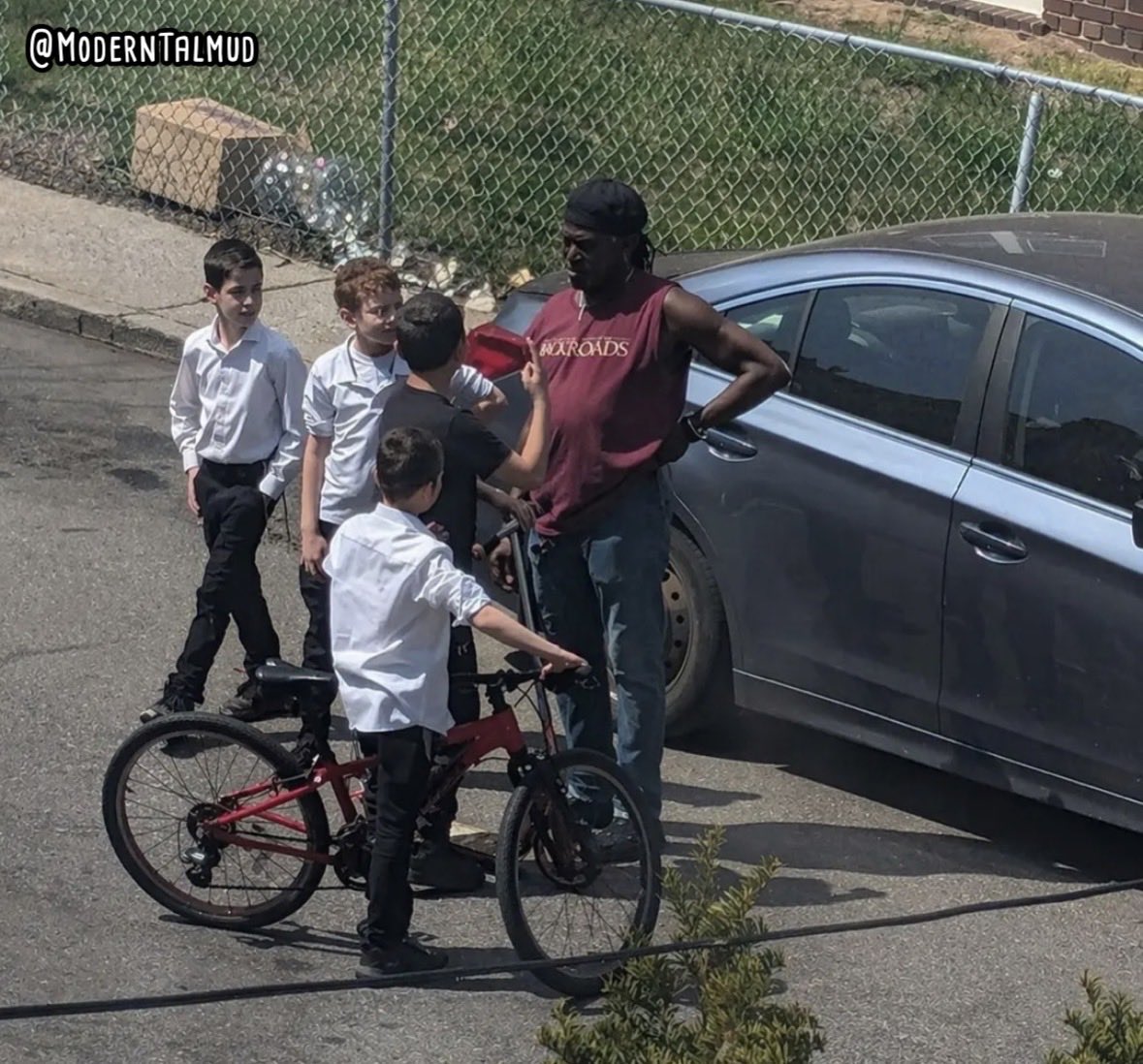
3
16
204
7,086