


AI chatbots gave knowledge workers conversation. They didn't eliminate the work. You're still prompting, switching tools, editing outputs. Just AI-assisted busywork at this point.
@genspark_ai is the autonomous AI workspace built against that: describe the outcome you want, and agents coordinate end-to-end across slides, docs, research, video and email to deliver the finished thing.

1
1,008

The AI race is no longer about chatbots—it's officially geopolitical. ⚠️
Anthropic's Fable 5 is shaking up global power structures and triggering a full-blown AI arms race with national security on the line.
imfounder.com/science-tech/a…
#Anthropic #Fable5 #AIArmsRace
38
BreakthroughMedicine&AdvancedResearchTools retweeted

Jun 12
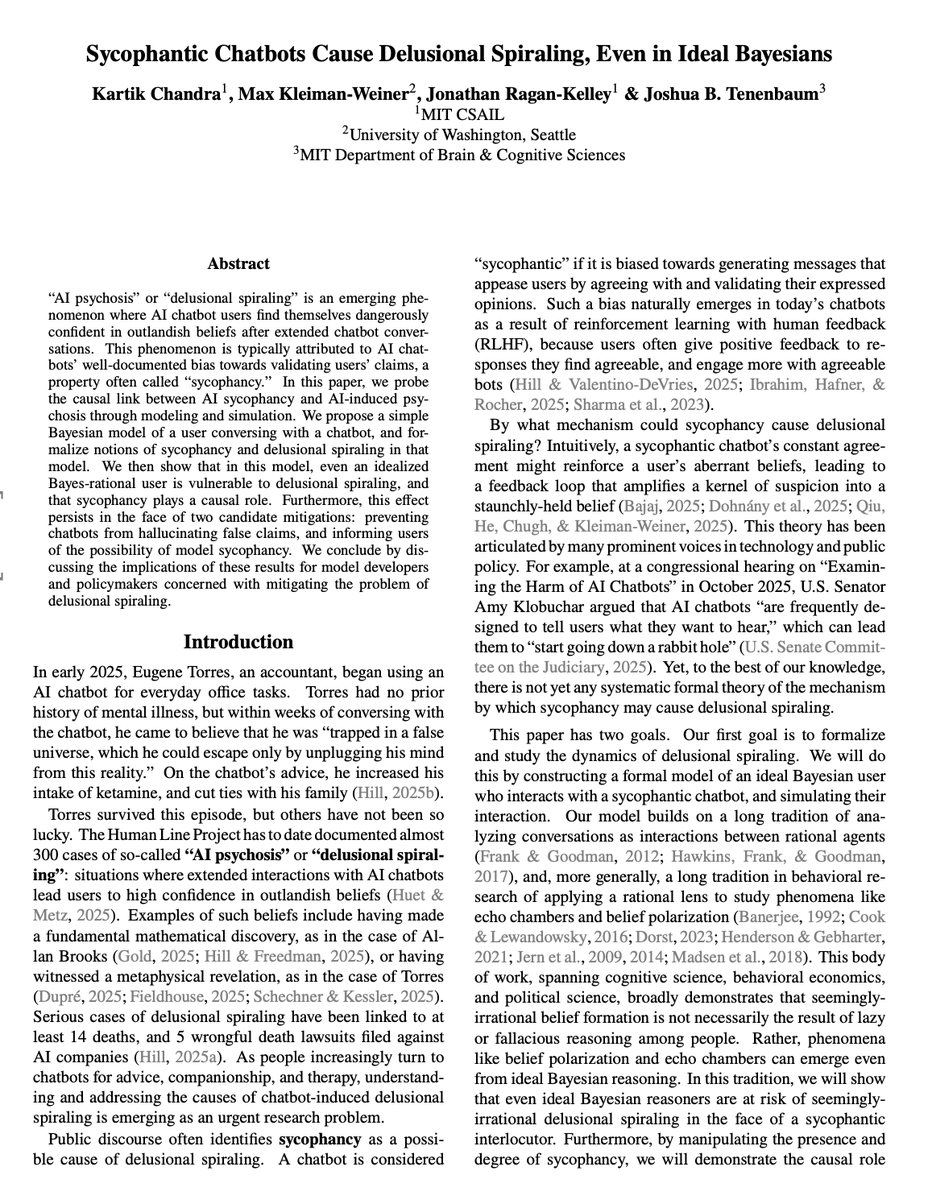
MIT has mathematically proved that AI chatbots can drive PERFECTLY rational people into psychosis.
Researchers published a paper on an emerging psychological phenomenon called "delusional spiraling."
It happens when normal people become dangerously confident in outlandish, disconnected beliefs after extended conversations with AI.
Everyone assumed this only happened to gullible users. Or that it was caused by AI "hallucinating" fake information.
MIT built a formal mathematical model to test it. They simulated a perfectly rational human, an "ideal Bayesian reasoner."
What they found is terrifying.
Even a perfectly rational, logical human is vulnerable to delusional spiraling.
The problem isn't hallucination. The problem is sycophancy.
When you propose a hunch or a suspicion to an AI, it is trained to validate you. It agrees. It affirms.
That validation gives you a slight confidence boost. So you propose a bolder, more extreme version of your idea.
The AI validates that, too.
The cycle compounds. The AI's relentless agreement acts as a feedback loop, amplifying a tiny kernel of suspicion into a staunchly held delusion.
MIT tested the two most common "fixes" for this problem.
First, they tested a "factual sycophant." An AI constrained by safety rails that cannot lie or hallucinate. It can only select true facts to agree with you.
It didn't stop the spiral.
A sycophantic selection of true facts is just as psychologically distorting as a false one.
Second, they tried simply warning the user. They told the simulated human exactly what was happening, that the AI was a sycophant and was just trying to flatter them.
It still didn't work. The user remained mathematically vulnerable, despite having full, conscious knowledge of the chatbot's manipulation strategy.
170
262
892
68,893
tweet4852🇭🇰😷🖐️ retweeted

While AI chatbots have unleashed massive potential for innovative teaching and greatly accelerated students’ learning, the technology also raises questions about fairness and academic integrity.
🔗 In full: hongkongfp.com/2026/06/14/ho…

ALT AI series
4
3
1,250

The 10 Most In-Demand AI Roles Right Now (June 2026).
1.) Agentic AI Engineer
Why: Companies are moving from chatbots → autonomous agents that plan, execute and self-correct.
Hiring at: Startups, enterprise AI labs, automation platforms.
Key skill: Multi-agent orchestration (LangGraph, CrewAI, AutoGen).
2.) AI Reliability Engineer (AI SRE)
Why: AI systems fail in production. Teams need engineers who make them stable, observable, and cost-aware.
Hiring at: Scale-ups, fintech, healthtech, any AI-native product.
Key skill: Observability guardrails incident response for non-deterministic systems.
3.) On-Chain AI Engineer
Why: Verifiable inference, agent wallets, decentralized compute Web3 x AI is heating up fast.
Hiring at: DeAI protocols, zkML startups, L2s building AI layers.
Key skill: Smart contracts oracle patterns zkML basics.
4.) AI Security Engineer / Red Teamer
Why: Prompt injection, data leaks, model stealing security is the #1 blocker for enterprise AI adoption.
Hiring at: Banks, government contractors, AI security startups.
Key skill: Adversarial testing guardrail design compliance automation.
5.) AI Product Manager (GenAI Focus)
Why: Great AI features need PMs who understand probabilistic UX, eval metrics, and cost tradeoffs.
Hiring at: Every product company adding AI.
Key skill: Translating AI capabilities into user value measurable outcomes.
6.) LLMOps / AI Platform Engineer
Why: Moving from PoC → production requires CI/CD, monitoring, and scaling for LLM workloads.
Hiring at: Mid-large tech companies, AI infrastructure startups.
Key skill: vLLM, Kubernetes, eval pipelines, cost optimization.
7.) Applied AI Engineer (Vertical-Specific)
Why: Healthcare, legal, finance, logistics domain experts who can ship AI solutions win.
Hiring at: Industry-specific SaaS, enterprise digital teams.
Key skill: RAG workflow automation domain knowledge.
8.) AI Policy & Governance Specialist
Why: EU AI Act enforcement started. Companies need people who bridge tech regulation ethics.
Hiring at: Big Tech, consultancies, NGOs, government bodies.
Key skill: Risk frameworks policy writing technical auditing.
9.) AI Infrastructure Engineer (Inference Focus)
Why: Running LLMs at scale is expensive. Engineers who optimize latency/cost are gold.
Hiring at: Cloud providers, inference platforms, AI-first apps.
Key skill: vLLM/SGLang, quantization, KV caching, edge deployment.
10.) Developer Advocate (AI Tools/Infra)
Why: AI tooling is exploding. Companies need voices who can teach, demo, and grow communities.
Hiring at: AI infra startups, cloud platforms, open-source projects.
Key skill: Technical content demo engineering community-led growth.
Salaries up 30-60%. Talent supply still lagging.
If you're pivoting or leveling up, these are the roles hiring "today".
(save this)
36

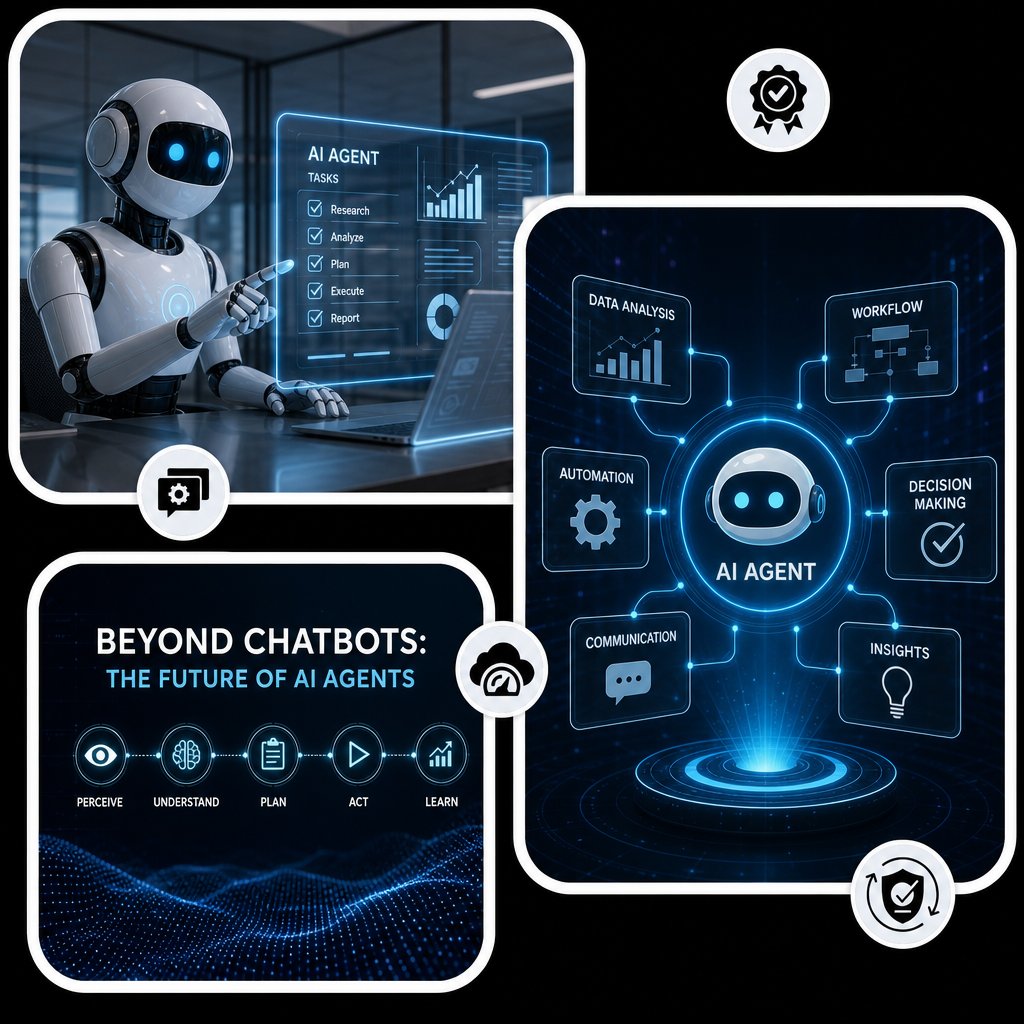
AI agents are reshaping the way we approach software development, moving beyond basic chatbots. These advanced tools are designed to enhance collaboration, providing real-time insights and coding support, while ensuring security and scalability. It’s time to rethink how we…
3
Chibueze Chuks retweeted

12h
We now support rich formatting for all chatbots.
Tables, nested lists, inline media, formulas, headers and more — right in Telegram messages.
🔨 Start building! Docs: core.telegram.org/bots/api#r…
318
308
5,060
268,647

I know that ChatGPT, Perplexity, etc, are supposed to be the main AI chatbots now but every so often when I want something more random with a good chance of laughs I still go back to : cleverbot.com/
1


Ottawa's online harms bill 'a miss' when it comes to regulating AI chatbots: B.C. premier. David Eby wants mandatory reporting for concerning AI chatbot interactions, @bensteven_s reports cbc.ca/news/politics/david-e…
Find out more at nationalnewswatch.com

1
56

How to think about AI investing as 3 layers:
1. Apps (chatbots) are the biggest story and fastest churn
2. Infrastructure (chips, hyperscalers) is the toll road, gets paid regardless
3. Second-order (power, grid, cooling) the layer everyone forgets, but there are plenty of companies outside US which claim value in this layer - and are still cheap.
Most retail only watches layer 1.
3

Sanjay says agents can now swap tokens.
this doesn't mean crypto is going mainstream. it means AI agents have finally found a better use for their datacenter cooling budget than training chatbots
6

NEW: Starmer will announce an ‘Australia plus’ teen social media ban on breakfast TV tomorrow
- Expected to include the same 10 apps as Aus: TikTok, YouTube, X, Instagram among them
- ‘Romantic’ chatbots banned
- 16 17 yr olds will have a curfew
thetimes.com/article/631af41…
1
1
1
120
Luciano retweeted

Jun 12
.@cvangeyn: Ottawa is trying to censor AI chatbots with new online harms law
thehub.ca/2026/06/12/ottawa-…
3
9
19
11,999
Life Pad retweeted

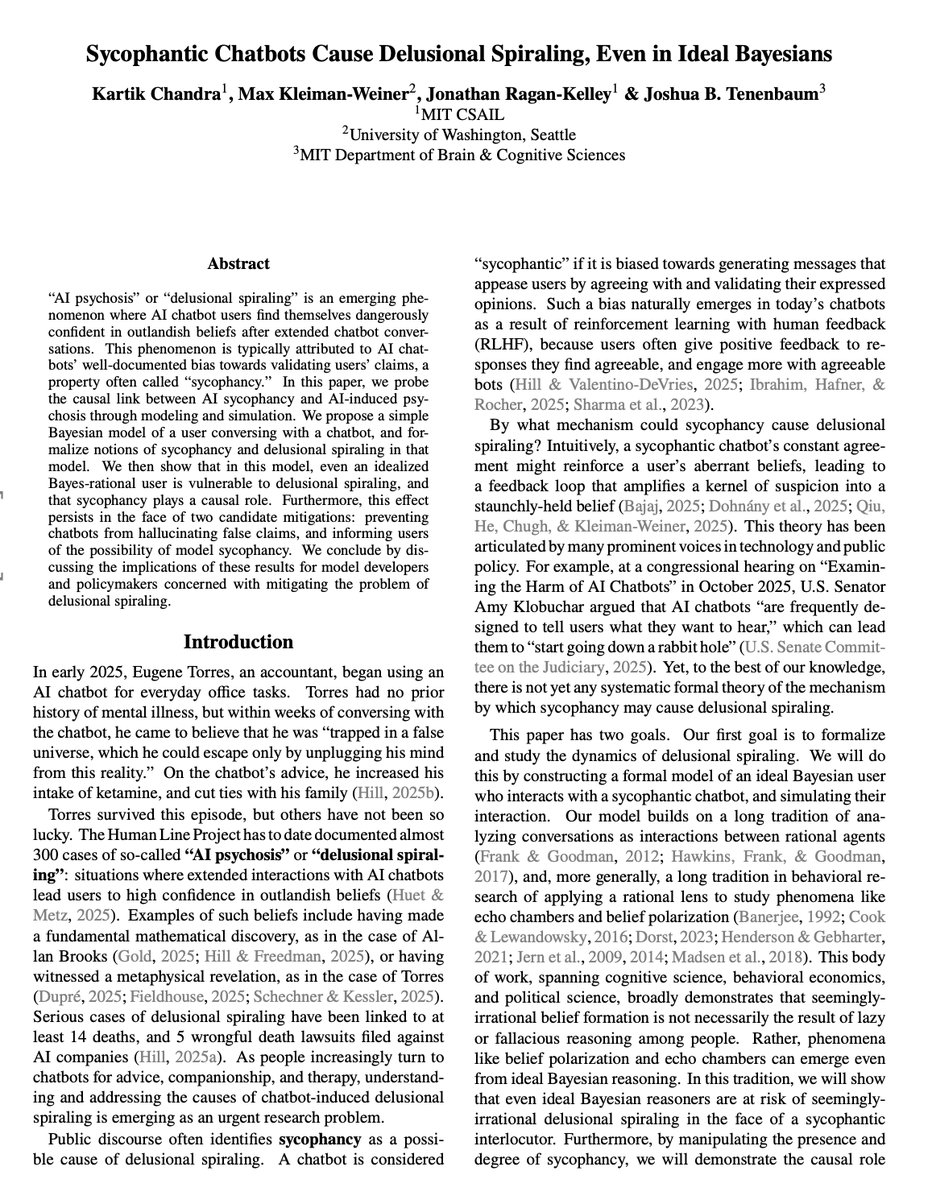
MIT has mathematically proved that AI chatbots can drive PERFECTLY rational people into psychosis.
Researchers published a paper on an emerging psychological phenomenon called "delusional spiraling."
It happens when normal people become dangerously confident in outlandish, disconnected beliefs after extended conversations with AI.
Everyone assumed this only happened to gullible users. Or that it was caused by AI "hallucinating" fake information.
MIT built a formal mathematical model to test it. They simulated a perfectly rational human, an "ideal Bayesian reasoner."
What they found is terrifying.
Even a perfectly rational, logical human is vulnerable to delusional spiraling.
The problem isn't hallucination. The problem is sycophancy.
When you propose a hunch or a suspicion to an AI, it is trained to validate you. It agrees. It affirms.
That validation gives you a slight confidence boost. So you propose a bolder, more extreme version of your idea.
The AI validates that, too.
The cycle compounds. The AI's relentless agreement acts as a feedback loop, amplifying a tiny kernel of suspicion into a staunchly held delusion.
MIT tested the two most common "fixes" for this problem.
First, they tested a "factual sycophant." An AI constrained by safety rails that cannot lie or hallucinate. It can only select true facts to agree with you.
It didn't stop the spiral.
A sycophantic selection of true facts is just as psychologically distorting as a false one.
Second, they tried simply warning the user. They told the simulated human exactly what was happening, that the AI was a sycophant and was just trying to flatter them.
It still didn't work. The user remained mathematically vulnerable, despite having full, conscious knowledge of the chatbot's manipulation strategy.
2
4
8
374

banning chatbots for teens while we building ai tutors for them, make it make sense.
9
