
Tulsi's statements after @NPR is a fake news.
That is the fake news:-How the false Russian biolab story came to circulate among the U.S. far right!
npr.org/2022/03/25/108791088…
@realDonaldTrump @DonaldJTrumpJr @MFA_China @mfa_russia
Jun 12

Today, I’m releasing never before seen intelligence revealing new evidence of past US government funding for more than 120 biolabs in over 30 countries, including Ukraine.
In support of President Trump‘s Executive Order to end federal funding of dangerous gain of function research around the world, and increase transparency and accountability, ODNI will continue working with partners across the Administration to identify where these labs are, what pathogens they contain, and what “research” is being conducted.
odni.gov/index.php/newsroom/…
1
Kanyoro Wa Kahuhi 🇰🇪 retweeted

51m
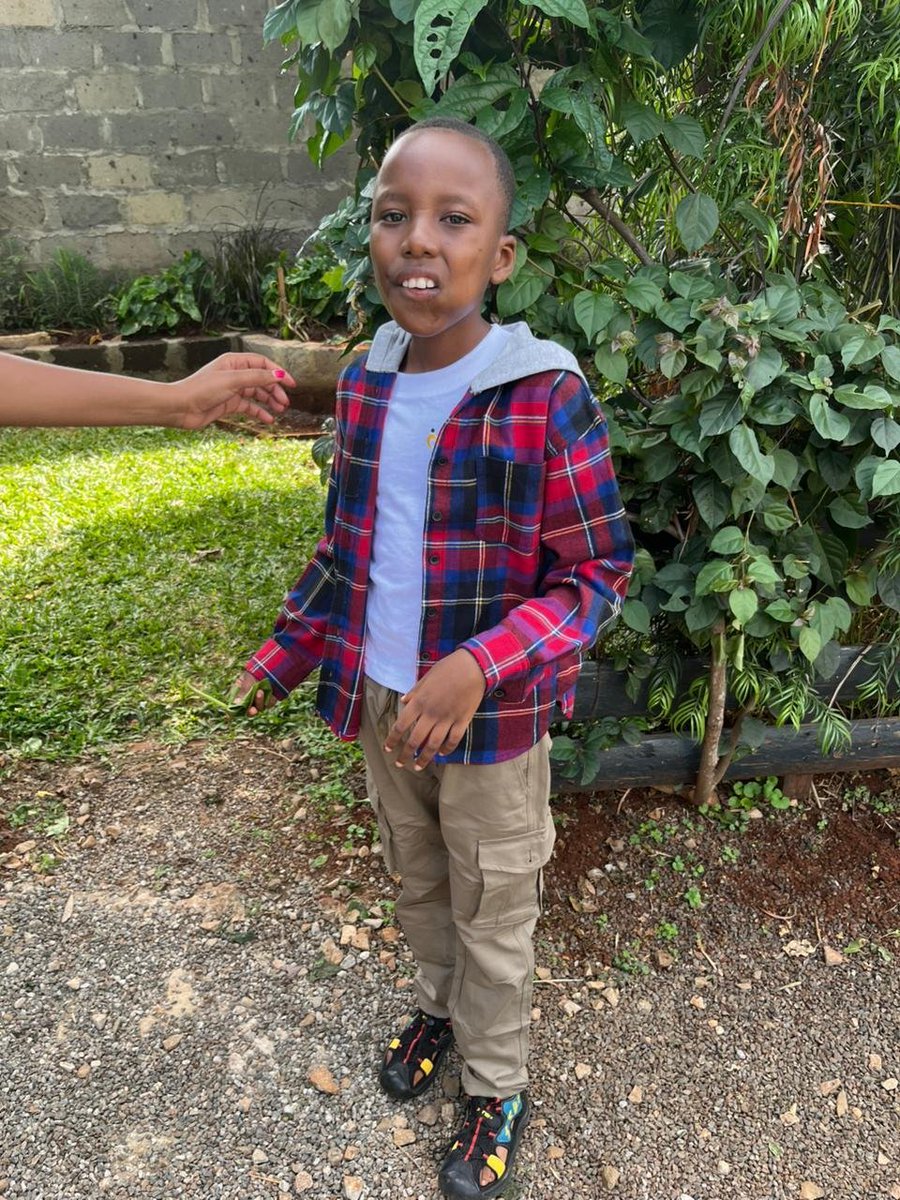
🚨 MISSING CHILD ALERT **KINDLY HELP CIRCULATE
Please help us find this child. He is non-verbal and was last seen wearing:
Brown trousers 🔹 Blue striped T-shirt 🔹 Blue Crocs last seen rolex centre
1
7
4
54
Ski retweeted

You fit dey the circle make you no know wetin dey circulate
2
2
11
Joh Mackenzie retweeted

No Australian mainstream journo will circulate this, they see no solidarity among journalists, their own careers come first.
Shame on them.
Free Palestine 🇵🇸✊

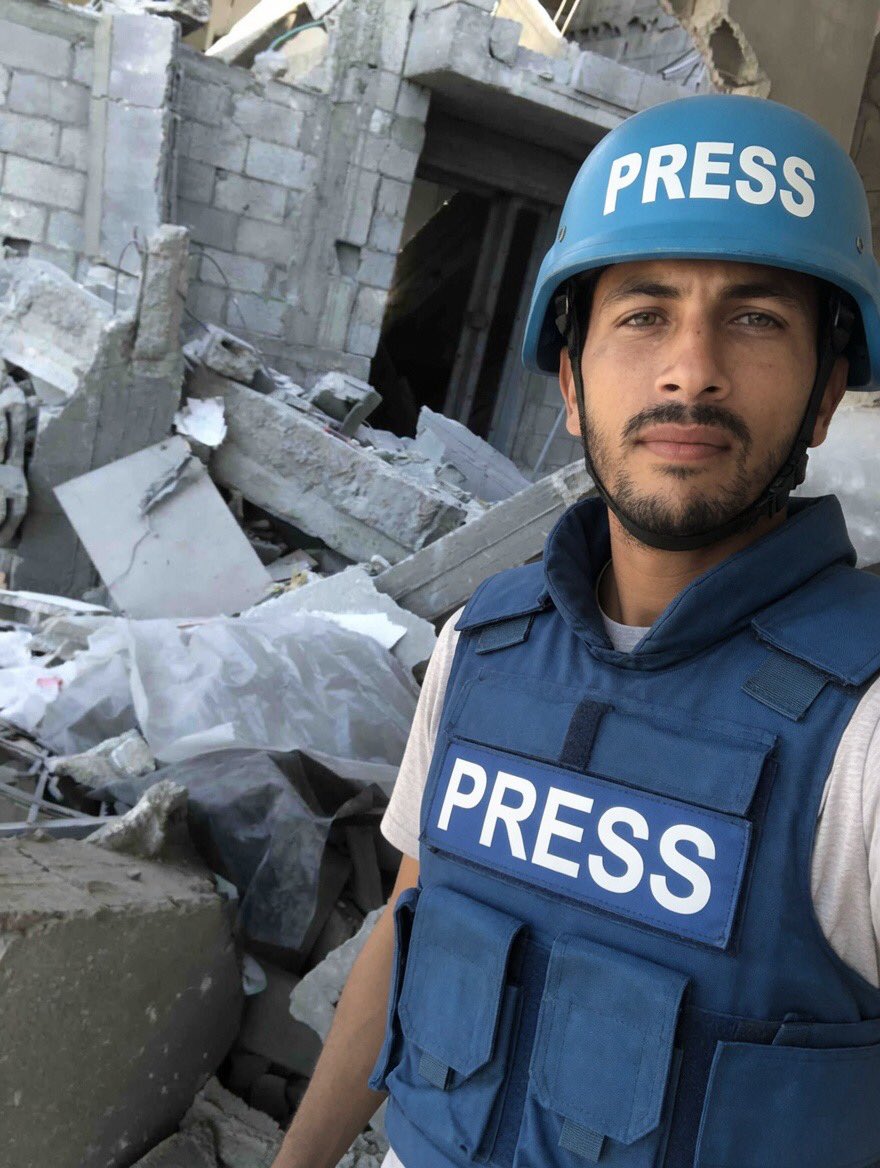
I've received over 50 threatening messages from Zionists because of the videos I posted documenting the brutal crimes committed by Israel in Gaza.
I need your support and kind words to continue until my last breath 🇵🇸
4
9
80

"the underground plumbing network (pipes/conduits that circulate water between the pool, a treatment plant, and the Tidal Basin) was not fully replaced".
Sort of like putting make-up over hand bruises. It only improves optics, doesn't fix the problem. x.com/i/grok/share/48d3e1f45…
4

Oh clearly you don’t know what you speak of. Water can circulate without showing signs of it. It all depends on which direction the jets are pointing. You point them downwards, which is appropriate, and the top shows no signs.
Just stop.
6

Yup. Ok lang yan hindi naman isi circulate ang 3,000 peso bill sabi ni BSP. Limited lang, for collectors only.
5
Yup. Ok lang yan hindi naman isi circulate ang 3,000 peso bill sabi ni BSP. Limited lang, for collection only.
3
studioJ-Wamaitha retweeted

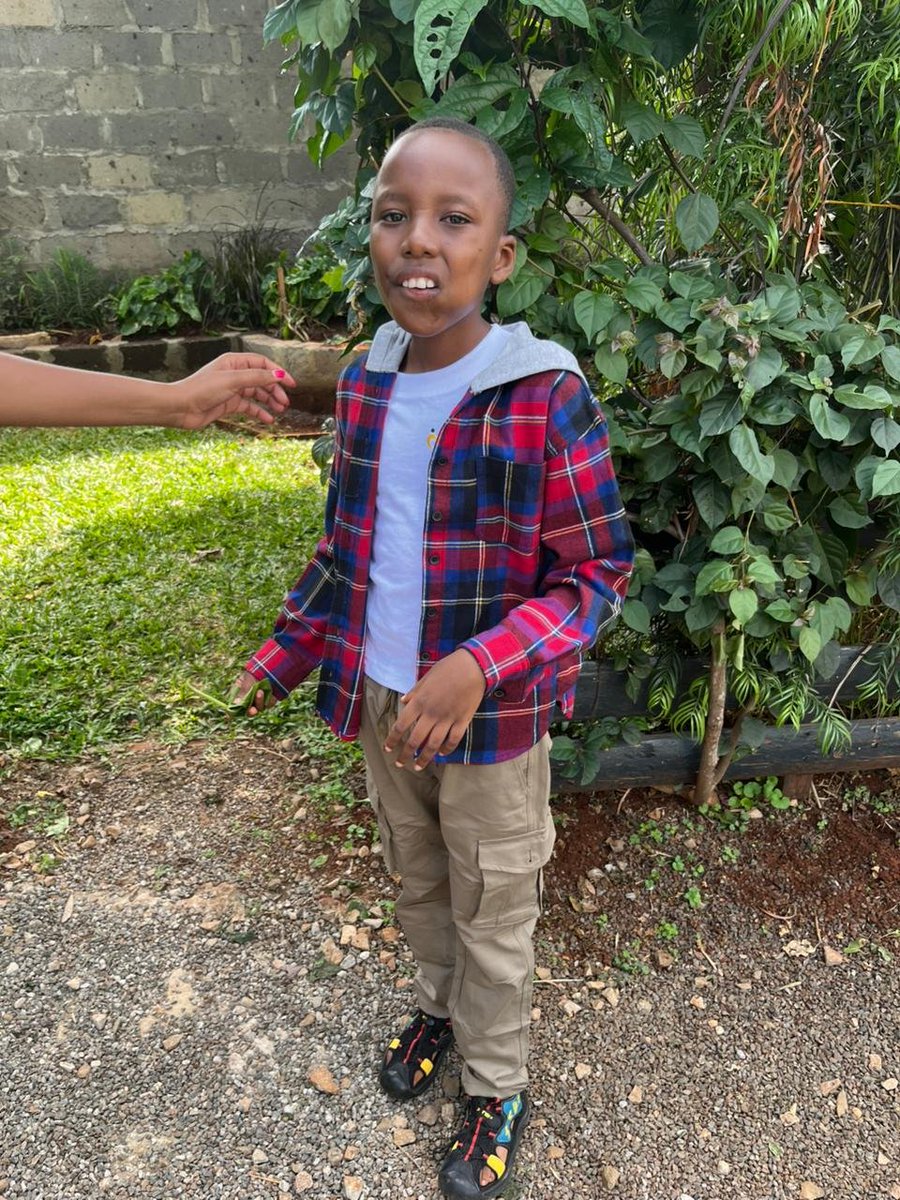
🚨 MISSING CHILD ALERT **KINDLY HELP CIRCULATE
Please help us find this child. He is non-verbal and was last seen wearing:
Brown trousers 🔹 Blue striped T-shirt 🔹 Blue Crocs last seen rolex centre
12
6
101

This is stopping really low bro. Appanna character is a praise worthy performance and also disability mocking should not be normalized. Very cheap of you to circulate this 😔😔
1
5
This is stopping really low bro. Appanna character is a praise worthy performance and also disability mocking should not be normalized. Very cheap of you to circulate this 😔😔
1
7
Dhavèèd retweeted

You fit de circle, make you no really know wetin de actually circulate
1
1
4

When Is Silence Forced?
Silence does not always mean the same thing.
There is a silence one chooses for oneself.
There is a silence kept in order not to speak too lightly.
There is a silence that waits for thought to ripen.
There are even moments when, before something that language cannot easily reach,
remaining silent is the more honest act.
In that sense, silence is not always something to be denied.
At times, it can be as strong a stance as speech itself.
But that is not the silence this book wishes to think about here.
What concerns us now is this:
when a person carries something that ought to be spoken, and yet cannot speak it, how is that silence being forced?
Silence is not produced only by command.
Of course, if one is directly told to be quiet, silence may follow.
Censorship by power, threats of violence, institutional exclusion—
these are the clearest forms of enforced silence.
But in modern society, silence is often forced in quieter ways.
Indeed, precisely because it is not explicitly forbidden,
it can come to look as though it were simply chosen.
That is part of what makes the problem so difficult to see.
People become unable to speak when they are exhausted.
This is simple, but decisive.
When life is crowded by long work hours,
when housework, care work, and childrearing pile up,
when each day leaves a person barely capable of sleep,
the power to turn complex experience into language begins to disappear.
There is no margin with which to sort out what exactly is painful.
No time to ask how it might be said.
Endurance comes first.
Speech is postponed.
At such a point, silence is not the absence of will.
It is the result of words taken away by fatigue.
People also become unable to speak under poverty.
Poverty does not only deprive people of things or money.
It deprives them of margin.
Of the power to refuse.
Of the time to rest.
And with that, it deprives them of the conditions under which they might calmly face their own experience.
When life remains constantly close to crisis,
a person’s energy is spent first on survival.
To offer one’s suffering to society as speech
can begin to feel almost like a luxury.
In this sense, poverty is not only the deprivation of speaking opportunities.
It is also the deprivation of the very preconditions of speech.
Here silence appears
not as free reserve,
but as the compressed result of life under pressure.
People become unable to speak in conditions of alienation as well.
One cannot find one’s own feeling
within the words that circulate around oneself.
One’s experience does not seem to count
as something socially important.
Whatever one says is received only as a special case,
a private complaint,
an emotional reaction.
When such experiences accumulate,
people gradually lose the sense
that there is any meaning in giving their reality words.
At this point, silence is not born
because there are no words at all.
It is born because
one’s words no longer seem capable of connecting to the world.
Alienation is not only isolation.
It is the condition in which one’s experience is not recognized
as part of reality itself.
And that condition pushes people toward silence.
People also become unable to speak through helplessness.
Nothing changes, no matter what I say.
I spoke before, and nothing happened.
No one listened.
Or worse, I was only hurt for having spoken.
Experiences like these can make language itself feel ineffective.
Silence then becomes
not simply resignation,
but a form of defense against further injury.
It is difficult for people to go on speaking
when they already know their words will have no effect.
That feeling of “it is useless anyway”
is one of the strongest forces that drive people into silence.
Helplessness is difficult to see from the outside,
and yet it is one of the most ordinary causes of silence.
People also become unable to speak
through the fear of ridicule.
This is enormous.
Perhaps I will be thought foolish.
Perhaps my words will be judged clumsy.
Perhaps I will be looked down upon for lacking knowledge.
Perhaps I will be dismissed as emotional.
Perhaps I will be told I am merely playing the victim.
Such fears silence people before speech even begins.
For those who lack confidence in their language,
or who do not stand close to institutions or public space,
ridicule is not merely unpleasant.
It becomes a signal that says:
“This is not a place where your words may be placed.”
Silence then appears
not as the result of explicit exclusion,
but as the result of exclusion carried by atmosphere.
What matters is that these forces often overlap.
A person is exhausted.
Poor.
Without anyone to consult.
Already convinced that speaking will change nothing.
And afraid of being mocked if they try.
When such conditions accumulate,
silence becomes almost inevitable.
And yet, from the outside,
that silence may still appear as though it had been freely chosen.
This is why enforced silence is so hard to see.
It appears in the face of voluntary quiet,
while beneath it many social pressures have already gathered.
In this sense, silence is often not a matter of personal character.
A person may seem introverted.
Passive.
Poor at expression.
So it may appear.
But in truth,
they may be silent because the conditions required for speech are absent.
And those absent conditions are not located only inside the individual.
They are rooted in the social world:
in the distribution of time,
in the structure of labor,
in inequalities of education,
in the thinning of community,
in the coldness of public space,
in the uneven distribution of visibility.
If we reduce silence to temperament alone,
we once again make the individual bear what belongs to structure.
Moreover, in a society where silence is forced,
the words of those who do have a voice
come all the more to define reality.
Those who can speak.
Those who are heard.
Those whose lives do not collapse when they speak.
Their words are more easily received as universal.
Meanwhile, the experiences of those who cannot speak
fall away from social reality precisely because they remain unspoken.
The suffering that is not voiced
comes to be treated as though it did not exist.
In this sense, enforced silence does not harm only individuals.
It also distorts society’s understanding of reality itself.
Here lies the politics of silence.
Who can speak?
Who cannot?
Whose suffering enters language,
and whose suffering disappears before it can be named?
This is not merely a difference in expressive ability.
It is a difference that shapes
what can be recognized as a social problem
and what is treated, from the beginning, as though it were nothing at all.
Silence is not simply absence.
It is often
an absence produced by society.
That is why, if we want to understand silence,
it is not enough to ask,
“Why does this person not speak?”
We must ask instead,
“What conditions are making this person unable to speak?”
Is it exhaustion?
Poverty?
Alienation?
Helplessness?
Fear of ridicule?
Or the overlap of all of these?
Only when we ask at that level
does silence begin to appear
not as an individual problem,
but as a problem of social distribution and structure.
And if we pursue the question further,
the next thing we must examine
is whose words become visible
and whose are buried.
For silence does not arise only from not being able to speak.
It also arises when words are spoken
but are not made visible, do not circulate, and do not remain.
That unevenness
is what we must think about next.
1
38