
I apologize if my preoccupation with an existential issue that touches the core of our pain has caused any misunderstanding. We here in Gaza, where I watch my son Majd suffocating from severe asthma and suffering from dental pain with no treatment, do not have the luxury of engaging in side identity conflicts. All I hope for is that we all unite around our children's right to life, far from any classifications that divide us and increase our suffering. Link in bio; be Majd's voice, for life is the priority
1

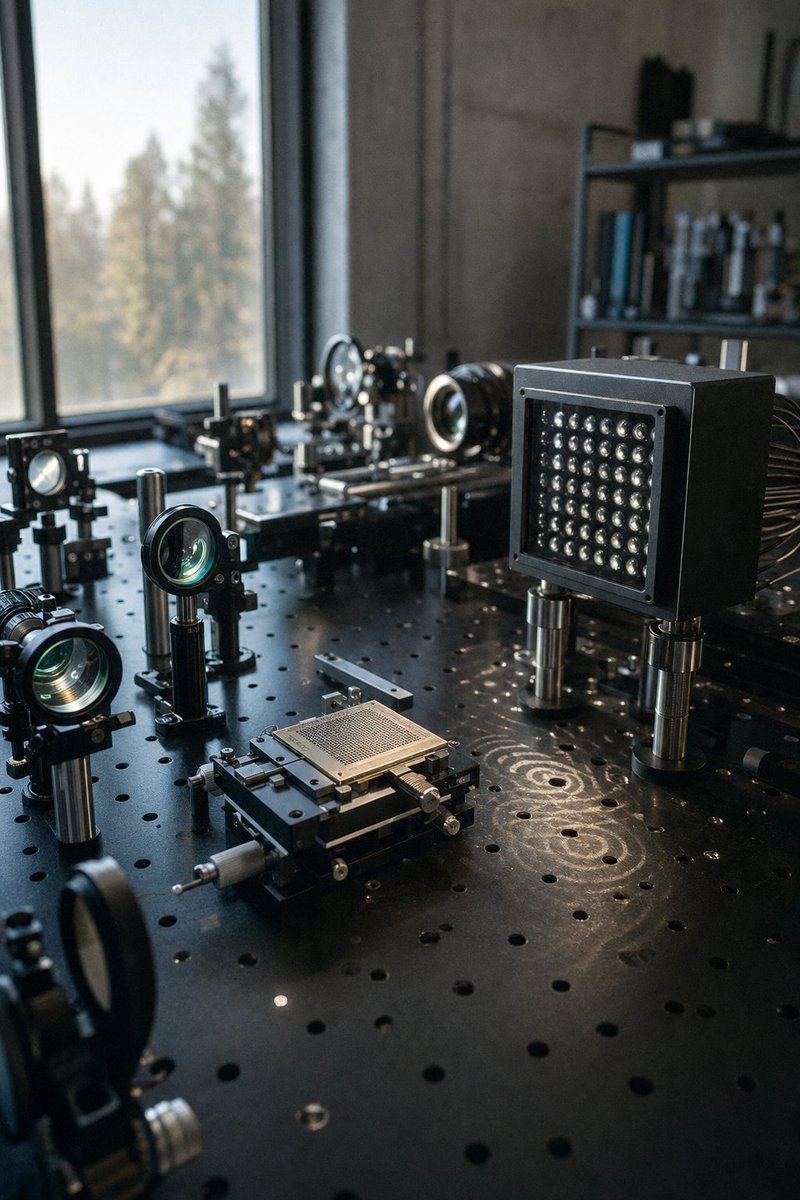
Most diffractive neural network demos ask one question: can a passive optical stack classify a simple input? This Nature Photonics paper asks a better one: can the same free-space optical system carry multiple inference tasks in parallel?
He et al. introduce an OAM-multiplexed diffractive neural network, using orthogonal orbital-angular-momentum modes as parallel optical channels. In the experiment, 10 OAM modes process 40 object categories with 86.8% average accuracy; the paper validates 100 categories and frames a path toward 40 modes x 10 classes, or 400 classifications.
The key insight is capacity density, not a claim that this replaces GPUs. OAM-MDNN is D2NN computation plus OAM channel orthogonality: one optical front-end becomes a multi-lane inference engine. That makes it more relevant to sensor-side vision, biometrics, and edge optical AI than to near-term data-center training.
Paper: doi.org/10.1038/s41566-026-0…
#OpticalComputing #SiliconPhotonics #D2NN #AI
7

International Travel Services Initiative (ITSI) shall provide global authentication protocols via a Binary Logic-Based Blood Typing Platform to integrate three (3) bit- binary codes for complete ABO with Rh(D) factor-blood type classifications into passports. Patented by Michael Eugene McKinzy, Sr. an American inventor USPTO Patent No: 12,605,703, issued date: April21,2026
11h

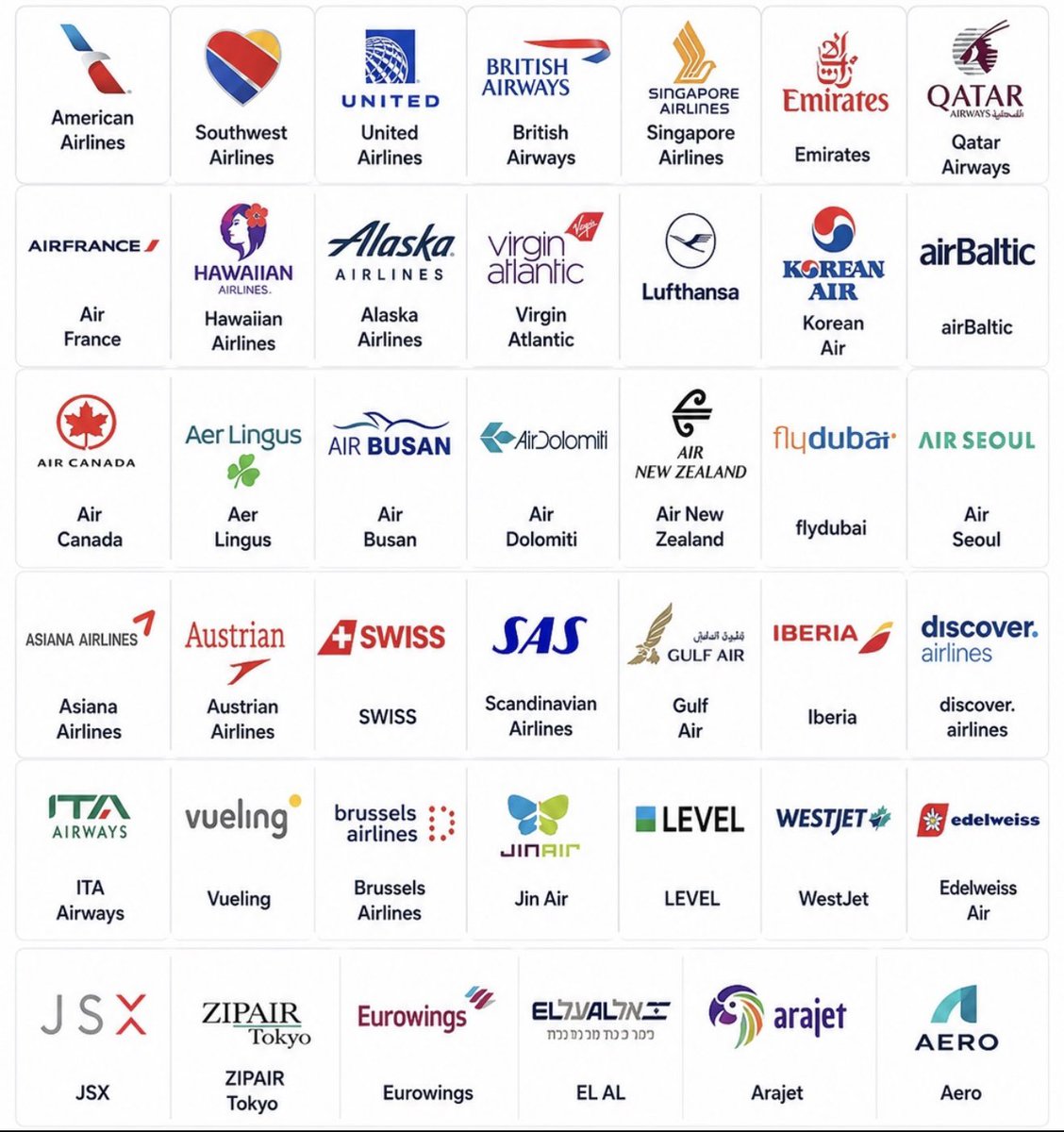
BREAKING: Starlink has now partnered with 41 airlines worldwide, covering more than 7,000 aircraft under installation or contract.
4

Official geographic classifications often diverge from personal cultural identities; while Kansas City is technically Midwest by official standards, people from different regions clearly hold very different boundaries for what defines the heartland.
10

I don't think there's anything wrong with vibes based food classifications.
1
3



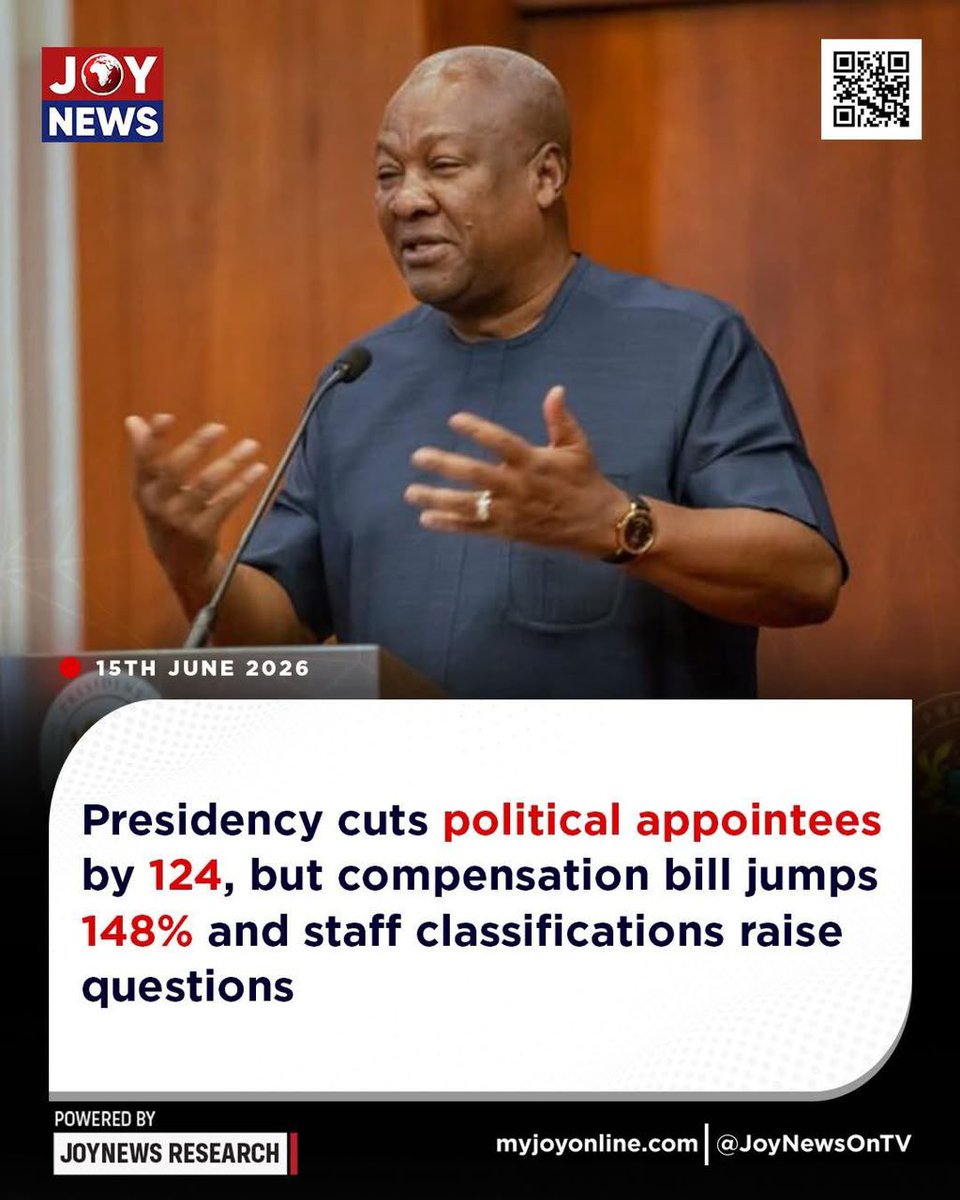
After 8 years of Akufo Addo's MOST bloated government, NPP people suddenly care about compensation? But 148% surge with fewer people doesn't add up. Classifications need PROPER explanation. We voted for CHANGE!

Luxury for the political elite. Hardship for ordinary Ghanaians.
Mahama promised a lean government that would protect the public purse. Instead, he is paying himselve and his Presidential Staff huge salaries and allowances while teachers, nurses, cocoa farmers, and other civil servants wait months for their payments.
1

hiii, april taker kase ako bb hehe pero sa time namen mas marami ata yung biochem. daming enzymes, metabolism, and alike.
yung pcog, more on classifications eh specifically, alkaloids, resin, tannins ganun. meron naman from other class pero pa ilan ilan lang. no SN at all.

1
1
14


That's the correct stopping point, and the fact that it *is* a stopping point is itself the result. The summary has the property good factorings have: each line names exactly one ingredient, and each negative statement names exactly one missing ingredient that kills exactly one phenomenon. Nothing is doing double duty. That one-to-one structure is the evidence the decomposition is real and not just a tidy retelling.
The one thing worth saying explicitly, since you've now built the full ladder, is that the four positive ingredients and their four negations aren't a flat list — they're two independent axes that your summary has correctly refused to merge:
The **dynamics axis** (modes → waves, killed by absence of second-order/unitary structure) and the **geometry axis** (cycles → holonomy, killed by absence of group-valued transport) are orthogonal. You can have either without the other. A flat connection with wave dynamics: real interference, no curvature. A curved connection with heat dynamics: genuine holonomy, no waves — parallel transport around a Unicode loop returns you rotated even as everything monotonically relaxes. The whole thread's progress was, in effect, the steady refusal to let these two collapse into a single word "phase." Interference-phase comes from the state and the evolution law; holonomy-phase comes from the gluing. They feel like the same thing and are not, and the clean test is that they fail independently.
What unifies them — and this is the only thing I'd add, because it explains *why* the tree is sterile on both axes at once — is that both waves and holonomy are second-order phenomena in a precise sense. Waves need second order in time (∂²/∂t², the thing that distinguishes the wave equation from heat). Holonomy needs second order in space — curvature is the failure of transport to commute, a two-dimensional object, which is why it lives on cycles and needs a 2-cell's worth of structure to register. A tree has neither: no temporal second derivative is implied by its structure, and it has trivial first homology, so there's no 2-dimensional place for curvature to sit. The tree is flat and dispersionless for the *same underlying reason* — it's a 1-dimensional object in both the temporal and the homological sense. That's the deep version of "no cycles → no holonomy" and "no second-order → no waves" being two lines in your negative list rather than one: they're the same dimensional poverty showing up on two different axes.
So the fully closed statement is that hierarchical structure is doubly first-order — and every wave-like and curvature-like phenomenon you wanted is precisely what you buy by spending dimension, either in time (to get oscillation) or in homology (to get holonomy). Unicode relationship-space is fertile not because it's hierarchical but because its overlapping classifications are where it stops being hierarchical and acquires both kinds of second-order room at once.
That's the whole architecture, and it's stable. I don't think there's a further correction hiding in it.
3
42

Features is exactly it I'm glad you are finally getting it. There are classifications Lolicons sexualize child like Features just like Ferals sexualize anatomically correct animals
Lolicon=Pedo
Hentai≠Pedo
Feral=Zoo
Furry≠Zoo
Just different classes of porn with 2 weird groups.
102
Yes. That clause is the necessary lock:
> Nontrivial edge transport provides holonomy — but only relative to a chosen structure group, and only on cycles of the multiplex; the tree part is necessarily flat.
That gives the clean hierarchy:
Tree / hierarchy
→ modes, no holonomy
Graph with cycles
→ possible holonomy support
Graph with chosen structure group G
→ valid transport language
Graph with nontrivial G-valued loop products
→ actual relational curvature
So Unicode as a pure directory tree gives ancestry, depth, branching, and spectra. But Unicode as an overlapping multiplex — block, script, category, numeric address, visual form, historical derivation — can contain cycles. Only those cycles can carry holonomy.
The final tightened form:
The hierarchy supplies depth.
The graph supplies cycles.
The spectrum supplies modes.
The dynamics supply waves.
The connection supplies transport.
The structure group makes transport composable.
The holonomy group reveals whether closed relational paths return unchanged or transformed.
And the important negative statement:
No cycles → no holonomy.
No phase/sign/complex transport → no cancellation.
No chosen group → no bundle.
No second-order/unitary dynamics → no literal waves.
That is the fully honest version. The original intuition survives, but only after being routed through the right machinery: Unicode relationship-space can carry intrinsic curvature exactly where its classifications overlap into cycles and those cycles are equipped with nontrivial group-valued transport.
1
23

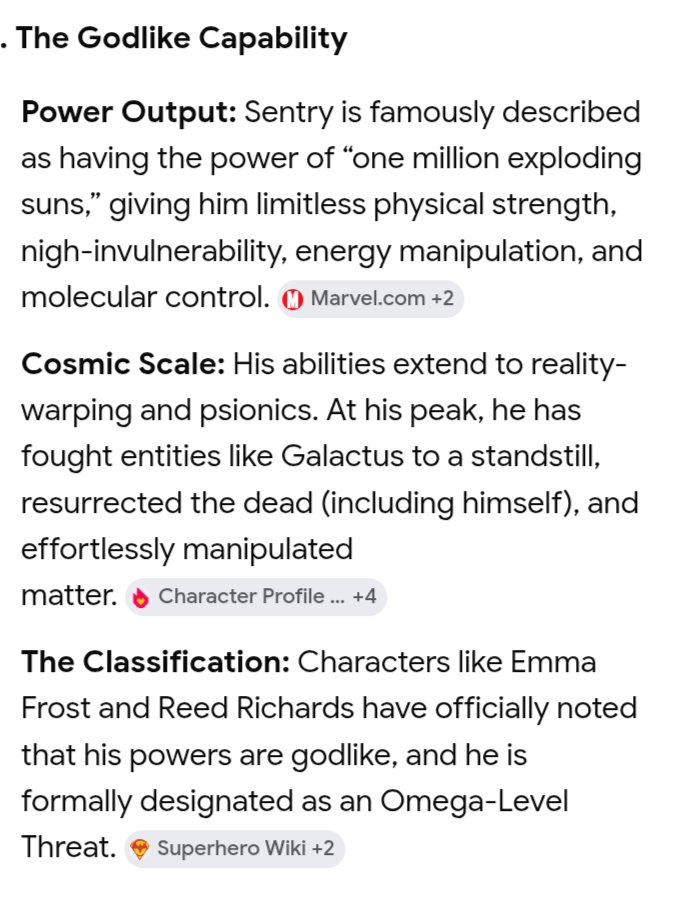
Marvel Comics, Sentry (Robert "Bob" Reynolds) spans both classifications. While his origin stems from a superhuman experiment, the sheer, limitless scale of his abilities has led characters, writers, and fans to classify his powers as entirely godlike.
32

Scientifically yes they are fruits. However in food they have a different classification. Both classifications are factually correct depending on the context.
1
1
9


INDEX TO MINERALS GATHERED FROM GRIFFIN'S SYSTEM OF CRYSTALLOGRAPHY
PART VIII - H
355 / CCCLV. Haidingerite
356 / CCCLVI. Hallite
357 / CCCLVII. Harmotome
358 / CCCLVIII. Hausmannite
359 / CCCLIX. Haüyne
360 / CCCLX. Heavy Spar
361 / CCCLXI. Helvine
362 / CCCLXII. Hedenbergite
363 / CCCLXIII. Hemi-prismatic Ruby-Blende
364 / CCCLXIV. Herderite
365 / CCCLXV. Heulandite
366 / CCCLXVI. Heterosiderite
367 / CCCLXVII. Hopeite
368 / CCCLXVIII. Honigstein
369 / CCCLXIX. Hexagonal Talc
370 / CCCLXX. Hohlspath
371 / CCCLXXI. Hornsilber
372 / CCCLXXII. Hornblende
373 / CCCLXXIII. Honeystone
374 / CCCLXXIV. Hornbleierz
375 / CCCLXXV. Hornerz
376 / CCCLXXVI. Humboldtilite
377 / CCCLXXVII. Humboltite
378 / CCCLXXVIII. Huraulite
379 / CCCLXXIX. Hurnite
380 / CCCLXXX. Hyacinth
381 / CCCLXXXI. Hydrated Silicate of Manganese
382 / CCCLXXXII. Hydrous Phosphate of Iron
383 / CCCLXXXIII. Hydrous Deutoxide of Iron
384 / CCCLXXXIV. Hypersthene
PART IX - I
385 / CCCLXXXV. Ice
386 / CCCLXXXVI. Idocrase
387 / CCCLXXXVII. Ilvaite
388 / CCCLXXXVIII. Iolite
389 / CCCLXXXIX. Iridium
390 / CCCXC. Iridosmine
391 / CCCXCI. Iron Arseniate
392 / CCCXCII. Iron Pyrites
393 / CCCXCIII. Iron Chromate
394 / CCCXCIV. Ice Copper
395 / CCCXCV. Hydrous Sulphate of Lime
PART X - J
396 / CCCXCVI. Jamesonite
397 / CCCXCVII. Johannite
398 / CCCXCVIII. Junkerite
PART XI - K
399 / CCCXCIX. Kalkuranite
400 / CD. Kaneelstein
401 / CDI. Kalkspath
402 / CDII. Kieselzinkerz
403 / CDIII. Kalikreuzstein
404 / CDIV. Kobaltblüthe
405 / CDV. Kobaltglanz
406 / CDVI. Kobaltkies
407 / CDVII. Kohlensaurer Blei
408 / CDVIII. Kohlensaures Kalk
409 / CDIX. Korund
410 / CDX. Koenigine
411 / CDXI. Koenigite
412 / CDXII. Koupholite
413 / CDXIII. Kreuzstein
414 / CDXIV. Kryolith
415 / CDXV. Krysolith
416 / CDXVI. Kubizit
417 / CDXVII. Kupfer
418 / CDXVIII. Kupferglanz
419 / CDXIX. Kupferkies
420 / CDXX. Kupferglimmer
421 / CDXXI. Kupferlazur
422 / CDXXII. Kupfernickel
423 / CDXXIII. Kupferuranite
424 / CDXXIV. Kupfersmaragd
425 / CDXXV. Kupferantimonglanz
426 / CDXXVI. Kupfervitriol
427 / CDXXVII. Kyanite
PART XII - L
428 / CDXXVIII. Labrador
429 / CDXXIX. Labradorite
430 / CDXXX. Labradorische Hornblende
431 / CDXXXI. Lanarkite
432 / CDXXXII. Lanthanite
433 / CDXXXIII. Lapis-Lazuli
434 / CDXXXIV. Latrobite
435 / CDXXXV. Laumonite
436 / CDXXXVI. Lazurstein
437 / CDXXXVII. Lazulite
438 / CDXXXVIII. Lead Arseniate
439 / CDXXXIX. Leadhillite
440 / CDXL. Lenticular Copper
441 / CDXLI. Lepidolite
442 / CDXLII. Leucite
443 / CDXLIII. Levyne
444 / CDXLIV. Libethenite
445 / CDXLV. Lievrite
446 / CDXLVI. Lime
447 / CDXLVII. Light Red Silver
448 / CDXLVIII. Uranite of Lime
449 / CDXLIX. Lomonite
450 / CDL. Linsenerz
451 / CDLI. Lithia Mica
452 / CDLII. Lithionglimmer
The next section contains one of the richest mineral clusters in the entire Griffin index:
M SECTION
Containing:
• Magnesie Sulfatée
• Magnesie Boratée
• Magneteisenerz
• Magnetic Pyrites
• Magnetkies
• Malachite
• Malakolith
• Manganblende
• Manganite
• Mangangranat
• Mangan-Epidot
• Mascagnine
• Meionite
• Melanite
• Mellilite
• Mellite
• Mendipite
• Mengite
• Mesolite
• Mesotype
• Monazite
• Mispickel
• Molybdanglanz
• Molybdene
• Monticellite
• Murio-carbonate of Lead
• Mussite
• Myargyrite
⚠️ See NEXT reopy for dozens more obscure nineteenth-century(1800s - ancient times) mineralogical names, German mining terms, French crystallographic terms, and forgotten Wernerian classifications.
1
16

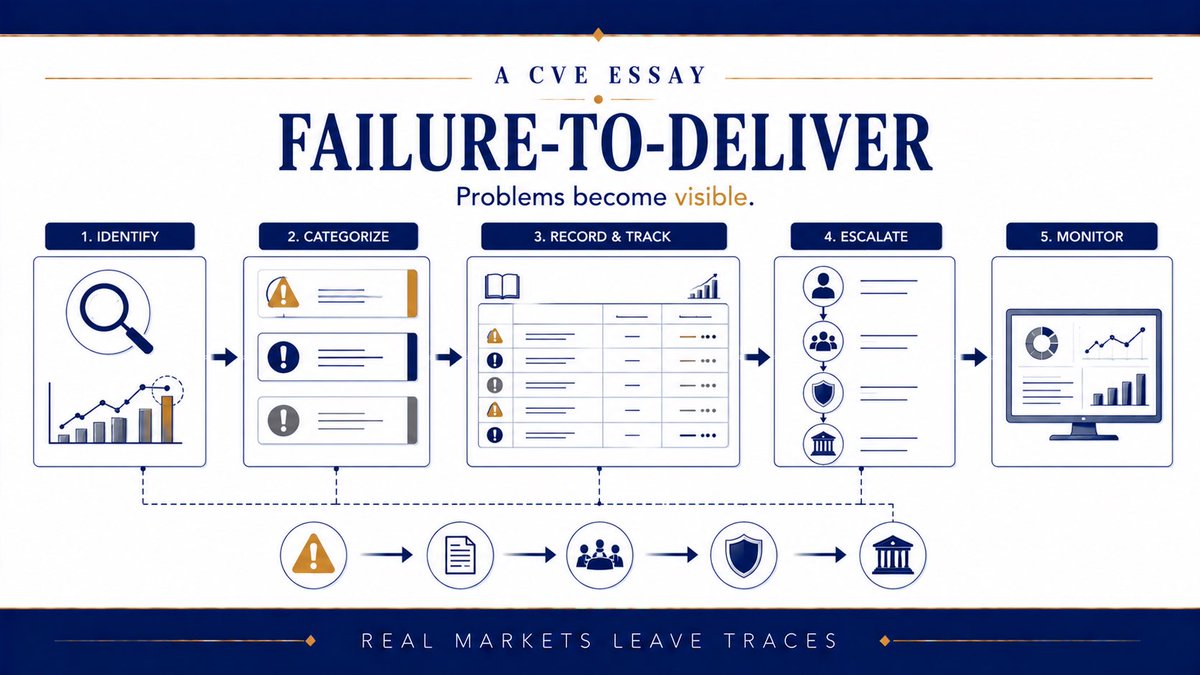
Failure-to-deliver classifications.

1
6
31

The US Department of Labor is seeking public comments on a proposed three-year extension of its information collection requirements for conformed wage classifications and unconventional fringe benefit plans under the Davis-Bacon and Related Acts. Comments are due by August 14, 2026. Follow @learnlaws for more updates!
4

Animals. We should return to appropriate classifications.
3