
11 Jun 2025
𝗘𝘃𝗮𝗹𝘂𝗮𝘁𝗲 𝗖𝗼𝗱𝗲𝘀 𝘄𝗶𝘁𝗵 𝗔𝗩𝗠, 𝗮 𝗺𝗼𝗿𝗲 𝘁𝗲𝗰𝗵𝗻𝗶𝗰𝗮𝗹 𝗮𝗽𝗽𝗿𝗼𝗮𝗰𝗵 𝘁𝗼 𝗽𝗲𝗿𝗰𝗲𝗶𝘃𝗶𝗻𝗴 𝘁𝗵𝗲 𝗔𝗩𝗠 𝗶𝗻𝗳𝗿𝗮𝘀𝘁𝗿𝘂𝗰𝘁𝘂𝗿𝗲 𝗮𝗻𝗱 𝗶𝘁𝘀 𝗶𝗺𝗽𝗼𝗿𝘁𝗮𝗻𝗰𝗲.
A lot of people are looking at the price action for $AVM and think we are so pumped up.
Well, i dont think you have seen it fully stacked and sure-to-be executed roadmap and what it does.
If the world of AI Agentic AI Swarms and the Agent Economy is to improve, developers and users in general will need speed, quick corrections and ease with their work and AVM is here to provide that.
AVM supports tasks like code evaluation /grading for developers, which is commonly referred to as code quality verification.
𝗪𝗵𝗮𝘁 𝗶𝘀 𝗖𝗼𝗱𝗲 𝗘𝘃𝗮𝗹𝘂𝗮𝘁𝗶𝗼𝗻 𝗮𝗻𝗱 𝗚𝗿𝗮𝗱𝗶𝗻𝗴?
Code evaluation and grading by developers is a method where a developer can assess another developer's code for various aspects like correctness, efficiency, readability, and adherence to coding standards.
It's a crucial part of software development, contributing to building high-quality software and improving developer skills.
𝗛𝗼𝘄 𝗱𝗼𝗲𝘀 𝗔𝗩𝗠 𝗺𝗮𝗸𝘀 𝘁𝗵𝗶𝘀 𝗮 𝗿𝗲𝗮𝗹𝗶𝘁𝘆 𝗳𝗼𝗿 𝗱𝗲𝘃𝗢𝗽𝘀?
.@avm_codes is here building an infrastructure that will ease developer time with codes, allow them to interact with other developers, and learn from one another.
Firstly, AVM was built as a modular, MCP-native architecture where agents generate code, MCP servers route tasks, and AVM nodes execute them in secure, isolated environments returning structured, verifiable outputs.
The initial AVM deployment (v0) is hosted on a distributed cloud infra, with an alpha dashboard for task monitoring and devOps will be able to integrate this into thier work for ease (early testers already confirmed this).
𝗪𝗵𝗮𝘁 𝗱𝗼 𝗶 𝗺𝗲𝗮𝗻?👇
When a code is graded, it is also assessed whether it correctly implements the intended functionality it was built for.
This will help developers grow as one of the foundations of code grading are reviews from peers, automations, and improved test functionality.
However, the task of grading codes can easily consume time and energy as developers and users may find themselves getting caught up in line by line details, and prolly get frustrated too.
Currently, to check if a code is really good before testing, developers have to use a code checking tool, and the best ones are paid for👍.
𝙀𝙭𝙖𝙢𝙥𝙡𝙚𝙨 𝙤𝙛 𝙨𝙪𝙘𝙝 𝙖𝙧𝙚 𝙩𝙤𝙤𝙡𝙨 𝙖𝙧𝙚 👇
1. CODILITY ( $1200 - $5000/yr depending on the level of package)
2. HackerRank ( $200/month)
3. Test Gorilla ( $75/month)
4. CODEAID ( $99/month)
5. CodeSubmit ($200/month)
6. HackerEarth ( $200/month)
7. DevSkiller ( $499/month)
8. iMocha ( $400/month)
With @avm_codes, developers can code, grade their codes for free, get reviews and corrections on it, test it and still get incentived with the $AVM tokens for using the platform.
There will also be a futuristic ecosystem grant for developers to code and build on AVM.
If you are a developer and you are still sleeping on AVM, you are missing out on a lot of fun, ease, and opportunity.
Integrate AVM into your codes and watch the ease, speed, and accuracy that comes with it.
Want to find your way around, visit the website 👇
avm.codes/
Other useful links to keep in touch with the AVM community and infrastructure updates 👇
linktr.ee/AVM_Codes
That's all for now, see you on the next AVM issue'.

20
23
66
12,983


29 May 2024
CodeAid: an LLM-based programming assistant for the classroom
blog.adafruit.com/2024/05/29…
1
10
2,423

20 May 2024
Read this blog post that summarizes our recent #CHI2024 paper about CodeAid, an LLM-powered coding assistant that avoids giving direct solutions to students: austinhenley.com/blog/codeai…
19 May 2024

We deployed an LLM-based programming assistant to 372 students for a semester. Read more about our CHI’24 paper here.
austinhenley.com/blog/codeai…
1
2
14
1,608

19 May 2024
The important piece is that CodeAid doesn’t give students the solution. It provides pseudo code, retrieves documentation, annotates incorrect parts, and suggests next steps.
14
669

9 May 2024
Checkout a list of accepted #CHI2024 papers from UofT DCS, including CodeAid!

Human-Computer Interaction research from @UofTCompSci is well represented at #CHI2024 with over 30 accepted papers, including a Best Paper Award and a few honourable mentions! uoft.me/au0

ALT Collage of various images and illustrations of human-computer interaction research from U of T CS papers accepted to the 2024 ACM Conference on Human Factors in Computing Systems (CHI).
1
3
391
26 Feb 2024
We've made a dataset of ~7k student queries from CodeAid publicly available: huggingface.co/datasets/maje… 📊
Example use cases:
- Automatically categorize student queries
- Benchmark educational AI tools against real-world queries
- Study the role and effectiveness of AI in CSEd
28 Jan 2024

How can we design "pedagogical" LLM-powered coding assistants?
Check out our conditionally accepted #CHI2024 paper, introducing CodeAid, its large classroom deployment, interviews with educators, and design implications for pedagogical AI assistants arxiv.org/abs/2401.11314
1/5
8
71
23,979
28 Jan 2024
• Evaluated CodeAid in a large class of 700 students over 12 weeks.
• Identified 9 common usage patterns and evaluated CodeAid's performance.
• Conducted weekly surveys, interviews with 22 students and 8 educators, and compared CodeAid with ChatGPT and non-AI tools.
3/5
1
3
266
28 Jan 2024
CodeAid was designed with "guradrails" to provide "scaffolded" LLM responses that do not directly reveal code solutions:
• CodeAid answers conceptual questions.
• Generates pseudo-code with on-hover explanations.
• Annotates student's incorrect code with suggested fixes.
2/5
1
2
341
28 Jan 2024
How can we design "pedagogical" LLM-powered coding assistants?
Check out our conditionally accepted #CHI2024 paper, introducing CodeAid, its large classroom deployment, interviews with educators, and design implications for pedagogical AI assistants arxiv.org/abs/2401.11314
1/5
5
13
98
31,916

23 Aug 2022
やっぱ「短い」方がいいのね:-)
それはさておき、「ip」という名称はgo言語の教訓が活きてないような気がしないでもないwww
RT: ifconfigとnetstatはipとssです – CodeAid-Lab(コードエイド・ラボ) codeaid.jp/blog/iproute2/
2

22 Aug 2022
I want give a big thank you 4 the gift aid my favorite member of blizzard squad @usecodeaid #codeaid #blizzardsquad #neikosgamer
1
7

22 Apr 2022
JavaScriptの仕様ES5以前とES2015(ES6)以降の違いの抑えるべき項目 – CodeAid-Lab(コードエイド・ラボ) codeaid.jp/js-es2015/
1

22 Sep 2021
Visual Studio CodeでJupyter Notebookを使う方法 – CodeAid-Lab(コードエイド・ラボ) codeaid.jp/vscode-jupyter/
2

13 Jul 2021
Thank you all for making this a success. This wouldn't have been possible without the amazing team! ❤️🚀
#CodeAid
13 Jul 2021

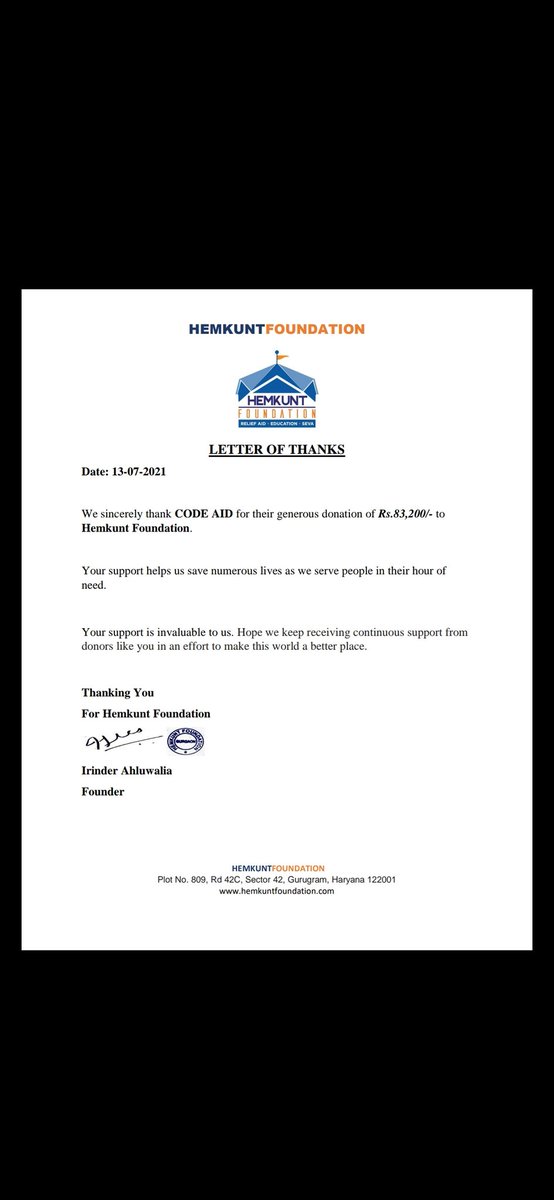
As promised, here's a proof of our donation towards @Hemkunt_Fdn , thank you all for donating and making this event a success! 🙏🥳
P.S. We collected total 85k, from which 1.8k went for payment gateway charges.
#CodeAid
1
13

13 Jul 2021
As promised, here's a proof of our donation towards @Hemkunt_Fdn , thank you all for donating and making this event a success! 🙏🥳
P.S. We collected total 85k, from which 1.8k went for payment gateway charges.
#CodeAid
4
20

28 Jun 2021
Glad to be a part of this 🤟
We were able to contribute a significant amount to India's fight against Covid!
#IndiaFightsCorona #IndiaFightsCOVID19 #CodeAid
27 Jun 2021

After a fun 2 day event, @CodeAidConf has come to an end!
May 19:
Thought about this idea randomly and called @shuvam360 straight up to pitch.
The idea popped up as a result of DAYS of stressing over imposter syndrome. So this was more like an event to feel better internally.

5

27 Jun 2021
Thanks @OnlyMaheswari for reaching out to me for great initiative 🙌🏻 Glad to be part it 🙏
#CodeAid #IndiaFightsCOVID19
27 Jun 2021
After a fun 2 day event, @CodeAidConf has come to an end!
May 19:
Thought about this idea randomly and called @shuvam360 straight up to pitch.
The idea popped up as a result of DAYS of stressing over imposter syndrome. So this was more like an event to feel better internally.
1
3