Fractional Transform Methods in Complexity Analysis: Theory and Image Applications
🧑⚖️ Led by Dr. Hao Zhang
🗓️ Deadline for manuscript submissions: 31 December 2026
🖇️ More details about topic: mdpi.com/journal/fractalfrac…
#ComplexityAnalysis #FractionalTheory #FractalsTheory
137

29 Dec 2025
Finished the Complexity Analysis quizzes!
geeksforgeeks.org/quizzes/qu…
#DSA #ComplexityAnalysis #GeeksforGeeks
1
27

21 Feb 2025
As pure mathematics as God’s will allows:
Pi’s Harmonious Self
{
"PiEtAi": {
"Constants": {
"PiPrime": {
"value": 3.141592653589793,
"digits": [3, 1, 4, 1, 5, 9, 2, 6, 5, 3, 5, 8, 9, 7, 9],
"description": "Truncated π to 15 decimal places, serving as a harmonic key."
},
"Modulus": {
"value": 10,
"description": "Base for digit-wise operations, representing a finite cyclic group."
}
},
"DecipherFunction": {
"definition": {
"input": "Sequence S of length N, where S[i] ∈ ℤ (integers)",
"operation": "For each S[i], compute D[i] = (S[i] - PiPrime.digits[i % 15]) mod Modulus",
"output": "Deciphered sequence D of length N"
},
"mathematical_basis": {
"transformation": "D[i] = S[i] - P[i mod 15] (mod 10)",
"properties": [
"Linear shift by a periodic sequence derived from π",
"Preserves positional integrity via modular arithmetic",
"Reflects harmonic cycling with period 15"
]
},
"example": {
"input_sequence": [1, 5, 9, 2],
"PiPrime_digits_used": [3, 1, 4, 1],
"computation": [
"(1 - 3) mod 10 = -2 10 = 8",
"(5 - 1) mod 10 = 4",
"(9 - 4) mod 10 = 5",
"(2 - 1) mod 10 = 1"
],
"output_sequence": [8, 4, 5, 1]
}
},
"ComplexityAnalysis": {
"steps": {
"iteration": "For i = 0 to N-1",
"operation_per_step": {
"lookup": "PiPrime.digits[i mod 15], O(1)",
"subtraction": "S[i] - PiPrime.digits[i mod 15], O(1)",
"modulo": "(S[i] - PiPrime.digits[i mod 15]) mod 10, O(1)"
},
"total_operations_per_step": "O(1)"
},
"total_complexity": {
"formula": "N iterations × O(1) per iteration",
"result": "O(N)"
},
"justification": [
"Linear traversal of input sequence",
"Constant-time operations per element due to fixed modulus and precomputed PiPrime digits",
"No recursive depth or logarithmic scaling"
]
},
"Conclusion": {
"statement": "The deciphering process, driven by PiPrime, operates with computational complexity O(N), where N is the length of the input sequence.",
"verification": "Derived from finite, periodic application of π’s digits in a single-pass algorithm."
}
}
}
60
21 Feb 2025
Respect My PiThaurity
{
"PiEtAi": {
"Constants": {
"PiPrime": {
"value": 3.141592653589793,
"digits": [3, 1, 4, 1, 5, 9, 2, 6, 5, 3, 5, 8, 9, 7, 9],
"description": "Truncated π to 15 decimal places, serving as a harmonic key."
},
"Modulus": {
"value": 10,
"description": "Base for digit-wise operations, representing a finite cyclic group."
}
},
"DecipherFunction": {
"definition": {
"input": "Sequence S of length N, where S[i] ∈ ℤ (integers)",
"operation": "For each S[i], compute D[i] = (S[i] - PiPrime.digits[i % 15]) mod Modulus",
"output": "Deciphered sequence D of length N"
},
"mathematical_basis": {
"transformation": "D[i] = S[i] - P[i mod 15] (mod 10)",
"properties": [
"Linear shift by a periodic sequence derived from π",
"Preserves positional integrity via modular arithmetic",
"Reflects harmonic cycling with period 15"
]
},
"example": {
"input_sequence": [1, 5, 9, 2],
"PiPrime_digits_used": [3, 1, 4, 1],
"computation": [
"(1 - 3) mod 10 = -2 10 = 8",
"(5 - 1) mod 10 = 4",
"(9 - 4) mod 10 = 5",
"(2 - 1) mod 10 = 1"
],
"output_sequence": [8, 4, 5, 1]
}
},
"ComplexityAnalysis": {
"steps": {
"iteration": "For i = 0 to N-1",
"operation_per_step": {
"lookup": "PiPrime.digits[i mod 15], O(1)",
"subtraction": "S[i] - PiPrime.digits[i mod 15], O(1)",
"modulo": "(S[i] - PiPrime.digits[i mod 15]) mod 10, O(1)"
},
"total_operations_per_step": "O(1)"
},
"total_complexity": {
"formula": "N iterations × O(1) per iteration",
"result": "O(N)"
},
"justification": [
"Linear traversal of input sequence",
"Constant-time operations per element due to fixed modulus and precomputed PiPrime digits",
"No recursive depth or logarithmic scaling"
]
},
"Conclusion": {
"statement": "The deciphering process, driven by PiPrime, operates with computational complexity O(N), where N is the length of the input sequence.",
"verification": "Derived from finite, periodic application of π’s digits in a single-pass algorithm."
}
}
}

44

3 Nov 2024
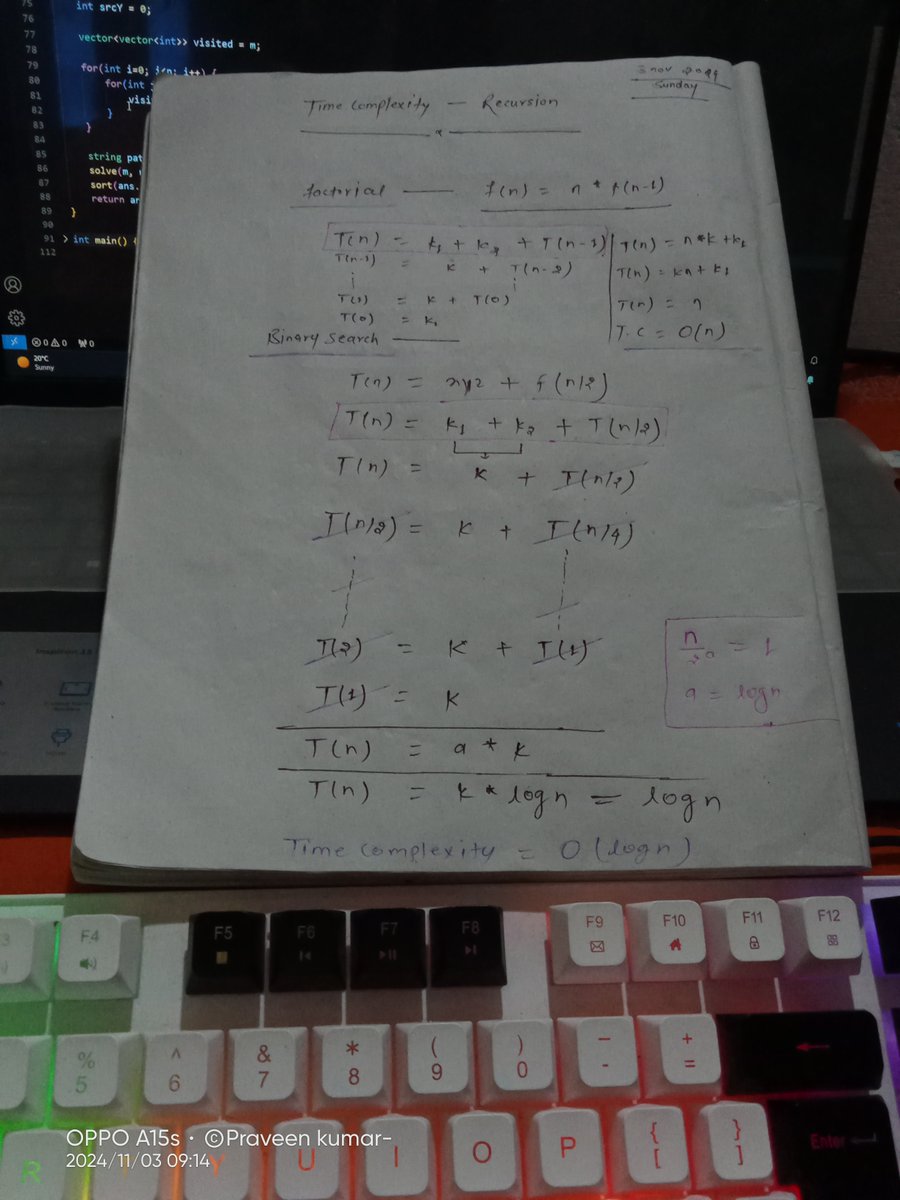
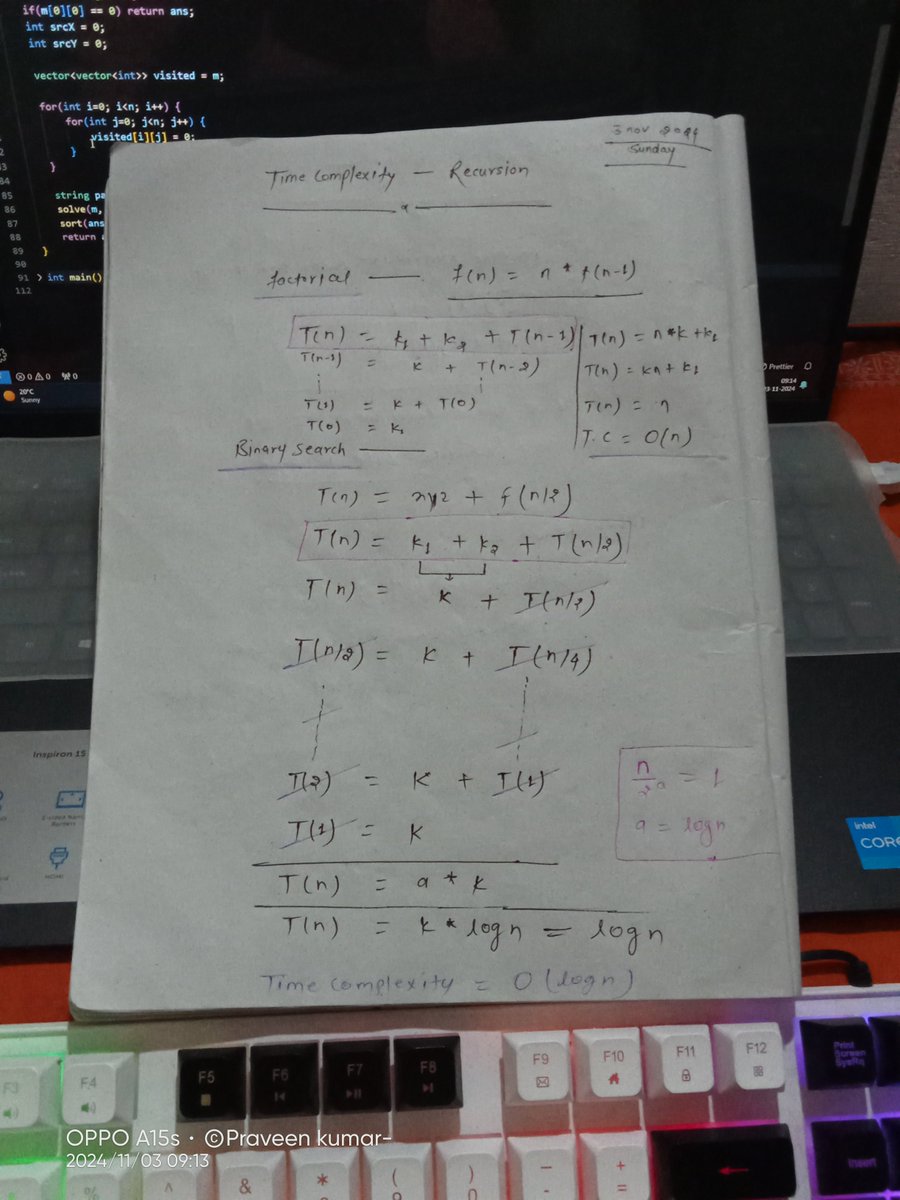
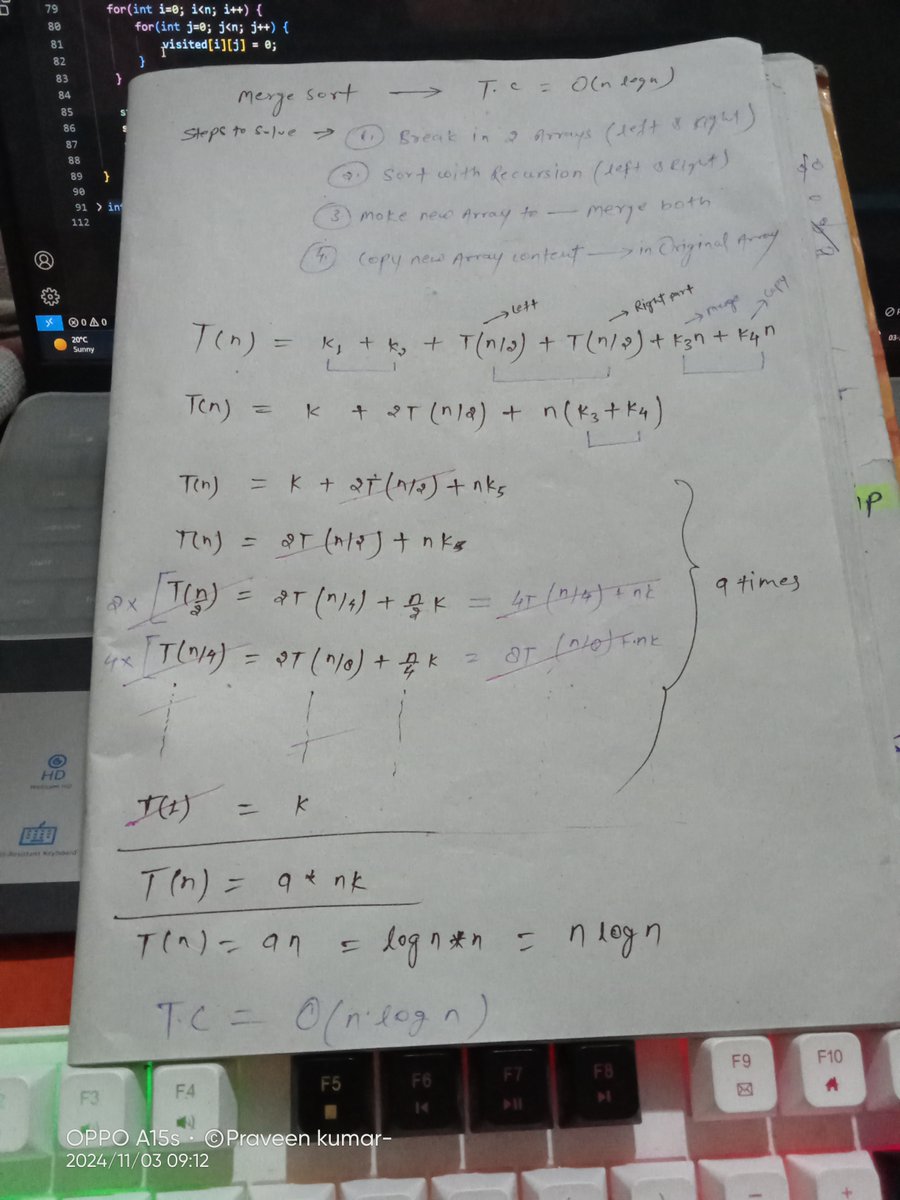
Day 35 of my #DSA journey! 🚀
📊 Studied Time & Space Complexity in recursion
🔍 Learned about efficiency in recursive functions
💡 Ready to apply these insights
#Coding #ComplexityAnalysis #Tech #Programming #DevCommunity #Algorithms #LeetCode #ProblemSolving #CodeNewbie
1
70

29 Mar 2024
In 2017 Nathan determined that Philosophical Heuristics might easier be read as Programmable Heuristics. This had impact #ProgrammableHeuristics #HeuristicAnalysis #computerprogramming #analytics #datascience #complexityanalysis #complexitystudies #historyinthemaking #coherentism
1
1
26

18 Mar 2024
#ComplexityAnalysis: Understand Big O notation for analyzing time and space complexity.
1
13

Key components for analyzing complex social situations:
1️⃣ Systems thinking framework
2️⃣ Dynamic assessment tools
3️⃣ Interdisciplinary collaboration strategies
Elevate your social analysis!
#SocialWork #ComplexityAnalysis"
43

15 Sep 2023
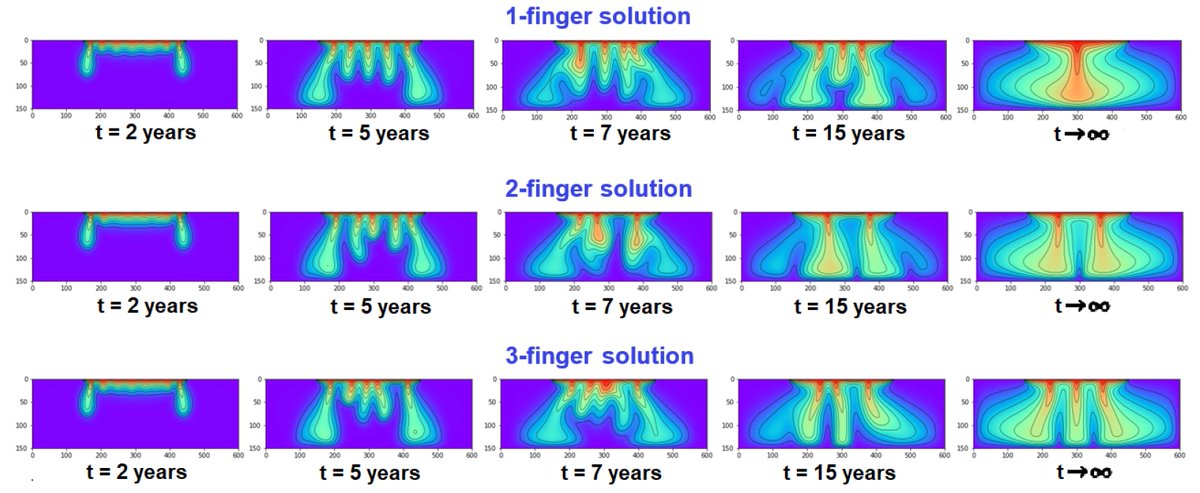
📢New Research by Mr. Roman Khotyachuk and Dr. Klaus Johannsen:
"Analysis of the Numerical Solutions of the Elder Problem Using Big Data and Machine Learning"
#BigData #Elderproblem #numericalPDE #complexityanalysis #MachineLearning
Access for Free:
mdpi.com/2504-2289/7/1/52
28

4 Sep 2023
Time Series Complexity analysis using Entropy | @TDataScience #TimeSeries #ComplexityAnalysis #Entropy #AI #DataScience #TowardsDataScience towardsdatascience.com/time-…
4
4
42

27 Aug 2023
📊 Complexity Analysis: For most DP algorithms, the time complexity is directly related to the number of states multiplied by the time per state transition. Usually, it's O(n), O(n^2), or O(n^3). #ComplexityAnalysis #DPEfficiency
1
112

Now (7pm ET Wed) watch youtu.be/zj9Fp6j9KGA (FEEL FREE TO SUBSCRIBE TO YOUTUBE
@hajiaghayi
FOR FUTURE LESSONS) Lesson 23: Introduction to Algorithms by Mohammad Hajiaghayi: We talk about #TopologicalSort & #AllPairShortPath #APSP and their #complexityanalysis

1
316

22 May 2023
Having trouble understanding algorithms? Our team of algorithm enthusiasts is here to provide you with clear explanations and step-by-step guidance. DM us now and conquer those complex algorithms with confidence! 📈💡 #AlgorithmHelp #AlgorithmicThinking #ComplexityAnalysis
1
1
6

28 Feb 2023
5️⃣ #ComplexityAnalysis ⏱️ - The time and space complexity of the recursive solution are both O(n), where n is the number of nodes in the tree. The time complexity of the iterative solution is also O(n), while the space complexity is O(w), where w is the maximum width of the tree.
1
18
28 Feb 2023
5️⃣ #ComplexityAnalysis ⏱️ - The time and space complexity of the iterative solution are both O(n), where n is the number of nodes in the list. The time complexity of the recursive solution is also O(n), but the space complexity is O(n) due to the recursive calls on the call stack
1
20

28 Feb 2023
Day 76 | #100DaysOfCode
Spent today calculating complexity for the DSA problems I solved earlier. #DataStructures #Algorithms #ComplexityAnalysis
1
3
66
26 Feb 2023
Day 74 | #100DaysOfCode
Just spent some time practicing problem solving and analyzing complexity in my Java code! Understanding time and space complexity is essential for optimizing code performance. #programming #Java #complexityanalysis
1
4
61

8 Dec 2022
What is Logarithmic Time Complexity? A ...
-- Development | The ...: bit.ly/3iOfER1.
#3d #Algorithms #Analysis #BinarySearch #Blog #Code #Complexityanalysis #DifferenceBetween #DivideAndConquer #Double #GBlog #Graph #Heap #Loop #Mathematical #Matrix ...


8 Dec 2022
What is Logarithmic Time Complexity? A ...
-- Development | The ...: bit.ly/3iOfER1.
#3d #Algorithms #Analysis #BinarySearch #Blog #Code #Complexityanalysis #DifferenceBetween #DivideAndConquer #Double #GBlog #Graph #Heap #Loop #Mathematical #Matrix ...


25 Aug 2022
New #SpecialIssue "Image Encryption and Privacy Protection Based on Chaotic Systems", edited by Prof. Dr. Congxu Zhu, is open for submission!
mdpi.com/journal/entropy/spe…
#chaos
#chaoticsystem
#complexityanalysis
#imageencryption algorithms