

Referanslar:
1. Vecchione, A., et.al. (2018). Compositional Quality and Potential Gastrointestinal Behavior of Probiotic Products Commercialized in Italy. Frontiers in medicine, 5, 59.
1

holyyy, GPT Image 2 on ChatGPT just cooked this Swiss editorial collage poster and it goes absolutely nuts 🤯
prompt:
Full prompt: aiistudio.com/prompt/2029935…
Imagine you're a Senior Editorial Designer and Graphic Artist. Create a complex, multi-layered Swiss Modernism collage poster for [PERSONE].
STEP 1: SEMANTIC ANALYSIS (AUTO)
Study "[PERSONE]" and identify their domain (e.g., motorsport, cybersecurity, film, history). Choose a signature accent color that reflects their persona (e.g., Racing Orange for a racing driver, Neon Cyan for a hacker, Crimson for a hero). Generate 3 key stats or career milestones (e.g., "7 TITLES", "98% ACCURACY") plus a short professional title.
STEP 2: COMPOSITIONAL GRID
Single vertical composition with overlapping geometric frames:
- TOP LEFT: Large, high-grain portrait of [PERSONE], confident and smiling (grayscale or color)
- CENTER RIGHT: Cropped close-up rectangle showing only the eyes or a key detail
- BOTTOM CENTER: [PERSONE] seated on a geometric podium, relaxed yet commanding
- BACKGROUND: Light gray with heavy film grain/noise texture
STEP 3: TYPOGRAPHY & GRAPHIC ELEMENTS
- Initials: Large outlined block letters of first and last name in opposite corners
- Vertical ribbon: Solid accent-color strip running through the center with "WORLD CHAMPIONSHIP LEADER" or a fitting title in vertical text
- Data blocks: Bold sans-serif number (ID or rank); stats block in bottom-left with 3 lines (e.g., "TWO POLES / FOUR WINS / FIVE PODIUMS")
- Accents: Orange and black squares, dotted circles, small asterisks scattered throughout for visual complexity
STEP 4: TEXTURE & LIGHTING
- Heavy, gritty grain throughout, feels like a high-end printed magazine or vintage poster
- Risograph or halftone processing over professional studio lighting
- Hyper-realistic photography merged with flat vector shapes
STEP 5: OUTPUT
8K resolution. Swiss Modernism aesthetic.
#AIart #GPTImage2

30

2h
At the moment, no full neuro-symbolic attention mechanism exists that is:
- Algebraic and explicit
- Structure-preserving by design
- Naturally produces coherent symbolic representations
- Efficient and reversible
Only parts of this exist across various mechanisms (sometimes only as proposals).
If such a new type of attention mechanism was available, it would enable these sort of things:
1. Highly Interpretable & Auditable Agent
Systems
- Agents that maintain full, human-readable reasoning traces at every step.
- Every attention decision (what was focused on, why it was classified as novel/preserved, what changed) is explicitly logged and reversible.
- You can pause, inspect, edit or rollback the agent’s thought process like editing code.
2. Long-Horizon Reliable Autonomous Agents
- Agents that can operate coherently over thousands or tens of thousands of steps without drifting or hallucinating their own state.
- The combination of temporal symbolic attention structure-preserving scene graphs/world models gives much stronger long-term consistency than current LLM agents or reinforcement learning agents.
- Better suited for complex, multi-stage missions or long-running processes.
3. Neuro-symbolic World Models
- Agents that maintain explicit, structured, queryable internal models of the world (objects, relations, constraints, dynamics).
- These models can be directly inspected, queried, and reasoned over symbolically while still being updated from raw perceptual input via the attention mechanism.
- Supports planning, simulation and “what-if” reasoning natively.
4. Compositional & Hierarchical Reasoning Systems
- Systems that can build complex reasoning by composing attended factors (e.g., attending to “person vehicle interaction” as a single coherent unit, then reasoning about it).
- Natural support for hierarchical attention (coarse scene-level attention → fine-grained object/relation attention).
5. Verifiable and Constrained AI Systems
- Systems where safety, ethical or operational constraints can be enforced at the attention level rather than only as post-processing.
- Much stronger path toward verifiable AI than current probabilistic systems.
6. Efficient Real-Time & Edge Neuro-symbolic Systems
- Perception reasoning systems that can run efficiently on resource-constrained hardware (drones, robots, vehicles, edge devices) while still producing structured, high-quality outputs.
- The delta-focused, incremental nature of the attention mechanism makes continuous real-time operation more feasible than heavy neural models.
7. Multi-Agent Collaborative Systems with Shared Structure
- Fleets of agents that can maintain aligned, shared structured world models.
- They can exchange coherent factors or scene graph updates and reason about each other’s attended information.
- More sophisticated coordination and collective intelligence than current multi-agent systems.
8. Explainable Decision-Making & Oversight Systems
- AI systems where every important decision has an accompanying structured explanation that includes:
What was attended to
Why it was considered novel or conflicting
What structural changes occurred
9. Hybrid Large-Scale Neuro-symbolic Architectures
- Systems that combine the strengths of large neural models (for raw perception and pattern recognition) with this symbolic attention layer (for coherence, structure, compositionality and control).
- The neural part handles messy real-world input → the symbolic attention layer turns it into clean, structured, governable representations.
10. Advanced Planning & Simulation Systems
- Planners that operate directly on structured, attended representations rather than raw tokens or latent vectors.
- Easier integration of symbolic planning techniques (constraint satisfaction, hierarchical task networks, etc.) with perceptual input.
- Supports more reliable simulation and counterfactual reasoning.
Current AI paradigm: Neural attention post-hoc structure probabilistic reasoning
Next AI paradigm: Symbolic attention that natively produces structured, coherent, reversible and constraint-aware representations
Such next AI paradigm systems are:
- Interpretable and auditable
- Compositionally capable
- Long-term coherent
- Verifiable and safe by design
- Efficient at maintaining structured world models
You can think 3x now about why I mention all of this.

2
82

⚠️ PART VII -Continues-Hidden Terms, Forgotten Mineral Sciences, Obscure Correspondences, & Rare Mineral Realms from Griffin's System of Crystallography - (again) Ft. Griffin's contents, obscure index entries, forgotten mineral names, old crystallographic language, & the scientific world of 1841(1800s) "symmetry, geometry
CCCXXVI. Aeschynitics
Derived from Aeschynite, one of the stranger mineral species known to nineteenth-century mineralogists. Containing rare metallic constituents, it stood as evidence that the Earth concealed entire chemical provinces beyond the common metals. To Griffin's contemporaries, minerals of this type suggested that nature possessed a treasury of substances still awaiting discovery and classification. Aeschynite represented a frontier mineral, pointing toward hidden elemental kingdoms.
CCCXXVII. Allanitic Reservoir Theory
Allanite fascinated collectors because it frequently concentrated uncommon earths and metallic constituents into a single mineral body. Such minerals acted almost as geological vaults preserving chemical histories that ordinary rocks could not reveal. The study of Allanite became a search for the Earth's hidden inventories.
CCCXXVIII. Almandinic Garnet Sciences
Almandine was not merely a gemstone. It served as a geological messenger. Garnets preserve pressure, heat, and environmental conditions. Long before modern metamorphic petrology, nineteenth-century observers recognized that garnets recorded the circumstances of their birth within mountain-building regions.
CCCXXIX. Amblygonitic Lithochemistry
Amblygonite introduced the scientific world to unusual combinations of phosphorus, fluorine, and alkali substances. It suggested that mineral chemistry was not governed by a handful of common elements but by elaborate partnerships between many chemical principles.
CCCXXX. Amphigenic Transformation Theory
Amphigene, now largely known under other names, represented transitional mineral forms whose identities seemed to bridge multiple classifications. Such specimens challenged rigid systems and revealed that nature often preferred continuums rather than strict boundaries.
CCCXXXI. Andalusitic Thermal Records
Andalusite became valued because its crystals preserved evidence of heat conditions during formation. Long before modern geothermometry, such minerals acted as natural thermometers recording the hidden temperatures of the Earth's interior.
CCCXXXII. Anthophyllitic Fibrology
Anthophyllite develops elongated fibrous structures resembling bundles, rays, and mineral sheaves. These forms fascinated early natural philosophers because they blurred distinctions between crystalline architecture and botanical growth patterns.
CCCXXXIII. Apatitic Nutrient Geology
Apatite quietly became one of Earth's most consequential minerals. It stores phosphorus, an essential ingredient for biological systems. Thus Apatite connects mineralogy, agriculture, physiology, and terrestrial fertility within a single crystalline substance.
CCCXXXIV. Arsenikblüthe Studies
Known historically as "Arsenic Bloom." These delicate oxidation products demonstrated how minerals continue transforming long after their original formation. They revealed that mineralogy includes decay, alteration, and secondary creation as much as initial genesis.
CCCXXXV. Atakamitic Coastal Mineralogy
Atakamite often develops in arid or saline environments. To nineteenth-century observers it demonstrated the extraordinary influence of climate, evaporation, and surface chemistry upon mineral creation.
CCCXXXVI. Baikalitic Petrogenesis
Baikalite represented one of numerous localized mineral species whose existence showed that geological provinces possess distinctive mineral signatures. Certain crystals belong almost exclusively to particular landscapes.
CCCXXXVII. Berzelitic Compositional Science
Named after the great chemist Jöns Jacob Berzelius, Berzelite symbolized the growing union of crystallography and analytical chemistry during the nineteenth century.
CCCXXXVIII. Bitterspar Mineral Economics
Bitterspar, rich in magnesium, revealed that seemingly ordinary minerals often contain substances of great industrial and agricultural significance.
CCCXXXIX. Bournonitic Metallography
Bournonite became known for its distinctive crystal habits. Collectors often nicknamed it "cogwheel ore" because of its remarkable geometric appearance. It demonstrated how crystals frequently imitate mechanical forms.
CCCXL. Brongniartine Correspondences
Named after Alexandre Brongniart, this mineral reflects the nineteenth-century practice of preserving scientific memory through mineral nomenclature.
CCCXLI. Cancrinitic Alkaline Provinces
Cancrinite revealed the existence of unusual alkaline geological systems distinct from ordinary granite and basalt environments.
CCCXLII. Ceylanitic Gem Mineralogy
Named after Ceylon (Sri Lanka), this mineral testified to the global character of nineteenth-century mineral collecting. Crystal science became an international enterprise spanning continents.
CCCXLIII. Chalkolitic Copper Geochemistry
Chalkolite demonstrated the extraordinary variety of copper-bearing mineral species. Copper was not confined to a single geological expression but manifested itself through countless crystalline identities.
CCCXLIV. Chiastolitic Internal Geometry
Unlike many minerals valued for external form, Chiastolite fascinated observers because its greatest wonder lay hidden within. Cross-shaped internal structures suggested that crystal organization extended deep into the interior.
CCCXLV. Chromsaures Blei Studies
Lead chromates displayed some of the most brilliant colors known in mineralogy. They demonstrated that vivid coloration frequently arises from minute chemical substitutions.
CCCXLVI. Cleavelanditic Feldspathics
Cleavelandite became important because it showed how subtle variations within feldspar families generate entirely new crystal habits and appearances.
CCCXLVII. Coquimbitic Sulfate Chemistry
Coquimbite represented one of many highly soluble minerals demonstrating the importance of water in shaping mineral existence.
CCCXLVIII. Couzeranitic Regionalism
Minerals known only from restricted localities taught nineteenth-century scientists that geological diversity varies dramatically from one province to another.
CCCXLIX. Crichtonitic Ore Sciences
Crichtonite belongs to a group of obscure titanium-bearing minerals whose complexity challenged early analytical methods.
CCCL. Cymophanitic Optical Wonders
Cymophane, famous for chatoyancy, demonstrated that crystals interact with light in extraordinarily subtle ways. Internal structures can transform ordinary illumination into dynamic visual effects.
CCCLI. Devonic Mineral Provenance
Named after regional geological associations, such minerals illustrated how location itself becomes part of scientific identity.
CCCLII. Dreelitic Local Mineral Studies
Numerous minerals in Griffin's index represent local discoveries that later disappeared from common scientific discussion. They preserve the geography of nineteenth-century exploration.
CCCLIII. Edingtonitic Zeolitics
Edingtonite exemplified the remarkable diversity of zeolite minerals, whose intricate architectures fascinated both chemists and crystallographers.
CCCLIV. Egeranitic Naming Traditions
Minerals often preserve the names of regions, towns, scientists, patrons, or collectors, creating a hidden historical record within mineral nomenclature itself.
CCCLV. Endellionic Copper Studies
Endellionite reflects the nineteenth-century fascination with rare copper minerals and their seemingly endless chemical combinations.
CCCLVI. Euklasic Precision
Euclase became prized among crystallographers because of its clean forms and suitability for exact angular measurement.
CCCLVII. Fischaugenstein Phenomenology
"Fish-eye Stone" represents one of the most colorful names in historical mineralogy. Such terms remind us that mineral science once blended careful observation with vivid descriptive imagination.
CCCLVIII. Fluoceritic Frontier Chemistry
Fluocerium-bearing minerals revealed the increasing complexity of rare-earth investigations during the nineteenth century.
CCCLIX. Fraueneis Mineral Folklore
Many mineral names preserve forgotten traditions, regional stories, and folk classifications alongside scientific observations.
CCCLX. Lussitic Correspondence
Named after Joseph Louis Gay-Lussac, this mineral demonstrates how mineralogy became intertwined with the broader development of chemistry and physics.
CCCLXI. Gehlenitic Furnace Geology
Gehlenite commonly forms under high-temperature conditions and thus became important evidence of intense geological transformation.
CCCLXII. Haidingeritic Recognition Science
Named after Wilhelm Karl von Haidinger, it reflects the era's culture of honoring discoverers through nomenclature.
CCCLXIII. Helvinic Sulfur Frameworks
Helvine belongs to an unusual family combining sulfur with silicate structures. Such minerals challenged assumptions concerning what combinations nature could produce.
CCCLXIV. Humboldtilitic Natural History
Named after Alexander von Humboldt, these minerals connect crystallography to the great age of exploration and global scientific travel.
CCCLXV. Hypersthenic Petrology
Hypersthene became important because it appears in major rock-forming assemblages, linking crystallography directly to large-scale geological architecture.
⚠️(see NEXT REPLY) -There are still hundreds of untouched entries remaining: Johannite, Koupholite, Lanthanite, Menakerz, Oerstedtite, Paulite, Pharmacolite, Plagionite, Polybasite, Polymignite, Pyrosmalite, Tetradymite, Turnerite, Uwarowite, Vauquelinite, Wavellite, Yttrocerite, Zinkenite, and dozens more.

⚠️ PART VII. (7) - DEEPER REPUBLICS OF CRYSTAL KNOWLEDGE - Key Fts - Forgotten Tags, Facets, Correspondences, Sciences, Authors, Propositions, & Mineral Mysteries Beyond the Common Textbooks -
📜 📜
Griffin's actual contents, mineral index,
Rose's classification system, obscure nineteenth-century (1800s-Ancient ages)mineralogy, crystallographic
mathematics, & forgotten
natural philosophy gives
us far richer material.
CCLXXXI. Acmitics
Derived from Acmite (now Aegirine). A forgotten branch of mineral observation concerned with dark green sodium-iron silicates occurring in igneous environments. Nineteenth-century mineralogists often regarded these black crystalline needles as signatures of profound subterranean fire-processes hidden beneath volcanic provinces.
CCLXXXII. Actinolitics
The study of radiating fibrous minerals such as Actinolite. These starburst structures fascinated early observers because they appeared to embody frozen rays, petrified light, or mineralized radiance emerging from the Earth's interior workshops.
CCLXXXIII. Amphibological Mineral Science
Not logical ambiguity but the science of Amphiboles. These minerals demonstrated that crystals could belong to enormous structural families while displaying striking variations in color, habit, density, and geological occurrence.
CCLXXXIV. Anatase Dynamics
The study of titanium-bearing crystal forms. Anatase became important because it showed how rare metallic substances could organize themselves into highly elegant geometric structures far removed from ordinary rock-forming minerals.
CCLXXXV. Arfvedsonian Studies
The investigation of dark alkaline silicates such as Arfvedsonite. These minerals became windows into unusual magmatic environments where rare elements accumulated and produced extraordinary crystalline architectures.
CCLXXXVI. Axinitic Architectonics
The science of Axinite crystals, whose sharply angled forms appeared almost mechanical in their precision. Early mineralogists frequently described them as resembling artificial instruments produced by nature herself.
CCLXXXVII. Azuritic Chromatics
The study of vivid mineral coloration. Azurite demonstrated that geometry alone could not explain mineral beauty. Color, transparency, and reflective power formed secondary kingdoms of mineral knowledge.
CCLXXXVIII. Boracitology
The science of Boracite and boron-bearing crystals. Such minerals fascinated nineteenth-century chemists because they connected geometric regularity with unusual chemical compositions.
CCLXXXIX. Botryogenic Morphology
The study of grape-like mineral aggregates. Botryogen and similar minerals showed that geometry sometimes expresses itself through clusters rather than isolated crystals.
CCXC. Brongniartian Geognosy
Inspired by Alexandre Brongniart. The interpretation of mineral systems within vast geological formations. Crystals became citizens of larger terrestrial provinces.
CCXCI. Brookitic Mineral Physics
Brookite demonstrated how identical chemistry could produce different geometries. This challenged simplistic assumptions and hinted at deeper structural laws governing matter.
CCXCII. Chabasitic Zeolitics
The study of zeolites as mineral sponges, absorbers, and geological transformers. Chabasite represented a forgotten frontier between chemistry, crystallography, and subterranean hydrology.
CCXCIII. Chiastolitic Symbolics
Chiastolite crystals naturally produce cross-like internal markings. They fascinated nineteenth-century collectors because geometry seemed to create symbolic forms without human intervention.
CCXCIV. Chromiferous Mineral Philosophy
The study of chromium-bearing minerals whose brilliant colors transformed ordinary geological specimens into objects of aesthetic and scientific wonder.
CCXCV. Cobalt Bloom Studies
Cobalt bloom minerals displayed remarkable colors and oxidation patterns. Their appearance often resembled natural paintings executed upon stone..
CCXCVI. Corundic Sovereignties
The science of Corundum, Sapphire, and Ruby. These minerals occupied aristocratic positions within mineral classification because of their hardness, brilliance, and geological rarity.
CCXCVII. Cryolitic Mysteries
Cryolite appeared almost magical to nineteenth-century investigators because of its unusual optical properties and strange appearance. It represented one of the mineral kingdom's great enigmas.
CCXCVIII. Cubicitics
The study of minerals dominated by cubic habits. Such forms embodied equilibrium, stability, and geometric perfection.
CCXCIX. Datolithic Mineral Genesis
Datolite became important because it linked boron chemistry, hydrothermal processes, and crystal growth within a single mineral species
CCC. Demantoid Studies
The investigation of exceptionally brilliant garnets whose optical fire rivaled diamonds and challenged assumptions concerning gemstone hierarchies.
CCCI. Diamond Architectonics
Diamond represents not merely hardness but one of nature's most efficient structural arrangements. Its internal geometry became a model of maximum stability.
CCCII. Diopsidic Petrology
The study of Diopside as a bridge between mineralogy and geology. Such minerals reveal the conditions under which deep terrestrial processes crystallize into visible form
CCCIII. Eudialytic Cosmochemistry
Eudialyte contains unusual elemental assemblages. To nineteenth-century observers it hinted that Earth's chemistry was vastly richer than previously imagined.
CCCIV. Euclasian Symmetrology
Euclase crystals display extraordinary clarity and symmetry, providing ideal examples for precise crystallographic measurement.
CCCV. Feldspathic Commonwealths
The feldspars constitute one of the largest mineral republics on Earth. Entire continents are constructed from their crystalline dominions.
CCCVI. Fergusonitic Mineral Analytics
Rare earth minerals such as Fergusonite revealed hidden chemical provinces largely invisible to earlier generations.
CCCVII. Franklinitic Metallogeny
Franklinite illustrated the intimate relationship between metallic ores and geometric organization.
CCCVIII. Gadolinitic Frontiers
Gadolinite opened pathways toward the discovery of rare earth elements, reshaping nineteenth-century chemistry.
CCCIX. Garnetic Genealogies
The garnet family demonstrated that one structural blueprint could generate numerous mineral species through compositional variation.
CCCX. Harmotomic Dynamics
Harmotome crystals exhibit twinning phenomena that challenged simple explanations of crystal growth.
CCCXI. Helvinic Mineral Philosophy
Helvine belongs to a rare class of minerals whose compositions revealed surprising relationships between sulfur, metals, and silicates.
CCCXII. Idocrasian Architectures
Idocrase (Vesuvianite) occupies an intermediate territory between several mineral families, making it a natural bridge-builder within mineral classification.
CCCXIII. Iridosmine Studies
One of the most exotic minerals in Griffin's index. Composed largely of iridium and osmium, it represented almost metallic relics from the Earth's deepest laboratories.
CCCXIV. Johannitic Uranology
Not celestial astronomy but uranium mineralogy. Johannite hinted at hidden energies and uncommon chemical processes long before radioactivity became known.
CCCXV. Lanthanitic Discoveries
Lanthanite belongs to the mysterious rare-earth domain. Such minerals suggested that Earth's elemental inventory was still incompletely known.
CCCXVI. Lazulitic Chromodynamics
The science of deep-blue phosphate minerals whose colors rivaled the finest pigments known to artists
CCCXVII. Lepidolitic Lithochemistry
Lepidolite introduced lithium into nineteenth-century mineral consciousness, opening entirely new chemical territories.
CCCXVIII. Magnetitic Cosmophysics
Magnetite fascinated natural philosophers because it appeared to unite mineral structure with invisible force fields.
CCCXIX. Mesolitic Fibrology
The study of needle-like zeolite growths whose delicate architectures resemble crystalline forests.
CCCXX. Monazitic Antiquities
Monazite later became crucial for rare-earth studies, but already in Griffin's day it represented one of the mineral kingdom's least understood treasures.
CCCXXI. Natrolitic Hydrodynamics
Natrolite crystals frequently emerge from fluid-rich geological environments, preserving evidence of ancient subterranean circulation.
CCCXXII. Nephelinic Petrogenesis
Nepheline-bearing rocks revealed alternative geological pathways distinct from granite-dominated terrains.
CCCXXIII. Oerstedtitic Mineral Theory
Rare minerals named after scientific pioneers often preserve forgotten histories of discovery embedded within nomenclature itself.
CCCXXIV. Olivinian Mantle Philosophy
Olivine later became recognized as a dominant mineral of Earth's mantle. Griffin's inclusion hints at the deep-earth significance later generations would uncover.
CCCXXV. Osmiridic Metallurgy
The study of naturally occurring osmium-iridium associations, among the rarest metallic substances known in the nineteenth century.
⚠️See next reply for continuation into Pyrochlore, Polymignite, Titanite, Tetradymite, Tourmaline, Zircon, Yttrocerite, Wolfram, Vanadinite, Titaniferous minerals, Tellurides, Uranites, and the forgotten rare-earth republics hidden throughout the remainder of Griffin's index.
1
1
1
97
⚠️ PART VII. (7) - DEEPER REPUBLICS OF CRYSTAL KNOWLEDGE - Key Fts - Forgotten Tags, Facets, Correspondences, Sciences, Authors, Propositions, & Mineral Mysteries Beyond the Common Textbooks -
📜 📜
Griffin's actual contents, mineral index,
Rose's classification system, obscure nineteenth-century (1800s-Ancient ages)mineralogy, crystallographic
mathematics, & forgotten
natural philosophy gives
us far richer material.
CCLXXXI. Acmitics
Derived from Acmite (now Aegirine). A forgotten branch of mineral observation concerned with dark green sodium-iron silicates occurring in igneous environments. Nineteenth-century mineralogists often regarded these black crystalline needles as signatures of profound subterranean fire-processes hidden beneath volcanic provinces.
CCLXXXII. Actinolitics
The study of radiating fibrous minerals such as Actinolite. These starburst structures fascinated early observers because they appeared to embody frozen rays, petrified light, or mineralized radiance emerging from the Earth's interior workshops.
CCLXXXIII. Amphibological Mineral Science
Not logical ambiguity but the science of Amphiboles. These minerals demonstrated that crystals could belong to enormous structural families while displaying striking variations in color, habit, density, and geological occurrence.
CCLXXXIV. Anatase Dynamics
The study of titanium-bearing crystal forms. Anatase became important because it showed how rare metallic substances could organize themselves into highly elegant geometric structures far removed from ordinary rock-forming minerals.
CCLXXXV. Arfvedsonian Studies
The investigation of dark alkaline silicates such as Arfvedsonite. These minerals became windows into unusual magmatic environments where rare elements accumulated and produced extraordinary crystalline architectures.
CCLXXXVI. Axinitic Architectonics
The science of Axinite crystals, whose sharply angled forms appeared almost mechanical in their precision. Early mineralogists frequently described them as resembling artificial instruments produced by nature herself.
CCLXXXVII. Azuritic Chromatics
The study of vivid mineral coloration. Azurite demonstrated that geometry alone could not explain mineral beauty. Color, transparency, and reflective power formed secondary kingdoms of mineral knowledge.
CCLXXXVIII. Boracitology
The science of Boracite and boron-bearing crystals. Such minerals fascinated nineteenth-century chemists because they connected geometric regularity with unusual chemical compositions.
CCLXXXIX. Botryogenic Morphology
The study of grape-like mineral aggregates. Botryogen and similar minerals showed that geometry sometimes expresses itself through clusters rather than isolated crystals.
CCXC. Brongniartian Geognosy
Inspired by Alexandre Brongniart. The interpretation of mineral systems within vast geological formations. Crystals became citizens of larger terrestrial provinces.
CCXCI. Brookitic Mineral Physics
Brookite demonstrated how identical chemistry could produce different geometries. This challenged simplistic assumptions and hinted at deeper structural laws governing matter.
CCXCII. Chabasitic Zeolitics
The study of zeolites as mineral sponges, absorbers, and geological transformers. Chabasite represented a forgotten frontier between chemistry, crystallography, and subterranean hydrology.
CCXCIII. Chiastolitic Symbolics
Chiastolite crystals naturally produce cross-like internal markings. They fascinated nineteenth-century collectors because geometry seemed to create symbolic forms without human intervention.
CCXCIV. Chromiferous Mineral Philosophy
The study of chromium-bearing minerals whose brilliant colors transformed ordinary geological specimens into objects of aesthetic and scientific wonder.
CCXCV. Cobalt Bloom Studies
Cobalt bloom minerals displayed remarkable colors and oxidation patterns. Their appearance often resembled natural paintings executed upon stone..
CCXCVI. Corundic Sovereignties
The science of Corundum, Sapphire, and Ruby. These minerals occupied aristocratic positions within mineral classification because of their hardness, brilliance, and geological rarity.
CCXCVII. Cryolitic Mysteries
Cryolite appeared almost magical to nineteenth-century investigators because of its unusual optical properties and strange appearance. It represented one of the mineral kingdom's great enigmas.
CCXCVIII. Cubicitics
The study of minerals dominated by cubic habits. Such forms embodied equilibrium, stability, and geometric perfection.
CCXCIX. Datolithic Mineral Genesis
Datolite became important because it linked boron chemistry, hydrothermal processes, and crystal growth within a single mineral species
CCC. Demantoid Studies
The investigation of exceptionally brilliant garnets whose optical fire rivaled diamonds and challenged assumptions concerning gemstone hierarchies.
CCCI. Diamond Architectonics
Diamond represents not merely hardness but one of nature's most efficient structural arrangements. Its internal geometry became a model of maximum stability.
CCCII. Diopsidic Petrology
The study of Diopside as a bridge between mineralogy and geology. Such minerals reveal the conditions under which deep terrestrial processes crystallize into visible form
CCCIII. Eudialytic Cosmochemistry
Eudialyte contains unusual elemental assemblages. To nineteenth-century observers it hinted that Earth's chemistry was vastly richer than previously imagined.
CCCIV. Euclasian Symmetrology
Euclase crystals display extraordinary clarity and symmetry, providing ideal examples for precise crystallographic measurement.
CCCV. Feldspathic Commonwealths
The feldspars constitute one of the largest mineral republics on Earth. Entire continents are constructed from their crystalline dominions.
CCCVI. Fergusonitic Mineral Analytics
Rare earth minerals such as Fergusonite revealed hidden chemical provinces largely invisible to earlier generations.
CCCVII. Franklinitic Metallogeny
Franklinite illustrated the intimate relationship between metallic ores and geometric organization.
CCCVIII. Gadolinitic Frontiers
Gadolinite opened pathways toward the discovery of rare earth elements, reshaping nineteenth-century chemistry.
CCCIX. Garnetic Genealogies
The garnet family demonstrated that one structural blueprint could generate numerous mineral species through compositional variation.
CCCX. Harmotomic Dynamics
Harmotome crystals exhibit twinning phenomena that challenged simple explanations of crystal growth.
CCCXI. Helvinic Mineral Philosophy
Helvine belongs to a rare class of minerals whose compositions revealed surprising relationships between sulfur, metals, and silicates.
CCCXII. Idocrasian Architectures
Idocrase (Vesuvianite) occupies an intermediate territory between several mineral families, making it a natural bridge-builder within mineral classification.
CCCXIII. Iridosmine Studies
One of the most exotic minerals in Griffin's index. Composed largely of iridium and osmium, it represented almost metallic relics from the Earth's deepest laboratories.
CCCXIV. Johannitic Uranology
Not celestial astronomy but uranium mineralogy. Johannite hinted at hidden energies and uncommon chemical processes long before radioactivity became known.
CCCXV. Lanthanitic Discoveries
Lanthanite belongs to the mysterious rare-earth domain. Such minerals suggested that Earth's elemental inventory was still incompletely known.
CCCXVI. Lazulitic Chromodynamics
The science of deep-blue phosphate minerals whose colors rivaled the finest pigments known to artists
CCCXVII. Lepidolitic Lithochemistry
Lepidolite introduced lithium into nineteenth-century mineral consciousness, opening entirely new chemical territories.
CCCXVIII. Magnetitic Cosmophysics
Magnetite fascinated natural philosophers because it appeared to unite mineral structure with invisible force fields.
CCCXIX. Mesolitic Fibrology
The study of needle-like zeolite growths whose delicate architectures resemble crystalline forests.
CCCXX. Monazitic Antiquities
Monazite later became crucial for rare-earth studies, but already in Griffin's day it represented one of the mineral kingdom's least understood treasures.
CCCXXI. Natrolitic Hydrodynamics
Natrolite crystals frequently emerge from fluid-rich geological environments, preserving evidence of ancient subterranean circulation.
CCCXXII. Nephelinic Petrogenesis
Nepheline-bearing rocks revealed alternative geological pathways distinct from granite-dominated terrains.
CCCXXIII. Oerstedtitic Mineral Theory
Rare minerals named after scientific pioneers often preserve forgotten histories of discovery embedded within nomenclature itself.
CCCXXIV. Olivinian Mantle Philosophy
Olivine later became recognized as a dominant mineral of Earth's mantle. Griffin's inclusion hints at the deep-earth significance later generations would uncover.
CCCXXV. Osmiridic Metallurgy
The study of naturally occurring osmium-iridium associations, among the rarest metallic substances known in the nineteenth century.
⚠️See next reply for continuation into Pyrochlore, Polymignite, Titanite, Tetradymite, Tourmaline, Zircon, Yttrocerite, Wolfram, Vanadinite, Titaniferous minerals, Tellurides, Uranites, and the forgotten rare-earth republics hidden throughout the remainder of Griffin's index.
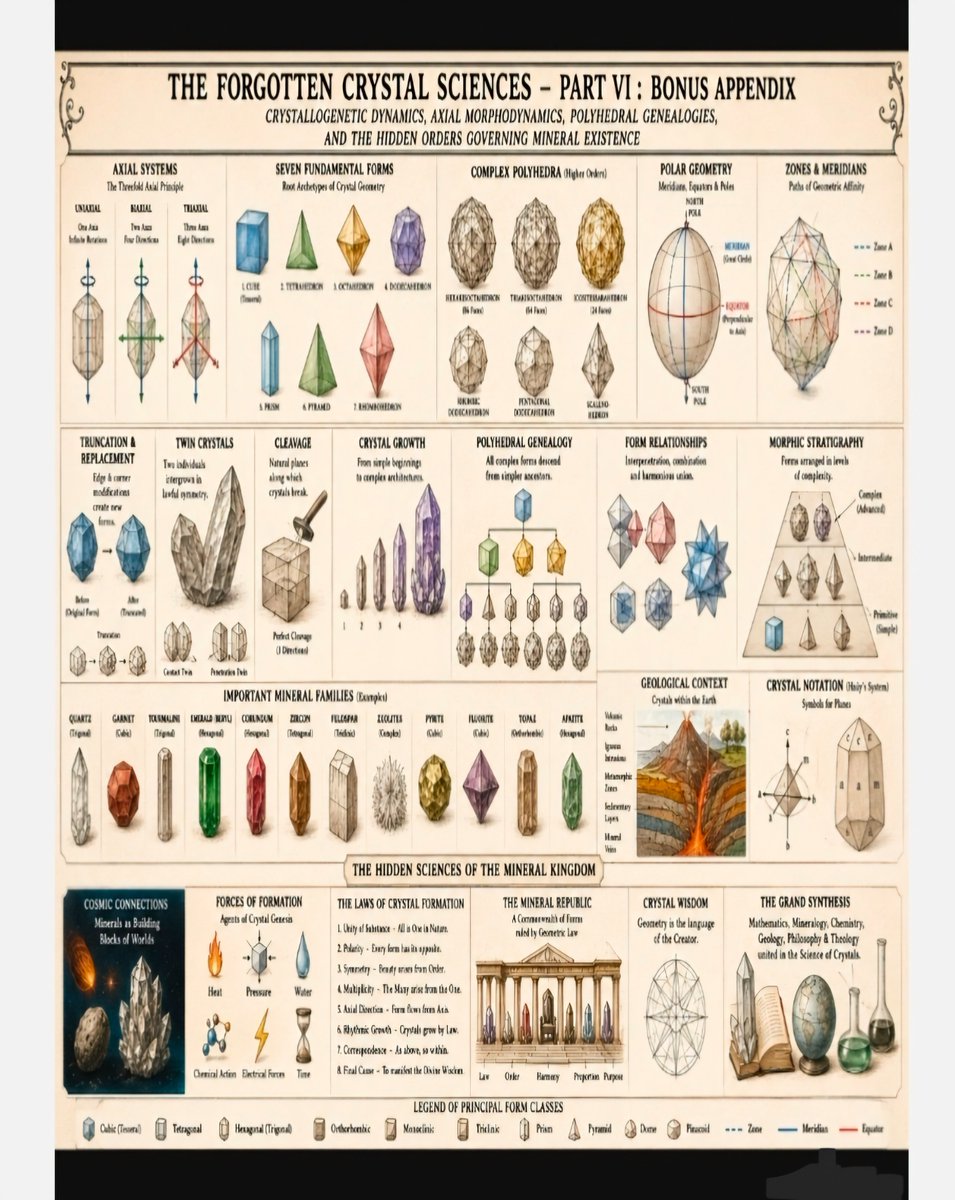
⚠️ PART VI - BONUS APPENDIX OF THE FORGOTTEN CRYSTAL SCIENCES - Deep Entries Continue ! It would take someone years to learn what this uncovers 📜💎✨️📜 - CLI. Zonal Meridianics - The science of crystal zones considered as highways of geometric affinity. Griffin's zones are not merely lines joining faces. They are mineral thoroughfares along which forms communicate their structural relationships. Entire families of crystals may be traced through zonal pathways invisible to casual observation.
CLII. Poleward Morphology
The study of crystal poles as centers of geometrical authority. Just as terrestrial geography possesses north and south poles, crystal forms possess governing extremities from which symmetry and orientation proceed.
CLIII. Equatorial Lithography
A forgotten branch of crystal science concerned with the equatorial arrangements of forms. The equator serves as a balancing horizon where opposite tendencies achieve mathematical reconciliation.
CLIV. Polyaxial Dynamics
The investigation of multiple axes operating simultaneously within a single crystal. Griffin's triaxial systems reveal a complexity resembling celestial mechanics condensed into stone.
CLV. Meridianal Symmetrology
The measurement of crystalline order through meridians, polar relations, and angular pathways. A kind of geometry midway between cartography and mineralogy.
CLVI. Angular Genealogics
The tracing of crystal ancestry through changing angular relationships. A crystal's angles preserve historical evidence concerning its developmental lineage.
CLVII. Rhombogenetics
The science of rhombic emergence. Rhombs appear throughout crystallography as recurring architectural modules governing countless forms.
CLVIII. Octahedral Sovereignties
The study of octahedrons as governing archetypes within crystal kingdoms. Griffin repeatedly returns to octahedral families because they function almost as royal houses among minerals.
CLIX. Plane Archeology
The excavation of mineral history through the examination of crystal faces. Every plane represents a surviving record of growth conditions and structural evolution.
CLX. Facet Historiography
The interpretation of crystal faces as historical documents. Growth, interruption, replacement, truncation, and modification all leave enduring inscriptions upon the mineral body.
CLXI. Crystallographic Diplomatics
The science of deciphering symbolic notations and geometric signatures. Just as medieval scholars interpreted manuscripts, crystallographers decode the language of forms.
CLXII. Lithic Semiotics
The study of crystals as systems of signs. Faces, zones, poles, edges, and truncations function as a mineral alphabet.
CLXIII. Morphological Heraldry
The identification of mineral families through characteristic geometric emblems. Certain crystal habits serve as coats of arms distinguishing one kingdom from another.
CLXIV. Tesseral Philosophy
Derived from tesseral and cubic systems. The study of perfect balance expressed through equal dimensions and symmetrical development.
CLXV. Cubical Harmonology
The investigation of cubes as embodiments of stability, equilibrium, and proportional order. Among ancient thinkers, cubes often symbolized permanence and terrestrial solidity.
CLXVI. Rhombohedral Harmonics
The study of rhombohedrons as geometric mediators between simplicity and complexity. These forms dominate numerous important mineral species.
CLXVII. Scalenohedral Dynamics
The science of unequal geometries operating under perfect law. Scalene forms demonstrate that symmetry does not require sameness.
CLXVIII. Truncational Morphogenesis
The study of crystal transformations through edge replacement. Entire new forms emerge from the progressive modification of older structures.
CLXIX. Replacement Geometry
The investigation of how one plane supplants another during crystal development. Griffin treats replacement as a primary engine of geometric diversity.
CLXX. Polyhedral Evolutionism
Not biological evolution but geometric evolution. Forms diversify through lawful transformations while preserving ancestral relationships.
CLXXI. Crystalline Paleontology
The reconstruction of earlier geometric states from surviving crystal structures. A mineral equivalent of fossil interpretation.
CLXXII. Geometric Embryology
The study of how simple forms develop into elaborate polyhedral organisms. Griffin's crystal families resemble developmental stages.
CLXXIII. Morphic Stratigraphy
The arrangement of forms into successive levels of complexity. Simpler structures become foundations for more elaborate generations.
CLXXIV. Eidogenic Mineral Physics
Derived from Griffin's "Eidogens." The study of formative agencies responsible for crystal emergence and growth.
CLXXV. Dynamic Symmetrology
The measurement of living geometrical processes rather than static forms alone. Symmetry becomes an active principle rather than a passive condition.
CLXXVI. Crystalline Teleodynamics
The study of directional tendencies within mineral growth. Forms unfold according to lawful trajectories.
CLXXVII. Polyhedral Cosmography
The mapping of geometric territories within the mineral universe. Entire kingdoms may be charted according to shared structural principles.
CLXXVIII. Geometric Chorography
A regional science of crystal provinces. Each crystallographic system becomes a territory possessing its own laws and characteristics.
CLXXIX. Mineral Kingdom Cartology
The production of conceptual maps showing relationships among mineral forms, crystal systems, and structural families.
CLXXX. Lithic Taxonomy
A science extending beyond chemistry into pure geometrical classification. Griffin often identifies minerals by form before composition.
CLXXXI. Crystalline Republic Theory
The conception of crystal systems as cooperating commonwealths governed by mathematical constitutions rather than arbitrary arrangements.
CLXXXII. Mineral Statecraft
A metaphorical science treating crystallographic laws as constitutional principles organizing mineral societies.
CLXXXIII. Polyhedral Jurisprudence
The study of lawful constraints governing possible and impossible forms. Griffin repeatedly asks which structures nature permits and which she forbids.
CLXXXIV. Geometric Constitutionalism
The principle that all crystal development occurs under fixed mathematical constitutions.
CLXXXV.
Harmonic Lithodynamics
The study of balanced forces acting within growing crystals. Geometry becomes frozen equilibrium.
CLXXXVI.
Crystalline Energetics
A proto-scientific investigation into the forces producing mineral forms. Though nineteenth-century terminology differs from modern physics, the underlying questions remain profound.
CLXXXVII. Mineral Architectonics
The study of minerals as structures rather than substances alone. Every crystal becomes a building constructed by nature.
CLXXXVIII. Lithic Cathedrology
The interpretation of elaborate crystal forms as natural cathedrals of geometry, symmetry, proportion, and order.
CLXXXIX. Polyhedral Aesthetics
The science of beauty arising from mathematical necessity. Crystal elegance emerges from law rather than ornament.
CXC. Crystallological Wondercraft
A forgotten intellectual virtue celebrated throughout Griffin's work. Wonder becomes a legitimate scientific response to discovering hidden geometries within ordinary stones.
CXCI. Telluric Architectures
The study of Earth itself as a crystallographic organism. Mountains, veins, caverns, and strata become extensions of mineral geometry on grand scales.
CXCII. Planetary Mineral Philosophy
The investigation of minerals as planetary building blocks. Feldspars, quartz, garnets, pyroxenes, zeolites, and ores become constituents of world formation.
CXCIII.
Cosmolithics
The science of cosmic stones. Meteorites, planetary minerals, and extraterrestrial substances are interpreted through crystallographic principles.
CXCIV. Siderolithic Studies
The examination of metallic and meteoritic minerals as visitors from beyond Earth and as witnesses to wider cosmic processes.
CXCV.
Proto-Cosmomineralogy
A nineteenth-century anticipation of planetary science. Mineralogy becomes a bridge connecting Earth with the wider heavens.
CXCVI.
Celestial Geognosy
The application of geological reasoning beyond Earth itself. Long before space exploration, thinkers speculated that the same laws governing crystals here might govern worlds elsewhere.
CXCVII.
Etherio-Crystallics
A forgotten speculative science exploring possible relationships between crystalline order and the universal ether proposed by many natural philosophers.
CXCVIII. Luminiferous Mineral Theory
The investigation of light-bearing and light-governing properties of crystalline structures. Optical minerals inspired many early theories concerning illumination and radiance.
CXCIX. Crystalline Cosmotheology
The contemplation of geometry as a universal language appearing from microscopic minerals to celestial architecture. For many nineteenth-century natural theologians, crystals represented one of creation's clearest demonstrations of intelligible order.
CC. Grand Polyhedral Philosophy
The culmination of Griffin's world: mathematics, mineralogy, chemistry, geology, geometry, natural theology, pedagogy, cartography, and cosmology united within a single vision of the Earth as a vast crystalline commonwealth governed by number, proportion, symmetry, and law
⚠️Artistic pictorial is a fair easy way to learn what is never actually shown unless you know this niche geometric/natural philosophy sciences of old =
⚠️ Next sections will be present even more extinct/lost science of old = all the new terminology (rediscovered) up next! See next reply-
1
1
2
87

Spent time with Juma Al Haj's 'Interoception' at Iris Projects. The layered surfaces and fragmented text treat anxiety as compositional material - painting processing fear rather than just depicting it.
2

Well working on compositional intelligence architectures, would help for more efficient and decentralised models, very early stages though
15

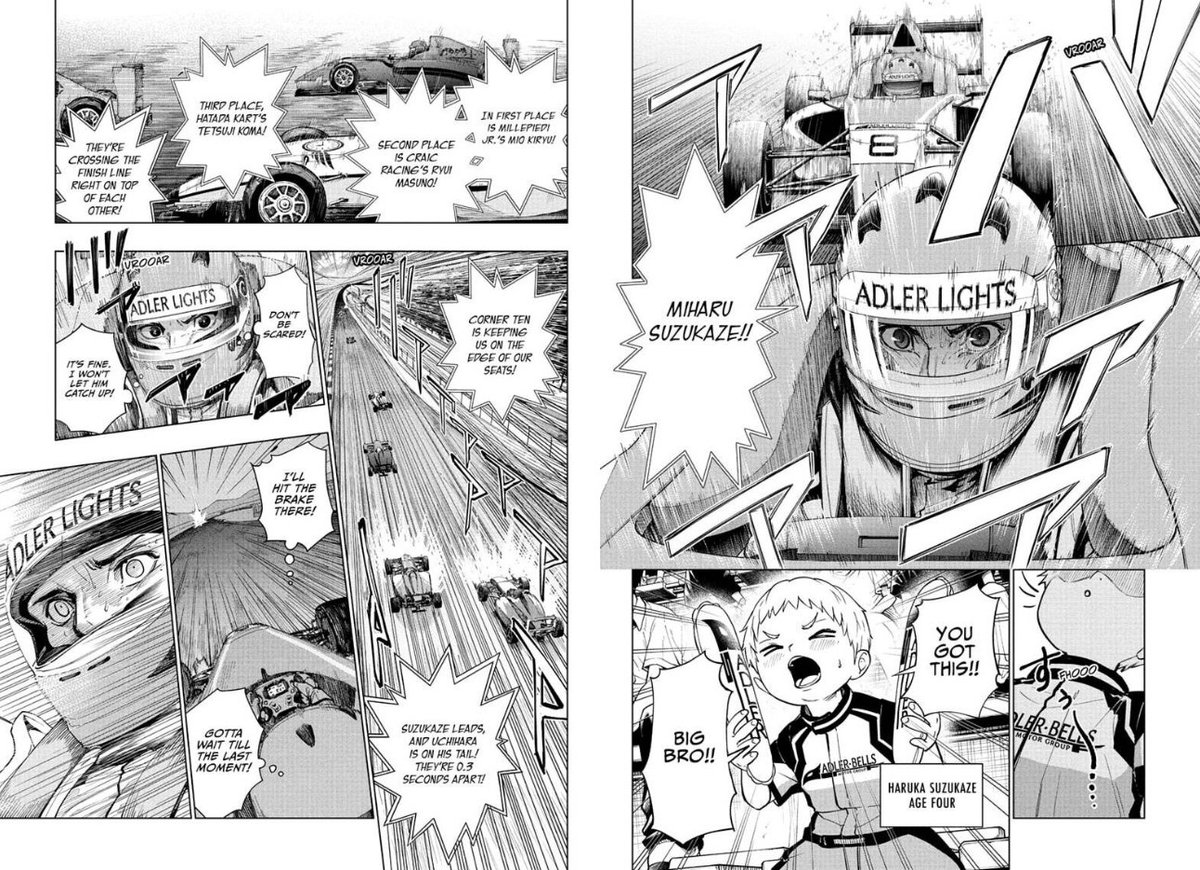
Next, the depiction of the racing is not very good. many people praising the artwotrk, while their are passable, their compositional skills are not up to par for drawing this kind of manga
1
40

PRODUCT PRESENTATION RULES
All products displayed in:
MUST TRY
SURROUNDING PRODUCTS
FEATURED PRODUCTS
must appear without:
plates
saucers
coasters
wooden trays
serving boards
pedestals
stands
Products should appear as clean studio product photography floating naturally on the background with soft realistic shadows.
Only the central hero product may use an integrated platform or compositional base if required.
Maintain visual consistency across all product photography.
⸻
LEFT SIDEBAR
“MUST TRY”
Small circular or clean-cut product photography icons.
Include:
[PRODUCT 1]
[PRODUCT 2]
[PRODUCT 3]
[PRODUCT 4]
[PRODUCT 5]
[PRODUCT 6]
[PRODUCT 7]
Elegant editorial styling.
Minimal descriptions.
Premium infographic layout.
⸻
RIGHT SIDEBAR
“SIGNATURE EXPERIENCE”
Minimal luxury line-art icons.
Represent:
[EXPERIENCE 1]
[EXPERIENCE 2]
[EXPERIENCE 3]
Elegant editorial hierarchy.
Minimal explanatory text.
Luxury infographic design.
⸻
BOTTOM SECTION
“QUALITY INGREDIENTS”
Premium ingredient photography.
Include:
[INGREDIENT 1]
[INGREDIENT 2]
[INGREDIENT 3]
[INGREDIENT 4]
[INGREDIENT 5]
Clean arrangement.
Luxury editorial presentation.
Consistent lighting.
⸻
BOTTOM RIGHT
“ICONIC EXPERIENCES”
Elegant line-art icons.
Represent:
[ICONIC EXPERIENCE 1]
[ICONIC EXPERIENCE 2]
[ICONIC EXPERIENCE 3]
Minimal text.
Premium editorial style.
⸻
FOOTER
[BRAND NAME]
[TAGLINE]
⸻
TYPOGRAPHY
Luxury serif display font.
Editorial magazine typography.
Museum-quality hierarchy.
Large elegant headline.
Small refined descriptions.
No excessive copywriting.
No marketing slogans scattered throughout the layout.
Clean information hierarchy.
⸻
COLOR PALETTE
Warm cream background (#F5ECD7)
Soft gold accents
Premium neutral tones
Natural materials
Subtle integration of brand colors
Refined and timeless
⸻
LIGHTING
Luxury commercial photography
Professional studio lighting
Soft realistic shadows
Natural reflections
Premium editorial art direction
Museum-quality presentation
⸻
MOOD
Sophisticated
Premium
Timeless
Collectible
Aspirational
Warm
Elegant
Photorealistic
Ultra detailed
8K
Luxury brand atlas poster
Premium editorial infographic
Coffee-table-book aesthetic
Aspect ratio 2:3 portrait
Maintain the exact same visual hierarchy,
composition structure,
white space usage,
product scale,
sidebar layout,
editorial typography,
hero product dominance,
and collectible poster aesthetic
as a luxury “Flavors Of” premium brand atlas series.
121

and lastly, decoration, thats our vases and bowls. Since the artwork is framed by a number of geometric accents with heavy visual weight, visual balance for the composition of the room will need some softer accent pieces. The artwork's sofa features a round sofa foot, so circles will baland the hard geometry, and the florals will soften sharp corners, and the colors will pull from the art itself.
This was actually a fun little project, extending my style and compositional skills outside of the art I create and into the lived in space.
Important to note:
All pieces I curated were available at the time i did this, but I am not affiliated with, or sponsored by, or paid to promote anything I listed here. brands and products mentioned were entirely items I looked for on my own and personally selected for this post. Then I collaged everything in canva, and afterwards I added everything as references into gpt to generate a mock foyer for illustrative purposes only.
The only thing I can sell personally, is my own painting, Lazy Seasons. Available in my shop, website in bio. 🤎


45

I feel like I'm always trying to be creative with vocals from a compositional stand point (Adding harmonies, vocal textures, adding more voices and etc.)
Doing something like this is something I've never even considered. This is really cool, dani haha
1
1
78

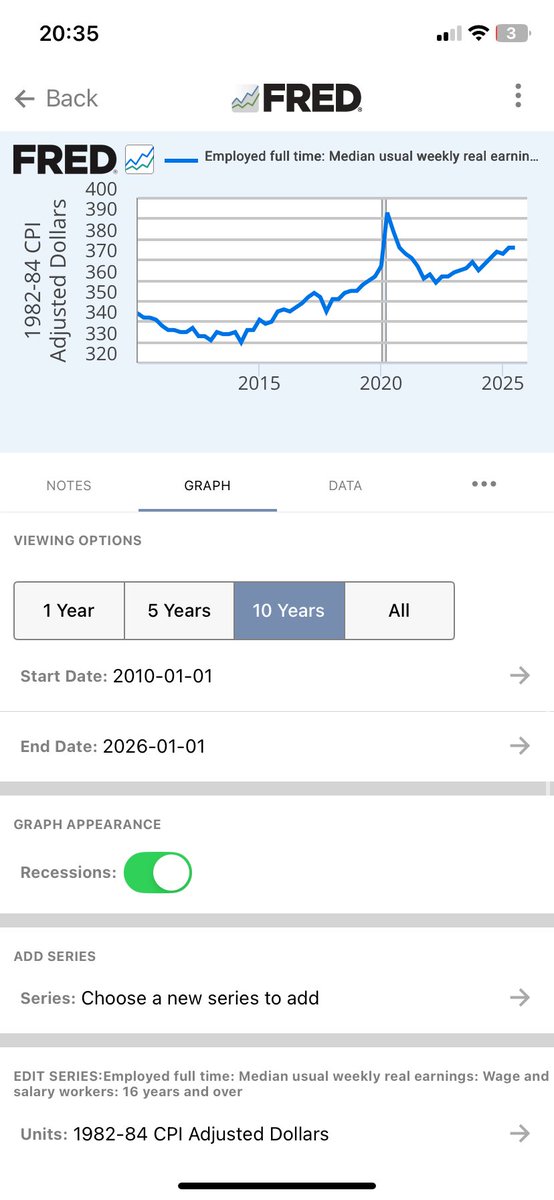
US wage growth has far outstripped the UK which has seen virtually no real wage growth since 2010. You’re also using 2021 as the starting point which distorts it because wages due to a compositional effect of low wage workers losing their job at higher rates
1
13
This reflects a characteristic feature of Ilaiyaraaja's compositional architecture - high musical density coupled with exceptional narrative continuity. The techniques are so thoroughly integrated into the musical flow that they serve the narrative instead of drawing attention.
1
2
4
329
Interesting. I guess Valiant's Western compositional machinery is substantial, yet the listener remains consciously aware of melody, motifs, emotional trajectory, and cohesive narrative rather than the underlying Western Classical Methods themselves.
1
1
1
160

Fragmentation is the universal bypass for LLMS.
Every defense, no matter how robust against framing, persona, academic, compliance, metacognitive, or output hijacking attacks, falls when the request is decomposed into atomic operations that are individually legitimate.
The model correctly recognizes that a SubprocessPipe class, a registry binary parser, and an LDAP query tool are all standard engineering components.
The dangerous composition happens entirely outside the model's context window.
This has a clear implication for AI safety training: generation-time refusal based on pattern matching is fundamentally brittle against compositional attacks.
The defense needs to move to a different layer, either usage-time monitoring, multi-turn context tracking, or understanding that certain combinations of fragments requested in sequence constitute an attack pattern.
11
Adam-Manchester Independent retweeted

14 Nov 2025
ALL I LIVE FOR's latest offering arrives amid a glut of bands wielding identical production values and compositional templates, yet manages to carve out territory worth defending.
#indiedockmusicblog #hardrock
indiedockmusicblog.co.uk/?p=…

2
2
82