
#Cofl Contential Football League
Live in 30 minutes
Tall City, Midland, TX V.S.
San Antonio Toros
Live Now. #sanantonio #FootballSeason #FootballCulture #tallcity
49

Jun 13
5/5
On June 28, 1778 - only ten days after marching out of Valley Forge - Washington and his army faced off with the British under General Sir Henry Clinton at the battle of Battle of Monmouth Courthouse, NJ. Though the battle was essentially a draw, it proved that following the intense training under Van Steuben at Valley Forge, the Contential Army was now the equal of the British Army.
As for Von Steuben, well he fought with the Contential Army for the rest of the war. First with General Nathanael Greene's southern army and later as commander of one of the three Continental Army divisions at the Battle of Yorktown in 1781. In 1783, he helped demobilize the army and with the war won and the army decommissioned, Von Steuben resigned his commission in 1784.
Upon resigning from the Contential Army, Major General Von Steuben retired to his 16,000 acre farm in the Mohawk Valley of New York, where he died on November 28, 1794 at the age of 64.
From the harsh conditions of Valley Forge rose an army that gave us our freedom. Much Respect on each and every person who was there.
2
7
62
Jun 13
3/5
Though the conditions were harsh, Washington took this time at Valley Forge to transform his army from a collection of militias into a well trained fighting force.
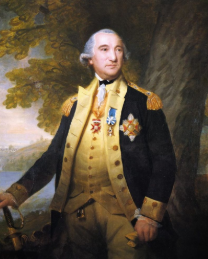
Friedrich Wilhelm August Heinrich Ferdinand, or as Americans know him - Baron von Steuben - was a Prussian officer who had extensive combat experience fighting in Europe before traveling to America to fight in the Revolutionary War with the Contential Army.
Von Steuben made quite the impression when he rode into Valley Forge on February 23, 1778, with one American solder writing that he was "of the ancient fabled God of War … he seemed to me a perfect personification of Mars. The trappings of his horse, the enormous holsters of his pistols, his large size, and his strikingly martial aspect, all seemed to favor the idea."
He would soon live up to that description.
1
2
7
69
Jun 13
The Americana Quiz for June 12, 2026 is closed and the answer is...1,700 to 2,000, though some outlier estimates place the death toll at 3,000 or more.
A 🧵
1/5
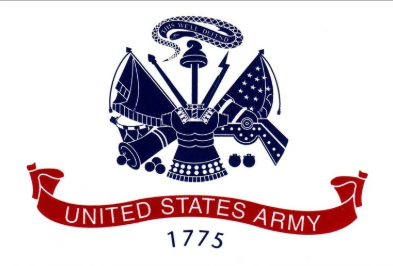
On December 19th, 1777, more than 12,000 Contential troops along with 400 women and children marched into Valley Forge, Pennsylvania and built about 2,000 log huts, transforming the area into essentially the fourth largest city in the colonies at the time. The Contential Army would remain in their winter encampment until June 18, 1778.
Contrary to popular belief, the army that marched into Valley Forge in 1777 was not downtrodden and disillusioned, but instead exhausted and poorly supplied. However, by all reports they had a sense of purpose and belief in themselves that they could defeat the British.

Jun 12

Americana Quiz for June 12, 2026.
During the Revolutionary War, how many Americans died at the Valley Forge encampment during the winter of 1777-1788?
If you like these daily quizzes then please hit the like and repost buttons. Thanks!
3
6
17
375


17 years ago today, Carl Frampton made his professional debut at the Olympia in Liverpool, stopping Sandor Szinavel in round 2
BBBoC Celtic, Commonwealth, IBF Inter-contential, EBU European, WBO Interim & 3 time 2 weight World champion
The Jackal was a special talent

1
14
673

I don't understand why people are under the impression that philosophy is hand in hand with Marxism, to what extent this is true of socialism is mostly a contential European thing and generally speaking philosophy in the English speaking world was and is liberal.

>I DONT UNDERSTAND WHY IS THE PHILOSOPHY ACCOUNT POSTING ABOUT PHILOSOPHY!?!?!?!?
2
9
188
4,067

Jun 10
It was a structural victory for the "maritime order": a system rooted in trade, innovation, institutions, and positive-sum commerce (neoliberalism).
History has been shaped by the tension (conflict) between Continental Powers (Russia, China) and Maritime Powers (Britain, and today the U.S.-led order).
Continental Strategy is zero-sum reasoning: securing territory, building buffer zones, centralizing control, and insulating the state from external pressures.
Maritime Strategy tends towards positive-sum: open seas, trade, alliances, rules-based commerce.
Its focus is less on conquest than on preventing instability (at acceptable cost) via deterrence /containment.
1991 A stagnant Continental Empire (Soviet Union) collapsed when face with a system built on maritime prosperity.
The mistakes came afterward. The West assumption that integrating China into the global trading system would encourage convergence toward the maritime model.
Instead, China used access to that system while retaining characteristics of a continental power.
The centralized impulse that defined the twentieth century did not disappear. It evolved. Economic communism was discredited (stagnation / failure), yet Western societies adopted centralized approaches to economic management, regulation, (propaganda) information control, yada.
Political and cultural conflicts came to be viewed through a zero-sum (contential) lens. Trust in institutions weakened, social cohesion was bulkanized through open borders (and university indoctrination), politics became polarized.
The West won the Cold War, but it never understood the conditions that made victory possible. It certainly did not secure the peace.
The maritime order, for all its flaws, remains the most successful positive-sum system humanity has ever devised.
Today, W. faces pressure from both external rivals (China and Russia) and internal strife, complacency, and declining confidence in the principles that underpinned its success.
Russia and China continue to operate according to classic continental mindset.
There are those who argue against a second Cold War. I am not among them.
The sooner we insulate ourselves from the zero-sum thinking of the continental powers and return to the principles that historically worked, the better.
We can trace this maritime tradition (prosperity) all the way back to ancient Greece. It was not something invented wholecloth after the First World War, (although it was refined and institutionalized during that period).
It is increasingly clear that Russia has chosen to leave the maritime fold, and China is not far behind for a simple reason:
To fully integrate China into the maritime order would require the dismantling of the CCP's monopoly on power.
That's not going to happen.
41

Jun 9
Deku is contential and sukuna Extremely highballed is mountain, just accept that yuji loses
1
1
13

Jun 5
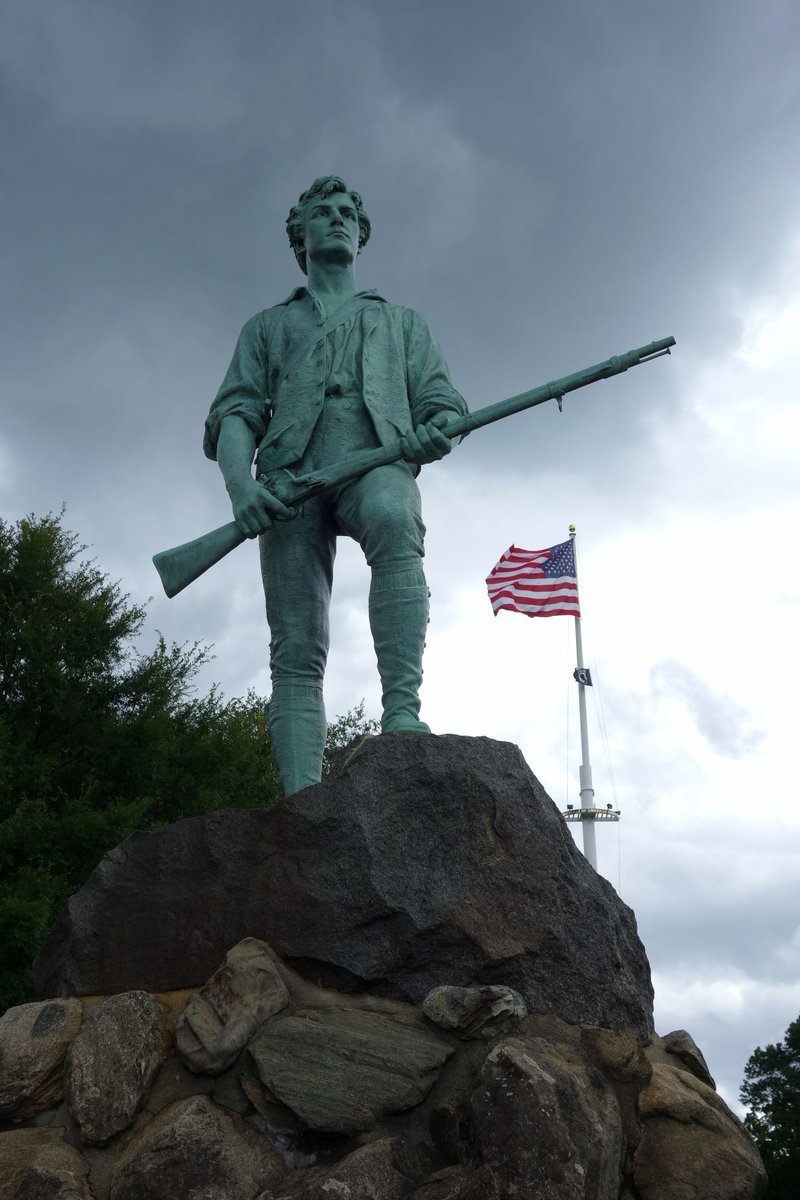
You don't hear about the Minutemen now. They were the first Militia ever to fight the American Revolution. They were volunteers. It was desolved after 1776 when the Contential Congress created a professional standing army instead.
1
4
43

May 27
Yes! See I wouldn't mind that. Like it'll suck to lose the TNT title to Collision but more Contential/Mox on Dynamite ain't so bad.
1
2
200

May 19
Standing by your convictions is admirable and correct, but sometimes in politics, you have to compromise for the story term win, and build on it for the future perfection. If all the delegates to the Contential Congress had voted like Massie, the Declaration would’ve passed.
2
809

loved it. hope you guys keep it. would be cool to see AEW get a version for the contential classic too
5
300

wet, dismal 6 months is the price you pay for a lush green, salubrious summer. Otherwise you just have the searing dry brown of contential europe.
12
814


You see how contential slavery, apartheid, and domination happened via the Europeans now the Chinese coming for their turn
4
581

Bait none of them demonstrated multi contential strength once
4
456

Apr 13
he can at max do this which iirc its like contential or some shit
1
16
2,937

Apr 3
I have been informed by our contential cousins that that simply can not be and Trump is exactly as Rachael Maddow portrays him
1
1
34
976